
The Plant Body Chapter 3 Fall 2020 Outline
The Plant Body Chapter 3 Fall 2020
Outline: • • Meristems: the plant’s growth centers Primary growth from apical meristems Secondary growth from lateral meristems Cells, tissues, and tissue systems
How plants grow: How Plants Grow: Meristems
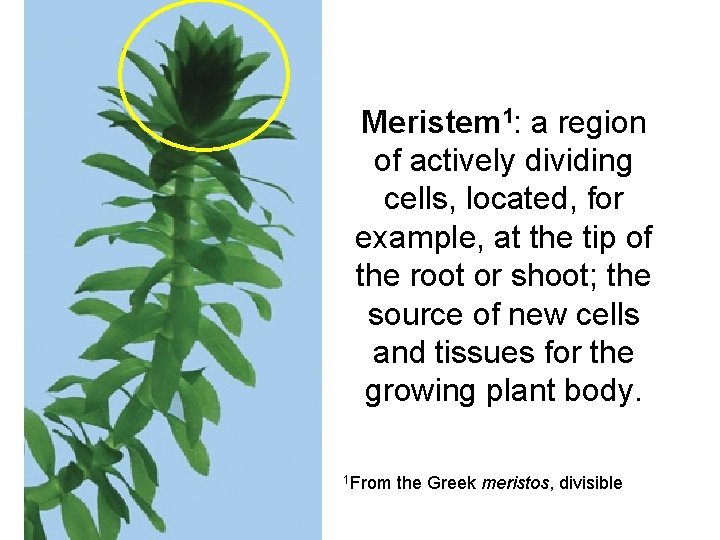
Meristem 1: a region of actively dividing cells, located, for example, at the tip of the root or shoot; the source of new cells and tissues for the growing plant body. 1 From the Greek meristos, divisible
There are two kinds of meristems: • Apical meristems - increase the length of stems and roots • Lateral meristems - increase the girth of stems and roots
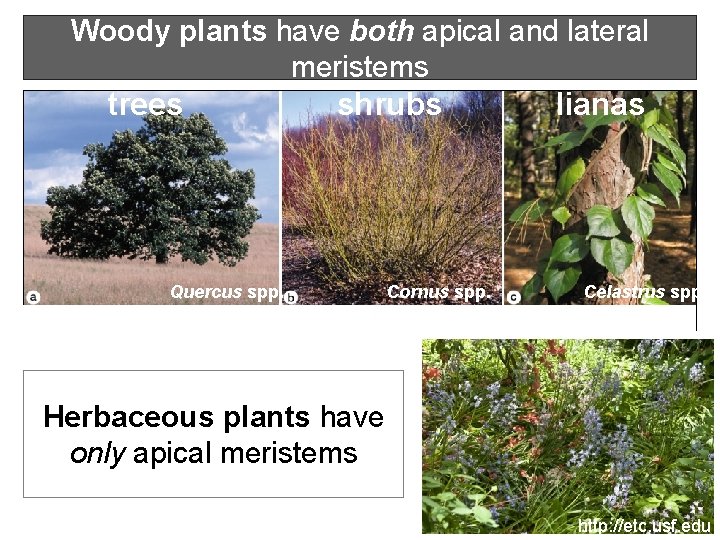
Woody plants have both apical and lateral meristems trees shrubs Quercus spp. Cornus spp. lianas Celastrus spp. Herbaceous plants have only apical meristems http: //etc. usf. edu
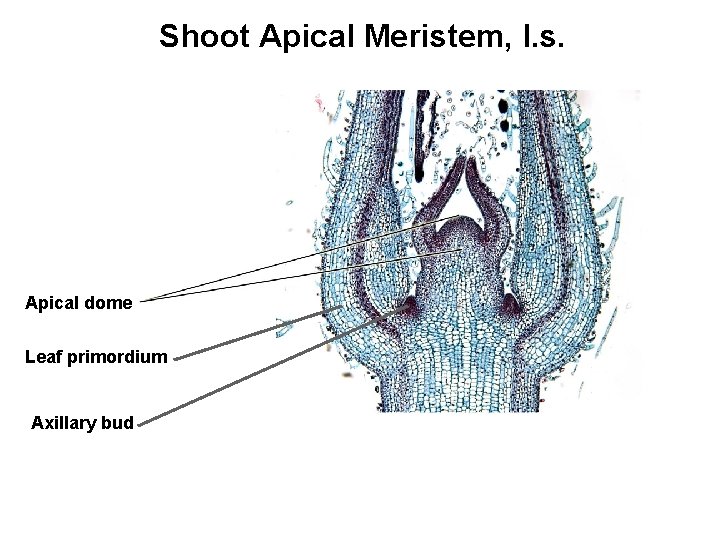
Shoot Apical Meristem, l. s. Apical dome Leaf primordium Axillary bud
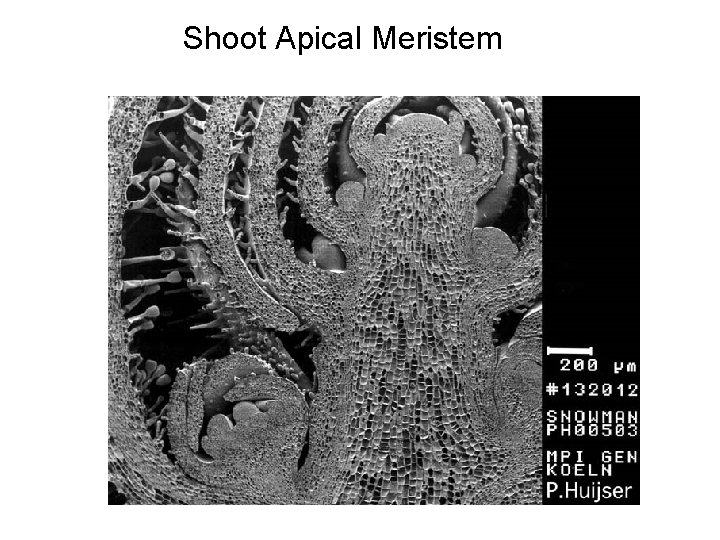
Shoot Apical Meristem
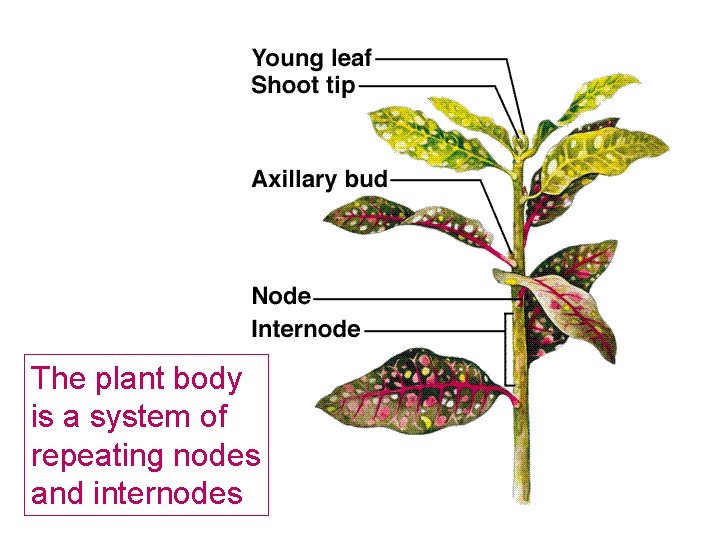
The plant body is a system of repeating nodes and internodes
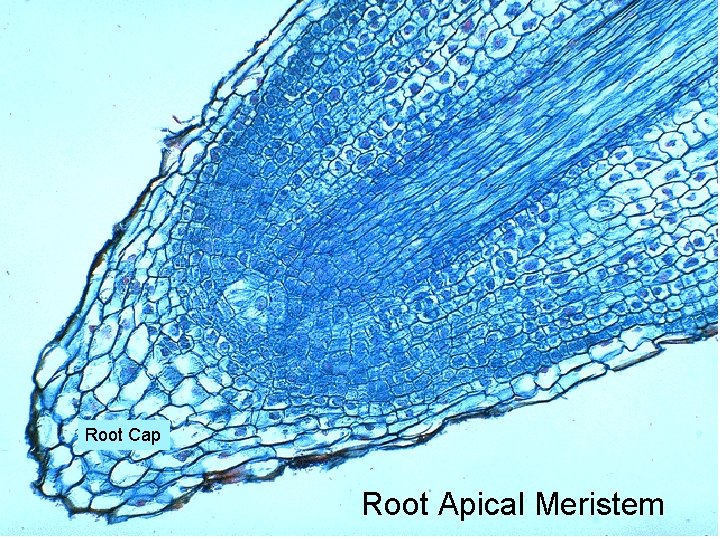
Root Cap Root Apical Meristem
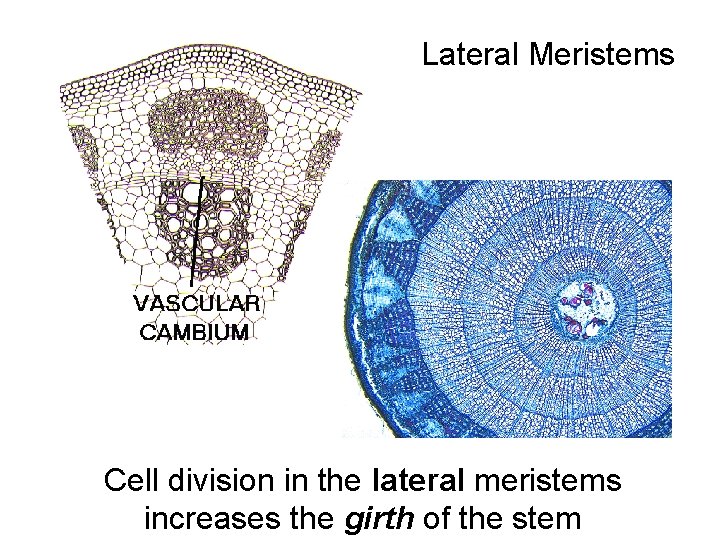
Lateral Meristems Cell division in the lateral meristems increases the girth of the stem
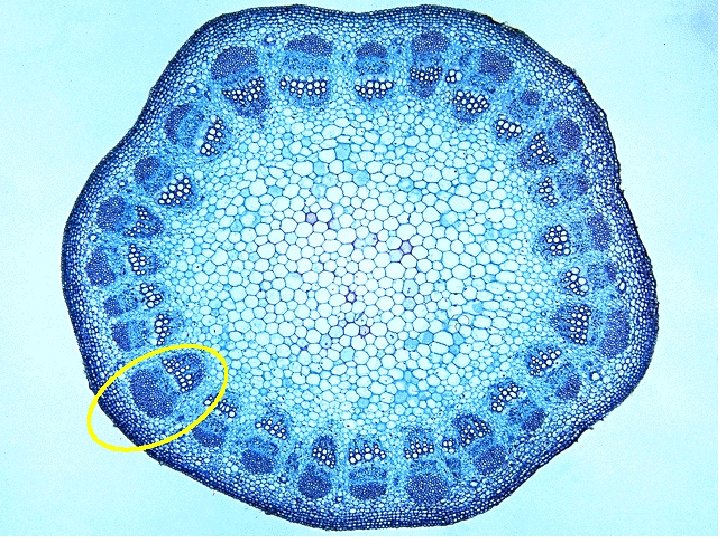
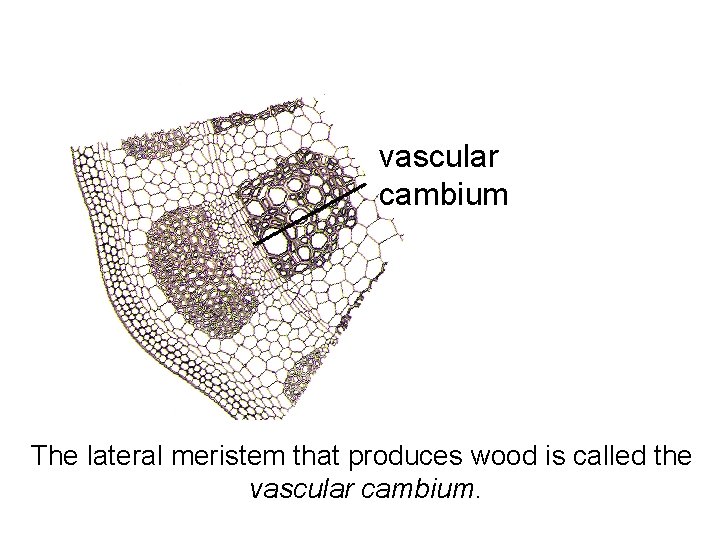
vascular cambium The lateral meristem that produces wood is called the vascular cambium.
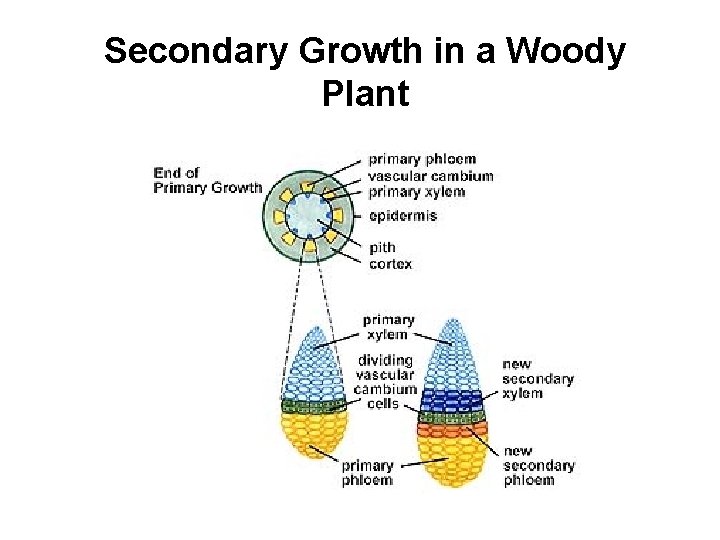
Secondary Growth in a Woody Plant

Secondary xylem (= wood!)
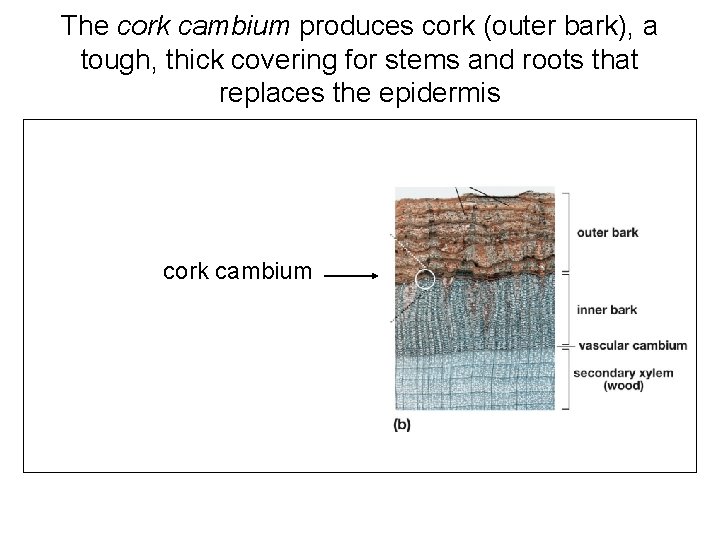
The cork cambium produces cork (outer bark), a tough, thick covering for stems and roots that replaces the epidermis cork cambium
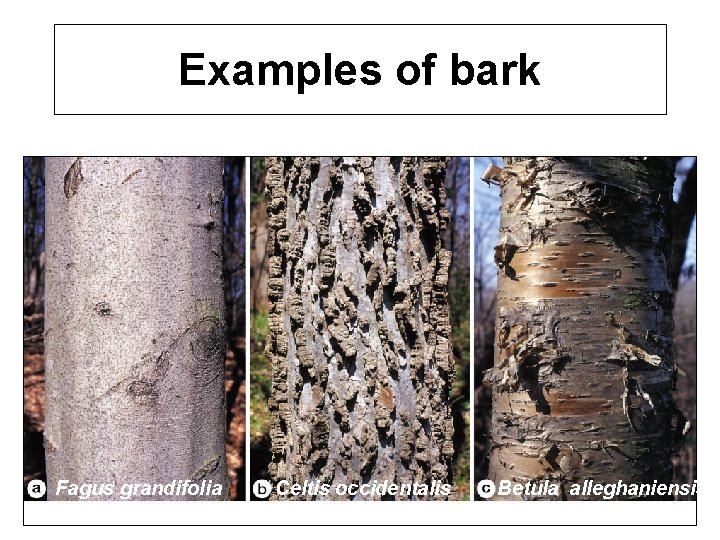
Examples of bark Fagus grandifolia Celtis occidentalis Betula alleghaniensis
Outline: • • Meristems: the plant’s growth centers Primary growth from apical meristems Secondary growth from lateral meristems Cells, tissues, and tissue systems
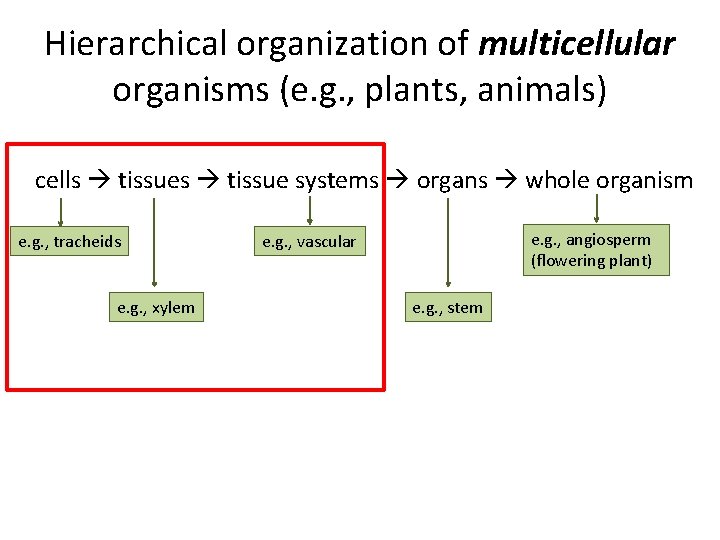
Hierarchical organization of multicellular organisms (e. g. , plants, animals) cells tissue systems organs whole organism e. g. , tracheids e. g. , xylem e. g. , angiosperm (flowering plant) e. g. , vascular e. g. , stem
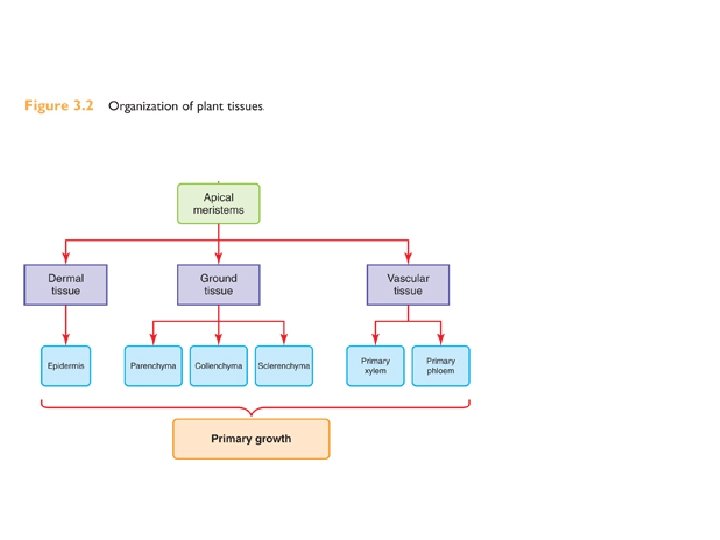
Definitions • Tissues are groups of cells that perform a common function. • Tissues are organized into tissue systems. The three tissue systems are the dermal, ground, and vascular tissues.
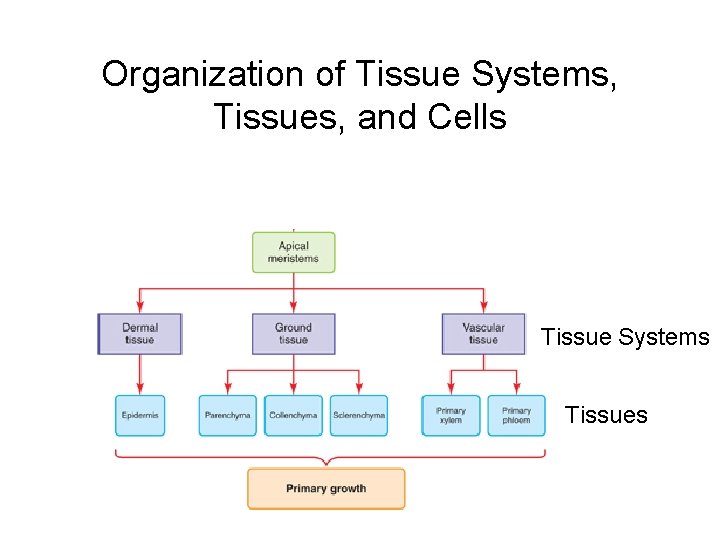
Organization of Tissue Systems, Tissues, and Cells TTisss Tissue Systems Tissues
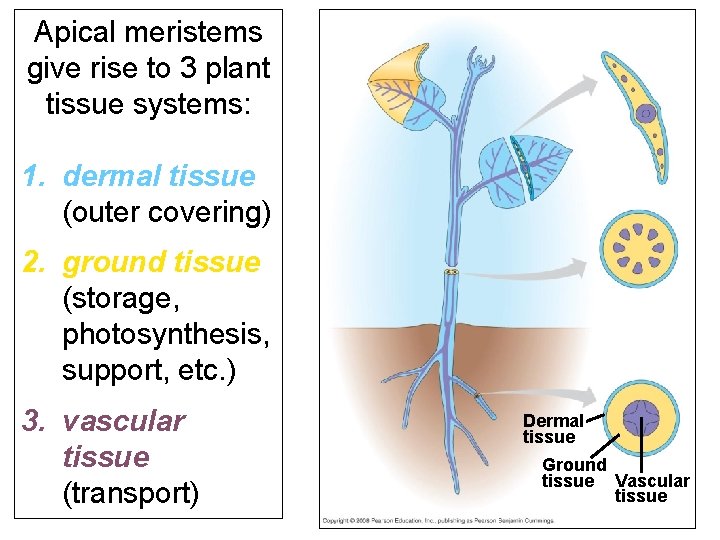
Apical meristems give rise to 3 plant tissue systems: 1. dermal tissue (outer covering) 2. ground tissue (storage, photosynthesis, support, etc. ) 3. vascular tissue (transport) Dermal tissue Ground tissue Vascular tissue
Three tissue systems are visible in a stem cross section: • Dermal - the epidermis • Ground - the cortex and pith (if present) • Vascular - the xylem and phloem
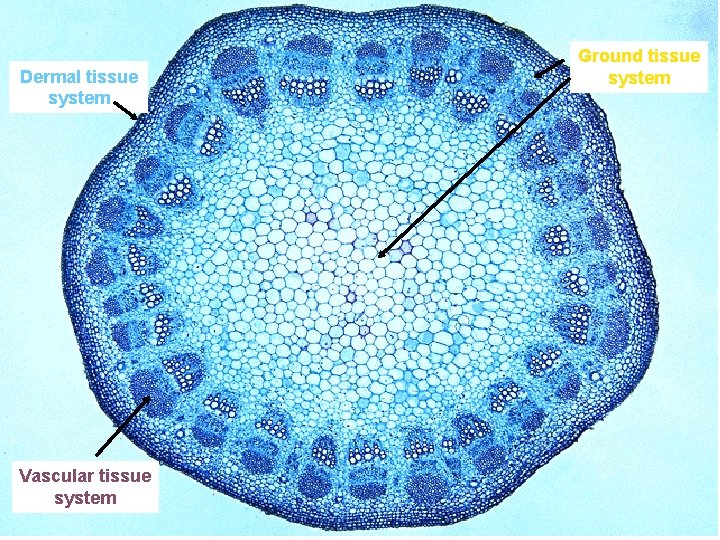
Dermal tissue system Vascular tissue system Ground tissue system
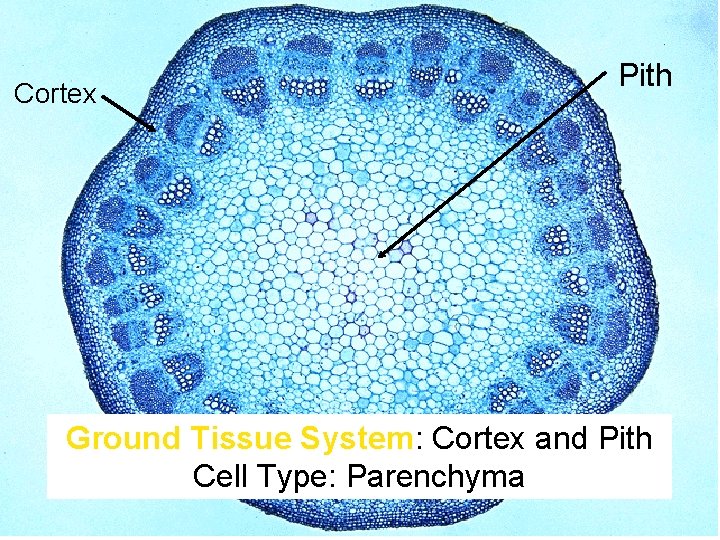
Cortex Pith Ground Tissue System: Cortex and Pith Cell Type: Parenchyma
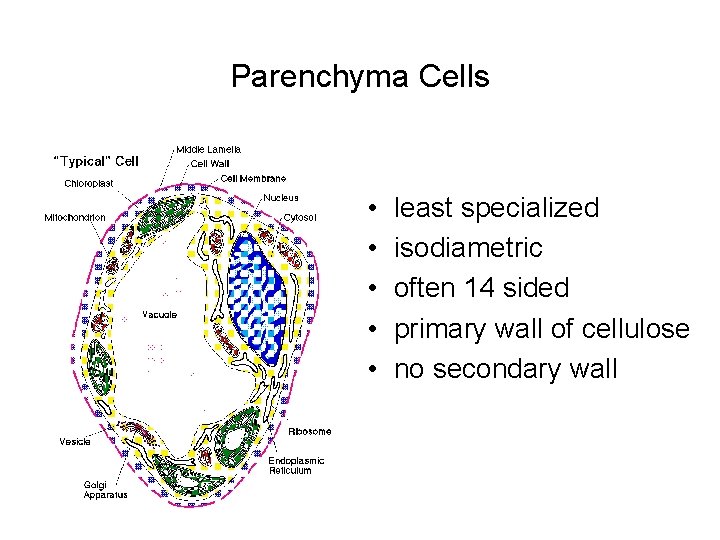
Parenchyma Cells • • • least specialized isodiametric often 14 sided primary wall of cellulose no secondary wall
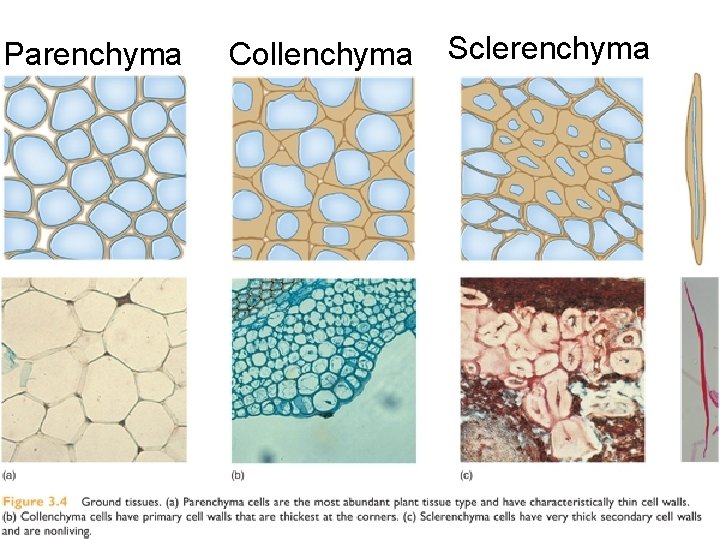
Parenchyma Collenchyma Sclerenchyma
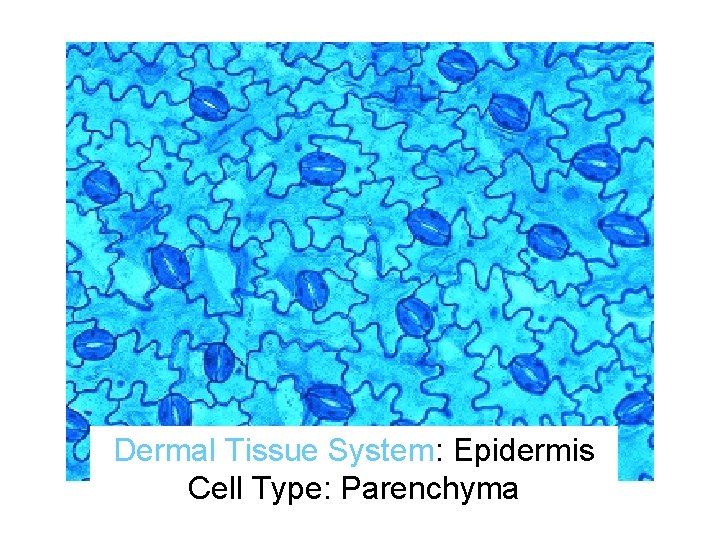
Dermal Tissue System: Epidermis Cell Type: Parenchyma
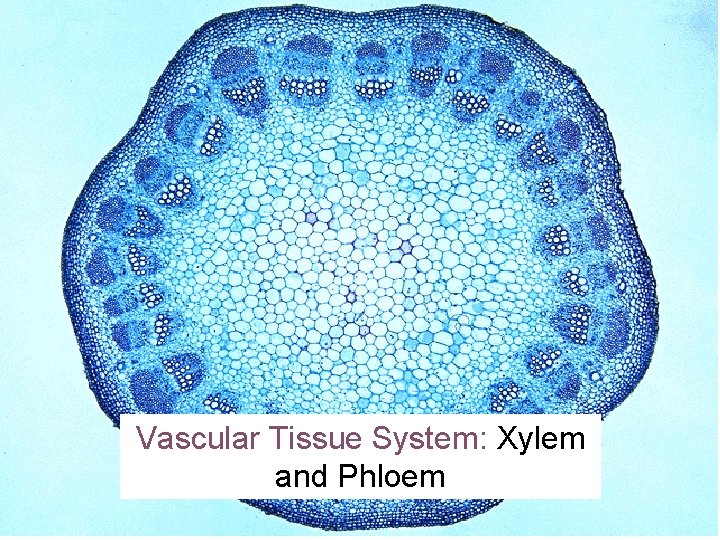
Vascular Tissue System: Xylem and Phloem
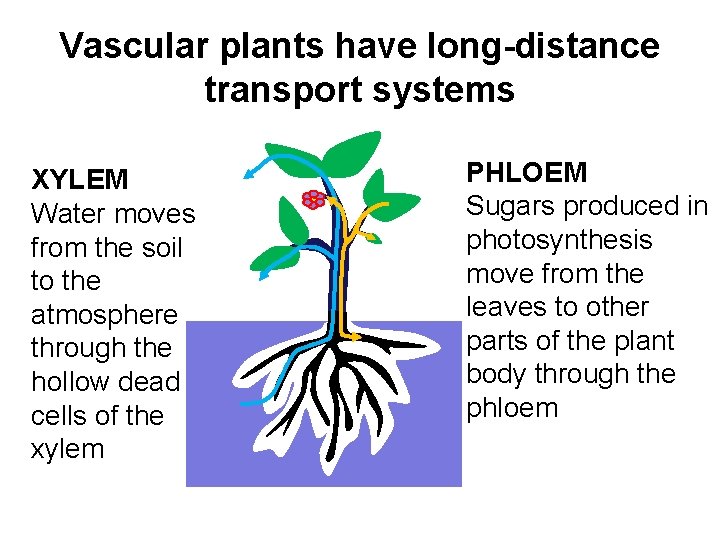
Vascular plants have long-distance transport systems XYLEM Water moves from the soil to the atmosphere through the hollow dead cells of the xylem PHLOEM Sugars produced in photosynthesis move from the leaves to other parts of the plant body through the phloem © 2013 American Society of Plant Biologists

Vascular tissue xylem
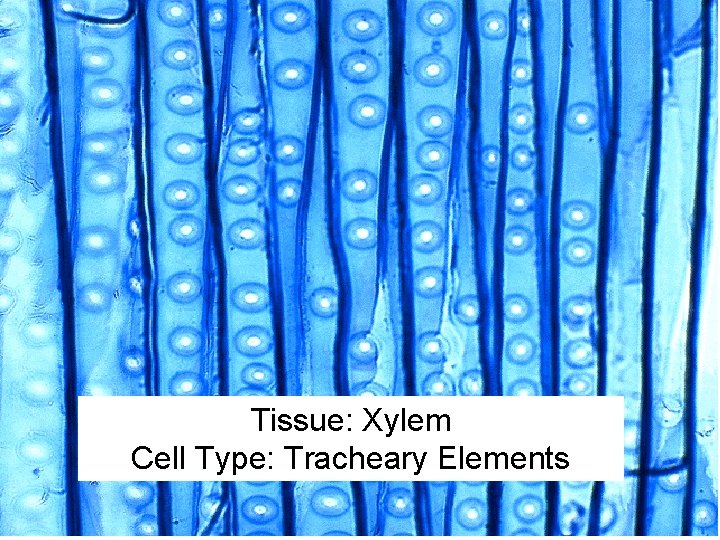
Tissue: Xylem Cell Type: Tracheary Elements
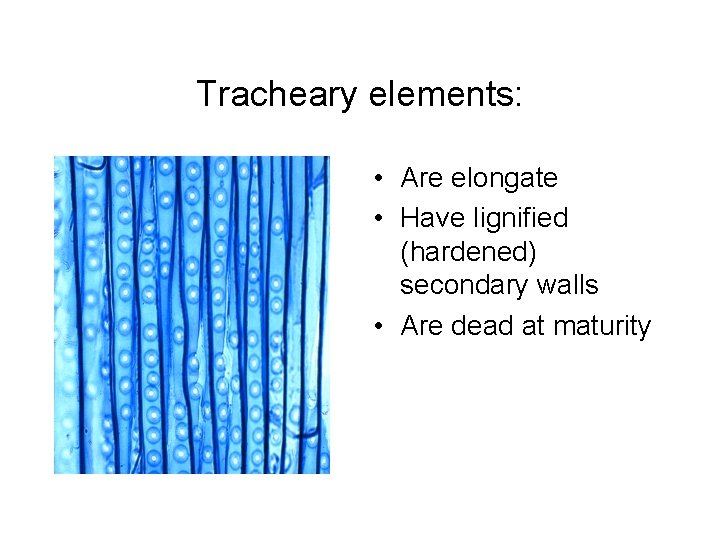
Tracheary elements: • Are elongate • Have lignified (hardened) secondary walls • Are dead at maturity
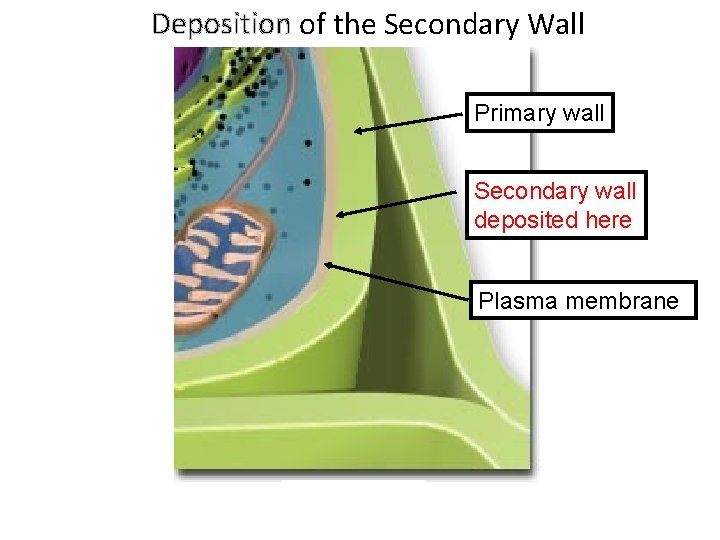
Deposition of the Secondary Wall Primary wall Secondary wall deposited here Plasma membrane
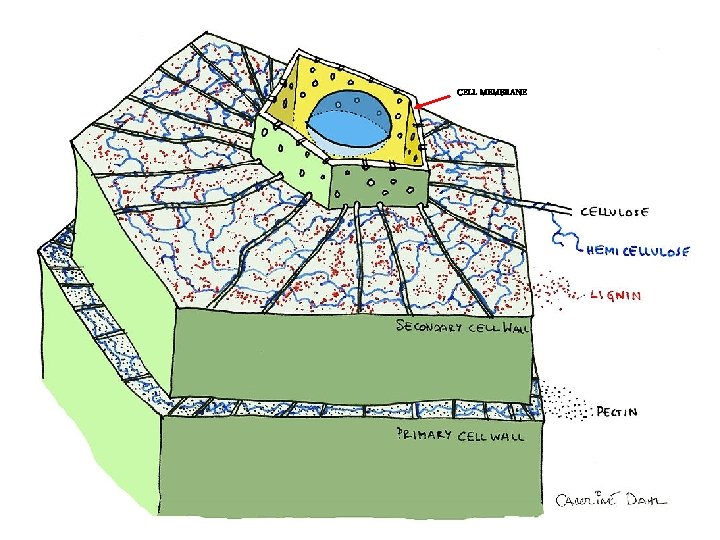
CELL MEMBRANE
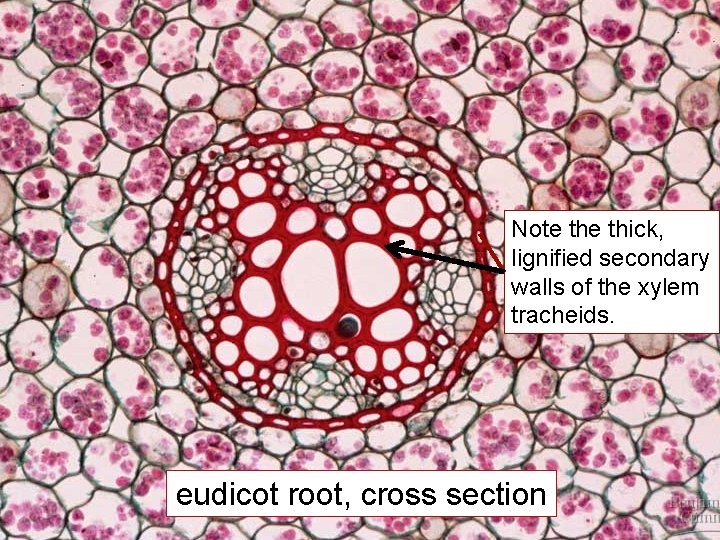
Note thick, lignified secondary walls of the xylem tracheids. eudicot root, cross section
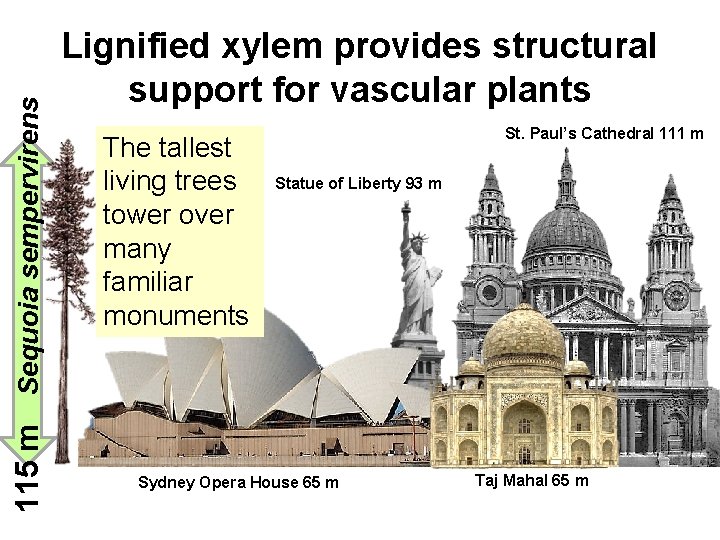
115 m Sequoia sempervirens Lignified xylem provides structural support for vascular plants The tallest living trees tower over many familiar monuments St. Paul’s Cathedral 111 m Statue of Liberty 93 m Sydney Opera House 65 m Taj Mahal 65 m © 2013 American Society of Plant Biologists
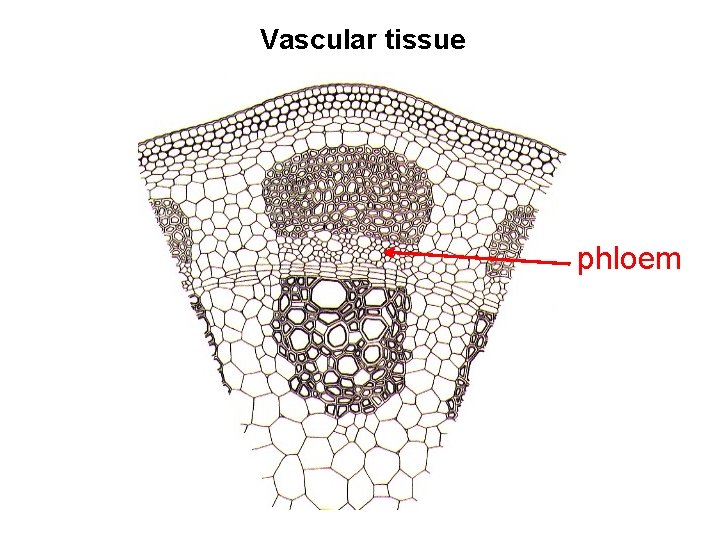
Vascular tissue phloem
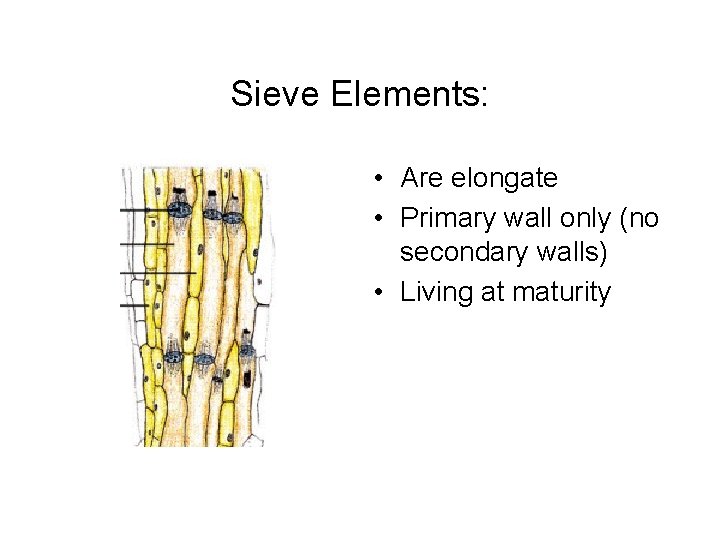
Sieve Elements: • Are elongate • Primary wall only (no secondary walls) • Living at maturity
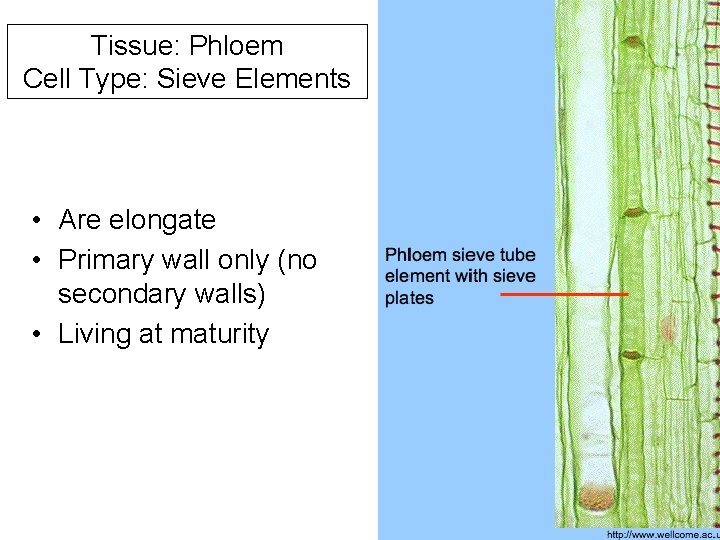
Tissue: Phloem Cell Type: Sieve Elements • Are elongate • Primary wall only (no secondary walls) • Living at maturity
Outer bark
Lecture Review, Chapter 3 • List the major plant organs and briefly describe the function of each. • How do monocots and eudicots differ in stem, leaf, and root morphology? • Name some familiar vegetables and the part of the plant body that each represents • Define meristem. Compare and contrast the apical meristem and lateral meristem. • What kinds of structures/organs do apical meristems give rise to? Lateral meristems? • What three tissue systems does the apical meristem produce? What is the main function of each? • List the cells types that make up each of the tissue systems.
- Slides: 43