
The Planets and Measuring Space Earth belongs to
The Planets and Measuring Space
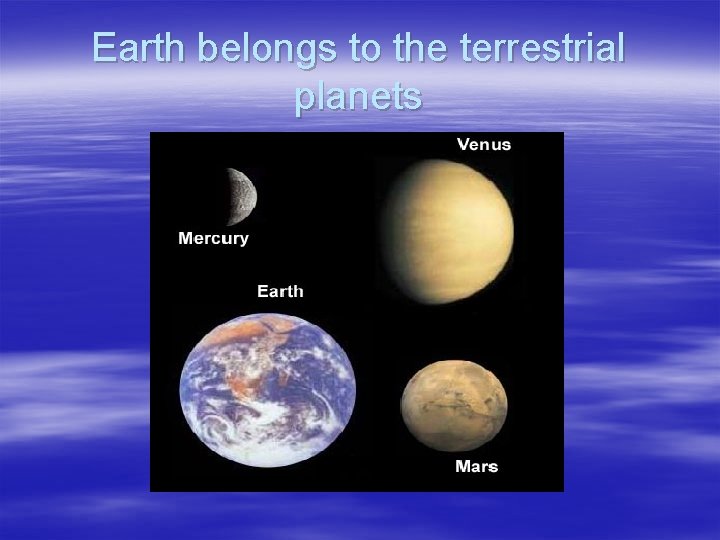
Earth belongs to the terrestrial planets
The speed of light is commonly used to measure distances in the solar system
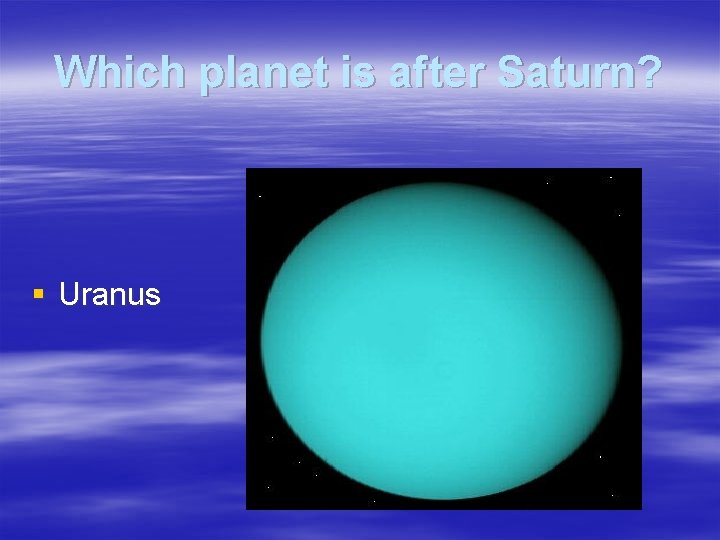
Which planet is after Saturn? § Uranus
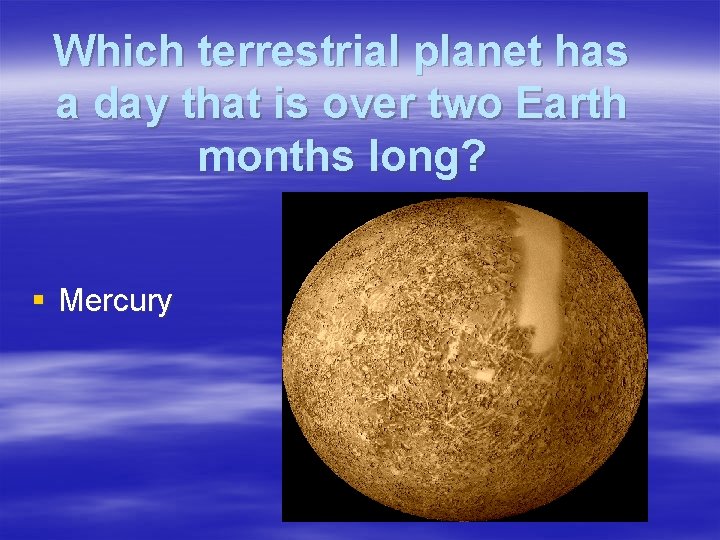
Which terrestrial planet has a day that is over two Earth months long? § Mercury
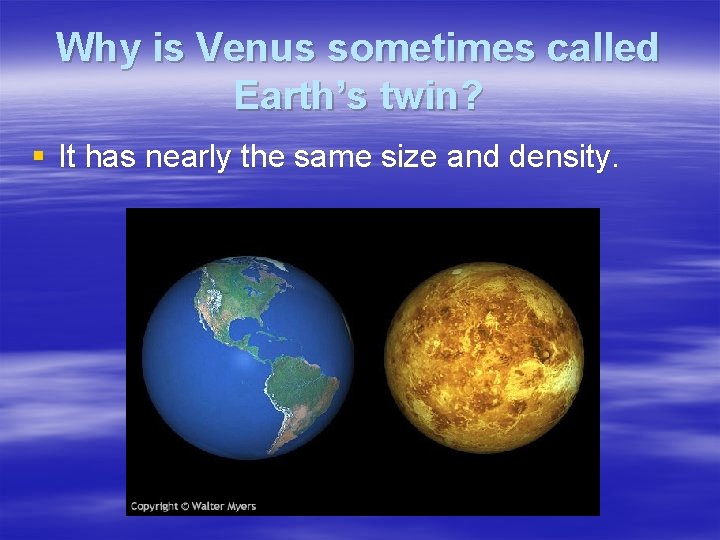
Why is Venus sometimes called Earth’s twin? § It has nearly the same size and density.
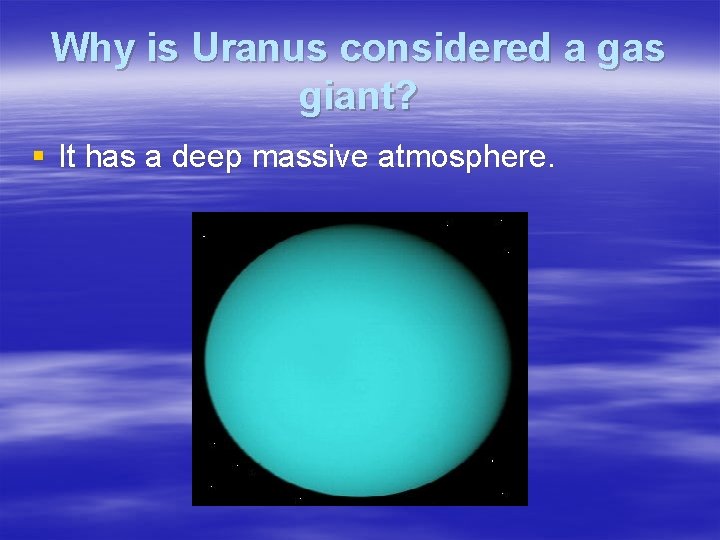
Why is Uranus considered a gas giant? § It has a deep massive atmosphere.
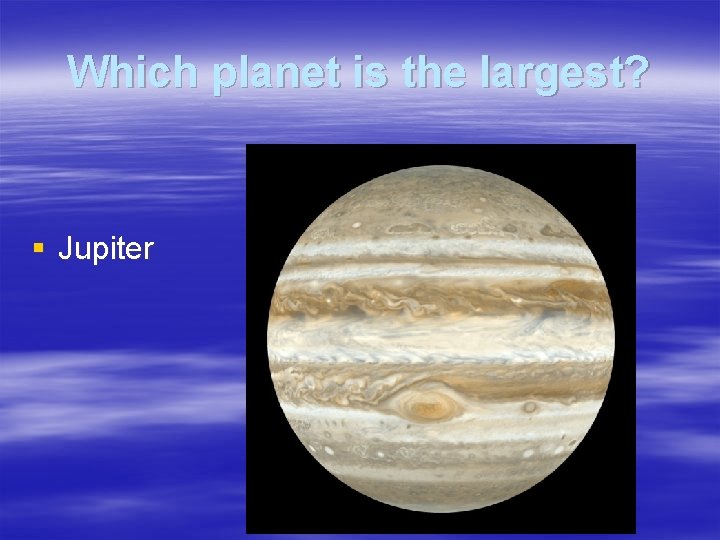
Which planet is the largest? § Jupiter
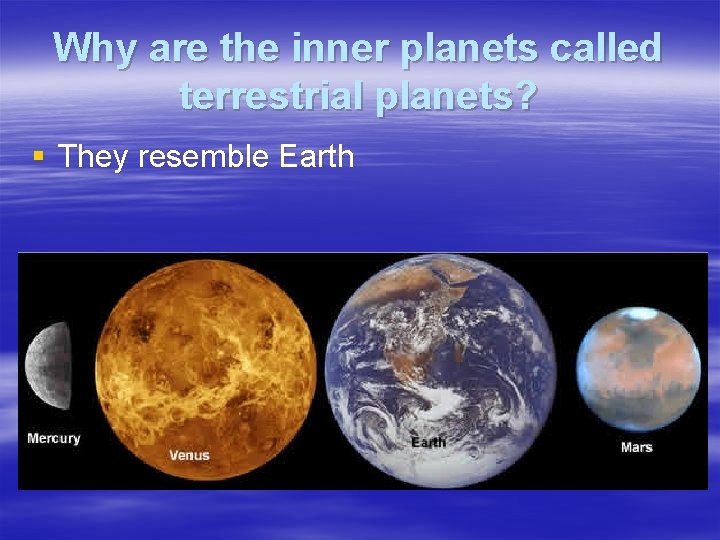
Why are the inner planets called terrestrial planets? § They resemble Earth
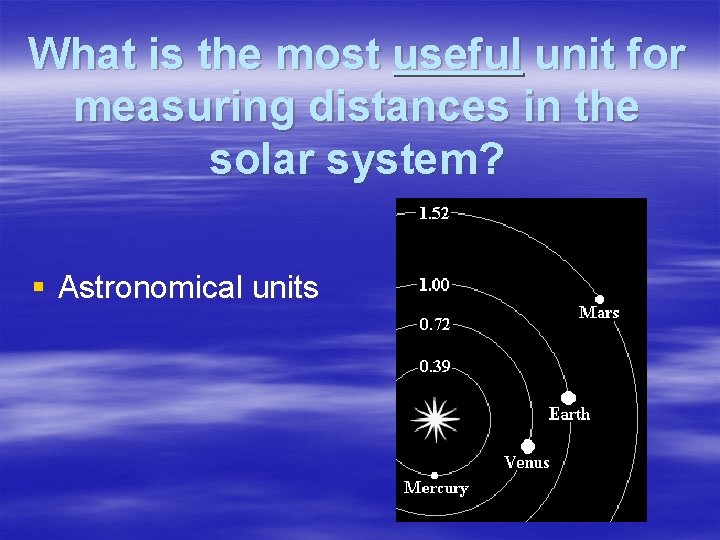
What is the most useful unit for measuring distances in the solar system? § Astronomical units
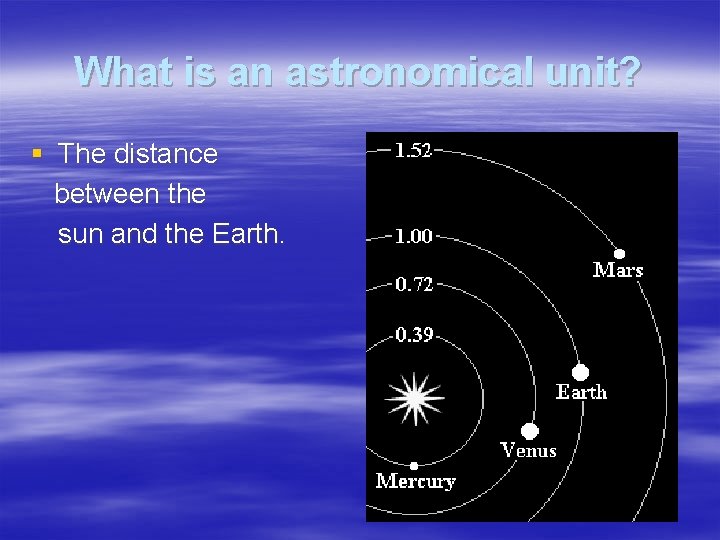
What is an astronomical unit? § The distance between the sun and the Earth.
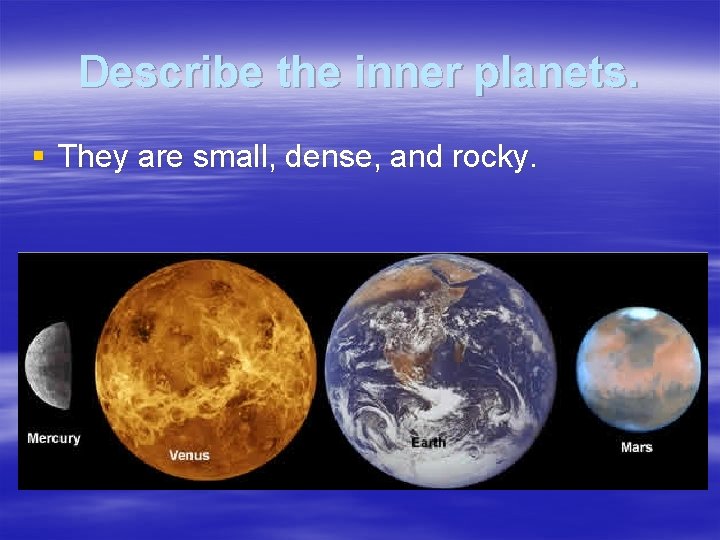
Describe the inner planets. § They are small, dense, and rocky.
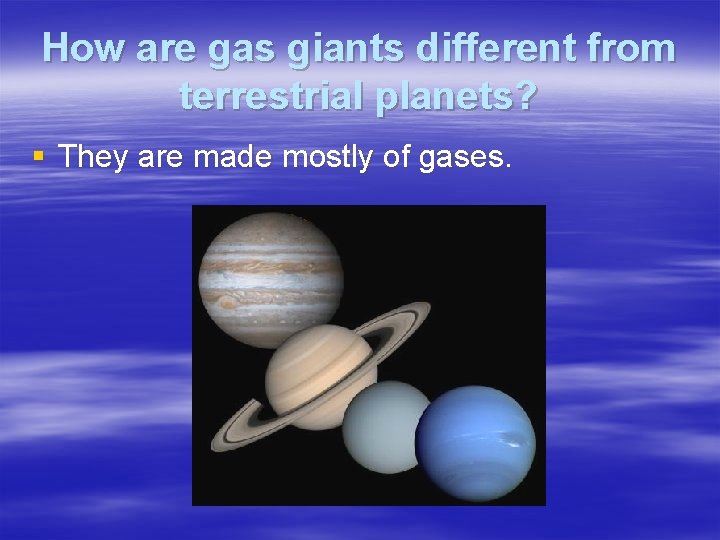
How are gas giants different from terrestrial planets? § They are made mostly of gases.
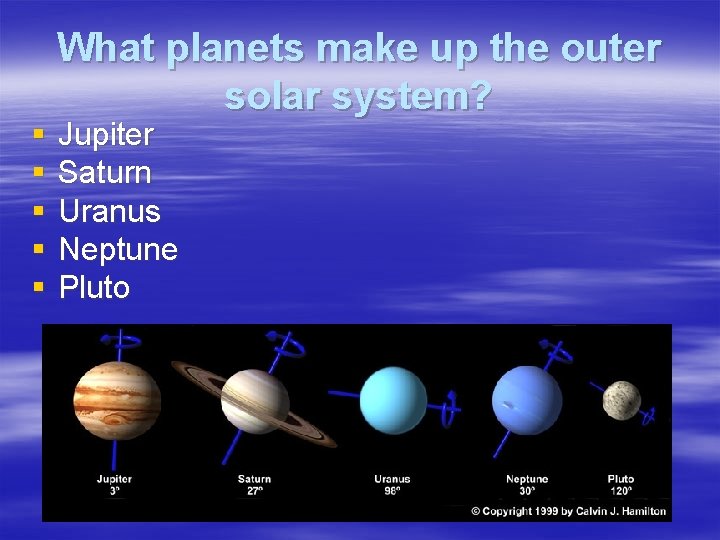
§ § § What planets make up the outer solar system? Jupiter Saturn Uranus Neptune Pluto
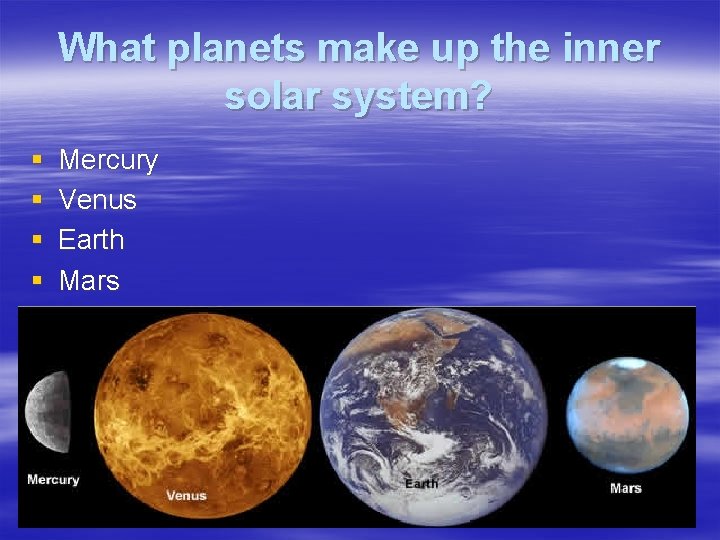
What planets make up the inner solar system? § § Mercury Venus Earth Mars
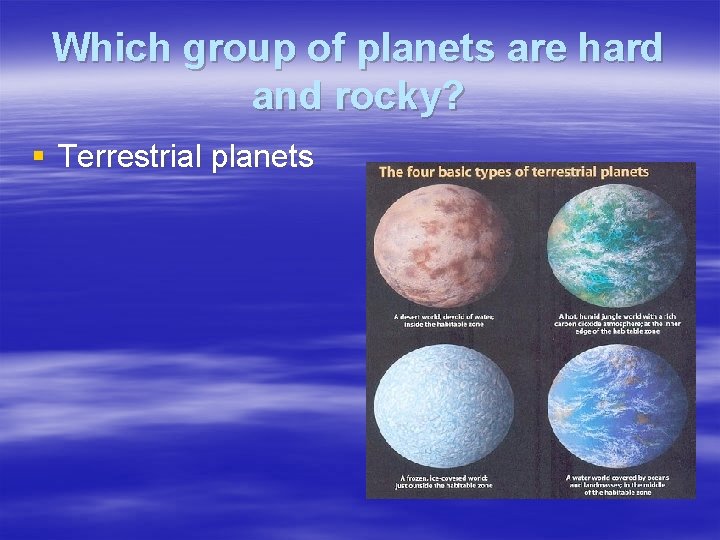
Which group of planets are hard and rocky? § Terrestrial planets
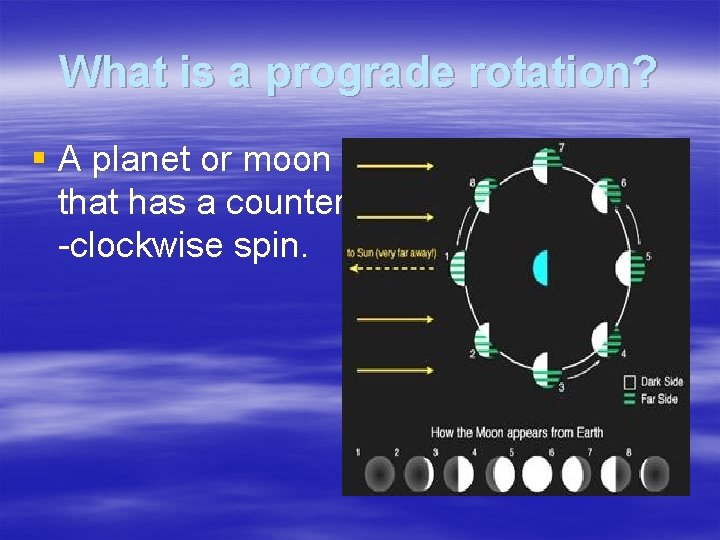
What is a prograde rotation? § A planet or moon that has a counter -clockwise spin.
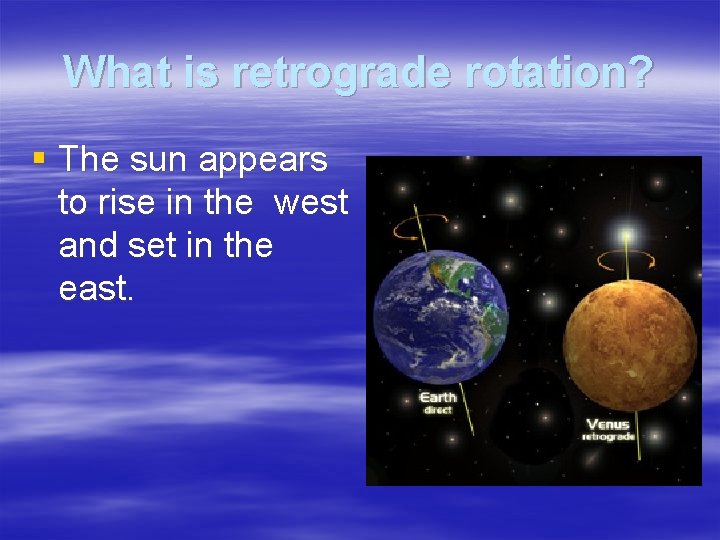
What is retrograde rotation? § The sun appears to rise in the west and set in the east.
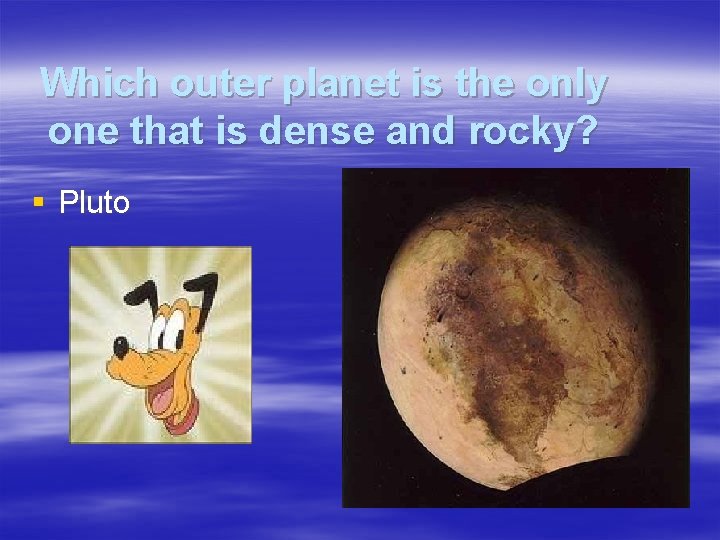
Which outer planet is the only one that is dense and rocky? § Pluto
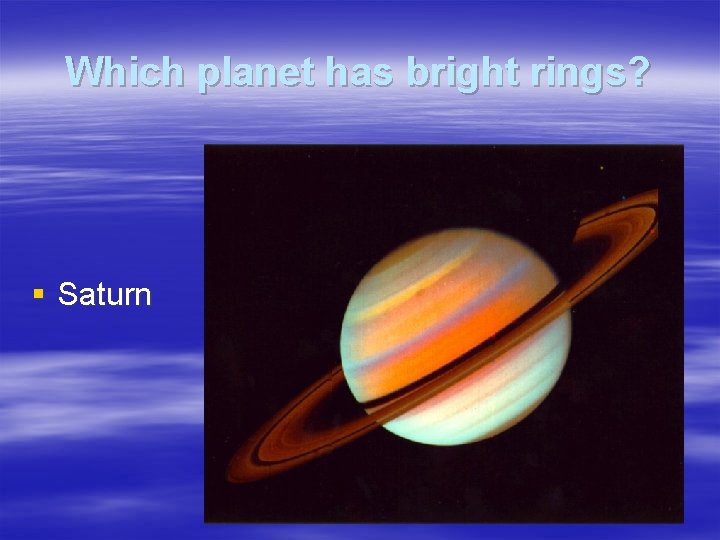
Which planet has bright rings? § Saturn
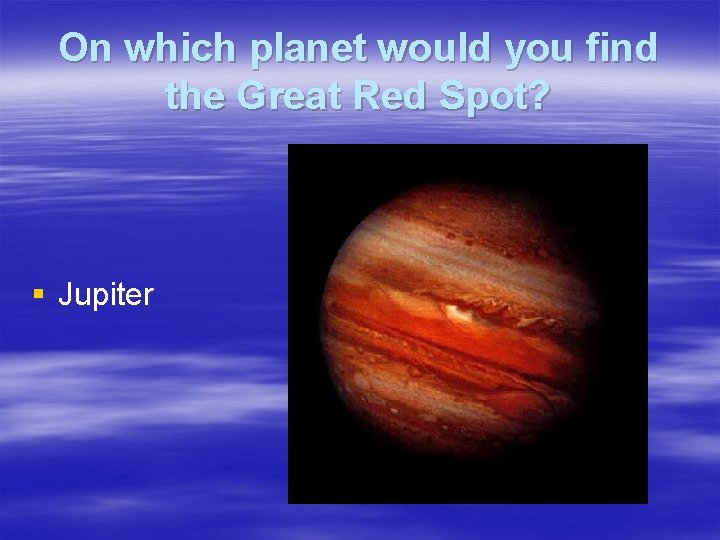
On which planet would you find the Great Red Spot? § Jupiter
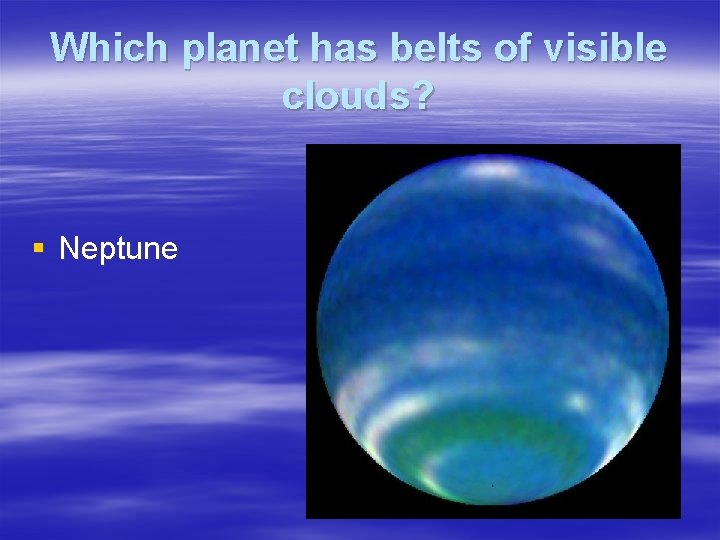
Which planet has belts of visible clouds? § Neptune
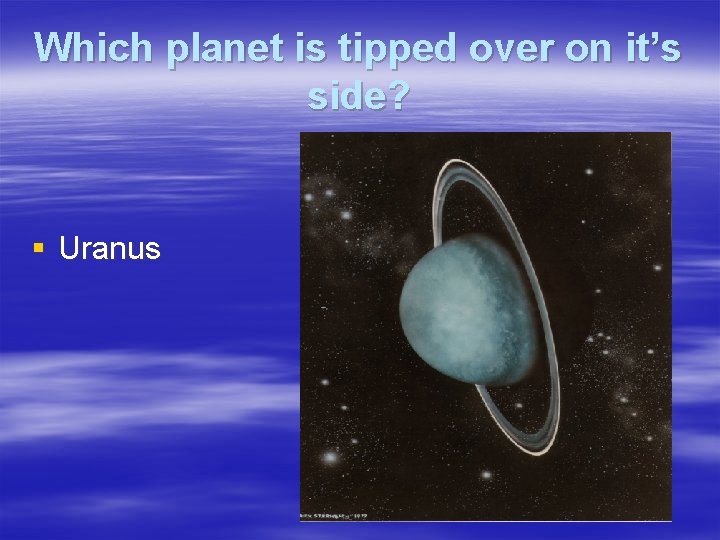
Which planet is tipped over on it’s side? § Uranus
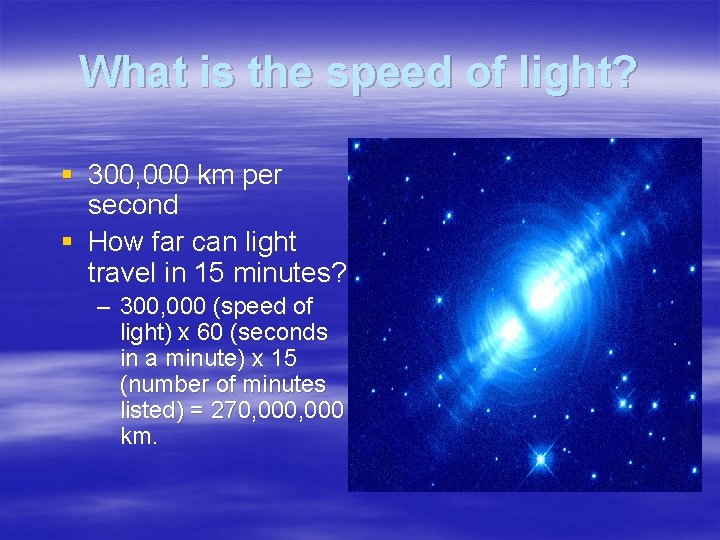
What is the speed of light? § 300, 000 km per second § How far can light travel in 15 minutes? – 300, 000 (speed of light) x 60 (seconds in a minute) x 15 (number of minutes listed) = 270, 000 km.
- Slides: 24