
The plan Geometrical optics 1 Reflective optics spherical
- Slides: 16
The plan Geometrical optics 1) Reflective optics spherical parabolic 2) The marvels of water drops and crystals 3) Spherical lenses and spherical aberration
GEOMETRICAL OPTICS Laws of Reflection Curved mirrors
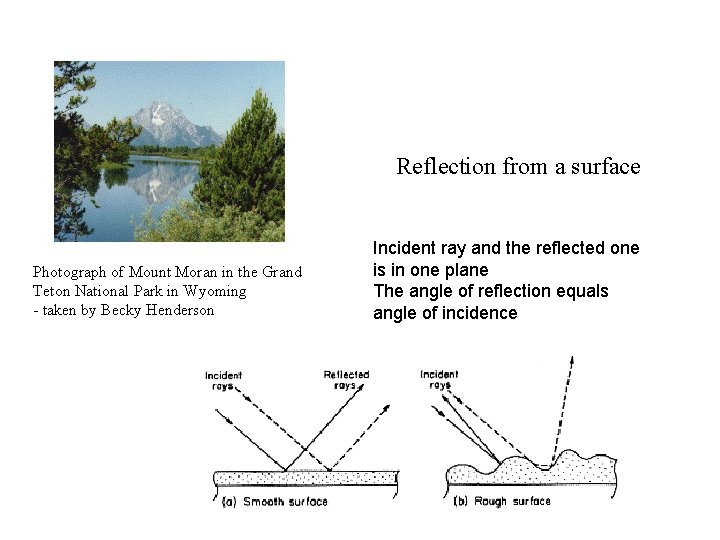
Reflection from a surface Photograph of Mount Moran in the Grand Teton National Park in Wyoming - taken by Becky Henderson Incident ray and the reflected one is in one plane The angle of reflection equals angle of incidence
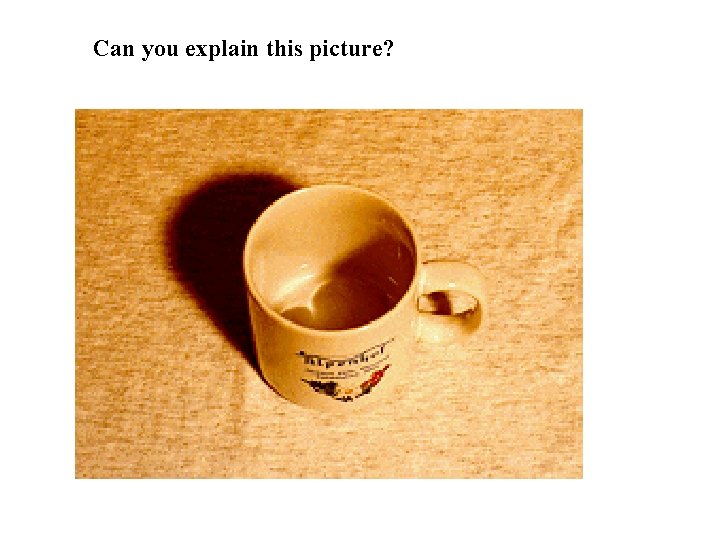
Can you explain this picture?
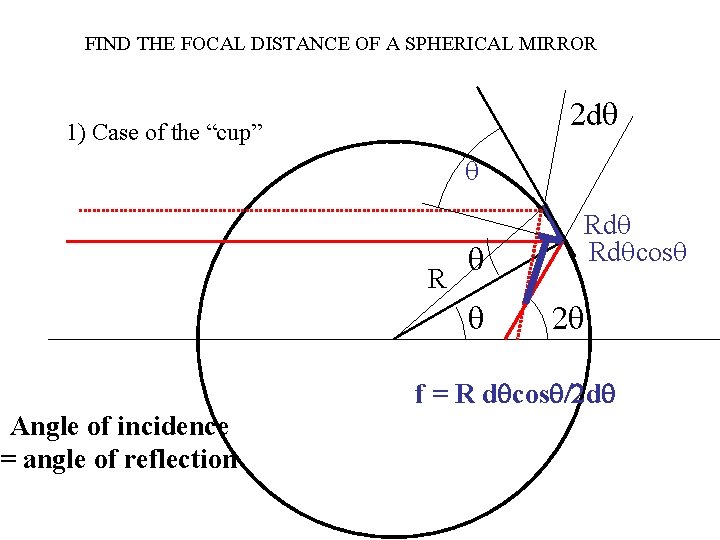
FIND THE FOCAL DISTANCE OF A SPHERICAL MIRROR 2 dq 1) Case of the “cup” Angle of incidence = angle of reflection q R q q Rdqcosq 2 q f = R dqcosq/2 dq
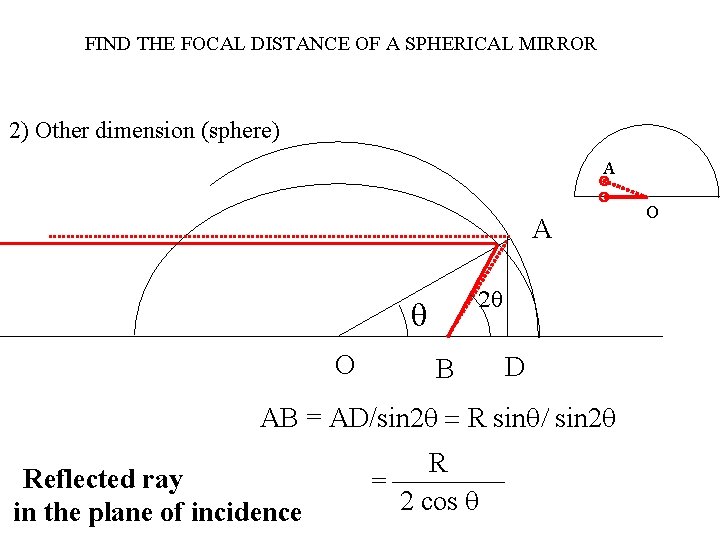
FIND THE FOCAL DISTANCE OF A SPHERICAL MIRROR 2) Other dimension (sphere) A A 2 q q O B D AB = AD/sin 2 q = R sinq/ sin 2 q Reflected ray in the plane of incidence R = 2 cos q O
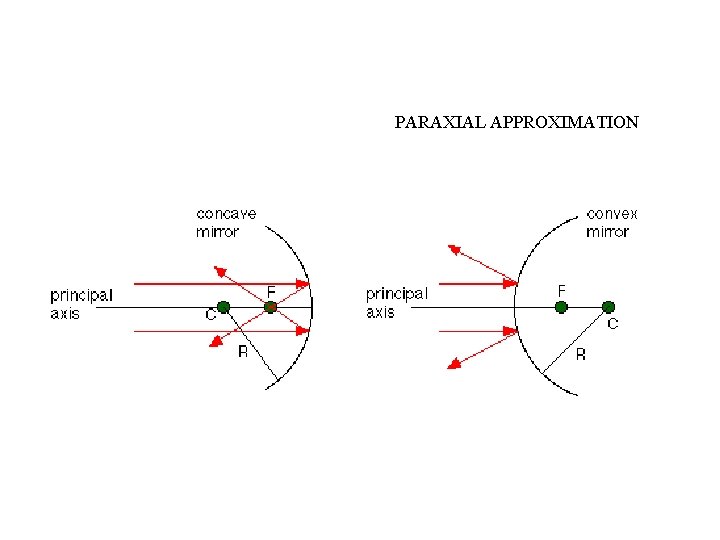
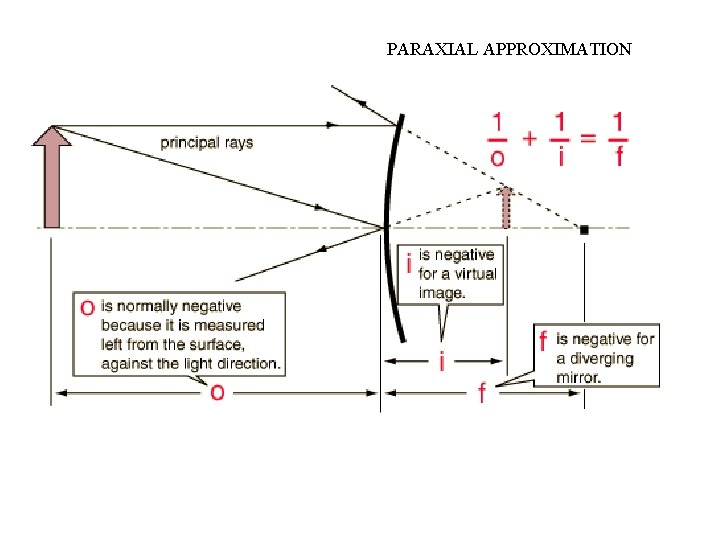
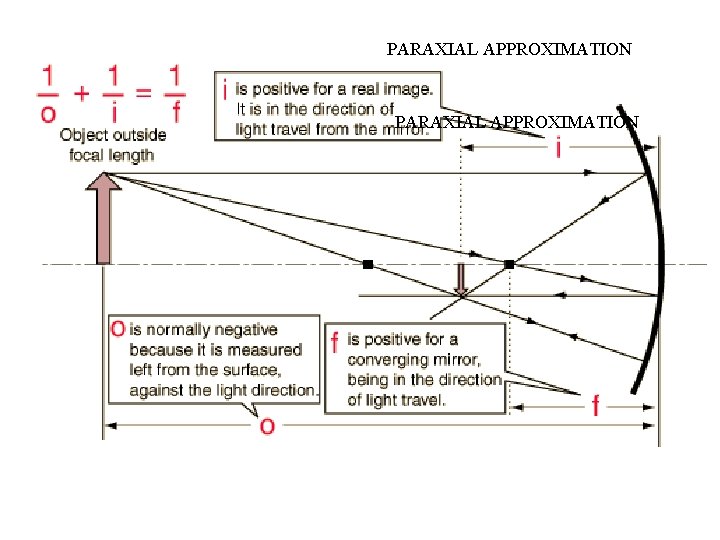
PARAXIAL APPROXIMATION
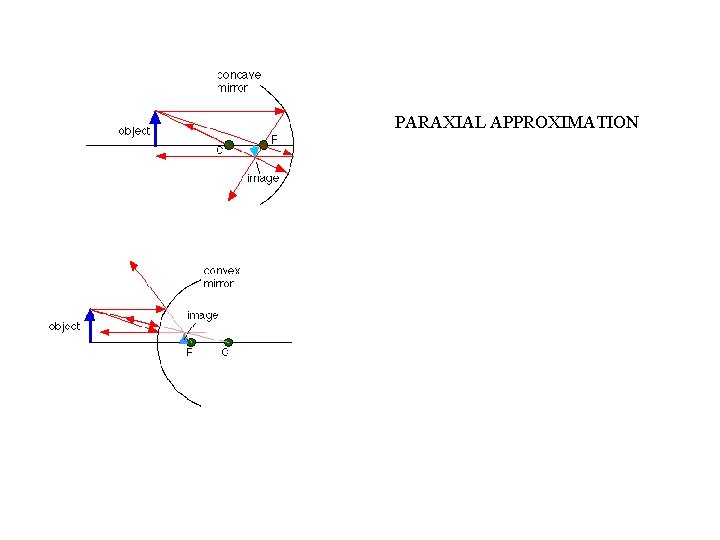
PARAXIAL APPROXIMATION
PARAXIAL APPROXIMATION
PARAXIAL APPROXIMATION
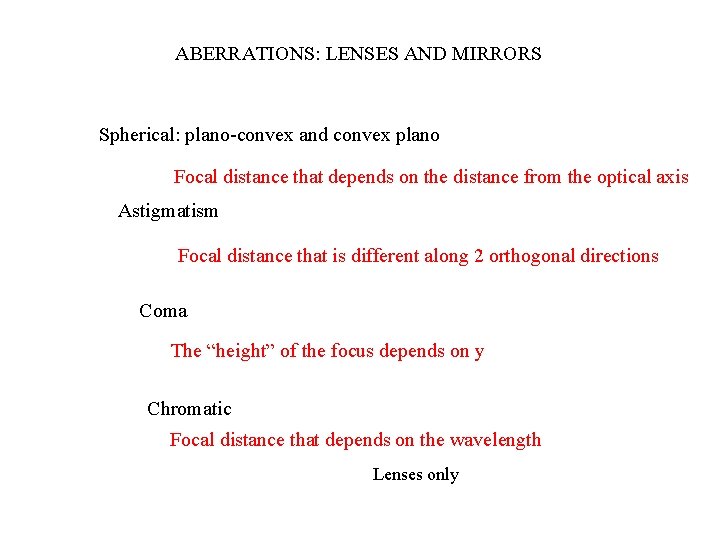
ABERRATIONS: LENSES AND MIRRORS Spherical: plano-convex and convex plano Focal distance that depends on the distance from the optical axis Astigmatism Focal distance that is different along 2 orthogonal directions Coma The “height” of the focus depends on y Chromatic Focal distance that depends on the wavelength Lenses only
Can you make an aberration-free mirror?
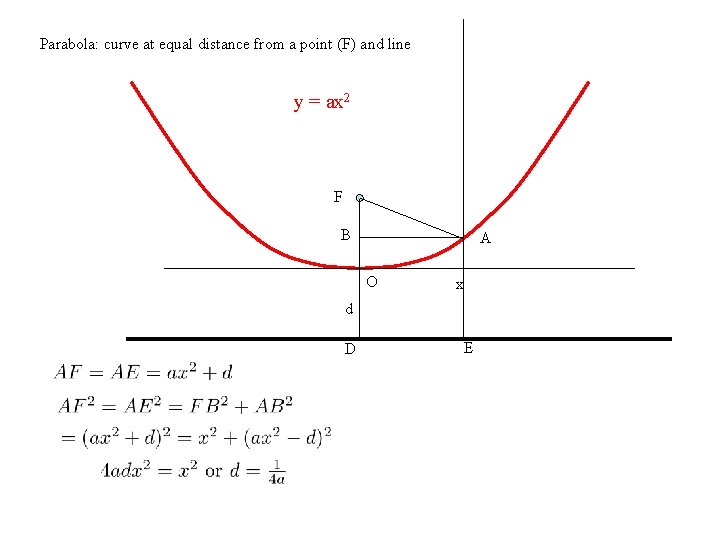
Parabola: curve at equal distance from a point (F) and line y = ax 2 F B A O x d D E
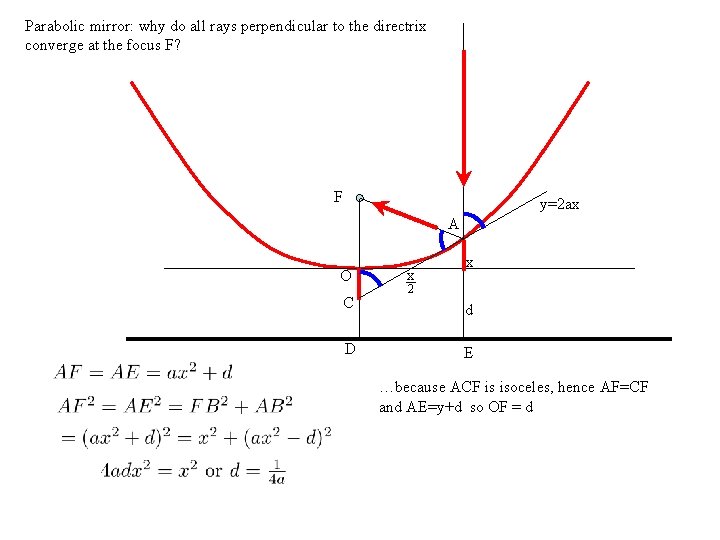
Parabolic mirror: why do all rays perpendicular to the directrix converge at the focus F? F y=2 ax A O C D x x 2 d E …because ACF is isoceles, hence AF=CF and AE=y+d so OF = d
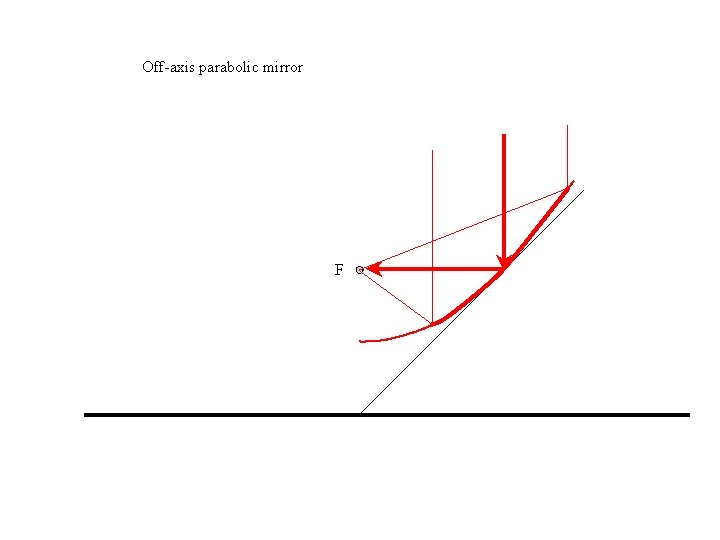
Off-axis parabolic mirror F