
The Pituitary Gland aka The Hypophysis By Rachel
The Pituitary Gland aka: The Hypophysis By: Rachel Flores, Scott Garcia, Sujey Ponce, Armando Hernandez
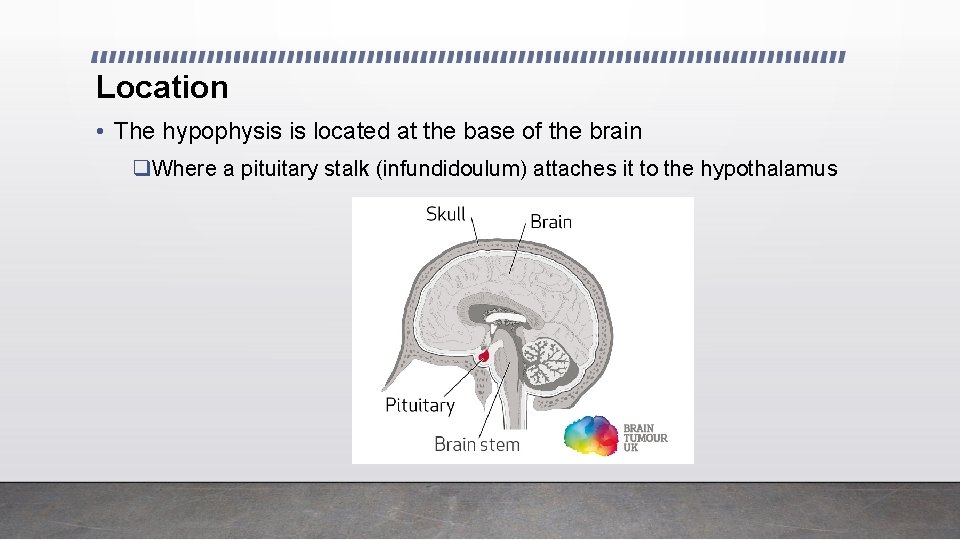
Location • The hypophysis is located at the base of the brain q. Where a pituitary stalk (infundidoulum) attaches it to the hypothalamus
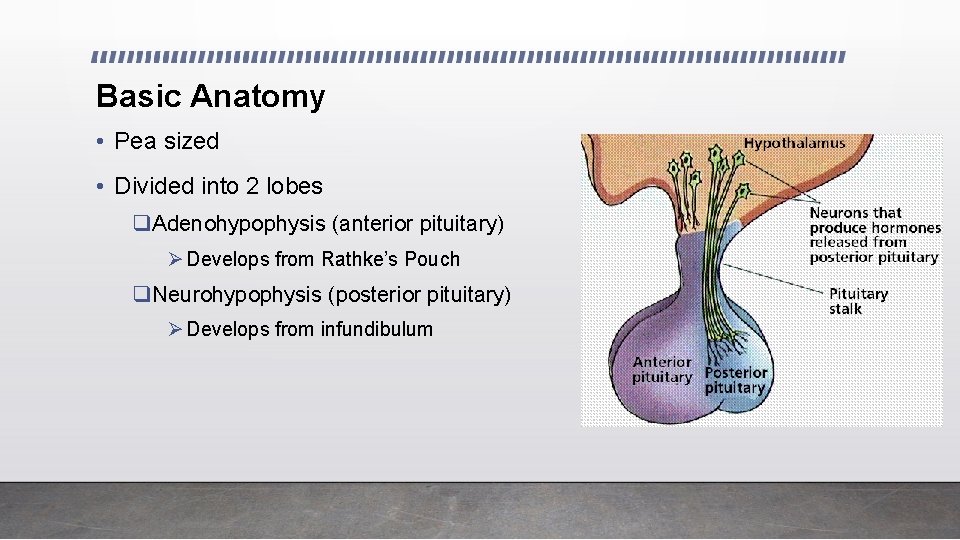
Basic Anatomy • Pea sized • Divided into 2 lobes q. Adenohypophysis (anterior pituitary) Ø Develops from Rathke’s Pouch q. Neurohypophysis (posterior pituitary) Ø Develops from infundibulum
General Function • Directs other organs to do their jobs q. Ex: Pituitary gland tells the Adrenal gland to increase or decrease hormone production • Functions the Pituitary handles: q Production of growth hormones q Regulation of Endocrine System q Production of hormones that affect the function of muscles & kidneys q Production of hormones that control other Endocrine glands q Storage of hormones that are produced by hypothalamus
Secretions and Functions • 5 types of secretory cells within epithelium and 4 of these secrete a different hormone 1) Growth hormone (GH) 2) Prolactin (PRL) 3) Thyroid- stimulating hormone (TSH) 4) Follicle- stimulating hormone (FSH) and Luteinizing hormone (LH)* * Males: LH is known as interstitial cell stimulating hormone (ICSH)
1) Growth Hormone (GH) Functions to stimulate growth in body cells (size and devision rate) • Allows for movement of amino acids across membranes • Regulates body metabolism • Regulates sugar levels in the blood • Controls the rates of utalization of carbohydrates and lipids (fats)
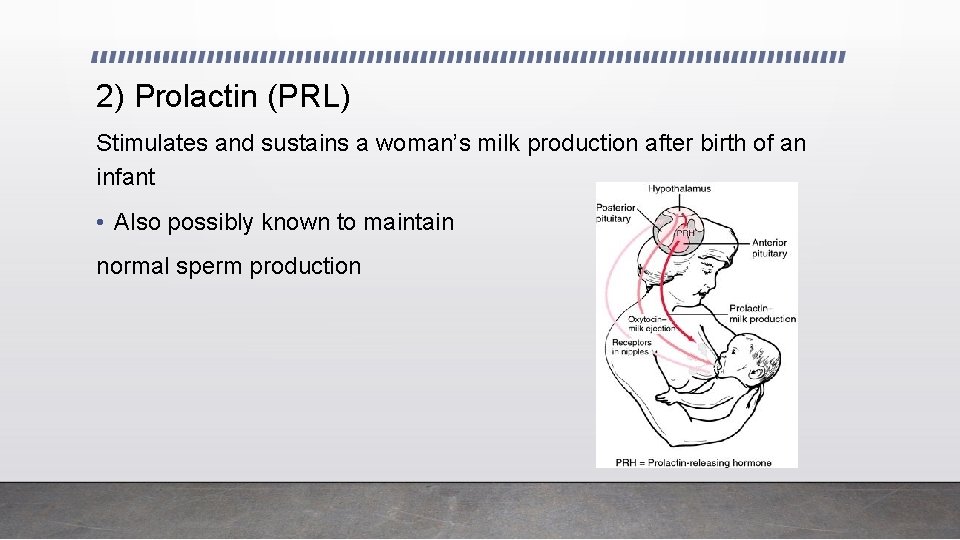
2) Prolactin (PRL) Stimulates and sustains a woman’s milk production after birth of an infant • Also possibly known to maintain normal sperm production
3) Thyroid- stimulating hormone (TSH) - Controls secretion of hormones from thyroid gland - Hypothalamus regulates TSH by producing thyroid- releasing hormone (TRH) • As blood concentration of thyroid hormones increase, secretion of TRH and TSH decrease - THS causes the thyroid gland to make 2 hormones 1) Triiodothyronie (T 3) 2) Thyroxine (T 4) - Help control body’s metabolism
4) Adrenocorticotropic hormone (ACTH) - Functions to stimulate production and release of cortisol from the cortex of the adrenal gland - ACTH secretion regulated partly by corticotropin- releasing hormone (CRH) - Stimulation: decreased concentrations of adrenal cortical hormones – stress (CRH)
5) Follicle- stimulating hormone (FSH) & Luteinizing hormone (LH) - FSH in females: stimulates gonads/ reproduction growth of ovarian follicles in organs the ovary before the release of an egg from the follicle at ovulation • Responsible for ovulation - FSH in males: stimulates testicular growth and enhances production sertoli cells (testes) - LH in females: stimulate estrogen and progesterone production from ovulation - LH in males: stimulates testosterone production from the interstitial cells of testes - LH promotes secretion of sex hormones
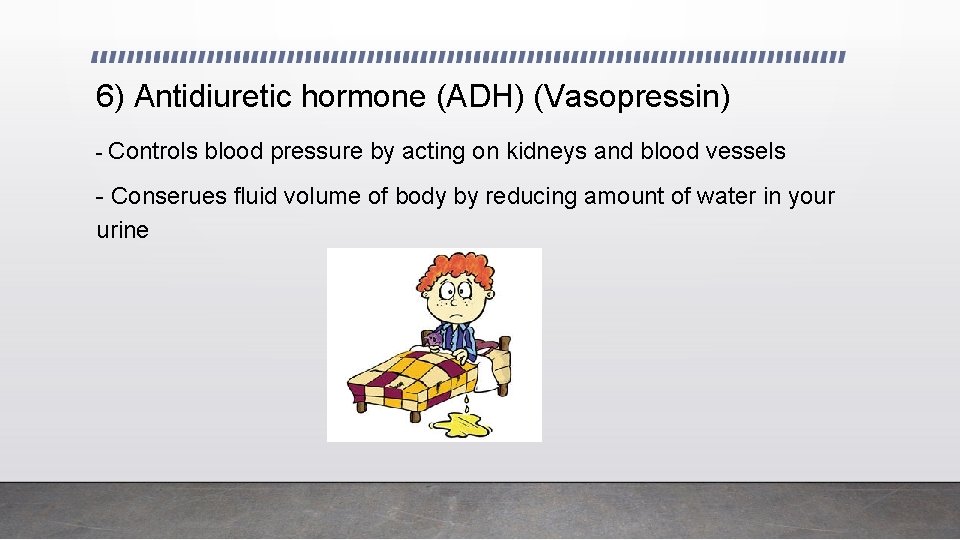
6) Antidiuretic hormone (ADH) (Vasopressin) - Controls blood pressure by acting on kidneys and blood vessels - Conserues fluid volume of body by reducing amount of water in your urine
7) Oxytocin (OT) - Contraction of womb (uterus) during childbirth and location - Stimulates uterine wall muscle to contract * pinch nipples when in birth to cause oxytocin release
Diseases or Abnormalities • Insufficient secretion of growth hormone (GH) during childhood limits growth, causing Hypopituitary Dwarfism • Over secretion of GH during childhood causing gigantism, in which height may exceed 8 ft. • Acromegaly is the overproduction of growth hormones in adulthood q Wide ranging effects include enlarged heart, bones thyroid gland, facial features, hands feet and head • An injury or tumor damages to any parts of the ADH- regulating mechanism, too little ADH may be synthesized or released, producing diabetes inspinidus q Affected individual may produce as much as 25 -30 liters of very dilute urine per day
Works Cited • Thompson E. Gregory, November 14, 2014, Thyroid- stimulating Hormone (TSH). Febr 20, 2016 • Dutta Shuchismita, Goodsell David, April 2003, Growth Hormone. February 20, 2016 https: //pdb 101. rcsb. org/motm/52 • NA, January 7, 2015, Follicle stimulating hormone. February 20, 2016 • NA, January 7, 2015, Anti-diuretic hormone. February 20, 2016 • Foulad, Allen. July 29, 2015, Emedicine. Medscape. com, 19 February, 2016 • NA, October 22, 2014, m. newhealthguide. org, 19 February, 2016 • Shier, David, Jackie Butler, Ricki Lewis, Hole’s essentials of Human Anatomy& Physiology, New York, Mc. Graw-Hill, Print
- Slides: 14