
The Physiological and Psychological Effects of Three Relaxation
- Slides: 1
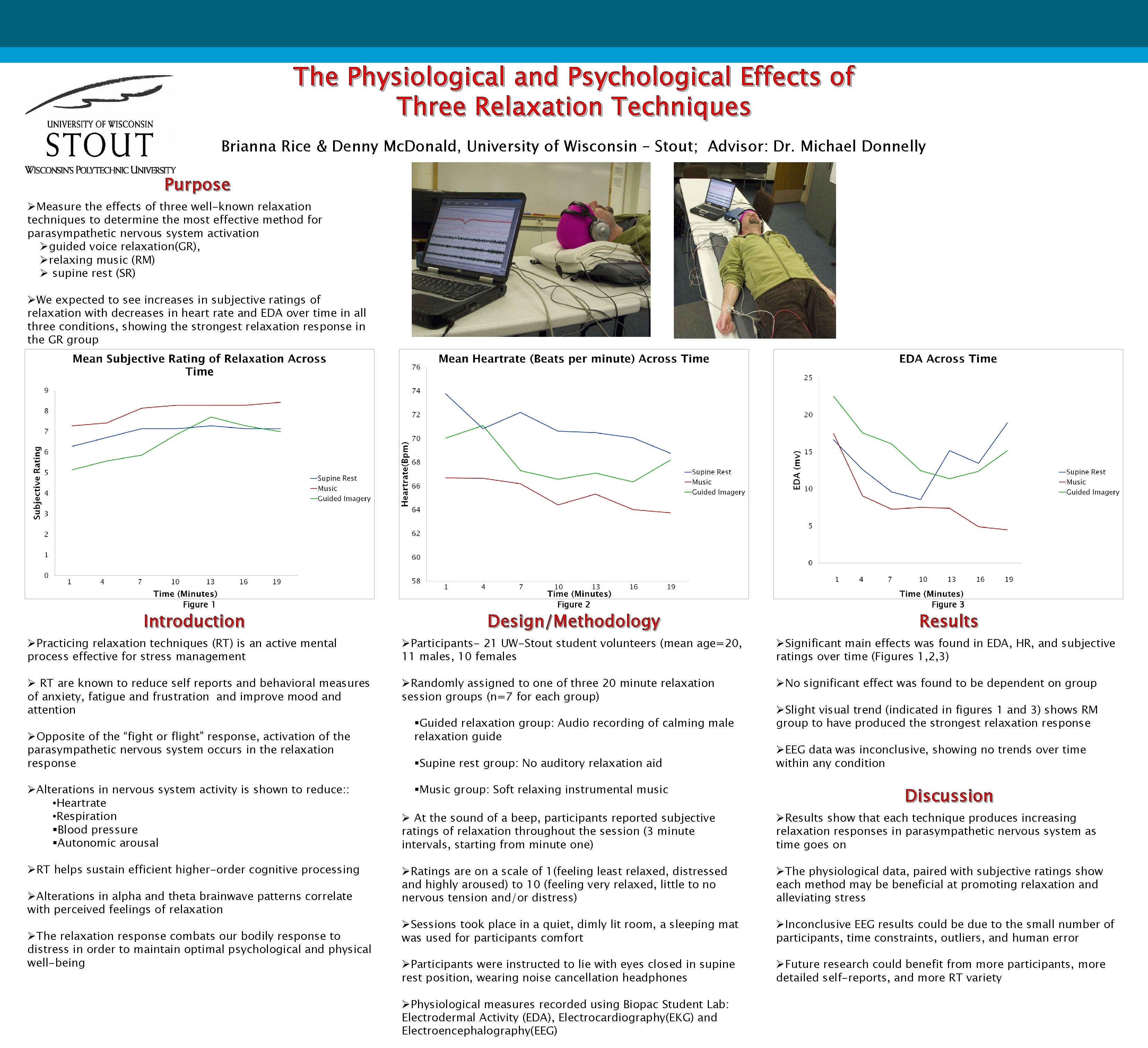
The Physiological and Psychological Effects of Three Relaxation Techniques Brianna Rice & Denny Mc. Donald, University of Wisconsin – Stout; Advisor: Dr. Michael Donnelly Purpose ØMeasure the effects of three well-known relaxation techniques to determine the most effective method for parasympathetic nervous system activation Øguided voice relaxation(GR), Ørelaxing music (RM) Ø supine rest (SR) ØWe expected to see increases in subjective ratings of relaxation with decreases in heart rate and EDA over time in all three conditions, showing the strongest relaxation response in the GR group Figure 1 Introduction Figure 2 Design/Methodology Figure 3 Results ØPracticing relaxation techniques (RT) is an active mental process effective for stress management ØParticipants- 21 UW-Stout student volunteers (mean age=20, 11 males, 10 females ØSignificant main effects was found in EDA, HR, and subjective ratings over time (Figures 1, 2, 3) Ø RT are known to reduce self reports and behavioral measures of anxiety, fatigue and frustration and improve mood and attention ØRandomly assigned to one of three 20 minute relaxation session groups (n=7 for each group) ØNo significant effect was found to be dependent on group ØOpposite of the “fight or flight” response, activation of the parasympathetic nervous system occurs in the relaxation response ØAlterations in nervous system activity is shown to reduce: : • Heartrate • Respiration §Blood pressure §Autonomic arousal ØRT helps sustain efficient higher-order cognitive processing ØAlterations in alpha and theta brainwave patterns correlate with perceived feelings of relaxation ØThe relaxation response combats our bodily response to distress in order to maintain optimal psychological and physical well-being §Guided relaxation group: Audio recording of calming male relaxation guide §Supine rest group: No auditory relaxation aid §Music group: Soft relaxing instrumental music ØSlight visual trend (indicated in figures 1 and 3) shows RM group to have produced the strongest relaxation response ØEEG data was inconclusive, showing no trends over time within any condition Discussion Ø At the sound of a beep, participants reported subjective ratings of relaxation throughout the session (3 minute intervals, starting from minute one) ØResults show that each technique produces increasing relaxation responses in parasympathetic nervous system as time goes on ØRatings are on a scale of 1(feeling least relaxed, distressed and highly aroused) to 10 (feeling very relaxed, little to no nervous tension and/or distress) ØThe physiological data, paired with subjective ratings show each method may be beneficial at promoting relaxation and alleviating stress ØSessions took place in a quiet, dimly lit room, a sleeping mat was used for participants comfort ØInconclusive EEG results could be due to the small number of participants, time constraints, outliers, and human error ØParticipants were instructed to lie with eyes closed in supine rest position, wearing noise cancellation headphones ØFuture research could benefit from more participants, more detailed self-reports, and more RT variety ØPhysiological measures recorded using Biopac Student Lab: Electrodermal Activity (EDA), Electrocardiography(EKG) and Electroencephalography(EEG)