
The physics GRE Mark Messier Indiana University Resources



- Slides: 20
The physics GRE Mark Messier Indiana University
Resources on the web • General information and Physics Test Practice Book: • http: //www. ets. org/Media/Tests/GRE/pdf/Physics. pdf • OSU Prep. course: • http: //www. physics. ohiostate. edu/undergrad/ugs_gre. php
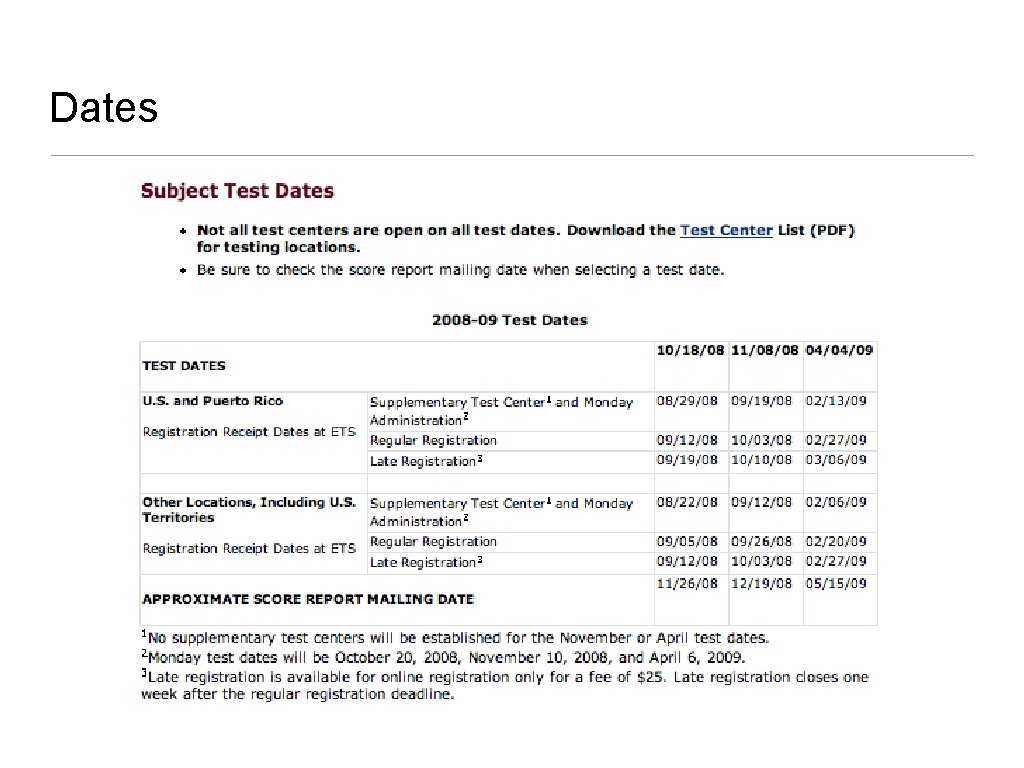
Dates
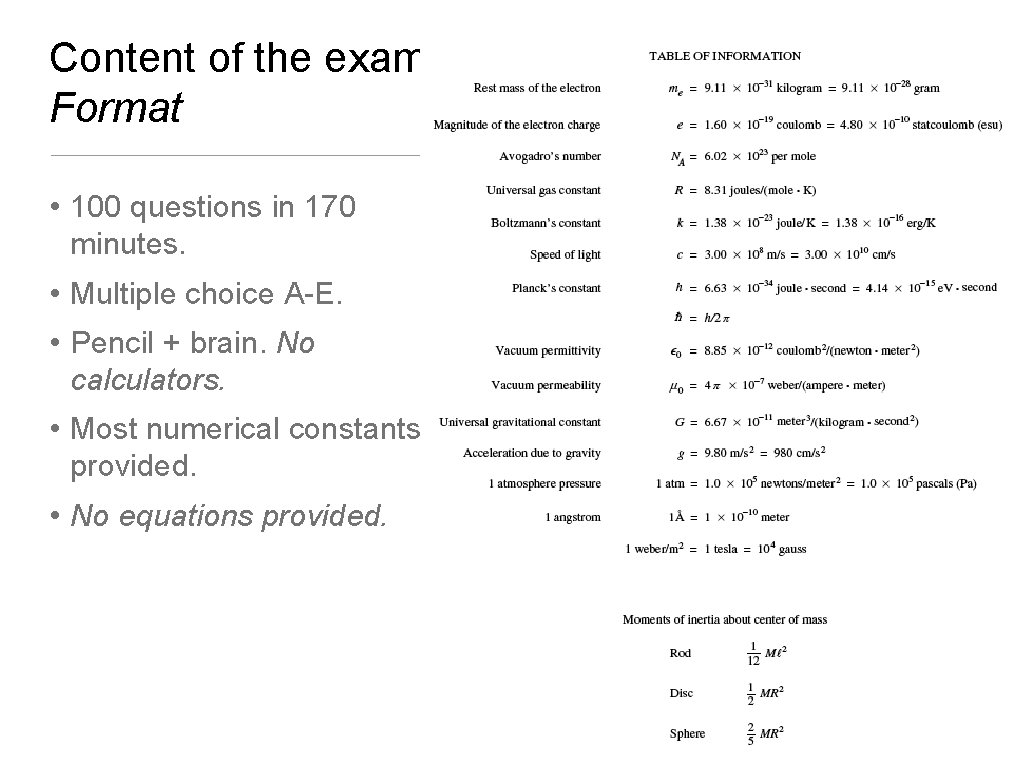
Content of the exam Format • 100 questions in 170 minutes. • Multiple choice A-E. • Pencil + brain. No calculators. • Most numerical constants provided. • No equations provided.
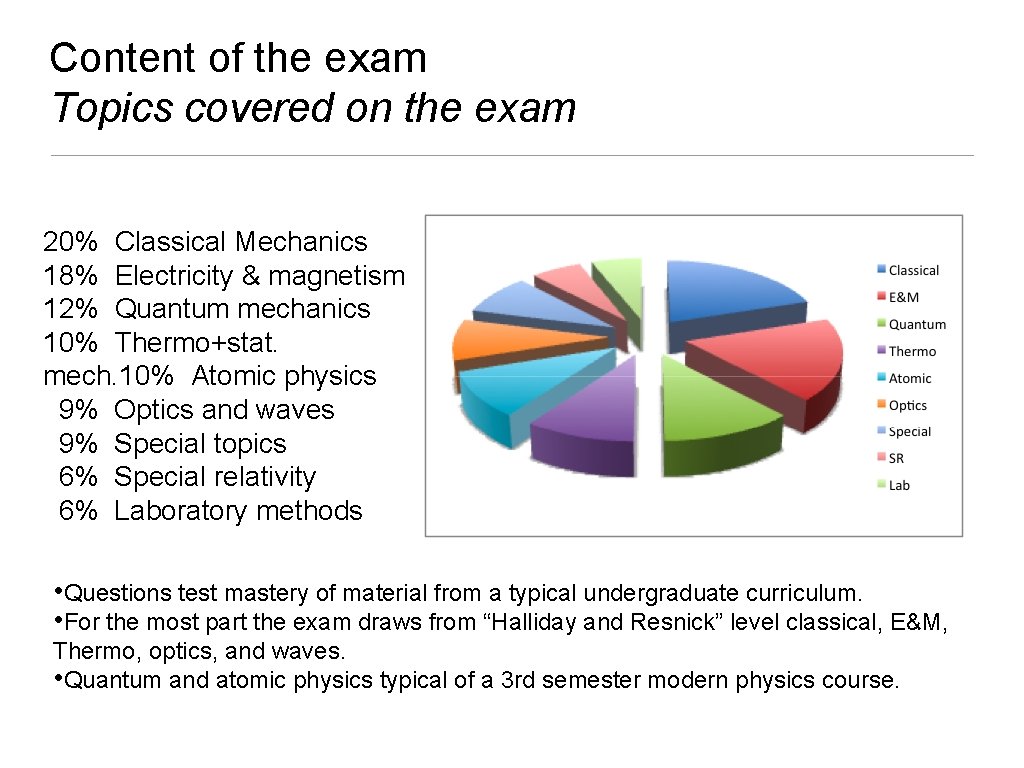
Content of the exam Topics covered on the exam 20% Classical Mechanics 18% Electricity & magnetism 12% Quantum mechanics 10% Thermo+stat. mech. 10% Atomic physics 9% Optics and waves 9% Special topics 6% Special relativity 6% Laboratory methods • Questions test mastery of material from a typical undergraduate curriculum. • For the most part the exam draws from “Halliday and Resnick” level classical, E&M, Thermo, optics, and waves. • Quantum and atomic physics typical of a 3 rd semester modern physics course.
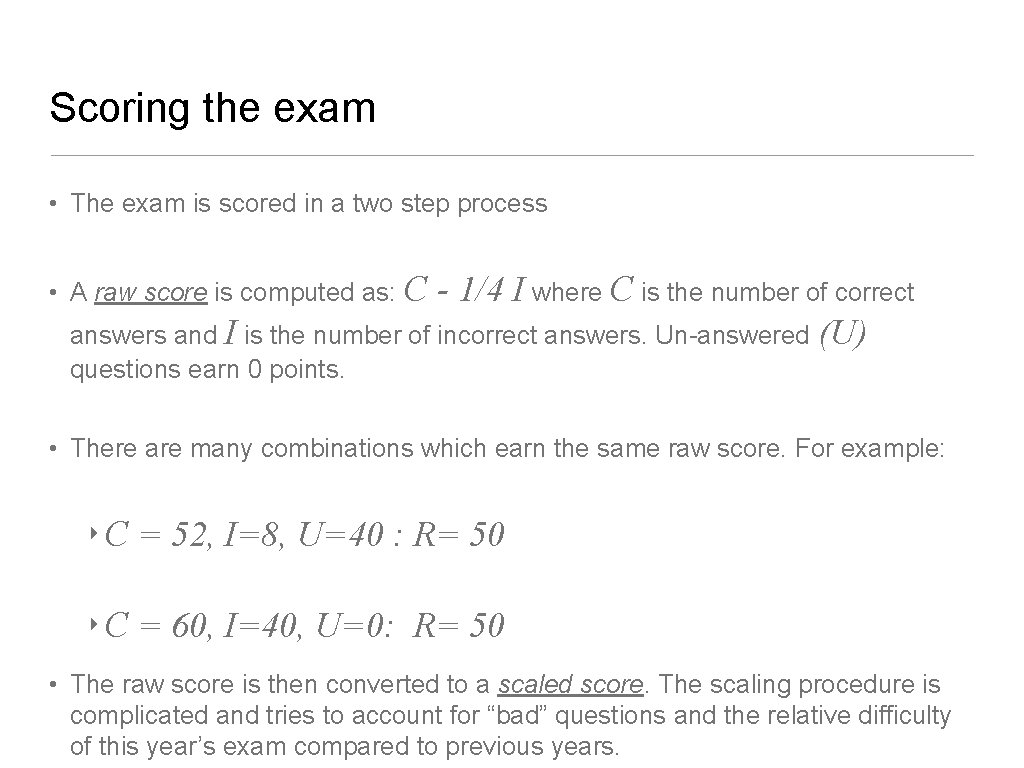
Scoring the exam • The exam is scored in a two step process • A raw score is computed as: C - 1/4 I where C is the number of correct answers and I is the number of incorrect answers. Un-answered (U) questions earn 0 points. • There are many combinations which earn the same raw score. For example: ‣ C = 52, I=8, U=40 : R= 50 ‣ C = 60, I=40, U=0: R= 50 • The raw score is then converted to a scaled score. The scaling procedure is complicated and tries to account for “bad” questions and the relative difficulty of this year’s exam compared to previous years.
Test taking strategy To guess or not to guess? Number of choices eliminated Average points P(correct) P(incorrect) earned by guessing 0 20% 80% 0. 00 1 25% 75% 0. 06 2 33% 67% 0. 17 3 50% 0. 38 4 100% 0% 1. 00 individual question more likely to on hurt than average helps your score
Test taking strategy Have a game plan • A good pace to work the exam might be: -t=30 min, n=25 questions -t=60 min, n=50 questions -t=90 min, n=75 questions -t=120 min, n=100 questions -This leaves 50 minutes to work problems you skipped, check work • A “game plan” like this will prevent you from dwelling on difficult problems and not having time to answer “easy” problems later in the exam. Remember: the easy problems and the difficult problems earn you the same number of points! • Work out a “book keeping” system before hand to mark problems you want to come back to. No time to invent this during the exam.
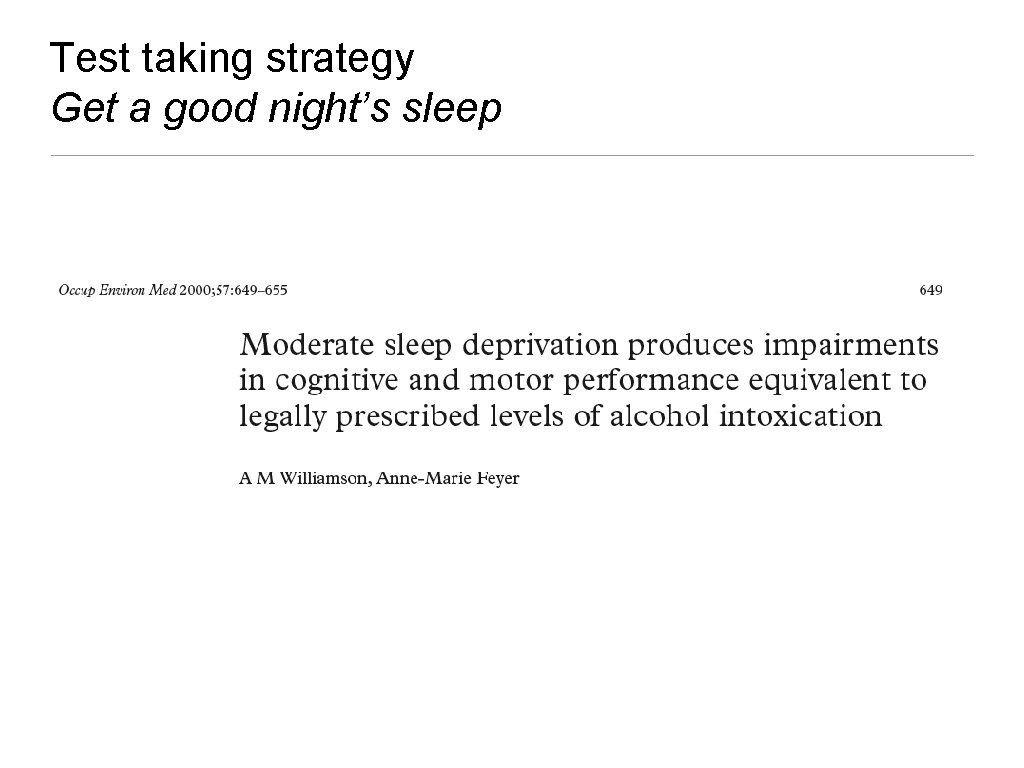
Test taking strategy Get a good night’s sleep
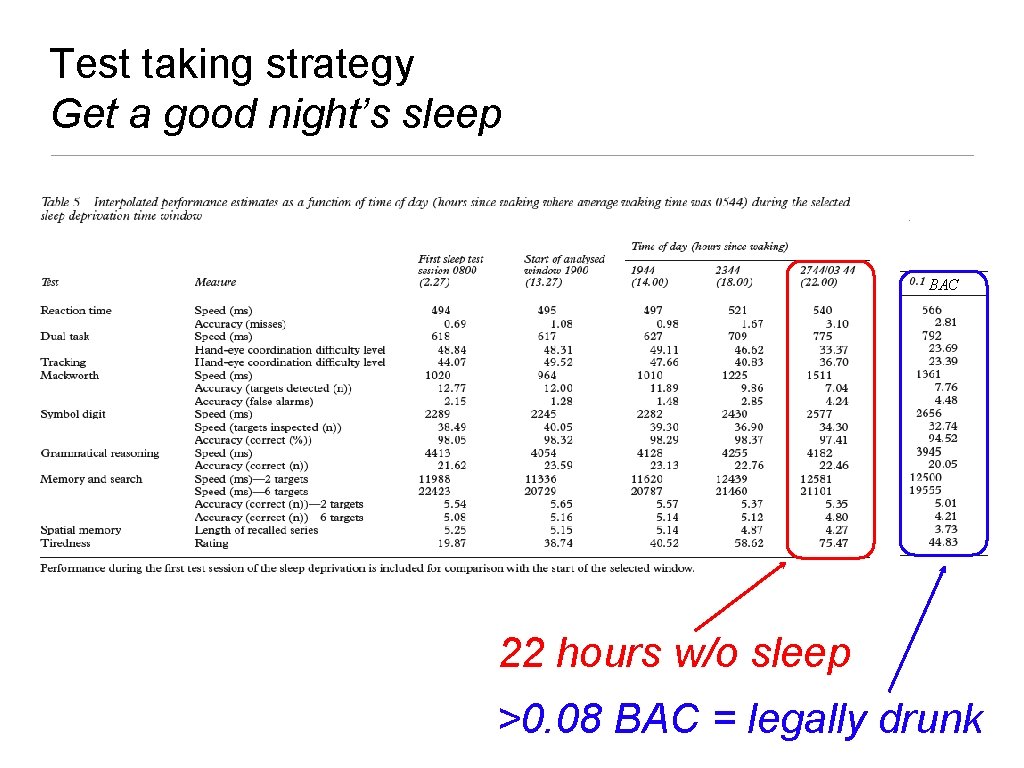
Test taking strategy Get a good night’s sleep BAC 22 hours w/o sleep >0. 08 BAC = legally drunk
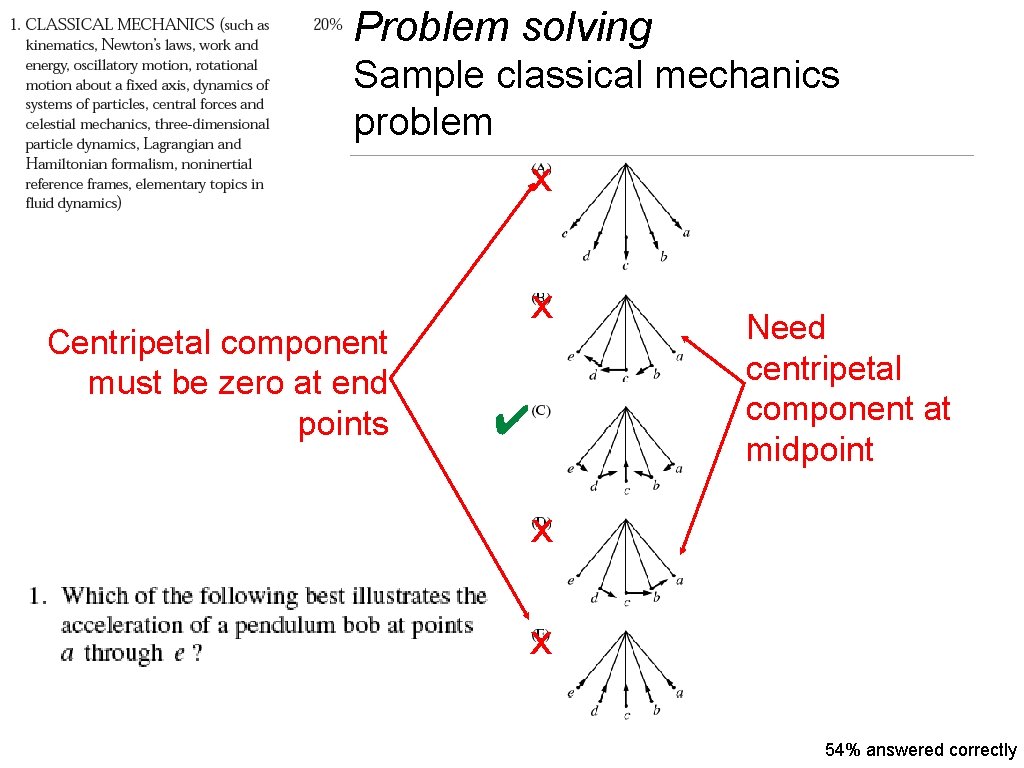
Problem solving Sample classical mechanics problem x Centripetal component must be zero at end points x ✔ Need centripetal component at midpoint x x 54% answered correctly
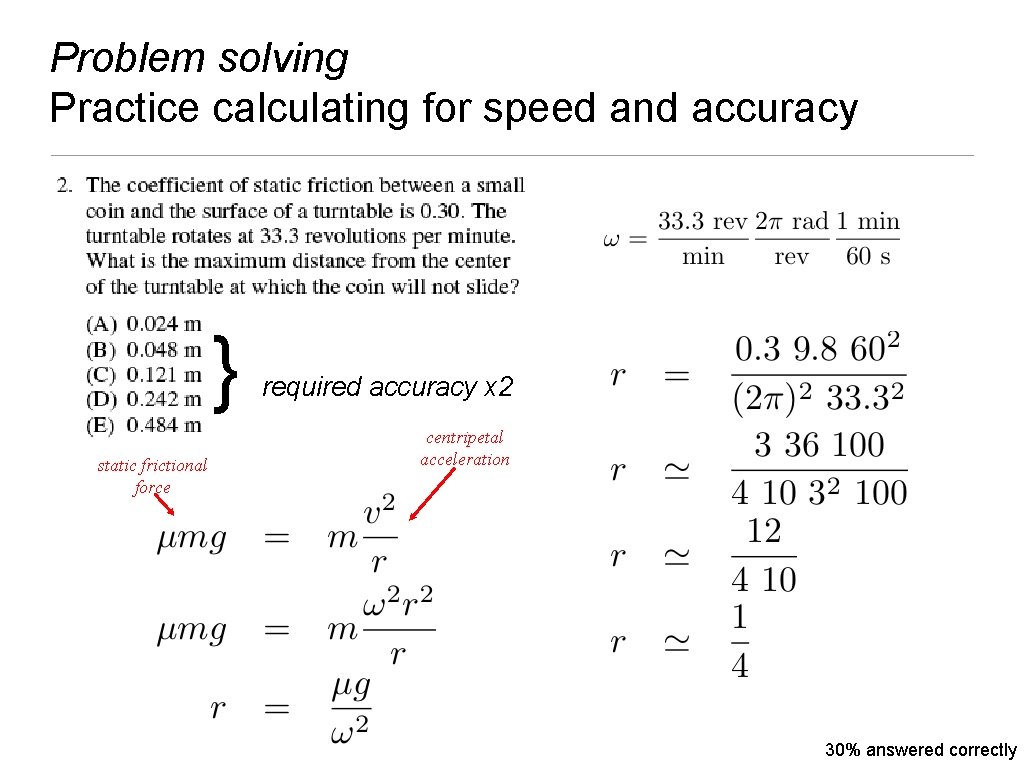
Problem solving Practice calculating for speed and accuracy } static frictional force required accuracy x 2 centripetal acceleration 30% answered correctly
Problem solving Sample electricity and magnetism problem Don’t need to solve to get to the correct answer. Check boundary conditions. These don’t satisfy boundary conditions x x ✔ 56% answered correctly
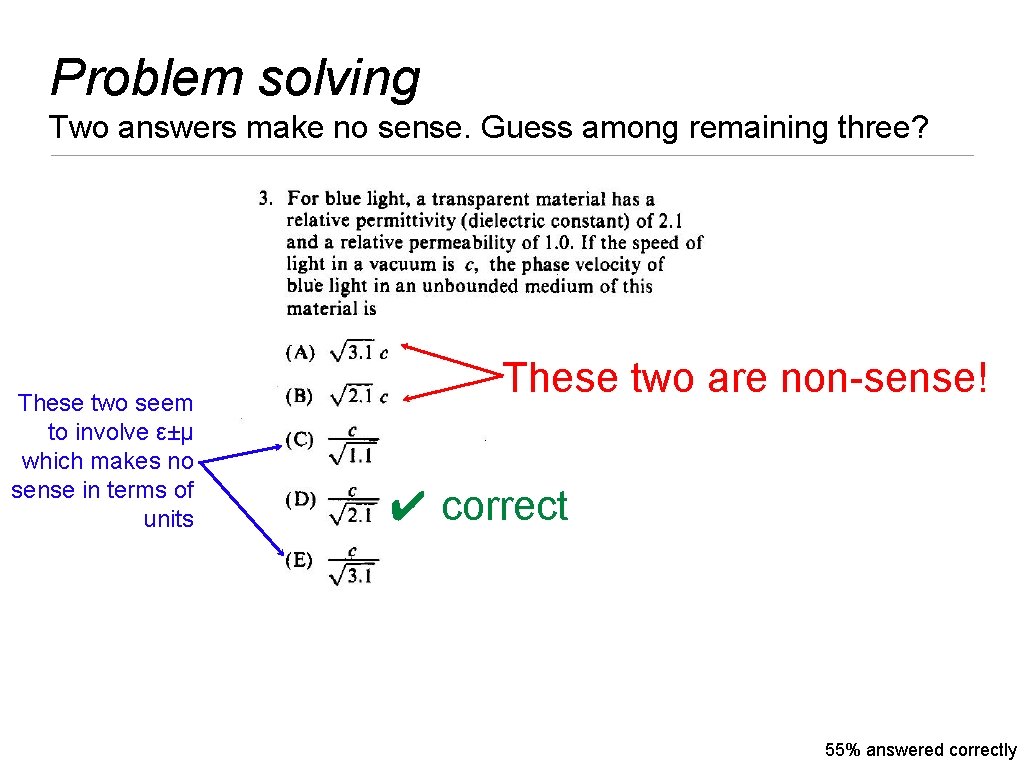
Problem solving Two answers make no sense. Guess among remaining three? These two seem to involve ε±μ which makes no sense in terms of units These two are non-sense! ✔ correct 55% answered correctly
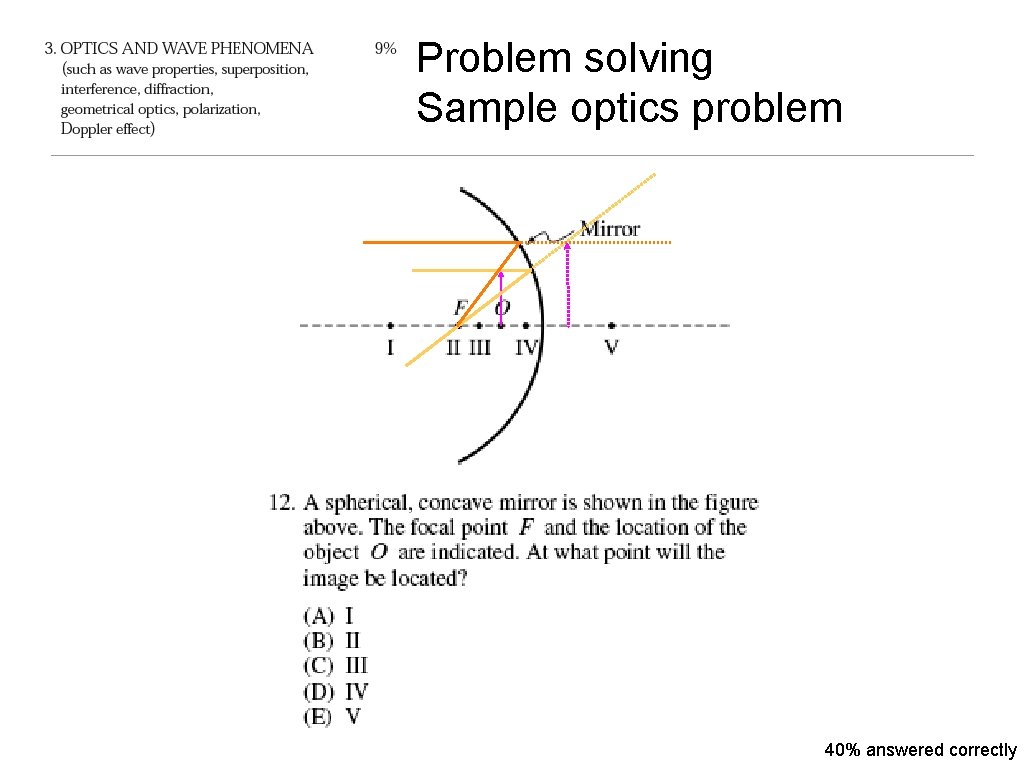
Problem solving Sample optics problem 40% answered correctly
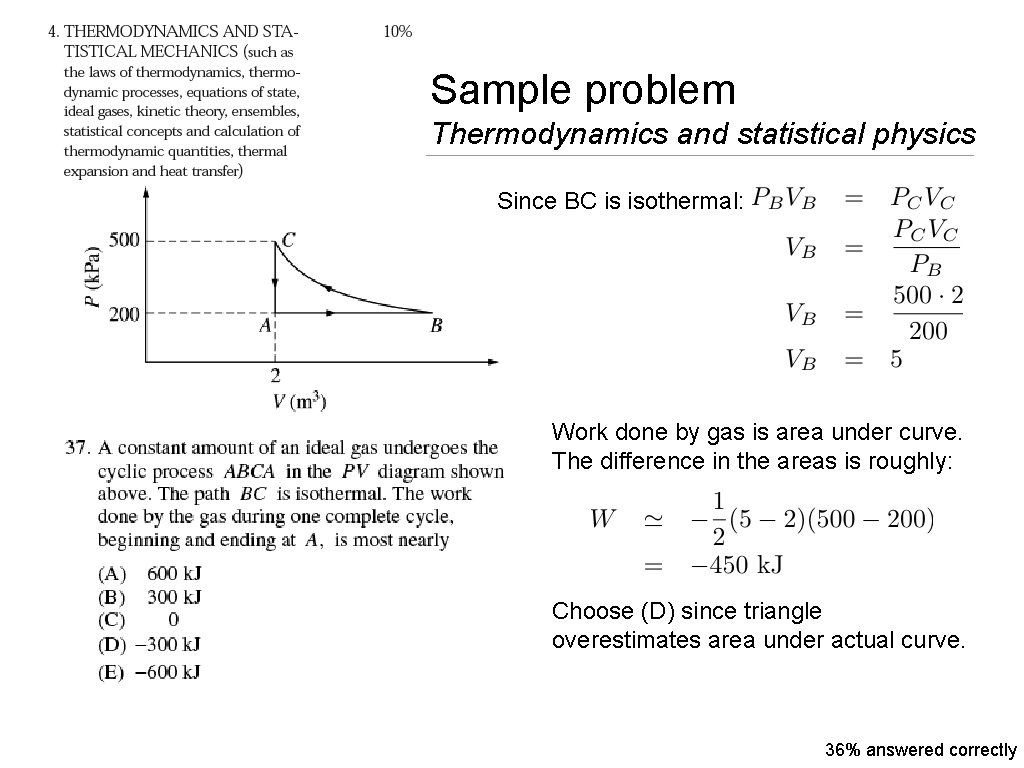
Sample problem Thermodynamics and statistical physics Since BC is isothermal: Work done by gas is area under curve. The difference in the areas is roughly: Choose (D) since triangle overestimates area under actual curve. 36% answered correctly
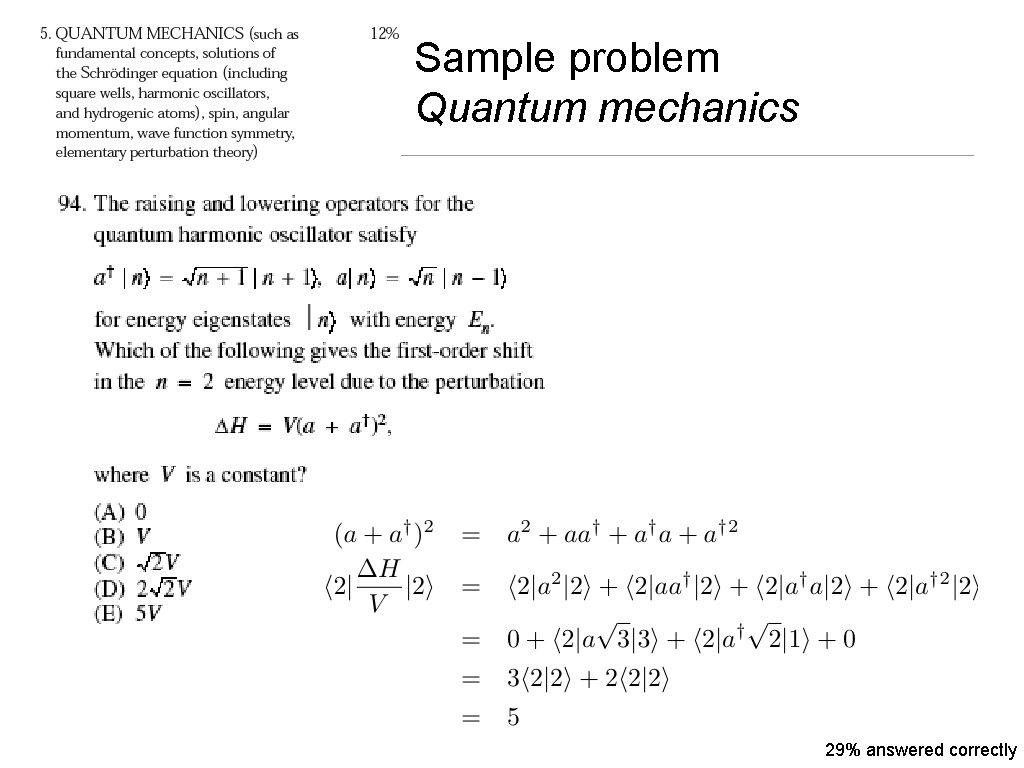
Sample problem Quantum mechanics 29% answered correctly
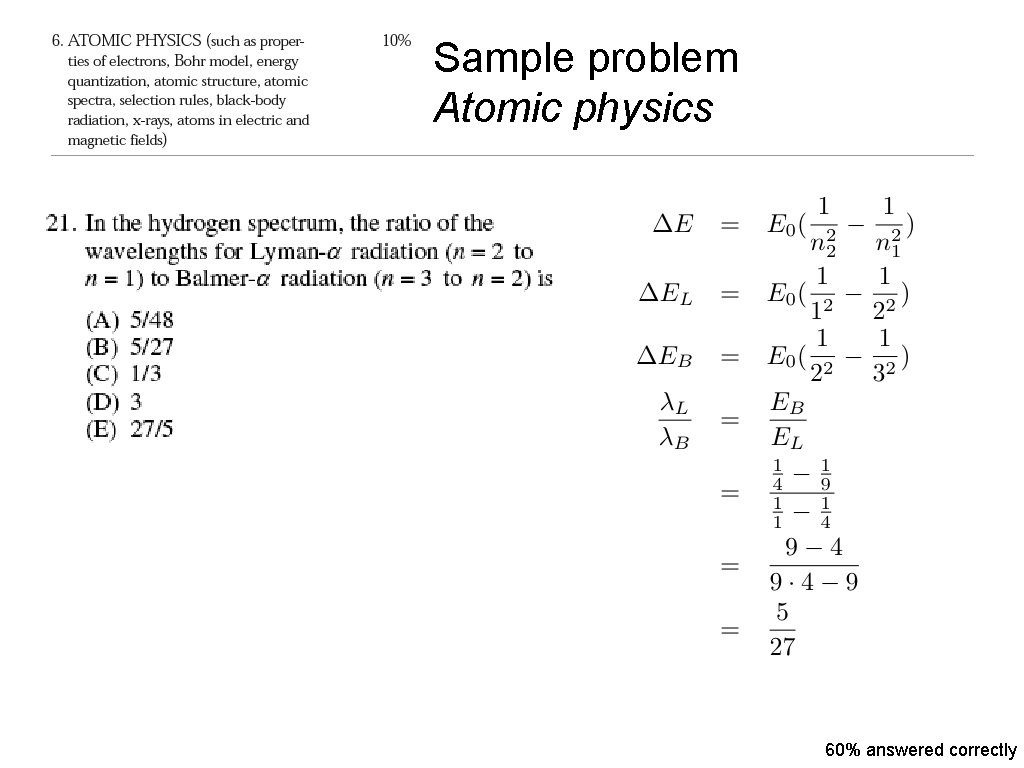
Sample problem Atomic physics 60% answered correctly
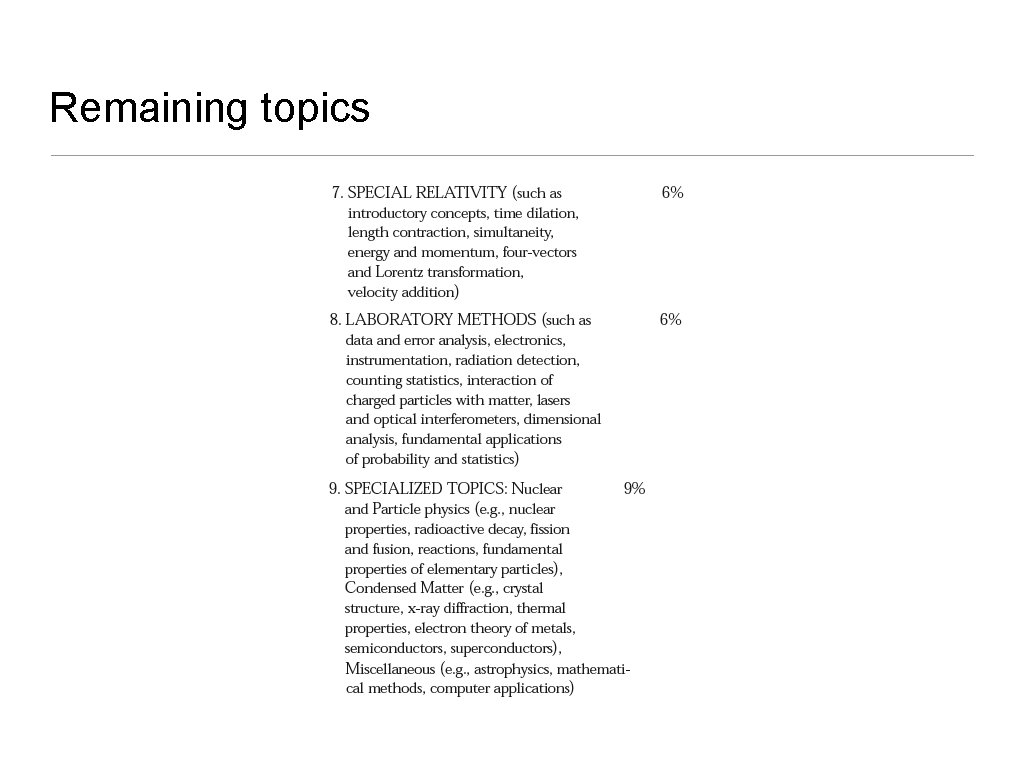
Remaining topics
Preparation will improve your GRE score • Know what material to study • Practice working numerical problems efficiently • Practice your test taking strategy • Good Luck!