
The Physical World Landforms and Water Bodies Mountains
The Physical World
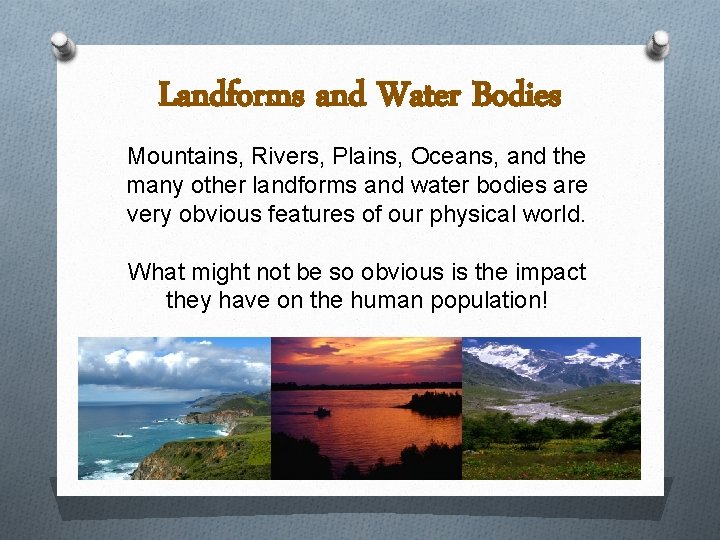
Landforms and Water Bodies Mountains, Rivers, Plains, Oceans, and the many other landforms and water bodies are very obvious features of our physical world. What might not be so obvious is the impact they have on the human population!
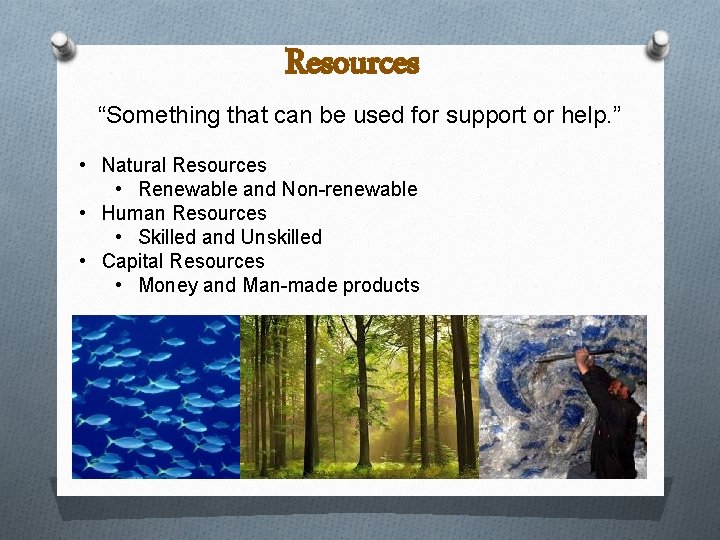
Resources “Something that can be used for support or help. ” • Natural Resources • Renewable and Non-renewable • Human Resources • Skilled and Unskilled • Capital Resources • Money and Man-made products
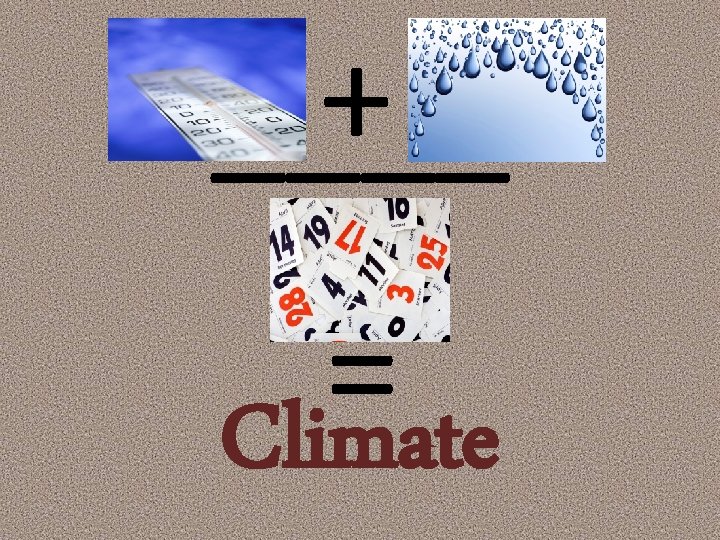
+ ____ = Climate
Factors That Influence ~Climate~ ØLatitude ØElevation ØProximity to Water ØOcean Currents ØPrevailing Winds ØPosition of Landforms
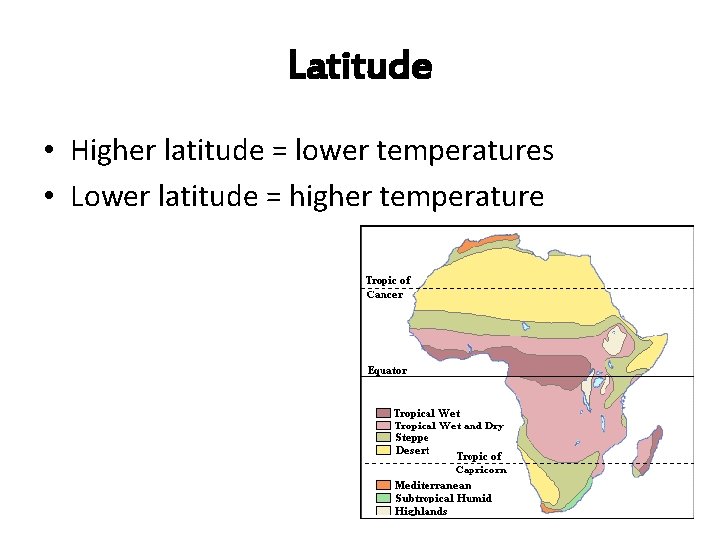
Latitude • Higher latitude = lower temperatures • Lower latitude = higher temperature
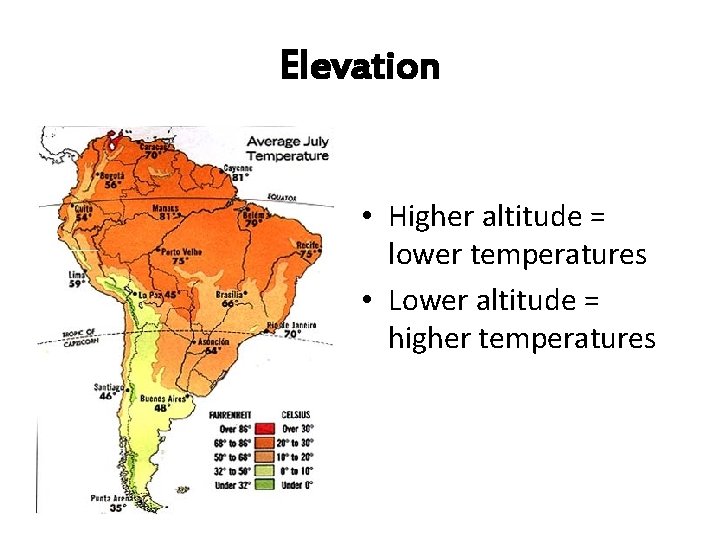
Elevation • Higher altitude = lower temperatures • Lower altitude = higher temperatures
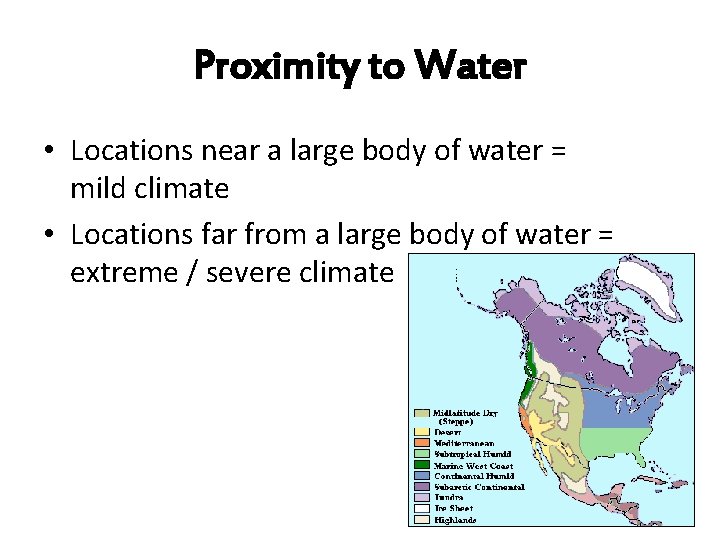
Proximity to Water • Locations near a large body of water = mild climate • Locations far from a large body of water = extreme / severe climate
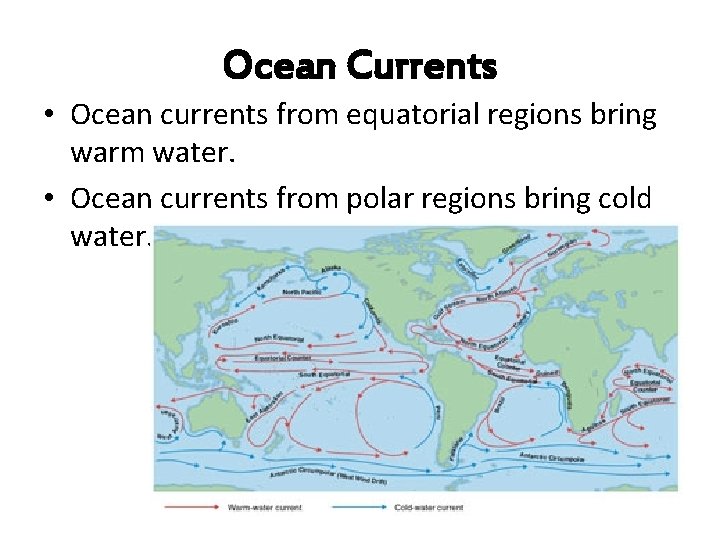
Ocean Currents • Ocean currents from equatorial regions bring warm water. • Ocean currents from polar regions bring cold water.
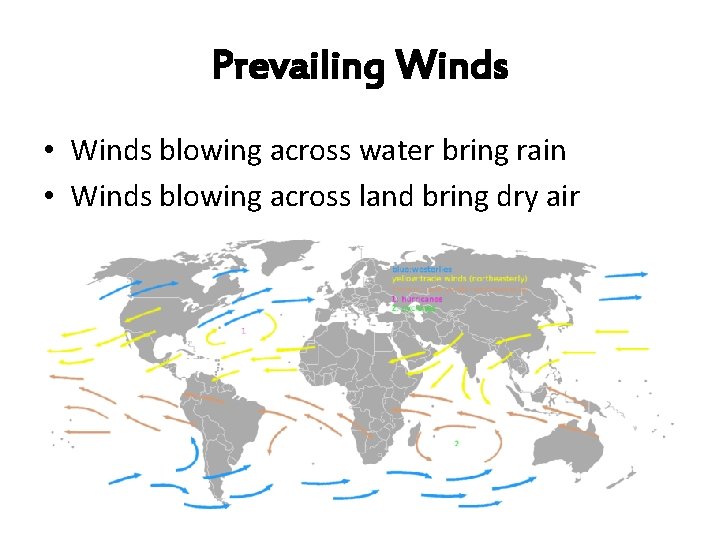
Prevailing Winds • Winds blowing across water bring rain • Winds blowing across land bring dry air
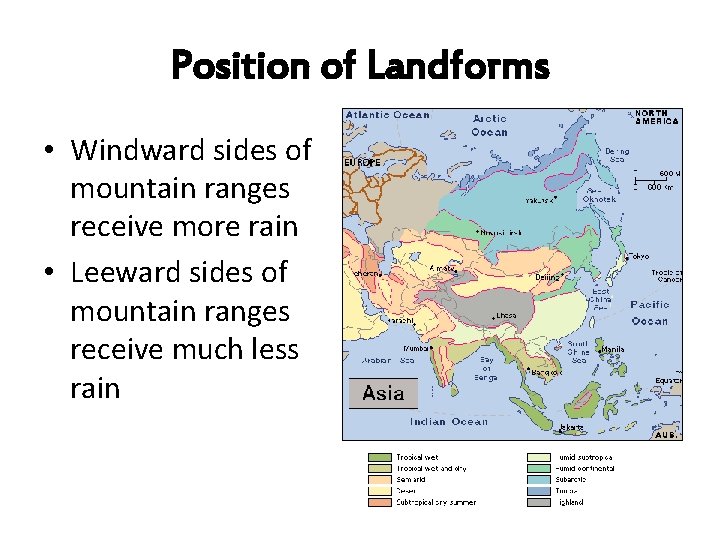
Position of Landforms • Windward sides of mountain ranges receive more rain • Leeward sides of mountain ranges receive much less rain
Climate Zones
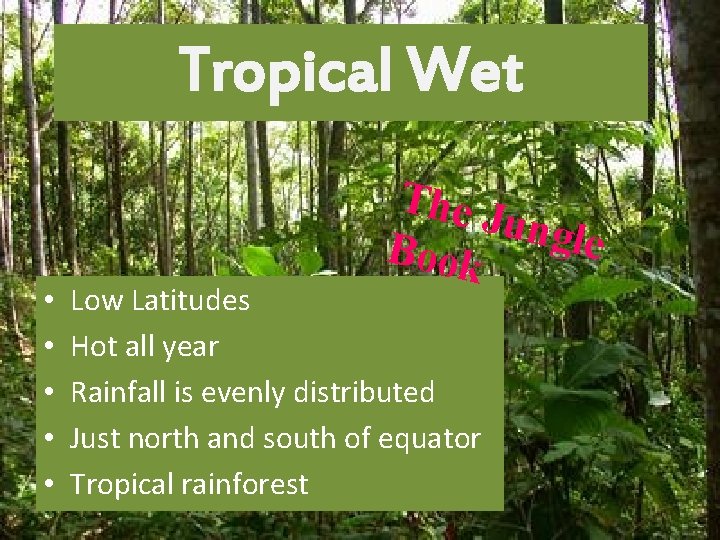
Tropical Wet • • • The J ungle Book Low Latitudes Hot all year Rainfall is evenly distributed Just north and south of equator Tropical rainforest
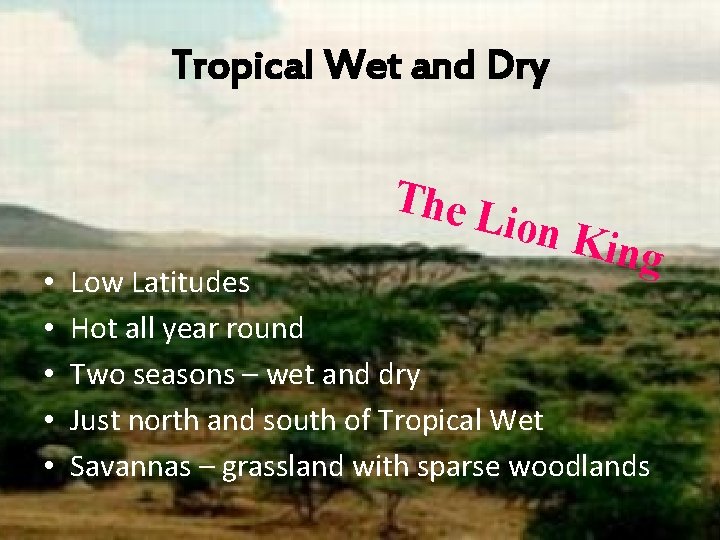
Tropical Wet and Dry The L ion K • • • ing Low Latitudes Hot all year round Two seasons – wet and dry Just north and south of Tropical Wet Savannas – grassland with sparse woodlands
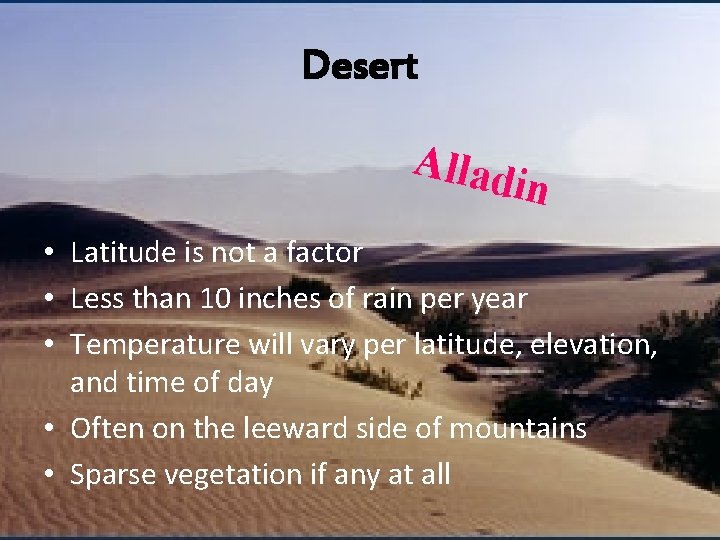
Desert Allad in • Latitude is not a factor • Less than 10 inches of rain per year • Temperature will vary per latitude, elevation, and time of day • Often on the leeward side of mountains • Sparse vegetation if any at all
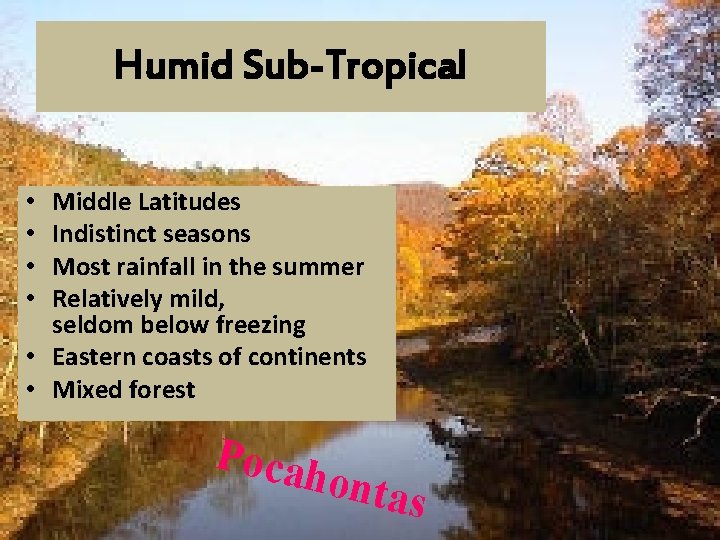
Humid Sub-Tropical Middle Latitudes Indistinct seasons Most rainfall in the summer Relatively mild, seldom below freezing • Eastern coasts of continents • Mixed forest • • Pocah o ntas
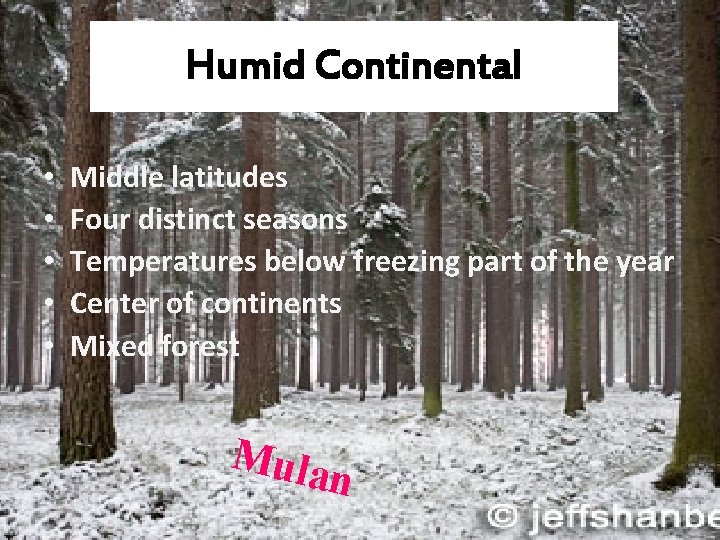
Humid Continental • • • Middle latitudes Four distinct seasons Temperatures below freezing part of the year Center of continents Mixed forest Mula n
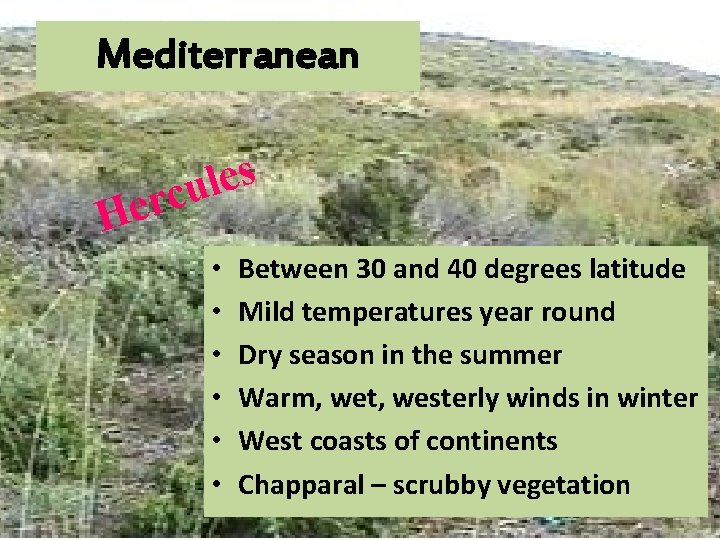
Mediterranean s e l rcu He • • • Between 30 and 40 degrees latitude Mild temperatures year round Dry season in the summer Warm, wet, westerly winds in winter West coasts of continents Chapparal – scrubby vegetation
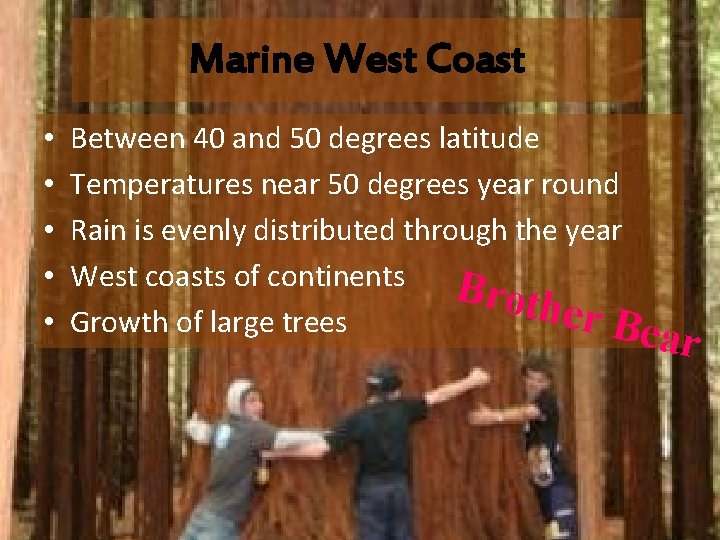
Marine West Coast • • • Between 40 and 50 degrees latitude Temperatures near 50 degrees year round Rain is evenly distributed through the year West coasts of continents Broth er Be Growth of large trees ar
Balto Sub-Arctic • High latitudes • Temperatures below freezing for 5 months • Just south of the arctic circle and north of the antarctic circle • “Tiaga” – little sticks – is dominant vegetation
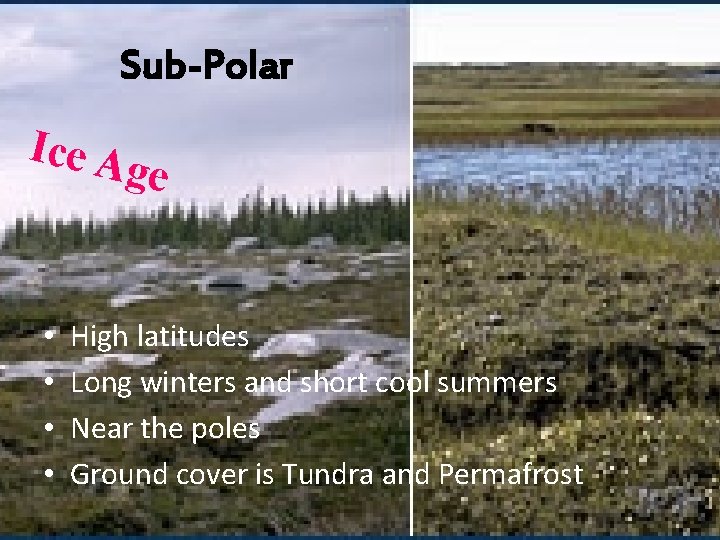
Sub-Polar Ice A ge • • High latitudes Long winters and short cool summers Near the poles Ground cover is Tundra and Permafrost
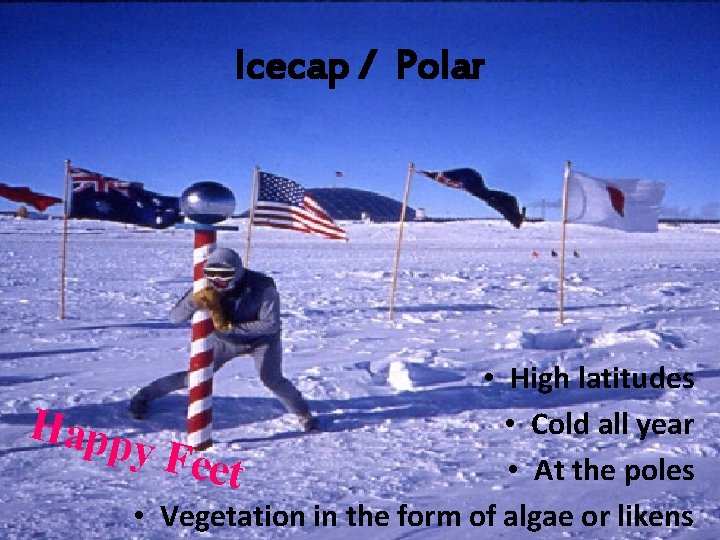
Icecap / Polar • High latitudes • Cold all year Happ y Fee • At the poles t • Vegetation in the form of algae or likens
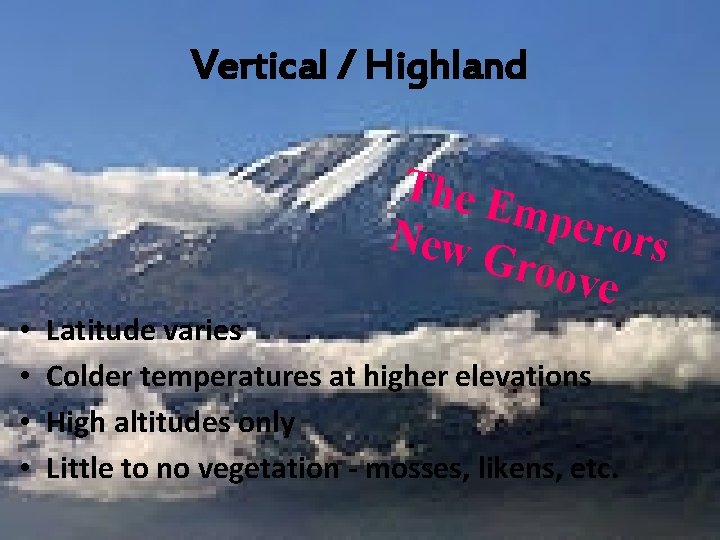
Vertical / Highland The E mper ors New Groo ve • • Latitude varies Colder temperatures at higher elevations High altitudes only Little to no vegetation - mosses, likens, etc.
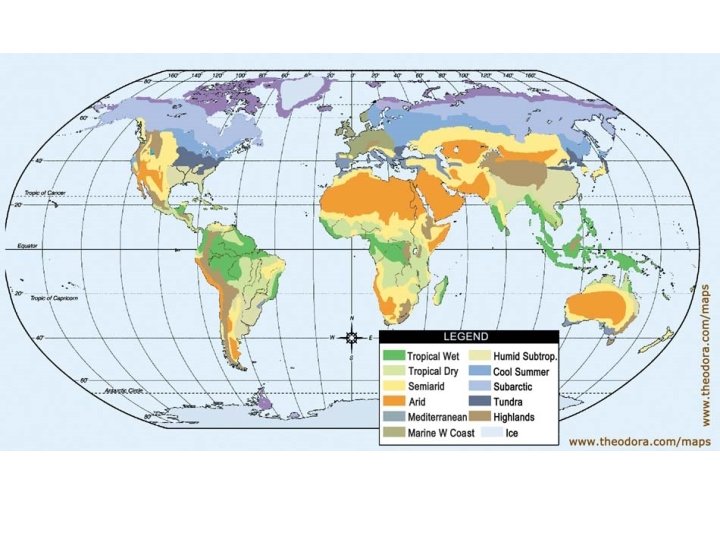
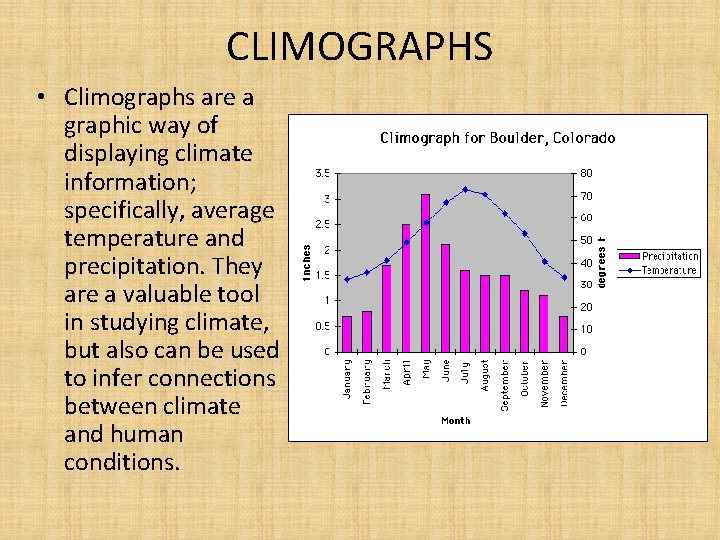
CLIMOGRAPHS • Climographs are a graphic way of displaying climate information; specifically, average temperature and precipitation. They are a valuable tool in studying climate, but also can be used to infer connections between climate and human conditions.
All of these physical features impact human activities! Like…. . Economic Activities Cultural Practices Beliefs and Values
Economic Activities The activities of humans are highly dependent on the physical environment in which they are found. We make shelter out of available resources…. huts of bamboo and thatch in the Pacific Islands, mobile homes of animal skin and bones in the arctic… We grow, eat and sell agricultural products that grow naturally in our environment…. fruits in the tropics, fish on islands, meat in areas of grassland…. We make clothing dress according to our climate…. flowing fabrics in hot climates, thick layers of insulation in cold climates… And more….
Cultural Practices Our physical environment often dictates the activities that we must participate in to survive. When activities become required and repeated they become a part of who we are…. our culture! We want to keep our dwellings free from dirt and germs so in dry dusty areas we remove our shoes or wash our feet when entering a building. We need protein in our diet, so we eat the most readily available items that we have…beans, pork, fish, deer, dogs, bugs…. making taboo those that are not appropriate to our environment. We must transport goods and people from place to place, so we develop forms of transportation that fit our environment…. sleds, boats, wheeled vehicles, etc.
Beliefs and Values To teach the important “rules of life” to our succeeding generations we instill values and beliefs that will ensure these rules are followed. Items that are scarcely available but necessary for life are cherished and rationed… give thanks and consume everything in moderation. When the earth is properly nourished it produces more resources for man…giving gifts to the powers that control the earth will please them.
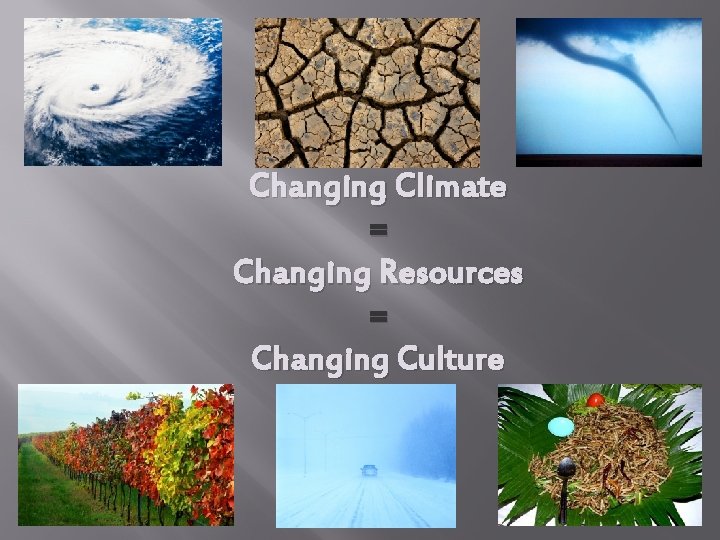
Changing Climate = Changing Resources = Changing Culture
- Slides: 30