
The Physical World Chapter 2 Section 1 Planet
- Slides: 18
The Physical World Chapter 2, Section 1: Planet Earth
Important Vocabulary ▪ Hydrosphere: the oceans, lakes, river, and other water bodies. ▪ Lithosphere: the land on the Earth’s surface. ▪ Atmosphere: a layer of gases extending above the earth’s surface. ▪ Biosphere: the part of the Earth that supports life. ▪ Continental Shelf: an underwater extension of the coastal plain.
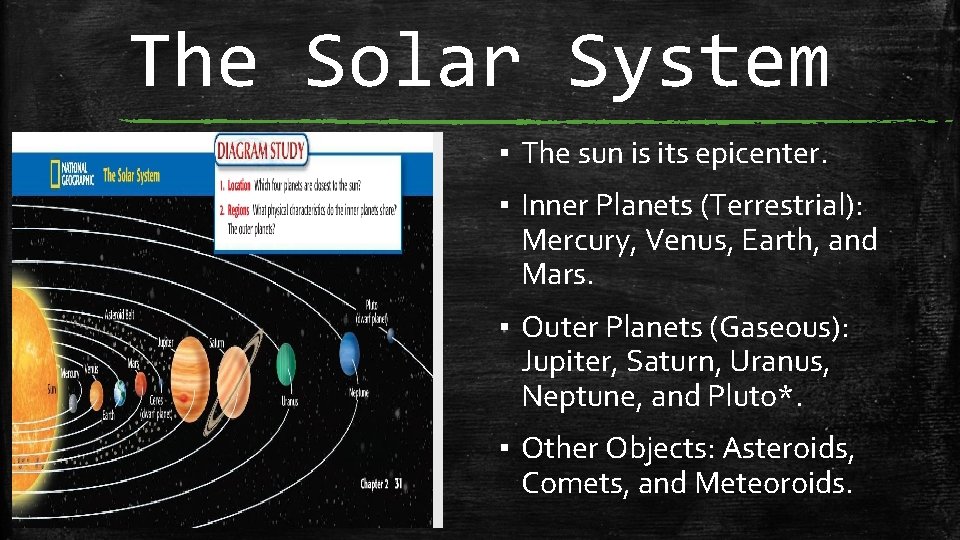
The Solar System ▪ The sun is its epicenter. ▪ Inner Planets (Terrestrial): Mercury, Venus, Earth, and Mars. ▪ Outer Planets (Gaseous): Jupiter, Saturn, Uranus, Neptune, and Pluto*. ▪ Other Objects: Asteroids, Comets, and Meteoroids.
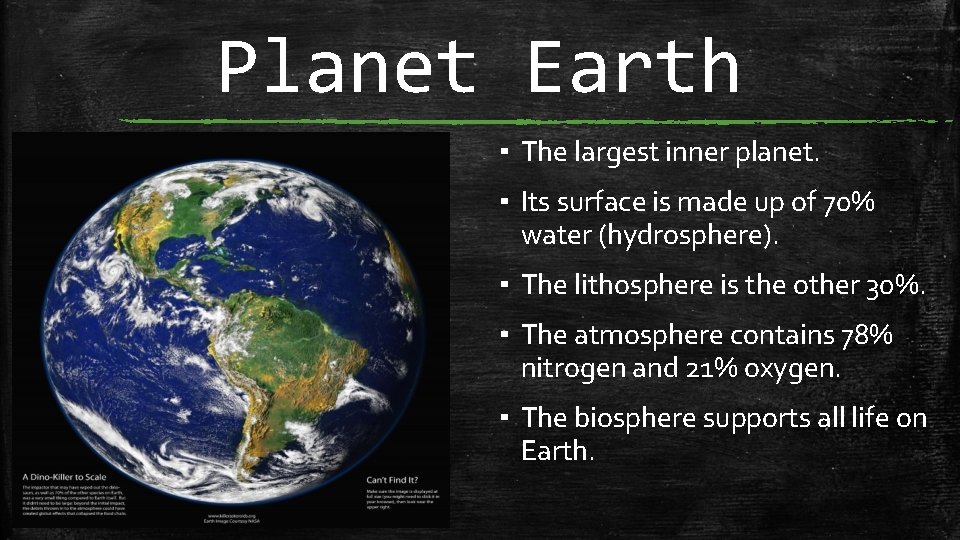
Planet Earth ▪ The largest inner planet. ▪ Its surface is made up of 70% water (hydrosphere). ▪ The lithosphere is the other 30%. ▪ The atmosphere contains 78% nitrogen and 21% oxygen. ▪ The biosphere supports all life on Earth.
The Physical World Chapter 2, Section 2: Forces of Change
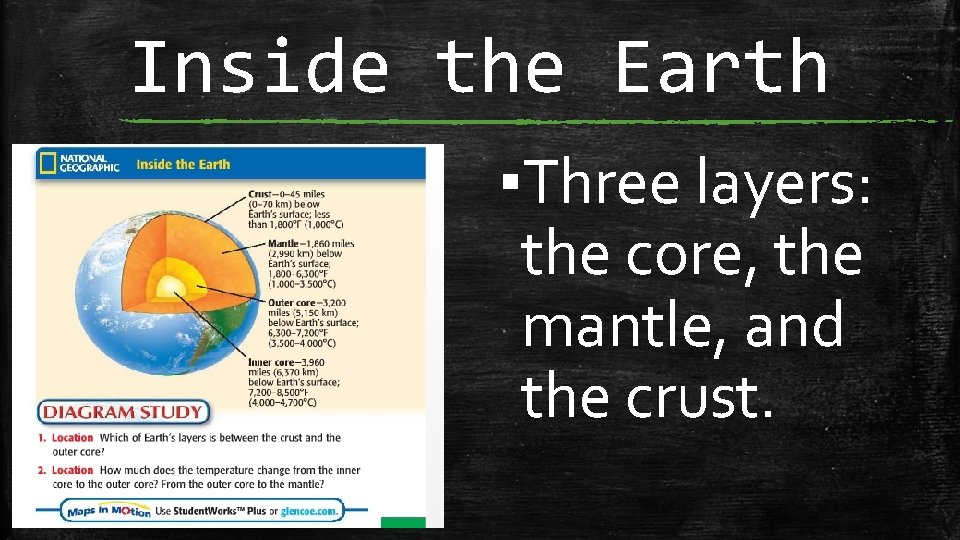
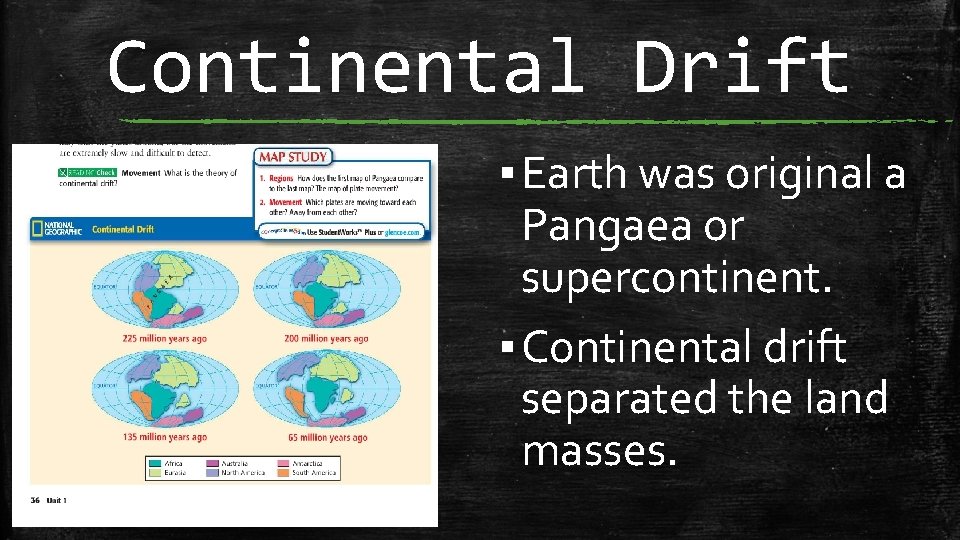
Important Vocabulary ▪ Core: super-hot solid at Earth’s inner center. ▪ Mantle: thick layer of hot, dense rock. ▪ Crust: the rocky outer layer of Earth’s surface. ▪ Continental Drift: theory that the continents were once joined together and then slowly drifted apart. ▪ Plate Tectonics: refers to all of the physical processes that create many of Earth’s physical features.
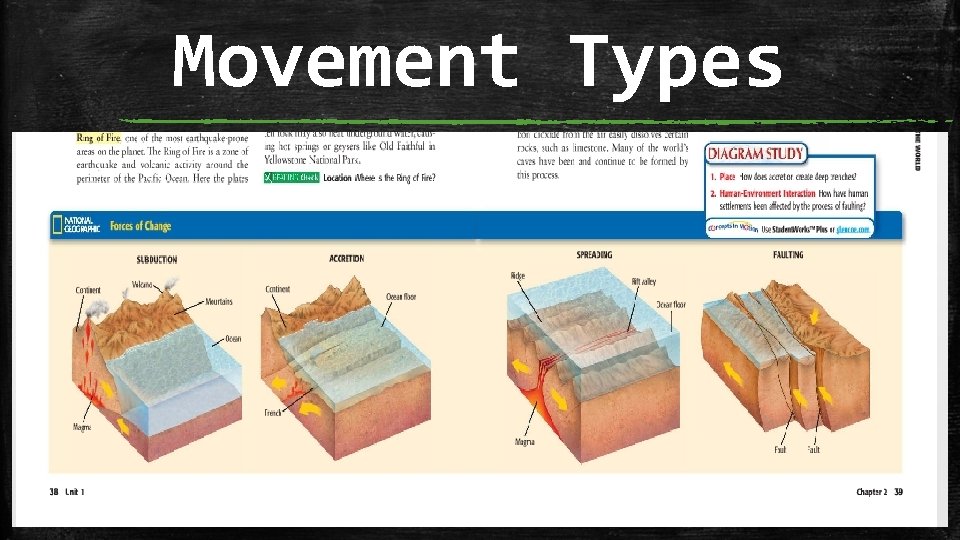
Important Vocabulary ▪ Magma: molten rock pushed up from the mantle during shifting plate tectonics. ▪ Subduction: heavier plate goes underneath lighter plate. ▪ Accretion: pieces of the Earth’s crust come together. ▪ Spreading: the moving apart of sea plates. ▪ Fold: the bending of layers of rock as plates push together. ▪ Fault: cracks in the Earth’s crust.
Important Vocabulary ▪ Faulting: occurs when the folded land cannot bend anymore. ▪ Weathering: the breakdown of rock. ▪ Erosion: the wearing away of Earth’s surface. ▪ Glacier: large ice bodies which move across Earth’s surface. ▪ Moraine: debris left behind by melted glaciers.
Inside the Earth ▪Three layers: the core, the mantle, and the crust.
Continental Drift ▪ Earth was original a Pangaea or supercontinent. ▪ Continental drift separated the land masses.
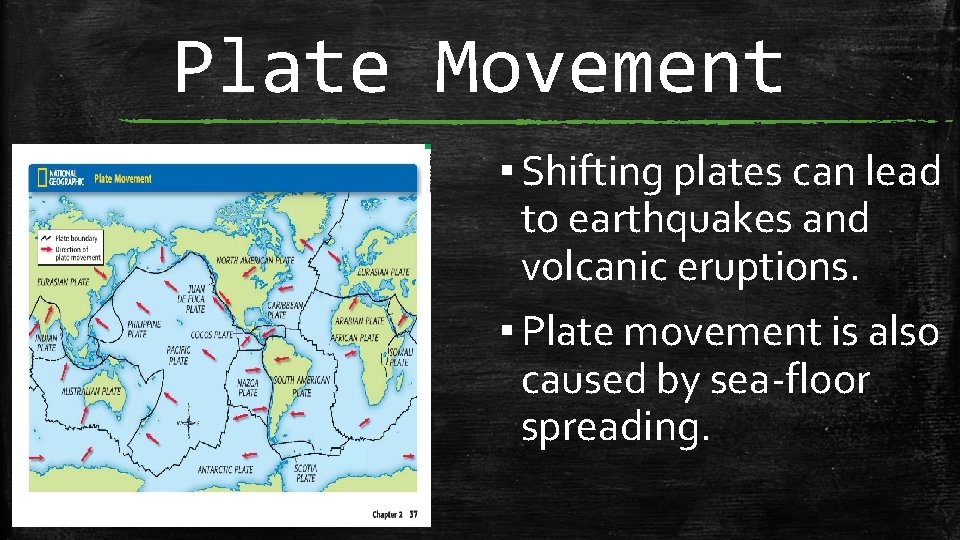
Plate Movement ▪ Shifting plates can lead to earthquakes and volcanic eruptions. ▪ Plate movement is also caused by sea-floor spreading.
Movement Types
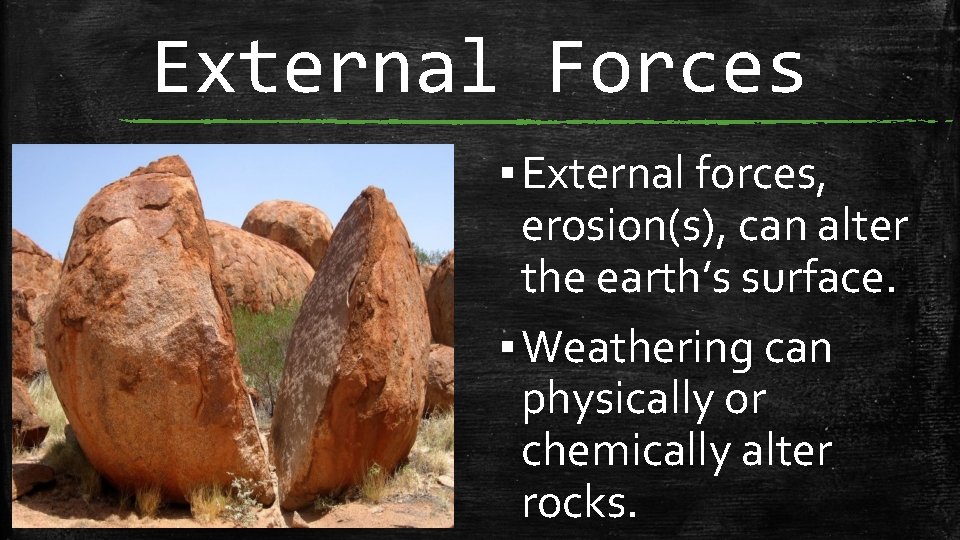
External Forces ▪ External forces, erosion(s), can alter the earth’s surface. ▪ Weathering can physically or chemically alter rocks.
The Physical World Chapter 2, Section 3: Earth’s Water
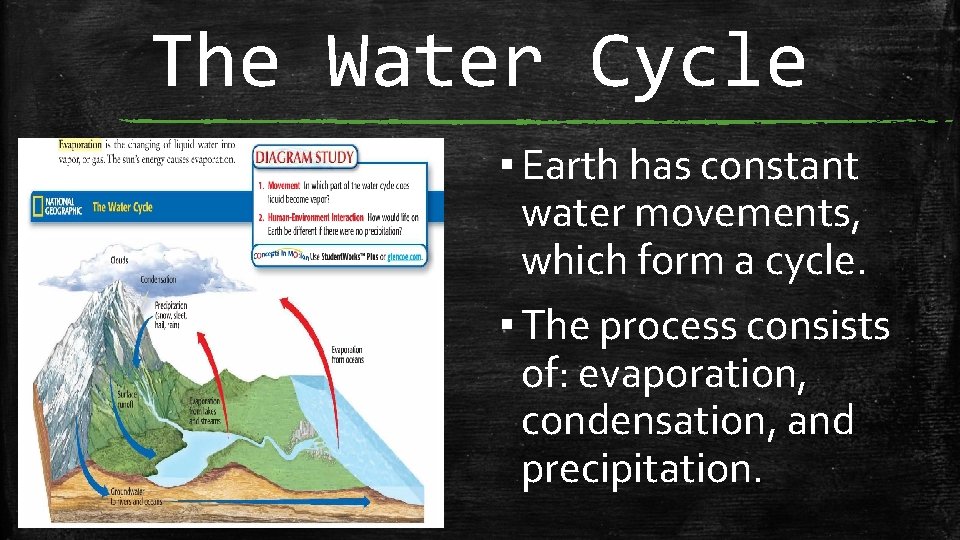
Important Vocabulary ▪ Water Cycle: the regular movement of water. ▪ Evaporation: changing of liquid water into a vapor or gas. ▪ Condensation: changing of water vapor into liquid water. ▪ Precipitation: moisture which falls to the Earth.
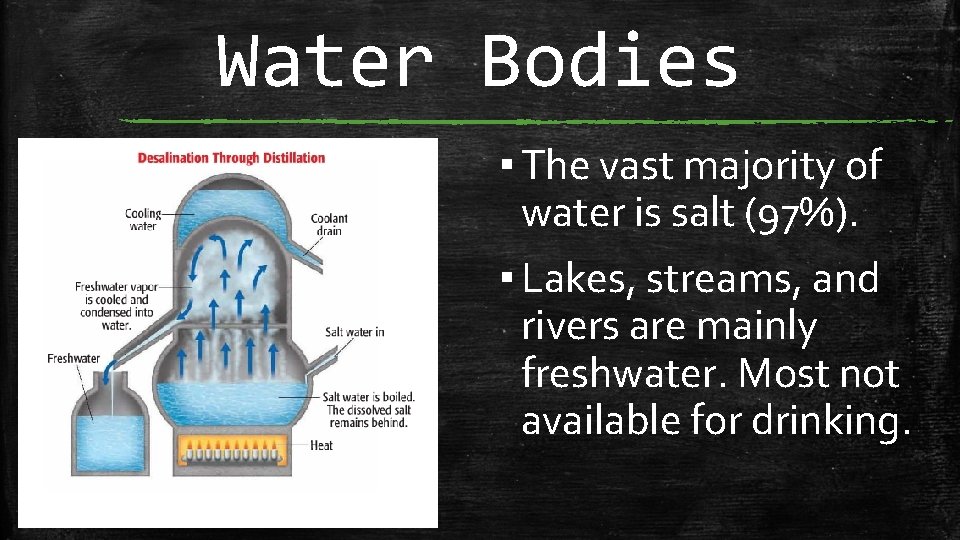
Important Vocabulary ▪ Desalination: turning saltwater into fresh, drinking water. ▪ Groundwater: freshwater which lies beneath the Earth’s surface. ▪ Aquifer: underground, porous rock which stores water.
The Water Cycle ▪ Earth has constant water movements, which form a cycle. ▪ The process consists of: evaporation, condensation, and precipitation.
Water Bodies ▪ The vast majority of water is salt (97%). ▪ Lakes, streams, and rivers are mainly freshwater. Most not available for drinking.