
The physical deterioration and escalation tool for carenursing
- Slides: 43
The physical deterioration and escalation tool for care/nursing homes 1
Information for Presenters using this slide deck These slides have been developed as a resource for people seeking to implement RESTORE 2 mini. They may be used as a standalone training resource or in conjunction with the RESTORE 2 “Rollout Handbook” (April 2020). The Handbook refers to the full version of RESTORE 2 for Care Homes which includes references to the National Early Warning Score (NEWS 2) in those settings. RESTORE 2 mini is a Soft Signs based approach and does not include the use of NEWS 2 and the full version of RESTORE 2 are referenced in these slides to explain the development of the RESTORE 2 mini tool and to clarify the differences between the versions for staff who may be aware of both. Other versions of RESTORE 2 mini have adapted the language to suit their own care setting. Some relevant “Managing Deterioration” videos are referenced on the relevant slides. The short 3 minute videos from Health Education England may be used as a teaching aid during a training session or referred to as an available resource for future use. These slides may be adapted by presenters as long as the content of the tools themselves are not amended in any way. This includes NEWS 2, RESTORE 2, SBARD and any other tools referred to. Some other Care Home resources are signposted via some relevant Wessex PSC webpages. Presenters may wish to adapt the slides to point to other sites as well as, or instead of, the Wessex PSC information. We hope you find these resources helpful to your work. Constructive feedback is always welcome to improve our materials, comments to geoff. cooper@wessexahsn. net Wessex PSC v 6 - 18/11/2020 2
A Patient Safety Initiative co-produced by West Hampshire CCG & Wessex Patient Safety Collaborative RESTORE 2 mini. TM is trademarked and copyright West Hampshire Clinical Commissioning Group 3
4
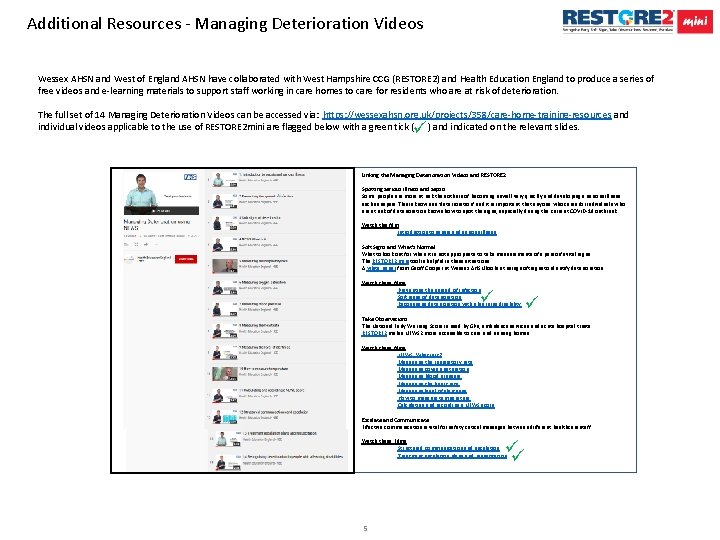
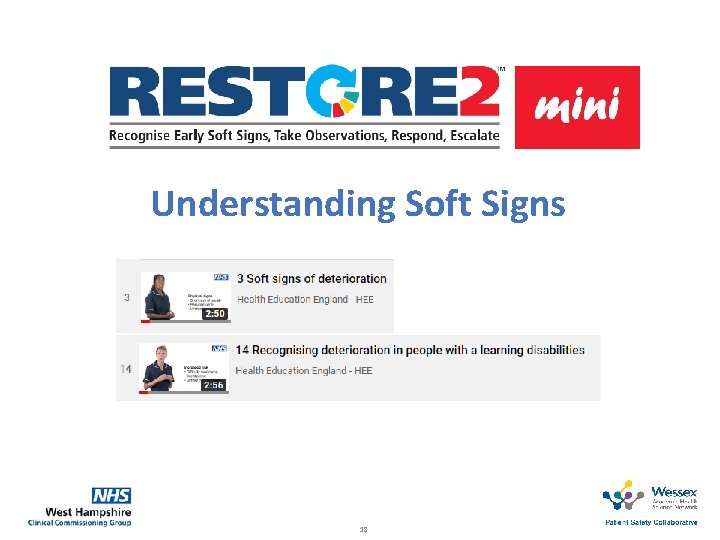
Additional Resources - Managing Deterioration Videos Wessex AHSN and West of England AHSN have collaborated with West Hampshire CCG (RESTORE 2) and Health Education England to produce a series of free videos and e-learning materials to support staff working in care homes to care for residents who are at risk of deterioration. The full set of 14 Managing Deterioration Videos can be accessed via: https: //wessexahsn. org. uk/projects/358/care-home-training-resources and individual videos applicable to the use of RESTORE 2 mini are flagged below with a green tick ( ) and indicated on the relevant slides. Linking the Managing Deterioration Videos and RESTORE 2 Spotting serious illness and sepsis Some people are more at risk than others of becoming unwell very quickly and developing a serious illness such as sepsis. This is known as ‘deterioration’ and it is important that anyone who cares for individuals who are at risk of deterioration knows how to spot the signs, especially during the current COVID-19 outbreak. Watch this film Introduction to sepsis and serious illness Soft Signs and What’s Normal What to look out for when it is not appropriate to take measurements of a person’s vital signs. The RESTORE 2 mini tool is helpful in these situations. A white paper from Geoff Cooper at Wessex AHSN looks at using soft signs to identify deterioration. Watch these films Preventing the spread of infection Soft signs of deterioration Recognising deterioration with a learning disability Take Observations The National Early Warning Score is used by GPs, ambulance services and acute hospital trusts. RESTORE 2 makes NEWS 2 more accessible to care and nursing homes. Watch these films NEWS: What is it? Measuring the respiratory rate Measuring oxygen saturation Measuring blood pressure Measuring the heart rate Measuring level of alertness How to measure temperature Calculating and recording a NEWS score Escalate and Communicate Effective communication is vital for safety critical messages between different healthcare staff Watch these Films Structured communication and escalation Treatment escalation plans and resuscitation 5
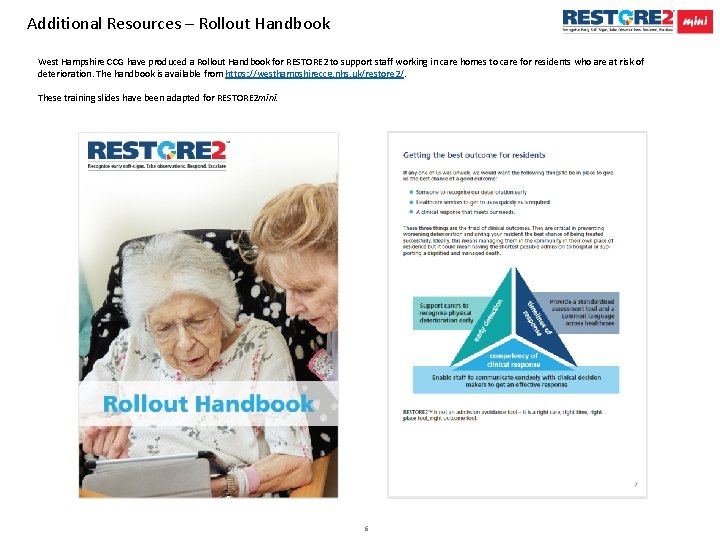
Additional Resources – Rollout Handbook West Hampshire CCG have produced a Rollout Handbook for RESTORE 2 to support staff working in care homes to care for residents who are at risk of deterioration. The handbook is available from https: //westhampshireccg. nhs. uk/restore 2/. These training slides have been adapted for RESTORE 2 mini. 6
Firstly, a quick word about… 7
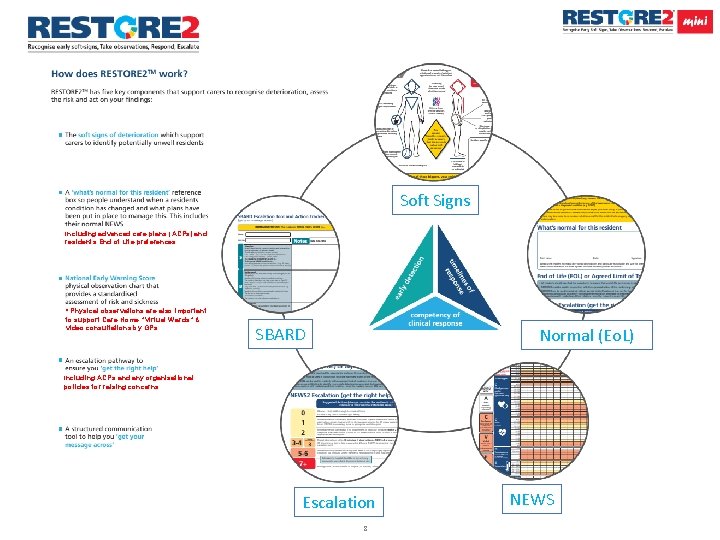
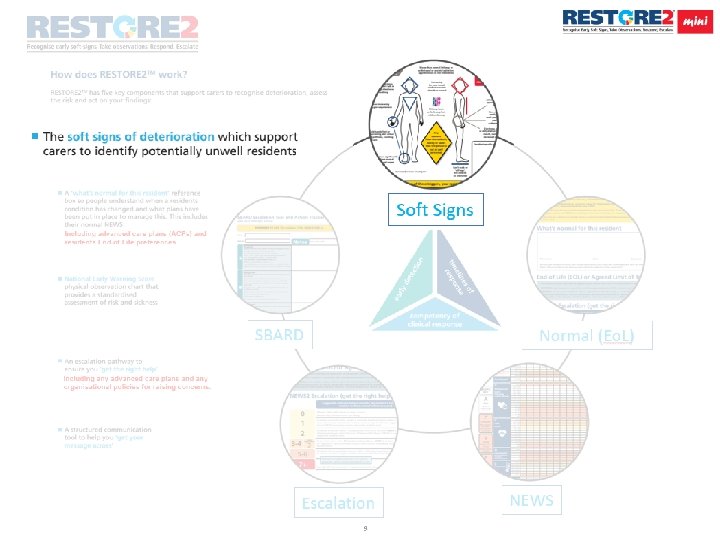
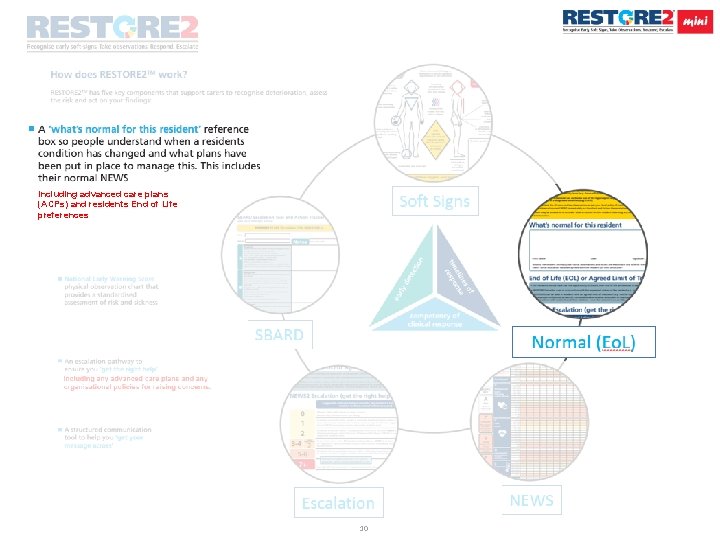
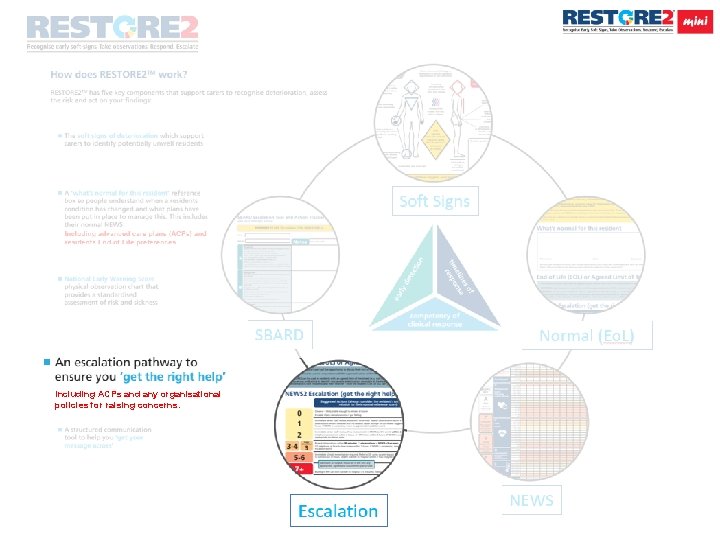
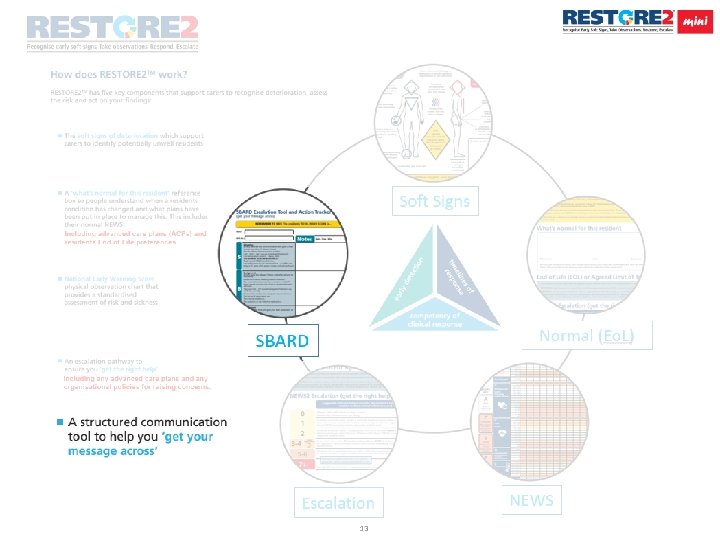
Soft Signs Including advanced care plans (ACPs) and residents End of Life preferences * Physical observations are also important to support Care Home “Virtual Wards” & video consultations by GPs SBARD Normal (Eo. L) Including ACPs and any organisational policies for raising concerns. Escalation 8 NEWS
9
Including advanced care plans (ACPs) and residents End of Life preferences 10
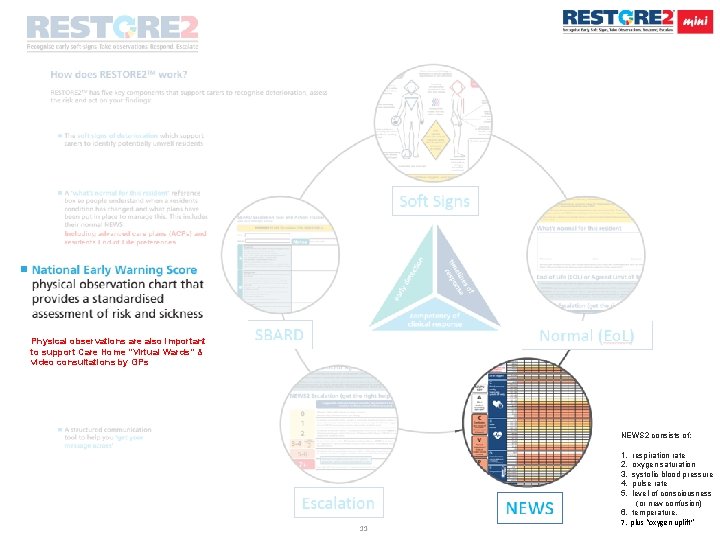
Physical observations are also important to support Care Home “Virtual Wards” & video consultations by GPs NEWS 2 consists of: 1. 2. 3. 4. 5. 11 respiration rate oxygen saturation systolic blood pressure pulse rate level of consciousness (or new confusion) 6. temperature. 7. plus “oxygen uplift”
Including ACPs and any organisational policies for raising concerns. 12
13
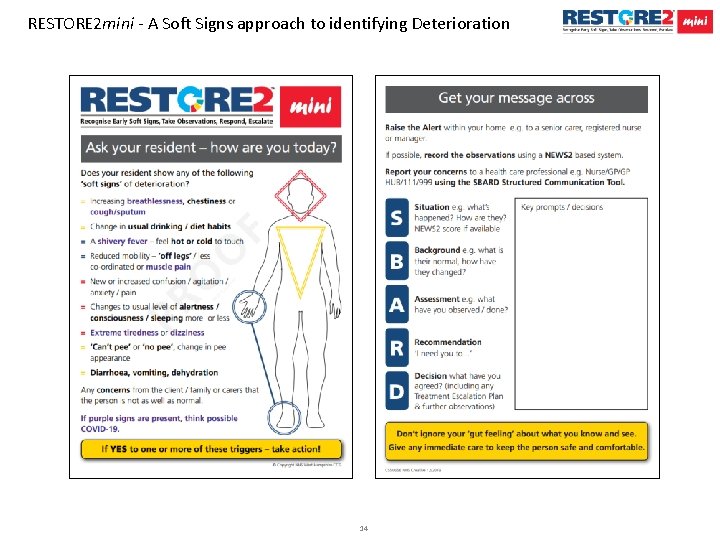
RESTORE 2 mini - A Soft Signs approach to identifying Deterioration 14
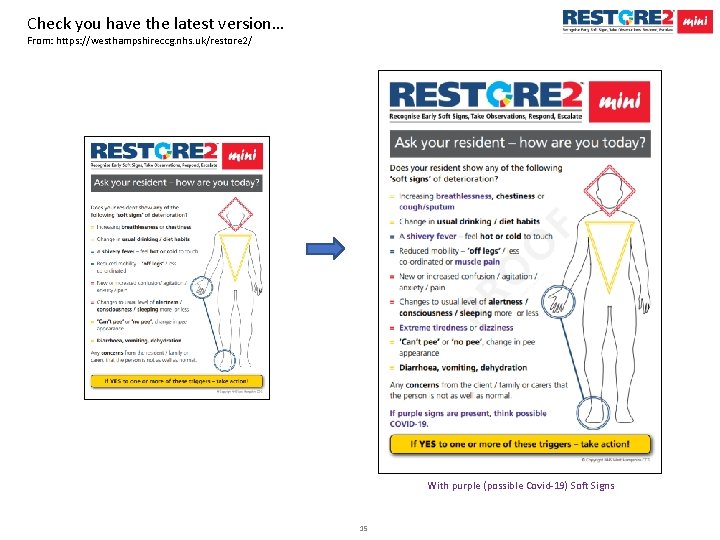
Check you have the latest version… From: https: //westhampshireccg. nhs. uk/restore 2/ With purple (possible Covid-19) Soft Signs 15
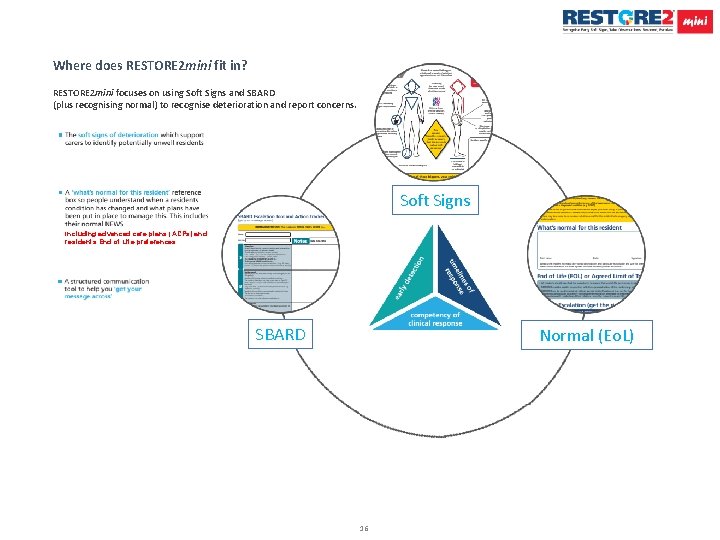
Where does RESTORE 2 mini fit in? RESTORE 2 mini focuses on using Soft Signs and SBARD (plus recognising normal) to recognise deterioration and report concerns. Soft Signs Including advanced care plans (ACPs) and residents End of Life preferences * Physical observations are also important to support Care Home “Virtual Wards” & video consultations by GPs SBARD Normal (Eo. L) Including ACPs and any organisational policies for raising concerns. Escalation 16 NEWS
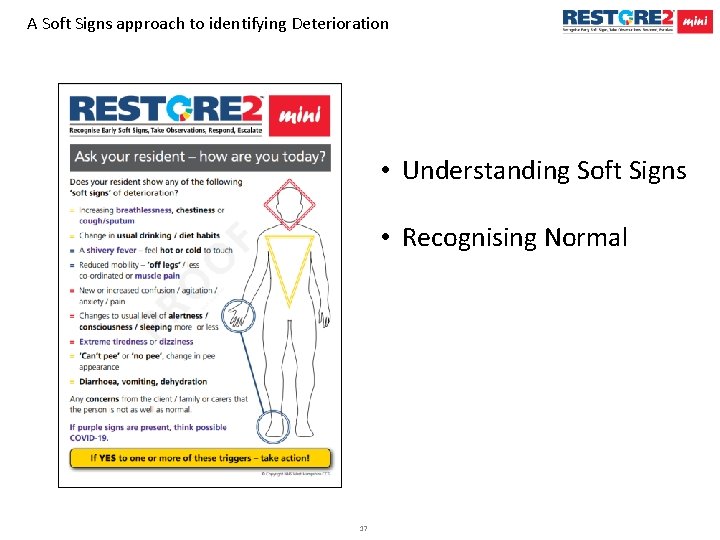
A Soft Signs approach to identifying Deterioration • Understanding Soft Signs • Recognising Normal 17
Understanding Soft Signs 18
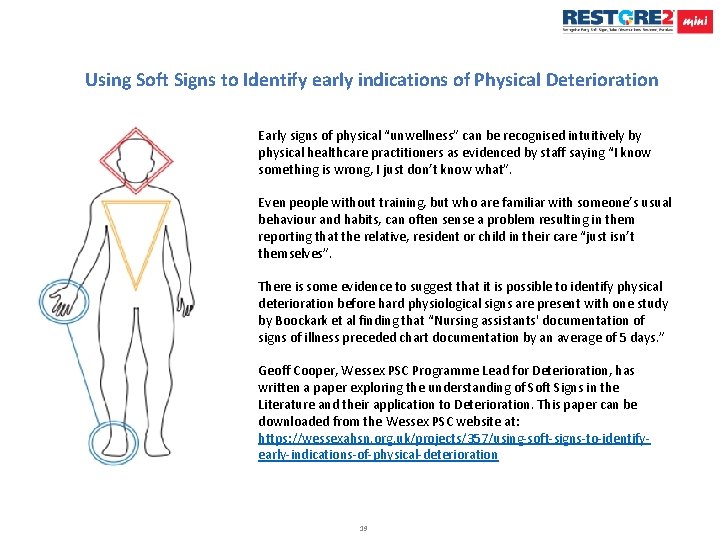
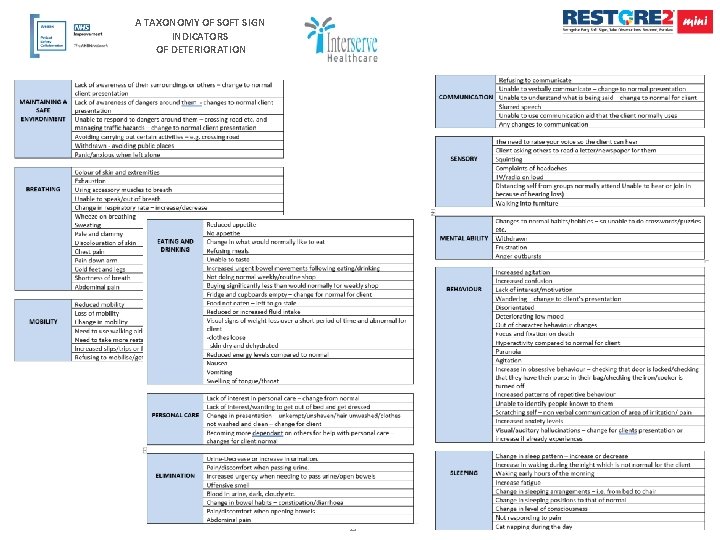
Using Soft Signs to Identify early indications of Physical Deterioration Early signs of physical “unwellness” can be recognised intuitively by physical healthcare practitioners as evidenced by staff saying “I know something is wrong, I just don’t know what”. Even people without training, but who are familiar with someone’s usual behaviour and habits, can often sense a problem resulting in them reporting that the relative, resident or child in their care “just isn’t themselves”. There is some evidence to suggest that it is possible to identify physical deterioration before hard physiological signs are present with one study by Boockark et al finding that “Nursing assistants' documentation of signs of illness preceded chart documentation by an average of 5 days. ” Geoff Cooper, Wessex PSC Programme Lead for Deterioration, has written a paper exploring the understanding of Soft Signs in the Literature and their application to Deterioration. This paper can be downloaded from the Wessex PSC website at: https: //wessexahsn. org. uk/projects/357/using-soft-signs-to-identifyearly-indications-of-physical-deterioration 19
20
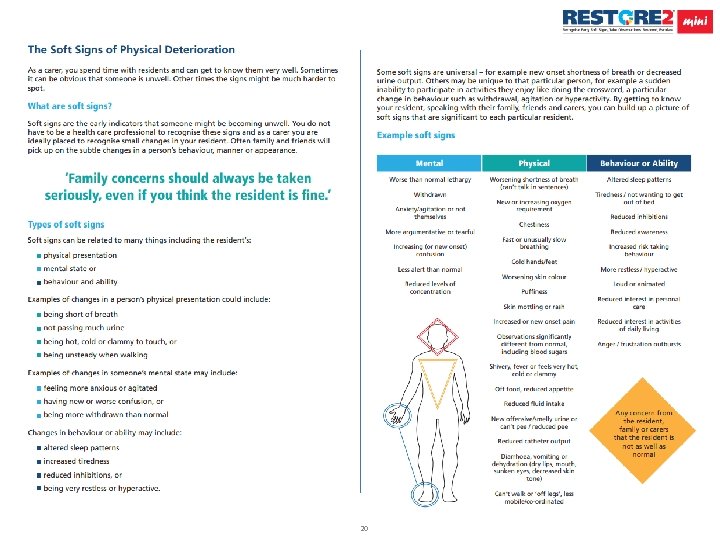
A TAXONOMY OF SOFT SIGN INDICATORS OF DETERIORATION 21
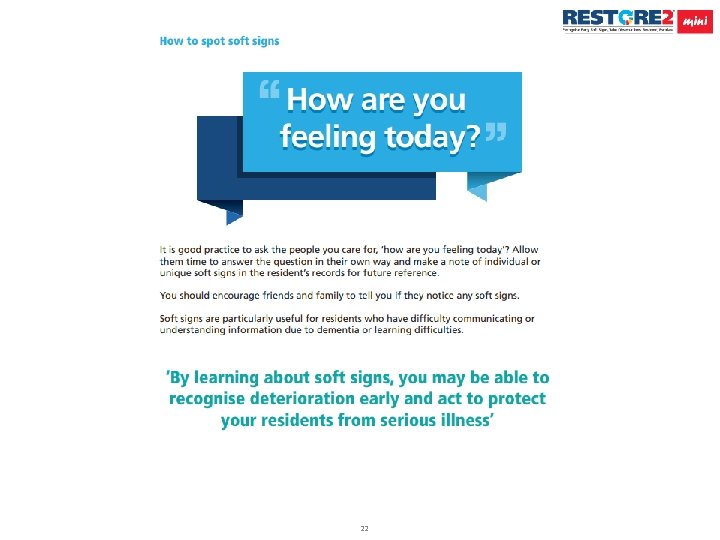
22
Recognising normal 23
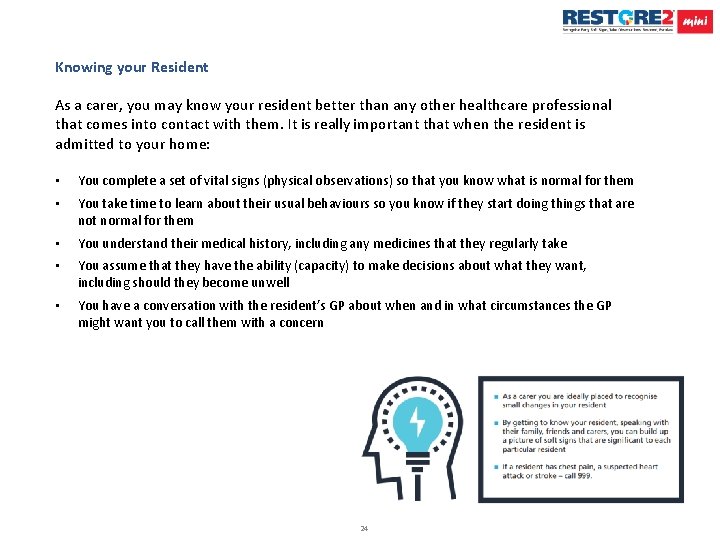
Knowing your Resident As a carer, you may know your resident better than any other healthcare professional that comes into contact with them. It is really important that when the resident is admitted to your home: • You complete a set of vital signs (physical observations) so that you know what is normal for them • You take time to learn about their usual behaviours so you know if they start doing things that are not normal for them • You understand their medical history, including any medicines that they regularly take • You assume that they have the ability (capacity) to make decisions about what they want, including should they become unwell • You have a conversation with the resident’s GP about when and in what circumstances the GP might want you to call them with a concern 24
25
26
Treatment Escalation Plans and Resuscitation Knowing your resident will help you to support them to live well but also to think about what they would like to happen if they become unwell. . . When a resident you are caring for becomes unwell, there are different options for looking after them. If possible and safe, most residents would prefer to be treated in their own home. For some residents it will be appropriate to call the GP or 999 to arrange admission into hospital. For some people, going into hospital is not appropriate or in their best interests. This can be for a number of reasons. Often, people who know they are approaching the end of their life may have decided that they want to die in their home and not in hospital if possible. For others, perhaps where a specific illness or event has happened (for example a serious stroke) they may have previously expressed a wish to be looked after by people that know them in a way that maintains their dignity. There are helpful documents available that support residents to have a say in their care prior to when they become unwell. These include Treatment Escalation Plans (TEPS) and Do Not Attempt Cardiopulmonary Resuscitation (DNACPR) documents. 27
Treatment Escalation Plans A Treatment Escalation Plan, or TEP, is a personalised recommendation for someone’s medical care. It is for use in an emergency situation as a reference and communicates the level of intervention or deescalation in the resident’s clinical management. A Treatment Escalation Plan is made with the resident and their caring team, and often with their family. It is ideally made when they are well and can say what they would want to happen. If your resident does not have the ability (capacity) to make decisions around what they would want to happen if they became unwell, a suitably trained person should undertake a capacity assessment that is time and decision specific – for example. . . if you developed a chest infection and oral antibiotics were not working, would you want to go into hospital for intravenous treatment? If the person lacks capacity to make this decision then a decision in their best interests, involving the residents GP, close family and home staff can be made and documented. The plan should include details about where the person wishes to be cared for and what treatments they would or would not want. This can include medication, surgery, intravenous antibiotics, or help with breathing. If your resident does not have a Treatment Escalation Plan you should assume they are for full treatment and intervention. 28
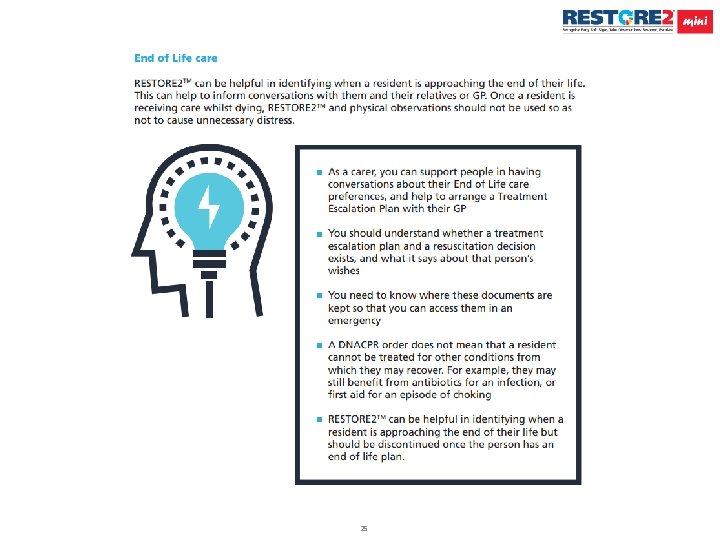
Resuscitation Cardiopulmonary resuscitation can involve chest compressions and defibrillation (heart shock therapy) in an attempt to restart someone’s heart. Resuscitation is more likely to be successful in someone who is ft and well, than in someone who is frail with medical problems. Do Not Attempt Cardiopulmonary Resuscitation or DNACPR decisions may be included in a Treatment Escalation Plan or be documented separately. They advise emergency teams like the ambulance service on whether they should or should not attempt resuscitation. Even if a resident has a DNACPR in place, this does not mean that they cannot be treated for other conditions. For example, they may still benefit from antibiotics for an infection, or first aid for an episode of choking. 29
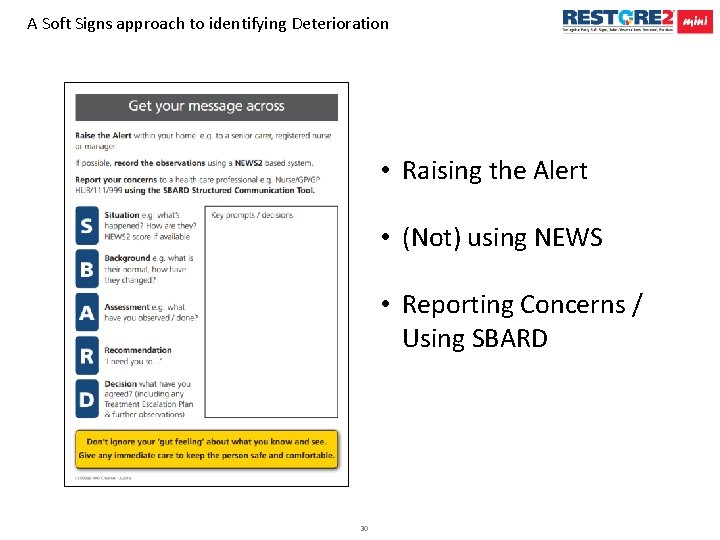
A Soft Signs approach to identifying Deterioration • Raising the Alert • (Not) using NEWS • Reporting Concerns / Using SBARD 30
Physical Observations & NEWS 2 Taking physical observations and recording a NEWS score part of RESTORE 2 are included in the “full” RESTORE 2 tool. RESTORE 2 mini is a “Soft Signs” based tool and does not include the taking of physical observations or the use of NEWS 2. More information about RESTORE 2 (full) can be obtained from Wessex PSC. 31
Raising the Alert 32
Raising the Alert Follow your organisations reporting procedures 33
Reporting Concerns / Using SBARD 34
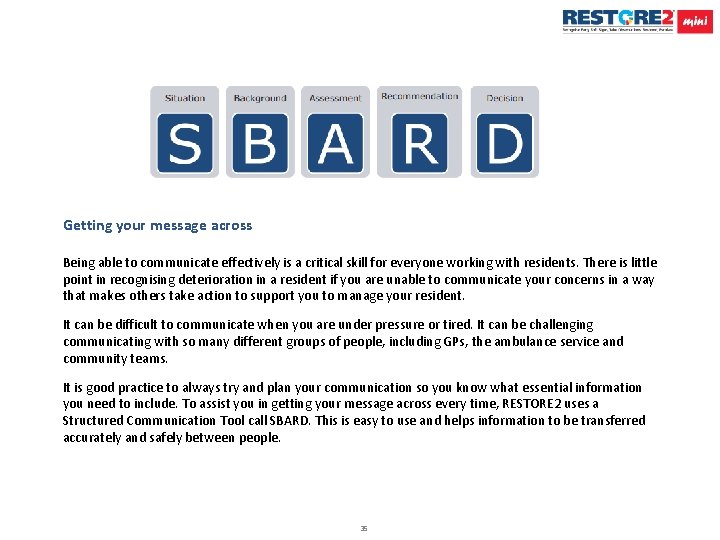
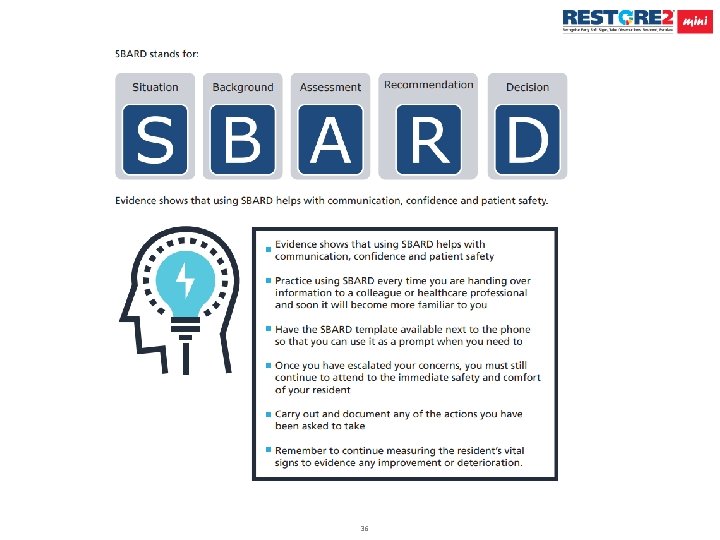
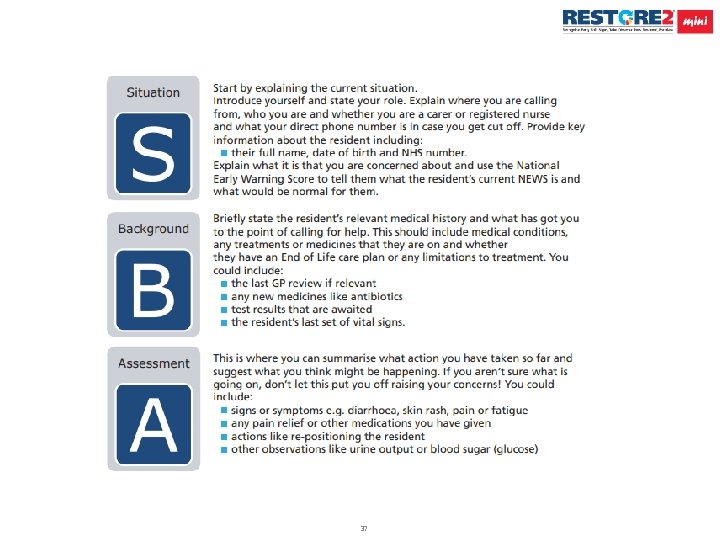
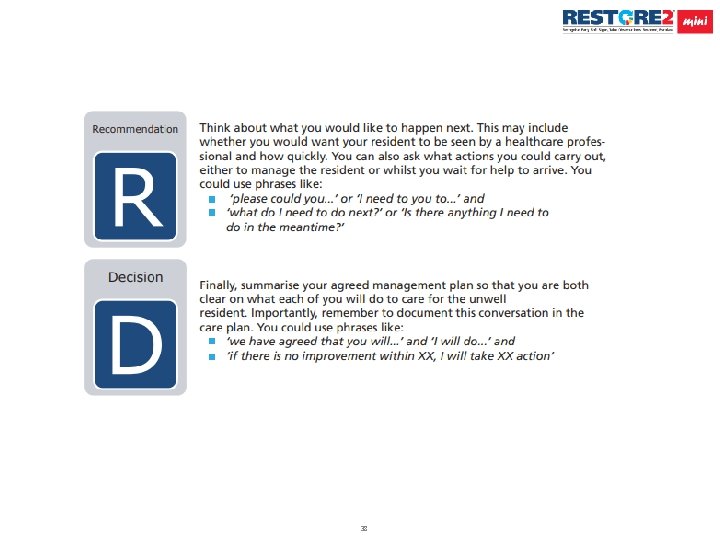
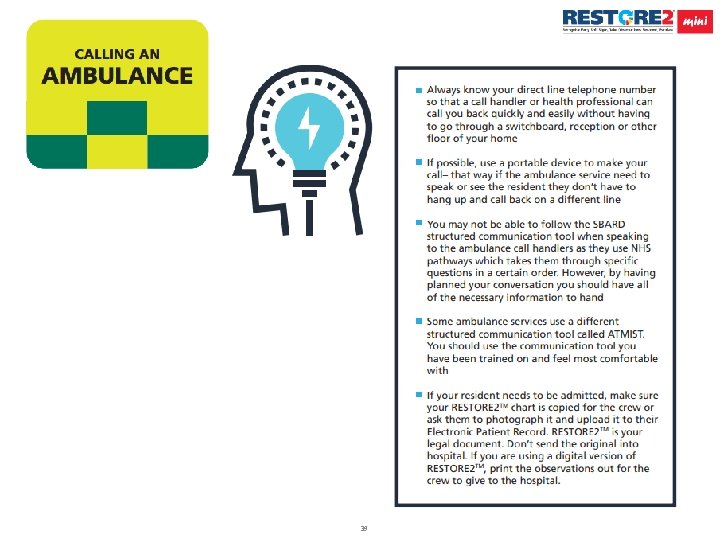
Getting your message across Being able to communicate effectively is a critical skill for everyone working with residents. There is little point in recognising deterioration in a resident if you are unable to communicate your concerns in a way that makes others take action to support you to manage your resident. It can be difficult to communicate when you are under pressure or tired. It can be challenging communicating with so many different groups of people, including GPs, the ambulance service and community teams. It is good practice to always try and plan your communication so you know what essential information you need to include. To assist you in getting your message across every time, RESTORE 2 uses a Structured Communication Tool call SBARD. This is easy to use and helps information to be transferred accurately and safely between people. 35
36
37
38
39
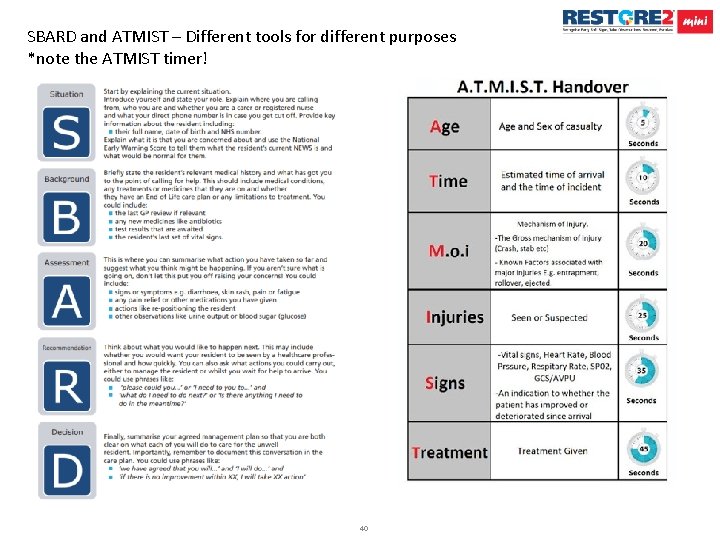
SBARD and ATMIST – Different tools for different purposes *note the ATMIST timer! 40
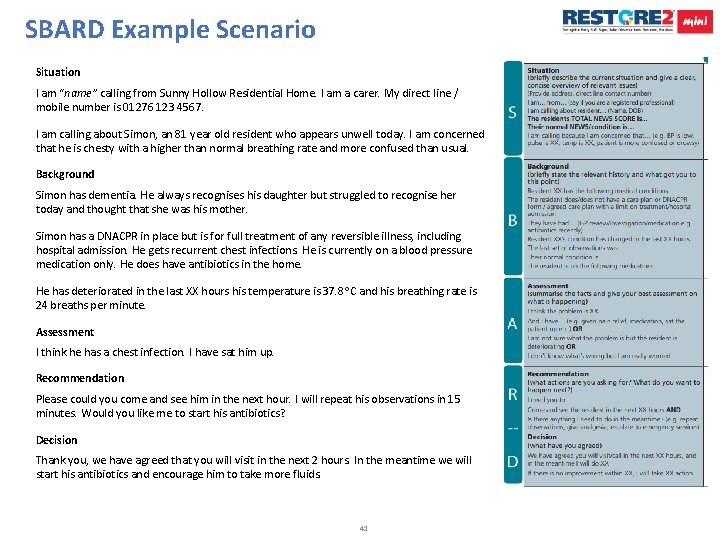
SBARD Example Scenario Situation I am “name” calling from Sunny Hollow Residential Home. I am a carer. My direct line / mobile number is 01276 123 4567. I am calling about Simon, an 81 year old resident who appears unwell today. I am concerned that he is chesty with a higher than normal breathing rate and more confused than usual. Background Simon has dementia. He always recognises his daughter but struggled to recognise her today and thought that she was his mother. Simon has a DNACPR in place but is for full treatment of any reversible illness, including hospital admission. He gets recurrent chest infections. He is currently on a blood pressure medication only. He does have antibiotics in the home. He has deteriorated in the last XX hours his temperature is 37. 8 C and his breathing rate is 24 breaths per minute. Assessment I think he has a chest infection. I have sat him up. Recommendation Please could you come and see him in the next hour. I will repeat his observations in 15 minutes. Would you like me to start his antibiotics? Decision Thank you, we have agreed that you will visit in the next 2 hours. In the meantime we will start his antibiotics and encourage him to take more fluids. 41
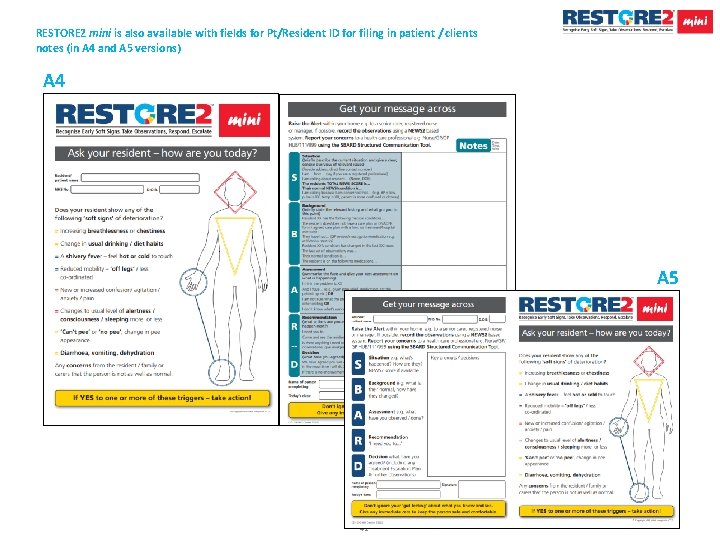
RESTORE 2 mini is also available with fields for Pt/Resident ID for filing in patient / clients notes (in A 4 and A 5 versions) A 4 A 5 42
43