
THE PHONATION PROCESS The vocal cords can be


THE PHONATION PROCESS The vocal cords can be in one of several positions during the production of a sound. The muscles of the vocal cords in the glottis can behave in various ways that affect the sound. The effect of this series of vocal cord states is called the phonation process.
The larynx, or more specifically the interaction between the vocal folds and the egressive pulmonic airstream, is responsible for phonation, the sound source which is termed voice in speech.
Various airstreams are used in speech but the basic one, used in every single language, is the egressive (moving outwards) pulmonic (from the lungs) airstream.
When we speak, we first inhale, filling our lungs with air The expulsion is controlled or regulated by action of the muscles moving the diaphragm and by the various pairs of muscles that act on the rib cage (principally here, the sets of intercostal muscles).
The pathway for the airstream is thus: out from the lungs, up the trachea and viathe larynx into what are called the supraglottal cavities (the cavities above the glottis: the pharynx (the throat), the oral cavity (the mouth) and the nasal cavity (the nose) which collectively form the vocal tract (the part of our body in which vocalization – speech – occurs)
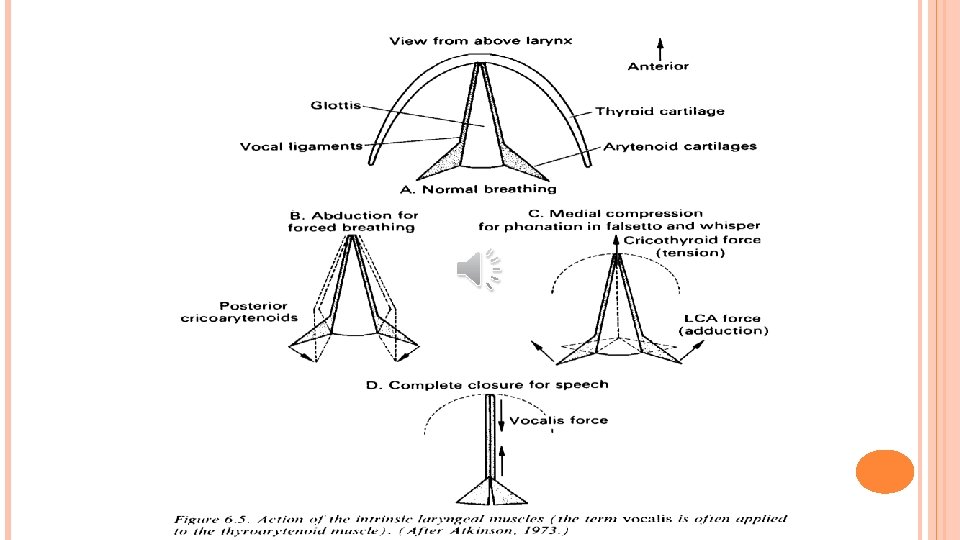

Normal voice is the result of the vocal folds vibrating in a particular way. For this to happen, as soon as the speaker has inhaled, the aretynoid cartilages draw the folds (and themselves) together but not so tightly that they cannot be forced open by the pressure exerted by air which is then expelled from the lungs.
The aretynoids cause them to close in depth, like a pair of curtains with the edges touching all the way from top to bottom as in the first diagram in Figure 2. 4. When the egressive pulmonic airstream reaches the bottom, it is strong enough to start pushing the folds apart from the bottom edge and, gradually, it pushes them apart in depth as it reaches the top of the obstruction. It is acting against the force being exerted by the aretynoids indoing this
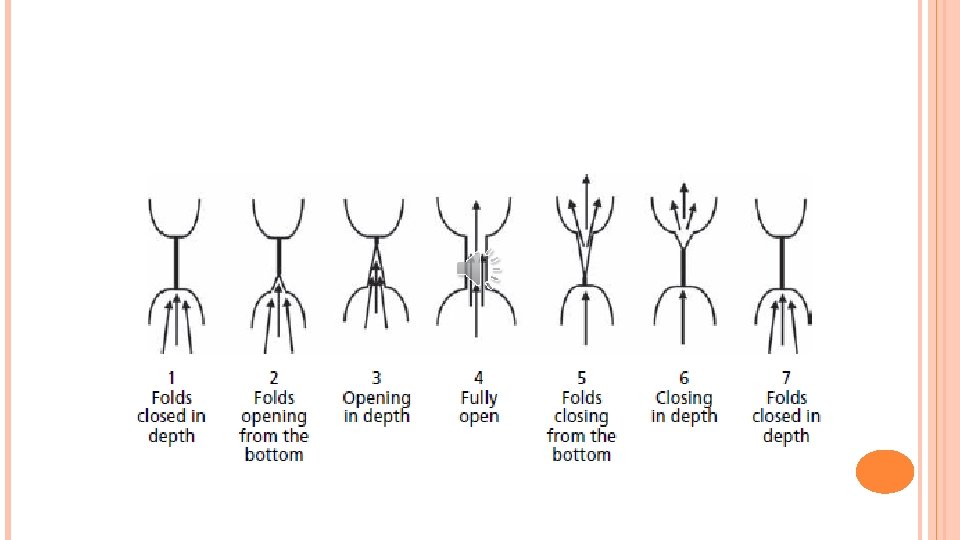
What we have put into words is just one cycle of vibratory activity. they repeat on average 100– 120 times per second for adult male voices and 200– 240 times per second for adult female voices. In children, it can be as many as 300 times per second. We hear this as pitch when we listen to speech
the faster the rate of vibration, the higher the pitch of the voice. In physical terms, we talk about the frequency with which the cycle repeats and this measurement is expressed in Hertz (Hz). One Hz is one cycle per second.
![VOICE When you produce a voiceless sound (such as [s, (sh), f, ]) the](http://slidetodoc.com/presentation_image_h2/8986f408d5ee22e3f0800c4564dde04b/image-14.jpg "VOICE When you produce a voiceless sound (such as [s, (sh), f, ]) the")
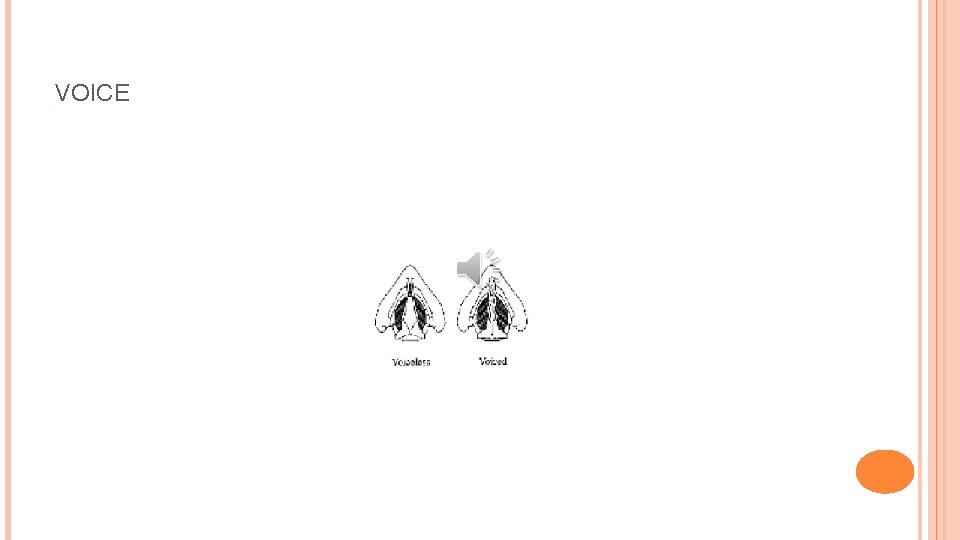
VOICE When you produce a voiceless sound (such as [s, (sh), f, ]) the glottis is open and air passes relatively unimpeded between the vocal folds (see diagram above). Voicing is produced when the vocal folds are lightly closed (drawn together).
VOICE
CREAKY SOUND Laryngealization. The posterior (artenoid) portion of the vocal cords can be closed to produce a laryngealized or creaky sound. This doesn't play a meaningful role in English phonology, although we might use a creaky voice to imitate an old witch when reading fairy tales. Some languages of Southeast Asia and Africa have creaky vowels and consonants. Listen to creaky voice!
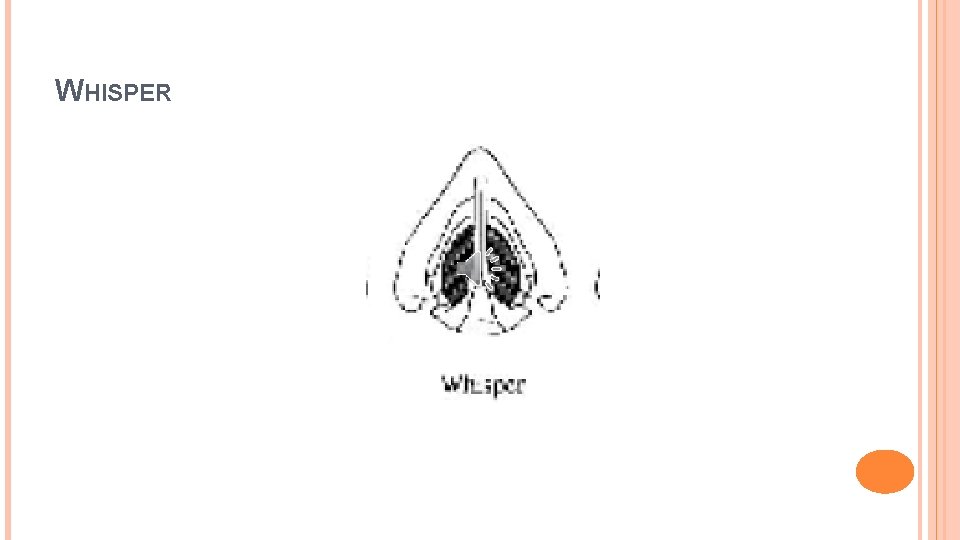
WHISPER A similar vocal cord state is used to produce the whisper. The vocal chords are narrowed but not vibrated, narrowing is more complete at the anterior end, less so at the posterior end. Whispered sounds do not contrast with non-whispered sounds to produce differences of meaning in any known language, but the whispered voice is common as a speech variant across languages. Listen to whisper!
WHISPER

- Slides: 19