
The Phoenix Compiler and Tools Framework Andy Ayers
- Slides: 26
The Phoenix Compiler and Tools Framework Andy Ayers Microsoft Phoenix Andy. A@microsoft. com
What is Phoenix? • Phoenix is a codename for Microsoft’s next-generation, state of the art infrastructure for program analysis and transformation
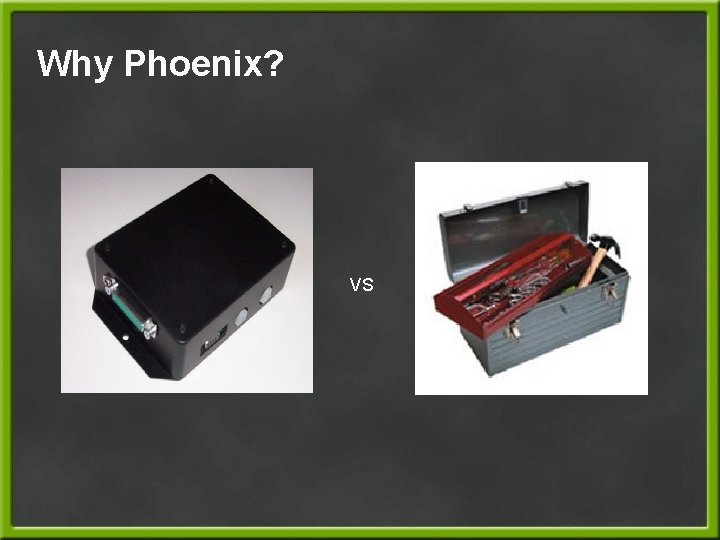
Why Phoenix? VS
Phoenix Goals An industry leading compilation and tools framework A rich ecosystem for academic research and industrial users An infrastructure that is robust retargetable extensible configurable scalable
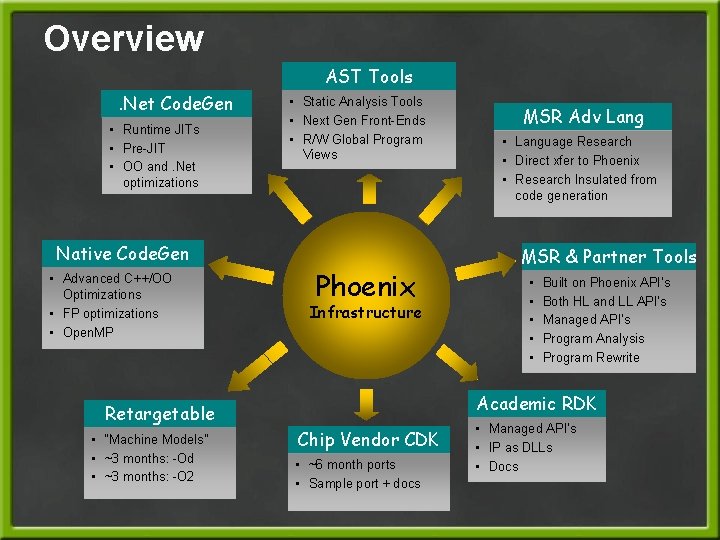
Overview AST Tools. Net Code. Gen • Runtime JITs • Pre-JIT • OO and. Net optimizations Native Code. Gen • Advanced C++/OO Optimizations • FP optimizations • Open. MP • Static Analysis Tools • Next Gen Front-Ends • R/W Global Program Views Phoenix Infrastructure • Language Research • Direct xfer to Phoenix • Research Insulated from code generation MSR & Partner Tools • • • Built on Phoenix API’s Both HL and LL API’s Managed API’s Program Analysis Program Rewrite Academic RDK Retargetable • “Machine Models” • ~3 months: -Od • ~3 months: -O 2 MSR Adv Lang Chip Vendor CDK • ~6 month ports • Sample port + docs • Managed API’s • IP as DLLs • Docs
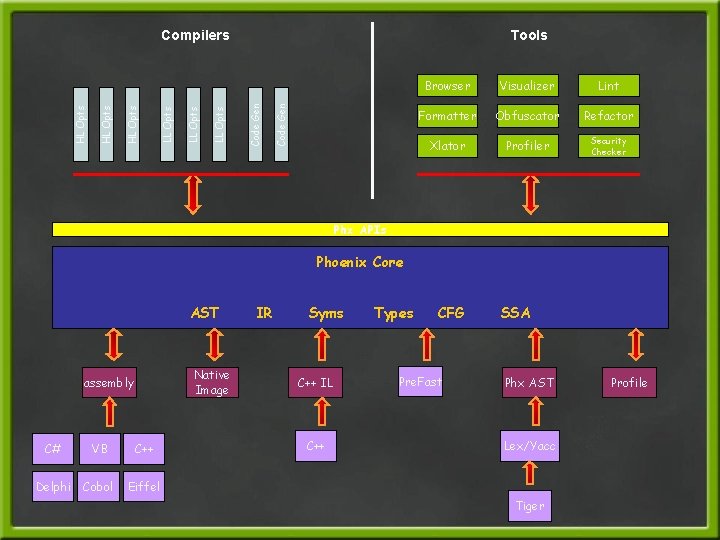
Code Gen Tools Code Gen LL Opts HL Opts Compilers Browser Visualizer Lint Formatter Obfuscator Refactor Xlator Profiler Security Checker Phx APIs Phoenix Core AST Native Image assembly C# VB C++ Delphi Cobol Eiffel IR Syms C++ IL C++ Types CFG Pre. Fast SSA Phx AST Lex/Yacc Tiger Profile
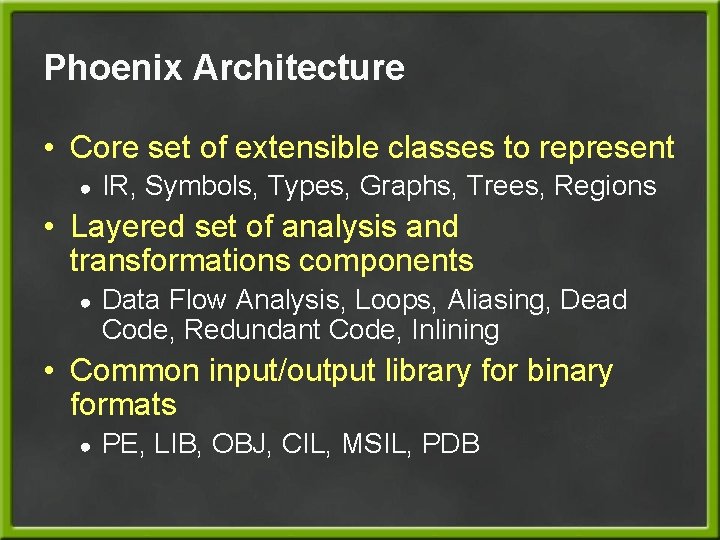
Phoenix Architecture • Core set of extensible classes to represent ● IR, Symbols, Types, Graphs, Trees, Regions • Layered set of analysis and transformations components ● Data Flow Analysis, Loops, Aliasing, Dead Code, Redundant Code, Inlining • Common input/output library for binary formats ● PE, LIB, OBJ, CIL, MSIL, PDB
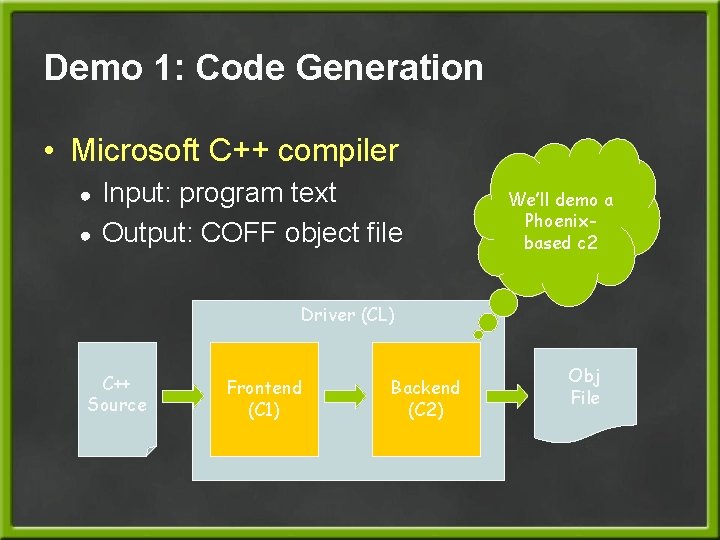
Demo 1: Code Generation • Microsoft C++ compiler ● ● Input: program text Output: COFF object file We’ll demo a Phoenixbased c 2 Driver (CL) C++ Source Frontend (C 1) Backend (C 2) Obj File
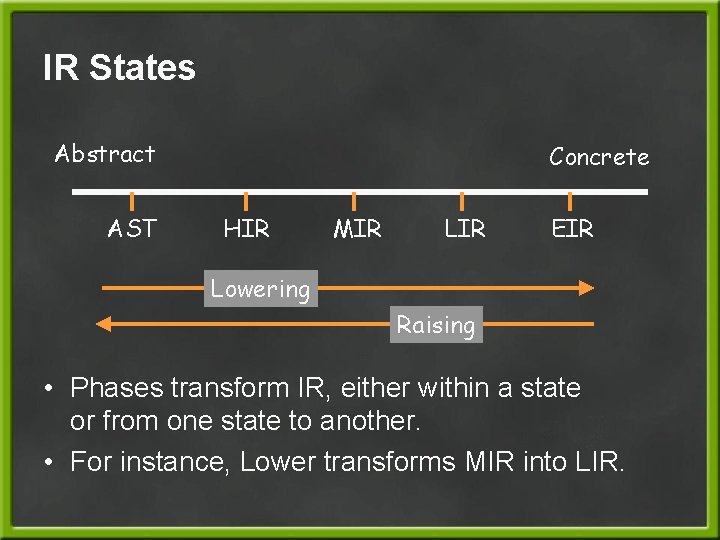
IR States Abstract AST Concrete HIR MIR LIR EIR Lowering Raising • Phases transform IR, either within a state or from one state to another. • For instance, Lower transforms MIR into LIR.
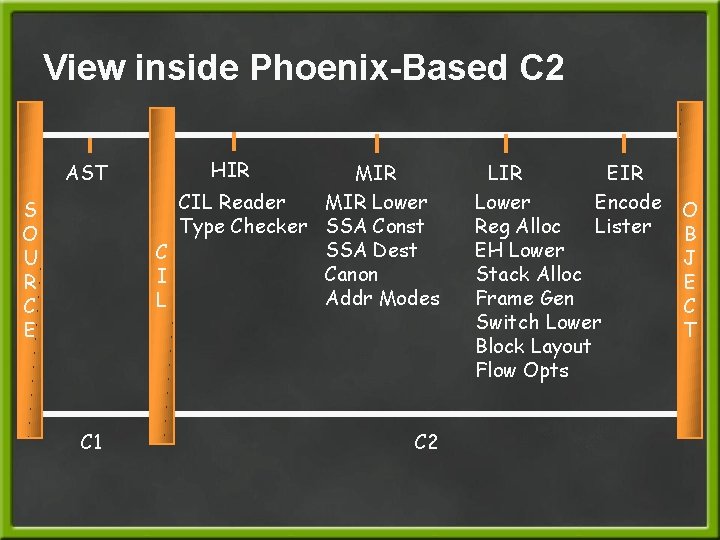
View inside Phoenix-Based C 2 AST S O U R C E C 1 HIR MIR CIL Reader MIR Lower Type Checker SSA Const SSA Dest C Canon I Addr Modes L C 2 LIR EIR Lower Encode Reg Alloc Lister EH Lower Stack Alloc Frame Gen Switch Lower Block Layout Flow Opts O B J E C T
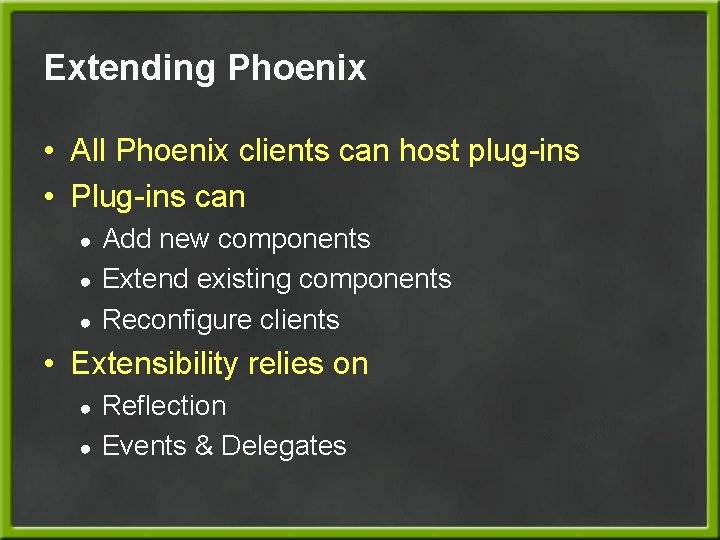
Extending Phoenix • All Phoenix clients can host plug-ins • Plug-ins can ● ● ● Add new components Extend existing components Reconfigure clients • Extensibility relies on ● ● Reflection Events & Delegates
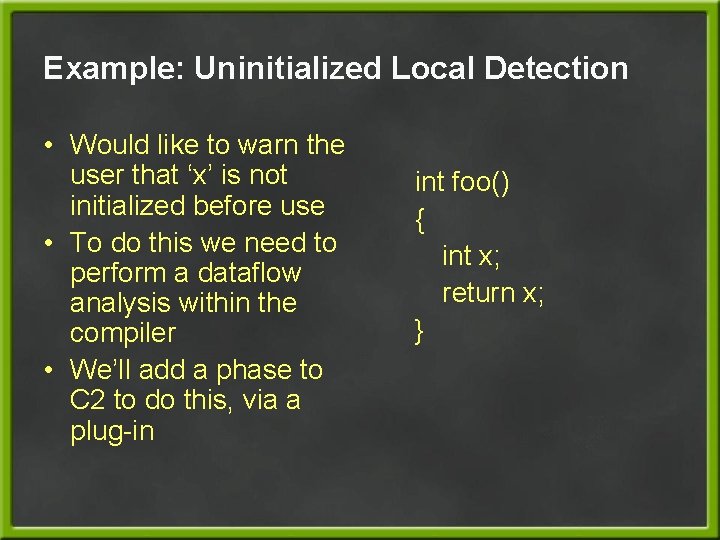
Example: Uninitialized Local Detection • Would like to warn the user that ‘x’ is not initialized before use • To do this we need to perform a dataflow analysis within the compiler • We’ll add a phase to C 2 to do this, via a plug-in int foo() { int x; return x; }
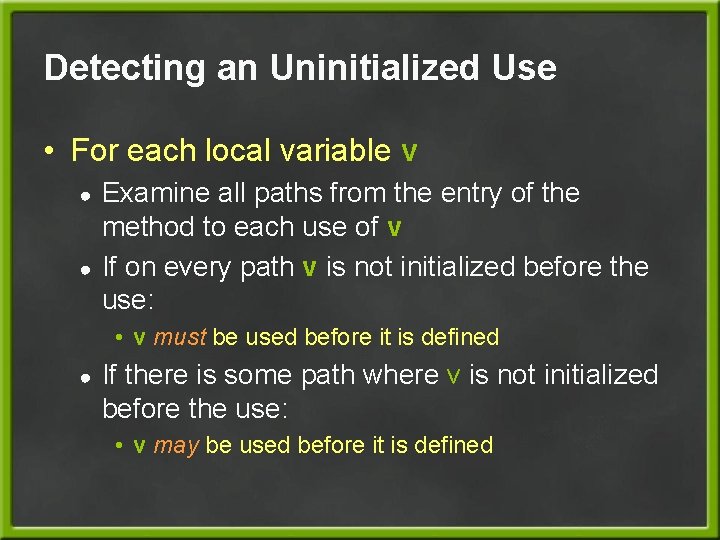
Detecting an Uninitialized Use • For each local variable v ● ● Examine all paths from the entry of the method to each use of v If on every path v is not initialized before the use: • v must be used before it is defined ● If there is some path where v is not initialized before the use: • v may be used before it is defined
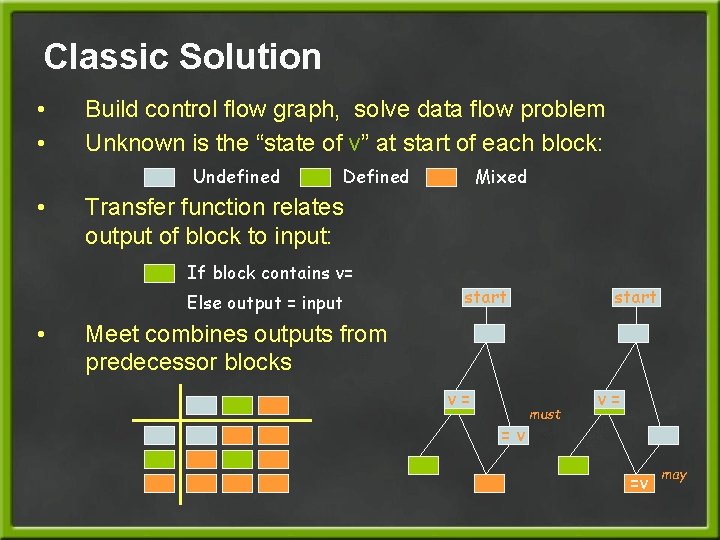
Classic Solution • • Build control flow graph, solve data flow problem Unknown is the “state of v” at start of each block: Undefined • Defined Transfer function relates output of block to input: If block contains v= Else output = input • Mixed start Meet combines outputs from predecessor blocks v= =v must v= =v may
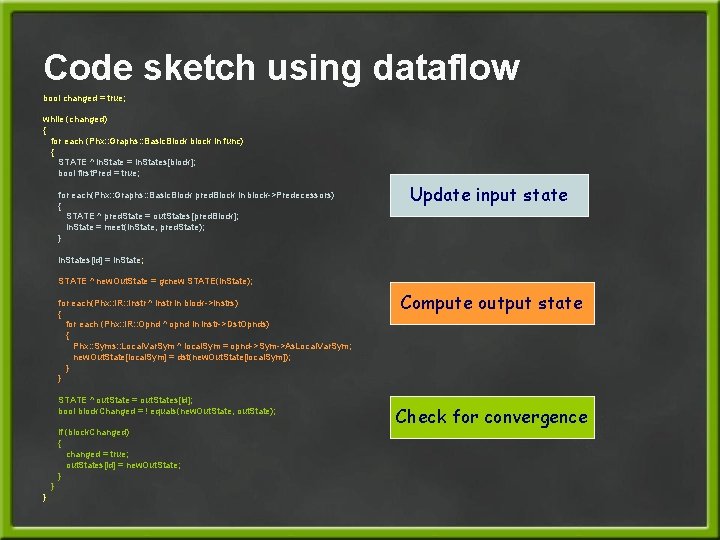
Code sketch using dataflow bool changed = true; while (changed) { for each (Phx: : Graphs: : Basic. Block block in func) { STATE ^ in. State = in. States[block]; bool first. Pred = true; for each(Phx: : Graphs: : Basic. Block pred. Block in block->Predecessors) { STATE ^ pred. State = out. States[pred. Block]; in. State = meet(in. State, pred. State); } Update input state in. States[id] = in. State; STATE ^ new. Out. State = gcnew STATE(in. State); for each(Phx: : IR: : Instr ^ instr in block->Instrs) { for each (Phx: : IR: : Opnd ^ opnd in instr->Dst. Opnds) { Phx: : Syms: : Local. Var. Sym ^ local. Sym = opnd->Sym->As. Local. Var. Sym; new. Out. State[local. Sym] = dst(new. Out. State[local. Sym]); } } STATE ^ out. State = out. States[id]; bool block. Changed = ! equals(new. Out. State, out. State); if (block. Changed) { changed = true; out. States[id] = new. Out. State; } } } Compute output state Check for convergence
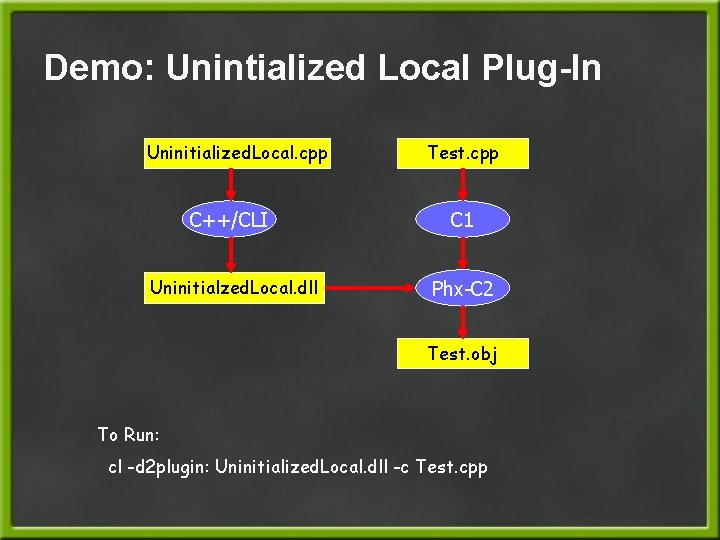
Demo: Unintialized Local Plug-In Uninitialized. Local. cpp Test. cpp C++/CLI C 1 Uninitialzed. Local. dll Phx-C 2 Test. obj To Run: cl -d 2 plugin: Uninitialized. Local. dll -c Test. cpp
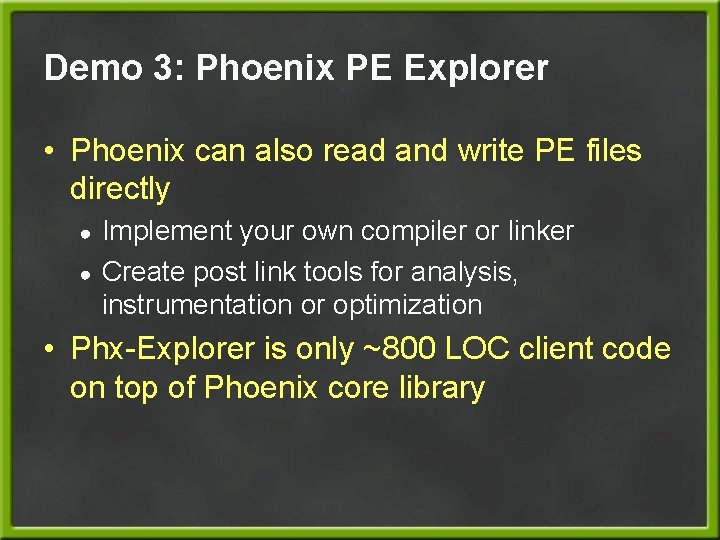
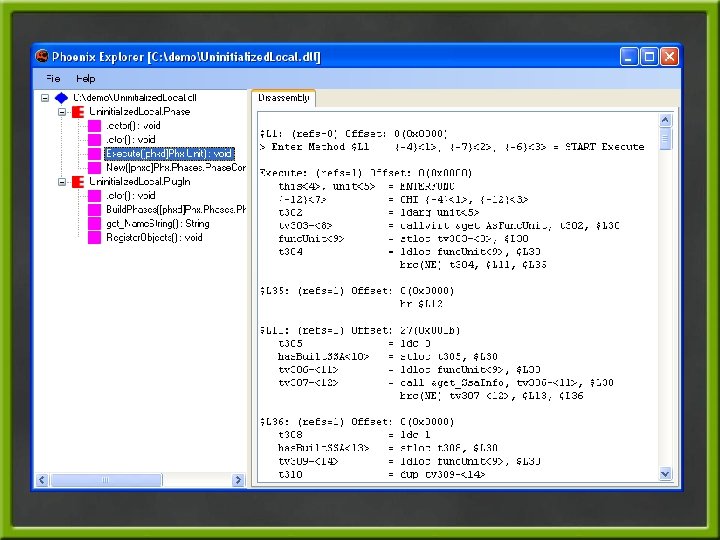
Demo 3: Phoenix PE Explorer • Phoenix can also read and write PE files directly ● ● Implement your own compiler or linker Create post link tools for analysis, instrumentation or optimization • Phx-Explorer is only ~800 LOC client code on top of Phoenix core library
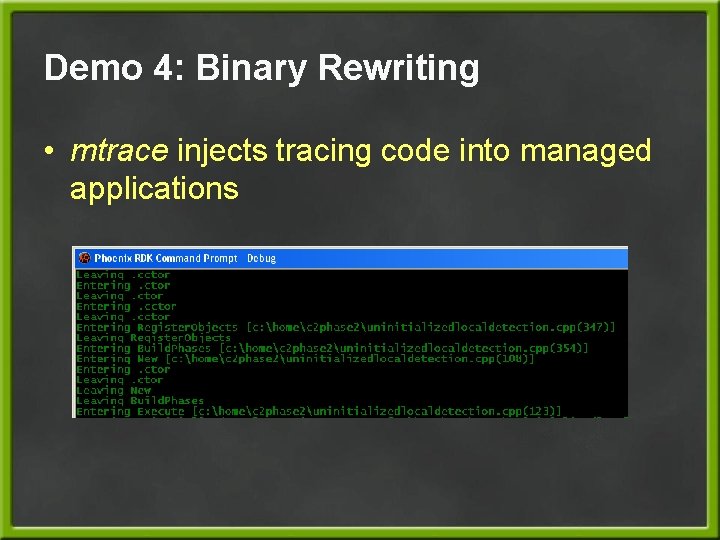
Demo 4: Binary Rewriting • mtrace injects tracing code into managed applications
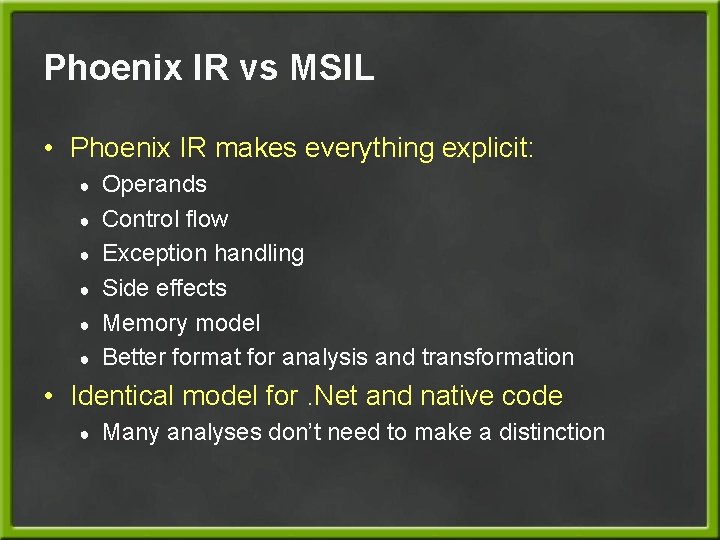
Phoenix IR vs MSIL • Phoenix IR makes everything explicit: ● ● ● Operands Control flow Exception handling Side effects Memory model Better format for analysis and transformation • Identical model for. Net and native code ● Many analyses don’t need to make a distinction
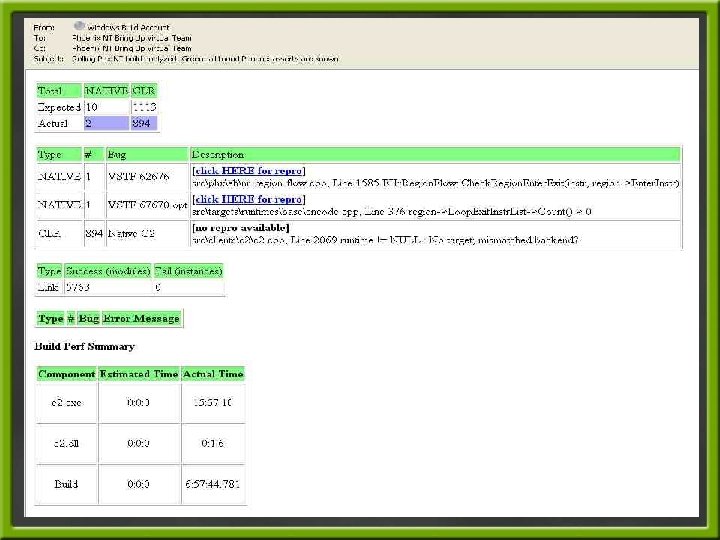
Current Status • RDKs released every 6 mos (May 06) with regular updates. • Phoenix is now building Vista • ~15 universities engaged via academic program • Code quality, code size, features, compile times not yet on par with the retail product (but closing ground fast).
Recap • Phoenix is a powerful and flexible framework for compilers & tools ● ● C 2 backend PE file read/write JIT & Pre. JIT (not shown) Universal plugins on a common IR • You can use the same components we use in your own work. ● ● ● Download available now Prerequisite: VS 2005 (VC++ Express will work, mostly) Evaluation license prohibits redist or commercial use
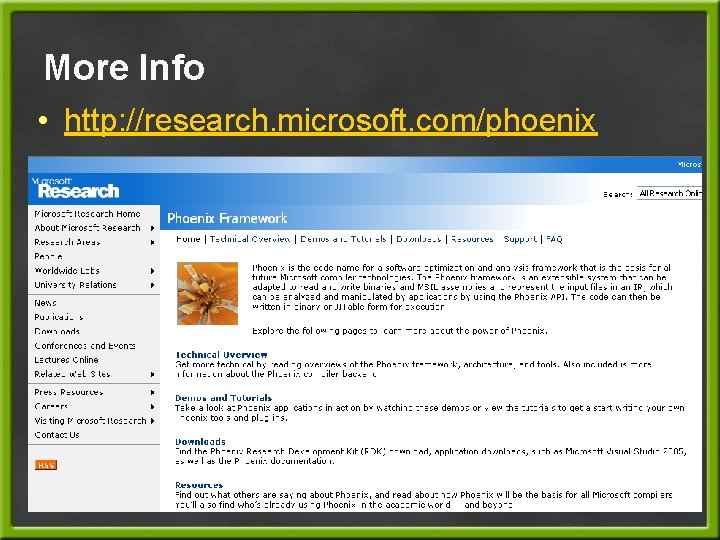
More Info • http: //research. microsoft. com/phoenix
Summary • Phoenix is Microsoft’s next-generation tools and code generation framework • It’s written entirely in C++/CLI • It’s available for you to experiment with now…
Questions? http: //research. microsoft. com/phoenix andya@microsoft. com