
The Phoenicians and The Hebrews 1830 B C
The Phoenicians and The Hebrews 1830 B. C. – 510 B. C. World History Moscow Middle School Mrs. Bailey
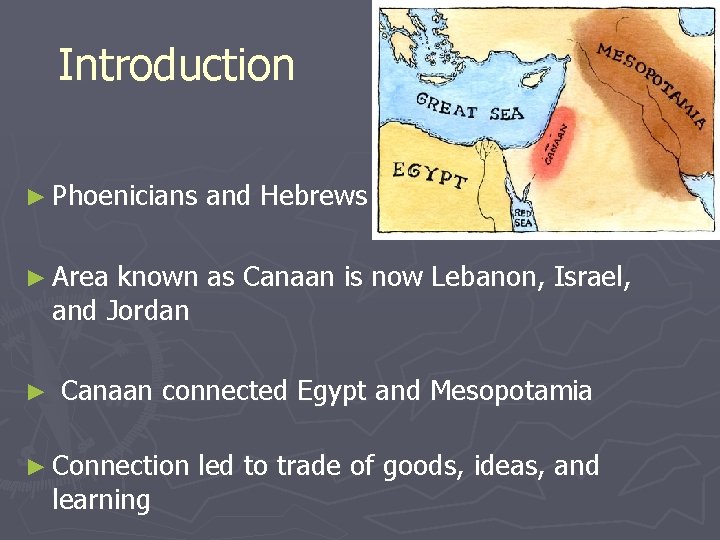
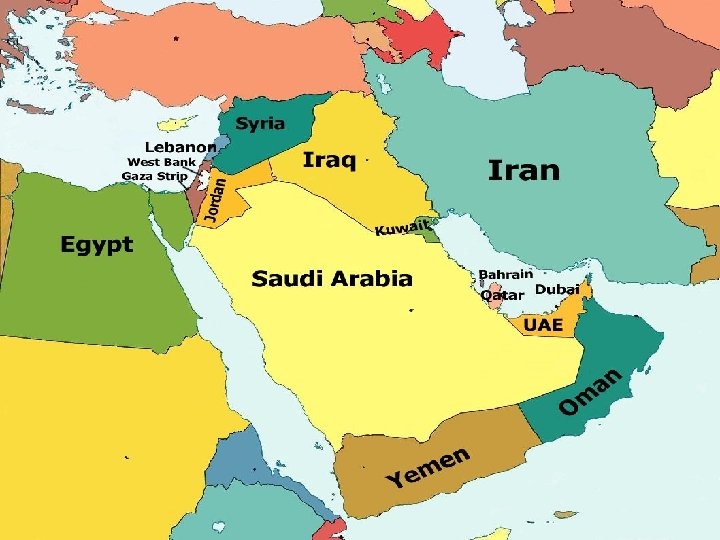
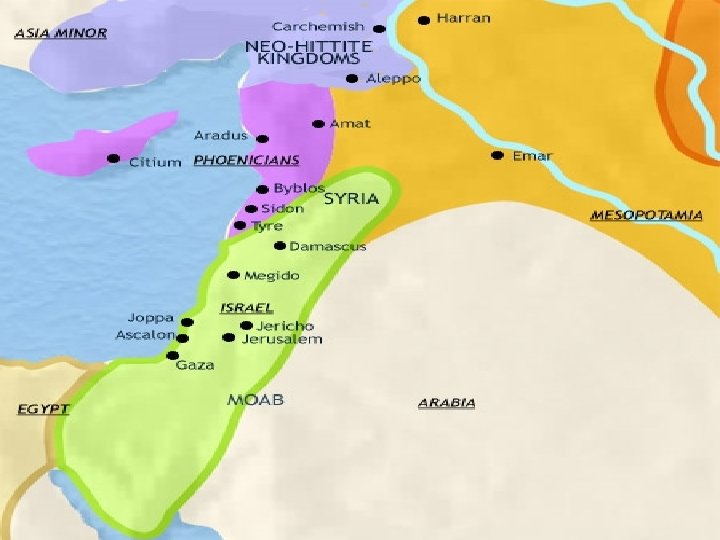
Introduction ► Phoenicians and Hebrews ► Area known as Canaan is now Lebanon, Israel, and Jordan ► Canaan connected Egypt and Mesopotamia ► Connection learning led to trade of goods, ideas, and
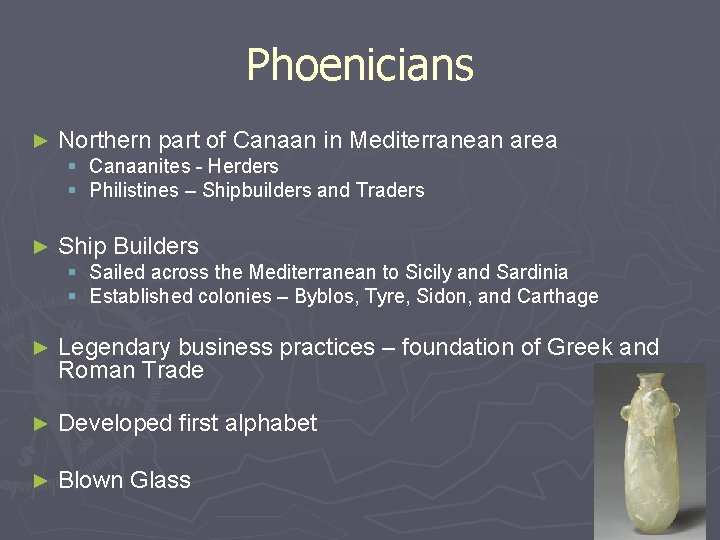
Phoenicians ► Northern part of Canaan in Mediterranean area § Canaanites - Herders § Philistines – Shipbuilders and Traders ► Ship Builders § Sailed across the Mediterranean to Sicily and Sardinia § Established colonies – Byblos, Tyre, Sidon, and Carthage ► Legendary business practices – foundation of Greek and Roman Trade ► Developed first alphabet ► Blown Glass
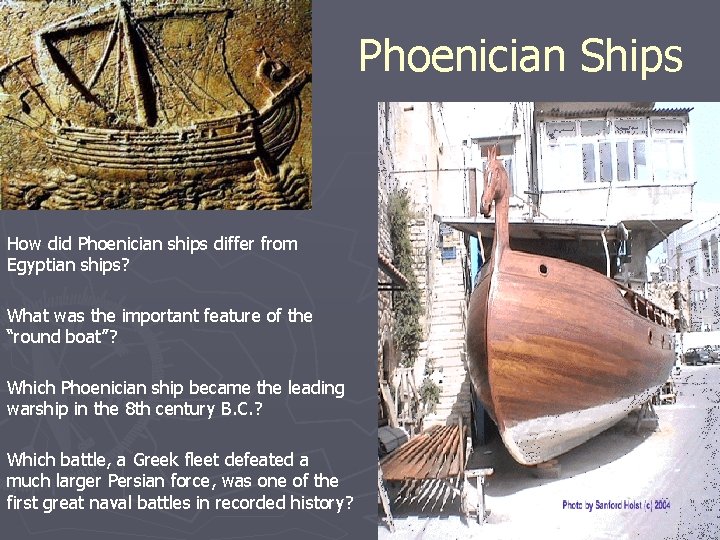
Phoenician Ships How did Phoenician ships differ from Egyptian ships? What was the important feature of the “round boat”? Which Phoenician ship became the leading warship in the 8 th century B. C. ? Which battle, a Greek fleet defeated a much larger Persian force, was one of the first great naval battles in recorded history?
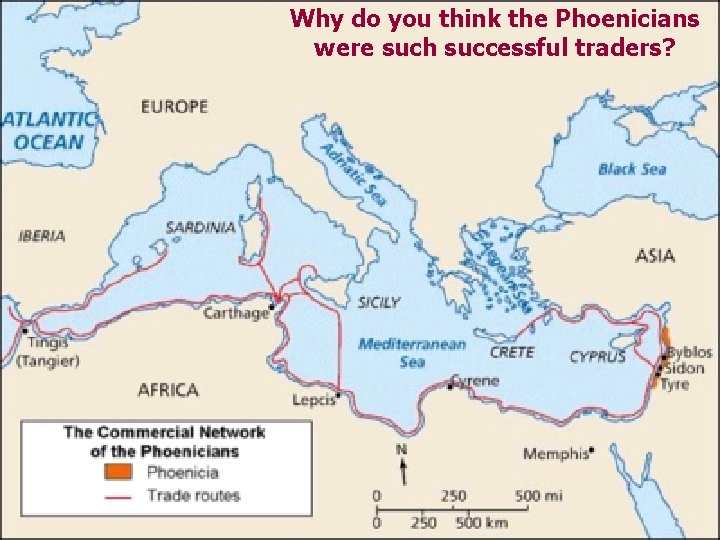
Why do you think the Phoenicians were such successful traders?
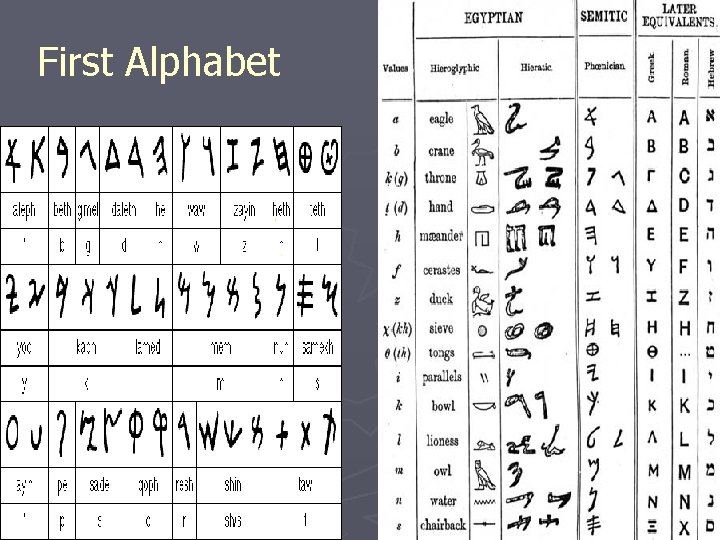
First Alphabet
Hebrews (“from across”) or Israelites Origins (c. 1900 B. C. ) ► From Ur in S. Mesopotamia § Nomadic herders and merchant traders ► Traded with Egyptians, Phoenicians, and Cretans and area known now as Iraq § Settled in Canaan - modern day Lebanon, Jordan, and Israel § Descended from Abraham “Father of many” ► Abraham had a grandson named Jacob, whose children would later form the 12 tribes of Israel
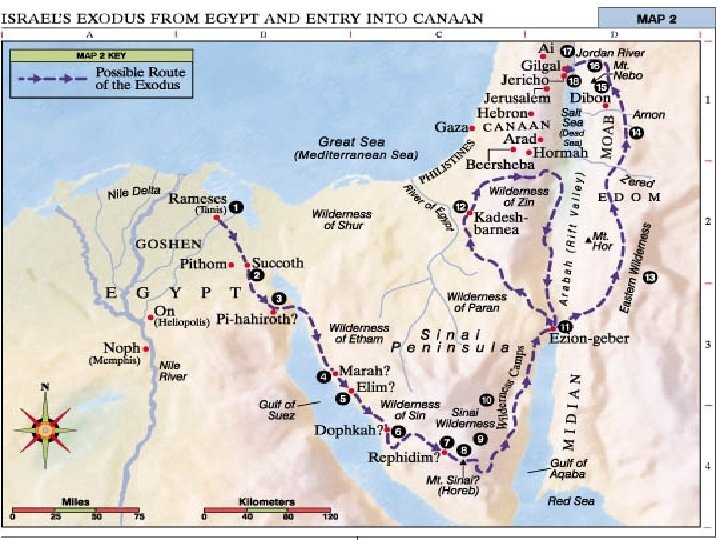
Hebrews or Israelites ► Judaism – still exists § Monotheistic – Believed in one god § Recorded history – Hebrew Bible or Old Testament ► Exodus § § Famine hits Canaan – many moved to Egypt Enslaved in Egypt - built famous monuments and cities Moses ended Hebrew enslavement and led out of Egypt Passover – re-dedicate to freedom
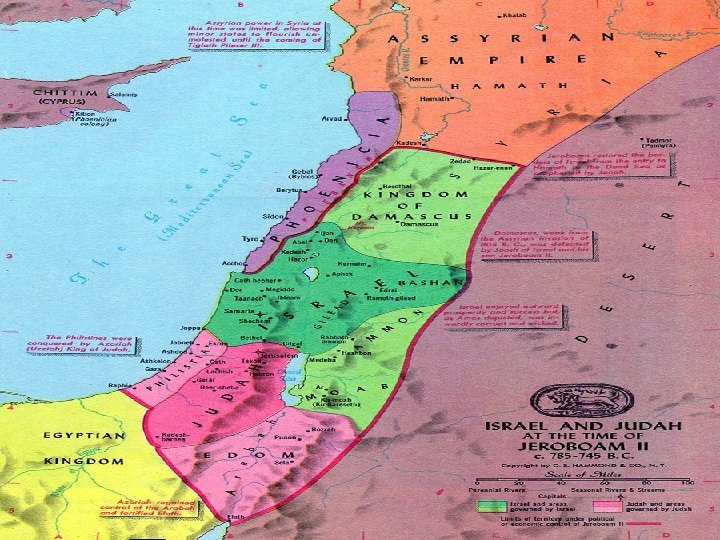
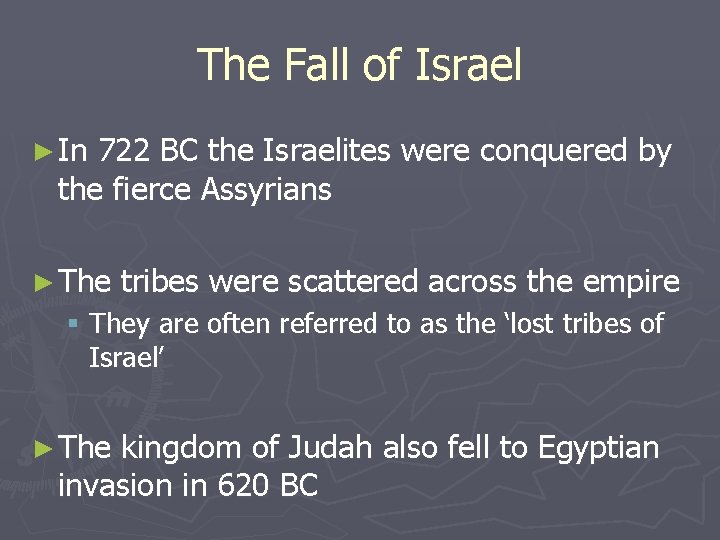
The Fall of Israel ► In 722 BC the Israelites were conquered by the fierce Assyrians ► The tribes were scattered across the empire § They are often referred to as the ‘lost tribes of Israel’ ► The kingdom of Judah also fell to Egyptian invasion in 620 BC
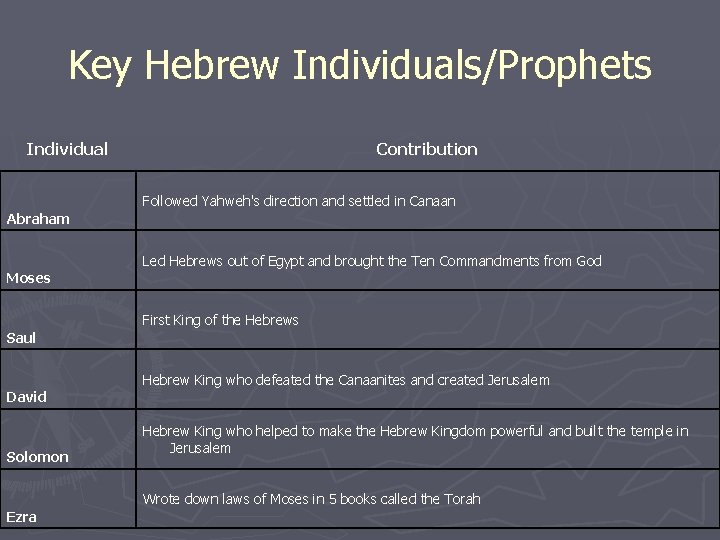
Key Hebrew Individuals/Prophets Individual Contribution Followed Yahweh's direction and settled in Canaan Abraham Led Hebrews out of Egypt and brought the Ten Commandments from God Moses First King of the Hebrews Saul Hebrew King who defeated the Canaanites and created Jerusalem David Solomon Hebrew King who helped to make the Hebrew Kingdom powerful and built the temple in Jerusalem Wrote down laws of Moses in 5 books called the Torah Ezra
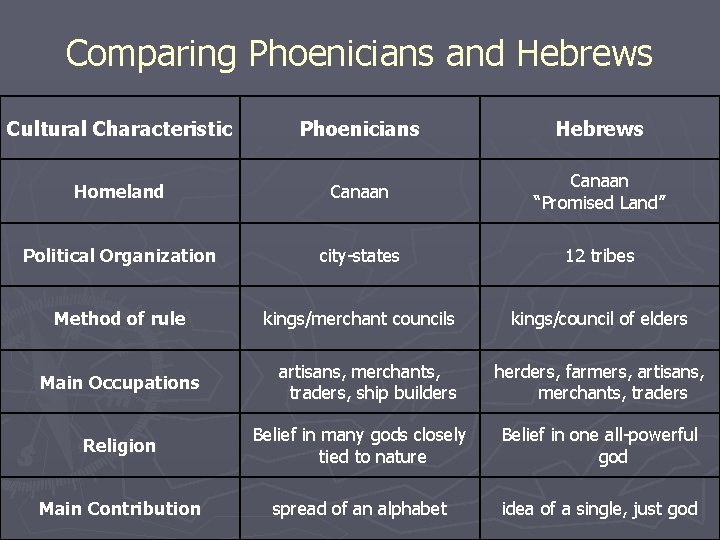
Comparing Phoenicians and Hebrews Cultural Characteristic Phoenicians Hebrews Homeland Canaan “Promised Land” Political Organization city-states 12 tribes Method of rule kings/merchant councils kings/council of elders Main Occupations artisans, merchants, traders, ship builders herders, farmers, artisans, merchants, traders Religion Belief in many gods closely tied to nature Belief in one all-powerful god Main Contribution spread of an alphabet idea of a single, just god
- Slides: 15