
THE PHILIPPINE NUTRITION CLUSTERS BATTLE FOR THE BEST
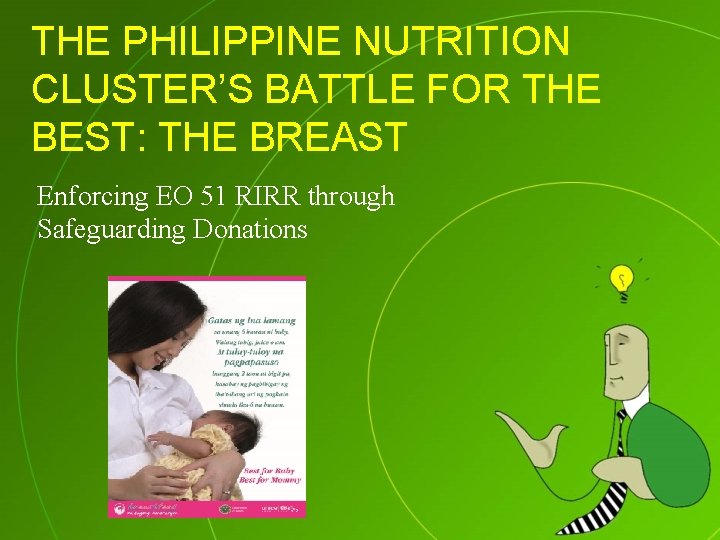
THE PHILIPPINE NUTRITION CLUSTER’S BATTLE FOR THE BEST: THE BREAST Enforcing EO 51 RIRR through Safeguarding Donations
OUTLINE l Background l Challenges l Enabling Factors l Policy Content l Next Steps (Plan)
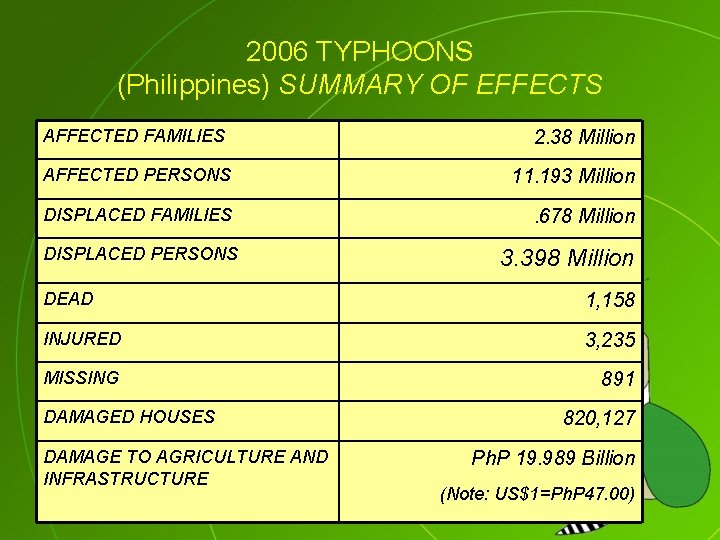
2006 TYPHOONS (Philippines) SUMMARY OF EFFECTS AFFECTED FAMILIES 2. 38 Million AFFECTED PERSONS 11. 193 Million DISPLACED FAMILIES . 678 Million DISPLACED PERSONS 3. 398 Million DEAD 1, 158 INJURED 3, 235 MISSING 891 DAMAGED HOUSES DAMAGE TO AGRICULTURE AND INFRASTRUCTURE 820, 127 Ph. P 19. 989 Billion (Note: US$1=Ph. P 47. 00)
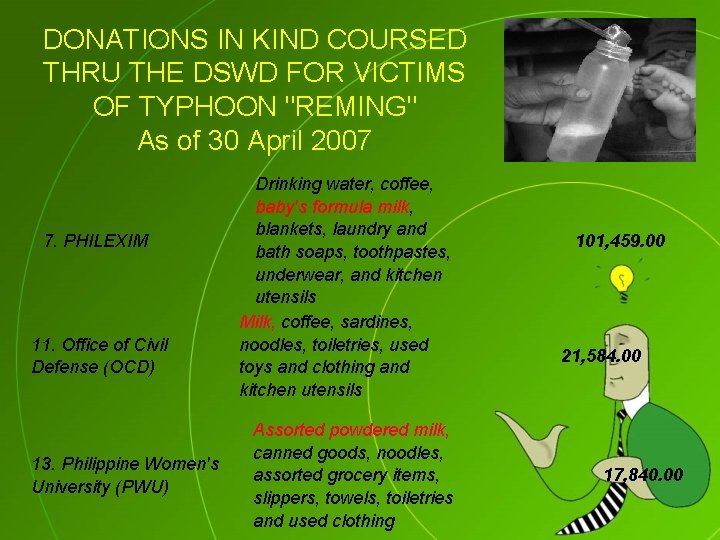
DONATIONS IN KIND COURSED THRU THE DSWD FOR VICTIMS OF TYPHOON "REMING" As of 30 April 2007 7. PHILEXIM 11. Office of Civil Defense (OCD) 13. Philippine Women's University (PWU) Drinking water, coffee, baby's formula milk, blankets, laundry and bath soaps, toothpastes, underwear, and kitchen utensils Milk, coffee, sardines, noodles, toiletries, used toys and clothing and kitchen utensils Assorted powdered milk, canned goods, noodles, assorted grocery items, slippers, towels, toiletries and used clothing 101, 459. 00 21, 584. 00 17, 840. 00
OTHER PRACTICES IN DISASTER l Evacuation Camps provided no space promotive to breastfeeding • 40% of all donations which arrived in the 1 st three days, mostly from foreign sources, were not monitored l Fragmented, independent, and donor driven assistance of NGOs
Summary of Post-disaster Evaluation Workshops The lack of guidelines and a clear-cut scheme on managing the flood of donations post-disaster resulted in issues of lack of local capacity in handling aids as well as inappropriateness and inequity in distribution of donations.
Call for Action Development of a national policy for managing humanitarian aids and strengthening of local capacities to prepare for and manage relief supplies is warranted.
Objectives l Increase public awareness l Sustain public support Promote breastfeeding practices especially in the evacuation centers/camps l l Establish a better relationship with donors Set standards and procedures on management of donations l l Enhance local capacities in handling donations
Enabling Factors A. Existing Guidelines on the Processing & Clearance of Importation Through Donations by the DOH l Guidelines for Drug Donations Handbook on Emergency Field Operations, WHO l • Guidelines for Assistance/Sponsorship by Manufacturers of Products Covered by Executive Order 51 • Draft Guidelines for the Domestic Facilitation and Regulation of International Relief and Initial assistance • National Policies on Infant and Young Child Feeding • Inter-agency Contingency Planning Guidelines for Humanitarian Assistance
B. Organizational Support Organization of the Health Sector in December 2001 by MOA signing l Establishment of the Health Cluster- 2006 under NDCC Circular No. 5 s. 2007 l The good news is that the Health Department’s budget for breastfeeding promotion for 2008 has been increased to $818, 000. l Chain of malls are tapped to welcome breastfeeding in their stores (Shoemart & NCC Malls) l DOH-UNICEF collaborative protest actions against milk companies l
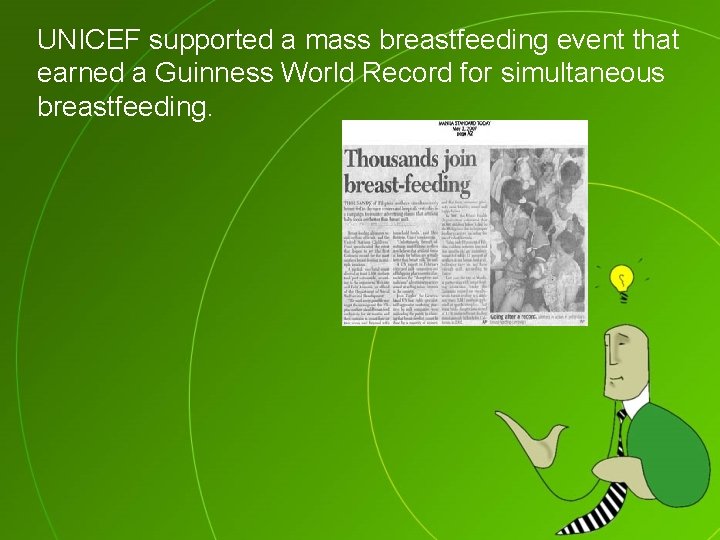
UNICEF supported a mass breastfeeding event that earned a Guinness World Record for simultaneous breastfeeding.
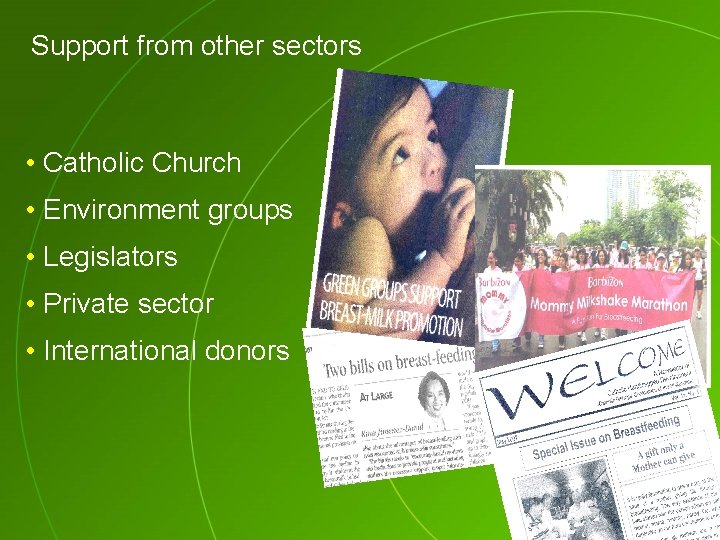
Support from other sectors • Catholic Church • Environment groups • Legislators • Private sector • International donors
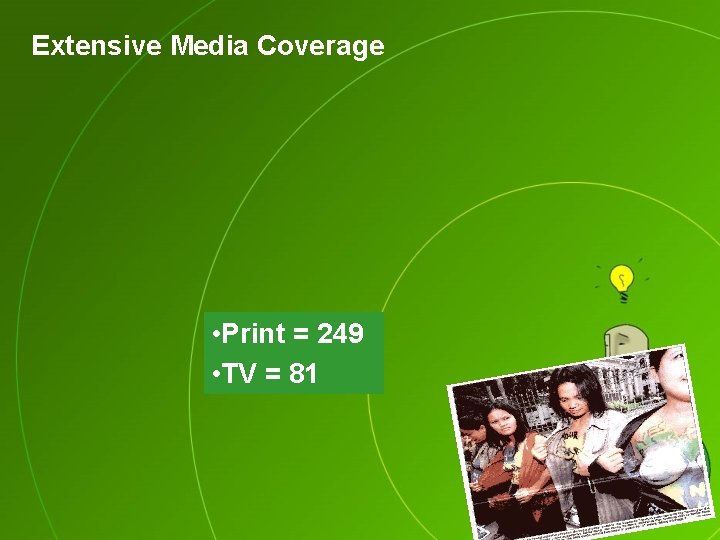
Extensive Media Coverage • Print = 249 • TV = 81

C. Institutionalization of the Cluster Approach in the Philippine Disaster Management (NDCC Circular # 5) The DOH was designated as Cluster Lead in Health, Nutrition, and WASH with well-defined roles and responsibilities.
Nutrition Cluster Members LEAD: DOH-HEMS l Plan International Assistant Lead: DOH-NNC l HKI l DSWD l DILG IASC Focal Point: UNICEF Members: l DOH-NCDPC l DOST-FNRI l PNRC l WHO l Save the Children Department of Education l l UNFPA
D. Technical Working Committee for Policy Development Lead: Bureau of International Health Cooperation Members: Health Emergency Management Staff Bureau of Health Devices & Technology Bureau of Food & Drug Administration Material Management Division
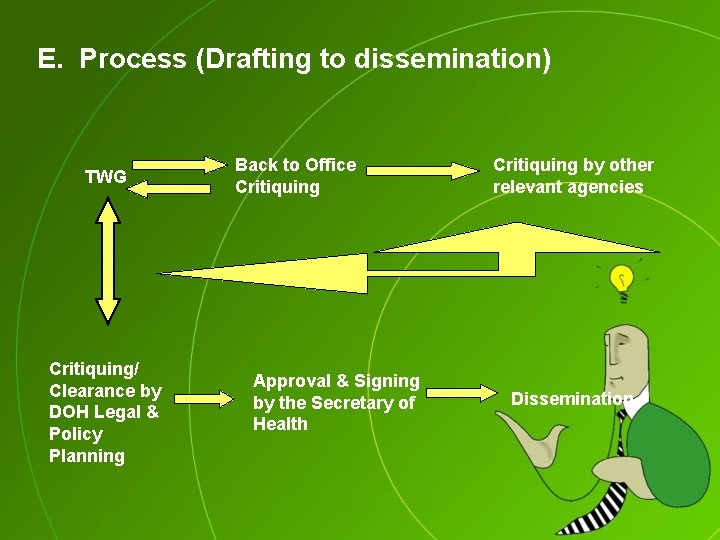
E. Process (Drafting to dissemination) TWG Critiquing/ Clearance by DOH Legal & Policy Planning Back to Office Critiquing Approval & Signing by the Secretary of Health Critiquing by other relevant agencies Dissemination
E. Major Venues for Dissemination • HEMS Convention • HEMS National Consultative Planning Workshop • Health Cluster & Sector Meetings • Donor’s Conference • BIHC communication to the Philippine embassies in different countries through DFA • IYCF Training Course • Training in Public Health and Emergency Management
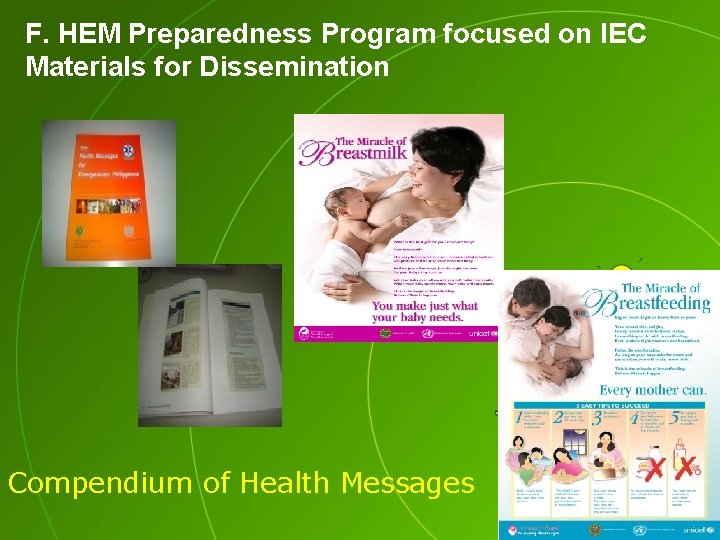
F. HEM Preparedness Program focused on IEC Materials for Dissemination Compendium of Health Messages
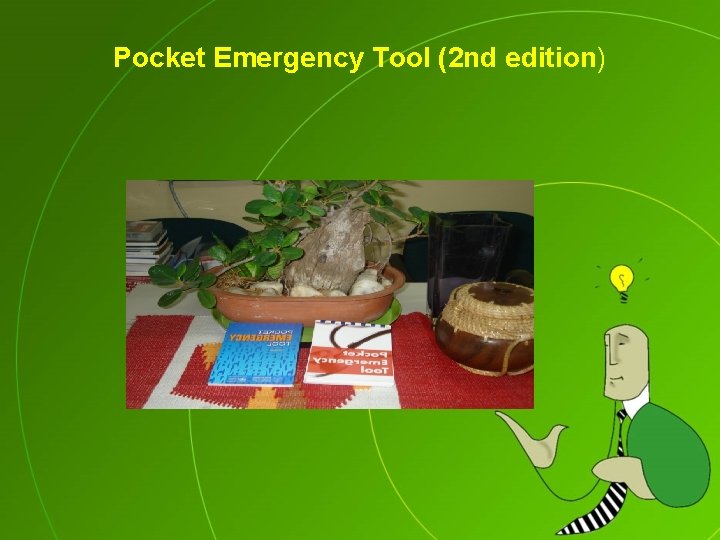
Pocket Emergency Tool (2 nd edition)
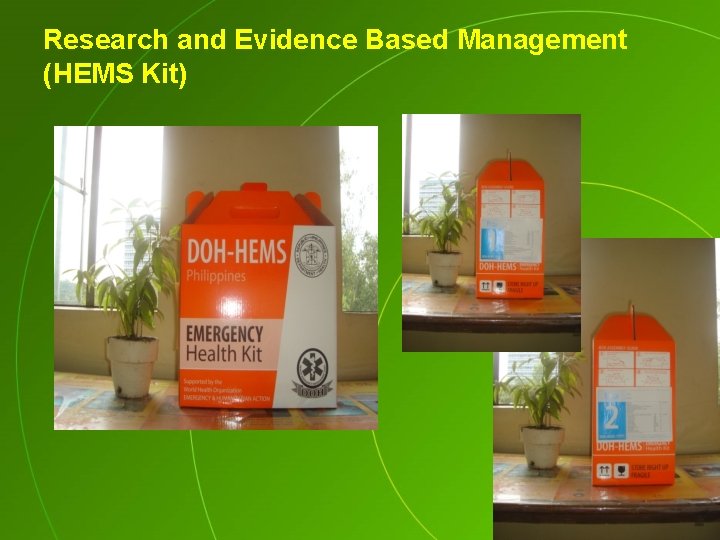
Research and Evidence Based Management (HEMS Kit)
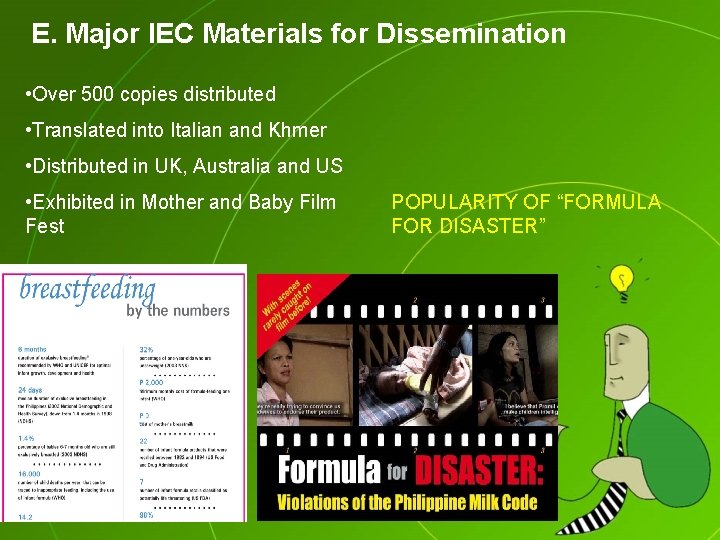
E. Major IEC Materials for Dissemination • Over 500 copies distributed • Translated into Italian and Khmer • Distributed in UK, Australia and US • Exhibited in Mother and Baby Film Fest POPULARITY OF “FORMULA FOR DISASTER”
POLICY CONTENT Administrative Order 2007 – 0017 “Guidelines on the Acceptance and Processing of Foreign and Local Donations During Emergency and Disaster Situations
Objective This shall provide a rational and systematic procedure for the acceptance, processing, and distribution of foreign and local donations that are exclusively for unforeseen, impending, occurring, and experienced emergency/disaster situations.
Definition of Terms DOH Package List for Emergencies and Disasters – shall refer to a listing of items for donation, such as, drugs/medicines, medical supplies, medical equipment, processed foodstuff, micronutrients, environmental supplies, and others. Such list shall be issued by the DOH, in consultation with other government agencies, NGOs, and other concerned entities.
General Guidelines Items for donation may be in any form, such as drugs/medicines, medical supplies, medical equipment, processed foodstuff, micronutrients, environmental supplies, and others that may be substantial in addressing emergencies and disaster situations.
Guidelines for Acceptance Infant formula, breast-milk substitute, feeding bottles, artificial nipples, and teats shall not be items for donation. No acceptance of donations shall be issued for any of the enumerated items.
Next Step Finalize the crafting of Nutrition Policy & Guidelines. l Sustain agency/organizational support. l Work with Ad. Board and Association of Broadcasters l Intensify dissemination of RIRR especially in the health emergency management system l Scale up IEC campaign l Conduct market research l Go to scale with other partners l

Thank you
- Slides: 29