
The Phenomenon of Memory Can you remember the
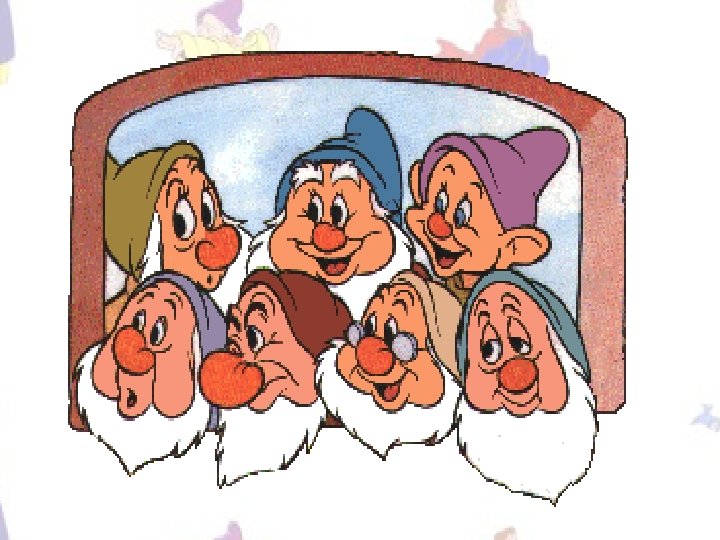
The Phenomenon of Memory Can you remember the Seven Dwarfs ?
Exercise Results… Memory= Persistence of learning over time. What made the task difficult? Encoding- info in brain Storage- retain over time Retrieval- getting it back out
Could you almost get it? Syllables? Beginning letter? Meaning of word? Tip-of-the-tongue phenomenon= The retrieval process does not produce a complex response.
Half Close Eyes…. The passage is about a Kite.
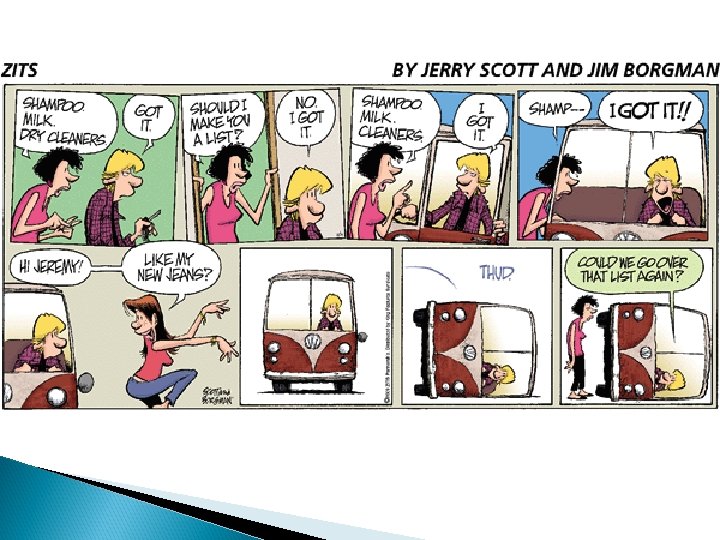
How do we encode? Can you recall the Twelve Days of Christmas? Rehearsalhttp: //www. youtube. com/watch? v=EDBMz. Gq 1 vhs&safety_mode=true&persist_safety_mod e=1&safe=active Write down the US presidents…. (not really) Serial Position effect
What do we encode? Visual Imagery- If a visual picture accompanies words, recall improves Meaning- If a passage is given context, recall improves Tell K story Mnemonic Devices= any memory device used to aid memory( organization, auditory or visual cues) Ex?
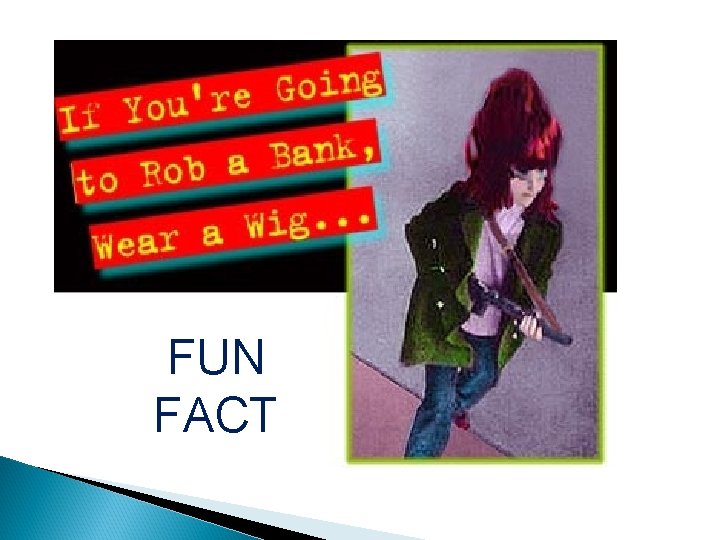
FUN FACT
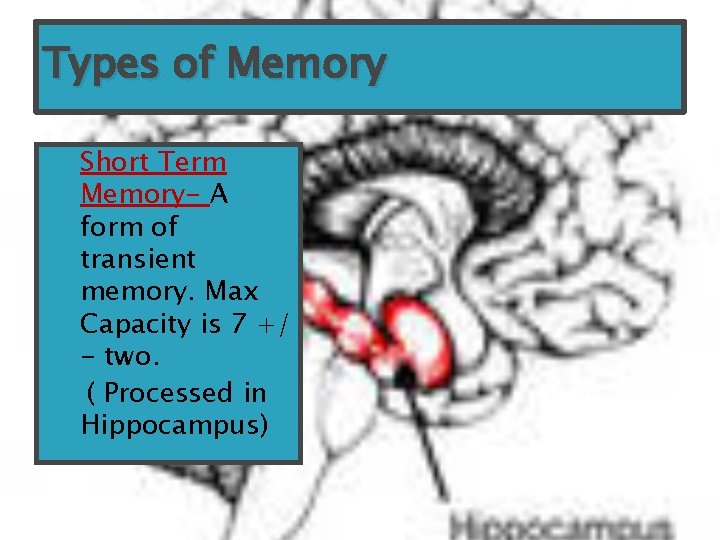
Types of Memory Short Term Memory- A form of transient memory. Max Capacity is 7 +/ - two. ( Processed in Hippocampus)
Short term memory exercise http: //garyfisk. com/anim/lecture_stm. swf
Types of Memory Long Term Memoryinformation is held for days, hours, years. Parceled out in cortex
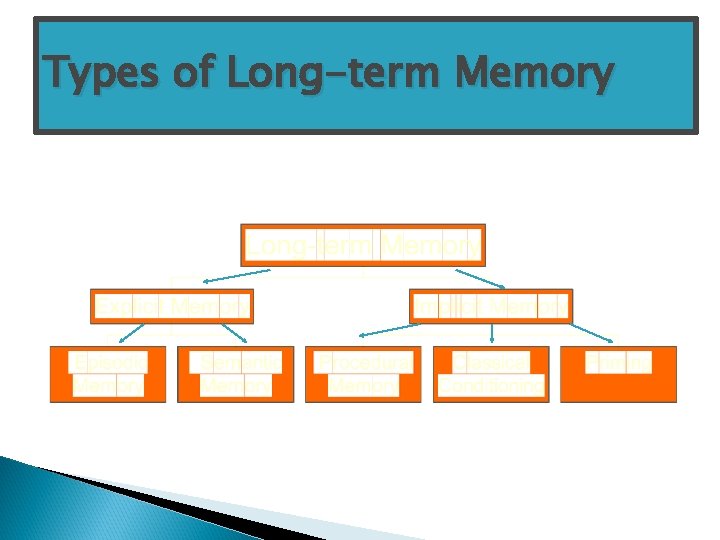
Types of Long-term Memory
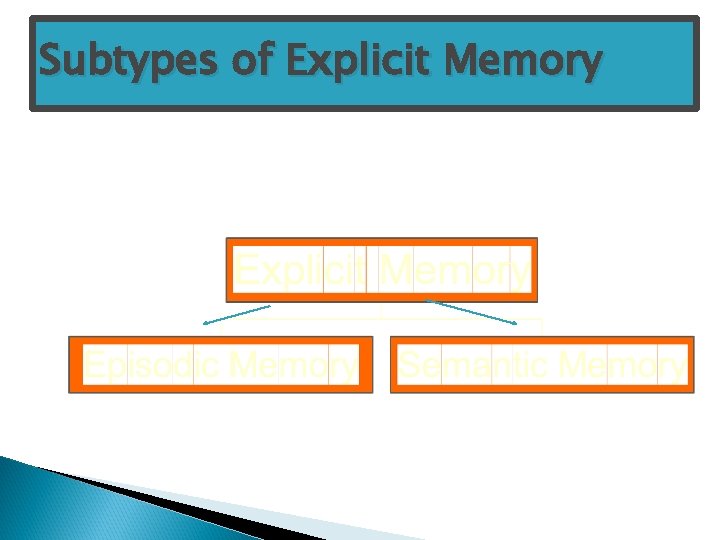
Subtypes of Explicit Memory
Episodic memory Memory tied to your own personal experiences Examples: Q: Why are these explicit memories? A: Can actively declare your answers
Semantic memory Memory not tied to personal events General facts and definitions about the world Examples:
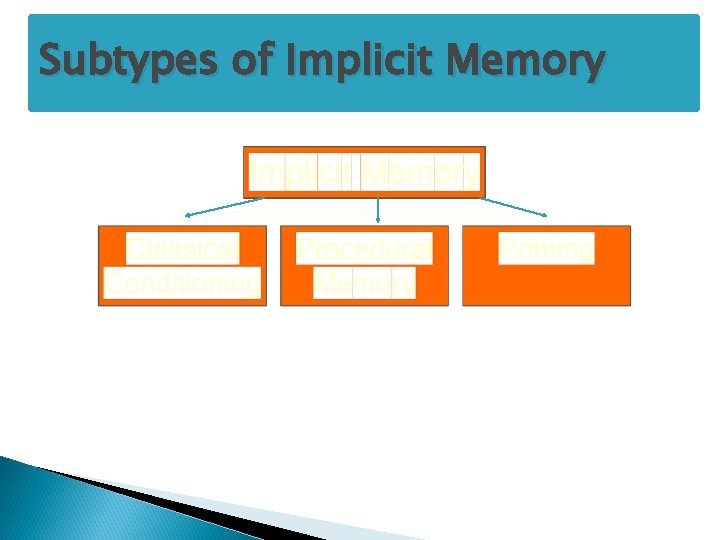
Subtypes of Implicit Memory
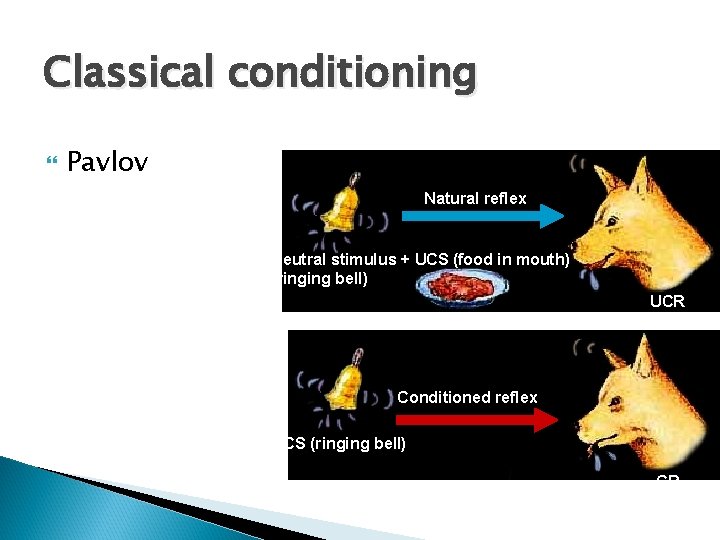
Classical conditioning Pavlov Natural reflex Neutral stimulus + UCS (food in mouth) (ringing bell) UCR (salivation) Conditioned reflex CS (ringing bell) CR (salivation)
Procedural memory Memory that enable you to perform specific learned skills or habitual responses Processed in Cerebellum Examples: Q: Why are these procedural memories implicit? A: No conscious memory needed
Priming Pass out demonstration sheets Half closes eyes WATER
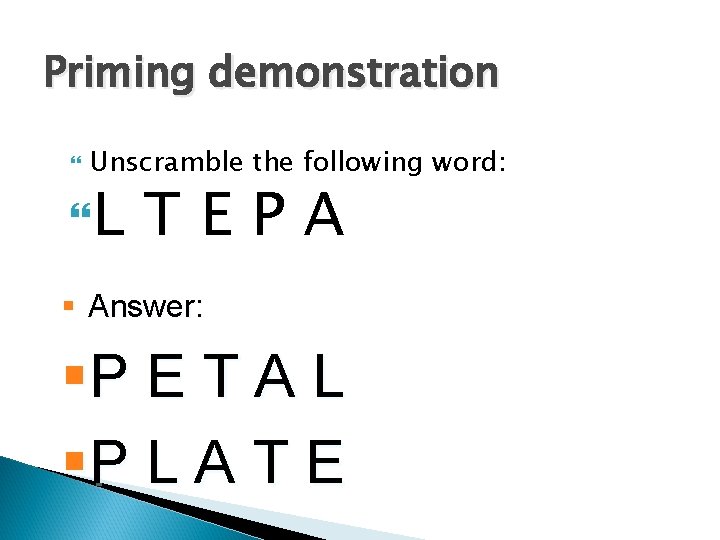
Priming demonstration Unscramble the following word: L TEPA § Answer: §P E T A L §P L A T E
Priming Why did half the class say plate and the other half say petal? They were primed to do so There were two different sheets of unscrambled words
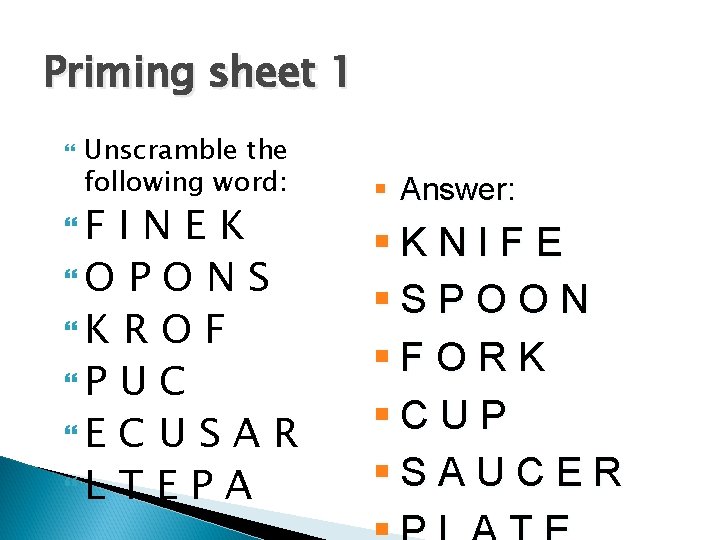
Priming sheet 1 Unscramble the following word: F INEK O P O N S K R O F P U C E C U S A R L T E P A § Answer: §K N I F E §S P O O N §F O R K §C U P §S A U C E R
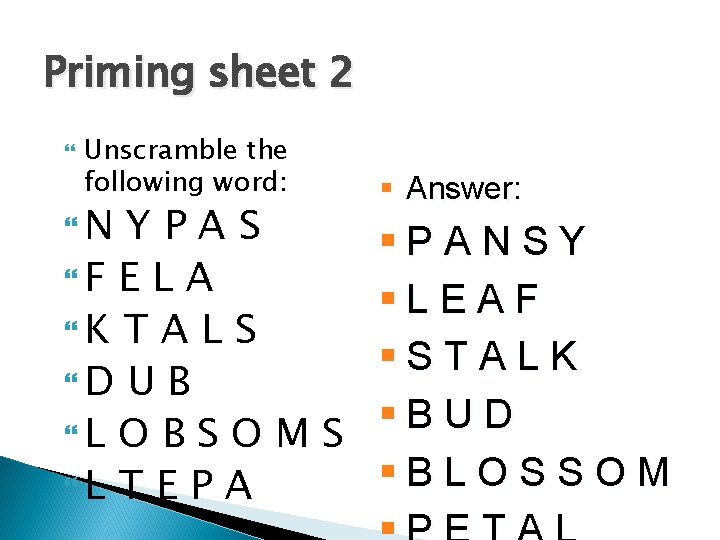
Priming sheet 2 Unscramble the following word: N § Answer: YPAS §P A N S Y F E L A §L E A F K T A L S §S T A L K D U B § B U D L O B S O M S §B L O S S O M L T E P A
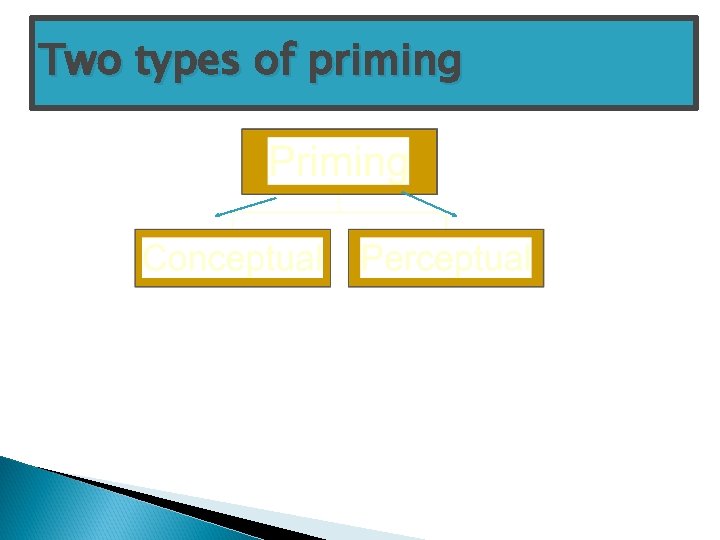
Two types of priming
Conceptual priming Thoughts involve activation of concepts stored in semantic memory Example: Previous priming demonstration Example: If you hear a story about a pitbull, when someone later asks you to name a dog, you’re more likely to say “pitbull” https: //www. youtube. com/watch? v=Xw. S 68 ix em. AQ
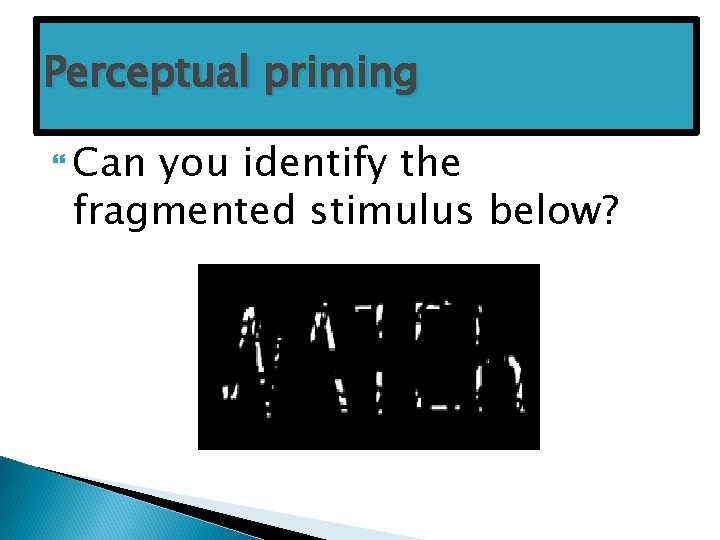
Perceptual priming Can you identify the fragmented stimulus below?
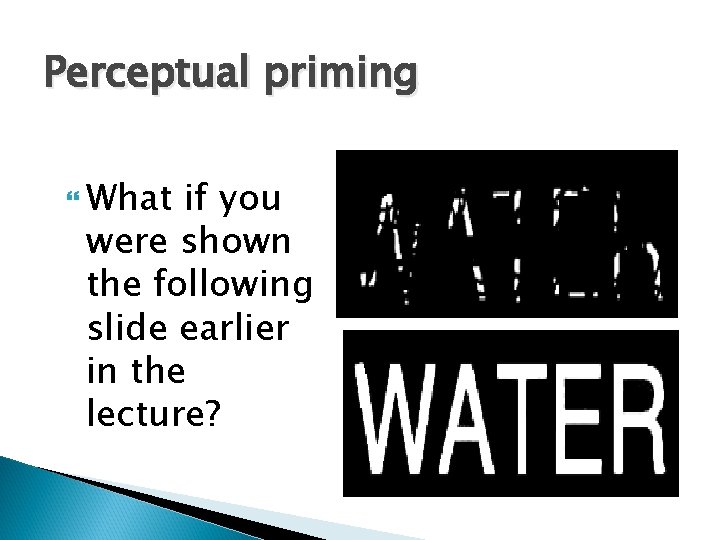
Perceptual priming What if you were shown the following slide earlier in the lecture?
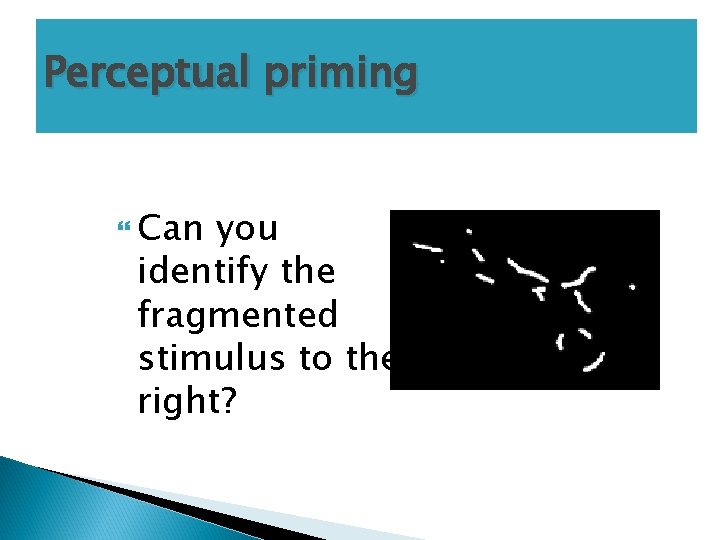
Perceptual priming Can you identify the fragmented stimulus to the right?
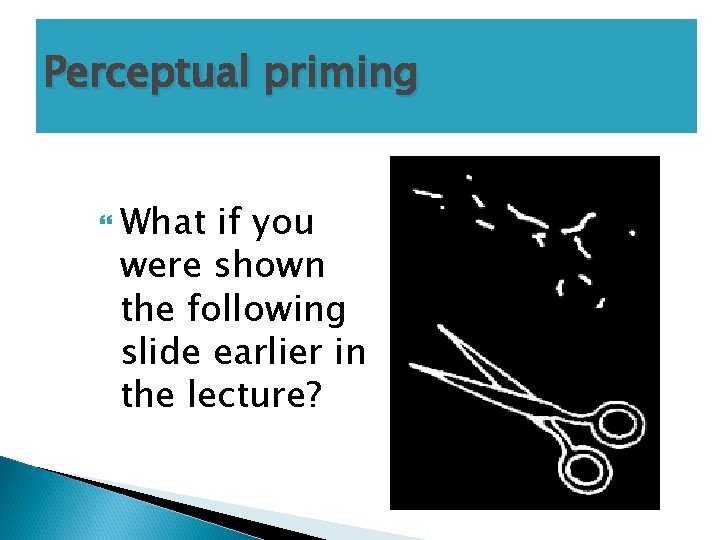
Perceptual priming What if you were shown the following slide earlier in the lecture?
Perceptual priming A priming stimulus enhances ability to identify a test stimulus (physical features) Why is priming implicit? Don’t need to conscious recall

- Slides: 32