
THE PHARMACOLOGY OF ADRENERGIC RECEPTORS M T Piascik





- Slides: 35
THE PHARMACOLOGY OF ADRENERGIC RECEPTORS M. T. Piascik PHA 824 December 11 & 16, 2008
Learning Objectives The student should be able to explain or describe; • The pharmacodynamic principles that aid in the understanding of adrenergic receptors and the actions of drugs on these receptors. • The criteria upon which alpha and beta receptors are defined. • The second messenger systems utilized by alpha and beta receptors and how activation of these receptors leads to a change in physiologic function.
Learning Objectives(cont. ) The student should be able to explain or describe; • The effects of alpha and beta receptor activation on the heart and blood vessels. • The effects of isoproterenol, epinephrine and norepinephrine on the cardiovascular system. • The clinical uses and potential toxicities of epinephrine, norepinephrine and isoproterenol with emphasis on epinephrine.
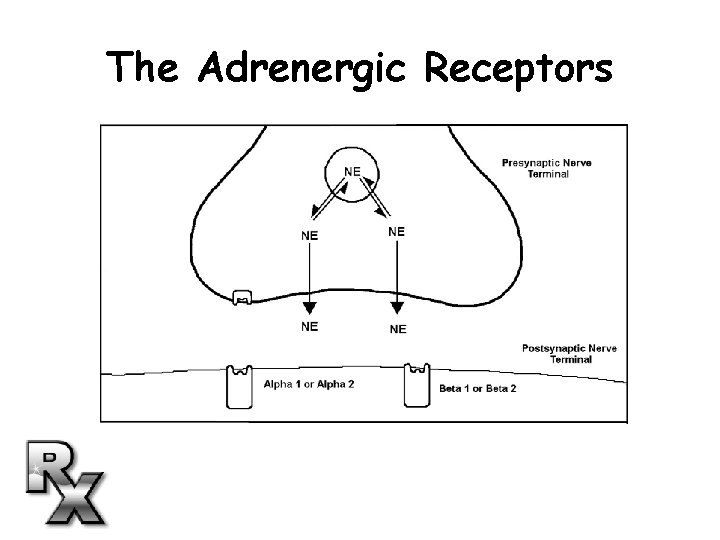
The Adrenergic Receptors
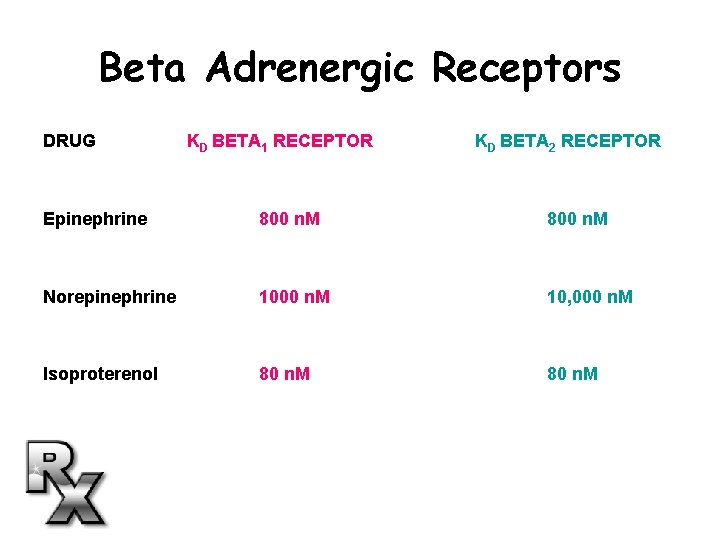
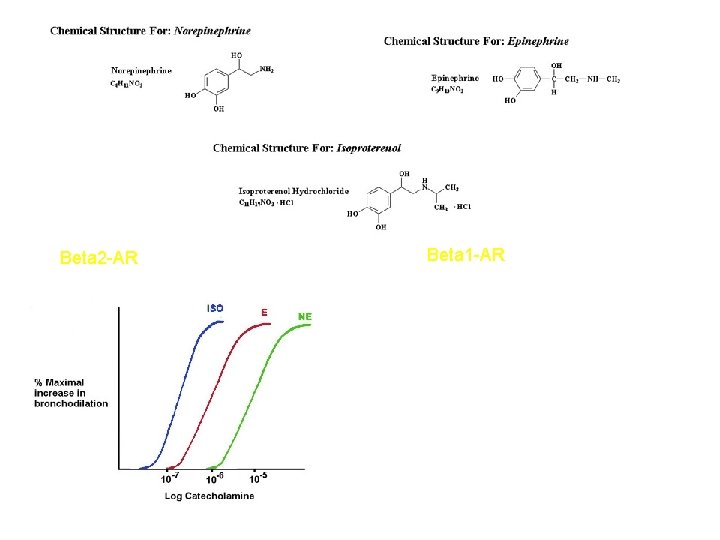
Beta Adrenergic Receptors DRUG KD BETA 1 RECEPTOR KD BETA 2 RECEPTOR Epinephrine 800 n. M Norepinephrine 1000 n. M 10, 000 n. M Isoproterenol 80 n. M
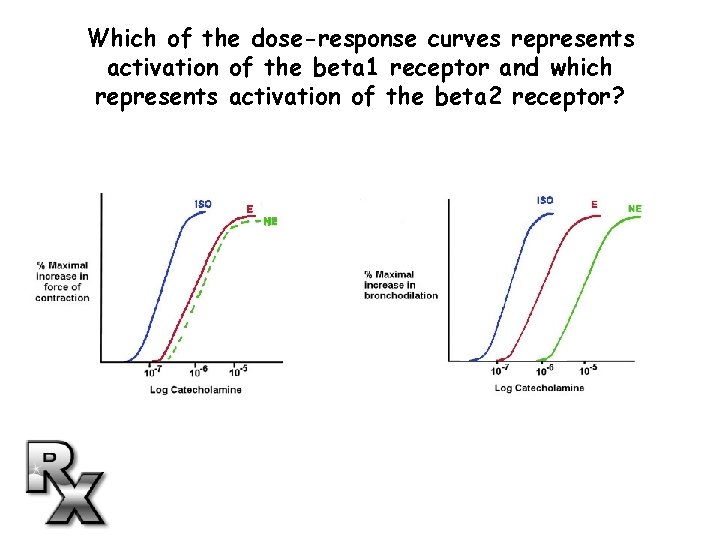
Which of the dose-response curves represents activation of the beta 1 receptor and which represents activation of the beta 2 receptor?
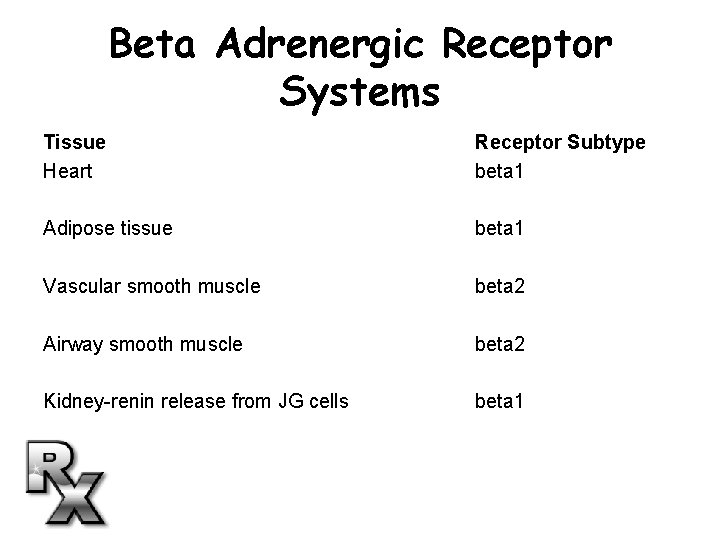
Beta Adrenergic Receptor Systems Tissue Heart Receptor Subtype beta 1 Adipose tissue beta 1 Vascular smooth muscle beta 2 Airway smooth muscle beta 2 Kidney-renin release from JG cells beta 1
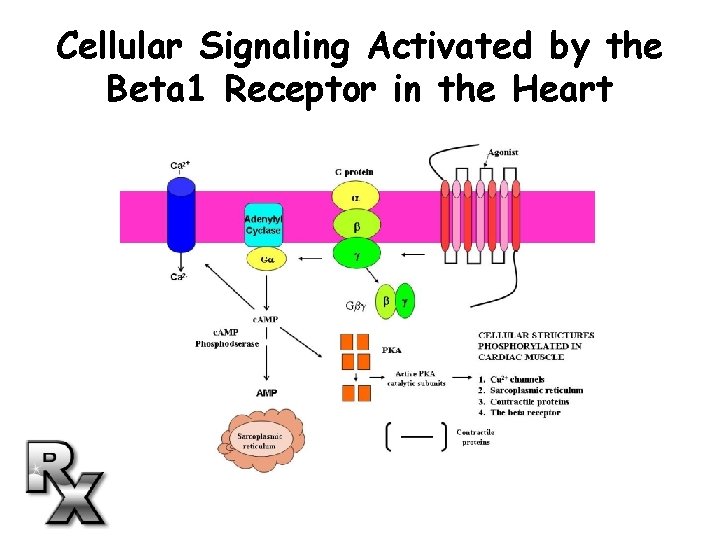
Cellular Signaling Activated by the Beta 1 Receptor in the Heart
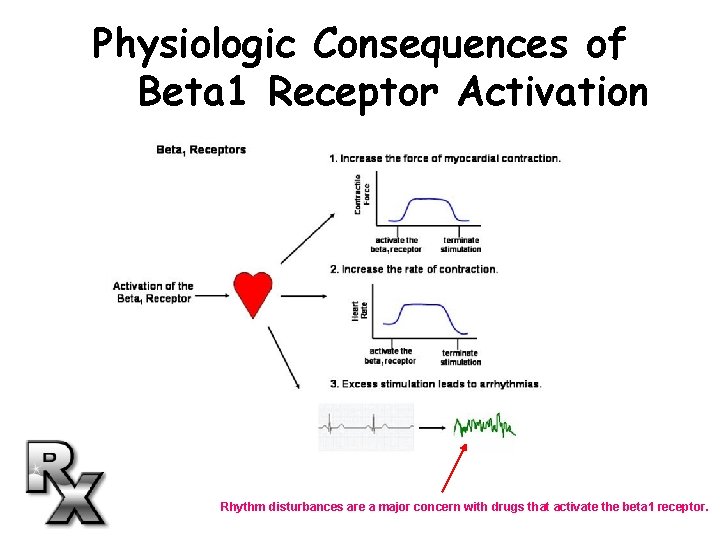
Physiologic Consequences of Beta 1 Receptor Activation Rhythm disturbances are a major concern with drugs that activate the beta 1 receptor.
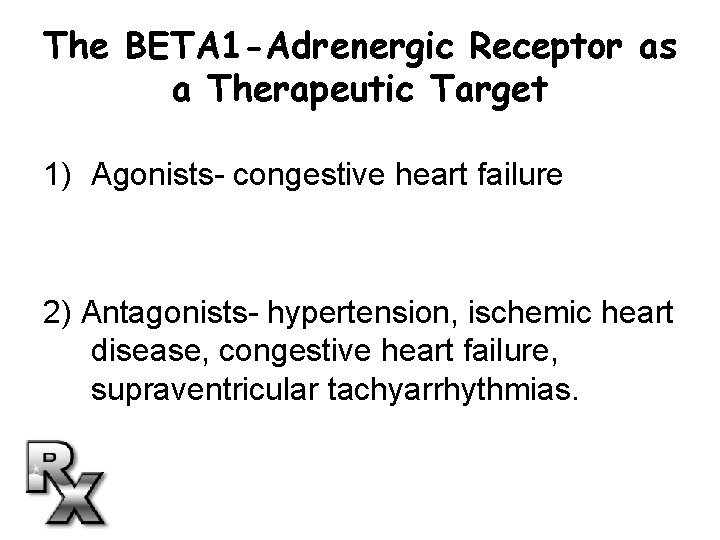
The BETA 1 -Adrenergic Receptor as a Therapeutic Target 1) Agonists- congestive heart failure 2) Antagonists- hypertension, ischemic heart disease, congestive heart failure, supraventricular tachyarrhythmias.
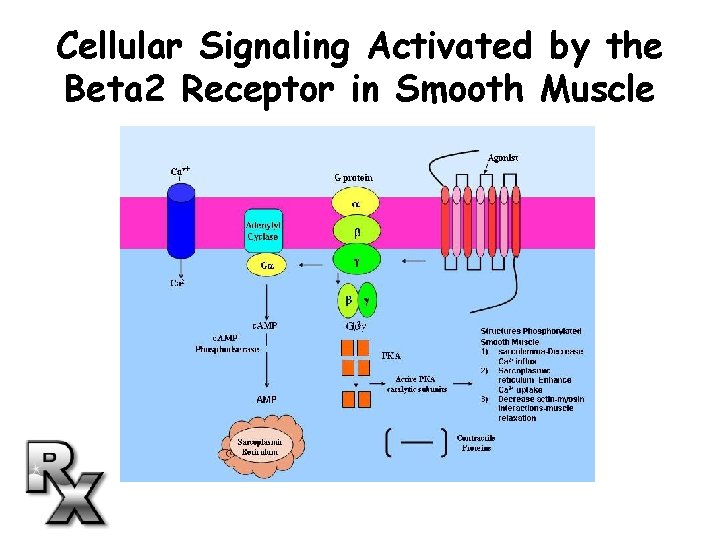
Cellular Signaling Activated by the Beta 2 Receptor in Smooth Muscle
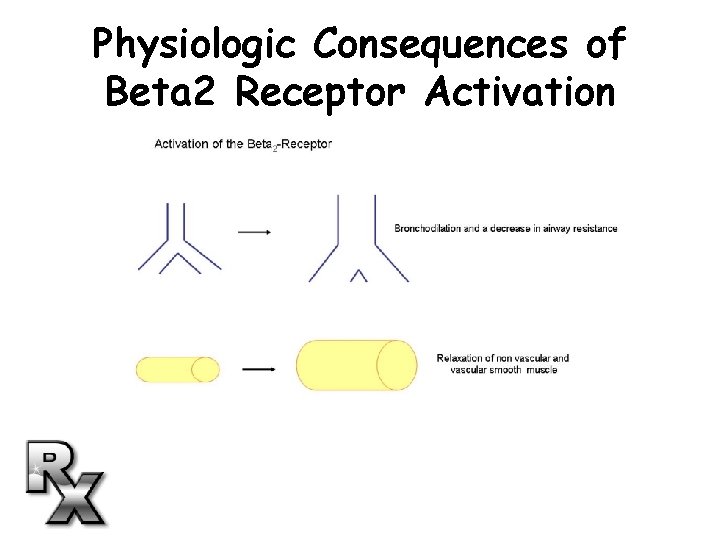
Physiologic Consequences of Beta 2 Receptor Activation
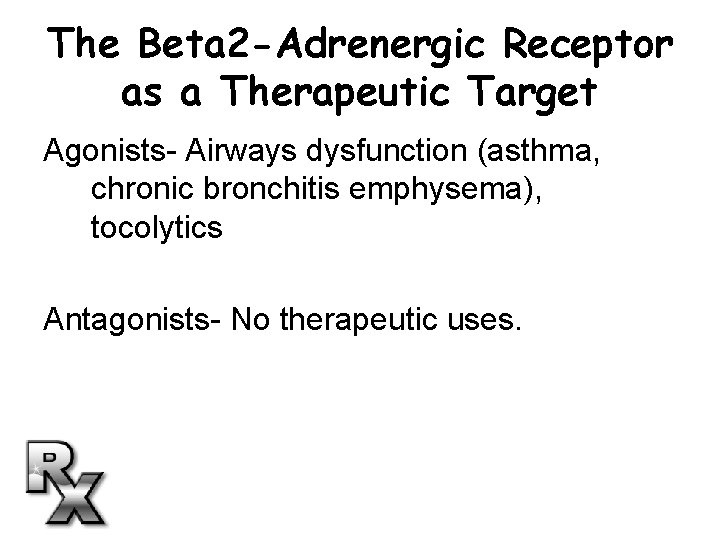
The Beta 2 -Adrenergic Receptor as a Therapeutic Target Agonists- Airways dysfunction (asthma, chronic bronchitis emphysema), tocolytics Antagonists- No therapeutic uses.
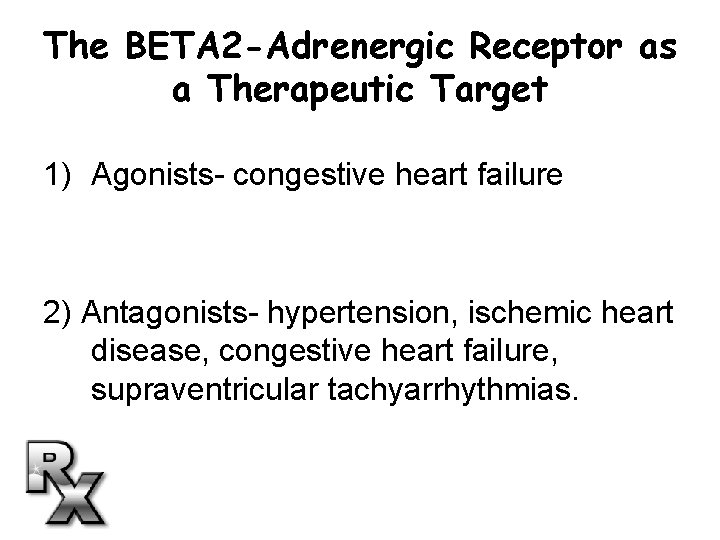
The BETA 2 -Adrenergic Receptor as a Therapeutic Target 1) Agonists- congestive heart failure 2) Antagonists- hypertension, ischemic heart disease, congestive heart failure, supraventricular tachyarrhythmias.
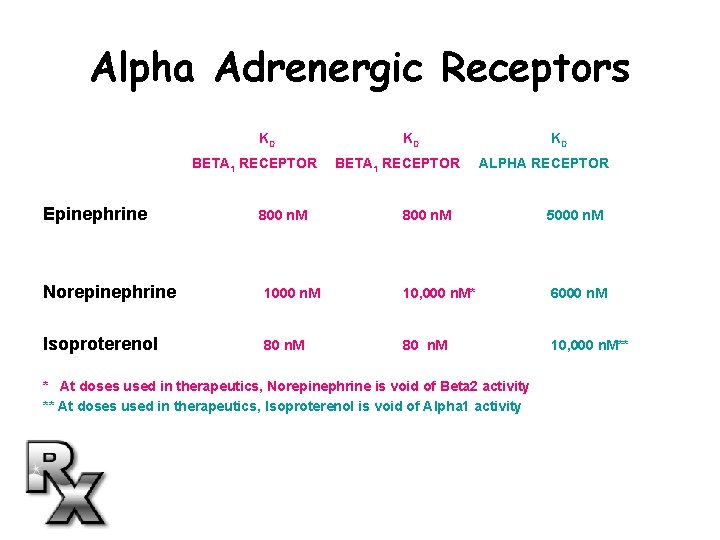
Alpha Adrenergic Receptors KD BETA 1 RECEPTOR Epinephrine 800 n. M KD BETA 1 RECEPTOR KD ALPHA RECEPTOR 800 n. M 5000 n. M Norepinephrine 1000 n. M 10, 000 n. M* 6000 n. M Isoproterenol 80 n. M 10, 000 n. M** * At doses used in therapeutics, Norepinephrine is void of Beta 2 activity ** At doses used in therapeutics, Isoproterenol is void of Alpha 1 activity
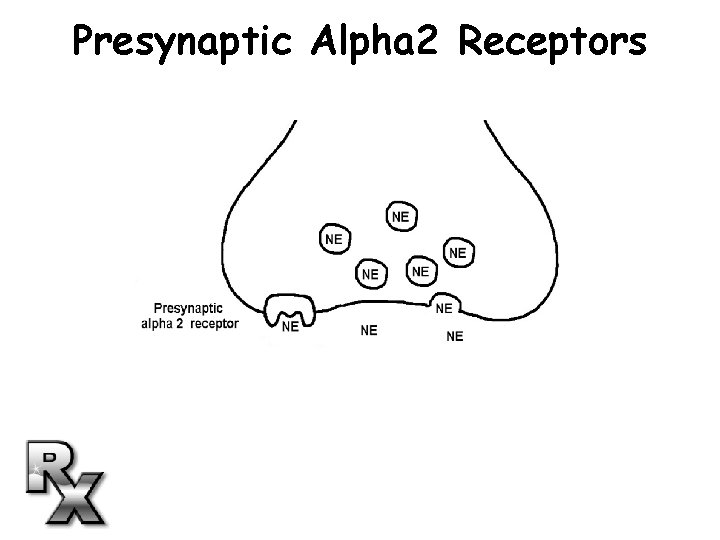
Presynaptic Alpha 2 Receptors
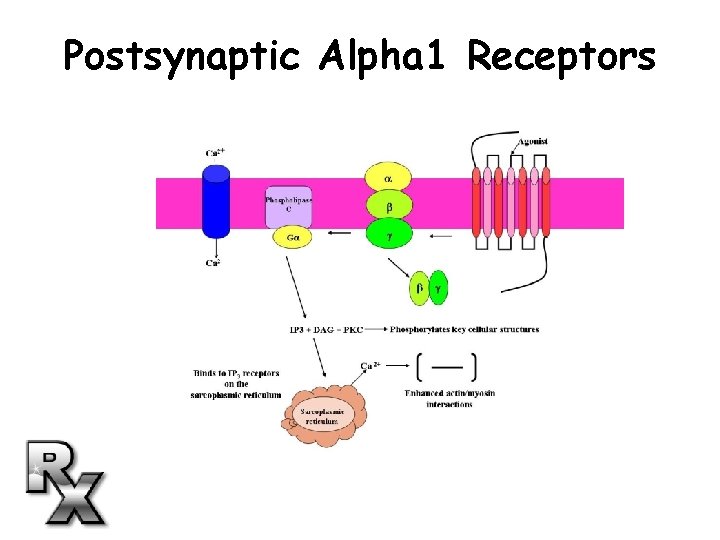
Postsynaptic Alpha 1 Receptors
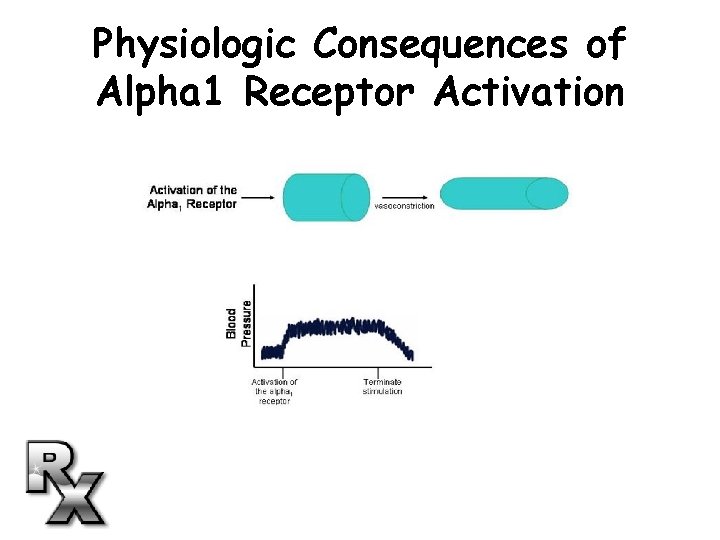
Physiologic Consequences of Alpha 1 Receptor Activation
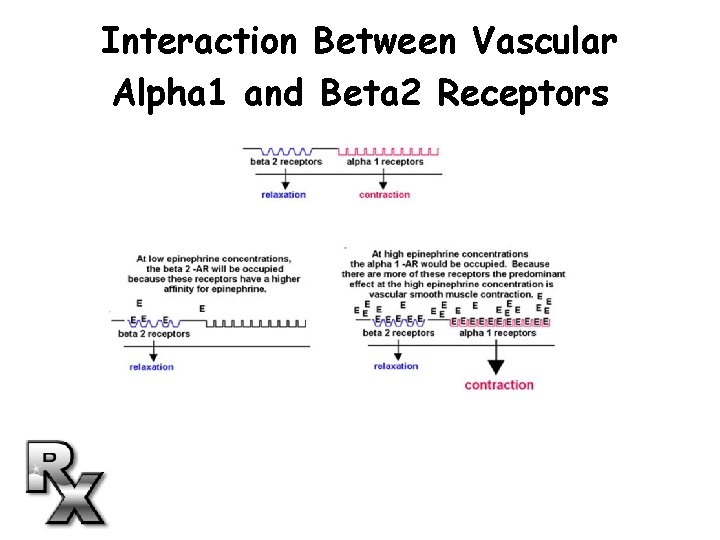
Interaction Between Vascular Alpha 1 and Beta 2 Receptors
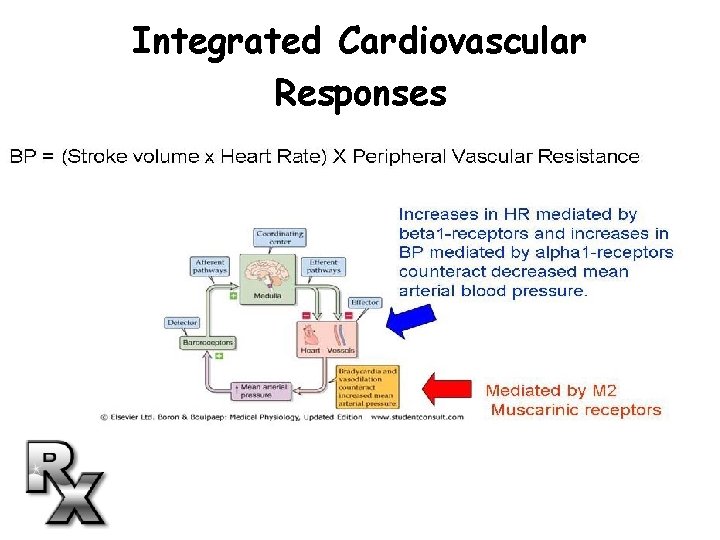
Integrated Cardiovascular Responses
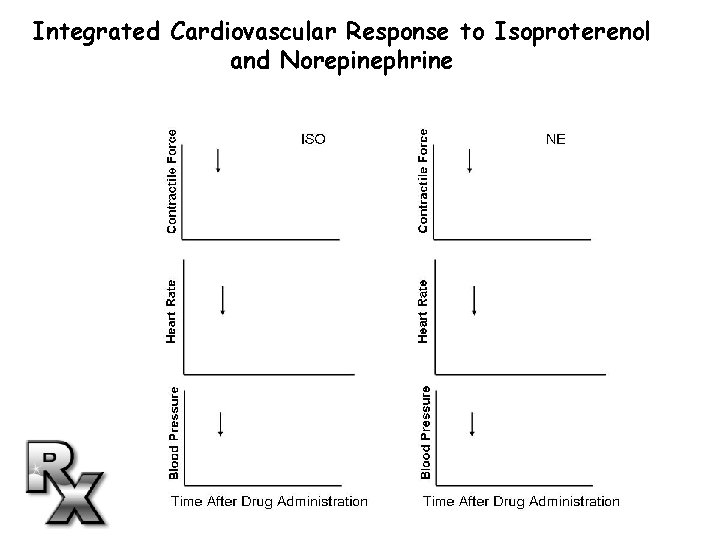
Integrated Cardiovascular Response to Isoproterenol and Norepinephrine
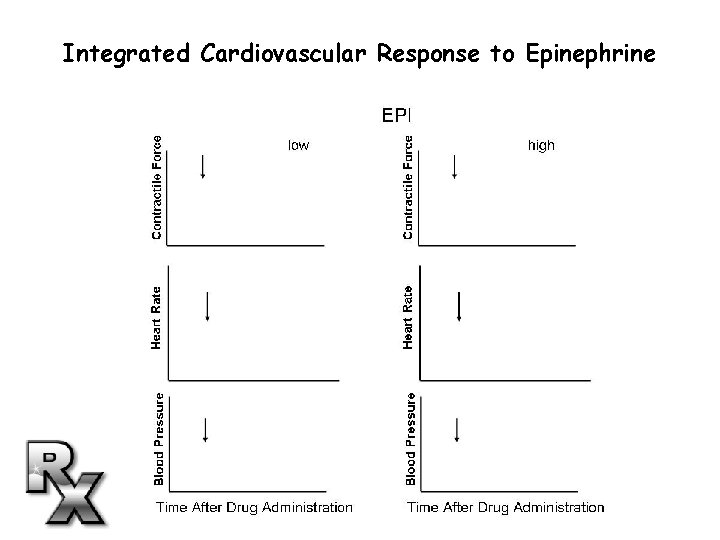
Integrated Cardiovascular Response to Epinephrine
Therapeutic Uses of Epinephrine Oral dosing of epinephrine, norepinephrine or isoproterenol is not possible due to its rapid metabolism in the gut by MAO. Epinephrine can be given topically, by injection (s. c. , i. m. i. v) or inhalation
Therapeutic Uses of Epinephrine (cont. ) Actions at the Beta 2 Receptor • The treatment of respiratory distress or bronchspasm caused for example by asthma (i. e. status asthmaticus) or anaphylaxis as a result of allergic responses. Actions at the Beta 1 Receptor • Epinephrine is also used to provide rapid inotropic support in cardiopulmonary resuscitation
Therapeutic Uses of Epinephrine (cont. ) Actions at the Beta 2 Receptor • The treatment of respiratory distress or bronchspasm caused for example by asthma (i. e. status asthmaticus) or anaphylaxis as a result of allergic responses. Actions at the Beta 1 Receptor • Epinephrine is also used to provide rapid inotropic support in cardiopulmonary resuscitation
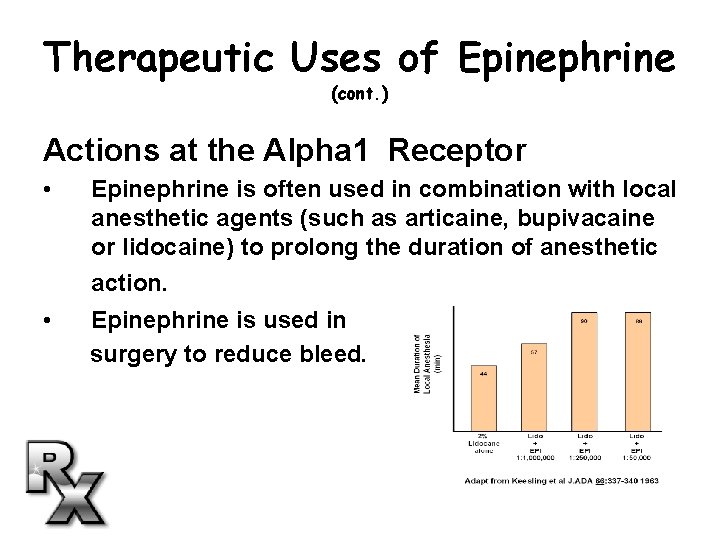
Therapeutic Uses of Epinephrine (cont. ) Actions at the Alpha 1 Receptor • Epinephrine is often used in combination with local anesthetic agents (such as articaine, bupivacaine or lidocaine) to prolong the duration of anesthetic action. • Epinephrine is used in surgery to reduce bleed.
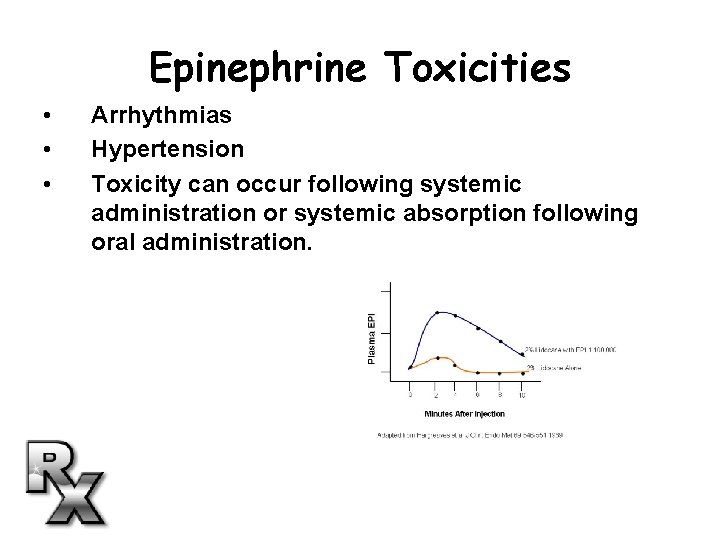
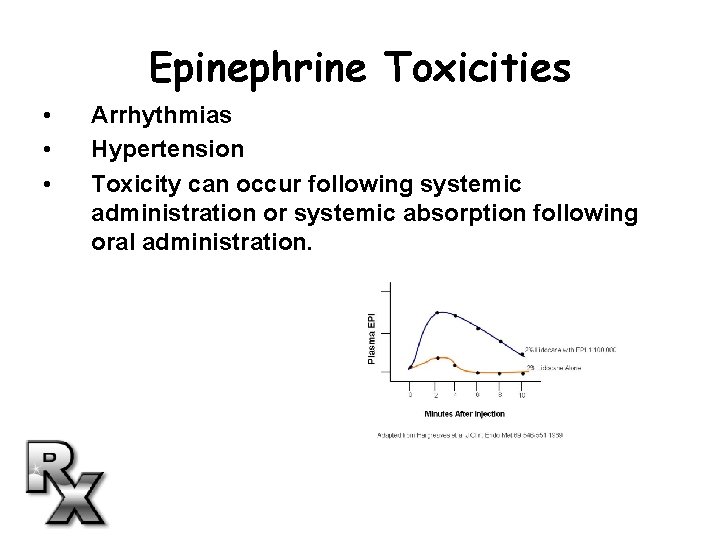
Epinephrine Toxicities • • • Arrhythmias Hypertension Toxicity can occur following systemic administration or systemic absorption following oral administration.
Epinephrine Toxicities • • • Arrhythmias Hypertension Toxicity can occur following systemic administration or systemic absorption following oral administration.
Epinephrine Toxicities • Toxicity can be potentiated in patients taking tricyclic antidepressants, nonselective beta blockers, cocaine and amphetamine-like drugs and those under general anesthesia.
Beta 2 -AR Beta 1 -AR