
The Pfafstetter Coding System in Hydrological modeling TANG



- Slides: 13
The Pfafstetter Coding System in Hydrological modeling TANG, Qiuhong
Outline • Introduction and concept • Methodology • Application
Introduction and concept • The river basin has seen as a fundamental landscape unit for water resources assessment and management. • A natural system for delineation and codification of basins is presented. • The system is based on topographic control and the topology of the river network. The DEM (digital elevation model) maps and GIS technique are used to reach the target automatically.
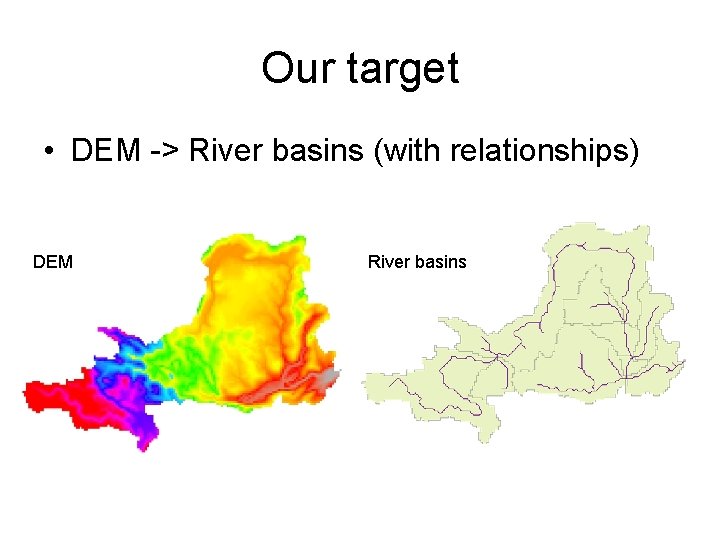
Our target • DEM -> River basins (with relationships) DEM River basins
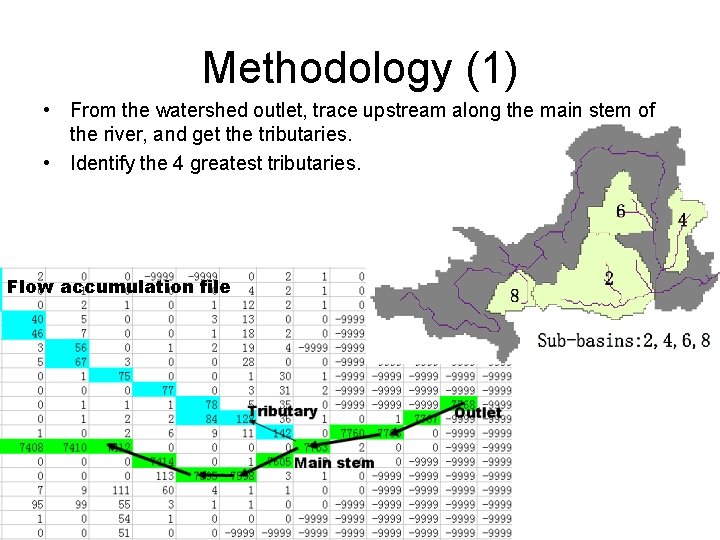
Methodology (1) • From the watershed outlet, trace upstream along the main stem of the river, and get the tributaries. • Identify the 4 greatest tributaries. Flow accumulation file
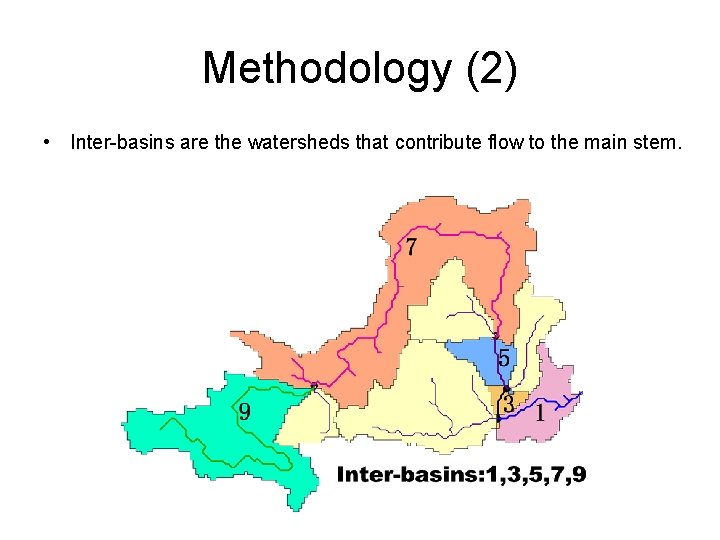
Methodology (2) • Inter-basins are the watersheds that contribute flow to the main stem.
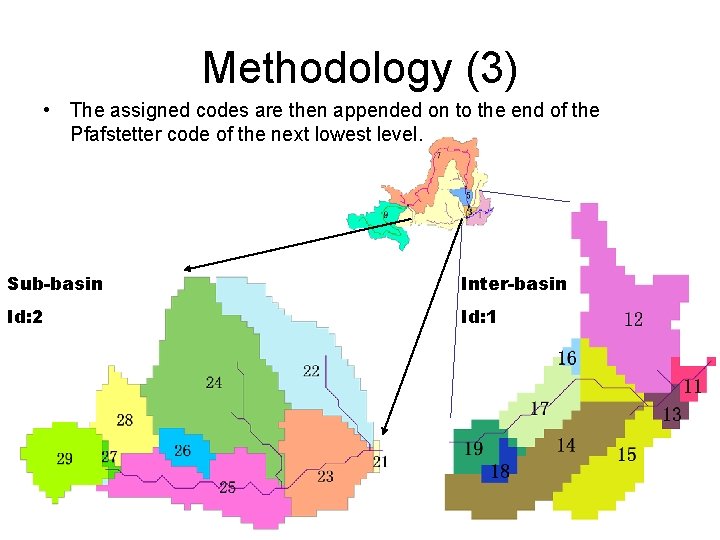
Methodology (3) • The assigned codes are then appended on to the end of the Pfafstetter code of the next lowest level. Sub-basin Inter-basin Id: 2 Id: 1
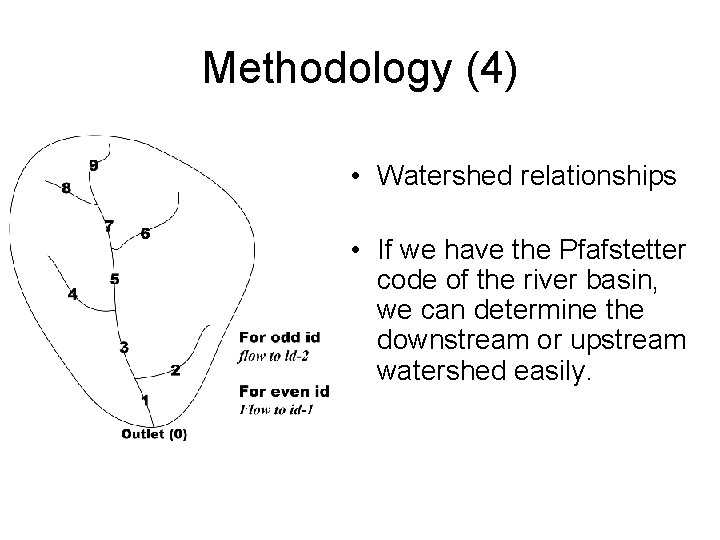
Methodology (4) • Watershed relationships • If we have the Pfafstetter code of the river basin, we can determine the downstream or upstream watershed easily.
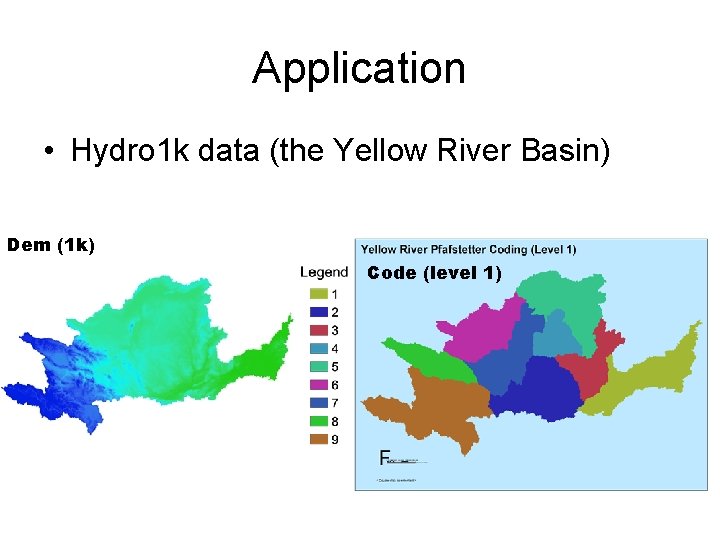
Application • Hydro 1 k data (the Yellow River Basin) Dem (1 k) Code (level 1)
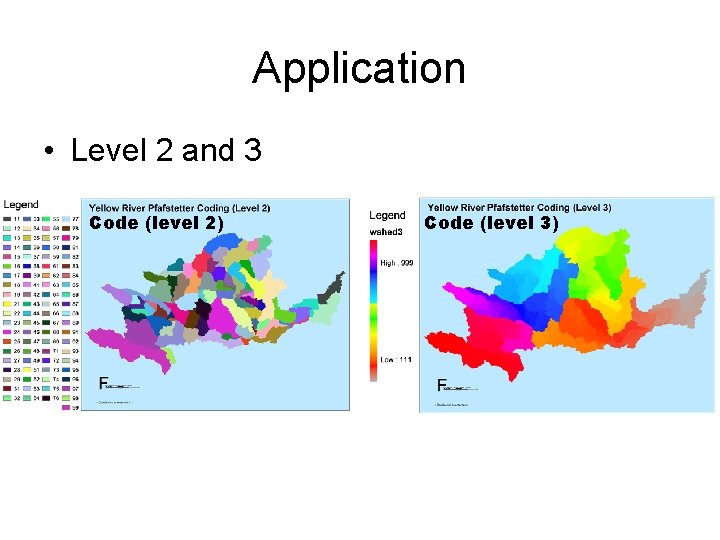
Application • Level 2 and 3 Code (level 2) Code (level 3)
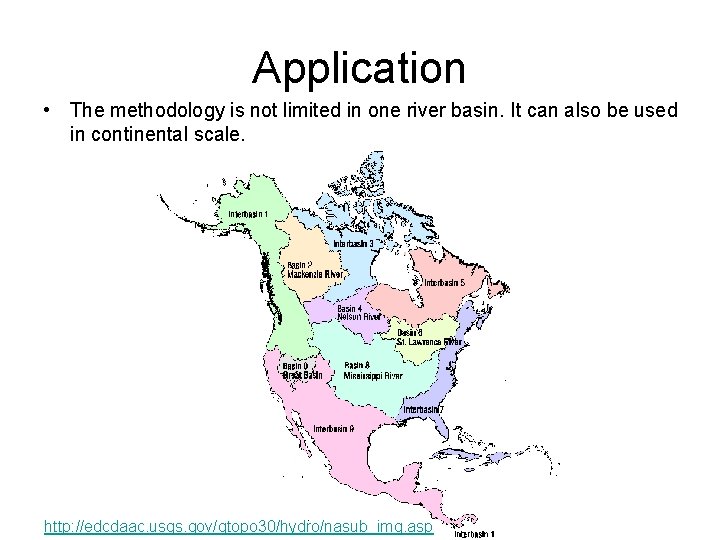
Application • The methodology is not limited in one river basin. It can also be used in continental scale. http: //edcdaac. usgs. gov/gtopo 30/hydro/nasub_img. asp
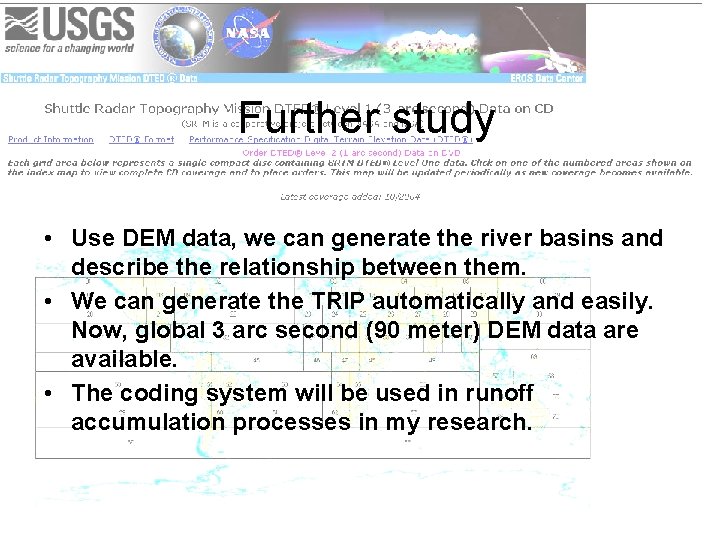
Further study • Use DEM data, we can generate the river basins and describe the relationship between them. • We can generate the TRIP automatically and easily. Now, global 3 arc second (90 meter) DEM data are available. • The coding system will be used in runoff accumulation processes in my research.
Thank you for your attention.