
The Peripheral Nervous System Key Note The 12
- Slides: 26
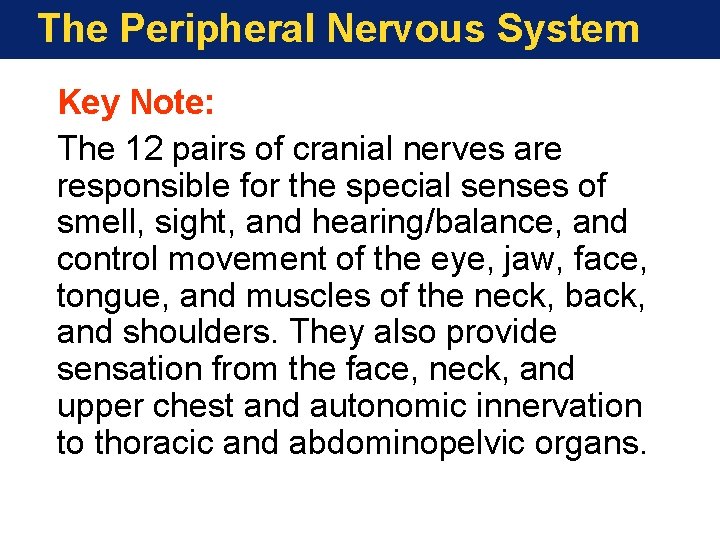
The Peripheral Nervous System Key Note: The 12 pairs of cranial nerves are responsible for the special senses of smell, sight, and hearing/balance, and control movement of the eye, jaw, face, tongue, and muscles of the neck, back, and shoulders. They also provide sensation from the face, neck, and upper chest and autonomic innervation to thoracic and abdominopelvic organs.
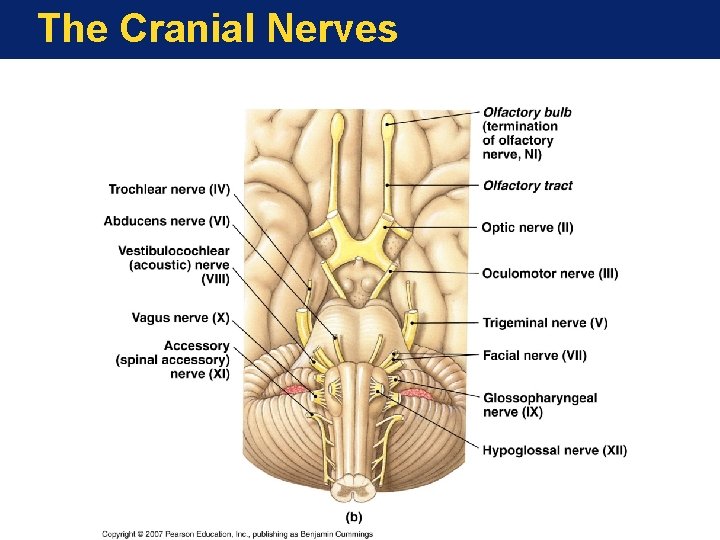
The Cranial Nerves
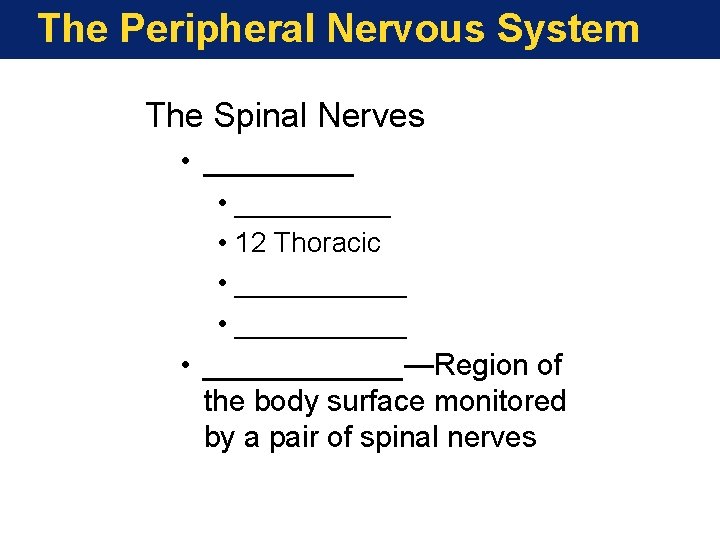
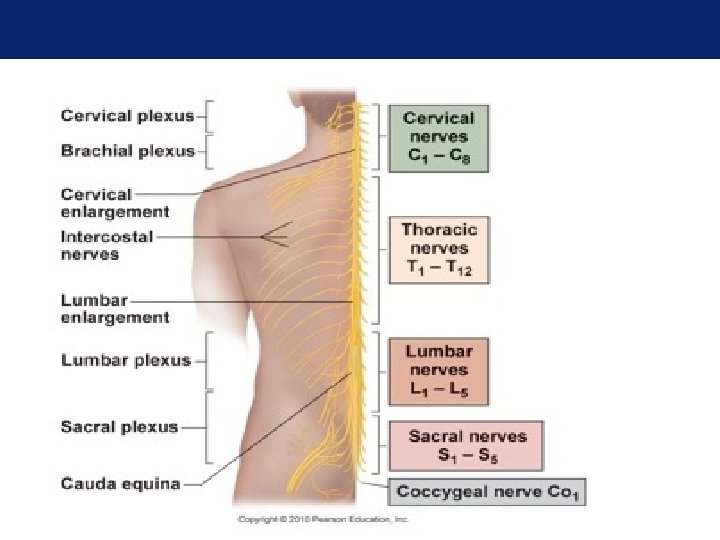
The Peripheral Nervous System The Spinal Nerves • __________ • 12 Thoracic • ___________ • ______—Region of the body surface monitored by a pair of spinal nerves
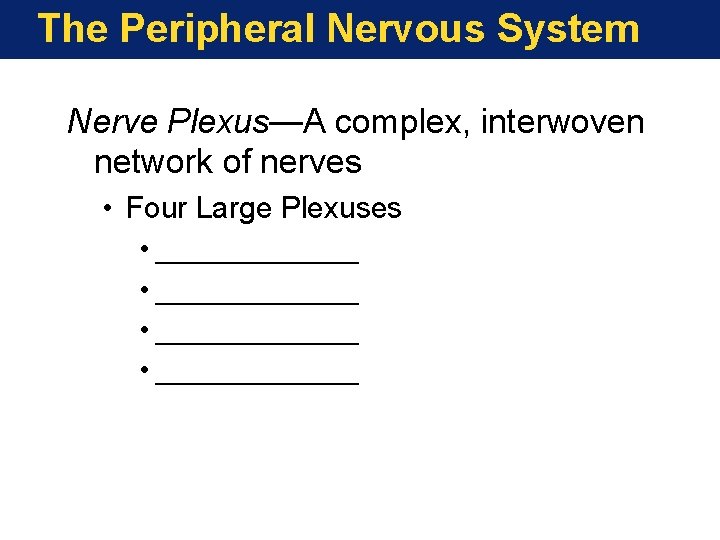
The Peripheral Nervous System Nerve Plexus—A complex, interwoven network of nerves • Four Large Plexuses • _____________
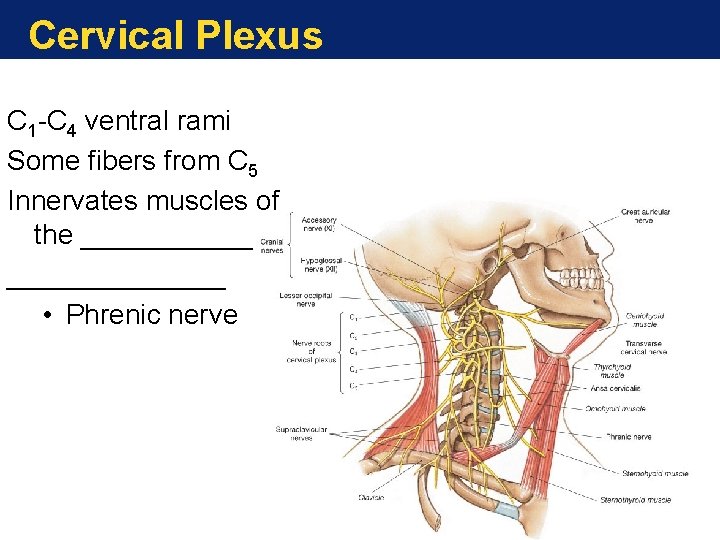
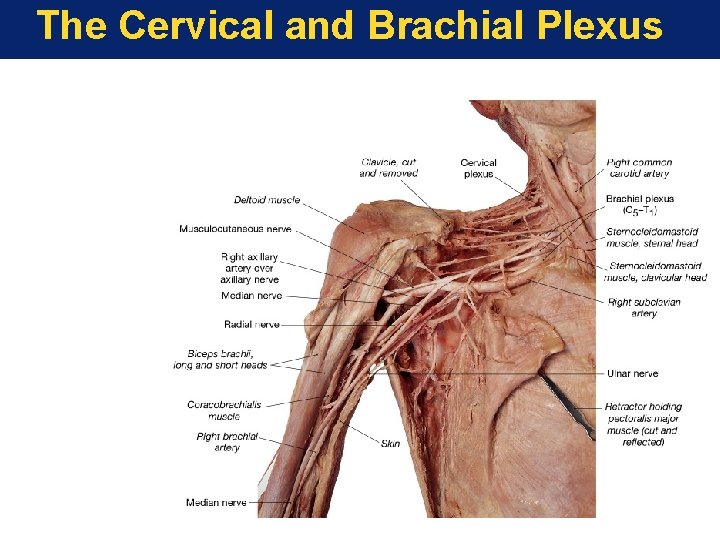
Cervical Plexus C 1 -C 4 ventral rami Some fibers from C 5 Innervates muscles of the ______________ • Phrenic nerve
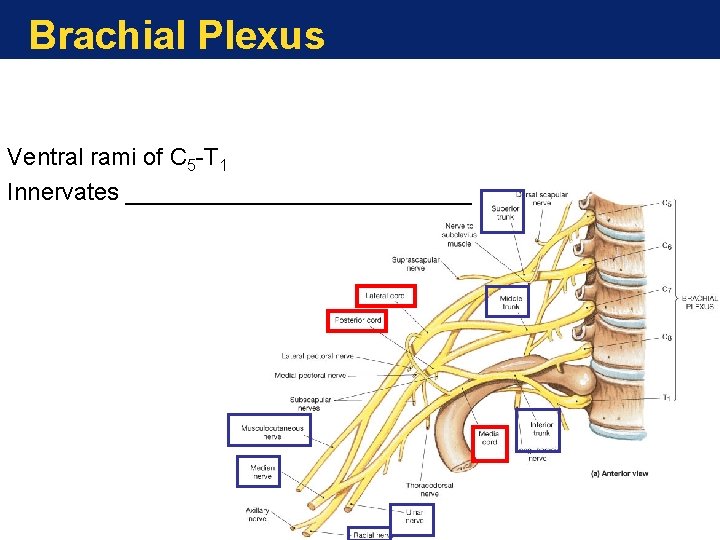
Brachial Plexus Ventral rami of C 5 -T 1 Innervates _____________
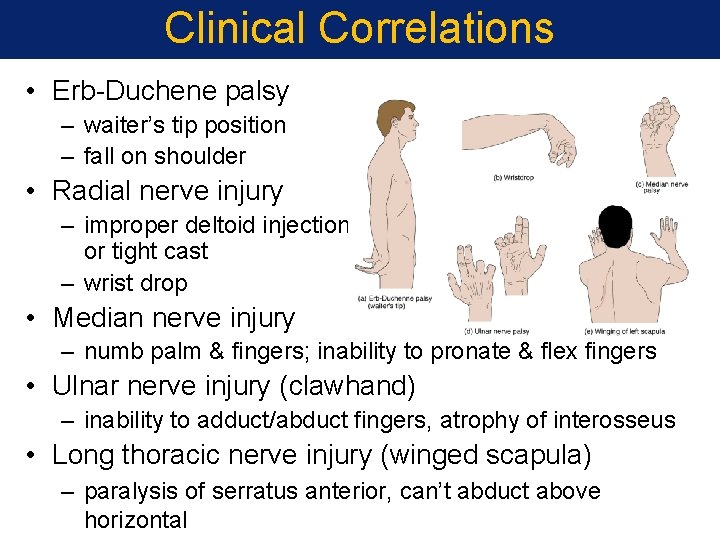
Clinical Correlations • Erb-Duchene palsy – waiter’s tip position – fall on shoulder • Radial nerve injury – improper deltoid injection or tight cast – wrist drop • Median nerve injury – numb palm & fingers; inability to pronate & flex fingers • Ulnar nerve injury (clawhand) – inability to adduct/abduct fingers, atrophy of interosseus • Long thoracic nerve injury (winged scapula) – paralysis of serratus anterior, can’t abduct above horizontal
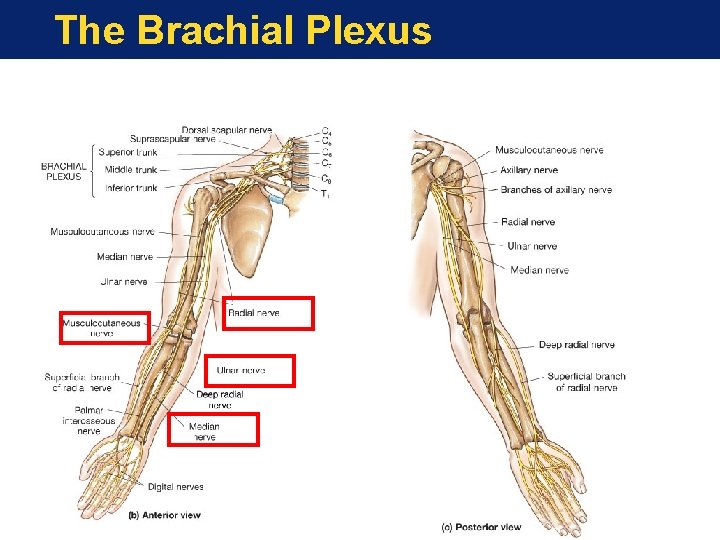
The Brachial Plexus
The Cervical and Brachial Plexus
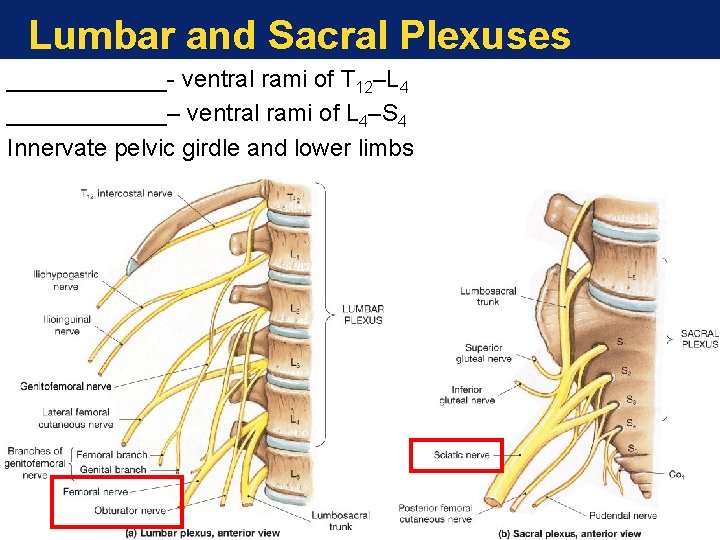
Lumbar and Sacral Plexuses ______- ventral rami of T 12–L 4 ______– ventral rami of L 4–S 4 Innervate pelvic girdle and lower limbs
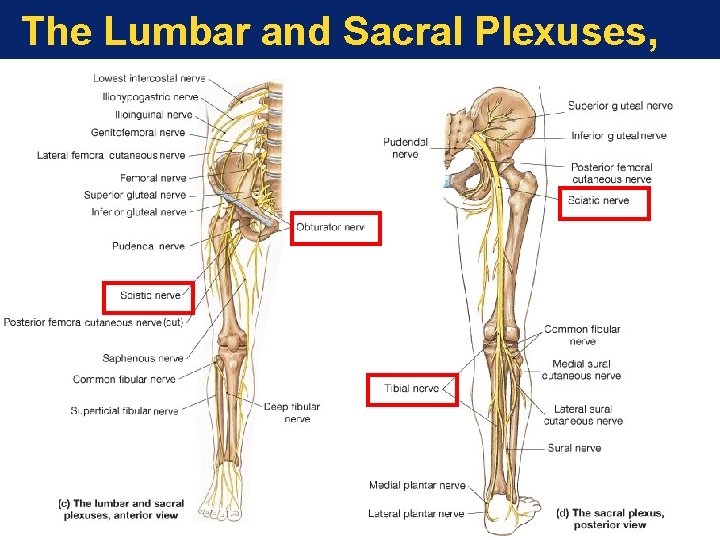
The Lumbar and Sacral Plexuses,
The Autonomic Nervous System Branch of nervous system that coordinates cardiovascular, ___________, and reproductive functions
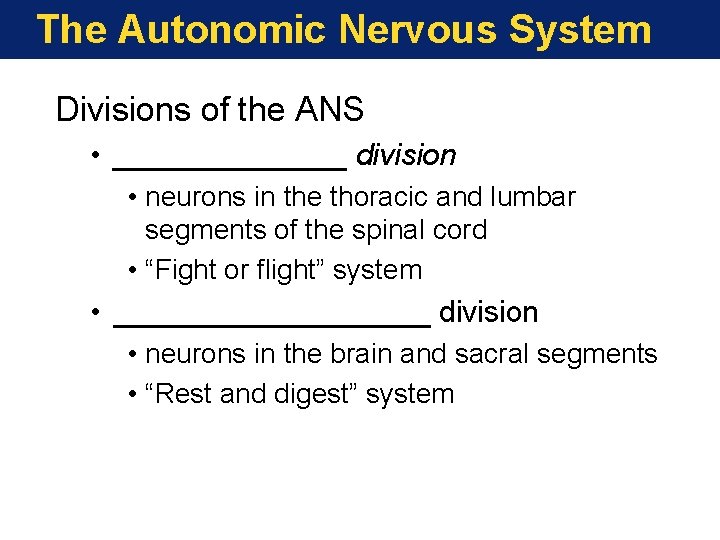
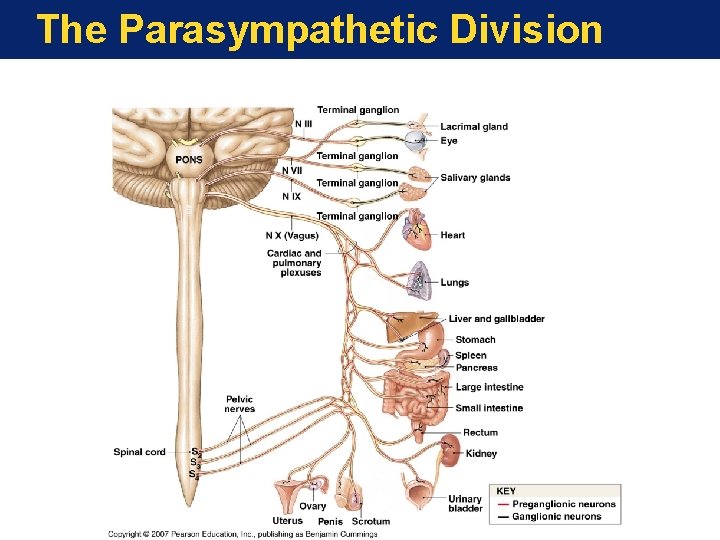
The Autonomic Nervous System Divisions of the ANS • _______ division • neurons in the thoracic and lumbar segments of the spinal cord • “Fight or flight” system • __________ division • neurons in the brain and sacral segments • “Rest and digest” system
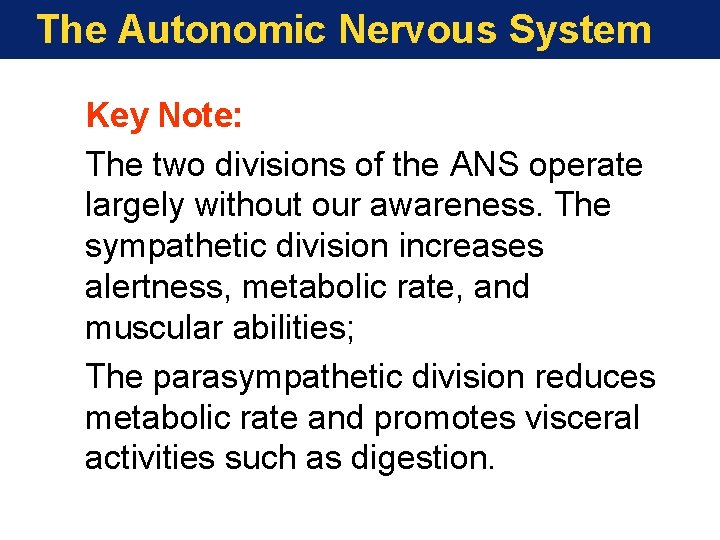
The Autonomic Nervous System Key Note: The two divisions of the ANS operate largely without our awareness. The sympathetic division increases alertness, metabolic rate, and muscular abilities; The parasympathetic division reduces metabolic rate and promotes visceral activities such as digestion.
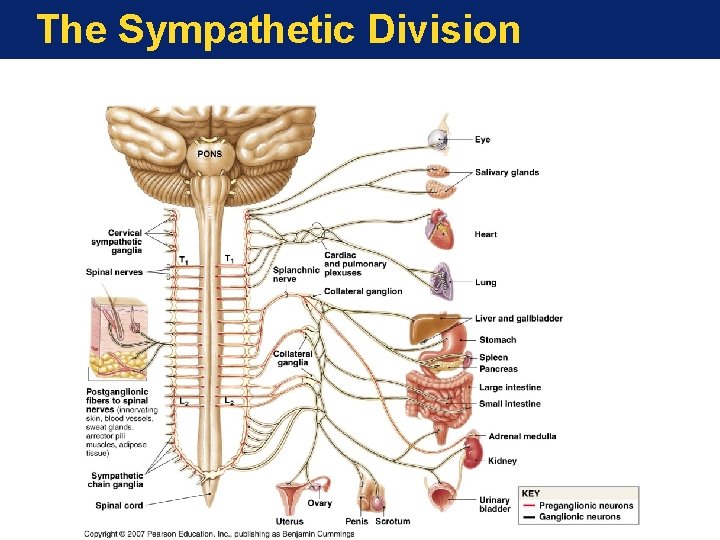
The Sympathetic Division
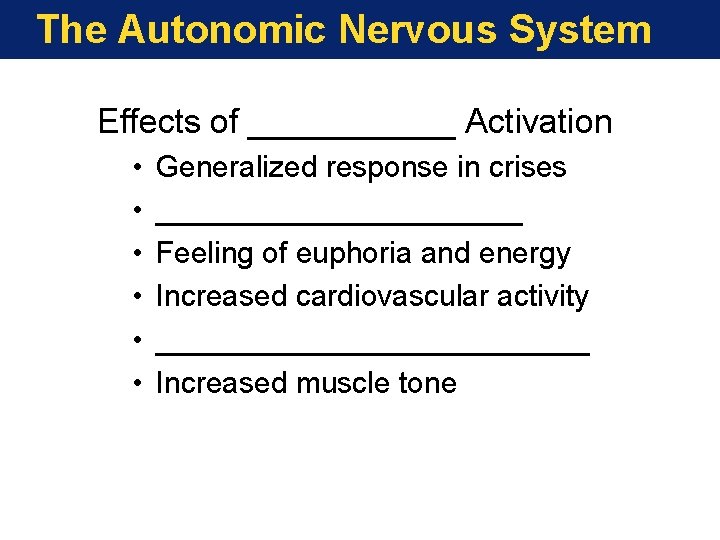
The Autonomic Nervous System Effects of ______ Activation • • • Generalized response in crises ___________ Feeling of euphoria and energy Increased cardiovascular activity _____________ Increased muscle tone
The Parasympathetic Division
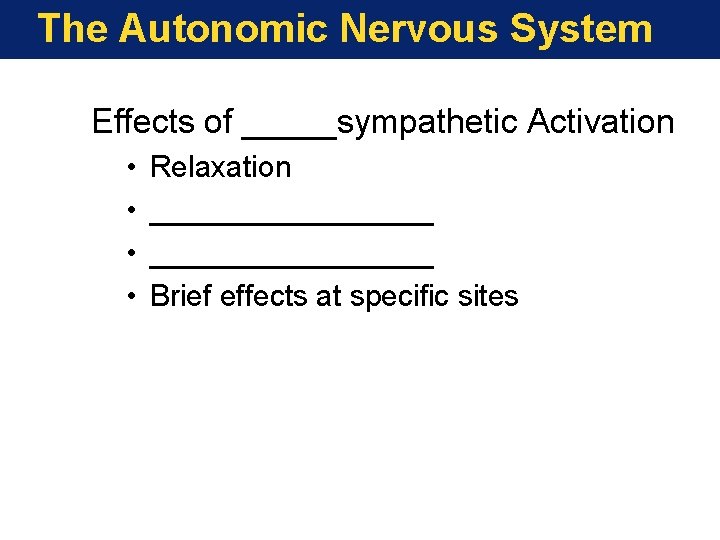
The Autonomic Nervous System Effects of _____sympathetic Activation • • Relaxation _________________ Brief effects at specific sites
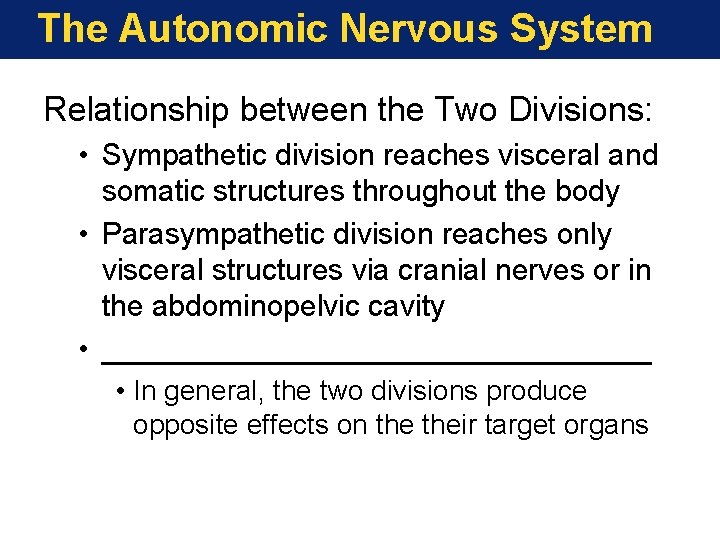
The Autonomic Nervous System Relationship between the Two Divisions: • Sympathetic division reaches visceral and somatic structures throughout the body • Parasympathetic division reaches only visceral structures via cranial nerves or in the abdominopelvic cavity • _________________ • In general, the two divisions produce opposite effects on their target organs
The Peripheral Nervous System Key Note: Reflexes are rapid, automatic responses to stimuli that “buy time” for the planning and execution of more complex responses that are often consciously directed.
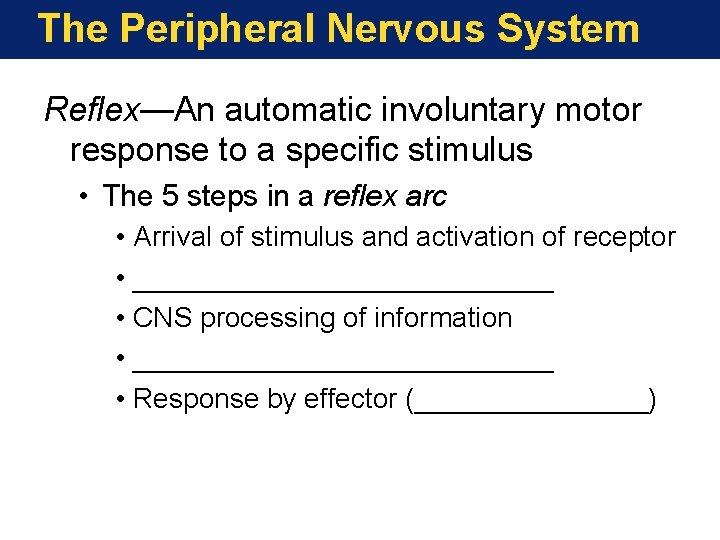
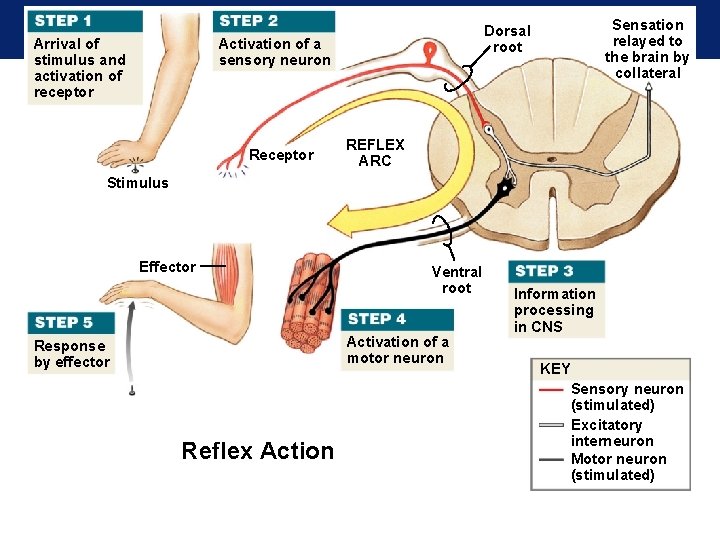
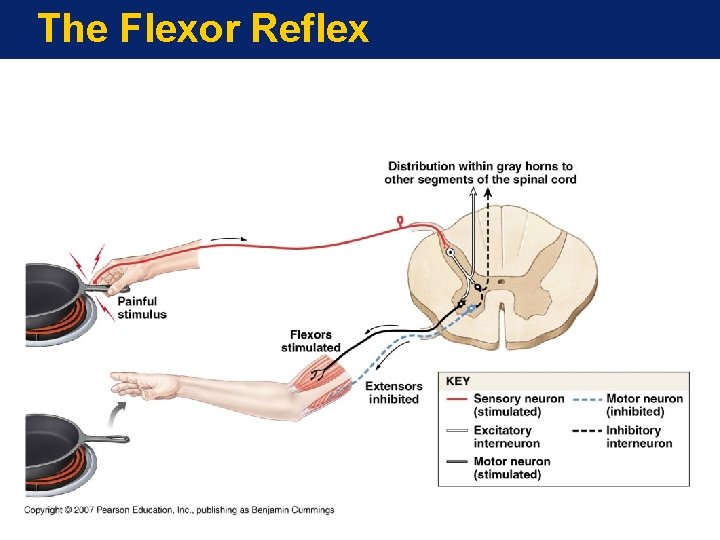
The Peripheral Nervous System Reflex—An automatic involuntary motor response to a specific stimulus • The 5 steps in a reflex arc • Arrival of stimulus and activation of receptor • ______________ • CNS processing of information • ______________ • Response by effector (________)
Arrival of stimulus and activation of receptor Activation of a sensory neuron Receptor Sensation relayed to the brain by collateral Dorsal root REFLEX ARC Stimulus Effector Ventral root Activation of a motor neuron Response by effector Reflex Action Information processing in CNS KEY Sensory neuron (stimulated) Excitatory interneuron Motor neuron (stimulated)
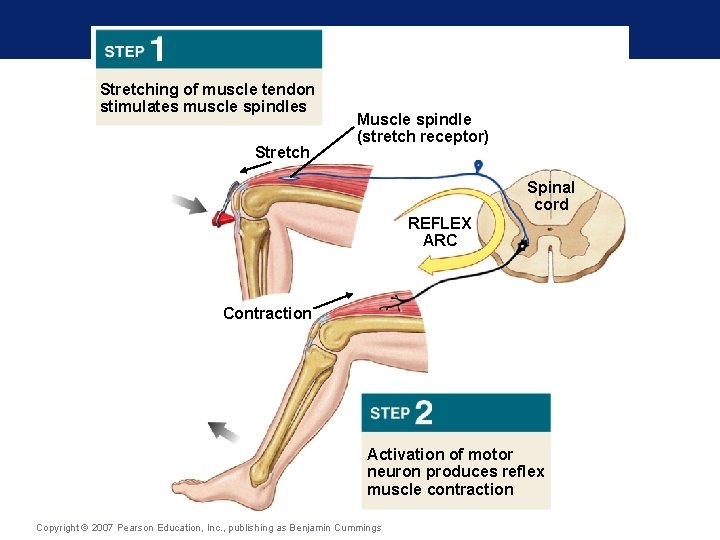
Stretching of muscle tendon stimulates muscle spindles Stretch Muscle spindle (stretch receptor) Spinal cord REFLEX ARC Contraction Activation of motor neuron produces reflex muscle contraction Copyright © 2007 Pearson Education, Inc. , publishing as Benjamin Cummings
The Flexor Reflex
Aging and the Nervous System Age-Related Changes • • Reduction in brain size and weight ______________________ Changes in synaptic organization of the brain • Intracellular and extracellular changes in CNS neurons