
THE PERIODIC TABLE The Big Questions Who developed
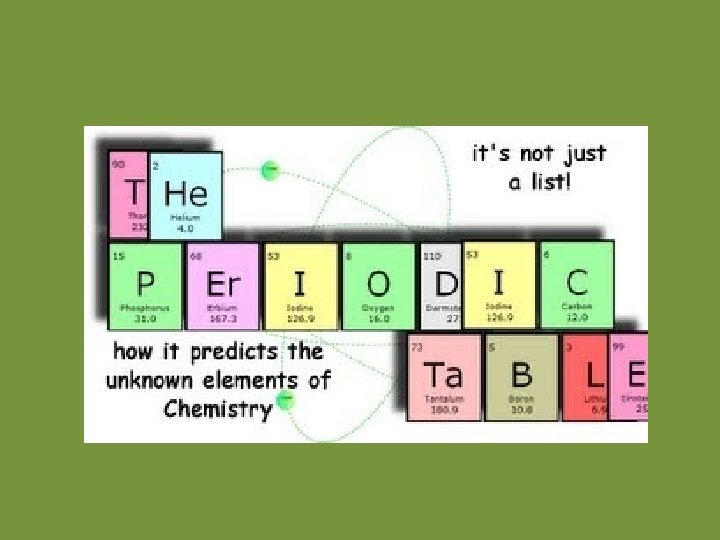
THE PERIODIC TABLE
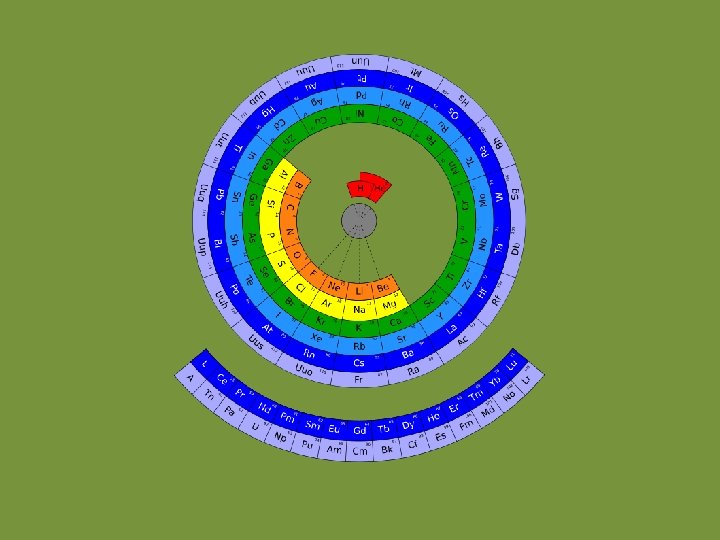
The Big Questions • Who developed the first periodic table? – How did he organize it, and how does this differ from the organization of the P. T. today? • What are some ways in which we group elements on the P. T. ? – What does this tell us about the atom’s structure?
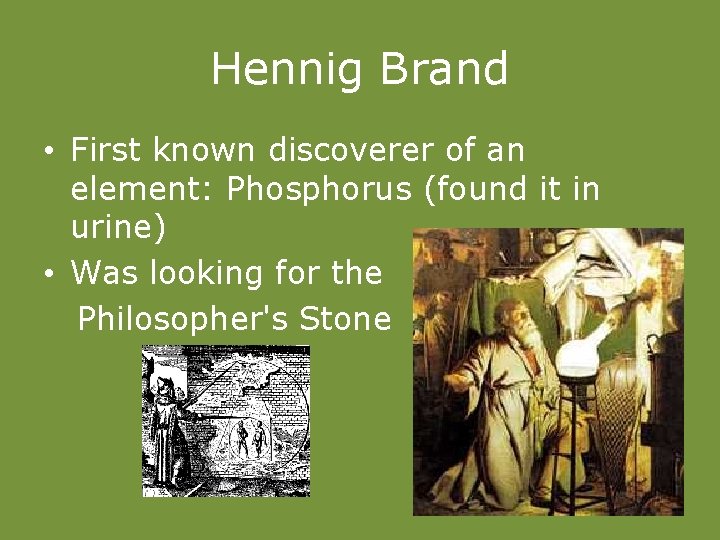
Hennig Brand • First known discoverer of an element: Phosphorus (found it in urine) • Was looking for the Philosopher's Stone
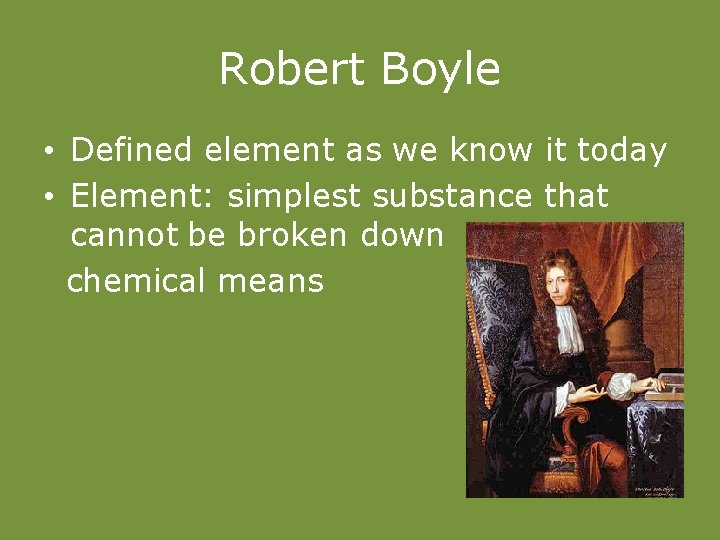
Robert Boyle • Defined element as we know it today • Element: simplest substance that cannot be broken down chemical means
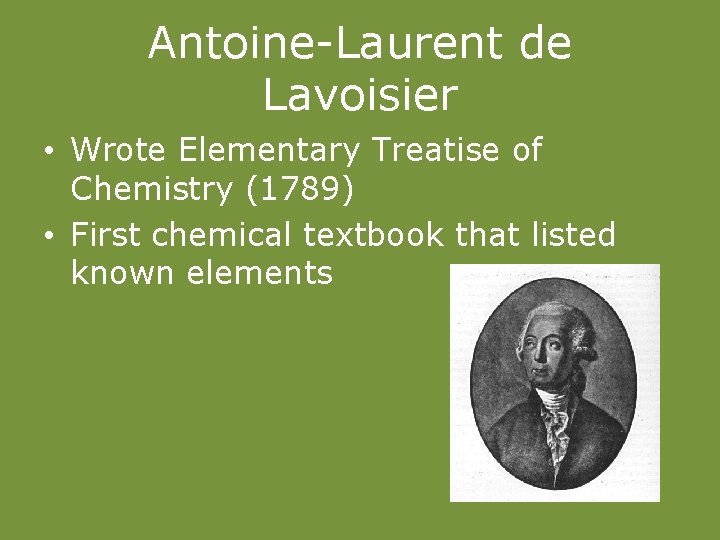
Antoine-Laurent de Lavoisier • Wrote Elementary Treatise of Chemistry (1789) • First chemical textbook that listed known elements
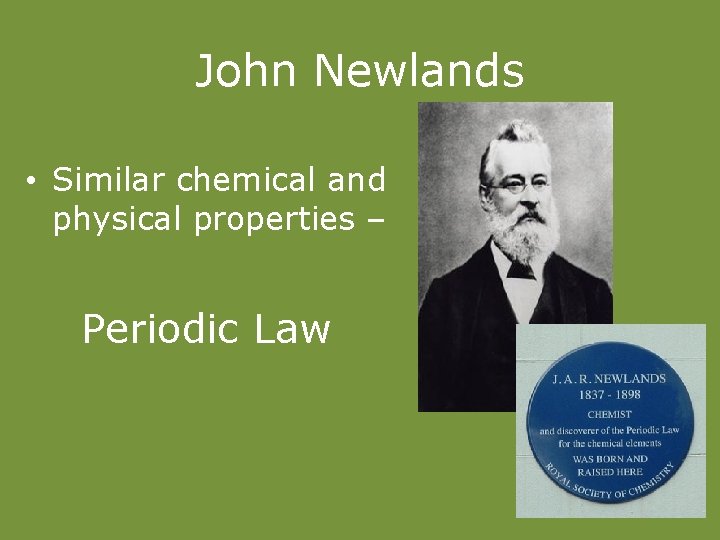
John Newlands • Similar chemical and physical properties – Periodic Law
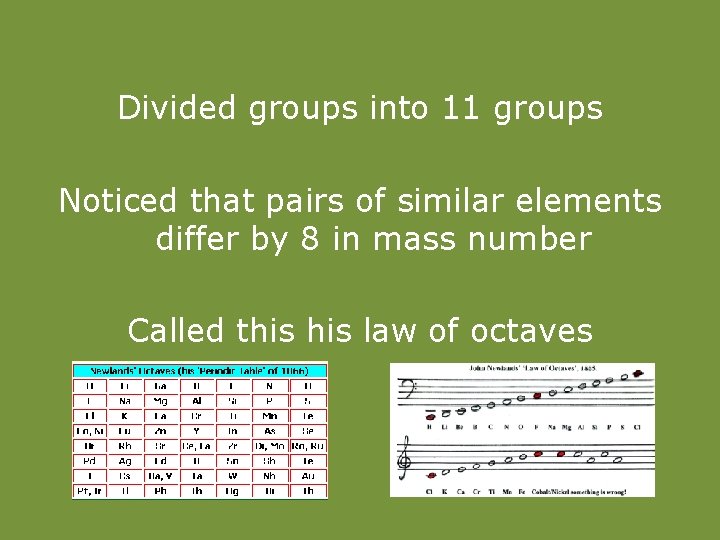
Divided groups into 11 groups Noticed that pairs of similar elements differ by 8 in mass number Called this law of octaves
Dmitri Mendeleev
Increasing Atomic Mass

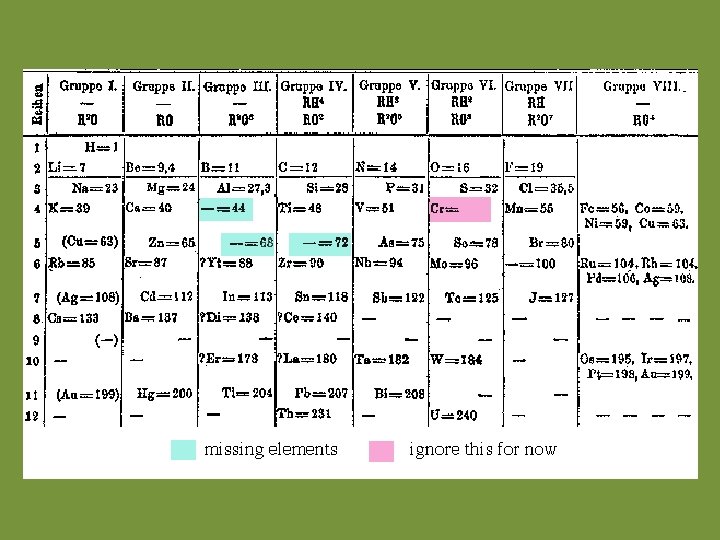
The First Periodic Table
The Mendeleev P. T. • DM noticed there were “holes” where no known element would fit. – Guessed that these holes represented undiscovered elements. – Made predictions about their properties. • When discovered, these elements matched their predicted properties.
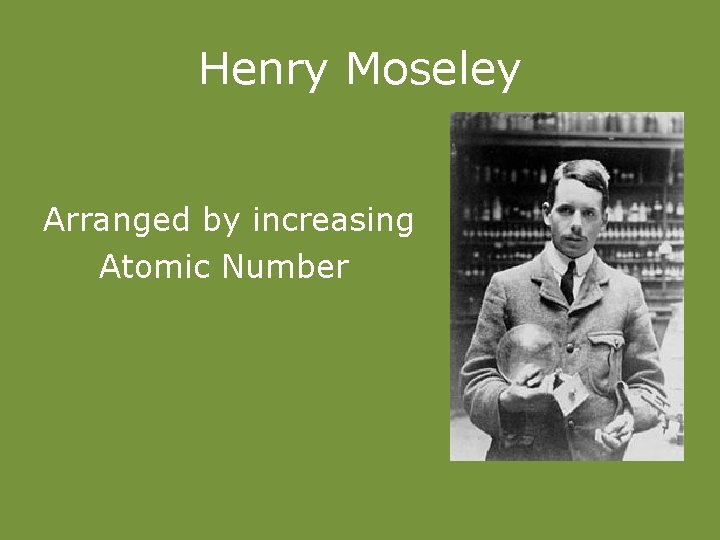
Henry Moseley Arranged by increasing Atomic Number
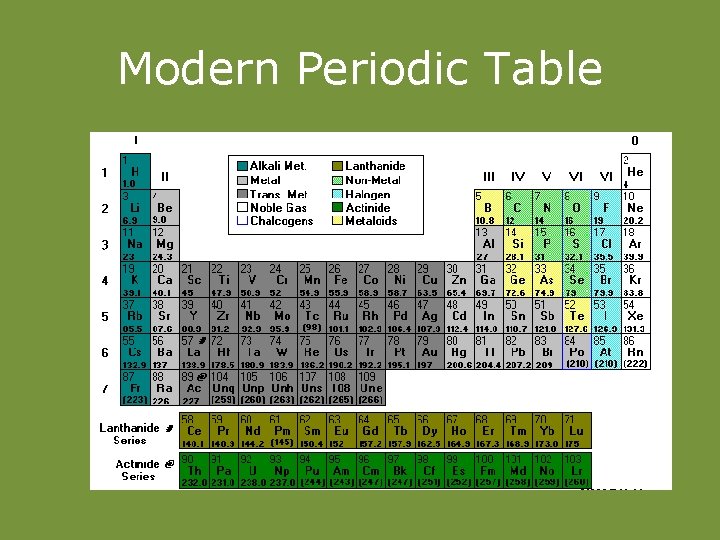
Modern Periodic Table
PERIODIC LAW
• When elements are arranged to atomic numbers, elements with similar properties appear at regular intervals.
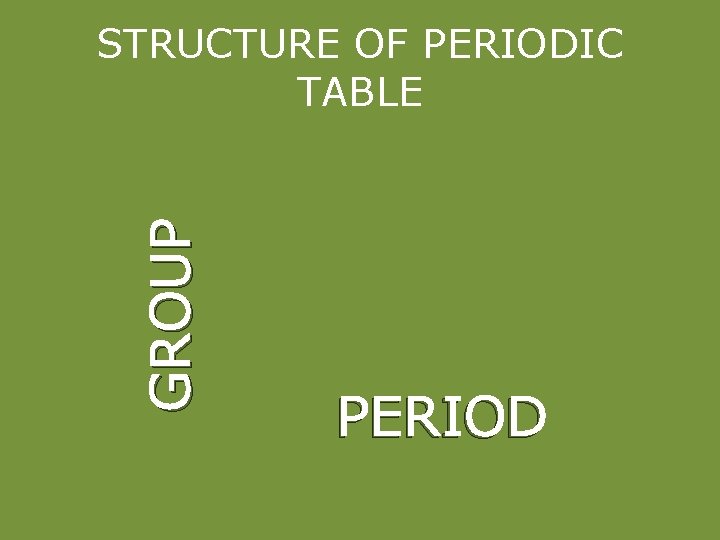
GROUP STRUCTURE OF PERIODIC TABLE PERIOD
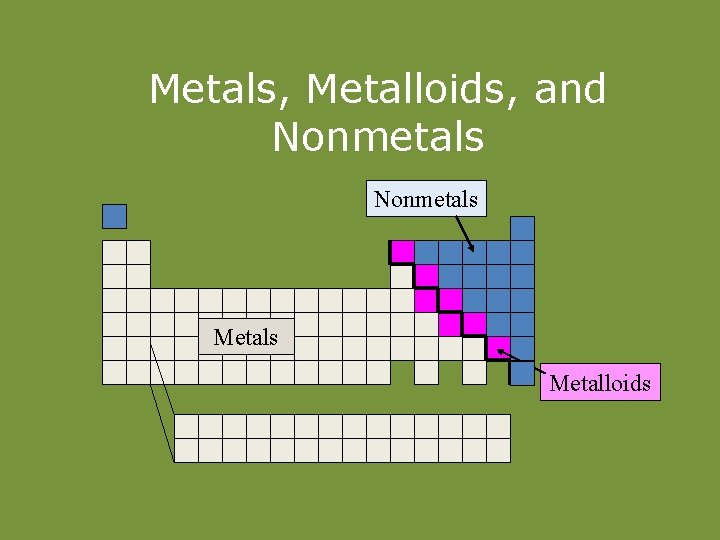
Metals, Metalloids, and Nonmetals Metals Metalloids
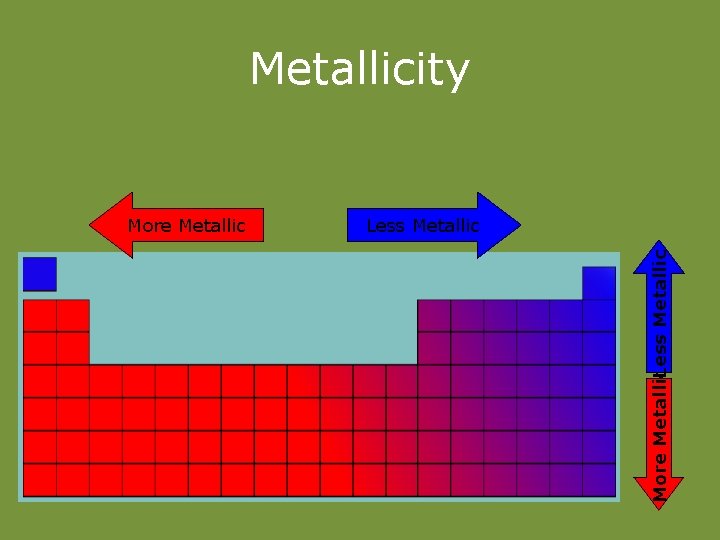
Metallicity Less Metallic More Metallic
The Octet Rule • Atoms tend to gain or lose electrons so they can have 8* valence electrons (same e- configuration as a noble gas). – Why? • 8 valence electrons = full s and p sublevel. • Extremely stable configuration. • *There a few exceptions to this rule that we will discuss later.
Ions • Atoms can lose or gain electrons. – Ion – an atom that has become charged by gaining or losing electrons. • Cation – positive ion (lost e-) • Anion – negative ion (gained e-)
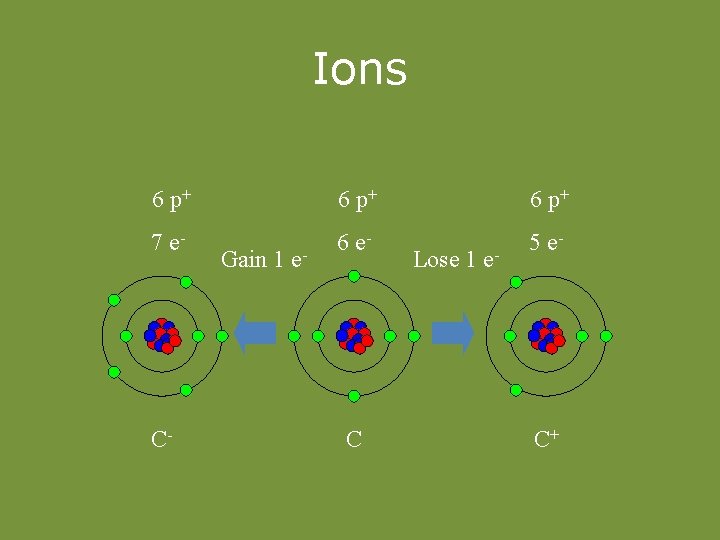
Ions 6 p+ 7 e- 6 e- 5 e- C- Gain 1 e- C Lose 1 e- C+
Families of Elements • Families – columns or groups. – Elements in a family have similar chem. properties. – Also have same no. of valence e-. – Coincidence? (No. )
s-block Blocks d-block f-block p-block
Electron Configs. on the P. T. 1 s 1 s 2 s 2 p 3 s 3 p 4 s 3 d 4 p 5 s 4 d 5 p 6 s 5 d 6 p 7 s 6 d 7 p 4 f 5 f
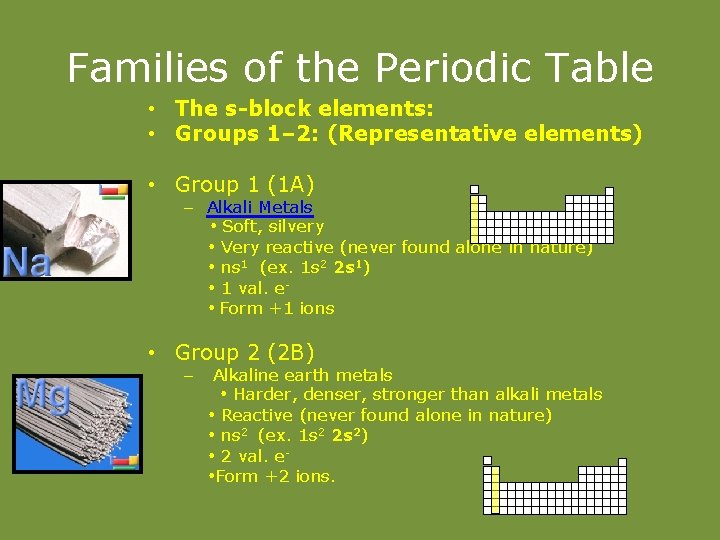
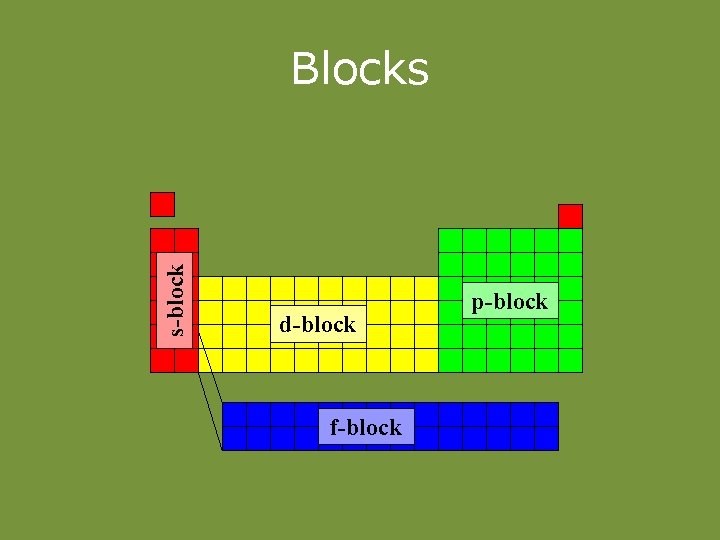
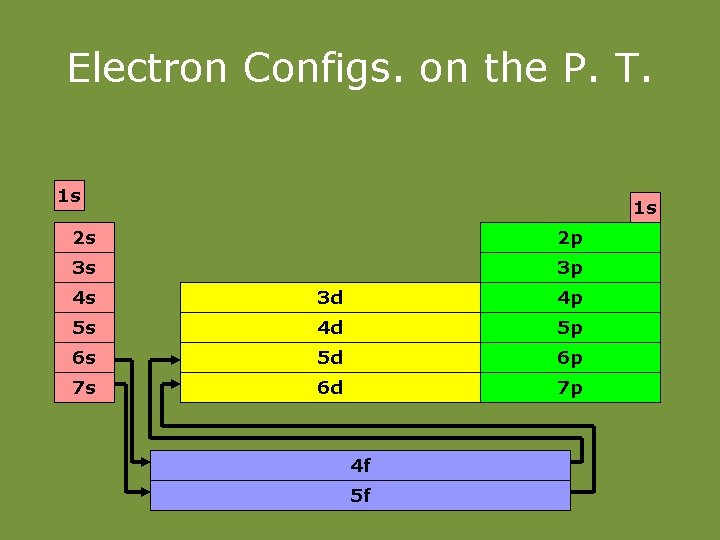
Families of the Periodic Table • The s-block elements: • Groups 1– 2: (Representative elements) • Group 1 (1 A) – Alkali Metals • Soft, silvery • Very reactive (never found alone in nature) • ns 1 (ex. 1 s 2 2 s 1) • 1 val. e • Form +1 ions • Group 2 (2 B) – Alkaline earth metals • Harder, denser, stronger than alkali metals • Reactive (never found alone in nature) • ns 2 (ex. 1 s 2 2 s 2) • 2 val. e • Form +2 ions.
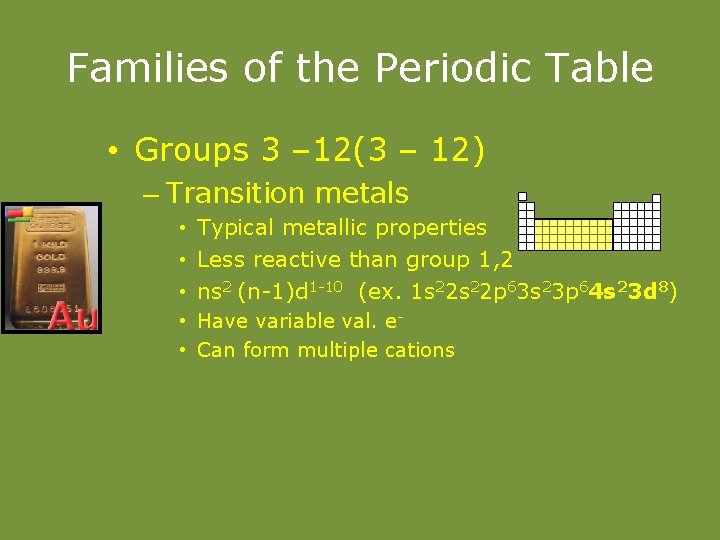
Families of the Periodic Table • Groups 3 – 12(3 – 12) – Transition metals • Typical metallic properties • Less reactive than group 1, 2 • ns 2 (n-1)d 1 -10 (ex. 1 s 22 p 63 s 23 p 64 s 23 d 8) • Have variable val. e • Can form multiple cations
Families of the Periodic Table The p-block elements: Groups 13 (3 A) – 18 (8 A): (Representative elements) Includes: Metalloids, nonmetals, metals ns 2 np 1 -6 (ex. 1 s 22 p 63 s 23 p 4)
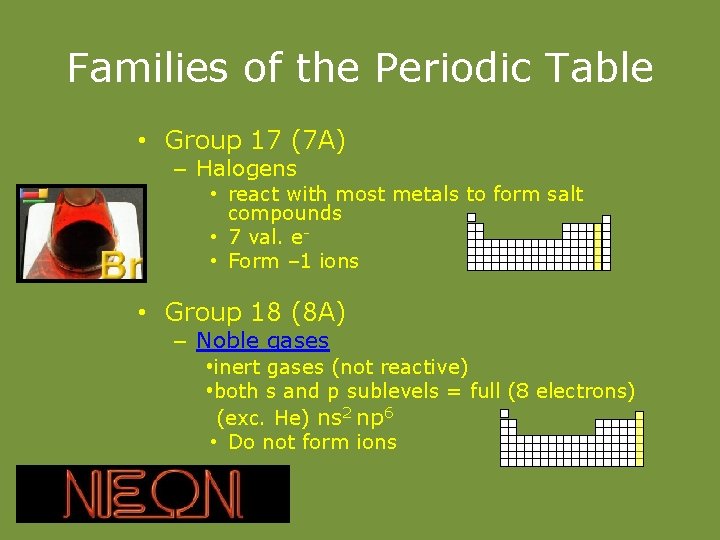
Families of the Periodic Table • Group 17 (7 A) – Halogens • react with most metals to form salt compounds • 7 val. e • Form – 1 ions • Group 18 (8 A) – Noble gases • inert gases (not reactive) • both s and p sublevels = full (8 electrons) (exc. He) ns 2 np 6 • Do not form ions
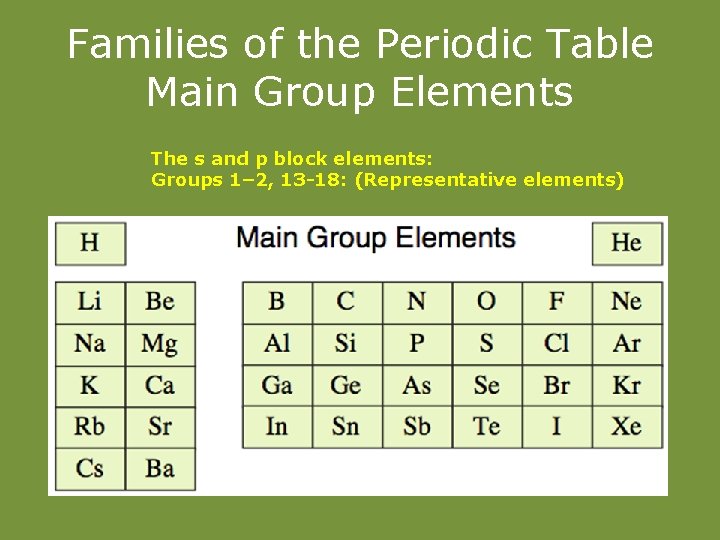
Families of the Periodic Table Main Group Elements The s and p block elements: Groups 1– 2, 13 -18: (Representative elements)
- Slides: 34