
The Periodic Table Recap An Atom 12 C
The Periodic Table
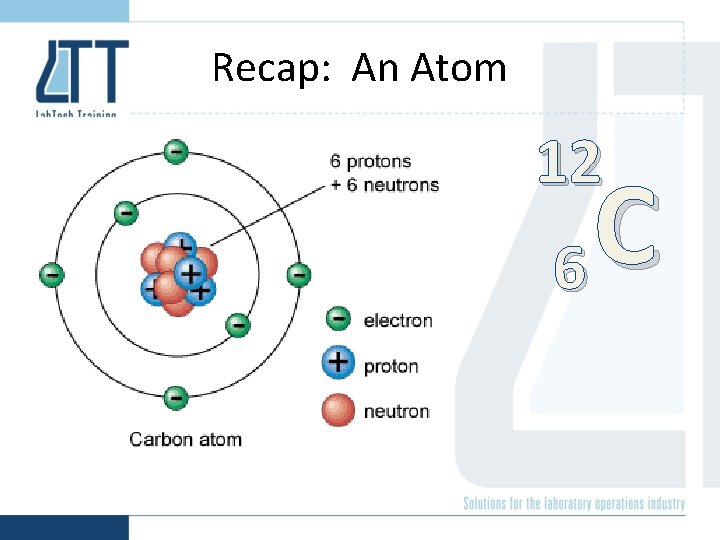
Recap: An Atom 12 C 6
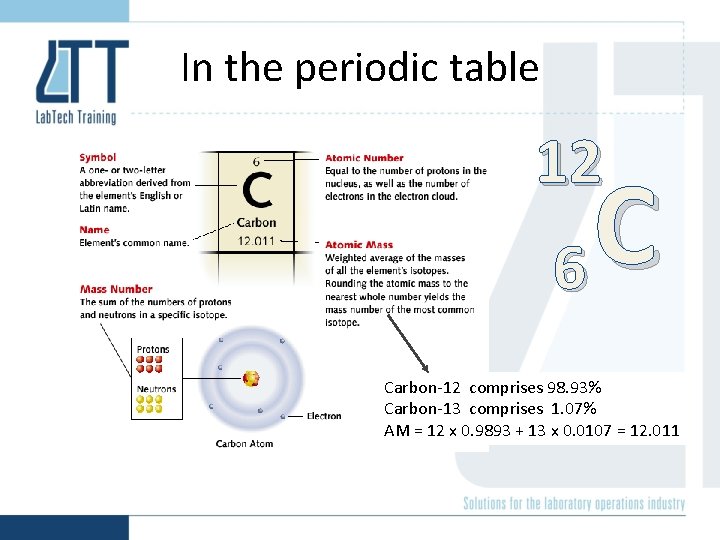
In the periodic table 12 C 6 Carbon-12 comprises 98. 93% Carbon-13 comprises 1. 07% AM = 12 x 0. 9893 + 13 x 0. 0107 = 12. 011

Distribution of carbon isotopes Carbon-12 and carbon-13 have natural abundances of 98. 93% and 1. 07% respectively. E. g. Sample of charcoal 98. 93% is carbon-12 1. 07% is carbon-13
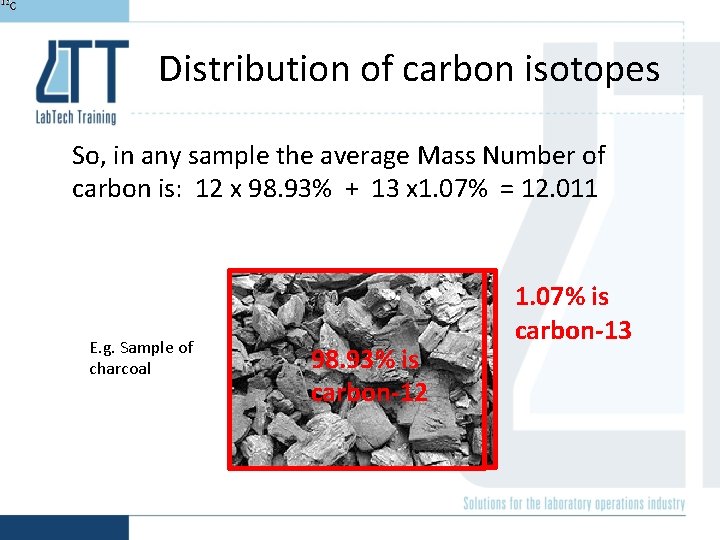
Distribution of carbon isotopes So, in any sample the average Mass Number of carbon is: 12 x 98. 93% + 13 x 1. 07% = 12. 011 E. g. Sample of charcoal 98. 93% is carbon-12 1. 07% is carbon-13
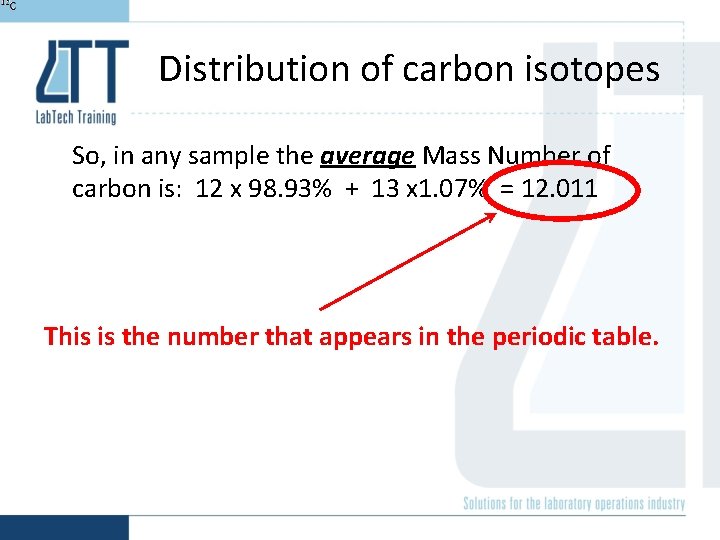
Distribution of carbon isotopes So, in any sample the average Mass Number of carbon is: 12 x 98. 93% + 13 x 1. 07% = 12. 011 This is the number that appears in the periodic table.
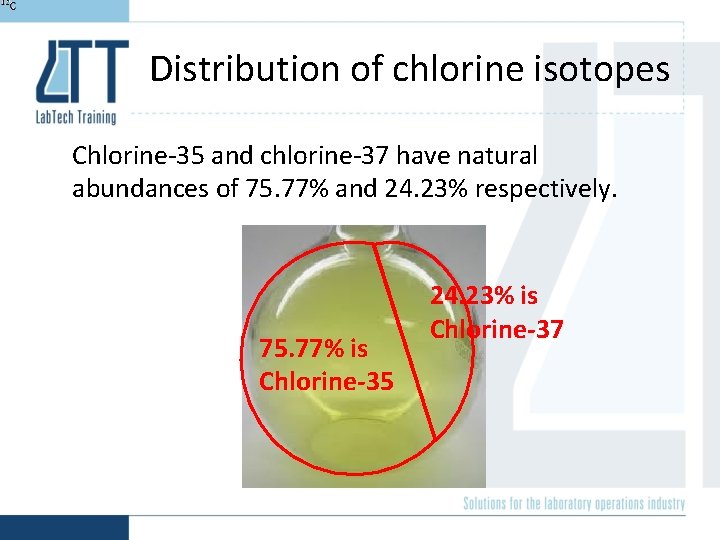
Distribution of chlorine isotopes Chlorine-35 and chlorine-37 have natural abundances of 75. 77% and 24. 23% respectively. 75. 77% is Chlorine-35 24. 23% is Chlorine-37
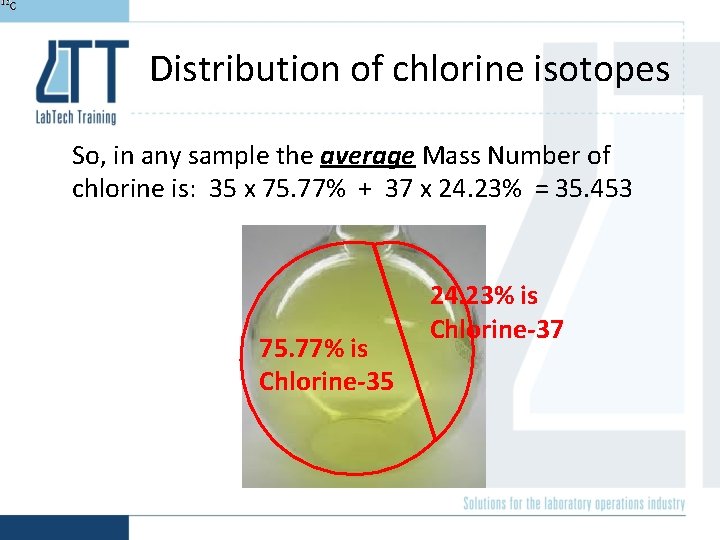
Distribution of chlorine isotopes So, in any sample the average Mass Number of chlorine is: 35 x 75. 77% + 37 x 24. 23% = 35. 453 75. 77% is Chlorine-35 24. 23% is Chlorine-37
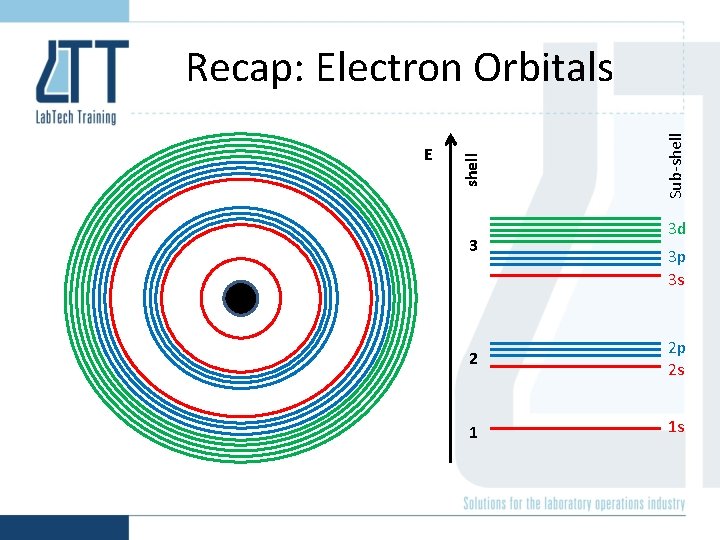
3 Sub-shell E shell Recap: Electron Orbitals 3 d 3 p 3 s 2 2 p 2 s 1 1 s
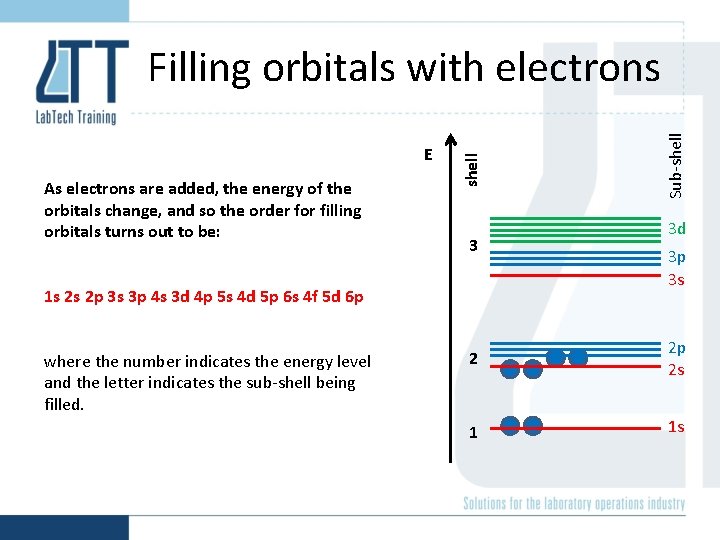
As electrons are added, the energy of the orbitals change, and so the order for filling orbitals turns out to be: 3 1 s 2 s 2 p 3 s 3 p 4 s 3 d 4 p 5 s 4 d 5 p 6 s 4 f 5 d 6 p where the number indicates the energy level and the letter indicates the sub-shell being filled. Sub-shell E shell Filling orbitals with electrons 3 d 3 p 3 s 2 2 p 2 s 1 1 s
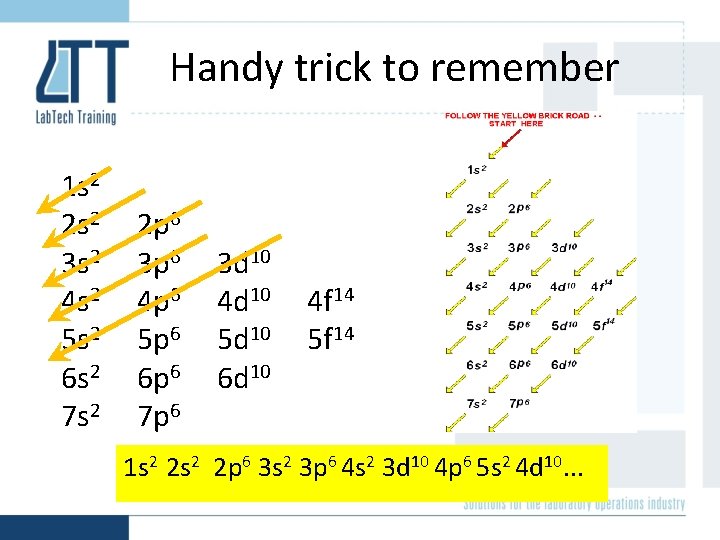
Handy trick to remember 1 s 2 2 s 2 3 s 2 4 s 2 5 s 2 6 s 2 7 s 2 2 p 6 3 p 6 4 p 6 5 p 6 6 p 6 7 p 6 3 d 10 4 d 10 5 d 10 6 d 10 4 f 14 5 f 14 1 s 2 2 p 6 3 s 2 3 p 6 4 s 2 3 d 10 4 p 6 5 s 2 4 d 10. . .
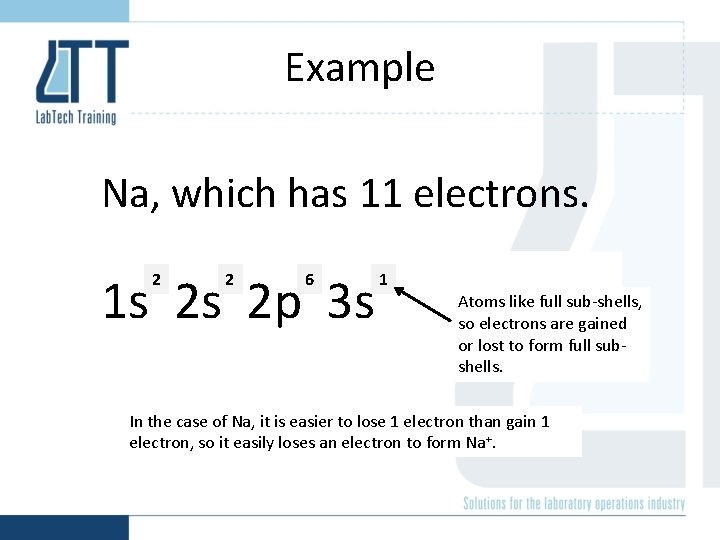
Example Na, which has 11 electrons. 1 s 2 s 2 p 3 s 3 p 4 s 3 d 2 1 6 5 4 3 2 1 1 Atoms like full sub-shells, so electrons are gained or lost to form full subshells. In the case of Na, it is easier to lose 1 electron than gain 1 electron, so it easily loses an electron to form Na+.
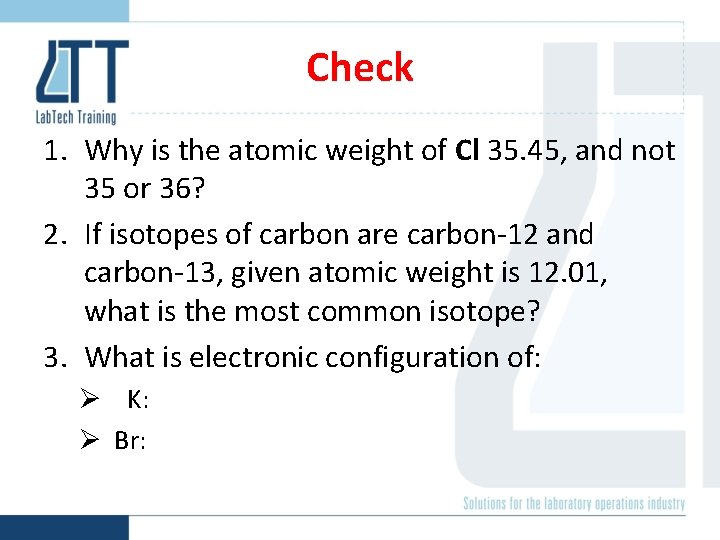
Check 1. Why is the atomic weight of Cl 35. 45, and not 35 or 36? 2. If isotopes of carbon are carbon-12 and carbon-13, given atomic weight is 12. 01, what is the most common isotope? 3. What is electronic configuration of: Ø K: Ø Br:
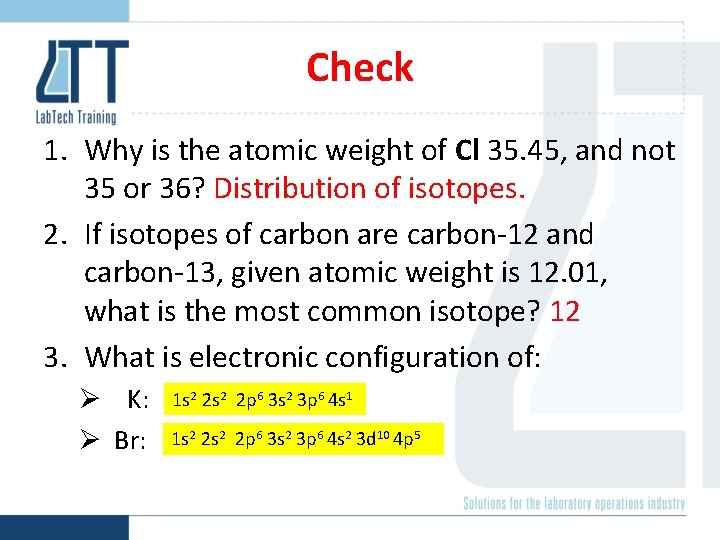
Check 1. Why is the atomic weight of Cl 35. 45, and not 35 or 36? Distribution of isotopes. 2. If isotopes of carbon are carbon-12 and carbon-13, given atomic weight is 12. 01, what is the most common isotope? 12 3. What is electronic configuration of: Ø K: Ø Br: 1 s 2 2 p 6 3 s 2 3 p 6 4 s 1 1 s 2 2 p 6 3 s 2 3 p 6 4 s 2 3 d 10 4 p 5

Normal View of Periodic Table Actinide and Lanthanide Series put separate.
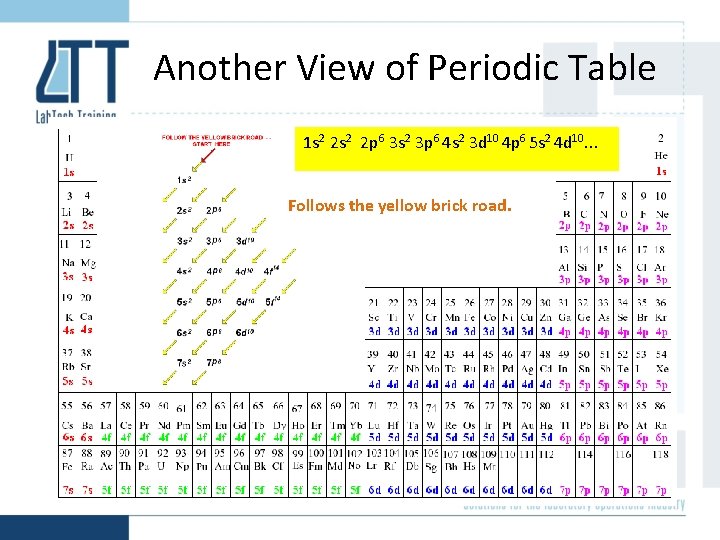
Another View of Periodic Table 1 s 2 2 p 6 3 s 2 3 p 6 4 s 2 3 d 10 4 p 6 5 s 2 4 d 10. . . Follows the yellow brick road.
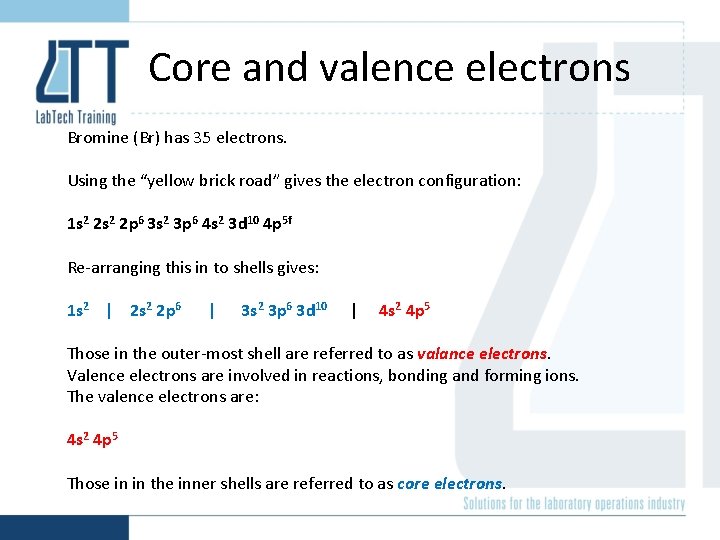
Core and valence electrons Bromine (Br) has 35 electrons. Using the “yellow brick road” gives the electron configuration: 1 s 2 2 p 6 3 s 2 3 p 6 4 s 2 3 d 10 4 p 5 f Re-arranging this in to shells gives: 1 s 2 | 2 s 2 2 p 6 | 3 s 2 3 p 6 3 d 10 | 4 s 2 4 p 5 Those in the outer-most shell are referred to as valance electrons. Valence electrons are involved in reactions, bonding and forming ions. The valence electrons are: 4 s 2 4 p 5 Those in in the inner shells are referred to as core electrons.
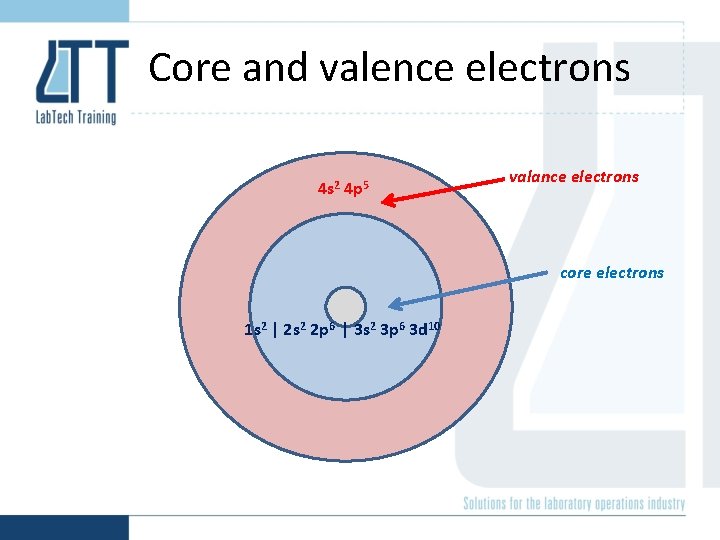
Core and valence electrons 4 s 2 4 p 5 valance electrons core electrons 1 s 2 | 2 s 2 2 p 6 | 3 s 2 3 p 6 3 d 10
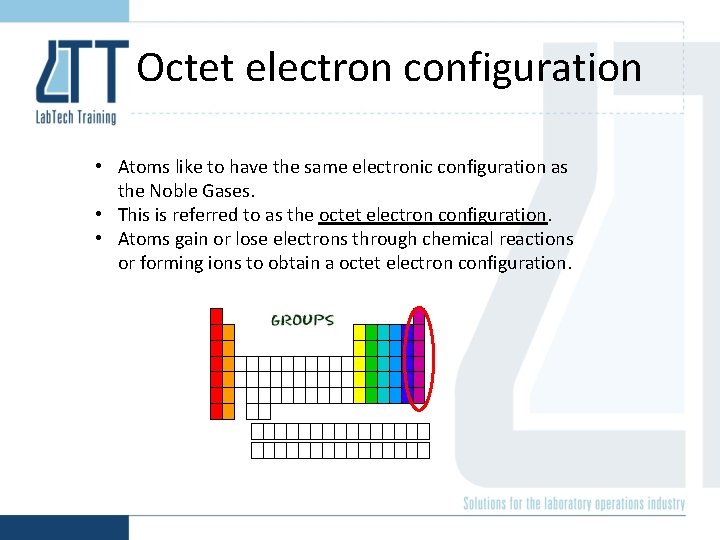
Octet electron configuration • Atoms like to have the same electronic configuration as the Noble Gases. • This is referred to as the octet electron configuration. • Atoms gain or lose electrons through chemical reactions or forming ions to obtain a octet electron configuration.
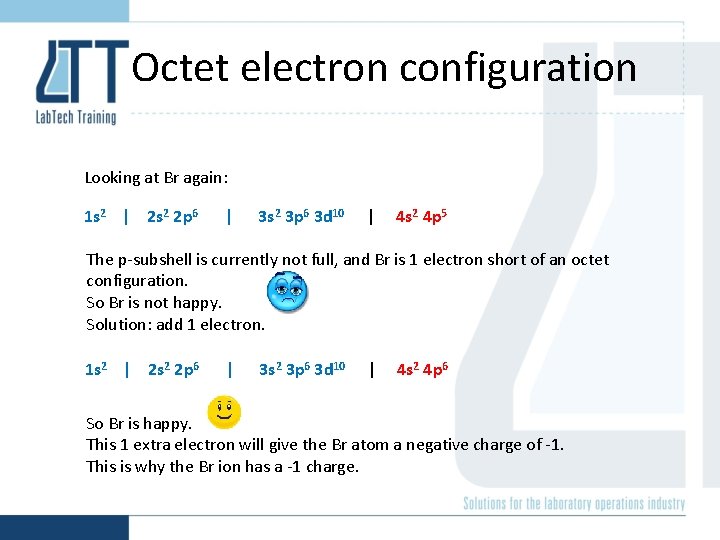
Octet electron configuration Looking at Br again: 1 s 2 | 2 s 2 2 p 6 | 3 s 2 3 p 6 3 d 10 | 4 s 2 4 p 5 The p-subshell is currently not full, and Br is 1 electron short of an octet configuration. So Br is not happy. Solution: add 1 electron. 1 s 2 | 2 s 2 2 p 6 | 3 s 2 3 p 6 3 d 10 | 4 s 2 4 p 6 So Br is happy. This 1 extra electron will give the Br atom a negative charge of -1. This is why the Br ion has a -1 charge.
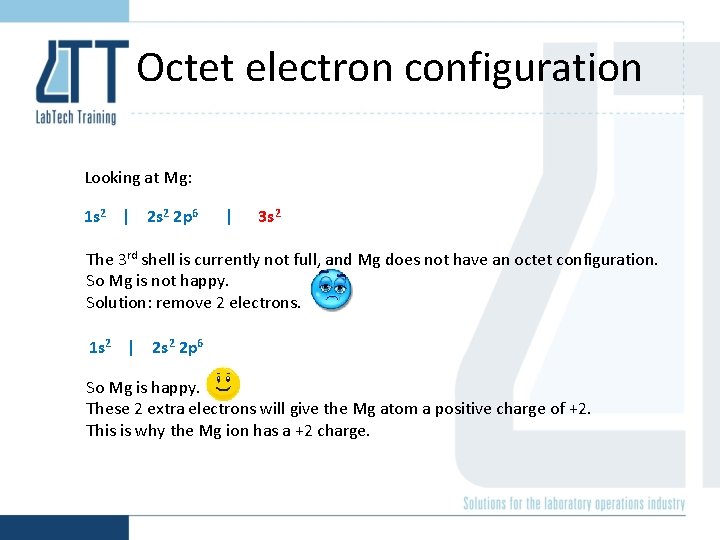
Octet electron configuration Looking at Mg: 1 s 2 | 2 s 2 2 p 6 | 3 s 2 The 3 rd shell is currently not full, and Mg does not have an octet configuration. So Mg is not happy. Solution: remove 2 electrons. 1 s 2 | 2 s 2 2 p 6 So Mg is happy. These 2 extra electrons will give the Mg atom a positive charge of +2. This is why the Mg ion has a +2 charge.
Valency and Oxidation number • The valency of an element measures its ability to combine with other elements. The valency is determined by the number of electrons in the outer shell of each atom of an element. • The oxidation number of an element indicates the number of electrons lost, gained, or shared as a result of chemical bonding. e. g. Valency of Na is 1 and oxidation number is +1
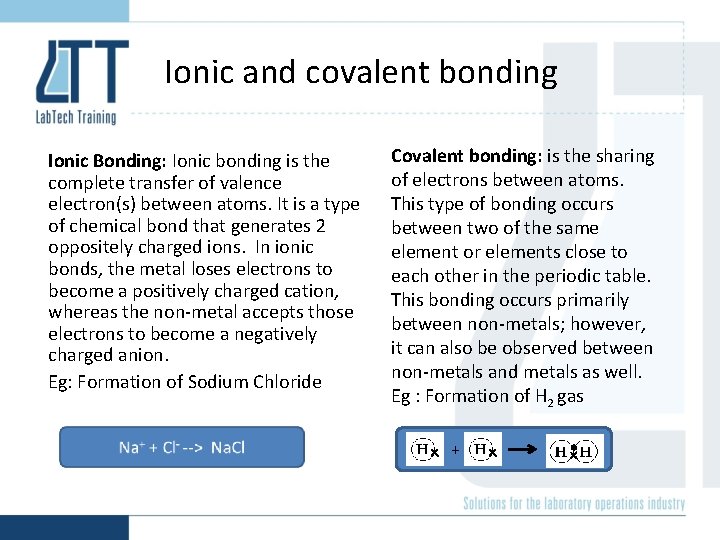
Ionic and covalent bonding Ionic Bonding: Ionic bonding is the complete transfer of valence electron(s) between atoms. It is a type of chemical bond that generates 2 oppositely charged ions. In ionic bonds, the metal loses electrons to become a positively charged cation, whereas the non-metal accepts those electrons to become a negatively charged anion. Eg: Formation of Sodium Chloride Covalent bonding: is the sharing of electrons between atoms. This type of bonding occurs between two of the same element or elements close to each other in the periodic table. This bonding occurs primarily between non-metals; however, it can also be observed between non-metals and metals as well. Eg : Formation of H 2 gas +
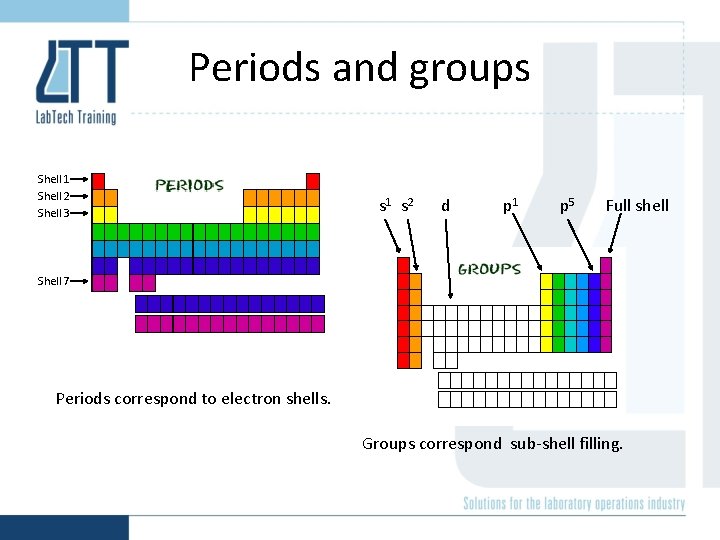
Periods and groups Shell 1 Shell 2 Shell 3 s 1 s 2 d p 1 p 5 Full shell Shell 7 Periods correspond to electron shells. Groups correspond sub-shell filling.
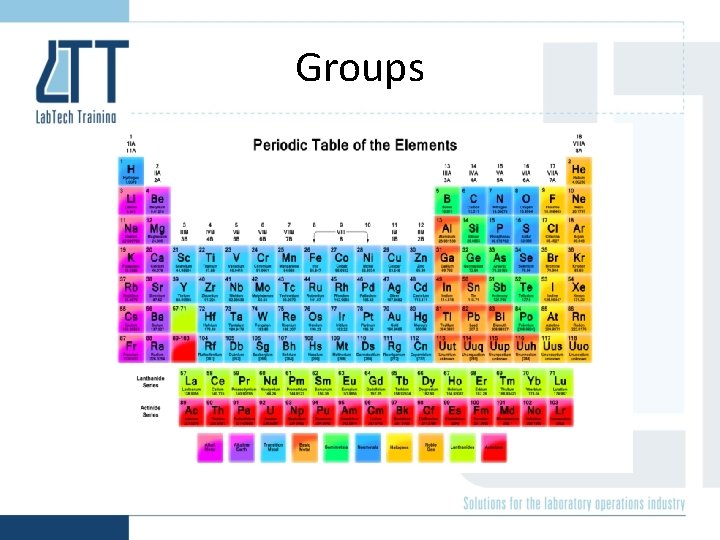
Groups
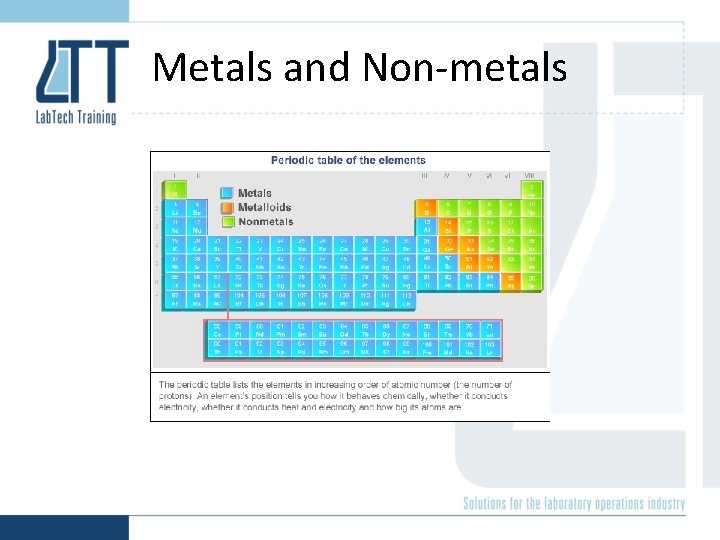
Metals and Non-metals
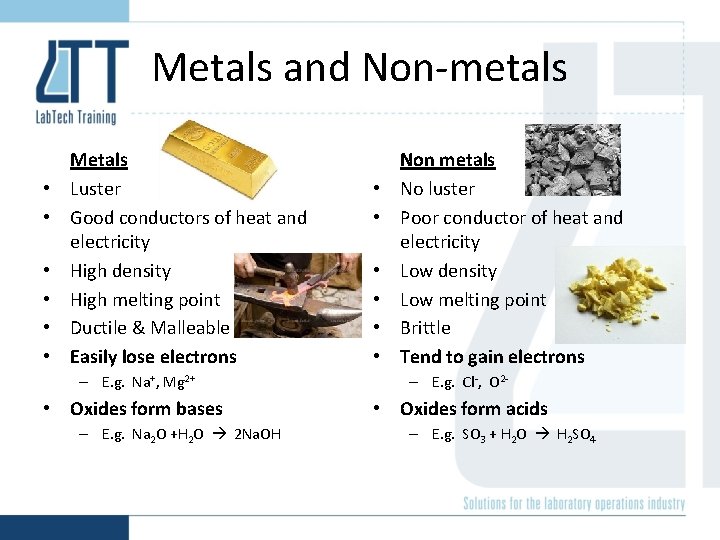
Metals and Non-metals • • • Metals Luster Good conductors of heat and electricity High density High melting point Ductile & Malleable Easily lose electrons • • • Non metals No luster Poor conductor of heat and electricity Low density Low melting point Brittle Tend to gain electrons – E. g. Na+, Mg 2+ – E. g. Cl-, O 2 - • Oxides form bases • Oxides form acids – E. g. Na 2 O +H 2 O 2 Na. OH – E. g. SO 3 + H 2 O H 2 SO 4
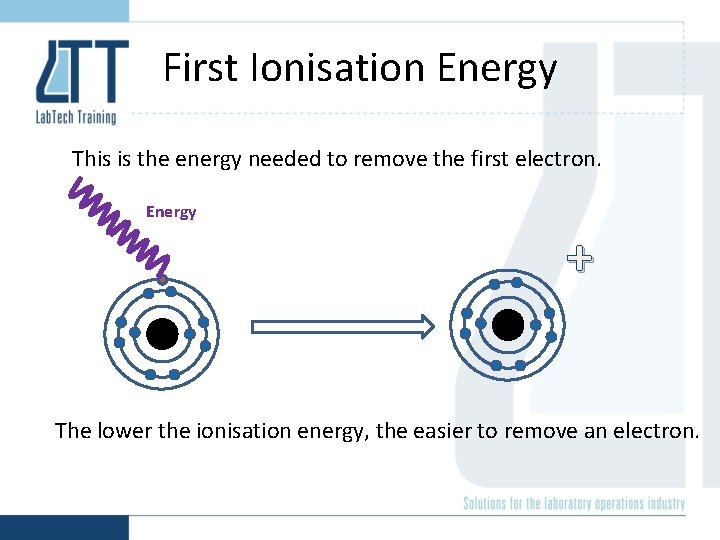
First Ionisation Energy This is the energy needed to remove the first electron. Energy + The lower the ionisation energy, the easier to remove an electron.

First Ionisation Energy
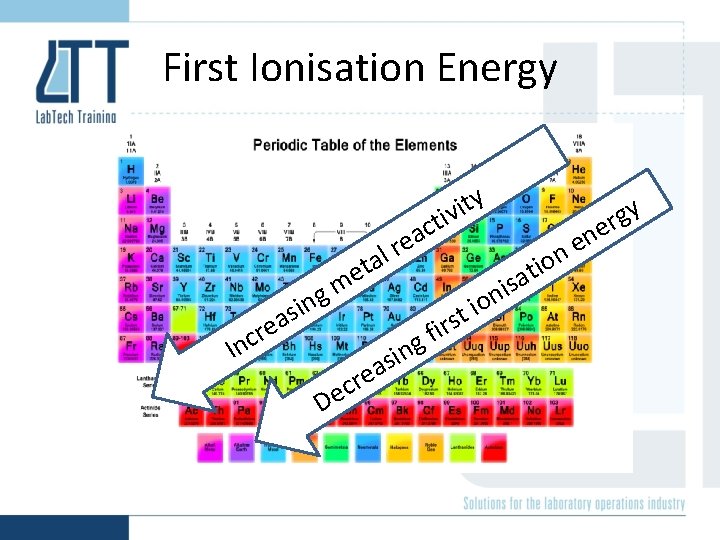
First Ionisation Energy y t i v i t ac Inc s a re ing e r l ta e m e r c De n i s a irs f g i n t io e n io t a s y g r ne
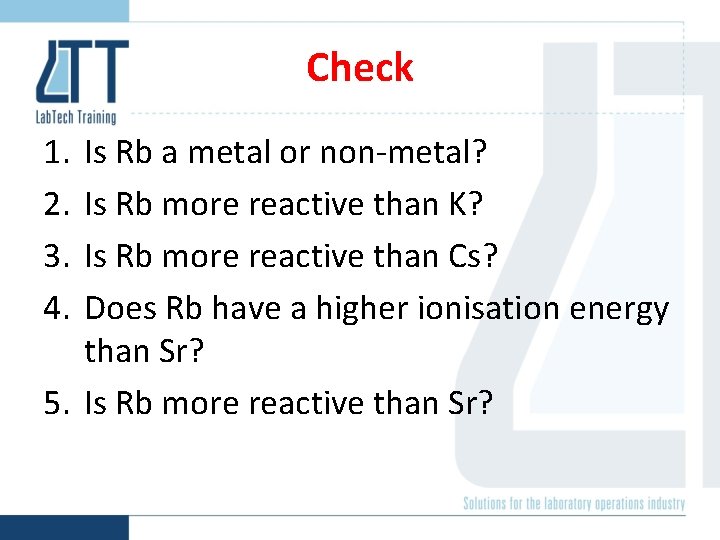
Check 1. 2. 3. 4. Is Rb a metal or non-metal? Is Rb more reactive than K? Is Rb more reactive than Cs? Does Rb have a higher ionisation energy than Sr? 5. Is Rb more reactive than Sr?
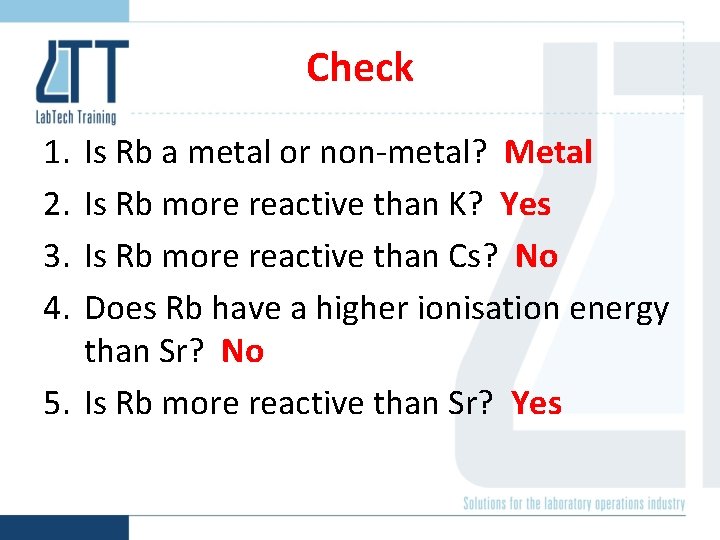
Check 1. 2. 3. 4. Is Rb a metal or non-metal? Metal Is Rb more reactive than K? Yes Is Rb more reactive than Cs? No Does Rb have a higher ionisation energy than Sr? No 5. Is Rb more reactive than Sr? Yes
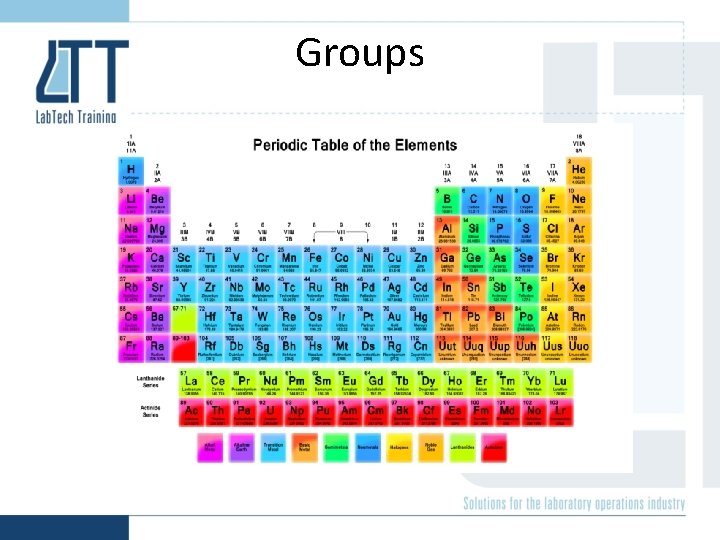
Groups
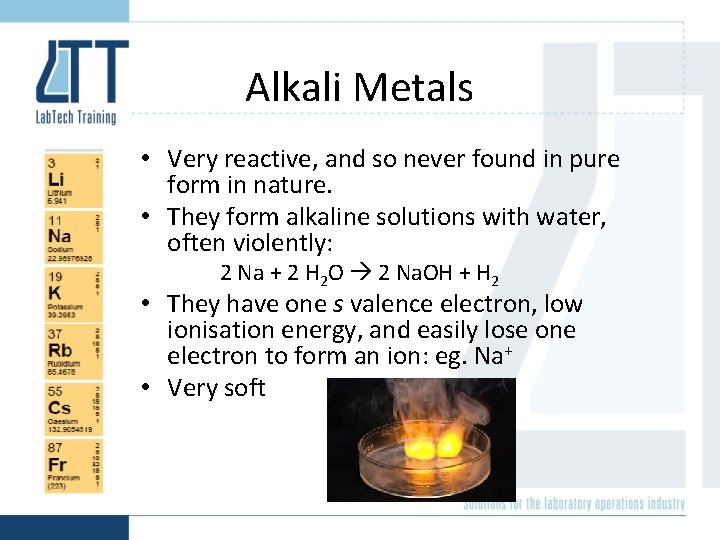
Alkali Metals • Very reactive, and so never found in pure form in nature. • They form alkaline solutions with water, often violently: 2 Na + 2 H 2 O 2 Na. OH + H 2 • They have one s valence electron, low ionisation energy, and easily lose one electron to form an ion: eg. Na+ • Very soft
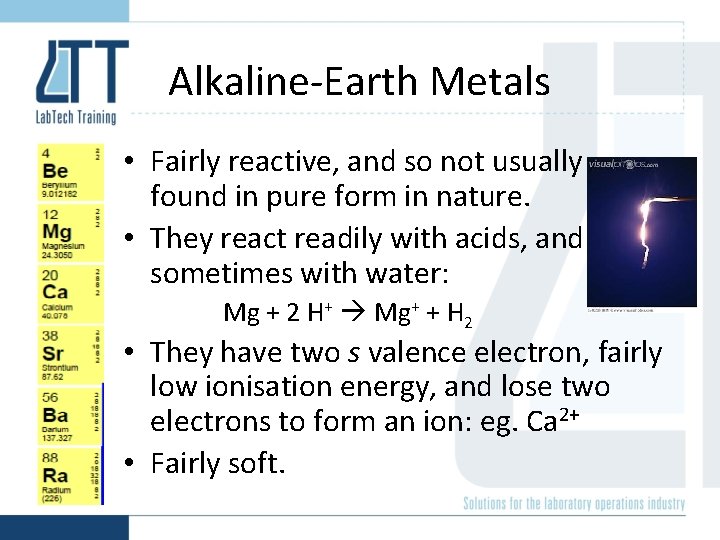
Alkaline-Earth Metals • Fairly reactive, and so not usually found in pure form in nature. • They react readily with acids, and sometimes with water: Mg + 2 H+ Mg+ + H 2 • They have two s valence electron, fairly low ionisation energy, and lose two electrons to form an ion: eg. Ca 2+ • Fairly soft.
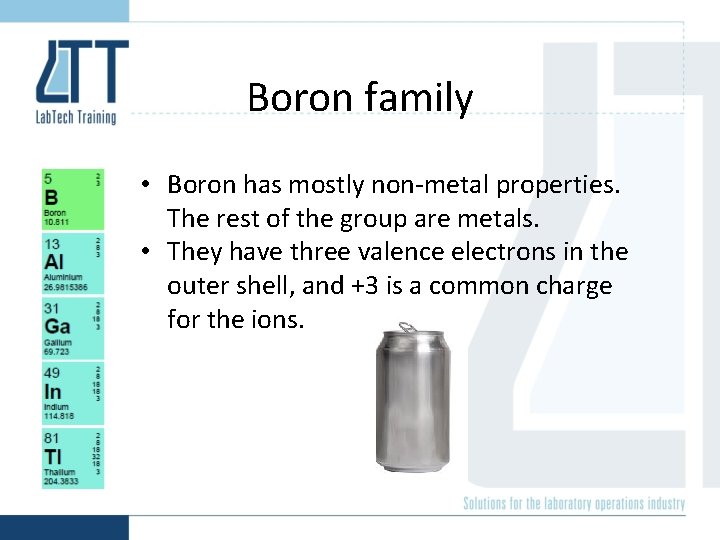
Boron family • Boron has mostly non-metal properties. The rest of the group are metals. • They have three valence electrons in the outer shell, and +3 is a common charge for the ions.
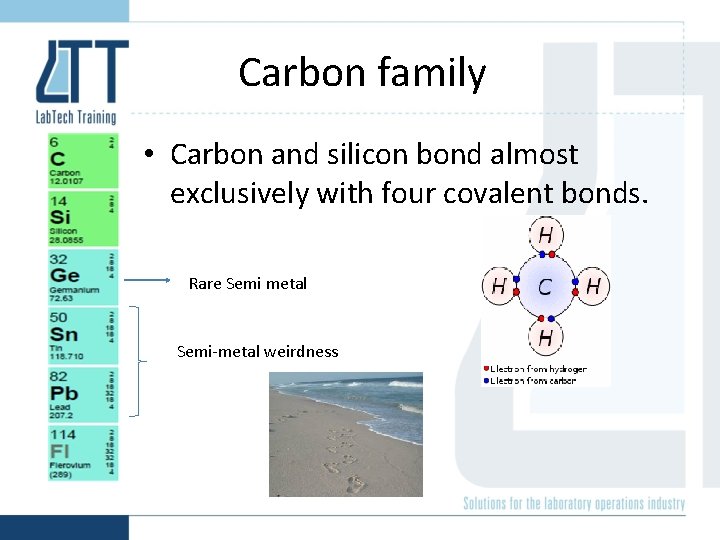
Carbon family • Carbon and silicon bond almost exclusively with four covalent bonds. Rare Semi metal Semi-metal weirdness
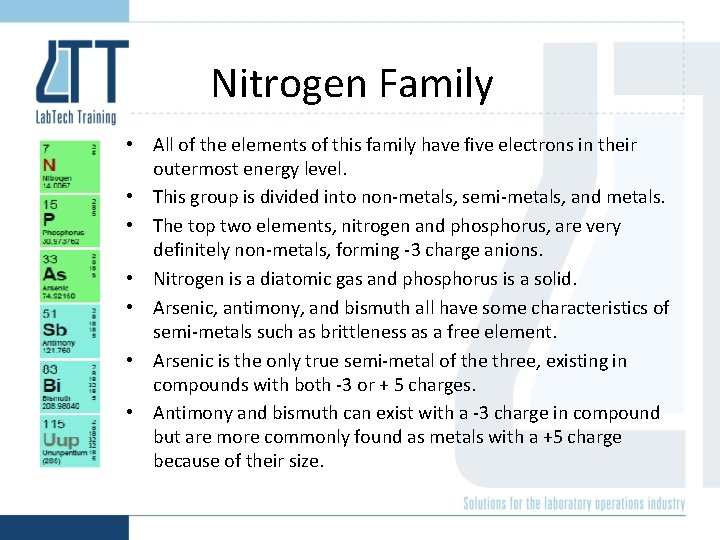
Nitrogen Family • All of the elements of this family have five electrons in their outermost energy level. • This group is divided into non-metals, semi-metals, and metals. • The top two elements, nitrogen and phosphorus, are very definitely non-metals, forming -3 charge anions. • Nitrogen is a diatomic gas and phosphorus is a solid. • Arsenic, antimony, and bismuth all have some characteristics of semi-metals such as brittleness as a free element. • Arsenic is the only true semi-metal of the three, existing in compounds with both -3 or + 5 charges. • Antimony and bismuth can exist with a -3 charge in compound but are more commonly found as metals with a +5 charge because of their size.
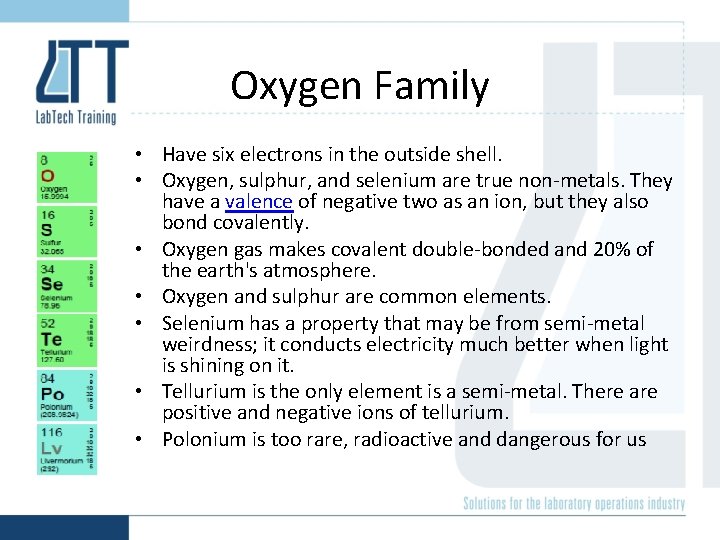
Oxygen Family • Have six electrons in the outside shell. • Oxygen, sulphur, and selenium are true non-metals. They have a valence of negative two as an ion, but they also bond covalently. • Oxygen gas makes covalent double-bonded and 20% of the earth's atmosphere. • Oxygen and sulphur are common elements. • Selenium has a property that may be from semi-metal weirdness; it conducts electricity much better when light is shining on it. • Tellurium is the only element is a semi-metal. There are positive and negative ions of tellurium. • Polonium is too rare, radioactive and dangerous for us
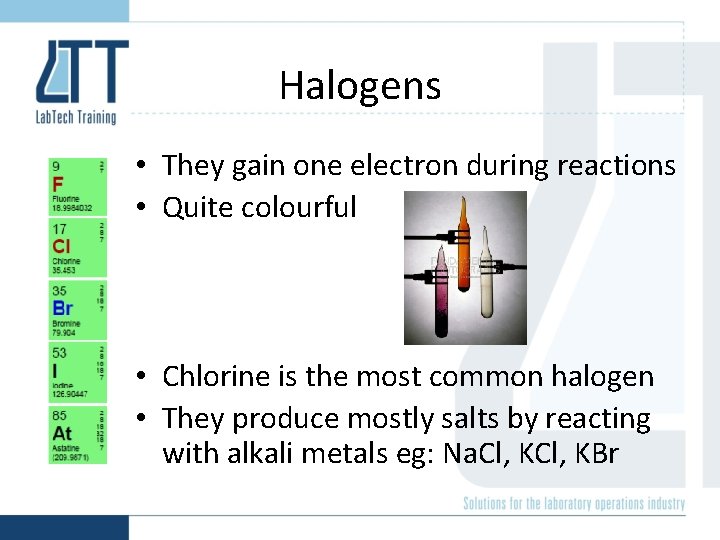
Halogens • They gain one electron during reactions • Quite colourful • Chlorine is the most common halogen • They produce mostly salts by reacting with alkali metals eg: Na. Cl, KBr
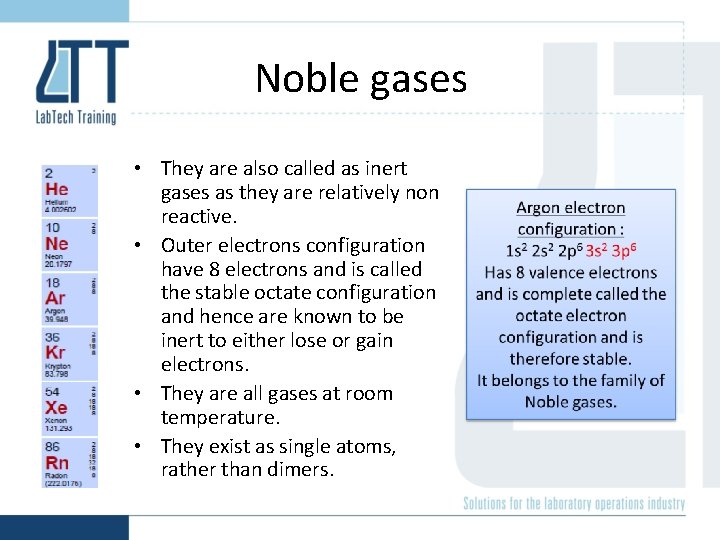
Noble gases • They are also called as inert gases as they are relatively non reactive. • Outer electrons configuration have 8 electrons and is called the stable octate configuration and hence are known to be inert to either lose or gain electrons. • They are all gases at room temperature. • They exist as single atoms, rather than dimers.
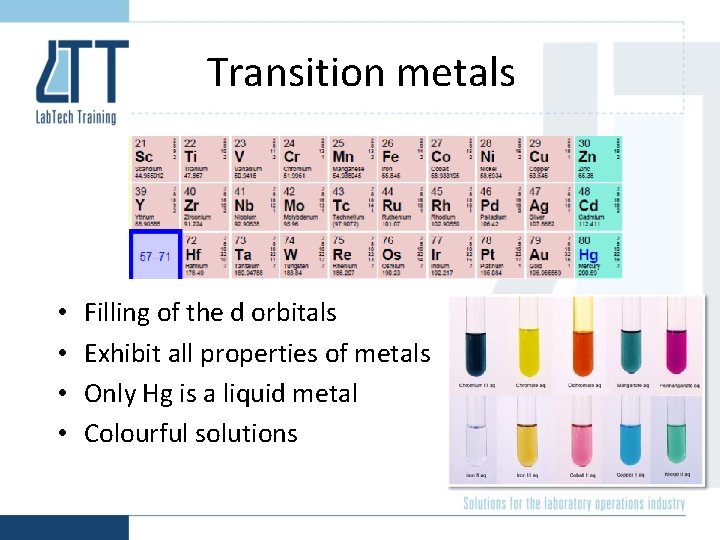
Transition metals • • Filling of the d orbitals Exhibit all properties of metals Only Hg is a liquid metal Colourful solutions
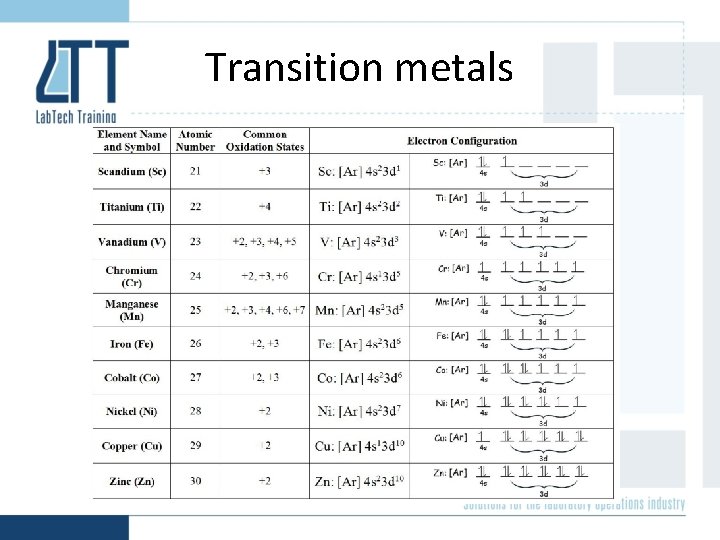
Transition metals
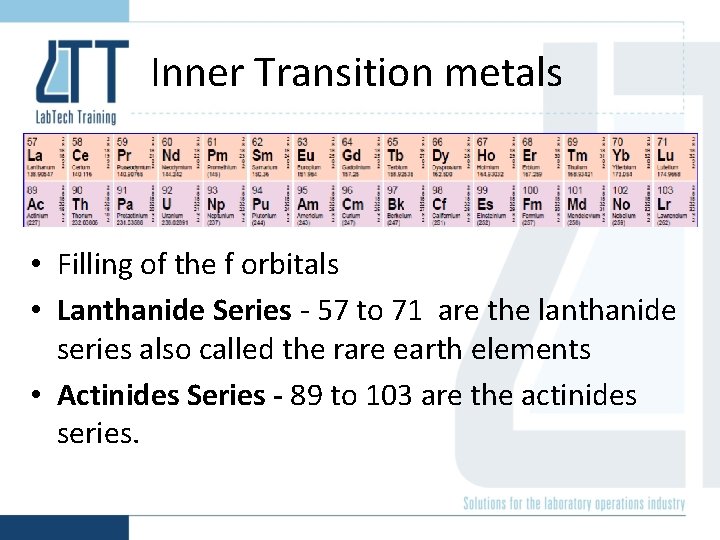
Inner Transition metals • Filling of the f orbitals • Lanthanide Series - 57 to 71 are the lanthanide series also called the rare earth elements • Actinides Series - 89 to 103 are the actinides series.
Check • Which group do the following belong (i. e. Alkali metal, transition, inner transition, etc. ) 1. 2. 3. 4. 5. 6. 7. K Ca Au Te I Kr Es
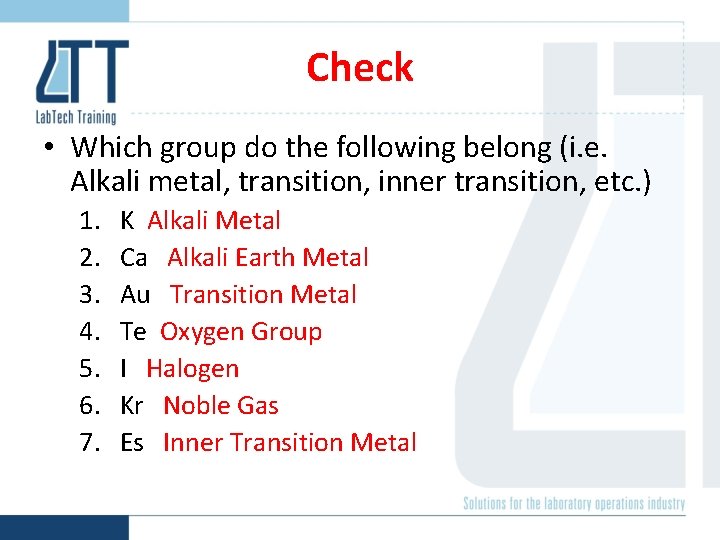
Check • Which group do the following belong (i. e. Alkali metal, transition, inner transition, etc. ) 1. 2. 3. 4. 5. 6. 7. K Alkali Metal Ca Alkali Earth Metal Au Transition Metal Te Oxygen Group I Halogen Kr Noble Gas Es Inner Transition Metal
Summary Atomic & Mass numbers Yellow Brick Road and shell filling Core and valence orbitals Octet electron configuration Valency, Oxidation State, Ionic and Covalent Bonding • Groups in the Periodic Table • Metals and non-metals • First Ionisation Energy • • •
- Slides: 47