
The Periodic Table PERIODIC appearing or occurring at
The Periodic Table

PERIODIC appearing or occurring at intervals. ¡ Why is it labeled the Periodic Table? ¡ Name some things that are periodic: ¡ ¡ It is periodic because there are patterns that repeat each row or period.
A BRIEF HISTORY We have not always had the periodic table. The modern table as we know it is only about 100 years old.
A BRIEF HISTORY Father of the Periodic Table DMITRI MENDELEEV published 1869. - He discovered a basic chemistry principle. - He felt there was a certain pattern with the elements. - He tested his hypothesis that there was a periodic relationship among the elements. - He set up the periodic table by ATOMIC MASS and left blanks for undiscovered elements (three were later discovered).
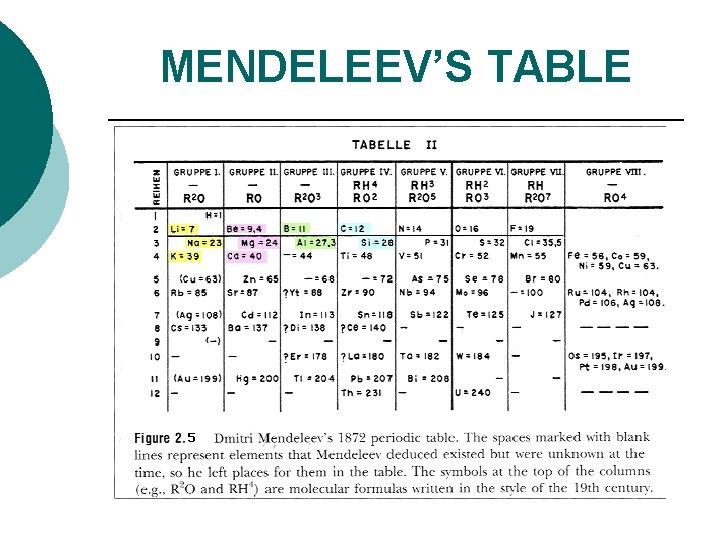
MENDELEEV’S TABLE
A BRIEF HISTORY Father of the Modern Periodic Table HENRY MOSELEY 1913 - He saw some elements were out of place in Mendeleev’s table. - He determined atomic numbers using xrays. - The elements were placed according to ATOMIC NUMBER. This was an important change. - This is the modern periodic table.
A BRIEF HISTORY The Final Changes to the Table Glenn Seaborg § The last major change to the periodic table resulted from Glenn Seaborg's work. § Starting with plutonium in 1940, Seaborg discovered transuranium elements 94 to 102 and reconfigured the periodic table by placing the lanthanide/actinide series at the bottom of the table. § In 1951 Seaborg was awarded the Nobel Prize in chemistry and element 106 was later named seaborgium (Sg) in his honor.
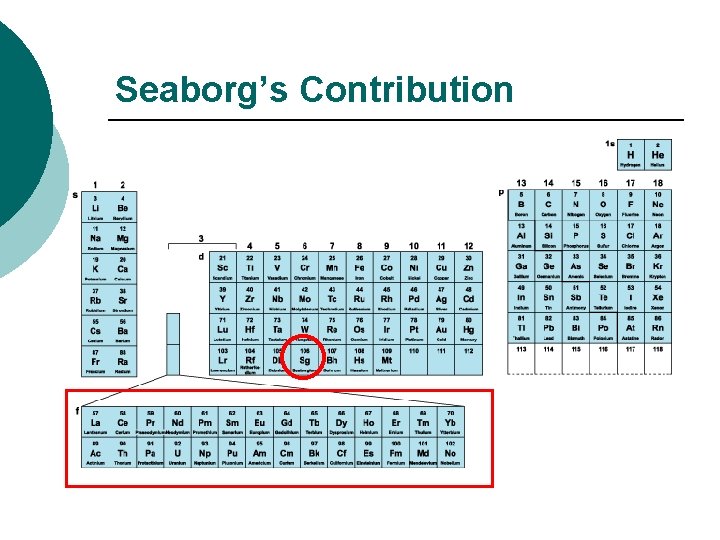
Seaborg’s Contribution
WATCH ¡ The Genius of Dmitri Mendeleev
PERIODIC TABLE ORGANIZATION Columns - vertical, called groups (numbers) or families (names) - 18 total (8 main ones) - elements in the same column are not identical, but similar in properties.
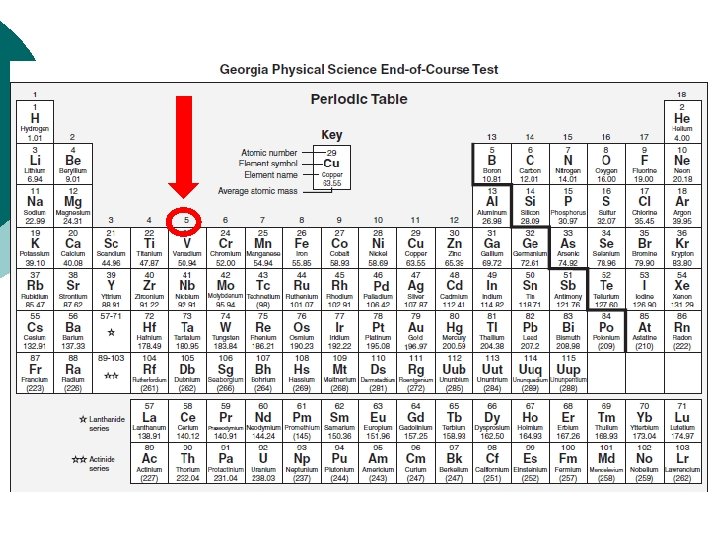
PERIODIC TABLE ORGANIZATION ROWS - horizontal, called periods, - 7 total (at this time) - elements are not alike in any way PATTERN: left side elements are active solids, far right side elements are inert (nonreactive) gases. Last two rows are rare earth elements. Atomic number increases from left to right.
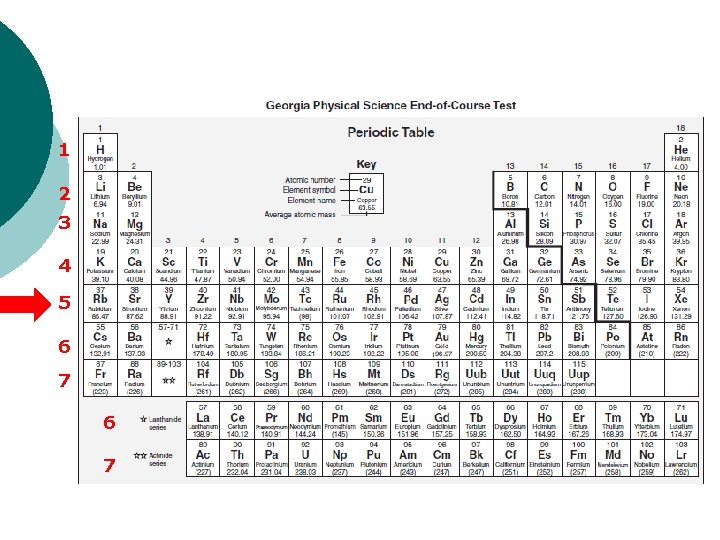
1 2 3 4 5 6 7
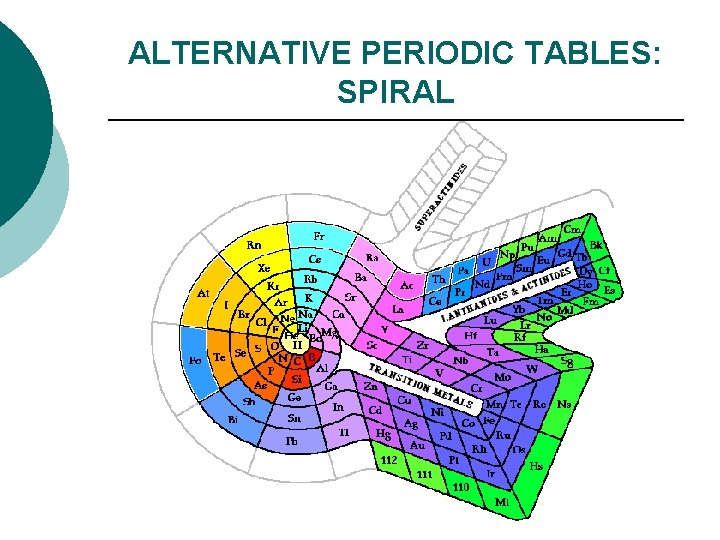
ALTERNATIVE PERIODIC TABLES: SPIRAL
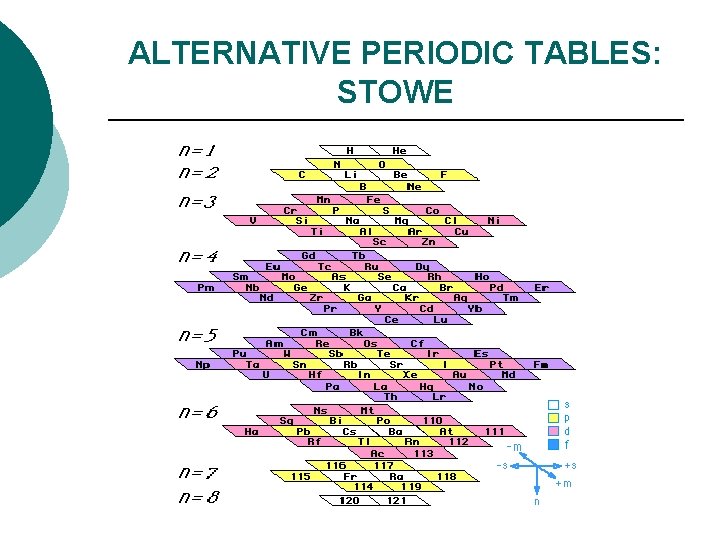
ALTERNATIVE PERIODIC TABLES: STOWE
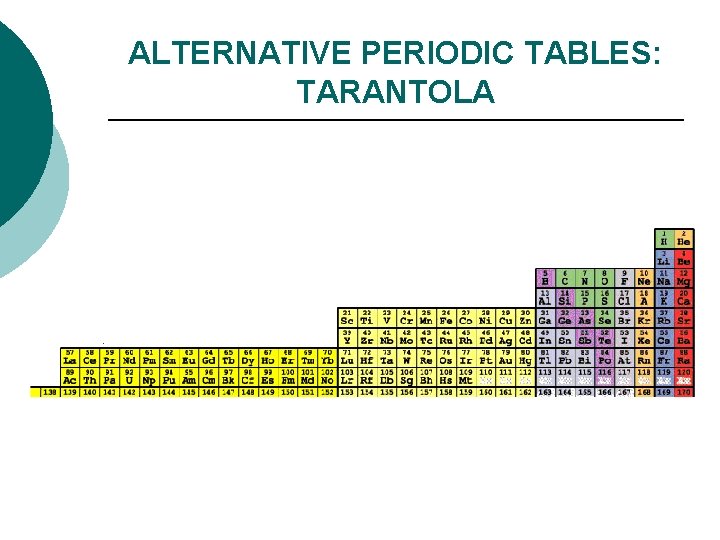
ALTERNATIVE PERIODIC TABLES: TARANTOLA
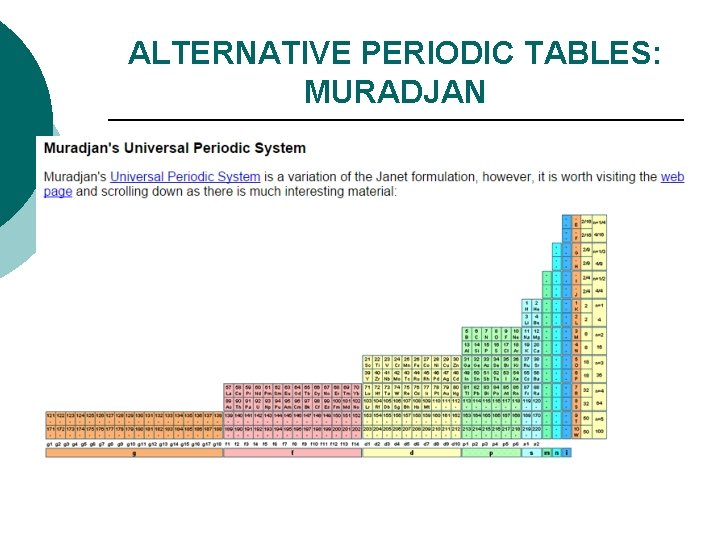
ALTERNATIVE PERIODIC TABLES: MURADJAN
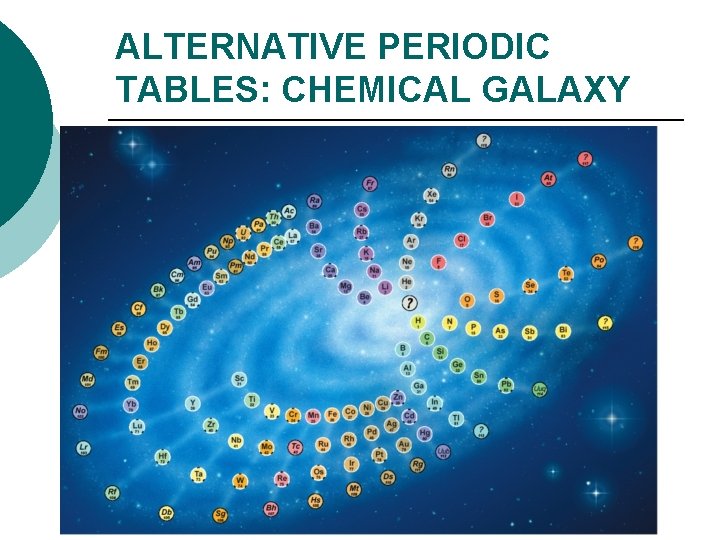
ALTERNATIVE PERIODIC TABLES: CHEMICAL GALAXY
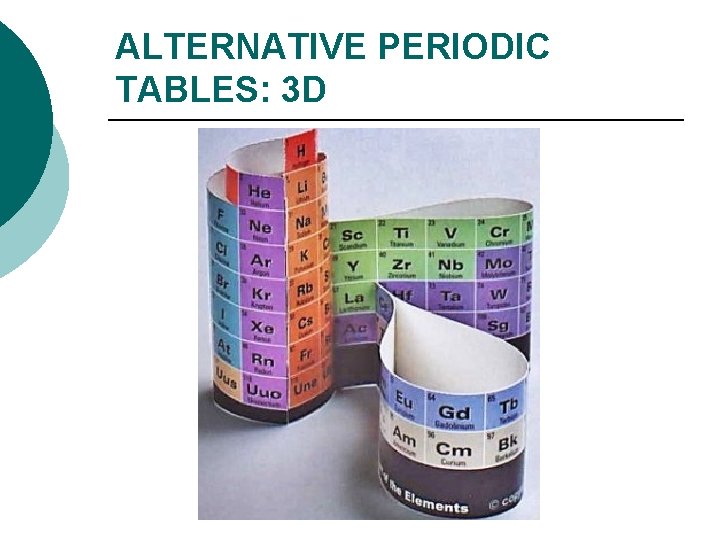
ALTERNATIVE PERIODIC TABLES: 3 D
CHARACTERISTICS OF THE PERIODIC TABLE ¡ Gases: hydrogen, helium, nitrogen, oxygen, fluorine, chlorine, neon, argon, krypton, xenon, radon. ¡ Liquids: mercury, bromine ¡ Solids: all the rest
PERIODIC TABLE Number the groups 1 -18. ¡ Number the periods 1 -7. ¡ Find element 92 (fourth one from the left in the bottom most row). ¡ Outline or lightly shade the elements that appear AFTER it in the row. ¡ Find the seventh period in the main table. Outline or lightly shade the elements that appear AFTER the first two in the row. ¡
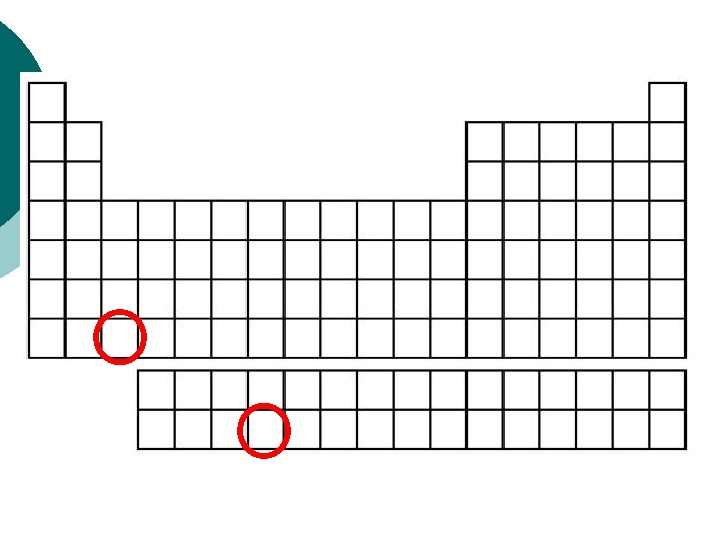
PERIODIC TABLE You have just outlined the synthetic elements, ¡ artificial elements, called the transuranium elements (“After” uranium). ¡ These are made in particle accelerators. ¡
- Slides: 23