
The Periodic Table of the Elements pt 2
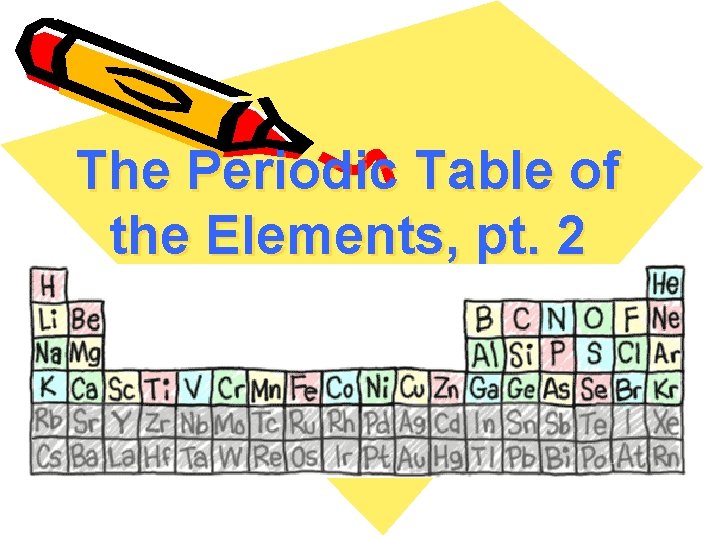
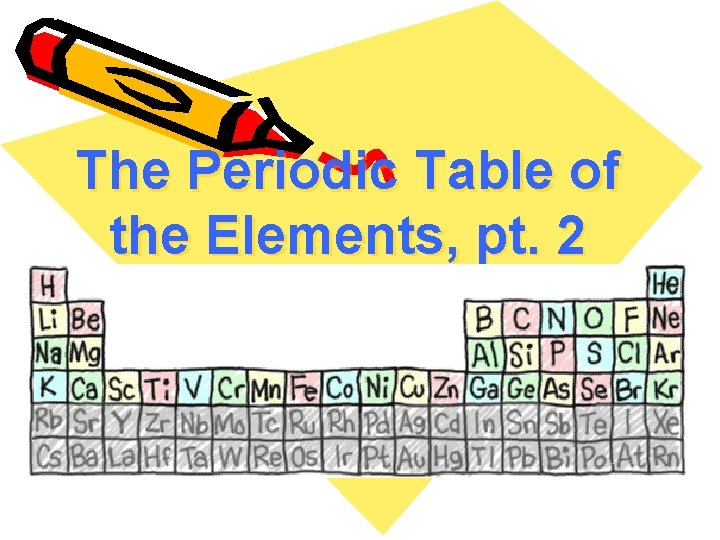
The Periodic Table of the Elements, pt. 2
Focus Question? • How are elements in the same Group similar?
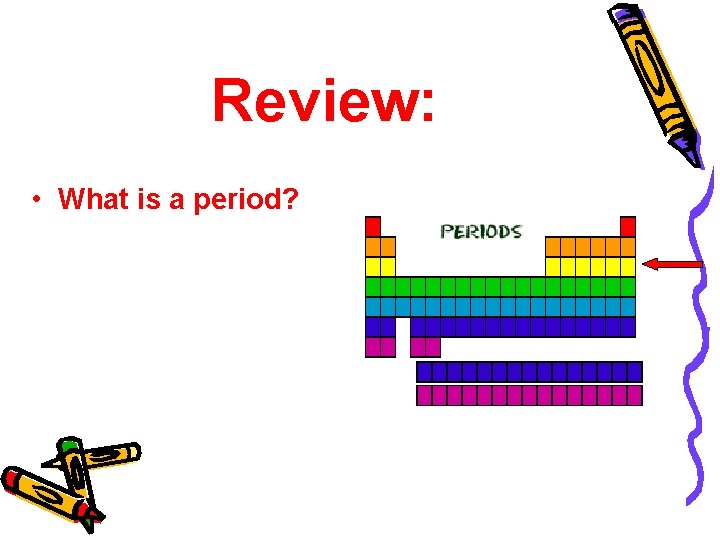
Review: • What is a period?
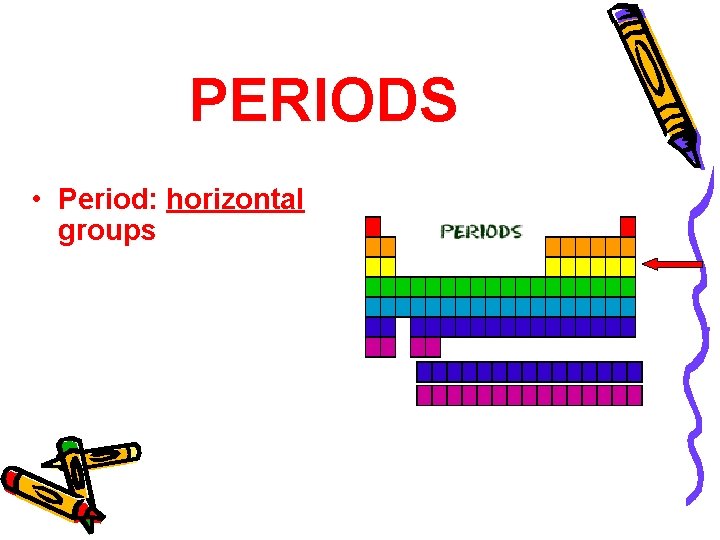
PERIODS • Period: horizontal groups
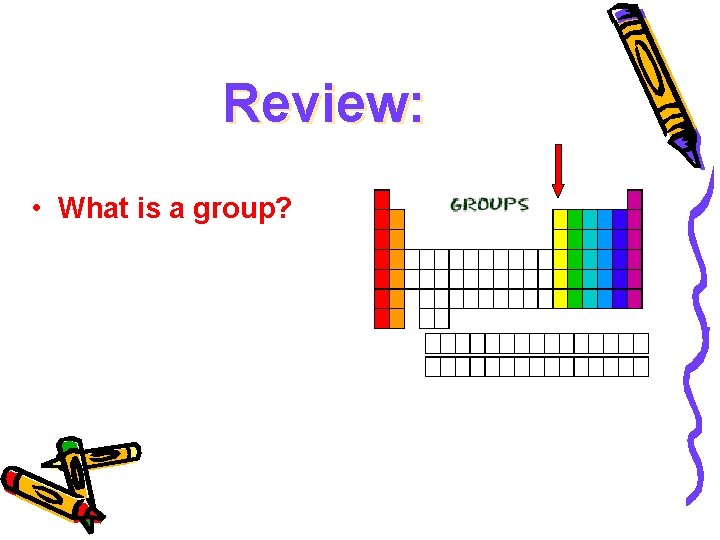
Review: • What is a group?

GROUPS • Groups: vertical columns
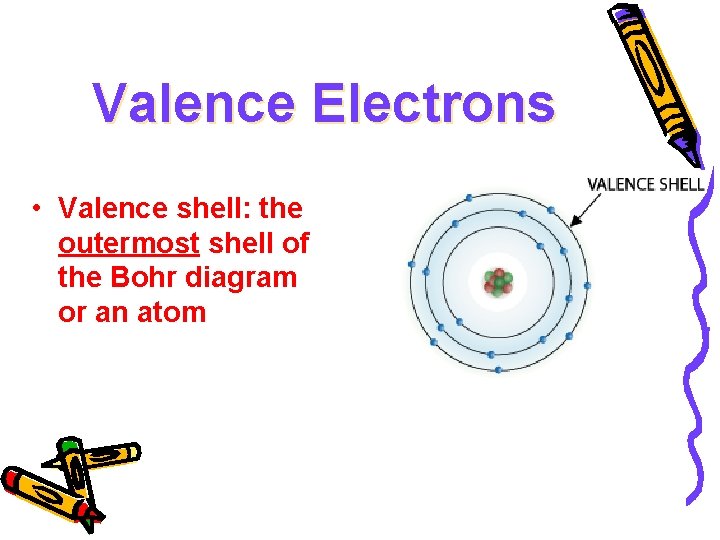
Valence Electrons • Valence shell: the outermost shell of the Bohr diagram or an atom
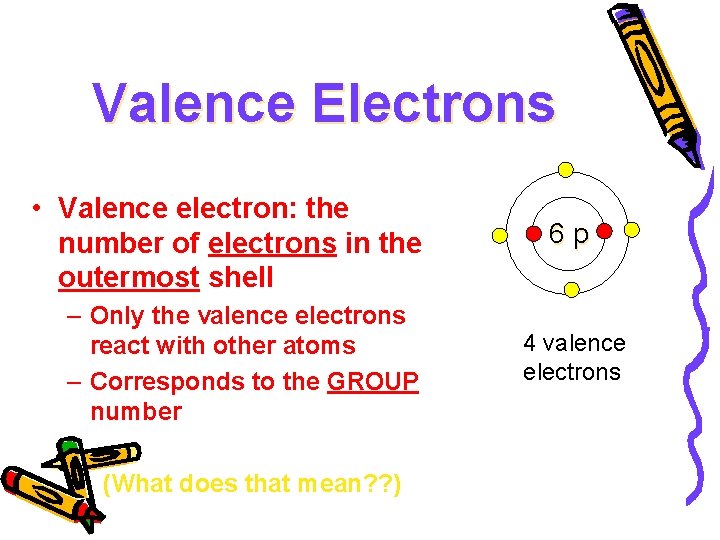
Valence Electrons • Valence electron: the number of electrons in the outermost shell – Only the valence electrons react with other atoms – Corresponds to the GROUP number (What does that mean? ? ) 6 p 4 valence electrons
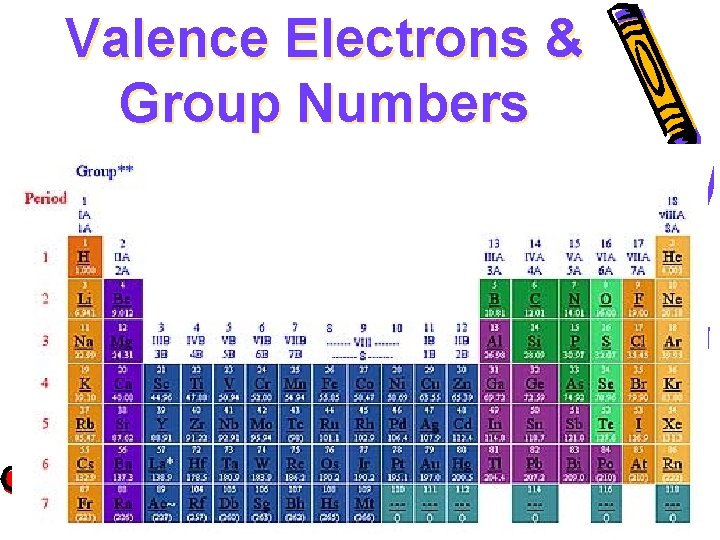
Valence Electrons & Group Numbers
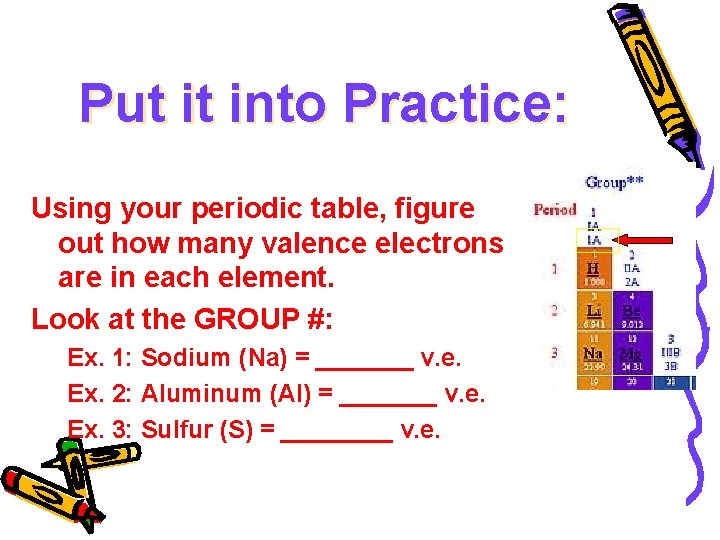
Put it into Practice: Using your periodic table, figure out how many valence electrons are in each element. Look at the GROUP #: Ex. 1: Sodium (Na) = _______ v. e. Ex. 2: Aluminum (Al) = _______ v. e. Ex. 3: Sulfur (S) = ____ v. e.

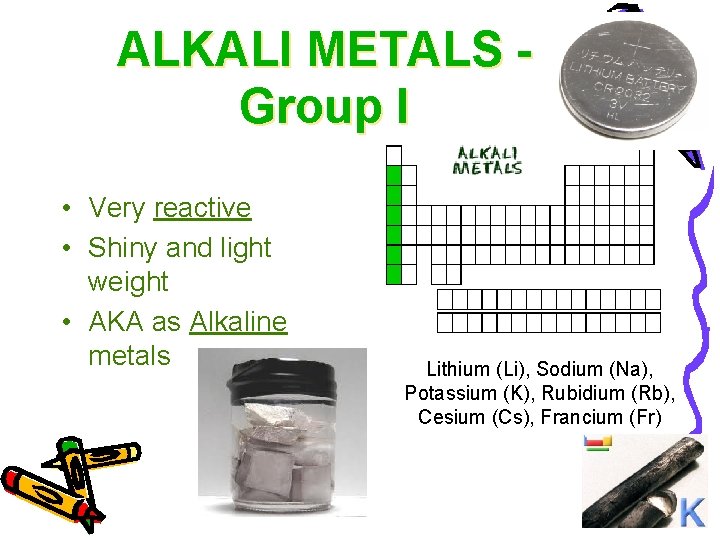
ALKALI METALS Group I • Very reactive • Shiny and light weight • AKA as Alkaline metals Lithium (Li), Sodium (Na), Potassium (K), Rubidium (Rb), Cesium (Cs), Francium (Fr)

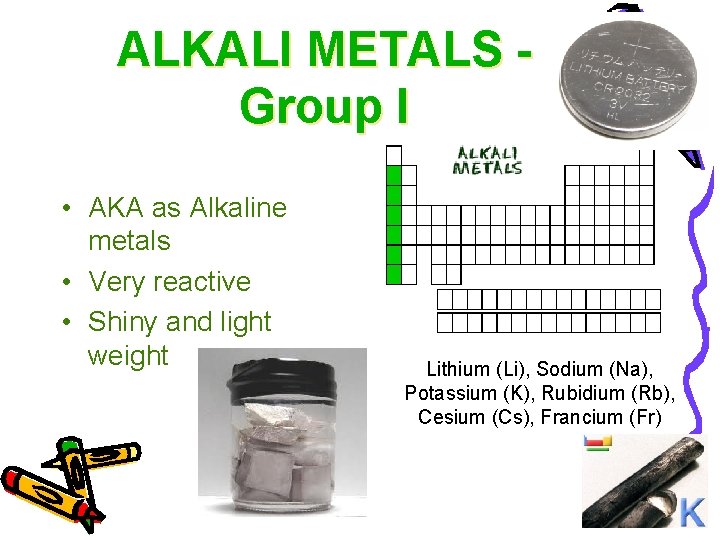
ALKALI METALS Group I • AKA as Alkaline metals • Very reactive • Shiny and light weight Lithium (Li), Sodium (Na), Potassium (K), Rubidium (Rb), Cesium (Cs), Francium (Fr)
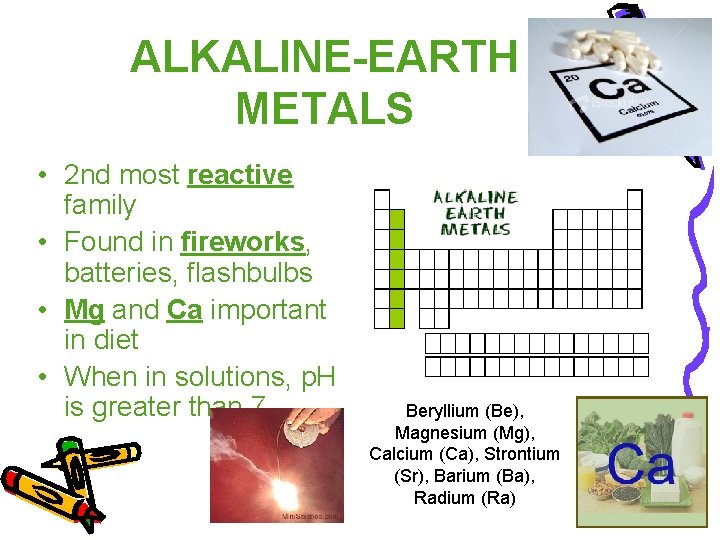
ALKALINE-EARTH METALS • 2 nd most reactive family • Found in fireworks, batteries, flashbulbs • Mg and Ca important in diet • When in solutions, p. H is greater than 7 Beryllium (Be), Magnesium (Mg), Calcium (Ca), Strontium (Sr), Barium (Ba), Radium (Ra)
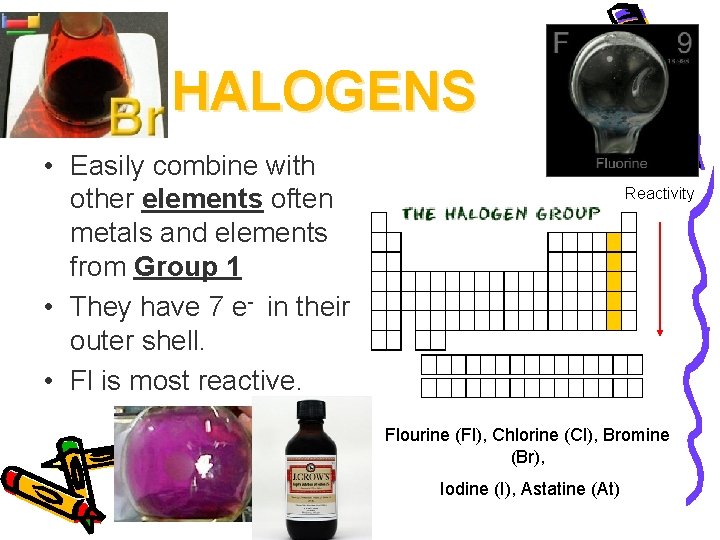
HALOGENS • Easily combine with other elements often metals and elements from Group 1 • They have 7 e- in their outer shell. • Fl is most reactive. Reactivity Flourine (Fl), Chlorine (Cl), Bromine (Br), Iodine (I), Astatine (At)
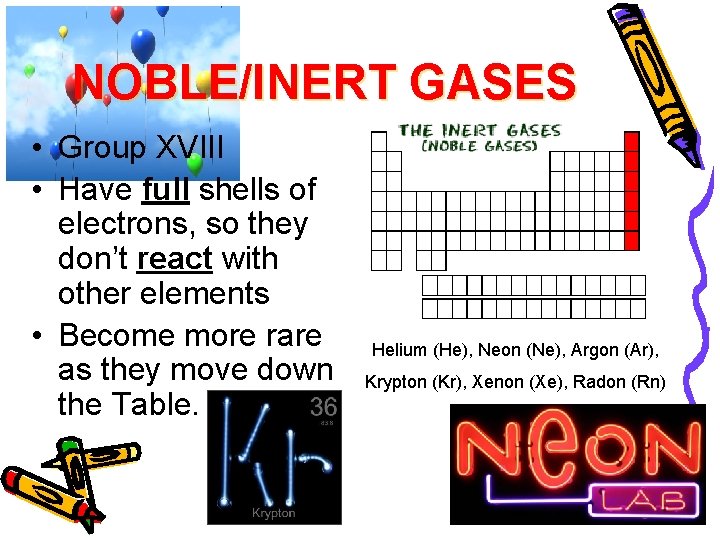
NOBLE/INERT GASES • Group XVIII • Have full shells of electrons, so they don’t react with other elements • Become more rare as they move down the Table. Helium (He), Neon (Ne), Argon (Ar), Krypton (Kr), Xenon (Xe), Radon (Rn)
Answer Question of the Day Answer question at the top of the notes: • How are elements in the same Group similar?

The Periodic Table of the Elements, pt. 2
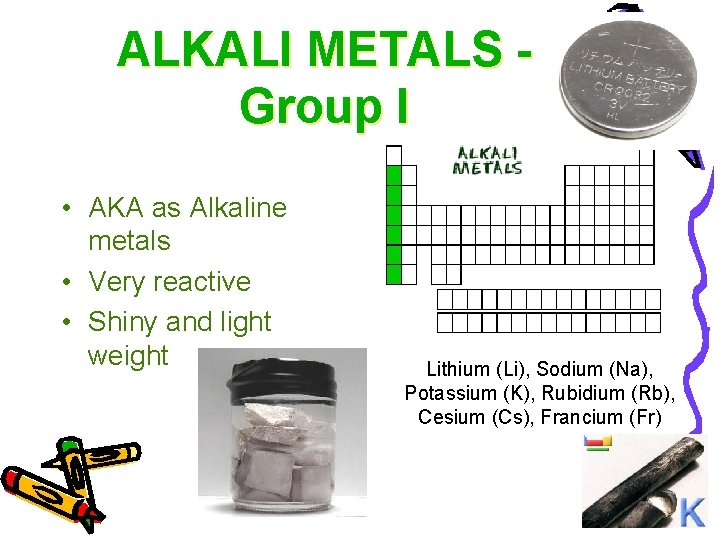
ALKALI METALS Group I • AKA as Alkaline metals • Very reactive • Shiny and light weight Lithium (Li), Sodium (Na), Potassium (K), Rubidium (Rb), Cesium (Cs), Francium (Fr)
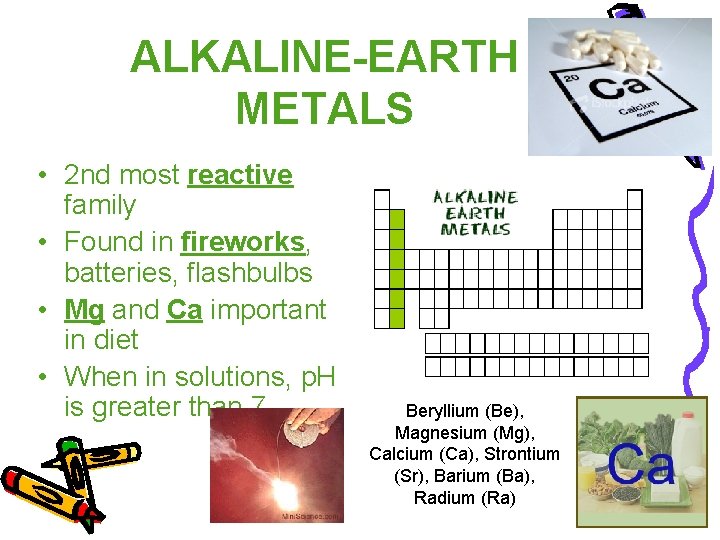
ALKALINE-EARTH METALS • 2 nd most reactive family • Found in fireworks, batteries, flashbulbs • Mg and Ca important in diet • When in solutions, p. H is greater than 7 Beryllium (Be), Magnesium (Mg), Calcium (Ca), Strontium (Sr), Barium (Ba), Radium (Ra)
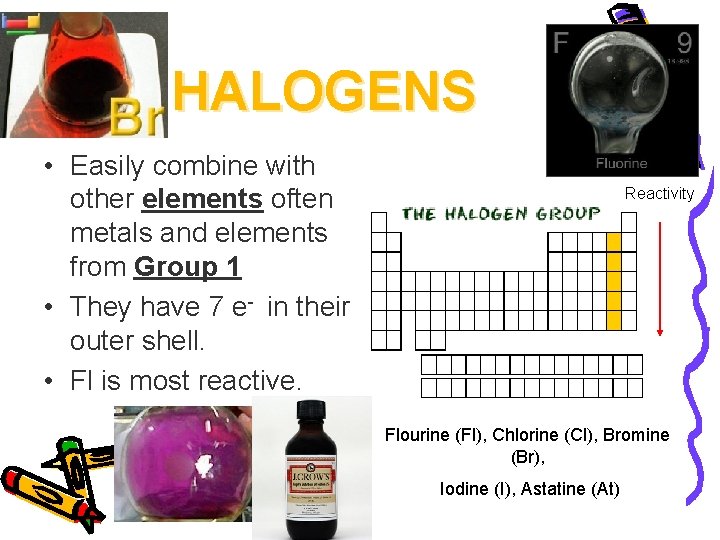
HALOGENS • Easily combine with other elements often metals and elements from Group 1 • They have 7 e- in their outer shell. • Fl is most reactive. Reactivity Flourine (Fl), Chlorine (Cl), Bromine (Br), Iodine (I), Astatine (At)
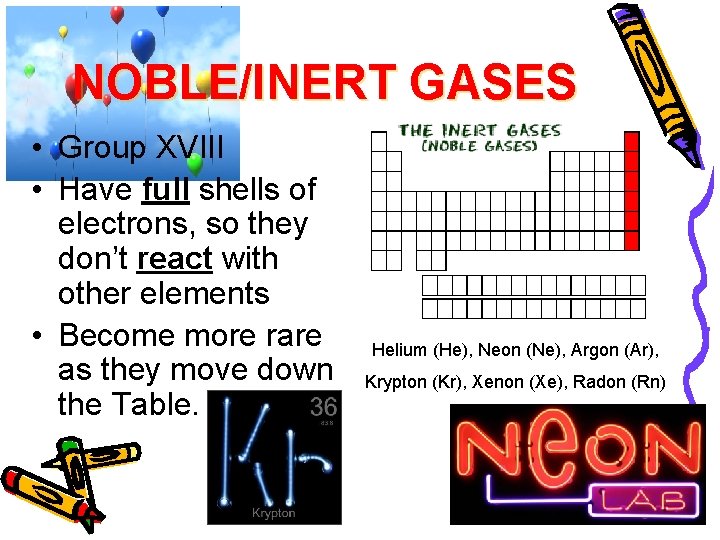
NOBLE/INERT GASES • Group XVIII • Have full shells of electrons, so they don’t react with other elements • Become more rare as they move down the Table. Helium (He), Neon (Ne), Argon (Ar), Krypton (Kr), Xenon (Xe), Radon (Rn)
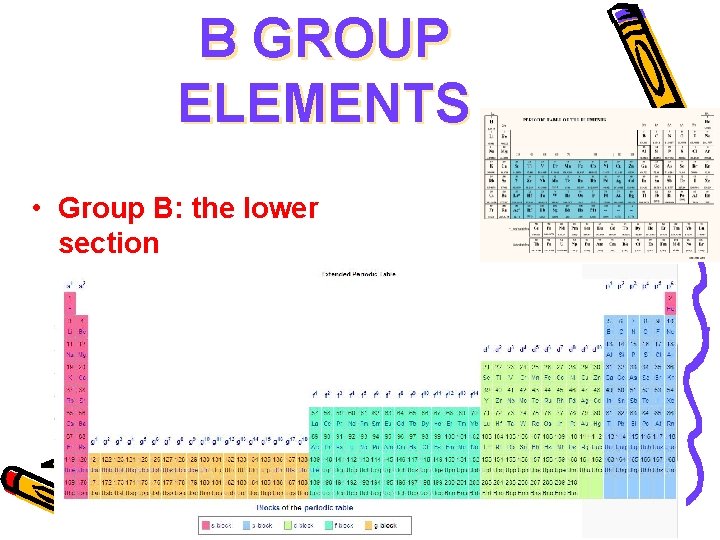
B GROUP ELEMENTS • Group B: the lower section
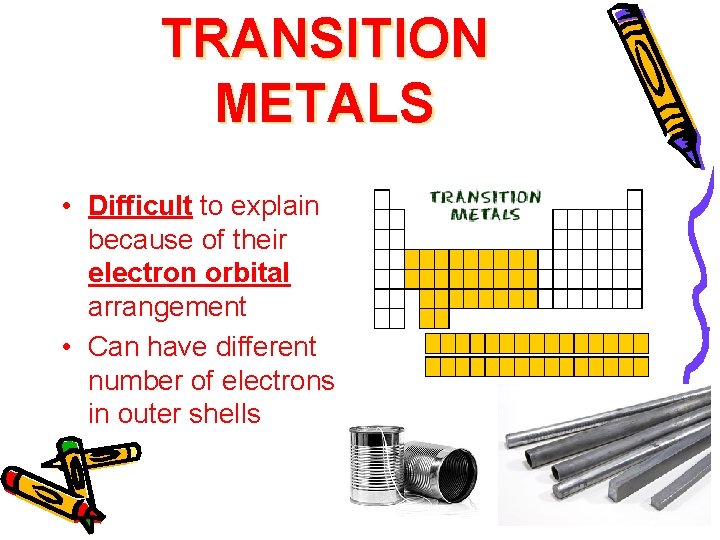
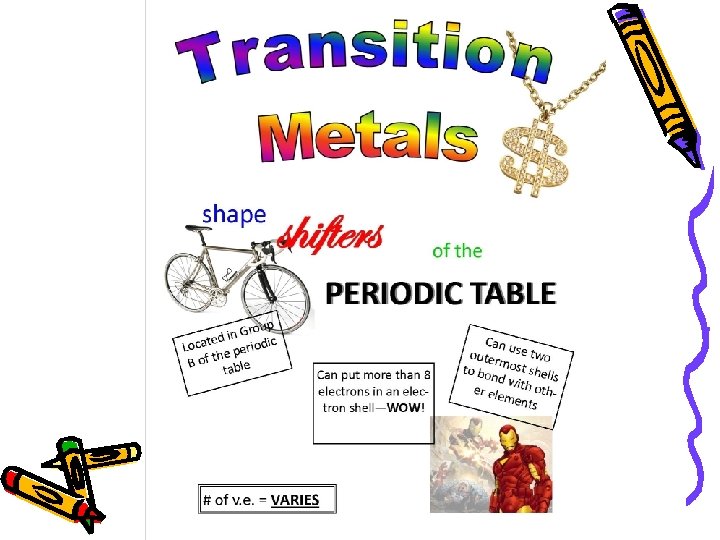
TRANSITION METALS • Difficult to explain because of their electron orbital arrangement • Can have different number of electrons in outer shells
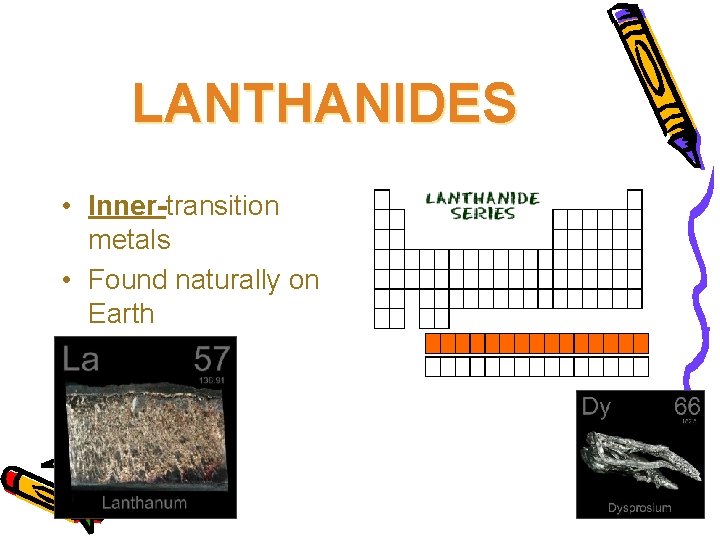
LANTHANIDES • Inner-transition metals • Found naturally on Earth
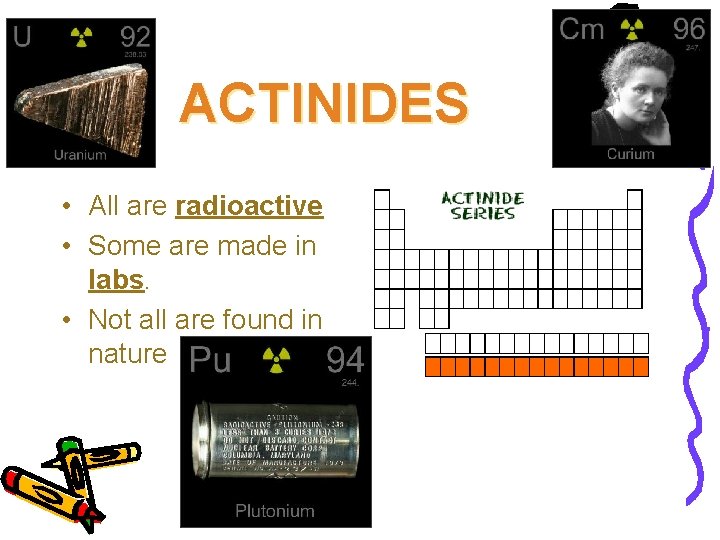
ACTINIDES • All are radioactive • Some are made in labs. • Not all are found in nature
Summary Summarize the notes at the bottom of the page Ideas: • What did you learn? • What are the different groups? • How do different groups behave?

Poster Rubric
Name that Group! You will be assigned a group. Create an advertisement that highlights characteristics of the group (the periodic kind, not YOUR group) You need: • 2 -3 characteristics/facts • # of valence electrons • A CATCHY slogan/saying • Picture • Use the pink handout for more facts
- Slides: 33