
The Periodic Table of Elements Elements k Science
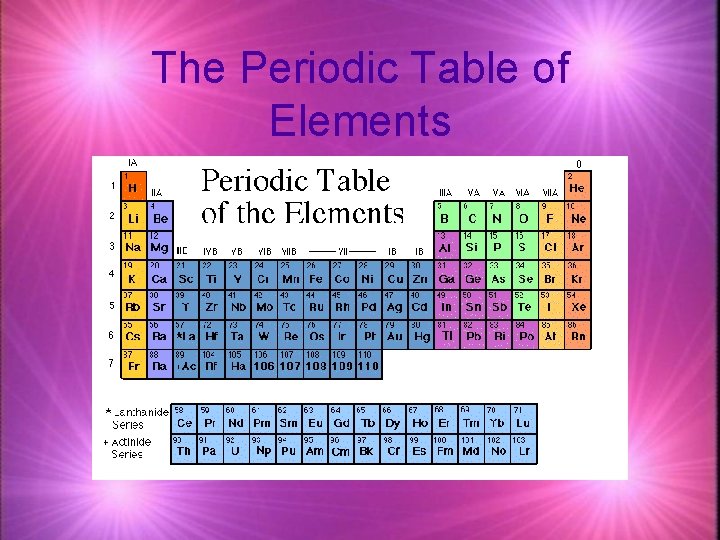
The Periodic Table of Elements

Elements k. Science has come along way since Aristotle’s theory of Air, Water, Fire, and Earth. k. Scientists have identified 92 Natural elements, and created about 28 others.
Elements The elements, alone or in combinations, make up our bodies, our world, our sun, and in fact, the entire universe.
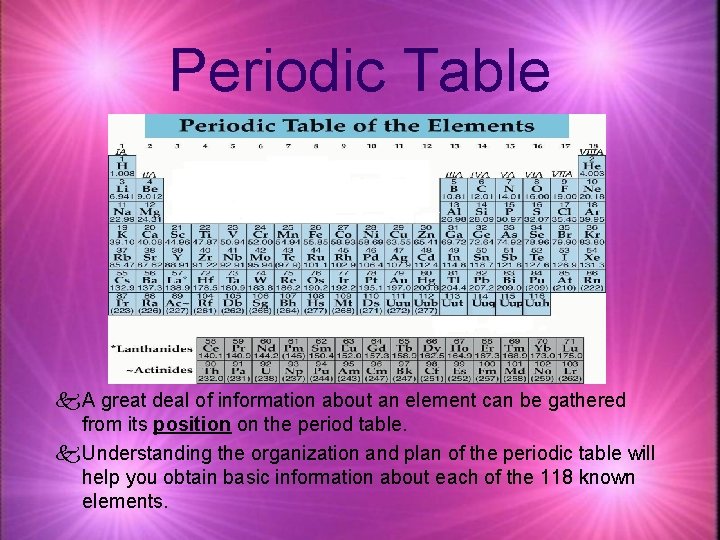
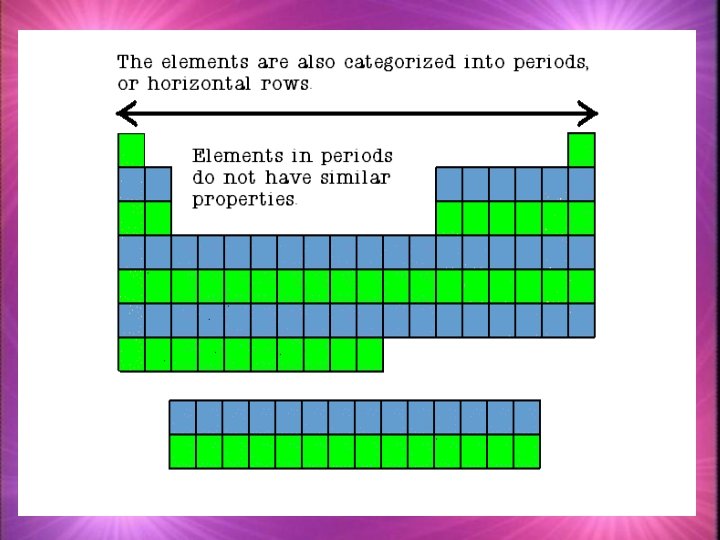
Periodic Table k A great deal of information about an element can be gathered from its position on the period table. k Understanding the organization and plan of the periodic table will help you obtain basic information about each of the 118 known elements.
Periodic Table
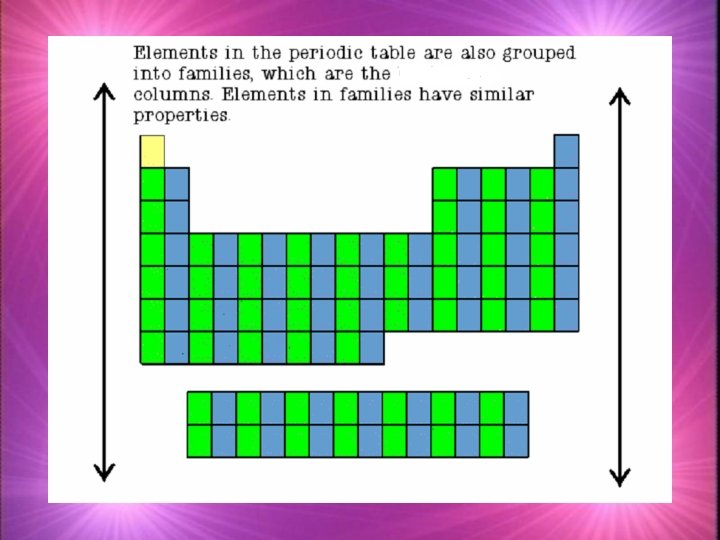
Families k. Families in the periodic table share chemical properties because all elements in a family have the same number of valence electrons k. This means that all elements in a family bond with other atoms in a similar way.
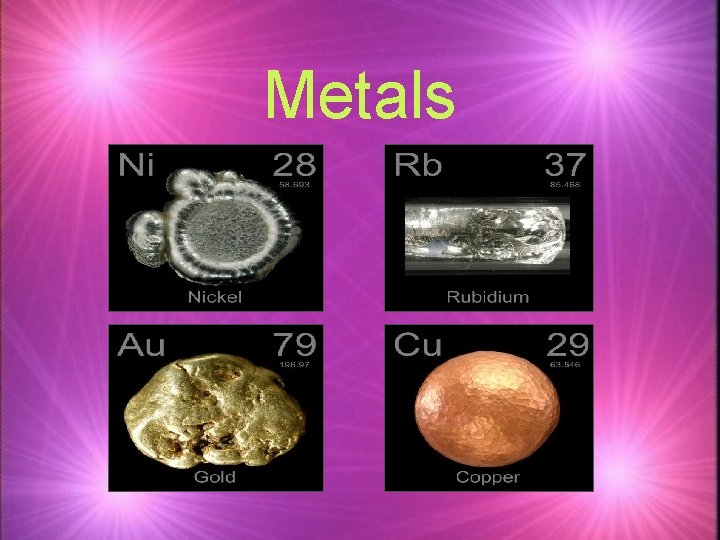
Metals
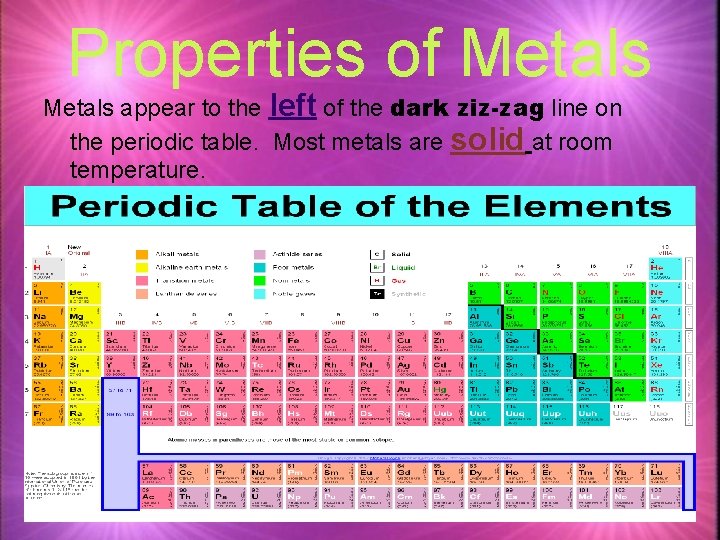
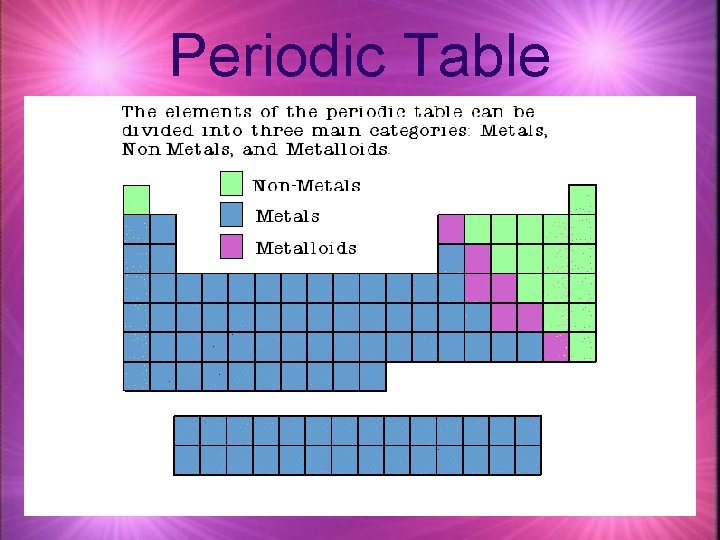
Properties of Metals appear to the left of the dark ziz-zag line on the periodic table. Most metals are solid at room temperature.

Properties of Metals have luster. This means they are shiny
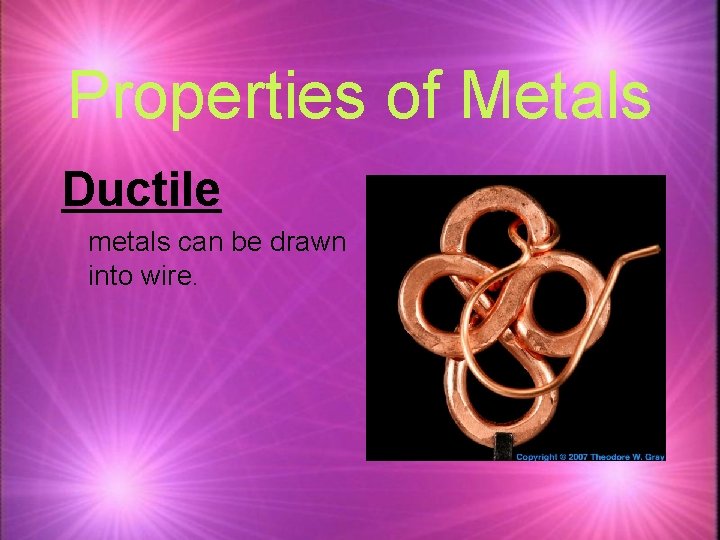
Properties of Metals Ductile metals can be drawn into wire.
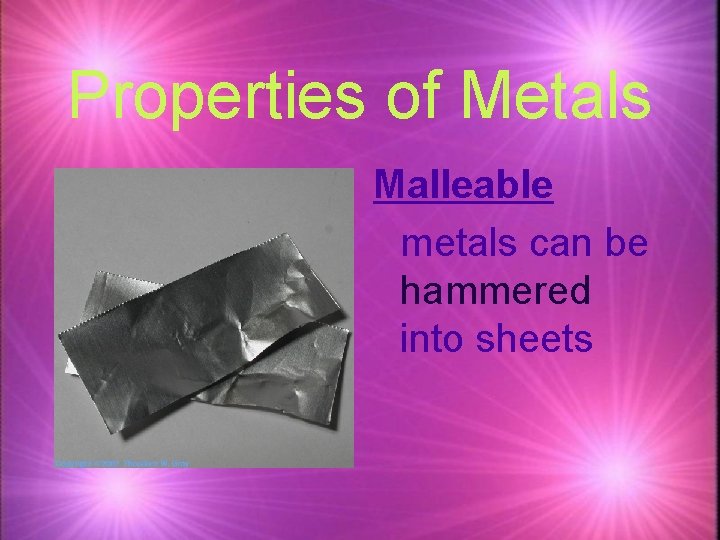
Properties of Metals Malleable metals can be hammered into sheets
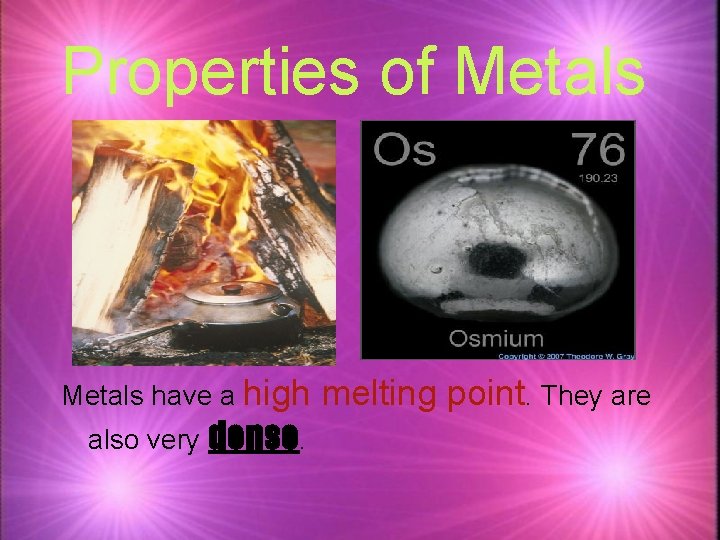
Properties of Metals have a high also very dense. melting point. They are
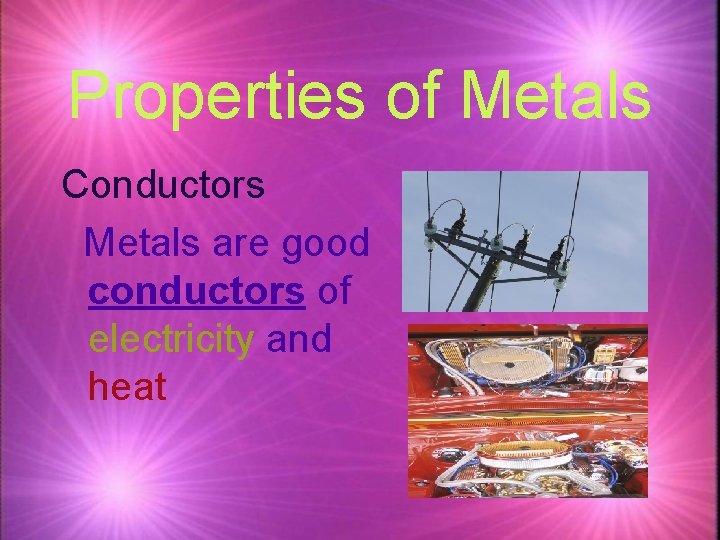
Properties of Metals Conductors Metals are good conductors of electricity and heat
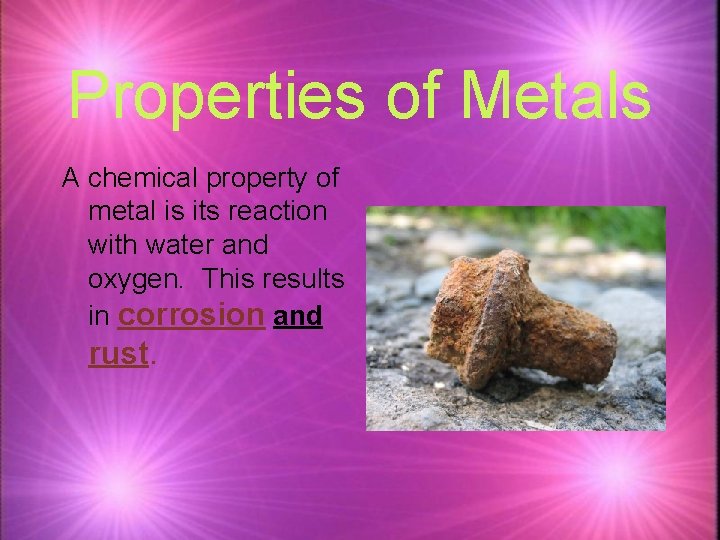
Properties of Metals A chemical property of metal is its reaction with water and oxygen. This results in corrosion and rust.
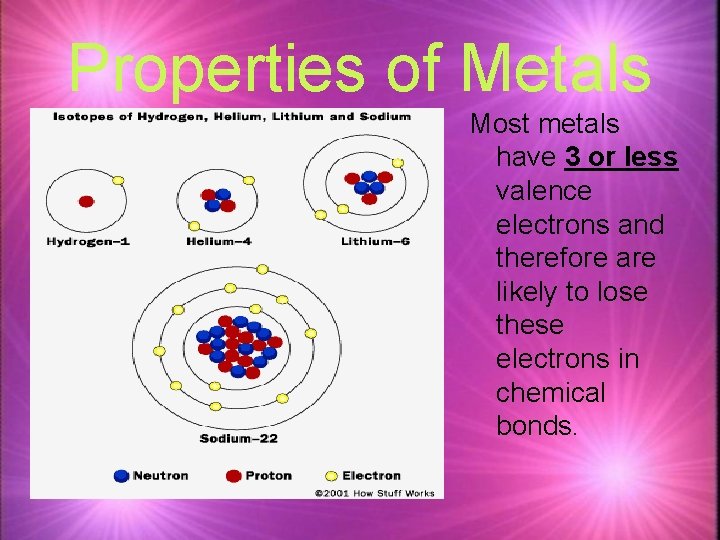
Properties of Metals Most metals have 3 or less valence electrons and therefore are likely to lose these electrons in chemical bonds.
Summary * Metals are solids (except mercury). * Metals are hard (except sodium, potassium etc. * Metals have metallic luster. * Metals have high melting points and boiling points. * Metals are malleable ( can be made into thin sheets). * Metals are ductile (can be made into thin wires). * Metals are good conductors of heat and electricity. * Metals are sonorous (produces sound).

Nonmetals
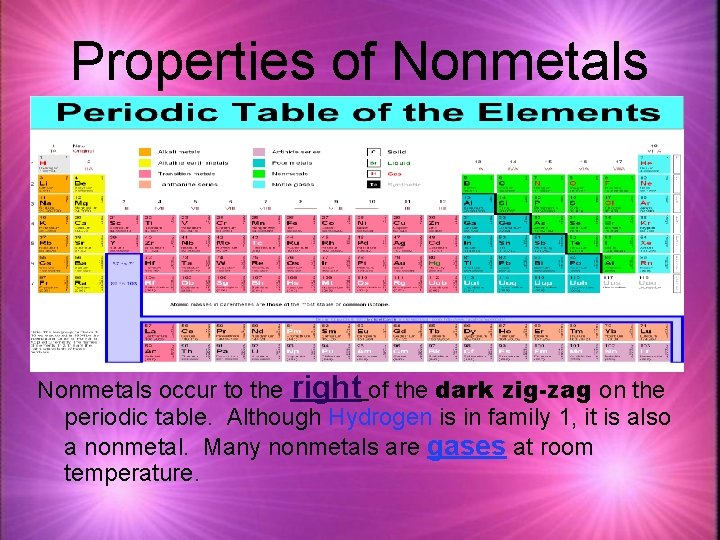
Properties of Nonmetals occur to the right of the dark zig-zag on the periodic table. Although Hydrogen is in family 1, it is also a nonmetal. Many nonmetals are gases at room temperature.
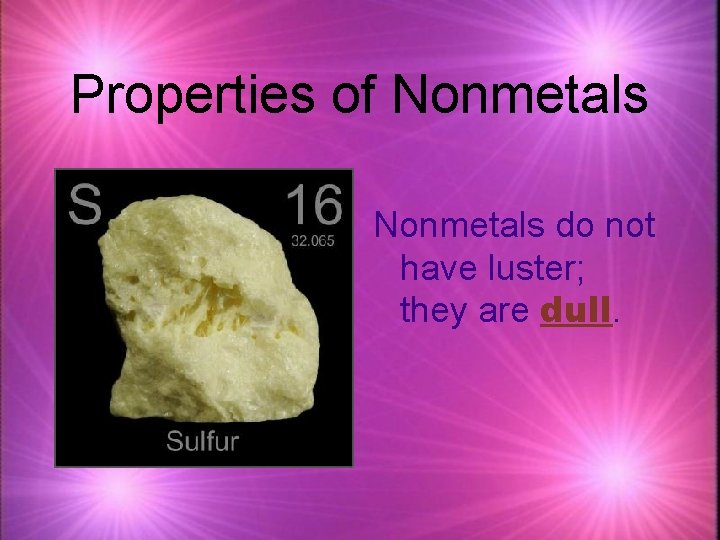
Properties of Nonmetals do not have luster; they are dull.
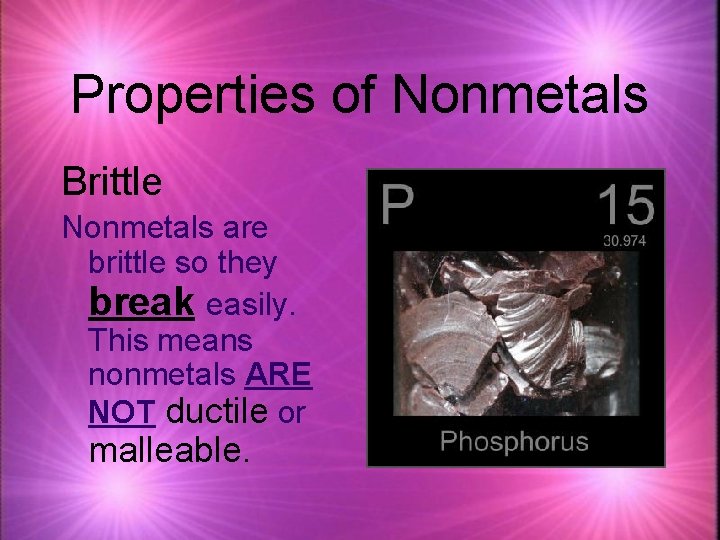
Properties of Nonmetals Brittle Nonmetals are brittle so they break easily. This means nonmetals ARE NOT ductile or malleable.
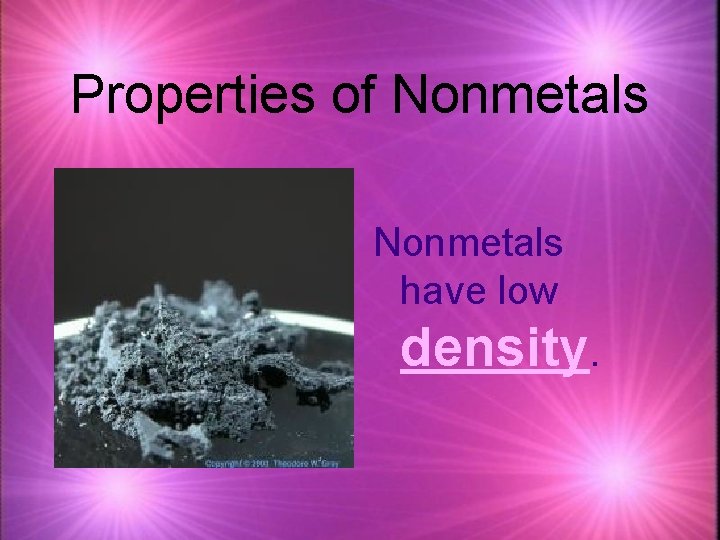
Properties of Nonmetals have low density.
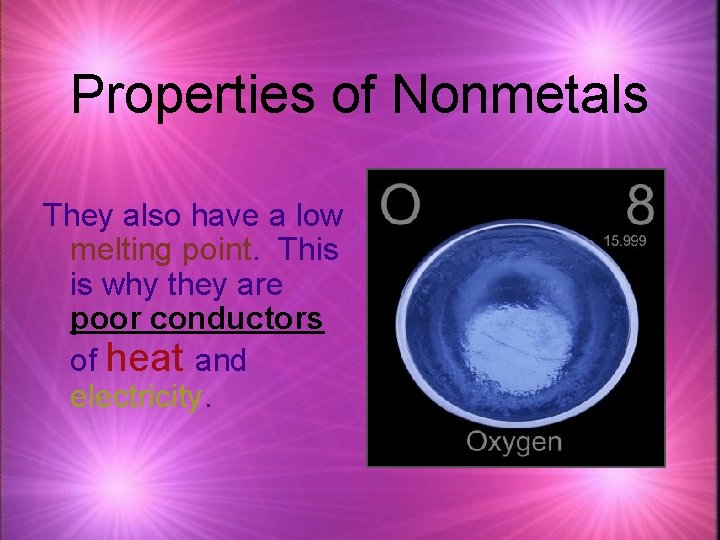
Properties of Nonmetals They also have a low melting point. This is why they are poor conductors of heat and electricity.
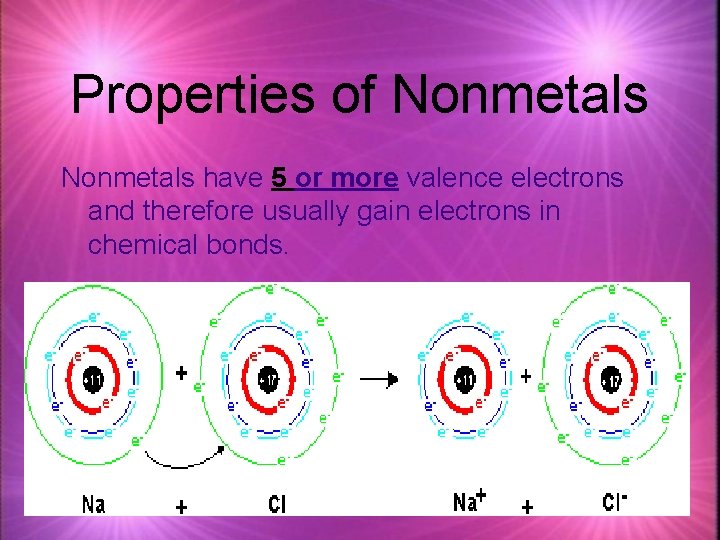
Properties of Nonmetals have 5 or more valence electrons and therefore usually gain electrons in chemical bonds.
Summary * Non metals may be solids, liquids or gases. * Non metals which are solids are brittle (diamond is the hardest). * Non metals do not have luster some have a dull luster. * Non metals have low melting points. * Non metals are not malleable. * Non metals are not ductile. * Non metals are bad conductors of heat and electricity (except graphite). * Non metals are not sonorous.
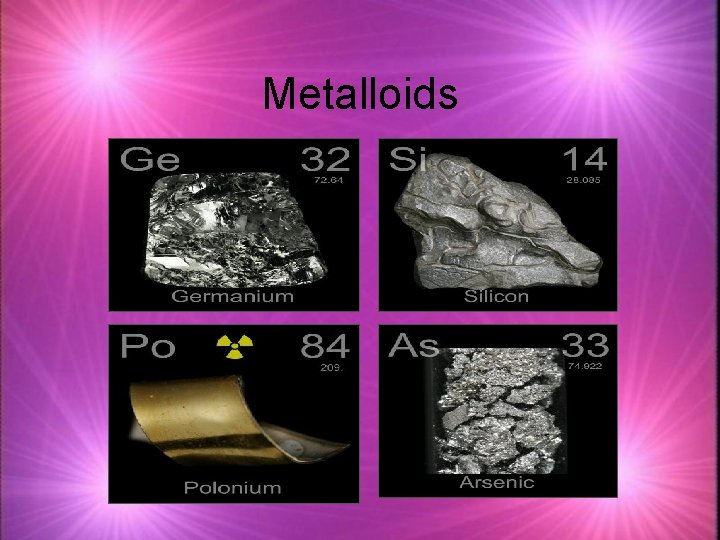
Metalloids
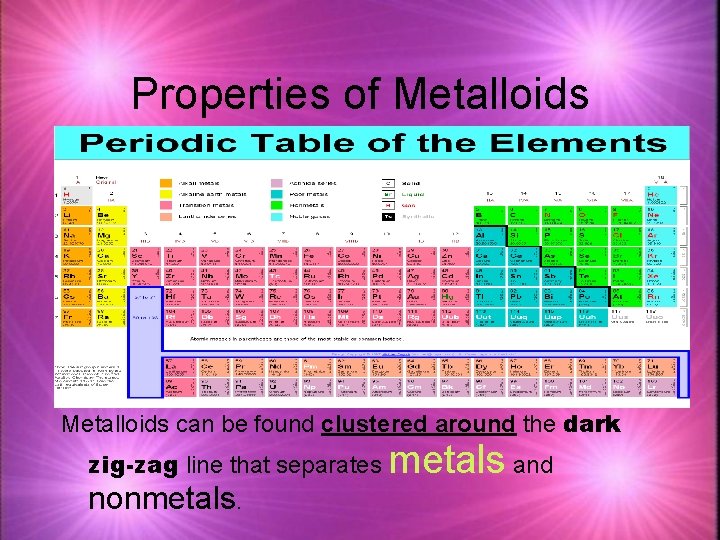
Properties of Metalloids can be found clustered around the dark zig-zag line that separates nonmetals. metals and
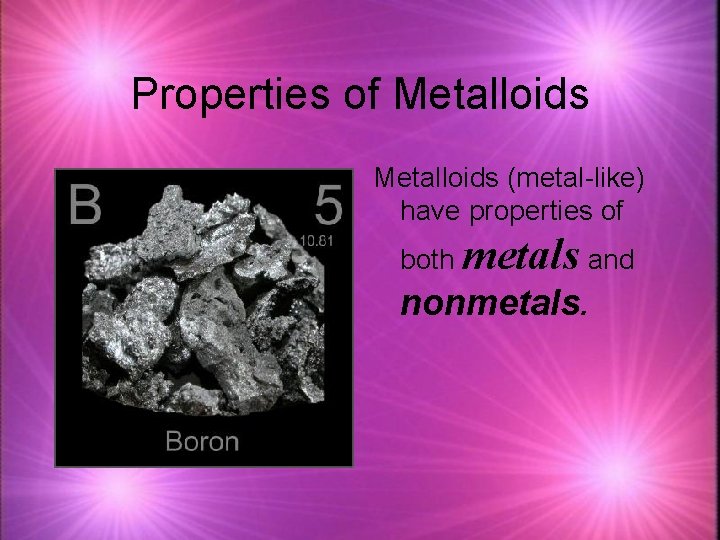
Properties of Metalloids (metal-like) have properties of both metals and nonmetals.
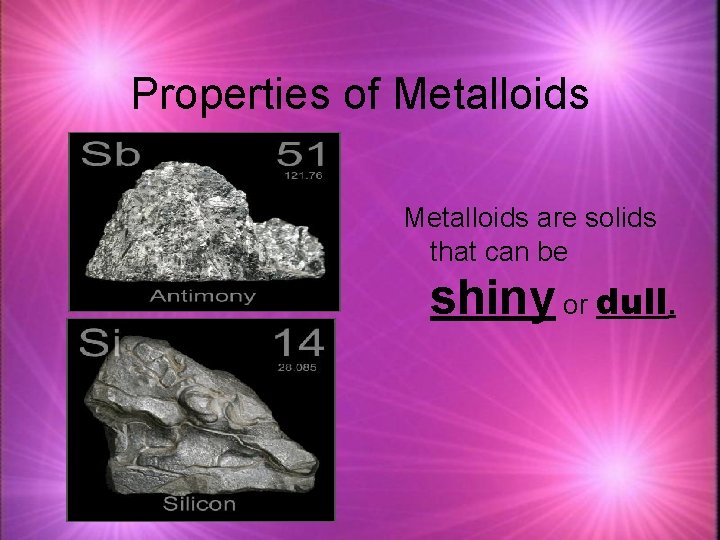
Properties of Metalloids are solids that can be shiny or dull.
Properties of Metalloids They conduct electricity and heat better than nonmetals but not as well as metals.
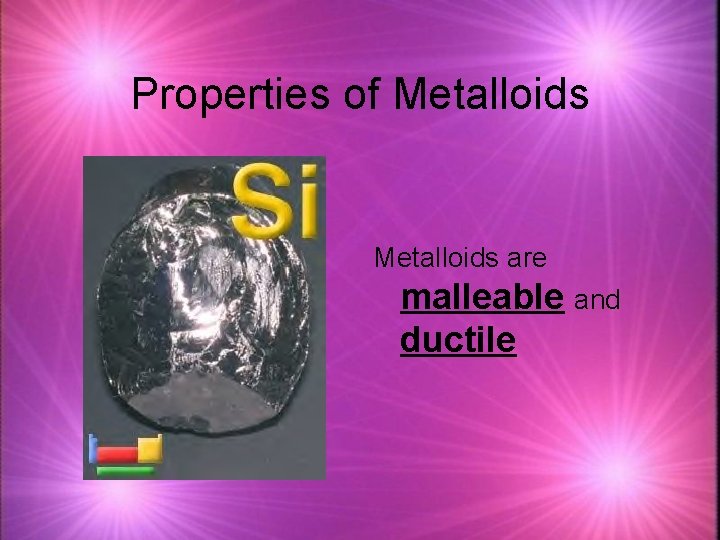
Properties of Metalloids are malleable and ductile
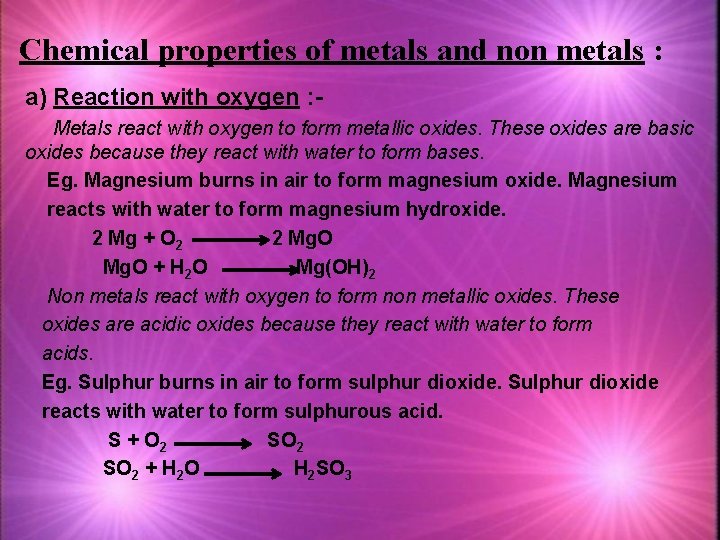
Chemical properties of metals and non metals : a) Reaction with oxygen : Metals react with oxygen to form metallic oxides. These oxides are basic oxides because they react with water to form bases. Eg. Magnesium burns in air to form magnesium oxide. Magnesium reacts with water to form magnesium hydroxide. 2 Mg + O 2 2 Mg. O + H 2 O Mg(OH)2 Non metals react with oxygen to form non metallic oxides. These oxides are acidic oxides because they react with water to form acids. Eg. Sulphur burns in air to form sulphur dioxide. Sulphur dioxide reacts with water to form sulphurous acid. S + O 2 SO 2 + H 2 O H 2 SO 3
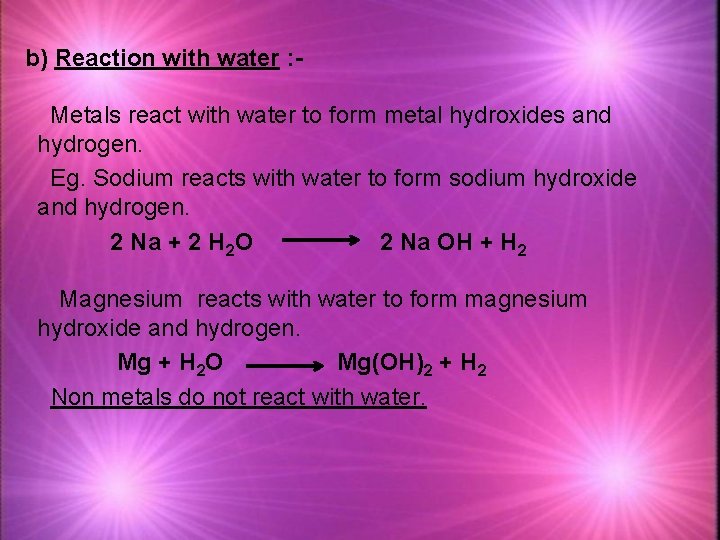
b) Reaction with water : Metals react with water to form metal hydroxides and hydrogen. Eg. Sodium reacts with water to form sodium hydroxide and hydrogen. 2 Na + 2 H 2 O 2 Na OH + H 2 Magnesium reacts with water to form magnesium hydroxide and hydrogen. Mg + H 2 O Mg(OH)2 + H 2 Non metals do not react with water.
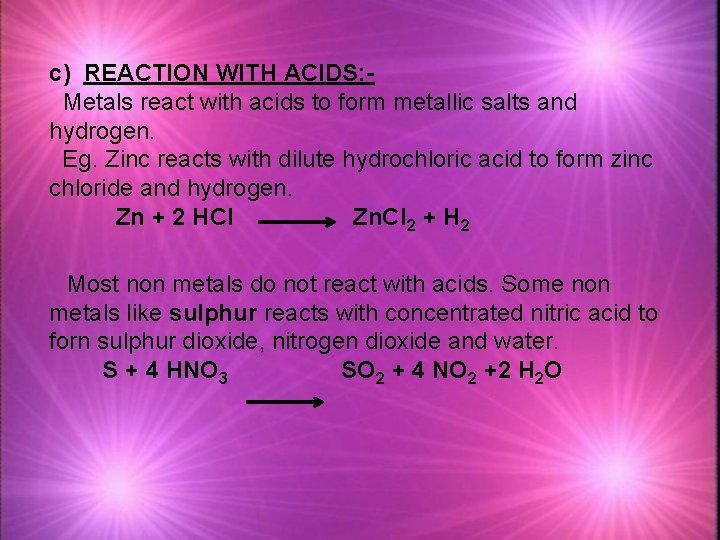
c) REACTION WITH ACIDS: Metals react with acids to form metallic salts and hydrogen. Eg. Zinc reacts with dilute hydrochloric acid to form zinc chloride and hydrogen. Zn + 2 HCl Zn. Cl 2 + H 2 Most non metals do not react with acids. Some non metals like sulphur reacts with concentrated nitric acid to forn sulphur dioxide, nitrogen dioxide and water. S + 4 HNO 3 SO 2 + 4 NO 2 +2 H 2 O
d) Metals replace metals : A more reactive metal replaces a less reactive metal from its salt solution. Eg. Magnesium replaces copper from copper sulphate solution to form magnesium sulphate and copper. Mg + Cu. SO 4 Mg. SO 4 + Cu Zinc replaces copper from copper sulphate solution to for zinc sulphate and copper. Zn + Cu. SO 4 Zn. SO 4 + Cu Iron replaces copper from copper sulphate solution to form iron sulphate and copper Fe + Cu. SO 4 Fe. SO 4 + Cu Based on the reactivity of metals, they can be arranged in the decreasing order of their activity.
Reactivity series of metals : The arranging of metals in the decreasing order of their reactivity is called activity series of metals. Potassium Sodium Magnesium Aluminium Decreasing Zinc order of Iron reactivity Lead Copper Silver Gold
Noble metals : Metals like gold, silver, platinum etc. retain their lustre because they do not react with air, water or acids. So they are called noble metals. Gold dissolves in aqua regia. Aqua regia is a mixture of concentrated nitric acid and concentrated hydrochloric acid in the ratio 1: 3. Pure is 24 carat gold. It is very soft and cannot be used for making ornaments. So it is mixed with some silver or copper to make it hard.
Uses of non metals : Sulphur : - is used for making sulphuric acid, salts of metals etc. Oxygen : - is used for respiration by living things, burning of fuels etc. Nitrogen : - is used for making ammonia which is used for making fertilizers. Hydrogen : - is used for making ammonia which is used for making fertilizers, as fuel in rockets, for welding etc. Chlorine : - is used to kill germs in water. Iodine : - is used as tincture iodine which is an antiseptic.

Alloys : An alloy is a homogeneous mixture of a metal with other metals or non metal. Alloy Steel Constituents iron, carbon Stainless steel iron, chromium Uses construction of tools, machines, tanks, vehicles, ships, rails, building, bridges, dams etc. utensils, cutlery, surgical instruments etc. utensils, handicrafts musical instruments etc. statues, medals, bells ornaments etc. making of magnets Brass copper, zinc Bronze Alnico copper, tin iron, aluminium nickel, cobalt aluminium, copper making utensils, pressure cookers, magnesium, parts of vehicles, aircrafts etc. manganese Duralium
Corrosion : The surface of some metals gets corroded when exposed to moist air for a long time. This is called corrosion. Prevention of corrosion of metals : The corrosion of metals can be prevented by: i) Applying oil or grease. ii) Applying paint iii) Galvanisation ( coating of metals with non corrosive metals like zinc) iv) Electroplating ( coating of metals with non corrosive metals like chromium tin by passing electricity) v) Alloying ( Eg. When iron is alloyed with chromium and nickel, it forms stainless steel which is resistant to corrosion)
- Slides: 41