
The Periodic Table of Elements 1 I can
The Periodic Table of Elements 1. I can locate element families on the periodic table. 2. I can identify an element’s family based on its properties
Organization • Group/family- vertical column • Period- horizontal row • Practice finding elements – What element is in: 1. 2. 3. 4. Group 1, period 4 Period 6, group 6 Group 13, period 3 Period 3, group 18 1. Potassium 2. Tungsten 3. Aluminum 4. argon
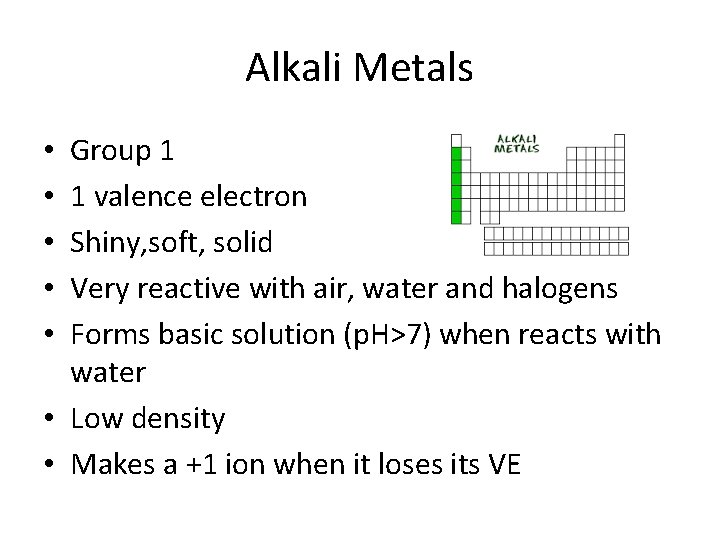
Alkali Metals Group 1 1 valence electron Shiny, soft, solid Very reactive with air, water and halogens Forms basic solution (p. H>7) when reacts with water • Low density • Makes a +1 ion when it loses its VE • • •
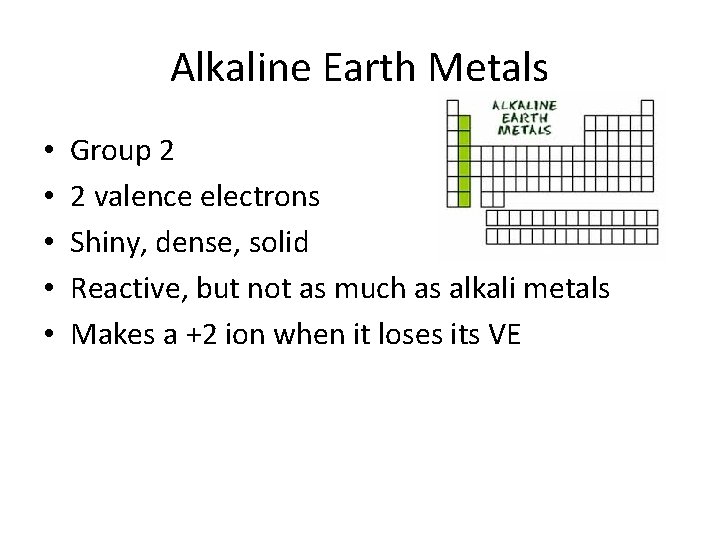
Alkaline Earth Metals • • • Group 2 2 valence electrons Shiny, dense, solid Reactive, but not as much as alkali metals Makes a +2 ion when it loses its VE
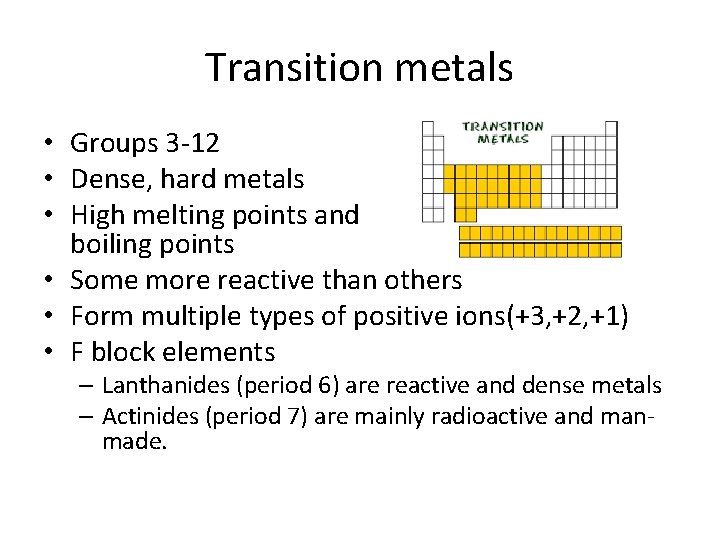
Transition metals • Groups 3 -12 • Dense, hard metals • High melting points and boiling points • Some more reactive than others • Form multiple types of positive ions(+3, +2, +1) • F block elements – Lanthanides (period 6) are reactive and dense metals – Actinides (period 7) are mainly radioactive and manmade.

Halogens • Group 17 • 7 valence electrons • Highly reactive with alkali metals and other elements • Non-metals • Toxic • Diatomic (F 2, Cl 2, Br 2) • Makes a -1 ion when it gains an electron
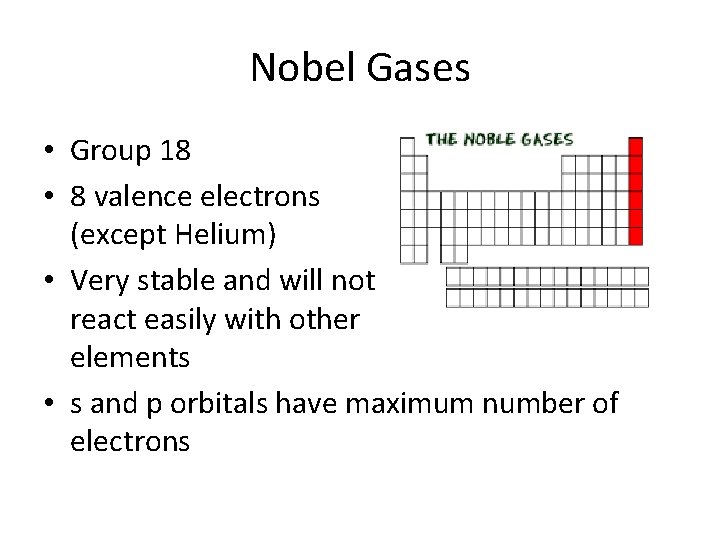
Nobel Gases • Group 18 • 8 valence electrons (except Helium) • Very stable and will not react easily with other elements • s and p orbitals have maximum number of electrons
- Slides: 7