
The Periodic Table and the Elements What is
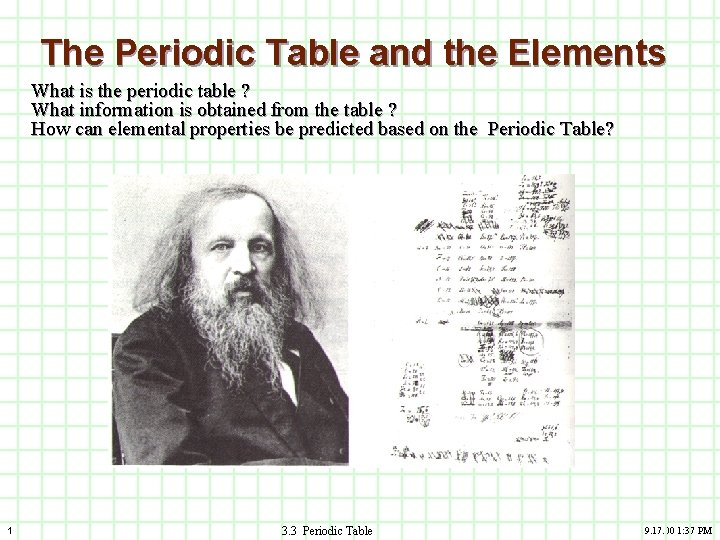
The Periodic Table and the Elements What is the periodic table ? What information is obtained from the table ? How can elemental properties be predicted based on the Periodic Table? 1 3. 3 Periodic Table 9. 17. 00 1: 37 PM
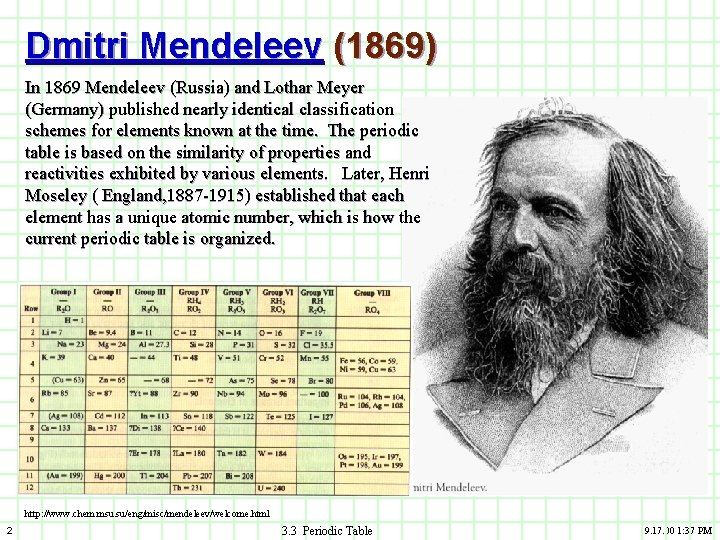
Dmitri Mendeleev (1869) In 1869 Mendeleev (Russia) and Lothar Meyer (Germany) published nearly identical classification schemes for elements known at the time. The periodic table is based on the similarity of properties and reactivities exhibited by various elements. Later, Henri Moseley ( England, 1887 -1915) established that each element has a unique atomic number, which is how the current periodic table is organized. http: //www. chem. msu. su/eng/misc/mendeleev/welcome. html 2 3. 3 Periodic Table 9. 17. 00 1: 37 PM
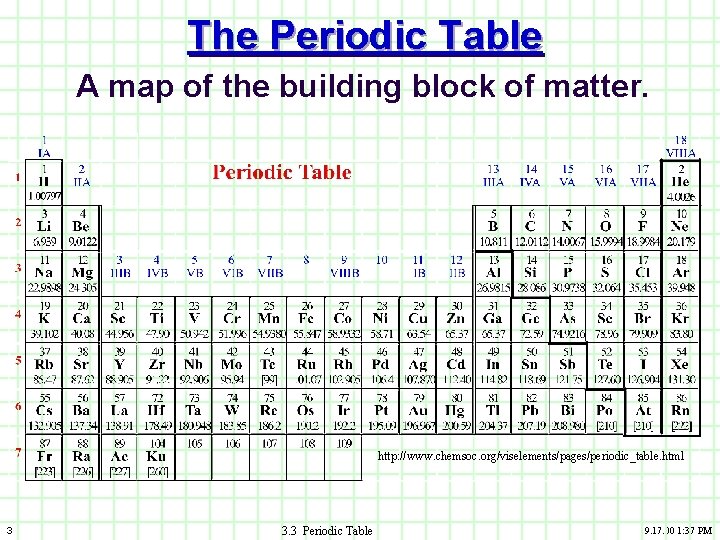
The Periodic Table A map of the building block of matter. http: //www. chemsoc. org/viselements/pages/periodic_table. html 3 3. 3 Periodic Table 9. 17. 00 1: 37 PM
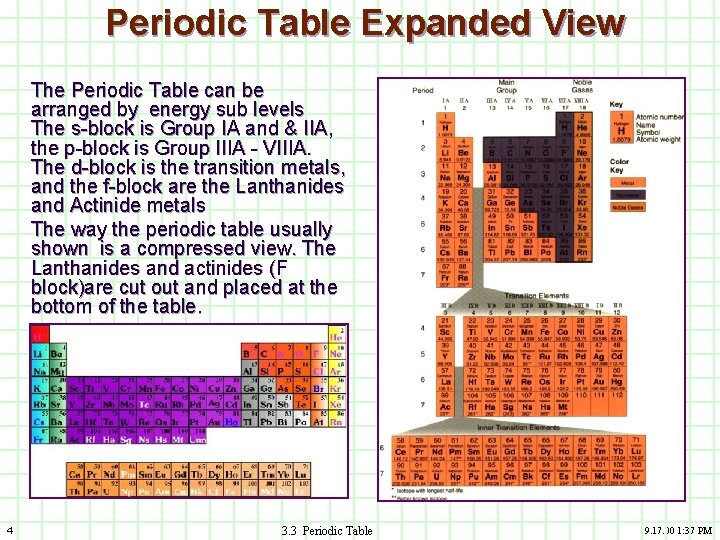
Periodic Table Expanded View The Periodic Table can be arranged by energy sub levels The s-block is Group IA and & IIA, the p-block is Group IIIA - VIIIA. The d-block is the transition metals, and the f-block are the Lanthanides and Actinide metals The way the periodic table usually shown is a compressed view. The Lanthanides and actinides (F block)are cut out and placed at the bottom of the table. 4 3. 3 Periodic Table 9. 17. 00 1: 37 PM

Periodic Table: Metallic arrangement Layout of the Periodic Table: Metals vs. nonmetals Metals 5 3. 3 Periodic Table Nonmetals 9. 17. 00 1: 37 PM
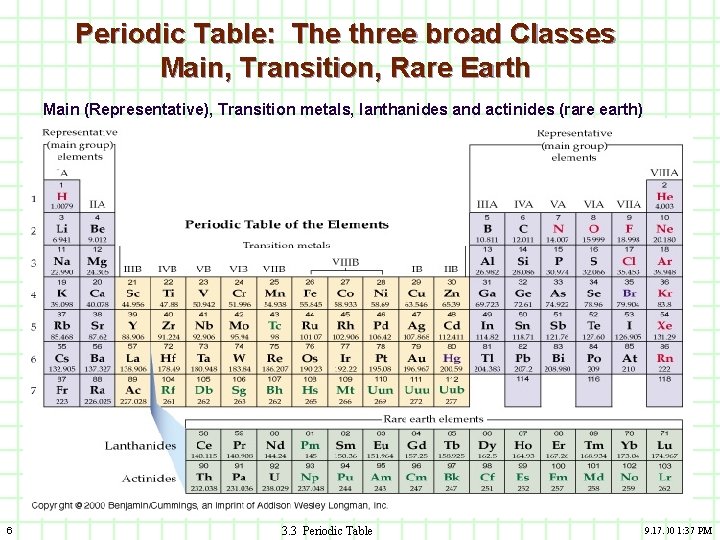
Periodic Table: The three broad Classes Main, Transition, Rare Earth Main (Representative), Transition metals, lanthanides and actinides (rare earth) 6 3. 3 Periodic Table 9. 17. 00 1: 37 PM
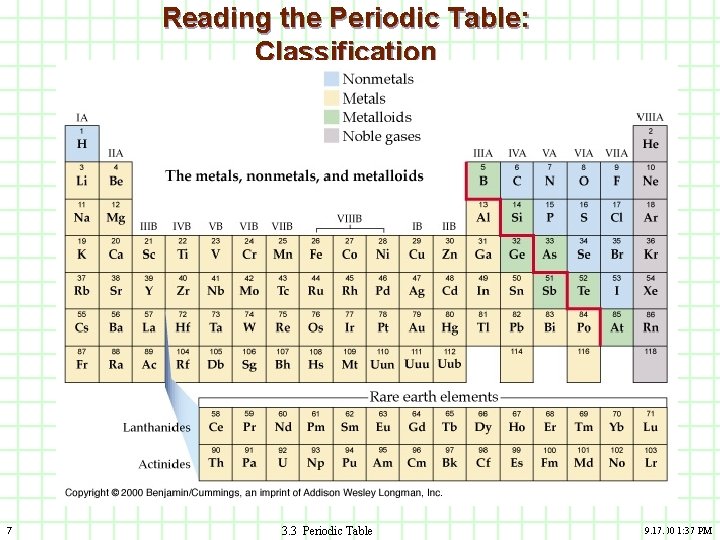
Reading the Periodic Table: Classification Nonmetals, Metalloids, Noble gases 7 3. 3 Periodic Table 9. 17. 00 1: 37 PM

Across the Periodic Table Periods: Are arranged horizontally across the periodic table (Rows 1 -7) 1 st TREND : Elements in the same period have the same number of orbitals. 2 nd Period 6 th Period 8 3. 3 Periodic Table 9. 17. 00 1: 37 PM
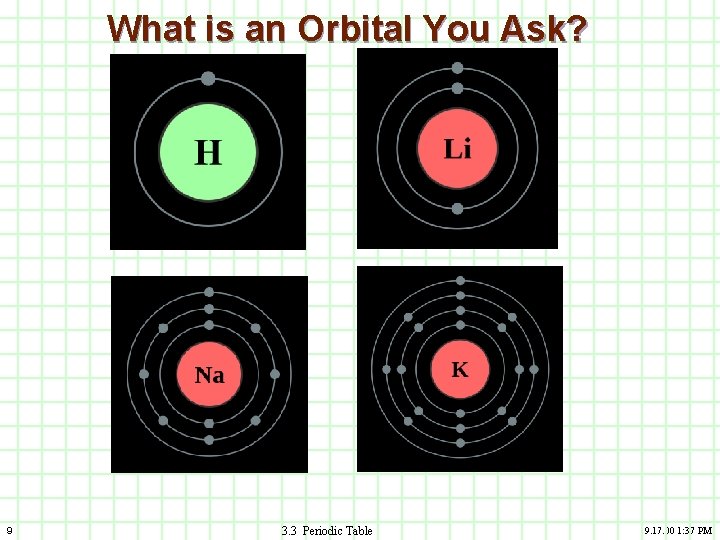
What is an Orbital You Ask? 9 3. 3 Periodic Table 9. 17. 00 1: 37 PM
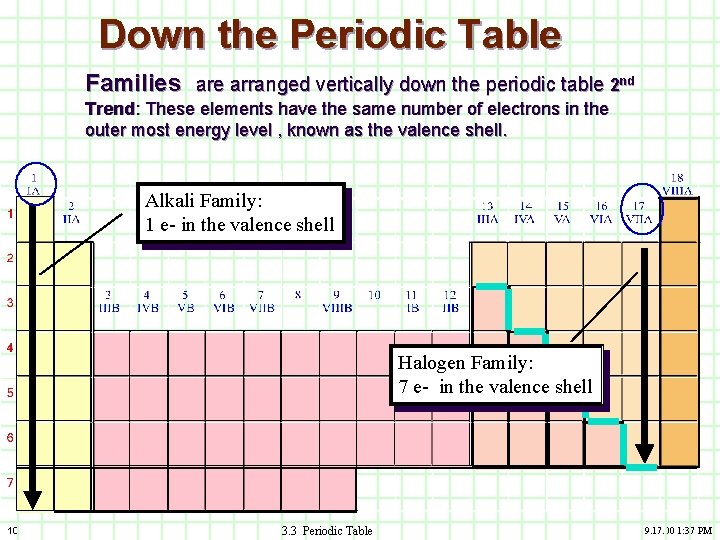
Down the Periodic Table Families are arranged vertically down the periodic table 2 nd Trend: These elements have the same number of electrons in the outer most energy level , known as the valence shell. Alkali Family: 1 e- in the valence shell Halogen Family: 7 e- in the valence shell 10 3. 3 Periodic Table 9. 17. 00 1: 37 PM
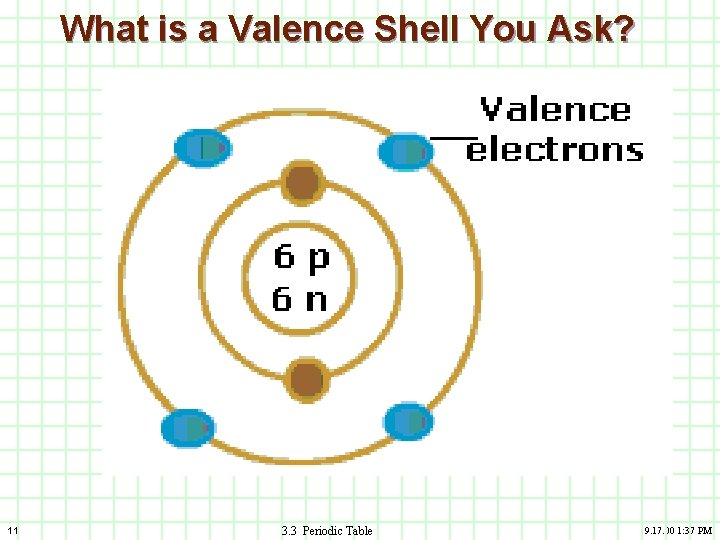
What is a Valence Shell You Ask? 11 3. 3 Periodic Table 9. 17. 00 1: 37 PM
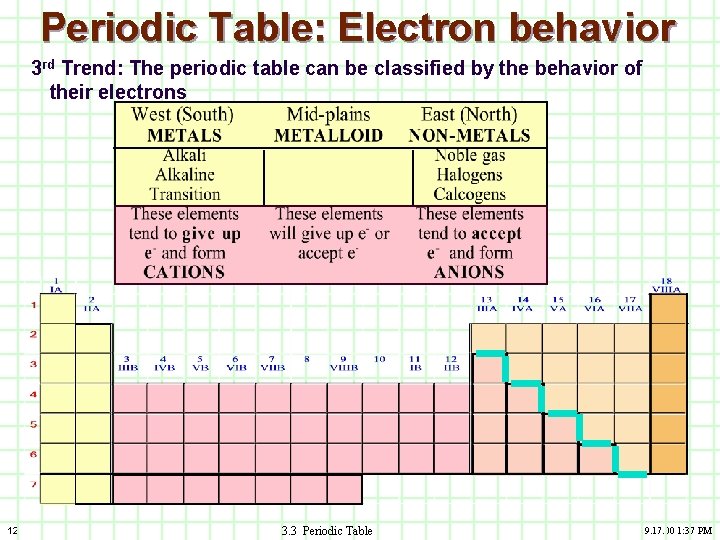
Periodic Table: Electron behavior 3 rd Trend: The periodic table can be classified by the behavior of their electrons 12 3. 3 Periodic Table 9. 17. 00 1: 37 PM
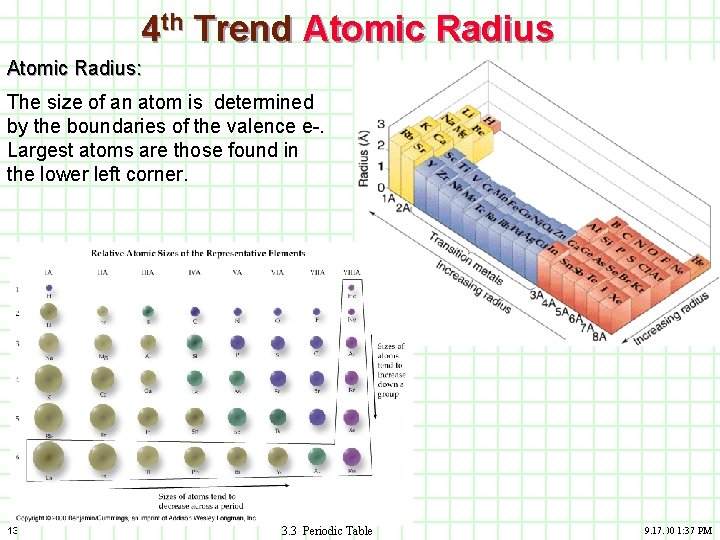
4 th Trend Atomic Radius: The size of an atom is determined by the boundaries of the valence e-. Largest atoms are those found in the lower left corner. 13 3. 3 Periodic Table 9. 17. 00 1: 37 PM
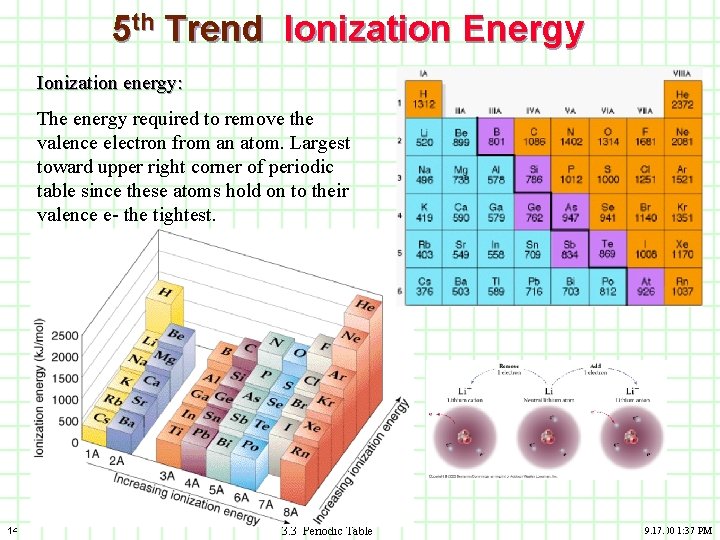
5 th Trend Ionization Energy Ionization energy: The energy required to remove the valence electron from an atom. Largest toward upper right corner of periodic table since these atoms hold on to their valence e- the tightest. 14 3. 3 Periodic Table 9. 17. 00 1: 37 PM
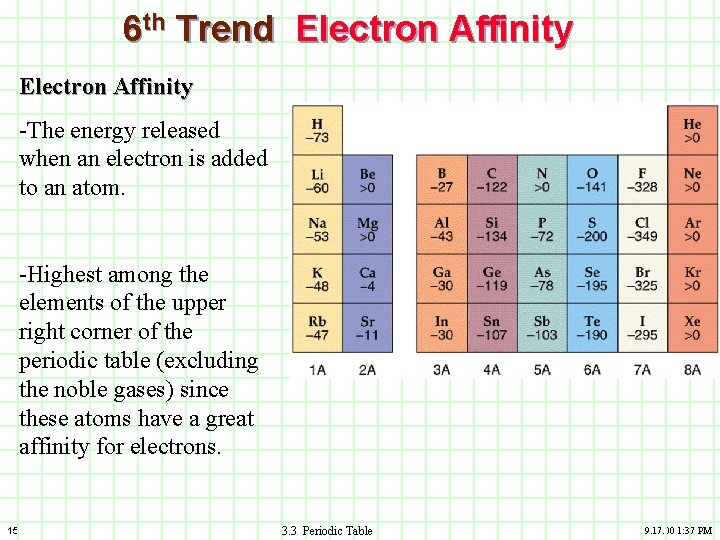
6 th Trend Electron Affinity -The energy released when an electron is added to an atom. -Highest among the elements of the upper right corner of the periodic table (excluding the noble gases) since these atoms have a great affinity for electrons. 15 3. 3 Periodic Table 9. 17. 00 1: 37 PM
- Slides: 15