
The peer review process What is the peer
- Slides: 13
The peer review process
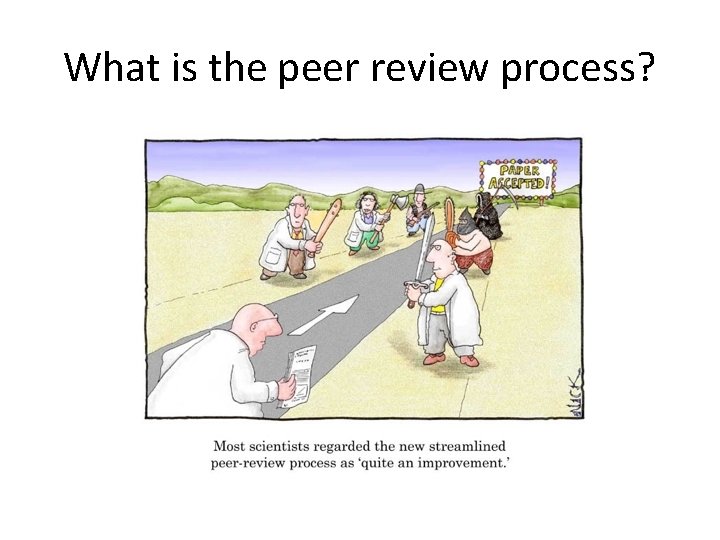
What is the peer review process?
Peer review. . • • Improves the quality of scientific research Maintains standards Provides a measure of credibility Helps an editor decide what qualifies as “publishable science” – What’s original – What’s scientifically important – What’s scientifically sound – What’s within the journal’s scope
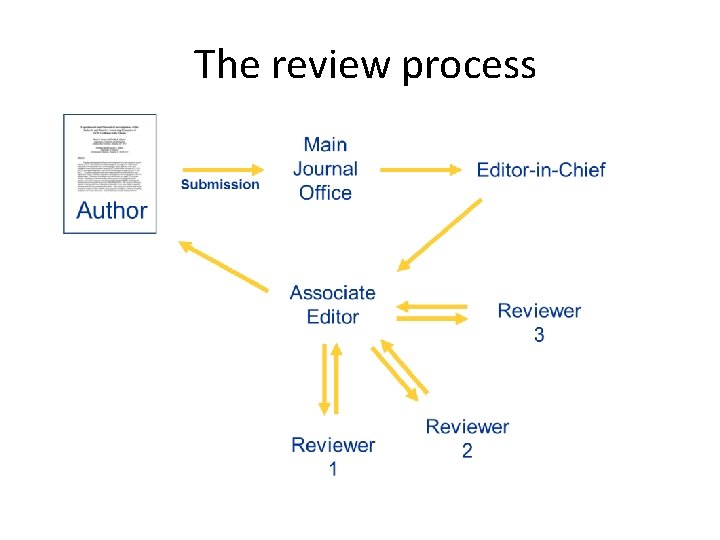
The review process
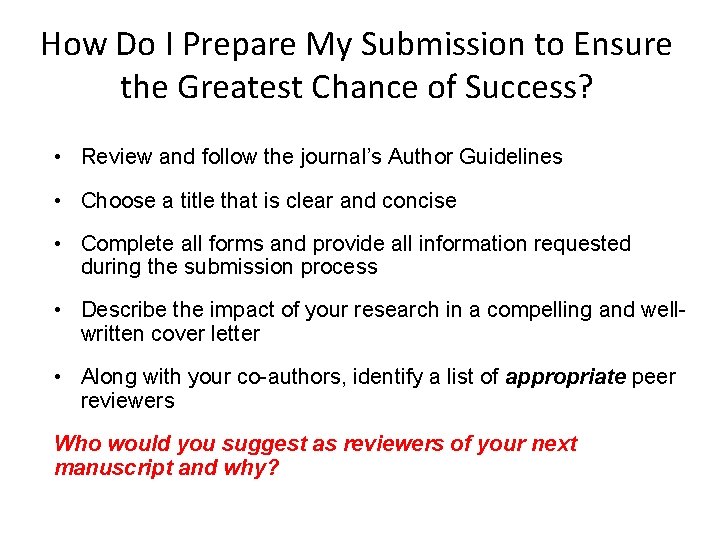
How Do I Prepare My Submission to Ensure the Greatest Chance of Success? • Review and follow the journal’s Author Guidelines • Choose a title that is clear and concise • Complete all forms and provide all information requested during the submission process • Describe the impact of your research in a compelling and wellwritten cover letter • Along with your co-authors, identify a list of appropriate peer reviewers Who would you suggest as reviewers of your next manuscript and why?
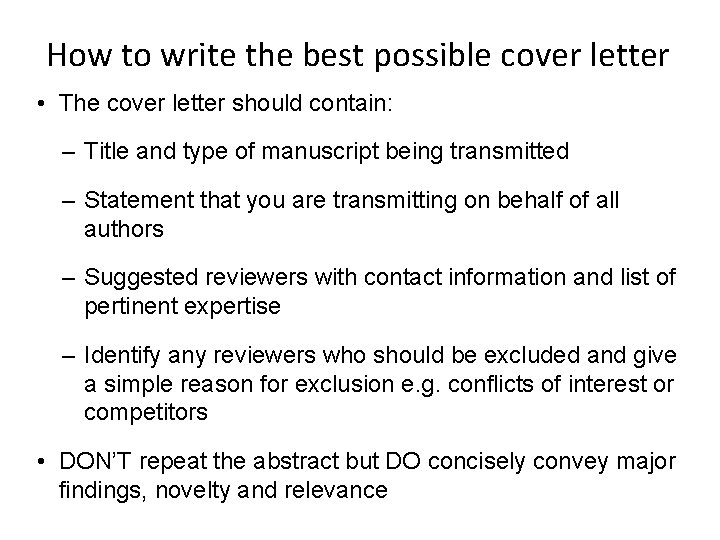
How to write the best possible cover letter • The cover letter should contain: – Title and type of manuscript being transmitted – Statement that you are transmitting on behalf of all authors – Suggested reviewers with contact information and list of pertinent expertise – Identify any reviewers who should be excluded and give a simple reason for exclusion e. g. conflicts of interest or competitors • DON’T repeat the abstract but DO concisely convey major findings, novelty and relevance
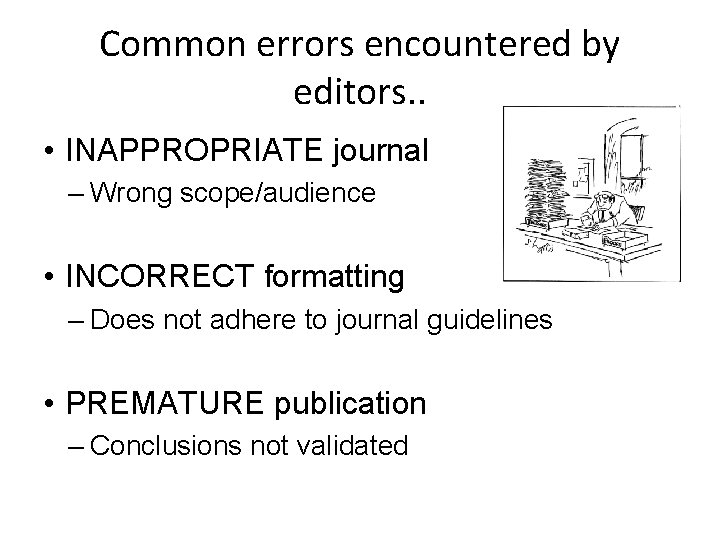
Common errors encountered by editors. . • INAPPROPRIATE journal – Wrong scope/audience • INCORRECT formatting – Does not adhere to journal guidelines • PREMATURE publication – Conclusions not validated
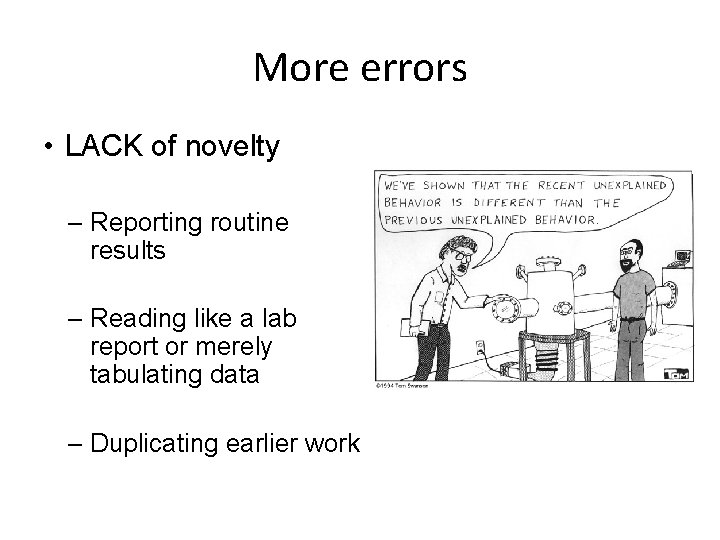
More errors • LACK of novelty – Reporting routine results – Reading like a lab report or merely tabulating data – Duplicating earlier work
More errors • TOO MUCH routine detail in experimental section – Use Supporting Information instead • FAILURE to properly cite literature • INADEQUATE description of sampling, materials and methods • INAPPROPRIATE reviewer suggestions – Don’t suggest your friends, your former advisors, your graduate school roommates, collaborators, your significant other…
More errors • LACK OF FOCUS – Trying to cover too much material – Trying to justify its relevance from all possible viewpoints – Making the presentation of data hard to follow • MISSING CONTROLS • FAILURE TO ADDRESS OTHER EXPLANATIONS • MAKING UNJUSTIFIED STATEMENTS • FAILING TO ACKNOWELDGE THE BIGGER PICTURE
How might an editor come to a decision? • Read all reviewer reports carefully and examines the manuscript to better understand the Reviewers’ concerns • Assess the concerns of the reviewers • If questions still remain, the editor may request the comments of another scientist • Transmit the decision to the authors, often with an explanation, especially in cases of rejection or request for major revisions
How should authors handle reviewer comments? • Reviewers generally are trying to help! – Their feedback is important and invaluable • Authors must read the reviewers’ comments – Carefully – Understand the nature of the critique – Evaluate their importance – Revise according to the critique
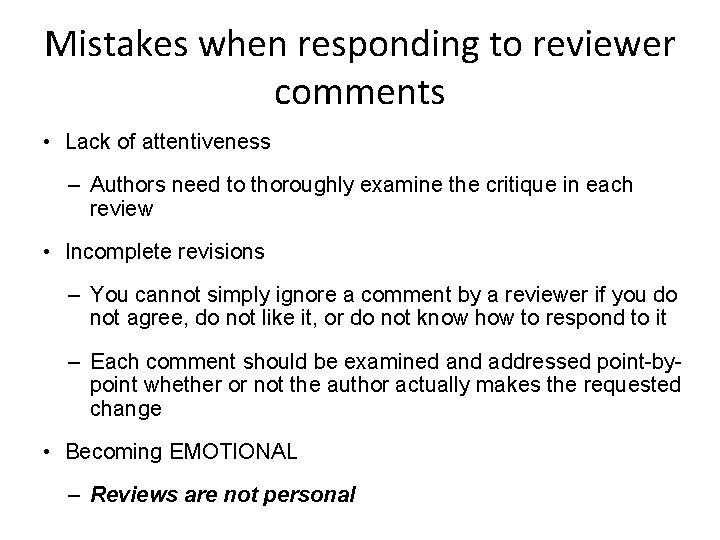
Mistakes when responding to reviewer comments • Lack of attentiveness – Authors need to thoroughly examine the critique in each review • Incomplete revisions – You cannot simply ignore a comment by a reviewer if you do not agree, do not like it, or do not know how to respond to it – Each comment should be examined and addressed point-bypoint whether or not the author actually makes the requested change • Becoming EMOTIONAL – Reviews are not personal