
The Peculiar Institution SLAVERY IN THE UNITED STATES


- Slides: 27
The Peculiar Institution SLAVERY IN THE UNITED STATES
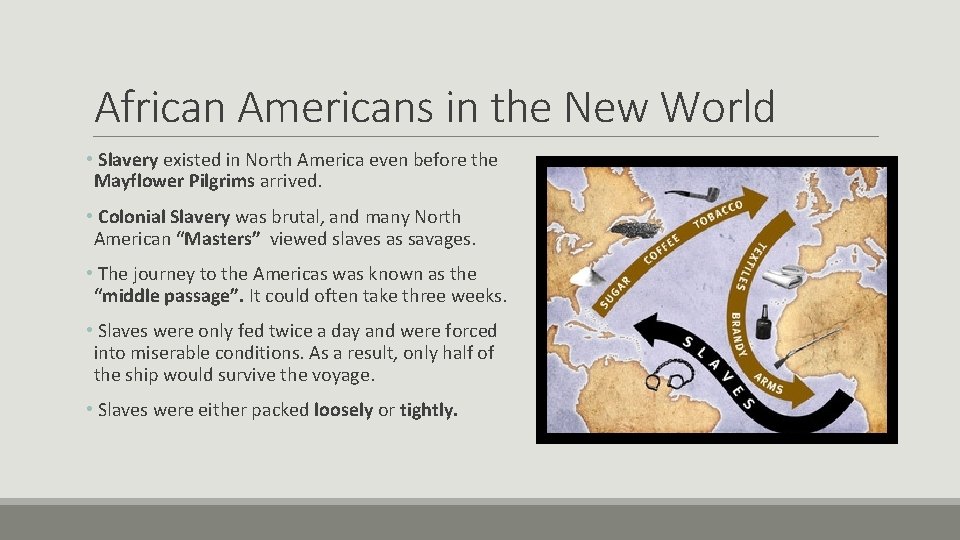
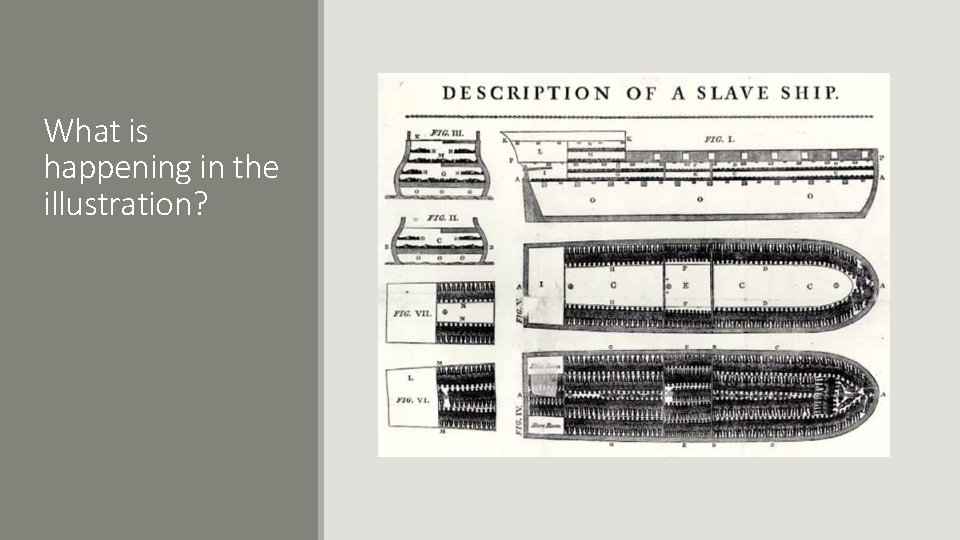
African Americans in the New World • Slavery existed in North America even before the Mayflower Pilgrims arrived. • Colonial Slavery was brutal, and many North American “Masters” viewed slaves as savages. • The journey to the Americas was known as the “middle passage”. It could often take three weeks. • Slaves were only fed twice a day and were forced into miserable conditions. As a result, only half of the ship would survive the voyage. • Slaves were either packed loosely or tightly.
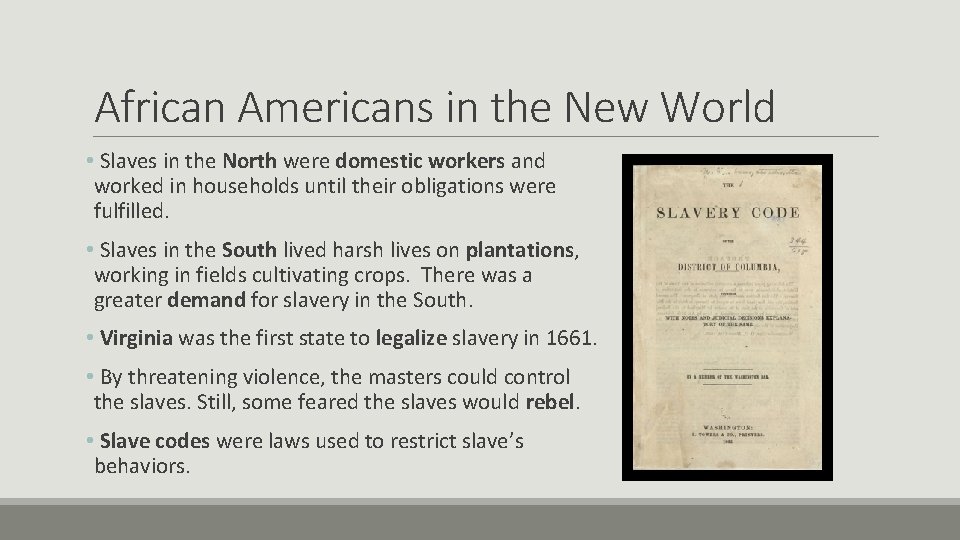
African Americans in the New World • Slaves in the North were domestic workers and worked in households until their obligations were fulfilled. • Slaves in the South lived harsh lives on plantations, working in fields cultivating crops. There was a greater demand for slavery in the South. • Virginia was the first state to legalize slavery in 1661. • By threatening violence, the masters could control the slaves. Still, some feared the slaves would rebel. • Slave codes were laws used to restrict slave’s behaviors.
African Americans in the New World • Slaves were consider property. They could not own property themselves, had special curfews, and could not meet unless under the supervision of a white person. • If a slave committed a crime, they were doomed since in court, they did not have a voice. • It was illegal to educate slaves, expect to teach them how to read the bible. • It was illegal for slaves to marry, since this took away the moral dilemma of having to separate a family. • A slave could be freed either by escaping, or through Manumission, where the owner would grant slaves freedom. • Freed slaves had trouble integrating into a predominately white society.
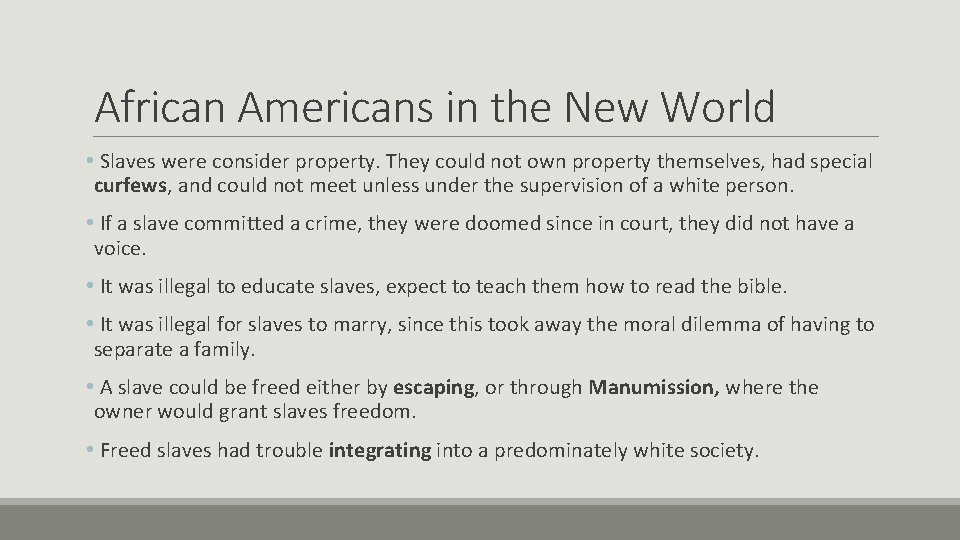
Slavery & the American Revolution • Despite “Life, Liberty, and the Pursuit of Happiness”, slaves did not have these rights, even after the revolutionary era. • In 1775, the Quakers founded the first Anti-slavery society. • The North, who did not rely as much on slavery, began gradually ending slavery. Still, the freed blacks did not have equal rights. • Some slaves were also freed if they agreed to fight in the Revolutionary war. Others were freed by the British. • In 1807, the importation of slaves was banned.
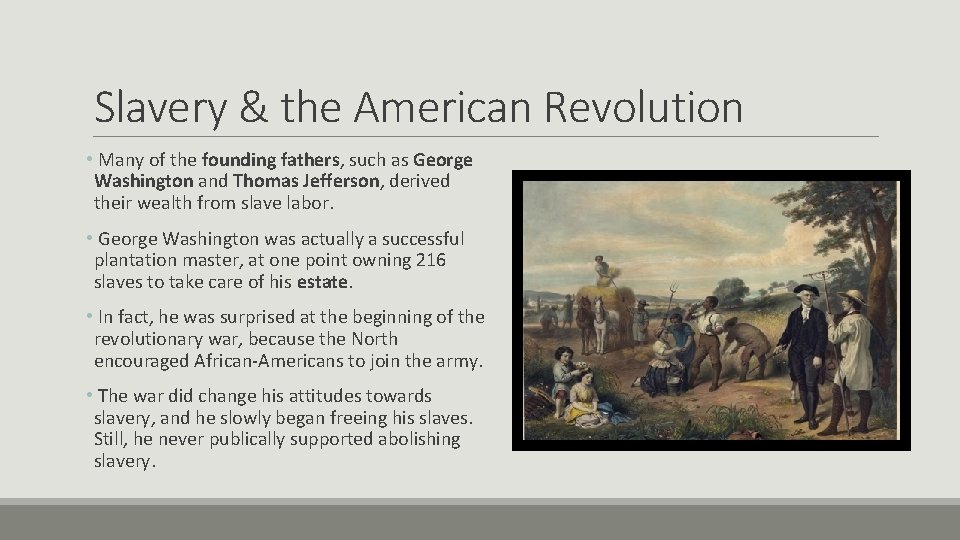
Slavery & the American Revolution • Many of the founding fathers, such as George Washington and Thomas Jefferson, derived their wealth from slave labor. • George Washington was actually a successful plantation master, at one point owning 216 slaves to take care of his estate. • In fact, he was surprised at the beginning of the revolutionary war, because the North encouraged African-Americans to join the army. • The war did change his attitudes towards slavery, and he slowly began freeing his slaves. Still, he never publically supported abolishing slavery.
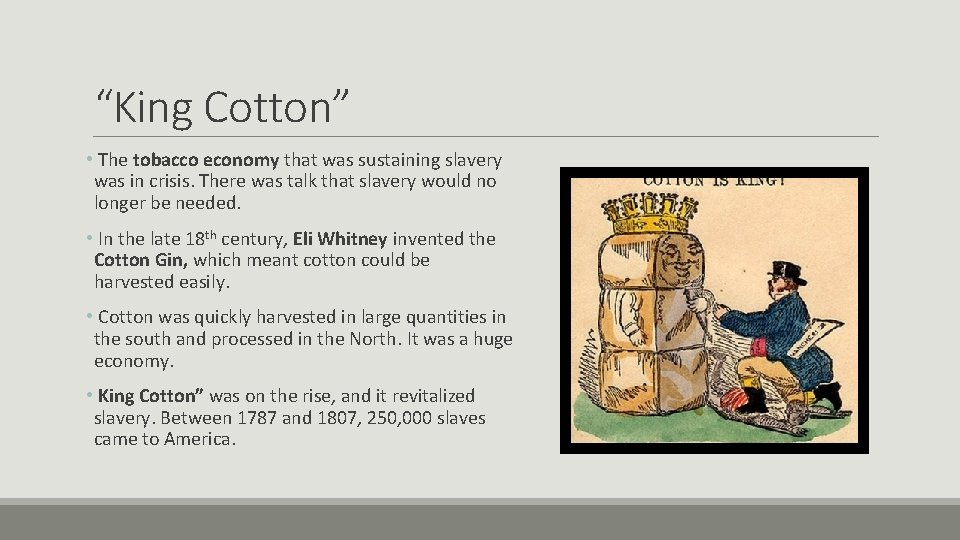
“King Cotton” • The tobacco economy that was sustaining slavery was in crisis. There was talk that slavery would no longer be needed. • In the late 18 th century, Eli Whitney invented the Cotton Gin, which meant cotton could be harvested easily. • Cotton was quickly harvested in large quantities in the south and processed in the North. It was a huge economy. • King Cotton” was on the rise, and it revitalized slavery. Between 1787 and 1807, 250, 000 slaves came to America.
Free African-Americans • By 1860, it is estimated that 1. 5 million free blacks lived in the South, amid the existence of slavery. • Most of these slaves were voluntary Emancipated by their owners, either for good work or outliving their usefulness. • Other slaves escaped, were freed upon their master’s death, or freed because of the growing abolitionist movement. • Freed slaves did not have the same rights as everyone else. Laws (“Slave Codes”) prevented freed blacks from fully integrating.
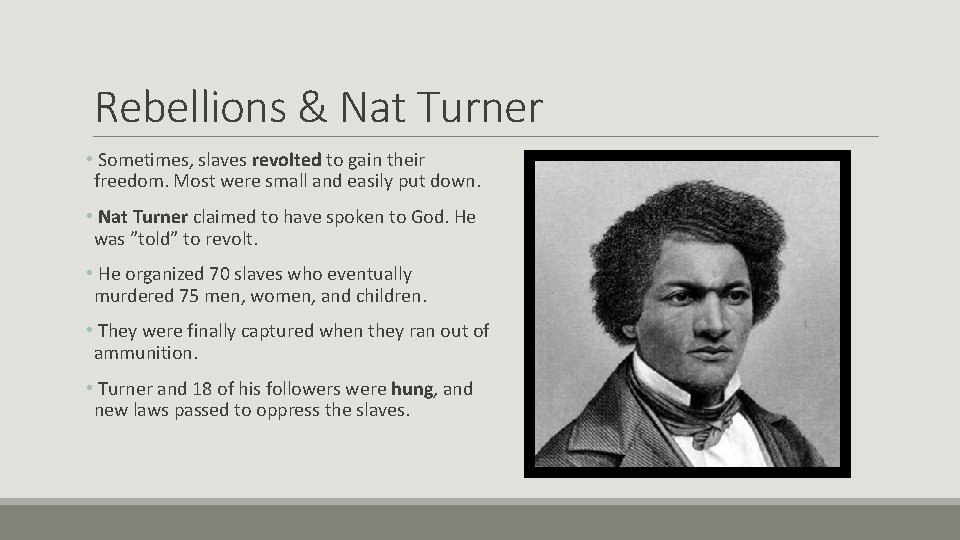
Rebellions & Nat Turner • Sometimes, slaves revolted to gain their freedom. Most were small and easily put down. • Nat Turner claimed to have spoken to God. He was ”told” to revolt. • He organized 70 slaves who eventually murdered 75 men, women, and children. • They were finally captured when they ran out of ammunition. • Turner and 18 of his followers were hung, and new laws passed to oppress the slaves.
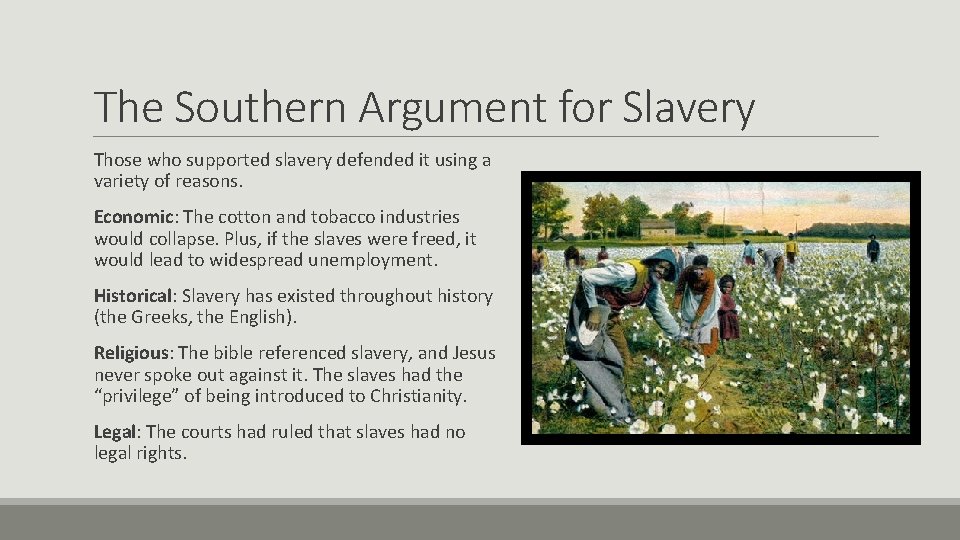
The Southern Argument for Slavery Those who supported slavery defended it using a variety of reasons. Economic: The cotton and tobacco industries would collapse. Plus, if the slaves were freed, it would lead to widespread unemployment. Historical: Slavery has existed throughout history (the Greeks, the English). Religious: The bible referenced slavery, and Jesus never spoke out against it. The slaves had the “privilege” of being introduced to Christianity. Legal: The courts had ruled that slaves had no legal rights.
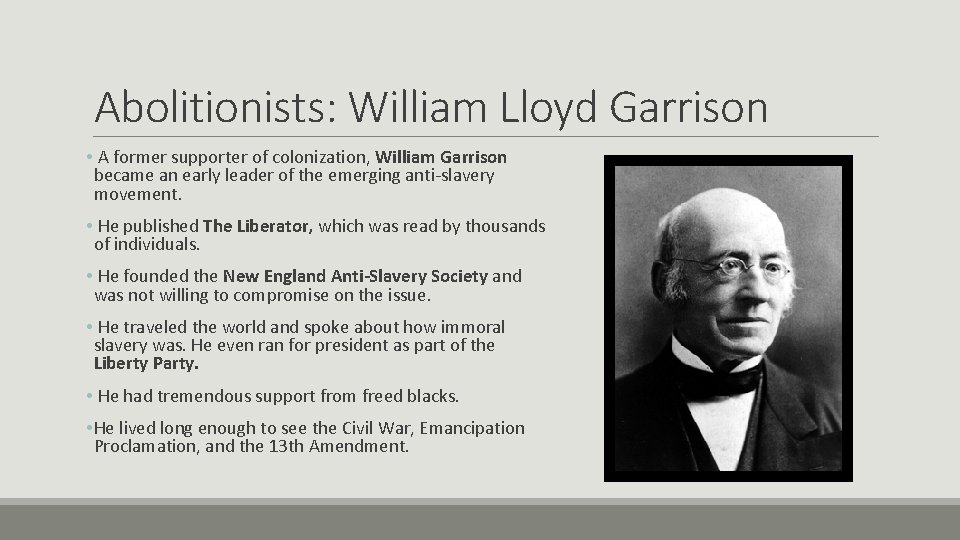
Abolitionists: William Lloyd Garrison • A former supporter of colonization, William Garrison became an early leader of the emerging anti-slavery movement. • He published The Liberator, which was read by thousands of individuals. • He founded the New England Anti-Slavery Society and was not willing to compromise on the issue. • He traveled the world and spoke about how immoral slavery was. He even ran for president as part of the Liberty Party. • He had tremendous support from freed blacks. • He lived long enough to see the Civil War, Emancipation Proclamation, and the 13 th Amendment.
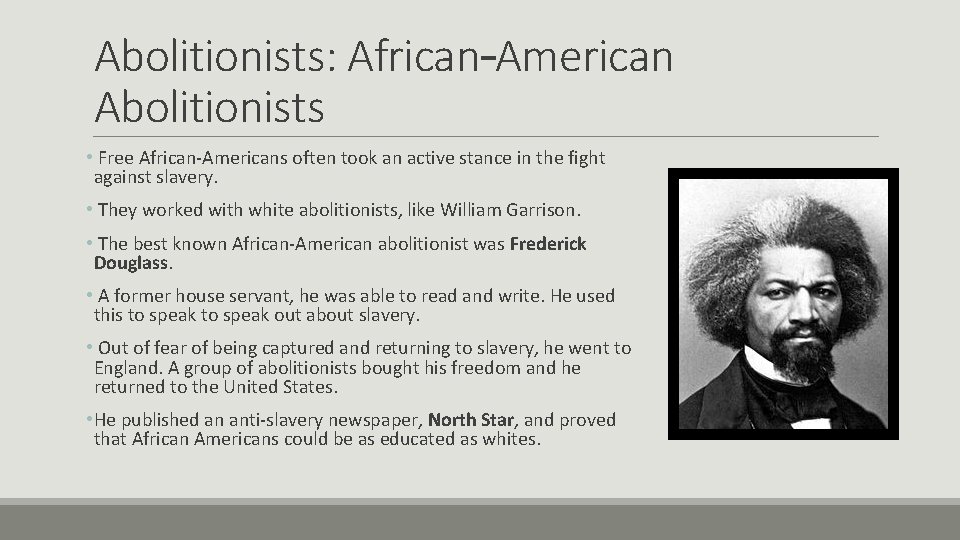
Abolitionists: African–American Abolitionists • Free African-Americans often took an active stance in the fight against slavery. • They worked with white abolitionists, like William Garrison. • The best known African-American abolitionist was Frederick Douglass. • A former house servant, he was able to read and write. He used this to speak out about slavery. • Out of fear of being captured and returning to slavery, he went to England. A group of abolitionists bought his freedom and he returned to the United States. • He published an anti-slavery newspaper, North Star, and proved that African Americans could be as educated as whites.
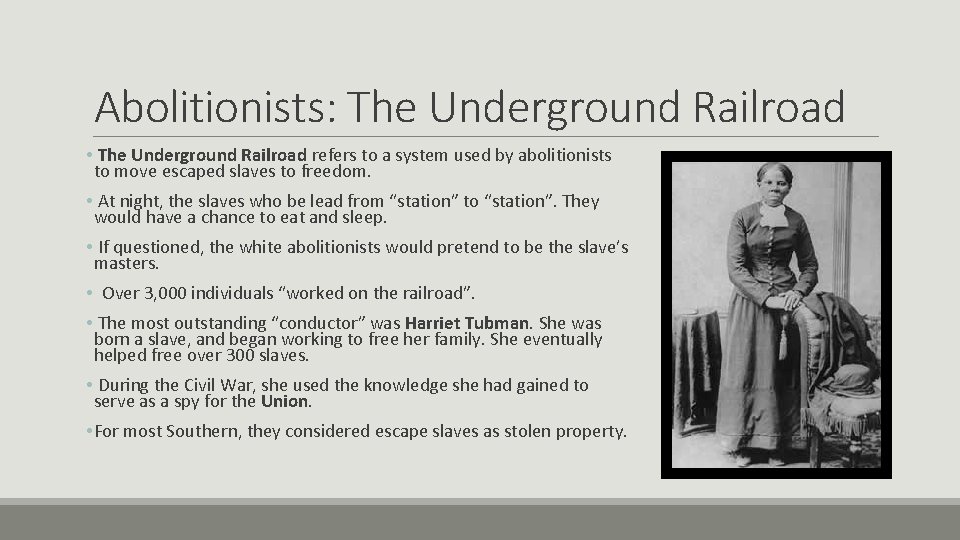
Abolitionists: The Underground Railroad • The Underground Railroad refers to a system used by abolitionists to move escaped slaves to freedom. • At night, the slaves who be lead from “station” to “station”. They would have a chance to eat and sleep. • If questioned, the white abolitionists would pretend to be the slave’s masters. • Over 3, 000 individuals “worked on the railroad”. • The most outstanding “conductor” was Harriet Tubman. She was born a slave, and began working to free her family. She eventually helped free over 300 slaves. • During the Civil War, she used the knowledge she had gained to serve as a spy for the Union. • For most Southern, they considered escape slaves as stolen property.
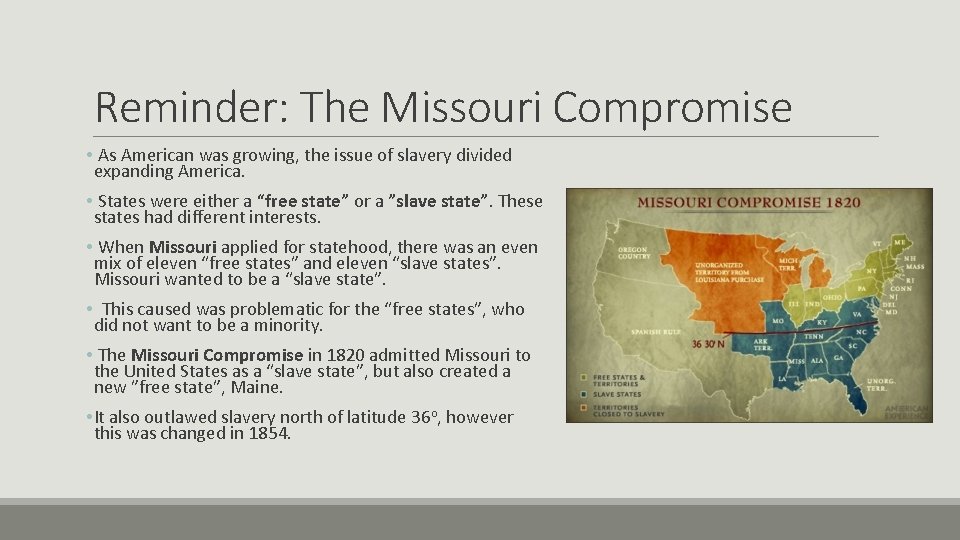
Reminder: The Missouri Compromise • As American was growing, the issue of slavery divided expanding America. • States were either a “free state” or a ”slave state”. These states had different interests. • When Missouri applied for statehood, there was an even mix of eleven “free states” and eleven “slave states”. Missouri wanted to be a “slave state”. • This caused was problematic for the “free states”, who did not want to be a minority. • The Missouri Compromise in 1820 admitted Missouri to the United States as a “slave state”, but also created a new ”free state”, Maine. • It also outlawed slavery north of latitude 36 o, however this was changed in 1854.
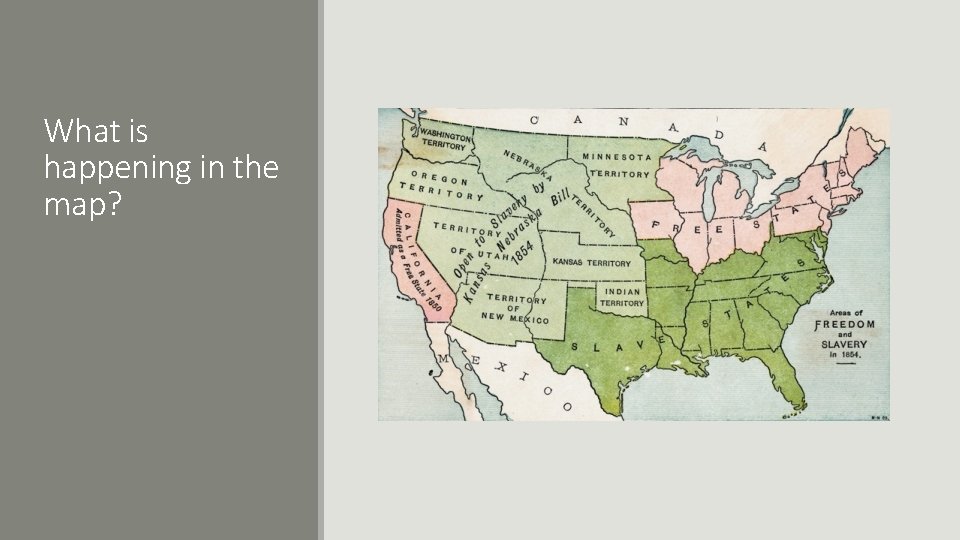
The Kansas-Nebraska Act • The Kansas-Nebraska Act of 1854 is widely believed to be the most significant event leading to the Civil War. • Settlers wanted to move into (the land now known as) Nebraska. Since it had no federal recognition, they could not move there just yet. • The Southern states did not want to recognize it, because it was north of latitude 36. . This meant it would have to be a “free state”. • The Kansas-Nebraska act proposed that a second state, Kansas, would join the United States. The act proposed each state could choose whether they wanted slavery or not. • This effectively repealed the Missouri Compromise, which enraged the North. They felt the act was being ignored. • There were two main political parties, the Whigs (North and South) and the Democratic Party (South). The Southern Whigs quickly re-aligned with the Democrats, and the Northern Whigs formed the Republican Party. • The North and South were quickly becoming hostile towards each other. .
Comprehension Questions! 1. When did the slave trade begin? 2. Who were the abolitionists? 3. Why did slavery become a regional issue?
Picture Prompts!
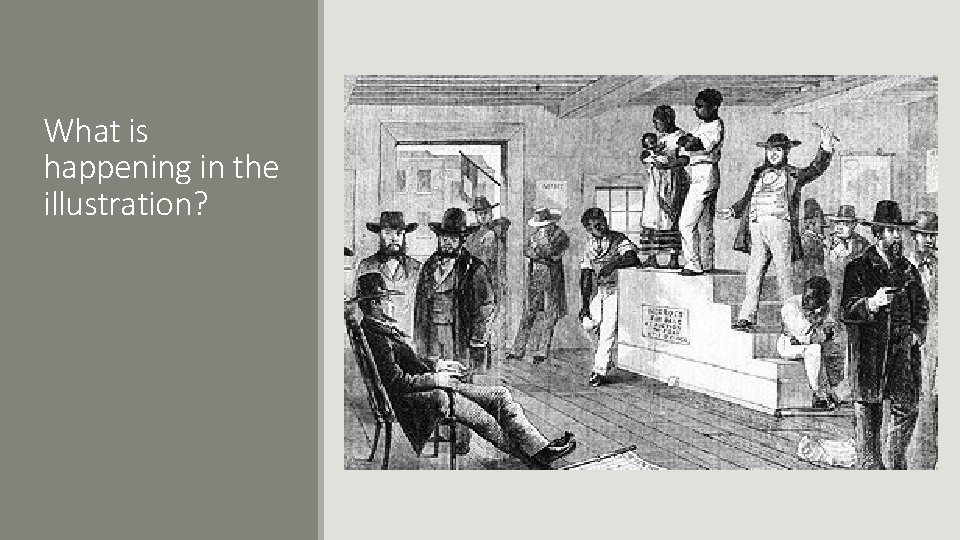
What is happening in the illustration?
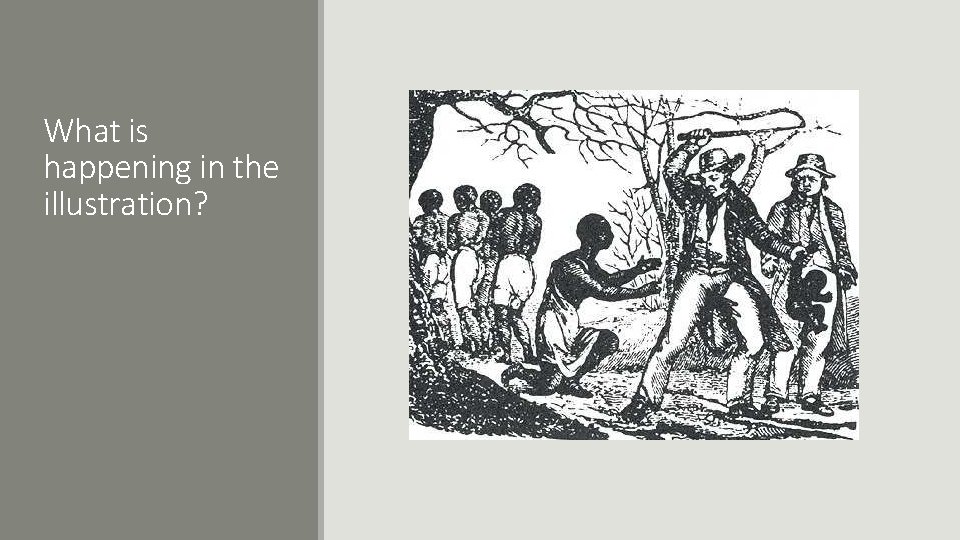
What is happening in the illustration?
What is happening in the illustration?
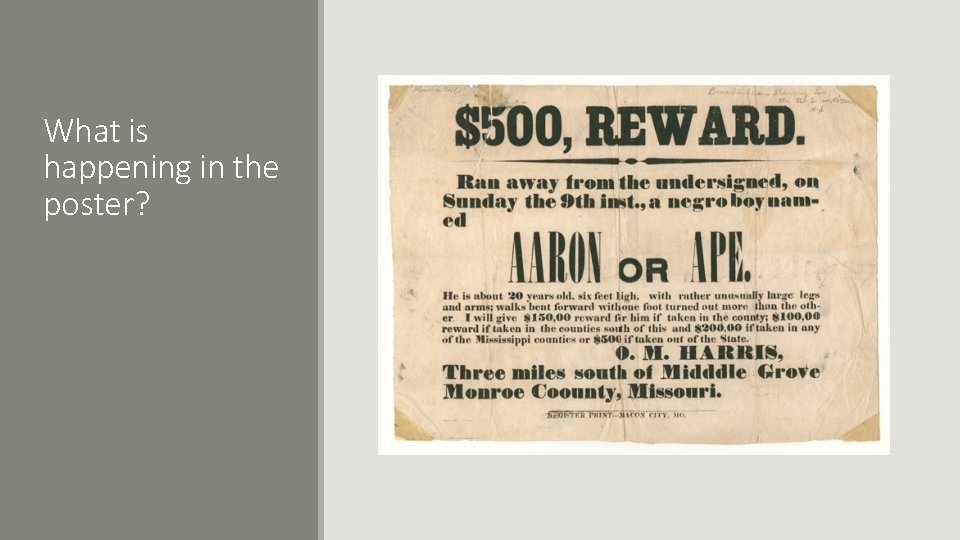
What is happening in the poster?
What is happening in the map?
Readings! SLAVERY THROUGH A MODERN PERSPECTIVE
Monuments The Alabama Senate has delayed a vote on a bill that would prohibit the removal or renaming of monuments located on public property. Senators said they needed more time to review the Alabama Memorial Preservation Act of 2017, given the ongoing regional debate over the appropriateness of monuments, street names and buildings with links to slavery The bill would apply only to monuments that are more than 50 years old. “I am concerned about efforts to erase entire portions of American history”, Senator Allen said in a news release. “I believe our children and grandchildren should remember history as it happened – the good and the bad. ”
Thomas Jefferson’s Legacy Thomas Jefferson's very existence was shaped by slavery. Slaves placed newborn Thomas in his cradle, and slaves comforted the former president on his deathbed. People often wonder how a man who dedicated his life to liberty on the one hand could have slaves close to him with the other, says Rex Ellis, an associate director with the Museum of African American History and Culture. The museum has a new exhibition surrounding Jefferson and the slaves he owned. "Throughout [Jefferson's] lifetime, he owned 607 enslaved men, women and children, " says Ellis. "That paradox is what we hope to discuss, talk about and help visitors understand. "
Prisons Du. Vernay has made a film, “ 13 th”, that is relevant in the age of Black Lives Matter and tragedy of escalated police shootings. She takes off from by highlighting that the United States contains just 5% of the world’s population and 25% of its prisoners. The movie “ 13 th” also travels deep into history, connecting every link in the chain to reveal how we got here. Du. Vernay’s message is that slavery has never gone away. Instead, it into different forms (Reconstruction, Jim Crow, the “war on drugs”) as the decades rolled on.
Discussion 1. How do you tell a story: Is it justifiable to erase controversial moments from our history? Is there ”right” way to honor controversial moments in our history? 2. Can you make any connections between slavery and prisons? Are prisons an evolution of slavery?