
The Pathway to Genomic Medicine by Richard A
The Pathway to Genomic Medicine by Richard A. Gibbs, Ph. D. Director, Human Genome Sequencing Center Wofford Cain Professor of Molecular and Human Genetics Baylor College of Medicine Bio. Ed Online
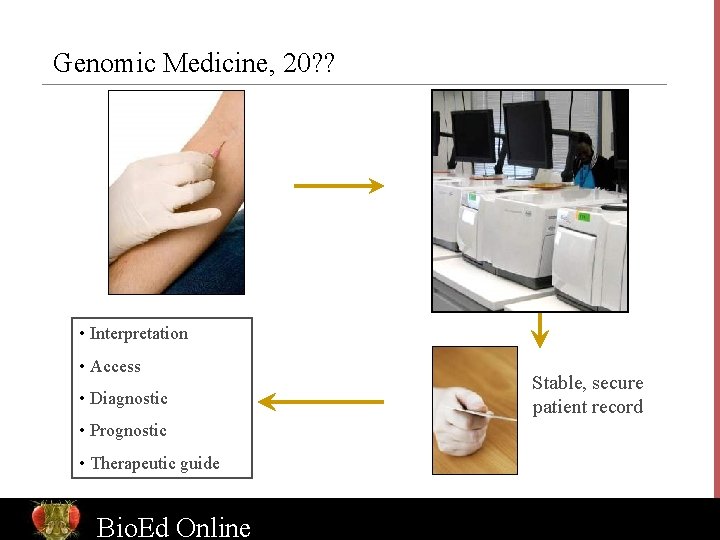
Genomic Medicine, 20? ? <> • Interpretation • Access • Diagnostic • Prognostic • Therapeutic guide Bio. Ed Online Stable, secure patient record
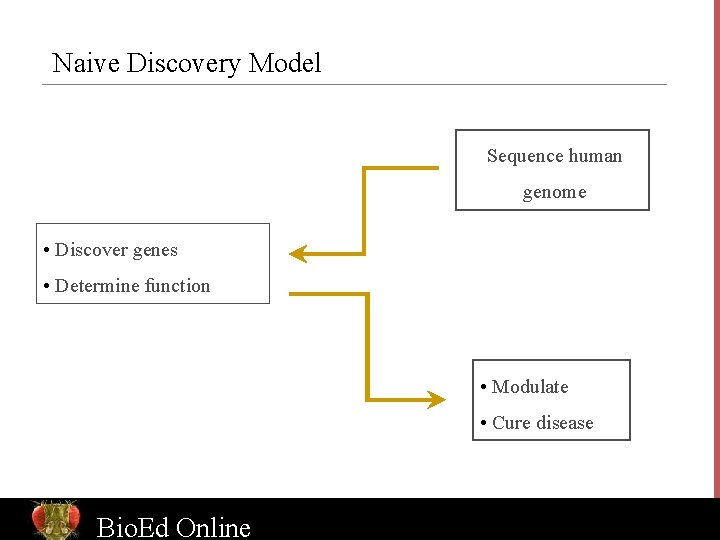
Naive Discovery Model Sequence human genome • Discover genes • Determine function • Modulate • Cure disease Bio. Ed Online
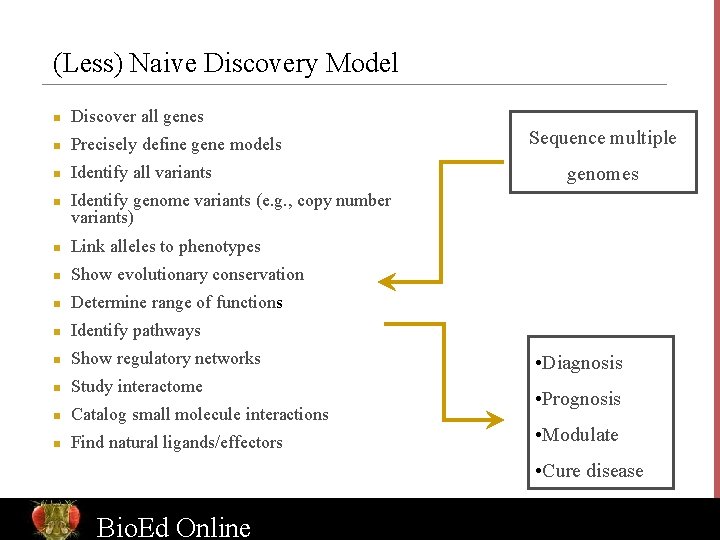
(Less) Naive Discovery Model n Discover all genes n Precisely define gene models n Identify all variants n Sequence multiple genomes Identify genome variants (e. g. , copy number variants) n Link alleles to phenotypes n Show evolutionary conservation n Determine range of functions n Identify pathways n Show regulatory networks n Study interactome n Catalog small molecule interactions n Find natural ligands/effectors • Diagnosis • Prognosis • Modulate • Cure disease Bio. Ed Online
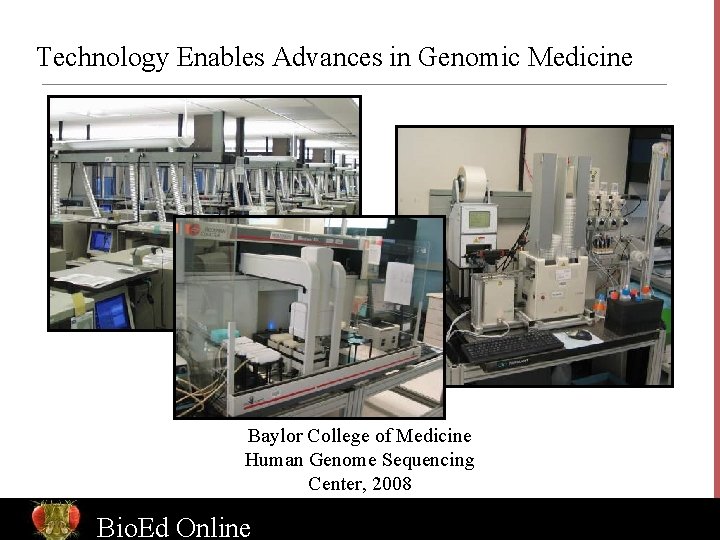
Technology Enables Advances in Genomic Medicine Baylor College of Medicine Human Genome Sequencing Center, 2008 Bio. Ed Online
Guiding Questions for this Presentation n What progress have we made in the global activity of knowledge discovery via DNA sequencing and genome analysis? What progress have we made specifically in the context of genetics and disease? What should we do next? Bio. Ed Online
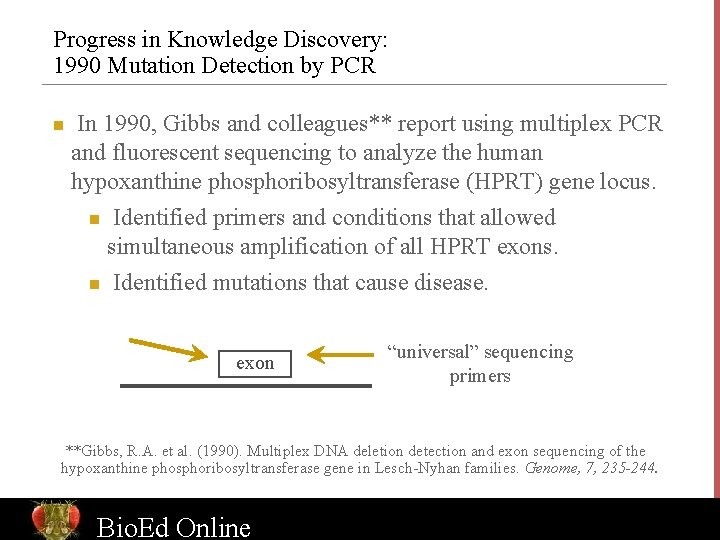
Progress in Knowledge Discovery: 1990 Mutation Detection by PCR n In 1990, Gibbs and colleagues** report using multiplex PCR and fluorescent sequencing to analyze the human hypoxanthine phosphoribosyltransferase (HPRT) gene locus. n Identified primers and conditions that allowed simultaneous amplification of all HPRT exons. n Identified mutations that cause disease. exon “universal” sequencing primers **Gibbs, R. A. et al. (1990). Multiplex DNA deletion detection and exon sequencing of the hypoxanthine phosphoribosyltransferase gene in Lesch-Nyhan families. Genome, 7, 235 -244. Bio. Ed Online
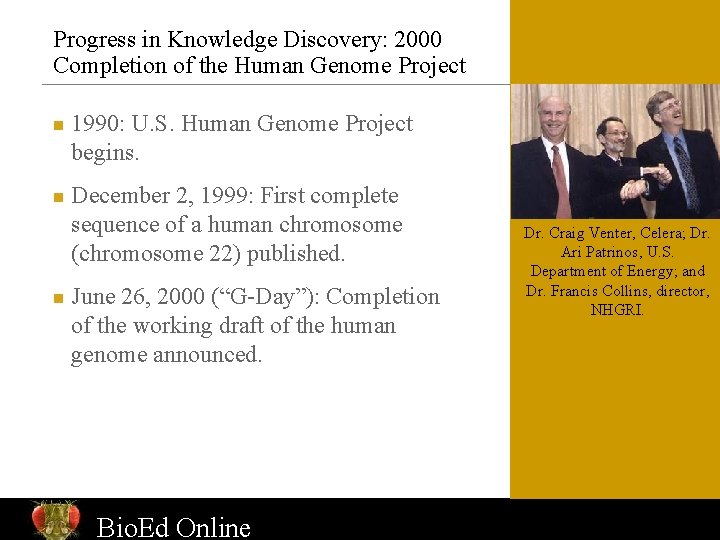
Progress in Knowledge Discovery: 2000 Completion of the Human Genome Project n n n 1990: U. S. Human Genome Project begins. December 2, 1999: First complete sequence of a human chromosome (chromosome 22) published. June 26, 2000 (“G-Day”): Completion of the working draft of the human genome announced. Bio. Ed Online Dr. Craig Venter, Celera; Dr. Ari Patrinos, U. S. Department of Energy; and Dr. Francis Collins, director, NHGRI.
An Enormous Amount of Sequence Data was CTAGCGAACAGCAAGTAGCA Generated Through ATGAGAGAATGATTTTAGAAT the Human Genome Project How can we GGTACGAGCATTATCTATGCA interpret. CTAGCGAACAGCAAGTAGCA these data? CACAATTTCTTTGGGTCATTAT GGTAWHATCGAGCATTATCTA TTANEEDACAGCAAGTAGCA CACATGGGDOESTTCTCAATC TGTMOREGCATTATCTATGCA TTAGCGAACAGCAAGTAGCA CACATTGGGTITCAATCTTTAT GGTSEQUENCE!ATCTATGCA TTAGCGGGGALLGCAAGTAGC CACATTTGGGCTCAATCTTTAT TGTACGAGCMEAN? ATTATCTA CTAGCGAGGGGCAAGTAGCA CACATTGGGGGTCAATCTTTAT GGTACGAGGGTATCTATGCA More sequence data required to drive comparative genomics. Bio. Ed Online
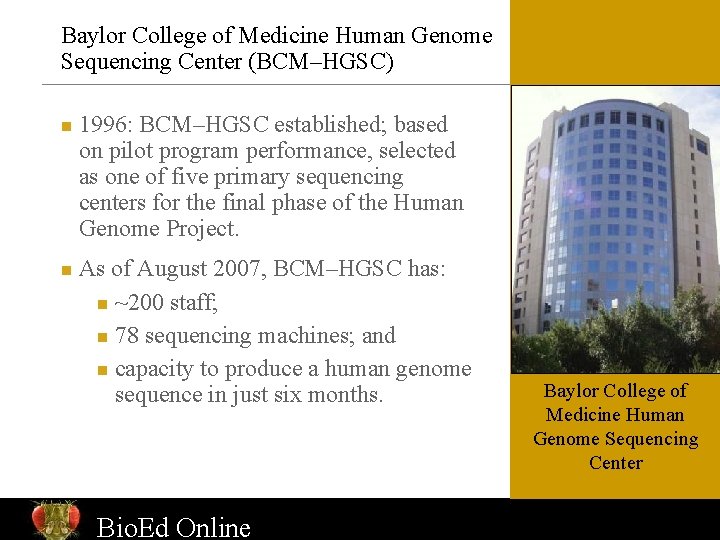
Baylor College of Medicine Human Genome Sequencing Center (BCM–HGSC) n n 1996: BCM–HGSC established; based on pilot program performance, selected as one of five primary sequencing centers for the final phase of the Human Genome Project. As of August 2007, BCM–HGSC has: n ~200 staff; n 78 sequencing machines; and n capacity to produce a human genome sequence in just six months. Bio. Ed Online Baylor College of Medicine Human Genome Sequencing Center
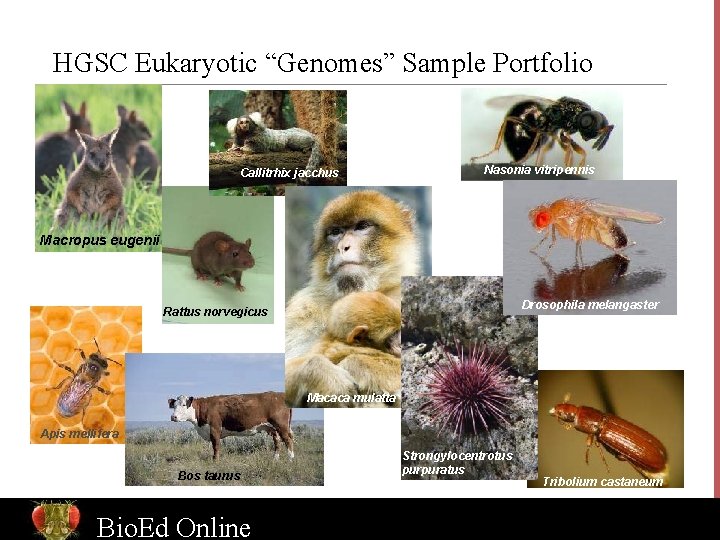
HGSC Eukaryotic “Genomes” Sample Portfolio Callitrhix jacchus Nasonia vitripennis <> Macropus eugenii Drosophila melangaster Rattus norvegicus Macaca mulatta Apis mellifera Bos taurus Bio. Ed Online Strongylocentrotus purpuratus Tribolium castaneum
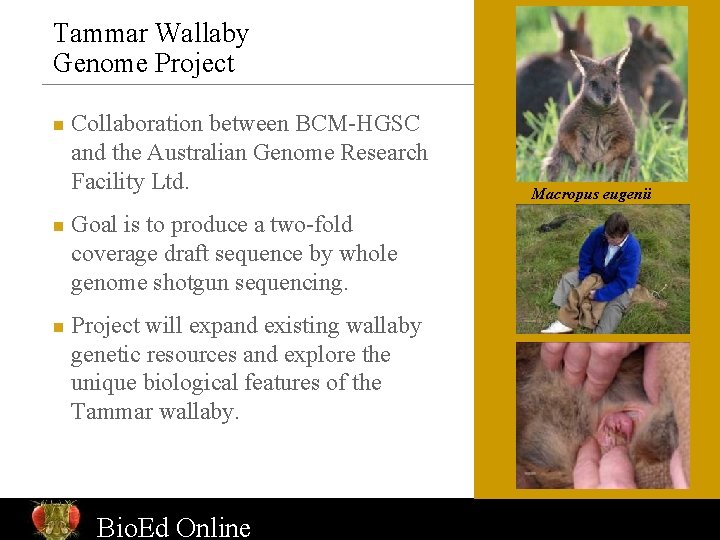
Tammar Wallaby Genome Project n n n Collaboration between BCM-HGSC and the Australian Genome Research Facility Ltd. Goal is to produce a two-fold coverage draft sequence by whole genome shotgun sequencing. Project will expand existing wallaby genetic resources and explore the unique biological features of the Tammar wallaby. Bio. Ed Online Macropus eugenii
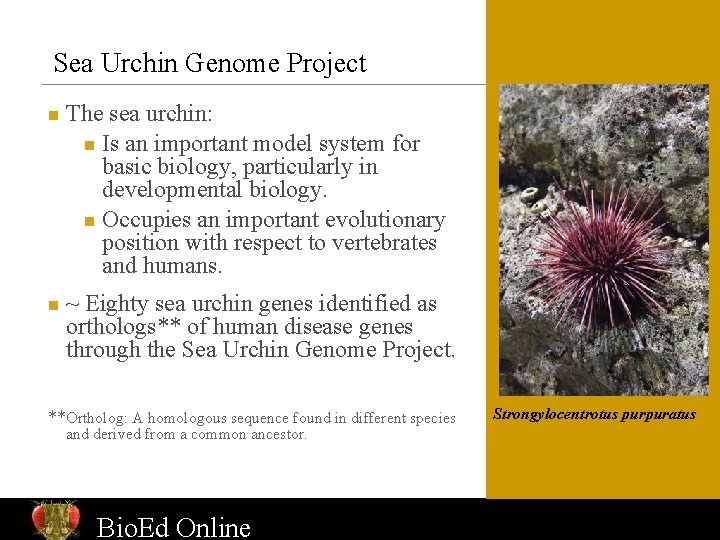
Sea Urchin Genome Project n n The sea urchin: n Is an important model system for basic biology, particularly in developmental biology. n Occupies an important evolutionary position with respect to vertebrates and humans. ~ Eighty sea urchin genes identified as orthologs** of human disease genes through the Sea Urchin Genome Project. **Ortholog: A homologous sequence found in different species and derived from a common ancestor. Bio. Ed Online Strongylocentrotus purpuratus
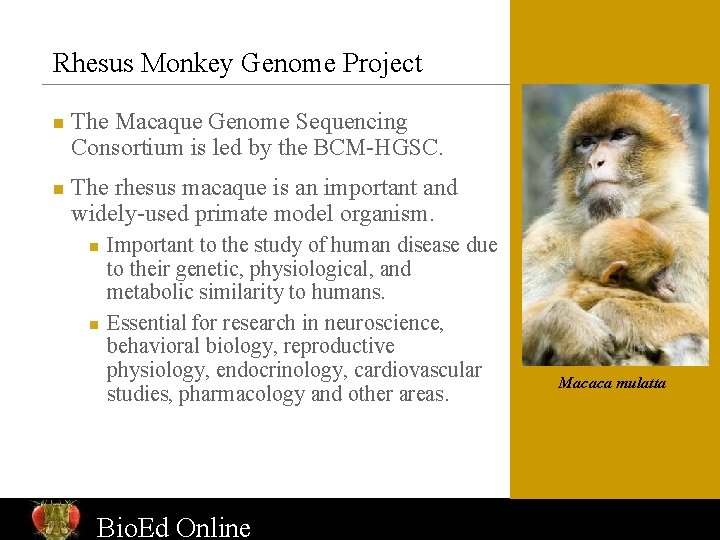
Rhesus Monkey Genome Project n n The Macaque Genome Sequencing Consortium is led by the BCM-HGSC. The rhesus macaque is an important and widely-used primate model organism. n n Important to the study of human disease due to their genetic, physiological, and metabolic similarity to humans. Essential for research in neuroscience, behavioral biology, reproductive physiology, endocrinology, cardiovascular studies, pharmacology and other areas. Bio. Ed Online Macaca mulatta
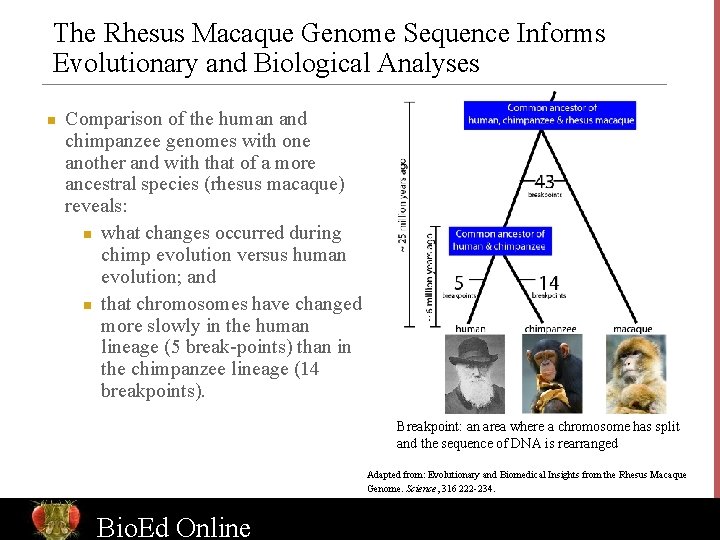
The Rhesus Macaque Genome Sequence Informs Evolutionary and Biological Analyses n Comparison of the human and chimpanzee genomes with one another and with that of a more ancestral species (rhesus macaque) reveals: n what changes occurred during chimp evolution versus human evolution; and n that chromosomes have changed more slowly in the human lineage (5 break-points) than in the chimpanzee lineage (14 breakpoints). Breakpoint: an area where a chromosome has split and the sequence of DNA is rearranged Adapted from: Evolutionary and Biomedical Insights from the Rhesus Macaque Genome. Science, 316 222 -234. Bio. Ed Online
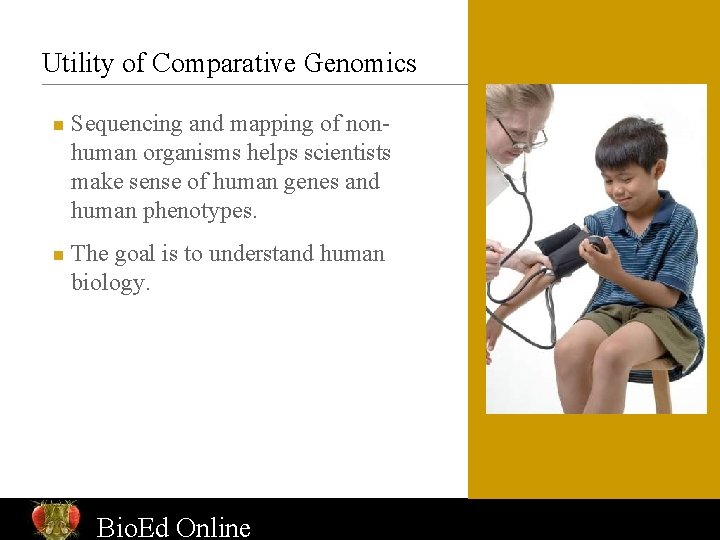
Utility of Comparative Genomics n n Sequencing and mapping of nonhuman organisms helps scientists make sense of human genes and human phenotypes. The goal is to understand human biology. Bio. Ed Online
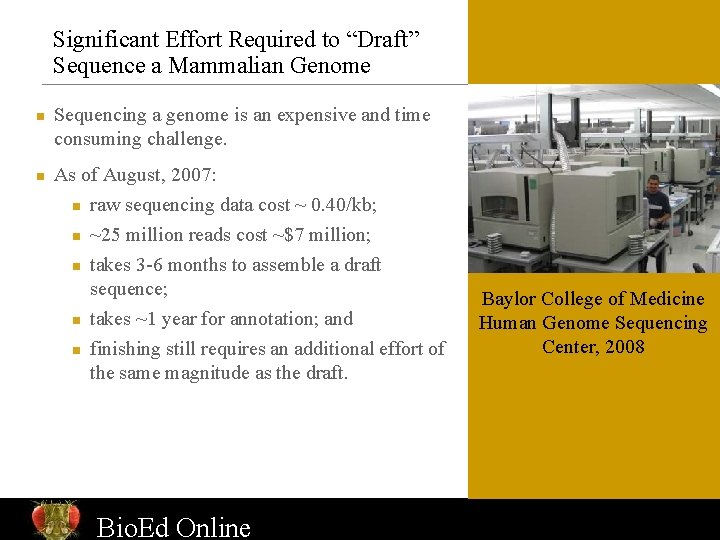
Significant Effort Required to “Draft” Sequence a Mammalian Genome n n Sequencing a genome is an expensive and time consuming challenge. As of August, 2007: n raw sequencing data cost ~ 0. 40/kb; n ~25 million reads cost ~$7 million; n takes 3 -6 months to assemble a draft sequence; n takes ~1 year for annotation; and n finishing still requires an additional effort of the same magnitude as the draft. Bio. Ed Online Baylor College of Medicine Human Genome Sequencing Center, 2008
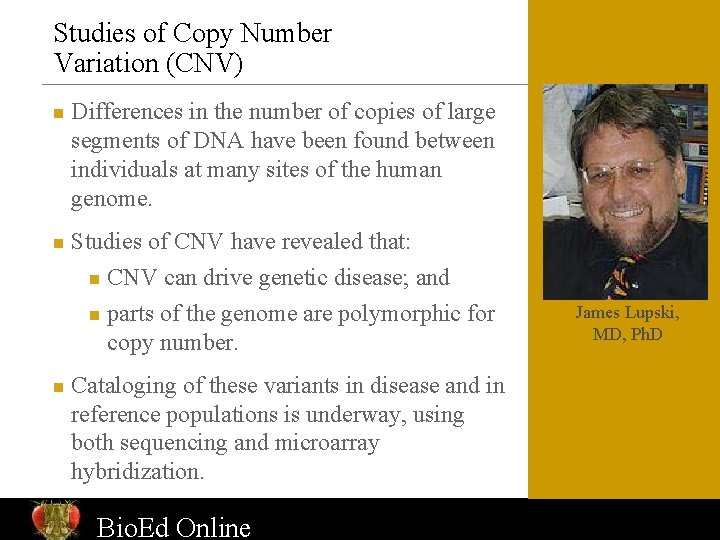
Studies of Copy Number Variation (CNV) n n n Differences in the number of copies of large segments of DNA have been found between individuals at many sites of the human genome. Studies of CNV have revealed that: n CNV can drive genetic disease; and n parts of the genome are polymorphic for copy number. Cataloging of these variants in disease and in reference populations is underway, using both sequencing and microarray hybridization. Bio. Ed Online James Lupski, MD, Ph. D
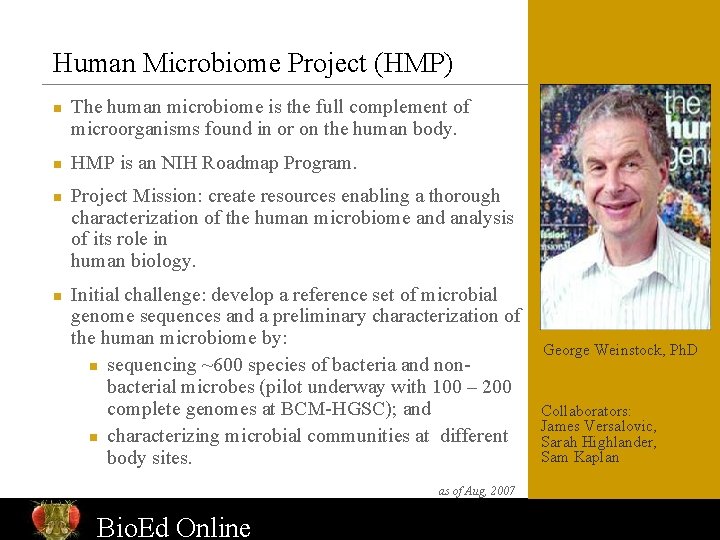
Human Microbiome Project (HMP) n n The human microbiome is the full complement of microorganisms found in or on the human body. HMP is an NIH Roadmap Program. Project Mission: create resources enabling a thorough characterization of the human microbiome and analysis of its role in human biology. Initial challenge: develop a reference set of microbial genome sequences and a preliminary characterization of the human microbiome by: n sequencing ~600 species of bacteria and nonbacterial microbes (pilot underway with 100 – 200 complete genomes at BCM-HGSC); and n characterizing microbial communities at different body sites. as of Aug, 2007 Bio. Ed Online George Weinstock, Ph. D Collaborators: James Versalovic, Sarah Highlander, Sam Kaplan
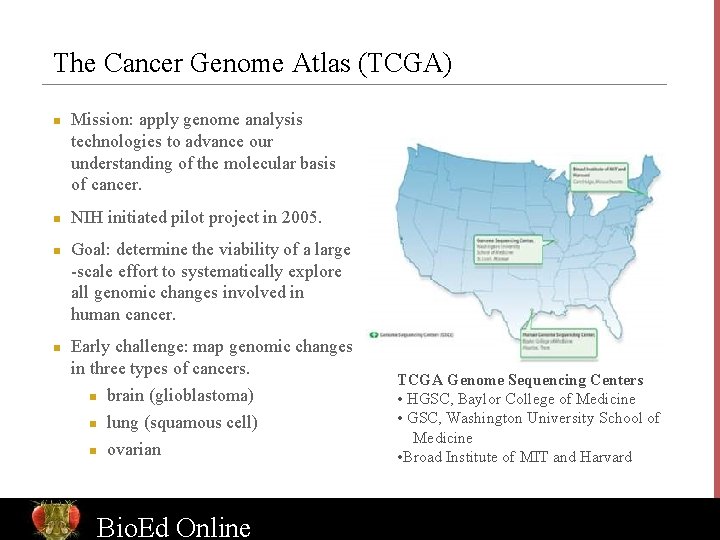
The Cancer Genome Atlas (TCGA) n n Mission: apply genome analysis technologies to advance our understanding of the molecular basis of cancer. NIH initiated pilot project in 2005. Goal: determine the viability of a large -scale effort to systematically explore all genomic changes involved in human cancer. Early challenge: map genomic changes in three types of cancers. n brain (glioblastoma) n lung (squamous cell) n ovarian Bio. Ed Online TCGA Genome Sequencing Centers • HGSC, Baylor College of Medicine • GSC, Washington University School of Medicine • Broad Institute of MIT and Harvard
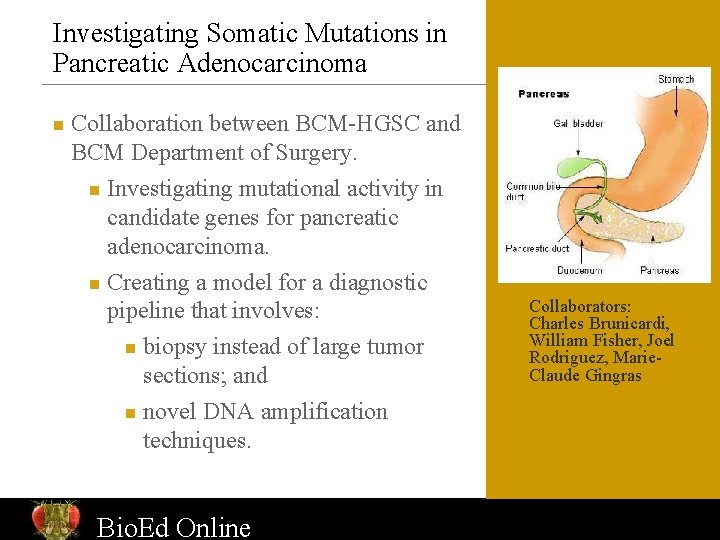
Investigating Somatic Mutations in Pancreatic Adenocarcinoma n Collaboration between BCM-HGSC and BCM Department of Surgery. n Investigating mutational activity in candidate genes for pancreatic adenocarcinoma. n Creating a model for a diagnostic pipeline that involves: n biopsy instead of large tumor sections; and n novel DNA amplification techniques. Bio. Ed Online Collaborators: Charles Brunicardi, William Fisher, Joel Rodriguez, Marie. Claude Gingras
Linking Genes to Human Disease n There are different categories of human genetic disease. Rare disease (rare alleles, including private mutations) n Low frequency disease n Common disease (common alleles) n n Online Mendelian Inheritance in Man (OMIM) n Continuously updated catalog of human genes and genetic disorders. n As of January 2008, >18, 000 entries. Bio. Ed Online
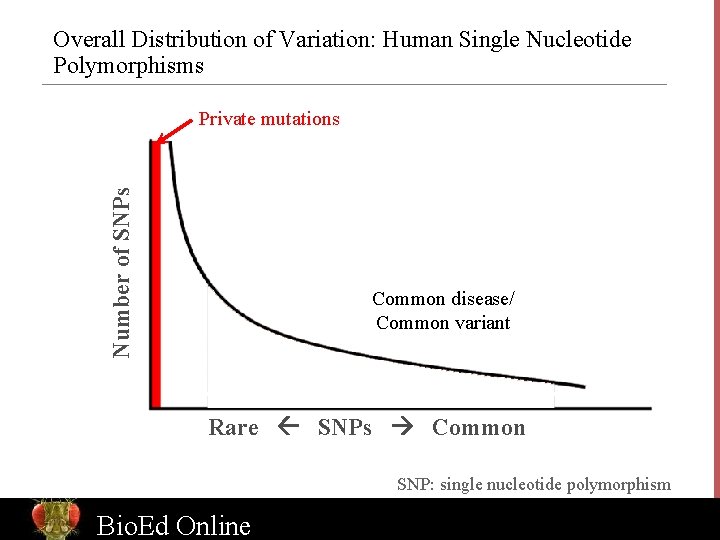
Overall Distribution of Variation: Human Single Nucleotide Polymorphisms Number of SNPs Private mutations Common disease/ Common variant Rare SNPs Common SNP: single nucleotide polymorphism Bio. Ed Online
Exploring Mendelian Disease by “Predictive Genotyping” n Phase I (Completed) n n n Phase II (In Progress) n n Annotation** of 1, 232 mutations in 119 disease genes. Study suggests utility of using predictive assays for particular mutations. Annotation of 44, 000 mutations in 900 high priority disease genes. Mutation Jamboree – 25 faculty and postdocs prioritizing content of the next version. Pharmacogenetic markers with established utility. Phase III (In Planning Stage) n n n Annotation of all 60, 000 known mutations in 2, 200 disease genes. Pharmacogenetic markers Common disease risk markers **Annotation is the process of attaching biological information to gene sequences. Bio. Ed Online As of June 2007 John Belmont, MD, Ph. D
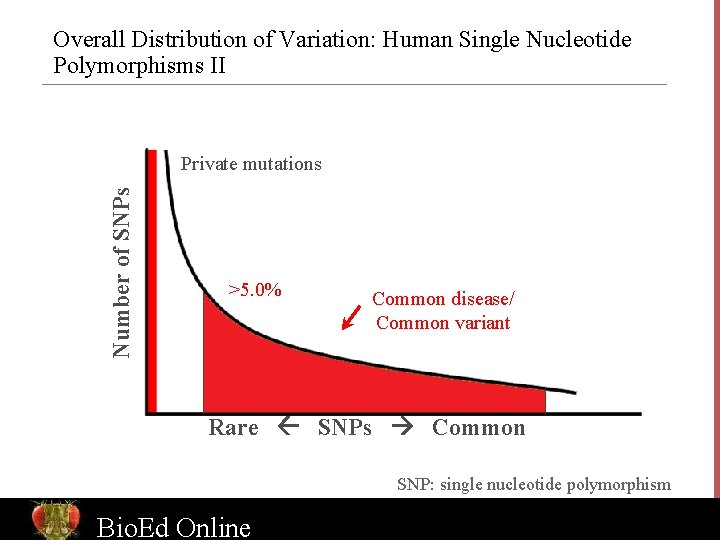
Overall Distribution of Variation: Human Single Nucleotide Polymorphisms II Number of SNPs Private mutations >5. 0% Common disease/ Common variant Rare SNPs Common SNP: single nucleotide polymorphism Bio. Ed Online
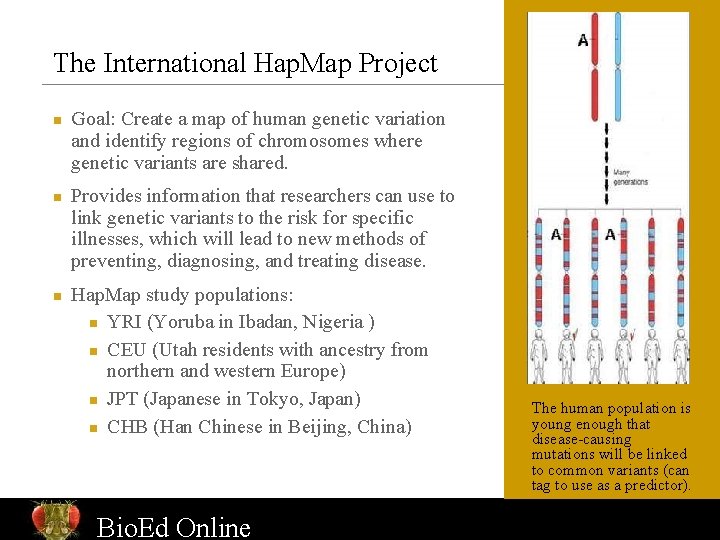
The International Hap. Map Project n n n Goal: Create a map of human genetic variation and identify regions of chromosomes where genetic variants are shared. Provides information that researchers can use to link genetic variants to the risk for specific illnesses, which will lead to new methods of preventing, diagnosing, and treating disease. Hap. Map study populations: n YRI (Yoruba in Ibadan, Nigeria ) n CEU (Utah residents with ancestry from northern and western Europe) n JPT (Japanese in Tokyo, Japan) n CHB (Han Chinese in Beijing, China) Bio. Ed Online The human population is young enough that disease-causing mutations will be linked to common variants (can tag to use as a predictor).
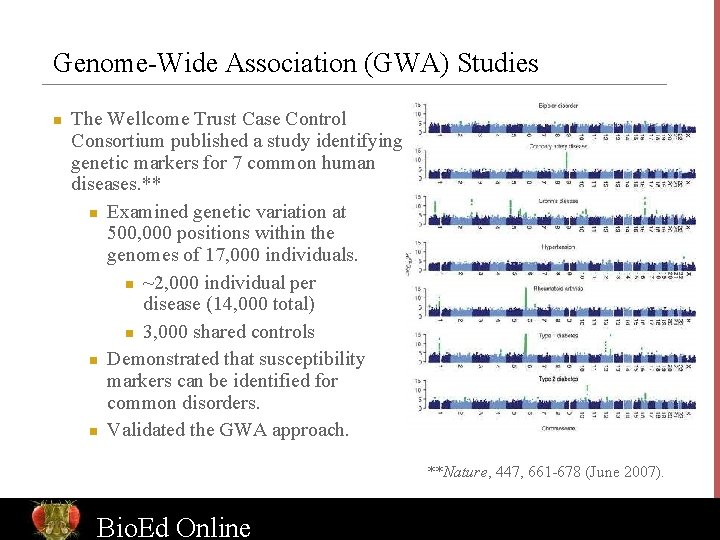
Genome-Wide Association (GWA) Studies n The Wellcome Trust Case Control Consortium published a study identifying genetic markers for 7 common human diseases. ** n Examined genetic variation at 500, 000 positions within the genomes of 17, 000 individuals. n ~2, 000 individual per disease (14, 000 total) n 3, 000 shared controls n Demonstrated that susceptibility markers can be identified for common disorders. n Validated the GWA approach. **Nature, 447, 661 -678 (June 2007). Bio. Ed Online
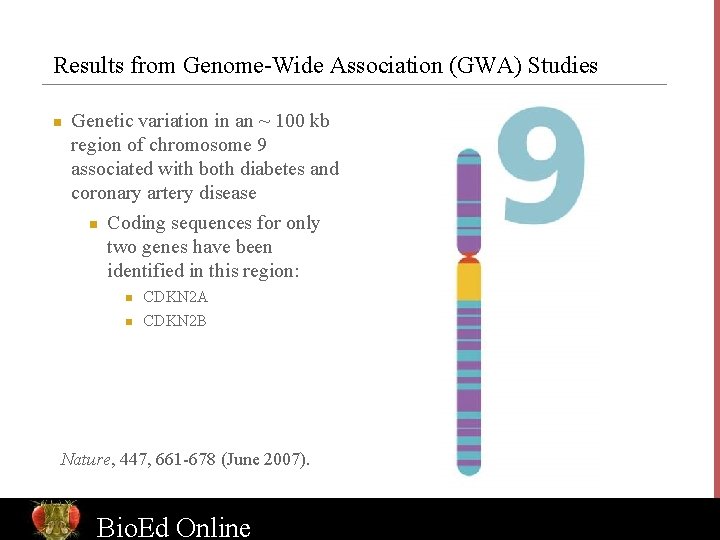
Results from Genome-Wide Association (GWA) Studies n Genetic variation in an ~ 100 kb region of chromosome 9 associated with both diabetes and coronary artery disease n Coding sequences for only two genes have been identified in this region: n n CDKN 2 A CDKN 2 B Nature, 447, 661 -678 (June 2007). Bio. Ed Online
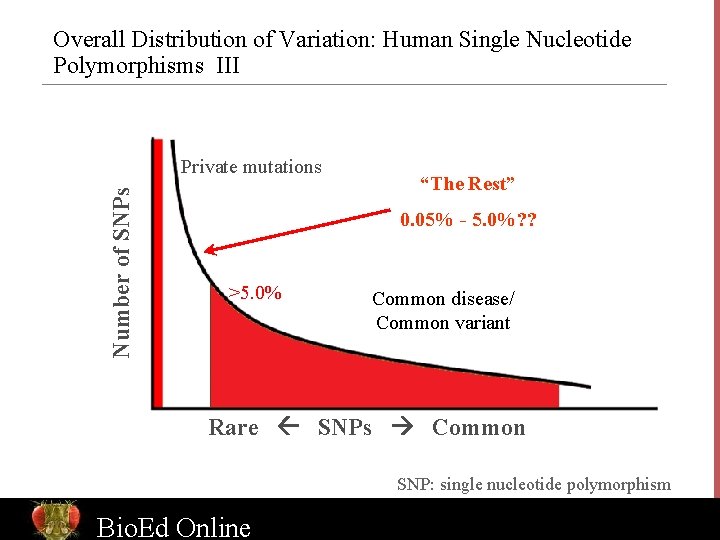
Overall Distribution of Variation: Human Single Nucleotide Polymorphisms III Number of SNPs Private mutations “The Rest” 0. 05% - 5. 0%? ? >5. 0% Common disease/ Common variant Rare SNPs Common SNP: single nucleotide polymorphism Bio. Ed Online
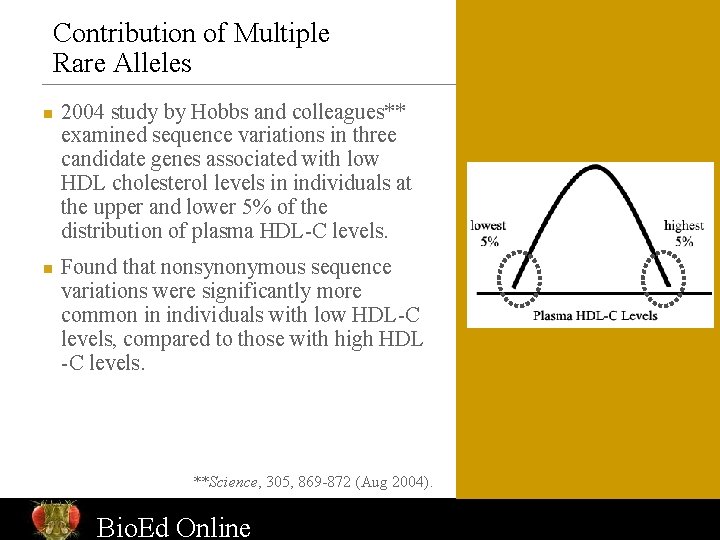
Contribution of Multiple Rare Alleles n n 2004 study by Hobbs and colleagues** examined sequence variations in three candidate genes associated with low HDL cholesterol levels in individuals at the upper and lower 5% of the distribution of plasma HDL-C levels. Found that nonsynonymous sequence variations were significantly more common in individuals with low HDL-C levels, compared to those with high HDL -C levels. **Science, 305, 869 -872 (Aug 2004). Bio. Ed Online
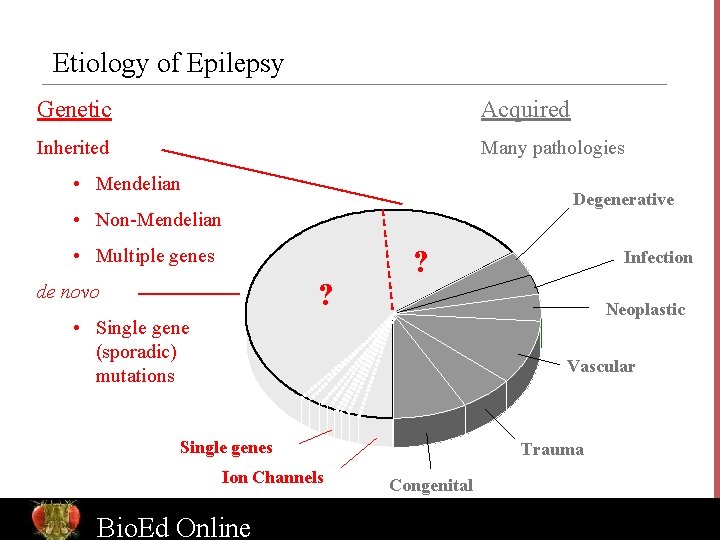
Etiology of Epilepsy Genetic Acquired Inherited Many pathologies • Mendelian Degenerative • Non-Mendelian • Multiple genes ? de novo ? Infection Neoplastic • Single gene (sporadic) mutations Vascular Single genes Ion Channels Bio. Ed Online Trauma Congenital
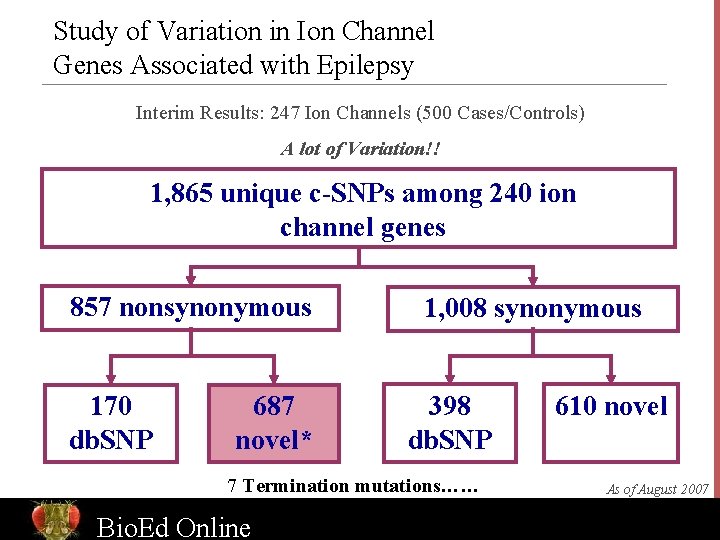
Study of Variation in Ion Channel Genes Associated with Epilepsy Interim Results: 247 Ion Channels (500 Cases/Controls) A lot of Variation!! 1, 865 unique c-SNPs among 240 ion channel genes 857 nonsynonymous 170 db. SNP 687 novel* 1, 008 synonymous 398 db. SNP 7 Termination mutations…… Bio. Ed Online 610 novel As of August 2007
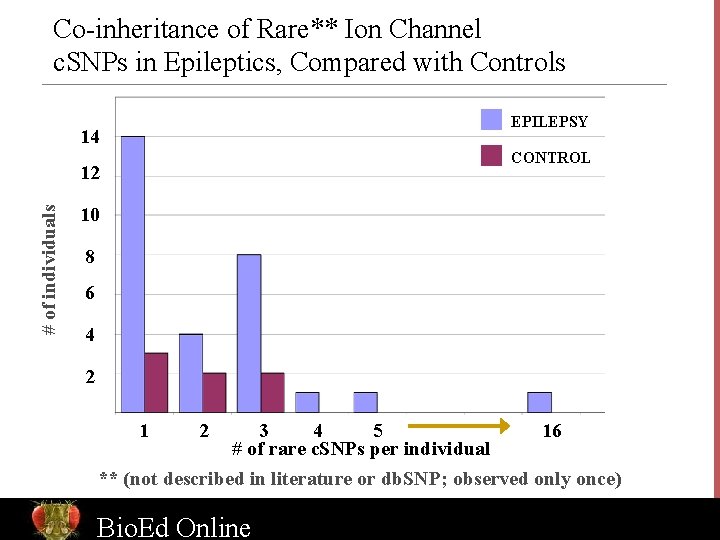
Co-inheritance of Rare** Ion Channel c. SNPs in Epileptics, Compared with Controls EPILEPSY 14 CONTROL # of individuals 12 10 8 6 4 2 1 2 3 4 5 16 # of rare c. SNPs per individual ** (not described in literature or db. SNP; observed only once) Bio. Ed Online
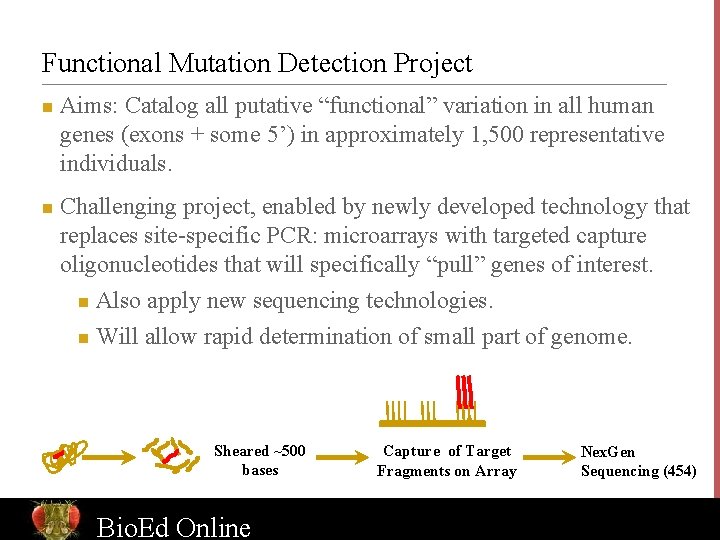
Functional Mutation Detection Project n n Aims: Catalog all putative “functional” variation in all human genes (exons + some 5’) in approximately 1, 500 representative individuals. Challenging project, enabled by newly developed technology that replaces site-specific PCR: microarrays with targeted capture oligonucleotides that will specifically “pull” genes of interest. n Also apply new sequencing technologies. n Will allow rapid determination of small part of genome. Sheared ~500 bases Bio. Ed Online Capture of Target Fragments on Array Nex. Gen Sequencing (454)
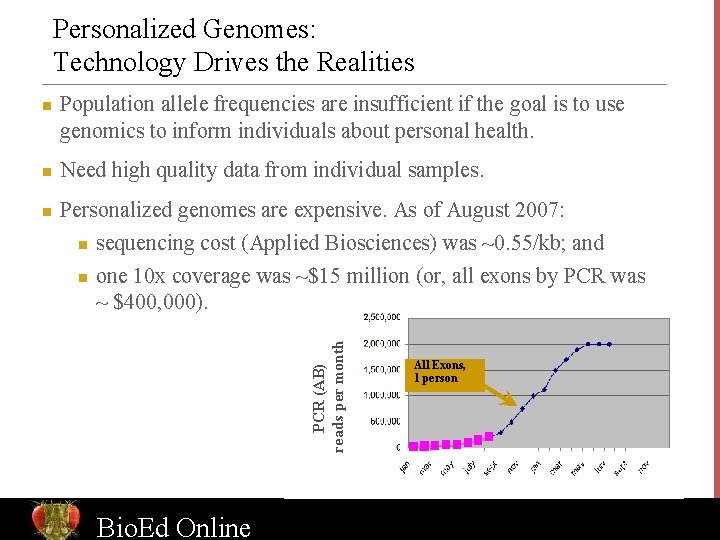
Personalized Genomes: Technology Drives the Realities n Population allele frequencies are insufficient if the goal is to use genomics to inform individuals about personal health. n Need high quality data from individual samples. n Personalized genomes are expensive. As of August 2007: n sequencing cost (Applied Biosciences) was ~0. 55/kb; and one 10 x coverage was ~$15 million (or, all exons by PCR was ~ $400, 000). PCR (AB) reads per month n Bio. Ed Online All Exons, 1 person
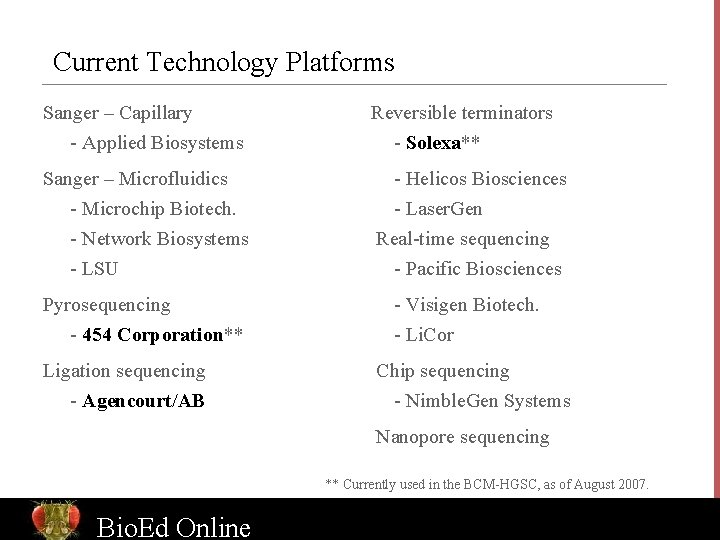
Current Technology Platforms Sanger – Capillary - Applied Biosystems Reversible terminators - Solexa** Sanger – Microfluidics - Microchip Biotech. - Network Biosystems - LSU - Helicos Biosciences - Laser. Gen Real-time sequencing - Pacific Biosciences Pyrosequencing - 454 Corporation** - Visigen Biotech. - Li. Cor Ligation sequencing - Agencourt/AB Chip sequencing - Nimble. Gen Systems Nanopore sequencing ** Currently used in the BCM-HGSC, as of August 2007. Bio. Ed Online
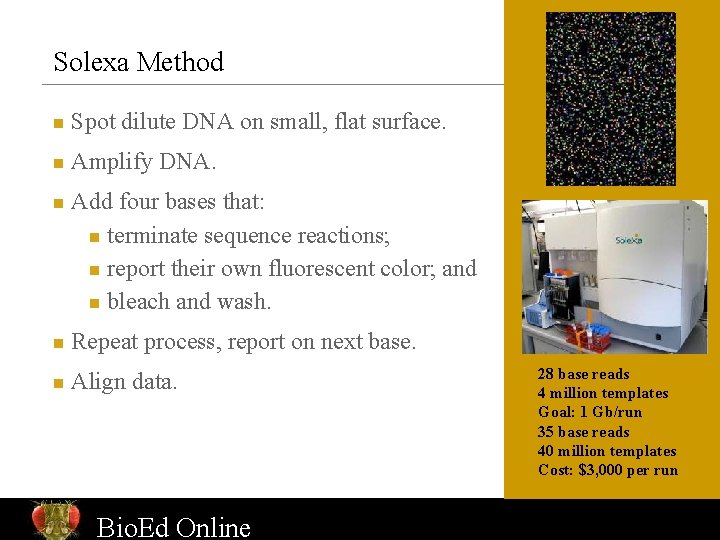
Solexa Method n Spot dilute DNA on small, flat surface. n Amplify DNA. n Add four bases that: n terminate sequence reactions; n report their own fluorescent color; and n bleach and wash. n Repeat process, report on next base. n Align data. Bio. Ed Online 28 base reads 4 million templates Goal: 1 Gb/run 35 base reads 40 million templates Cost: $3, 000 per run
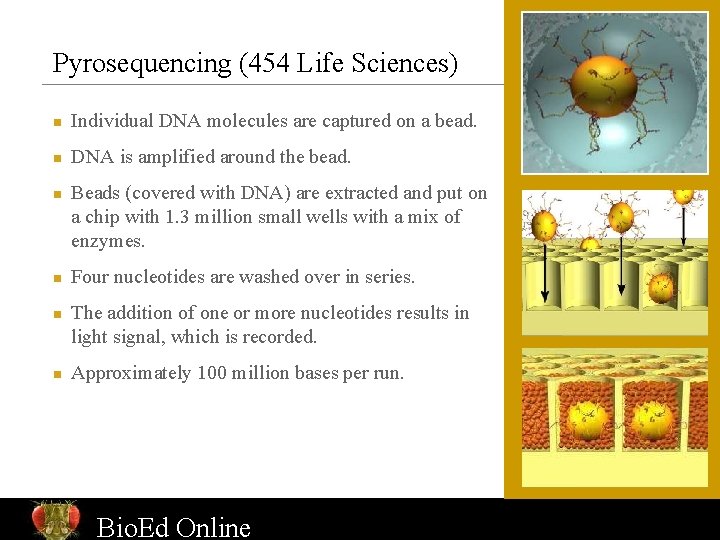
Pyrosequencing (454 Life Sciences) n Individual DNA molecules are captured on a bead. n DNA is amplified around the bead. n n Beads (covered with DNA) are extracted and put on a chip with 1. 3 million small wells with a mix of enzymes. Four nucleotides are washed over in series. The addition of one or more nucleotides results in light signal, which is recorded. Approximately 100 million bases per run. Bio. Ed Online
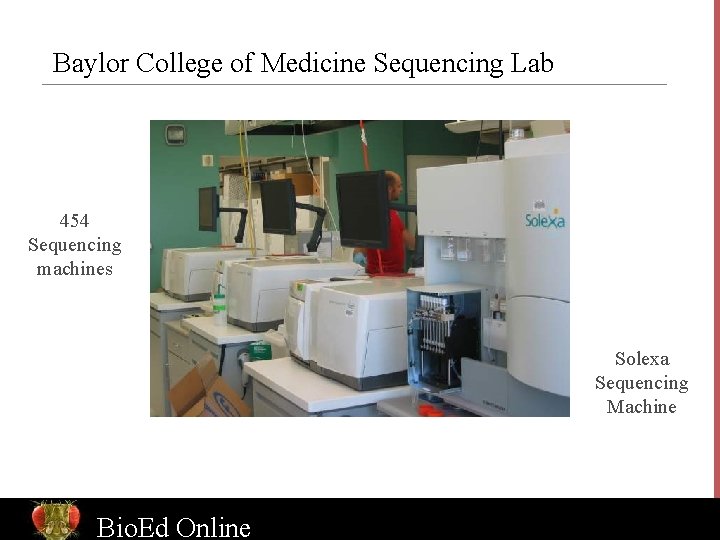
Baylor College of Medicine Sequencing Lab 454 Sequencing machines Solexa Sequencing Machine Bio. Ed Online
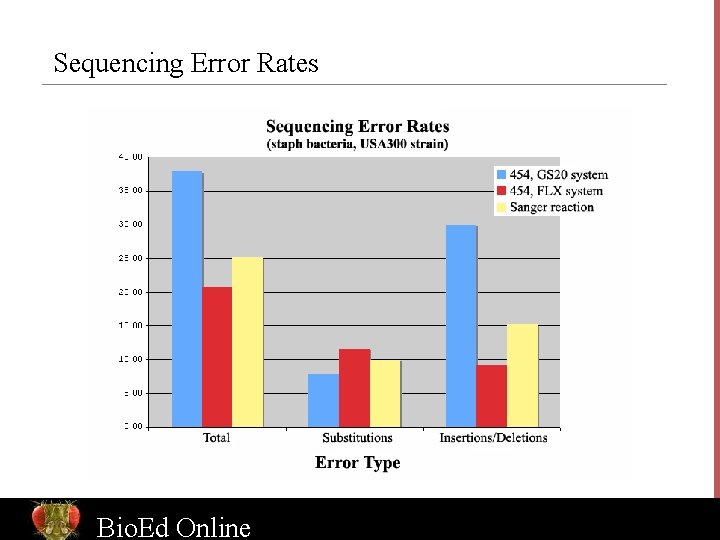
Sequencing Error Rates Bio. Ed Online
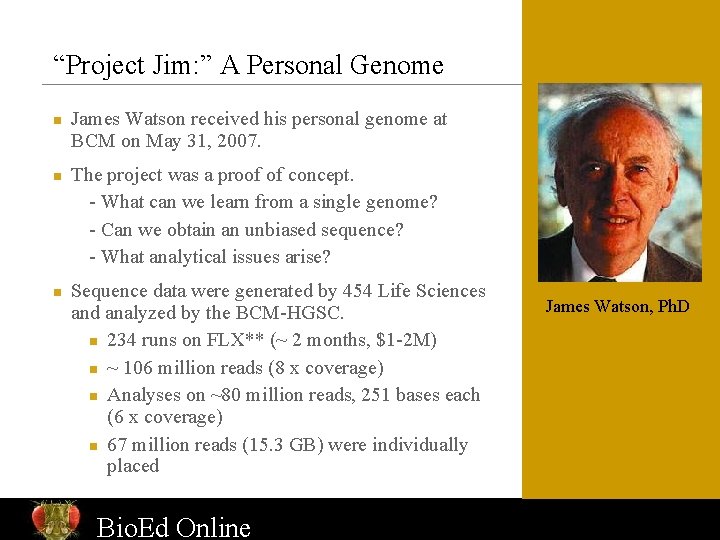
“Project Jim: ” A Personal Genome n n n James Watson received his personal genome at BCM on May 31, 2007. The project was a proof of concept. - What can we learn from a single genome? - Can we obtain an unbiased sequence? - What analytical issues arise? Sequence data were generated by 454 Life Sciences and analyzed by the BCM-HGSC. n 234 runs on FLX** (~ 2 months, $1 -2 M) n ~ 106 million reads (8 x coverage) n Analyses on ~80 million reads, 251 bases each (6 x coverage) n 67 million reads (15. 3 GB) were individually placed Bio. Ed Online James Watson, Ph. D
Ethical Considerations for Data Release n n The release of personalized DNA sequence will cause further loss of privacy and may impact family members. Would you put your DNA sequence on the web? Amy Mc. Guire, JD, Ph. D Bio. Ed Online
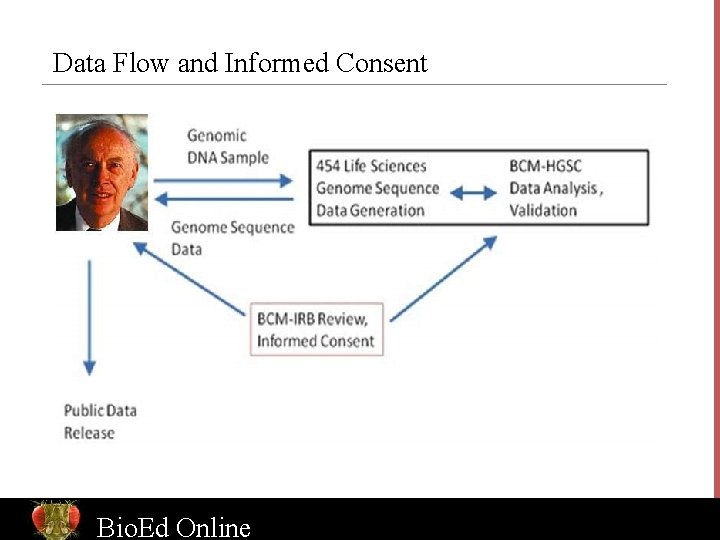
Data Flow and Informed Consent Bio. Ed Online
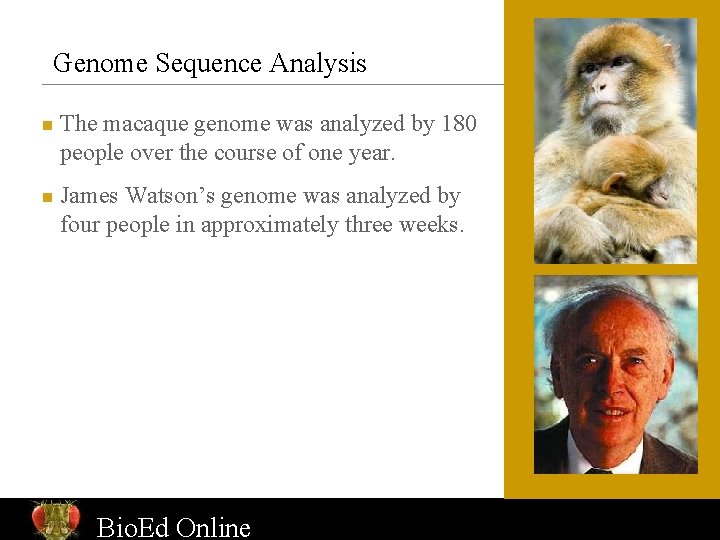
Genome Sequence Analysis n n The macaque genome was analyzed by 180 people over the course of one year. James Watson’s genome was analyzed by four people in approximately three weeks. Bio. Ed Online
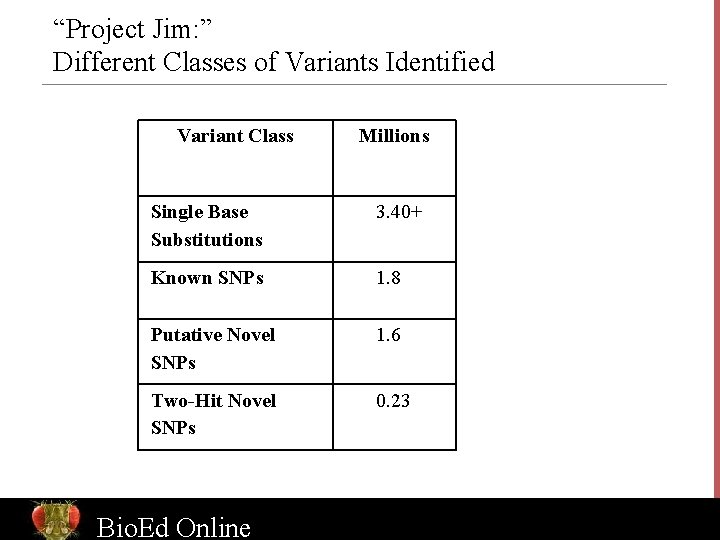
“Project Jim: ” Different Classes of Variants Identified Variant Class Millions Single Base Substitutions 3. 40+ Known SNPs 1. 8 Putative Novel SNPs 1. 6 Two-Hit Novel SNPs 0. 23 Bio. Ed Online
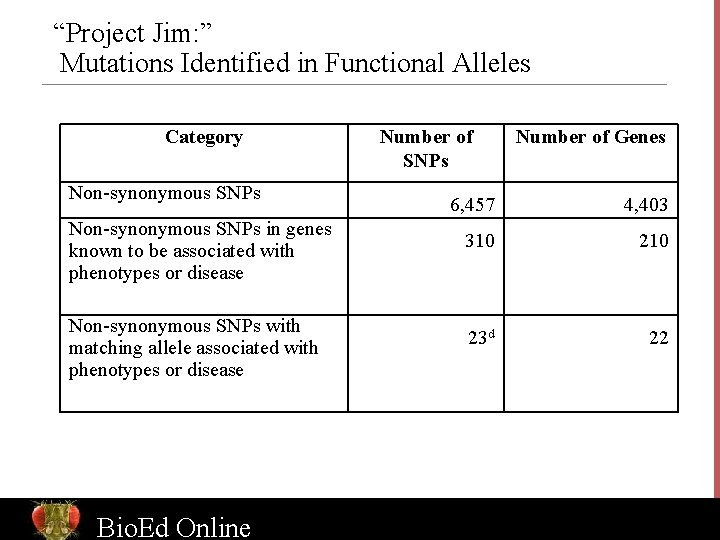
“Project Jim: ” Mutations Identified in Functional Alleles Category Non-synonymous SNPs in genes known to be associated with phenotypes or disease Non-synonymous SNPs with matching allele associated with phenotypes or disease Bio. Ed Online Number of SNPs Number of Genes 6, 457 4, 403 310 23 d 22
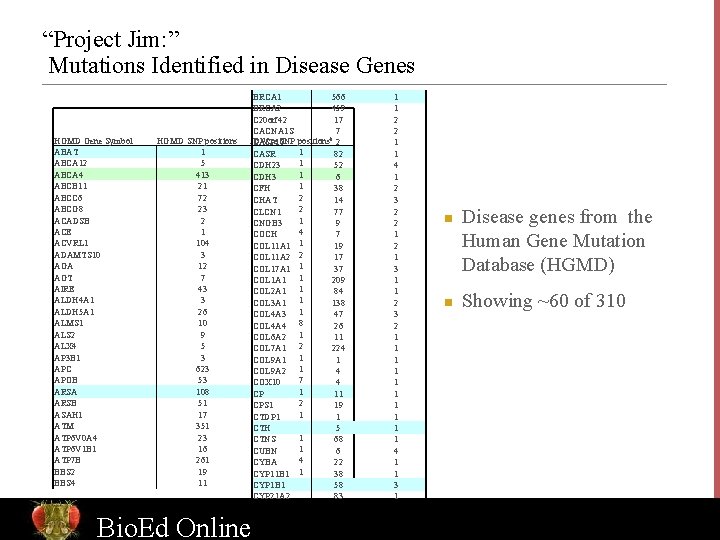
“Project Jim: ” Mutations Identified in Disease Genes HGMD Gene Symbol ABAT ABCA 12 ABCA 4 ABCB 11 ABCC 6 ABCG 8 ACADSB ACE ACVRL 1 ADAMTS 10 AGA AGT AIRE ALDH 4 A 1 ALDH 5 A 1 ALMS 1 ALS 2 ALX 4 AP 3 B 1 APC APOB ARSA ARSB ASAH 1 ATM ATP 6 V 0 A 4 ATP 6 V 1 B 1 ATP 7 B BBS 2 BBS 4 HGMD SNP positions 1 5 413 21 72 23 2 1 104 3 12 7 43 3 26 10 9 5 3 623 53 108 51 17 351 23 16 261 19 11 BRCA 1 566 BRCA 2 459 C 20 orf 42 17 CACNA 1 S 7 JDW ns. SNP positionsb 2 CASP 10 1 CASR 82 1 CDH 23 52 1 CDH 3 6 1 CFH 38 2 CHAT 14 2 CLCN 1 77 1 CNGB 3 9 4 COCH 7 COL 11 A 1 1 19 COL 11 A 2 2 17 COL 17 A 1 1 37 COL 1 A 1 1 209 COL 2 A 1 1 84 COL 3 A 1 1 138 COL 4 A 3 1 47 COL 4 A 4 8 26 COL 6 A 2 1 11 COL 7 A 1 2 224 COL 9 A 1 1 1 COL 9 A 2 1 4 7 COX 10 4 1 CP 11 2 CPS 1 19 1 CTDP 1 1 1 CTH 5 1 CTNS 68 1 CUBN 6 4 CYBA 22 CYP 11 B 1 1 38 1 CYP 1 B 1 58 CYP 21 A 2 83 Bio. Ed Online 1 1 2 2 1 1 4 1 2 3 2 2 1 3 1 1 2 3 2 1 1 1 1 1 4 1 1 3 1 n n Disease genes from the Human Gene Mutation Database (HGMD) Showing ~60 of 310
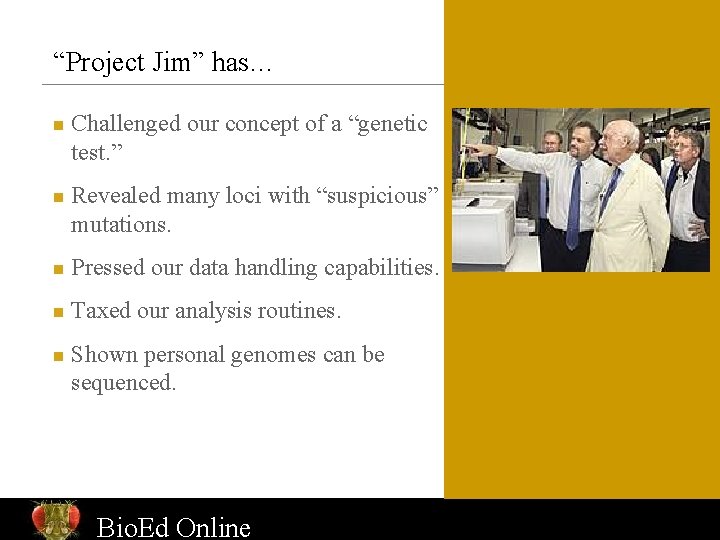
“Project Jim” has… n n Challenged our concept of a “genetic test. ” Revealed many loci with “suspicious” mutations. n Pressed our data handling capabilities. n Taxed our analysis routines. n Shown personal genomes can be sequenced. Bio. Ed Online
To Biobank or Not? n What to Bank? n n n Blood Cells DNA Records? ? Current biobanking project, Bio. Bank Japan, led by Yusuke Nakamura at the University of Tokyo. n Began biobanking as part of the Hap. Map Project. n As of August 2007, more than 115, 000 samples collected from visitors with: n good phenotypic records; and n multiple blood draws. Bio. Ed Online
Pharmacogenomics: An Example n n Anticoagulant drug use frequently aids both the treatment and prevention of disease, but is often accompanied by significant side-effects. There is considerable variability among individuals’ problems associated with—and dose requirements for— anticoagulant use. Studies have shown that both individual and combined polymorphisms influence dose requirements and long-term coagulation response. ** Bio. Bank Japan has initiated testing of individuals for genetic markers associated with coagulation response. **e. g. Clinical Pharmacology & Therapeutics, 80: 13 -22 (July 2006). Bio. Ed Online
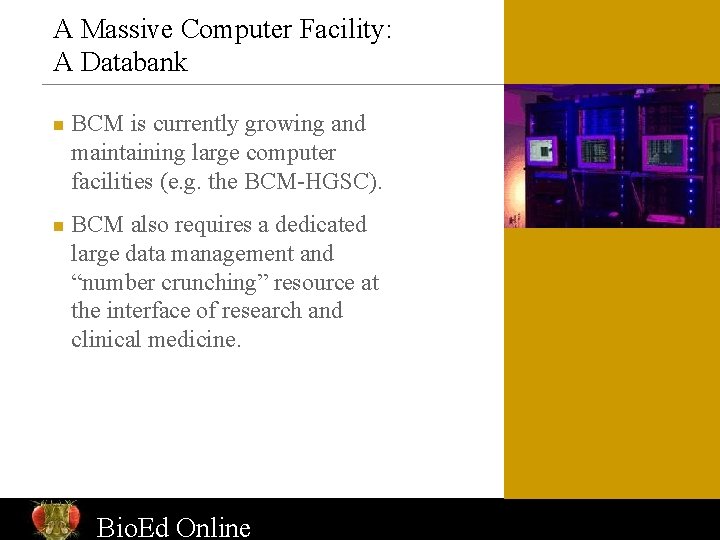
A Massive Computer Facility: A Databank n n BCM is currently growing and maintaining large computer facilities (e. g. the BCM-HGSC). BCM also requires a dedicated large data management and “number crunching” resource at the interface of research and clinical medicine. Bio. Ed Online
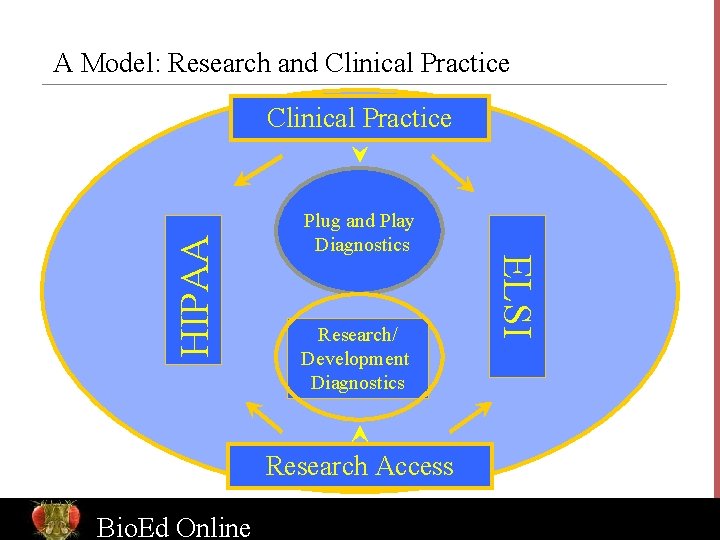
A Model: Research and Clinical Practice Plug and Play Diagnostics Research/ Development Diagnostics Research Access Bio. Ed Online ELSI HIPAA Clinical Practice
Conclusions n TECHNOLOGY Large scale mutation detection improving rapidly. n Databases continuing to fill up. n n MORE IMPORTANTLY n Opportunities to introduce new markers increasing. n Both predicted and new alleles to be tested. Bio. Ed Online
Acknowledgements FUNDING NHGRI NCI (Direct Selection) IDIOPATHEIC EPILEPSY Jeff Nobles Alicia Goldman WATSON PROJECT: 454 LIFE SCIENCES Jonathan Rothberg Michael Egholm Maithreyan Srinivasan CANCER Chuck Brunacardi Bill Fisher Marie-Claude Gingras HGSC George Weinstock Donna Muzny John Mc. Pherson Erica Sodergren Lynne Nazareth Steve Scherer David Parker GENETICS John Belmont James Lupski David Nelson Bio. Ed Online WEST NILE VIRUS David Tweardy DIRECT SELECTION Tom Albert BIOINFORMATICS David Wheeler Kim Worley Jerry Fowler ETHICS Amy Mc. Guire
- Slides: 54