
The Path to Revolution Early Discontent Bacons Rebellion
The Path to Revolution
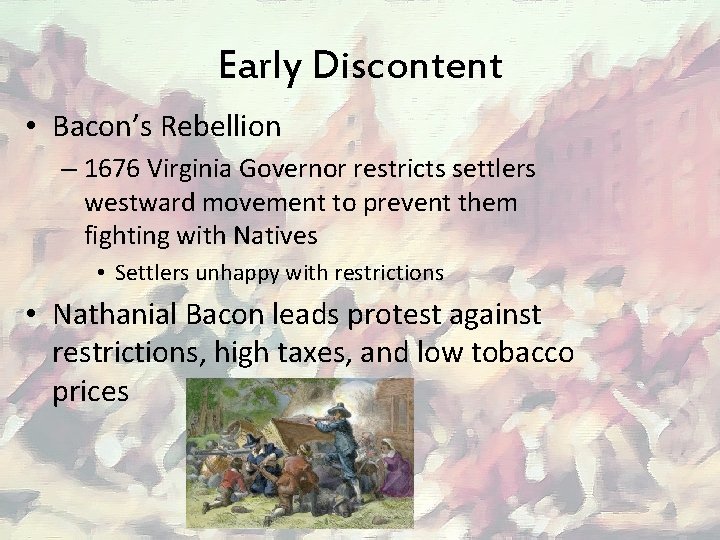
Early Discontent • Bacon’s Rebellion – 1676 Virginia Governor restricts settlers westward movement to prevent them fighting with Natives • Settlers unhappy with restrictions • Nathanial Bacon leads protest against restrictions, high taxes, and low tobacco prices
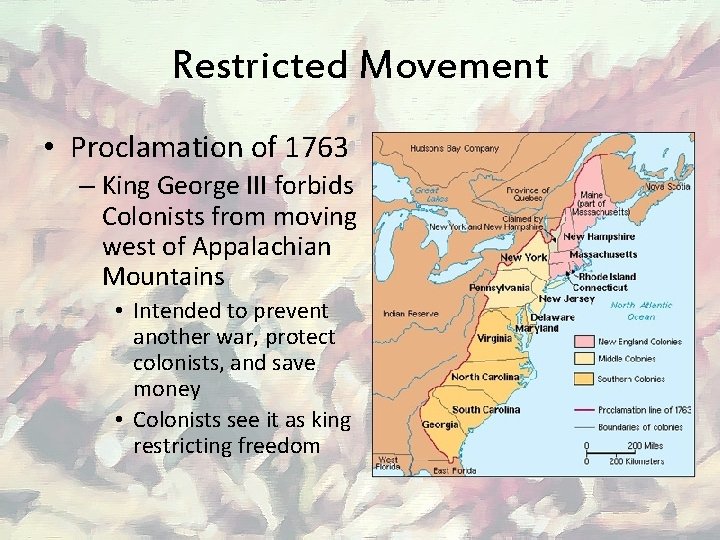
Restricted Movement • Proclamation of 1763 – King George III forbids Colonists from moving west of Appalachian Mountains • Intended to prevent another war, protect colonists, and save money • Colonists see it as king restricting freedom
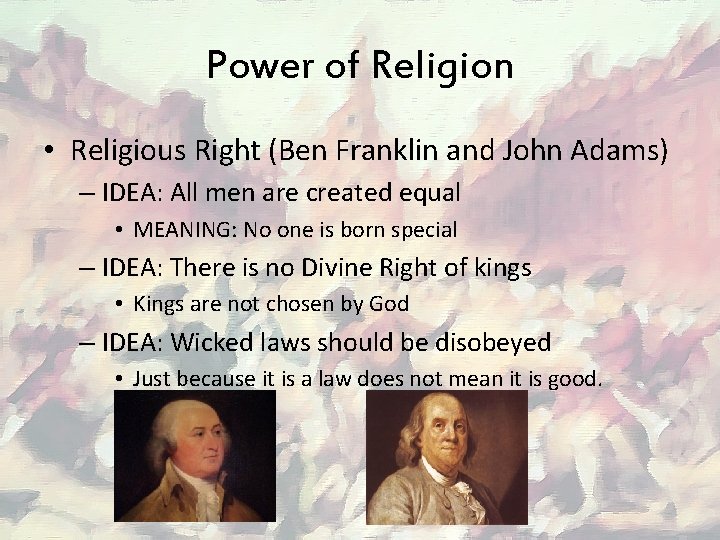
Power of Religion • Religious Right (Ben Franklin and John Adams) – IDEA: All men are created equal • MEANING: No one is born special – IDEA: There is no Divine Right of kings • Kings are not chosen by God – IDEA: Wicked laws should be disobeyed • Just because it is a law does not mean it is good.
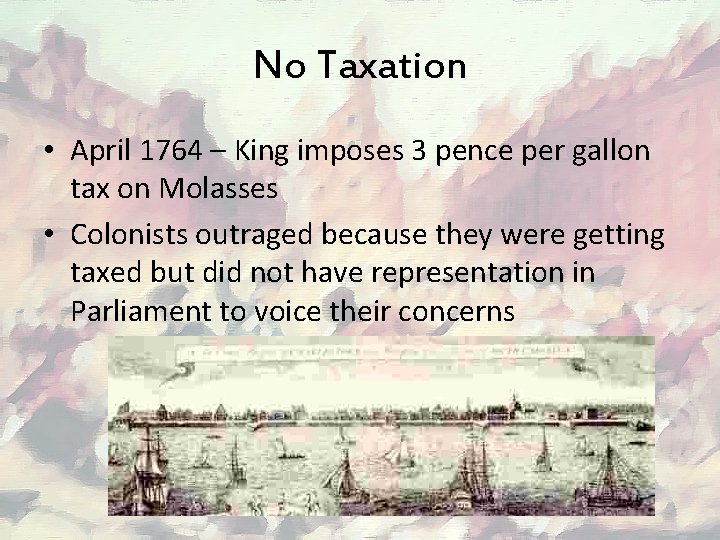
No Taxation • April 1764 – King imposes 3 pence per gallon tax on Molasses • Colonists outraged because they were getting taxed but did not have representation in Parliament to voice their concerns
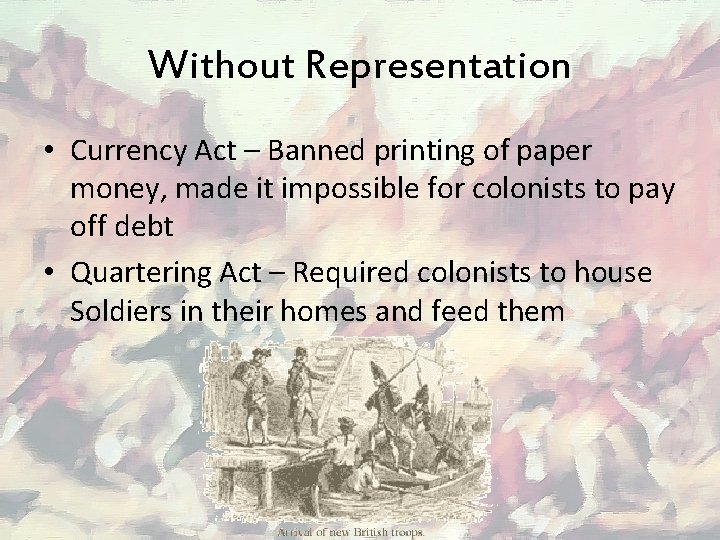
Without Representation • Currency Act – Banned printing of paper money, made it impossible for colonists to pay off debt • Quartering Act – Required colonists to house Soldiers in their homes and feed them
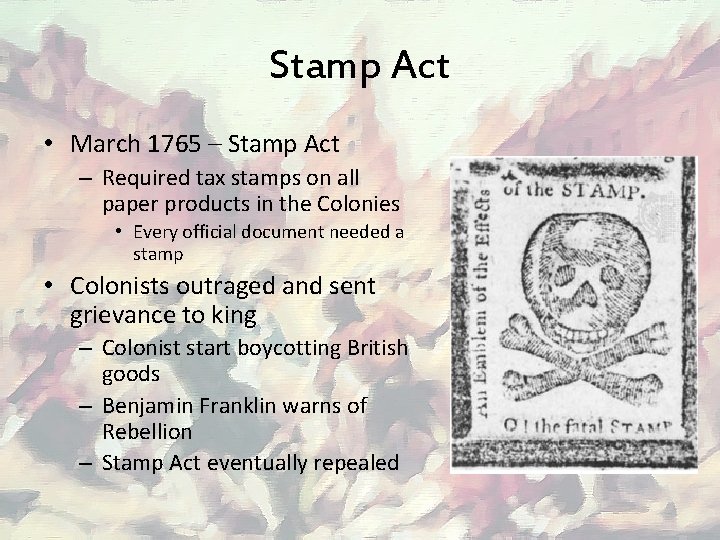
Stamp Act • March 1765 – Stamp Act – Required tax stamps on all paper products in the Colonies • Every official document needed a stamp • Colonists outraged and sent grievance to king – Colonist start boycotting British goods – Benjamin Franklin warns of Rebellion – Stamp Act eventually repealed
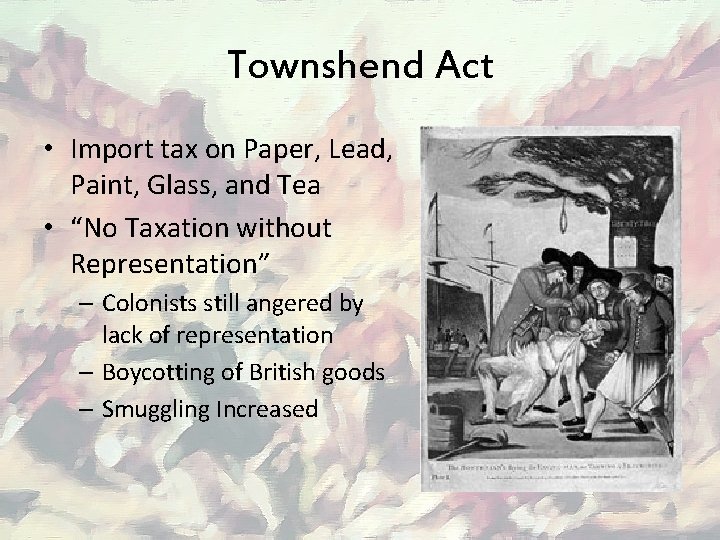
Townshend Act • Import tax on Paper, Lead, Paint, Glass, and Tea • “No Taxation without Representation” – Colonists still angered by lack of representation – Boycotting of British goods – Smuggling Increased

First Bloodshed • March 5, 1770 – Colonists protesting outside customs house in Boston start throwing snow and rocks at soldiers – Soldiers open fire killing 5 colonists – Event called “Boston Massacre”
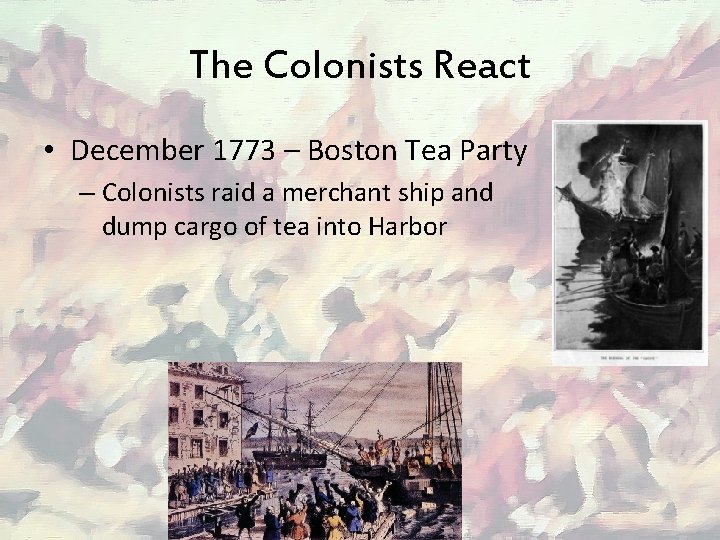
The Colonists React • December 1773 – Boston Tea Party – Colonists raid a merchant ship and dump cargo of tea into Harbor

The British React • The Intolerable Act – Massachusetts Government Act – Restricted Town Hall meetings – Administration of Justice Act – All British Soldiers who committed a crime were tried in Britain. – Boston Port Act – Closed Boston harbor till the cost of the tea was repaid – Quartering Act of 1774 – Governors could place soldiers in homes without consent of homeowner.

Colonists Re-React • Meeting of the Continental Congress (Sept 1774) – Argued whether to fix relations with England or attempt to establish a new government – Decided to stop all trade with Britain
Homework Questions 1. Which of the “Acts” would YOU have had the most problems with? Which would you not have followed? WHY? 2. Why did Britain tax the colonists?
- Slides: 13