
The path to citizenship in Europe The hidden
- Slides: 20
The path to citizenship in Europe: The hidden obstacles that influence immigrants’ interests and ability to naturalise Thomas HUDDLESTON Research Director Migration Policy Group
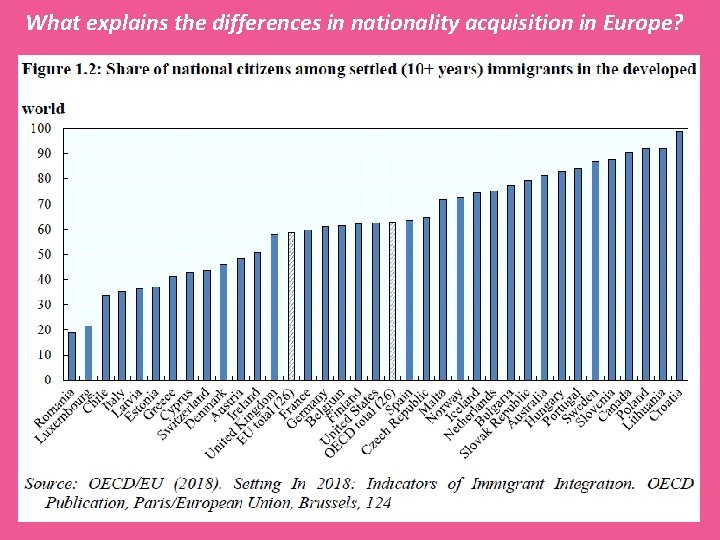
What explains the differences in nationality acquisition in Europe?
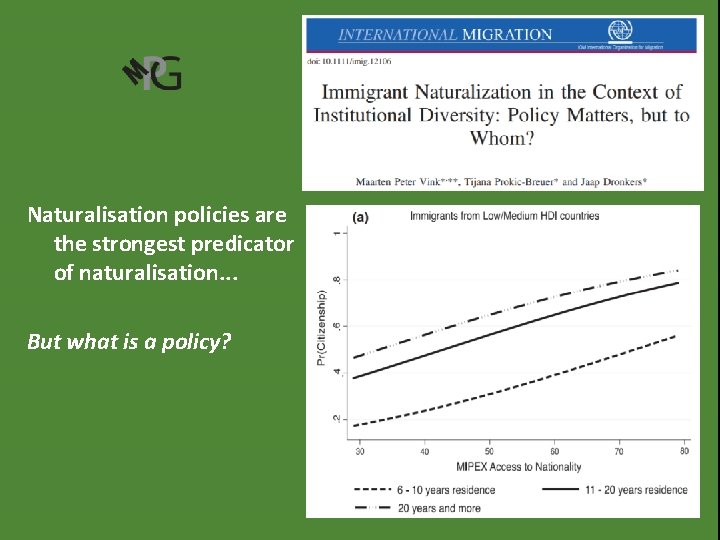
Naturalisation policies are the strongest predicator of naturalisation. . . But what is a policy?
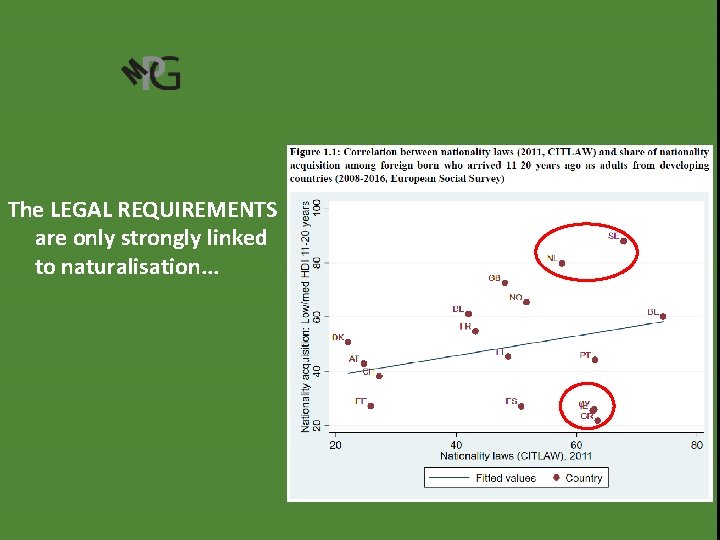
The LEGAL REQUIREMENTS are only strongly linked to naturalisation. . .
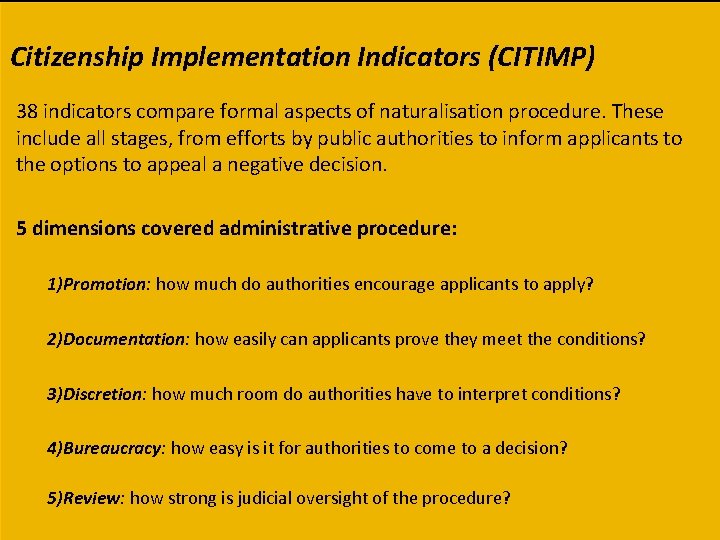
Citizenship Implementation Indicators (CITIMP) 38 indicators compare formal aspects of naturalisation procedure. These include all stages, from efforts by public authorities to inform applicants to the options to appeal a negative decision. 5 dimensions covered administrative procedure: 1)Promotion: how much do authorities encourage applicants to apply? 2)Documentation: how easily can applicants prove they meet the conditions? 3)Discretion: how much room do authorities have to interpret conditions? 4)Bureaucracy: how easy is it for authorities to come to a decision? 5)Review: how strong is judicial oversight of the procedure?
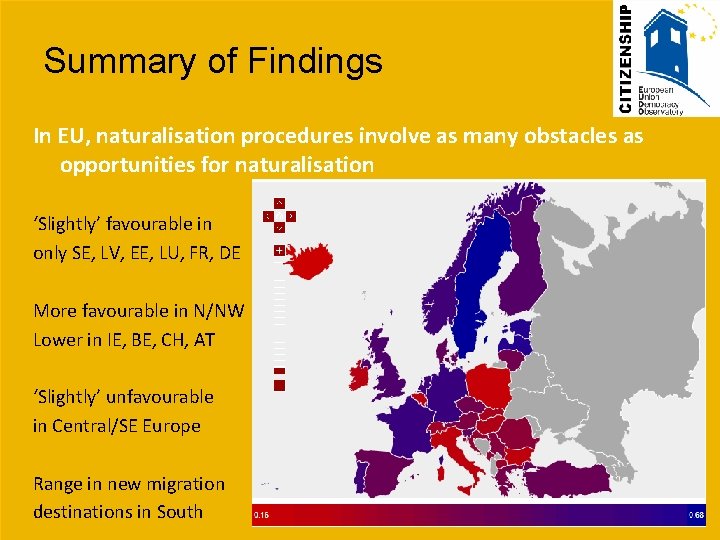
Summary of Findings In EU, naturalisation procedures involve as many obstacles as opportunities for naturalisation ‘Slightly’ favourable in only SE, LV, EE, LU, FR, DE More favourable in N/NW Lower in IE, BE, CH, AT ‘Slightly’ unfavourable in Central/SE Europe Range in new migration destinations in South
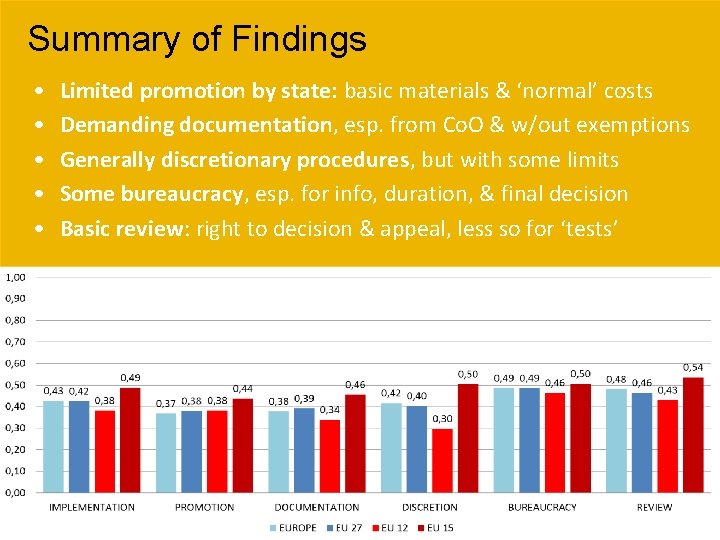
Summary of Findings • • • Limited promotion by state: basic materials & ‘normal’ costs Demanding documentation, esp. from Co. O & w/out exemptions Generally discretionary procedures, but with some limits Some bureaucracy, esp. for info, duration, & final decision Basic review: right to decision & appeal, less so for ‘tests’
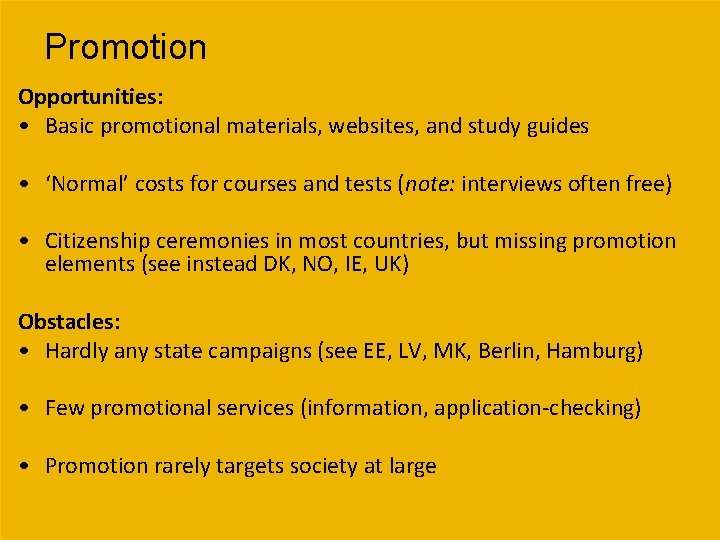
Promotion Opportunities: • Basic promotional materials, websites, and study guides • ‘Normal’ costs for courses and tests (note: interviews often free) • Citizenship ceremonies in most countries, but missing promotion elements (see instead DK, NO, IE, UK) Obstacles: • Hardly any state campaigns (see EE, LV, MK, Berlin, Hamburg) • Few promotional services (information, application-checking) • Promotion rarely targets society at large
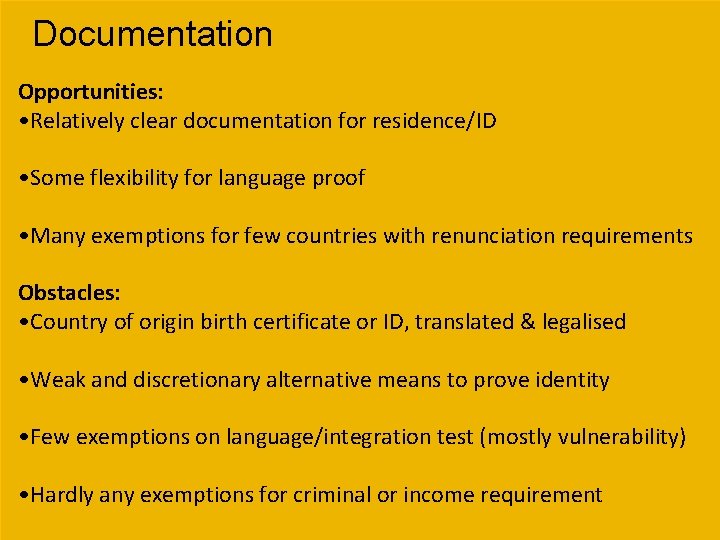
Documentation Opportunities: • Relatively clear documentation for residence/ID • Some flexibility for language proof • Many exemptions for few countries with renunciation requirements Obstacles: • Country of origin birth certificate or ID, translated & legalised • Weak and discretionary alternative means to prove identity • Few exemptions on language/integration test (mostly vulnerability) • Hardly any exemptions for criminal or income requirement
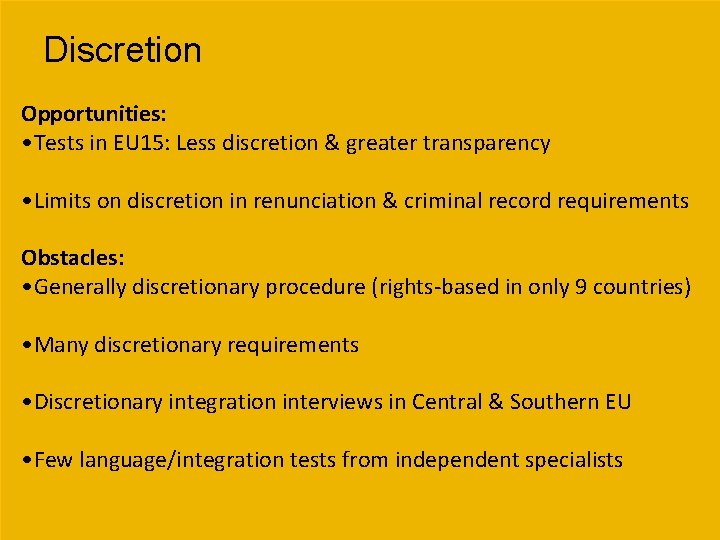
Discretion Opportunities: • Tests in EU 15: Less discretion & greater transparency • Limits on discretion in renunciation & criminal record requirements Obstacles: • Generally discretionary procedure (rights-based in only 9 countries) • Many discretionary requirements • Discretionary integration interviews in Central & Southern EU • Few language/integration tests from independent specialists
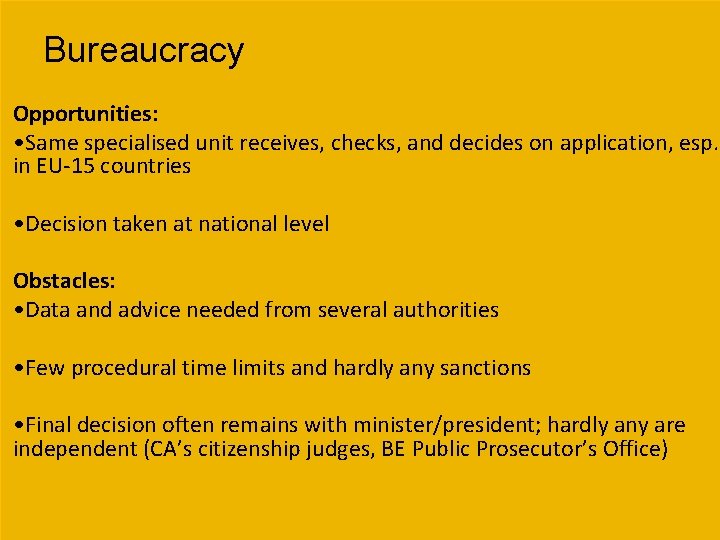
Bureaucracy Opportunities: • Same specialised unit receives, checks, and decides on application, esp. in EU-15 countries • Decision taken at national level Obstacles: • Data and advice needed from several authorities • Few procedural time limits and hardly any sanctions • Final decision often remains with minister/president; hardly any are independent (CA’s citizenship judges, BE Public Prosecutor’s Office)
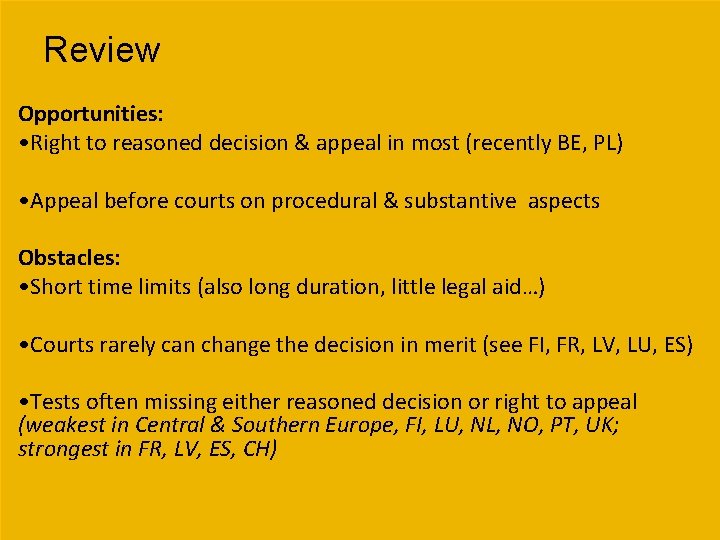
Review Opportunities: • Right to reasoned decision & appeal in most (recently BE, PL) • Appeal before courts on procedural & substantive aspects Obstacles: • Short time limits (also long duration, little legal aid…) • Courts rarely can change the decision in merit (see FI, FR, LV, LU, ES) • Tests often missing either reasoned decision or right to appeal (weakest in Central & Southern Europe, FI, LU, NL, NO, PT, UK; strongest in FR, LV, ES, CH)
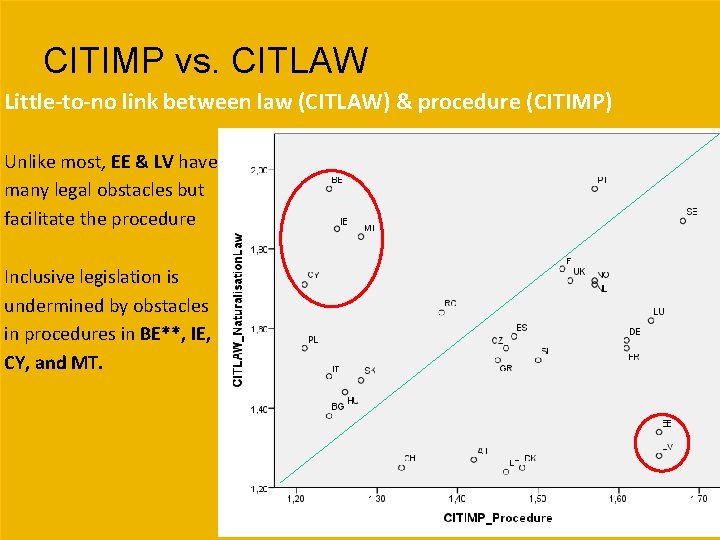
CITIMP vs. CITLAW Little-to-no link between law (CITLAW) & procedure (CITIMP) Unlike most, EE & LV have many legal obstacles but facilitate the procedure Inclusive legislation is undermined by obstacles in procedures in BE**, IE, CY, and MT.
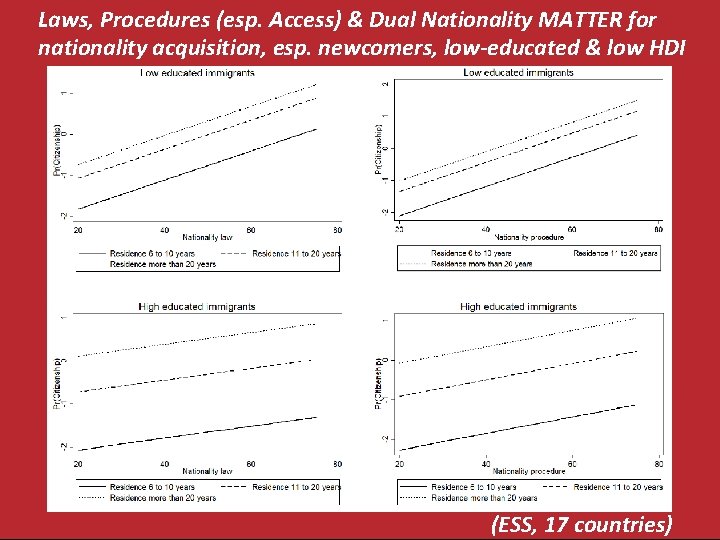
Laws, Procedures (esp. Access) & Dual Nationality MATTER for nationality acquisition, esp. newcomers, low-educated & low HDI (ESS, 17 countries)
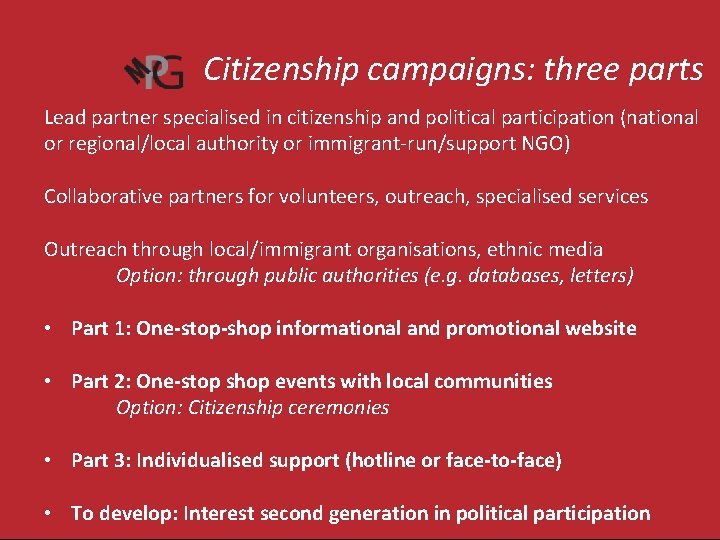
Citizenship campaigns: three parts Lead partner specialised in citizenship and political participation (national or regional/local authority or immigrant-run/support NGO) Collaborative partners for volunteers, outreach, specialised services Outreach through local/immigrant organisations, ethnic media Option: through public authorities (e. g. databases, letters) • Part 1: One-stop-shop informational and promotional website • Part 2: One-stop shop events with local communities Option: Citizenship ceremonies • Part 3: Individualised support (hotline or face-to-face) • To develop: Interest second generation in political participation
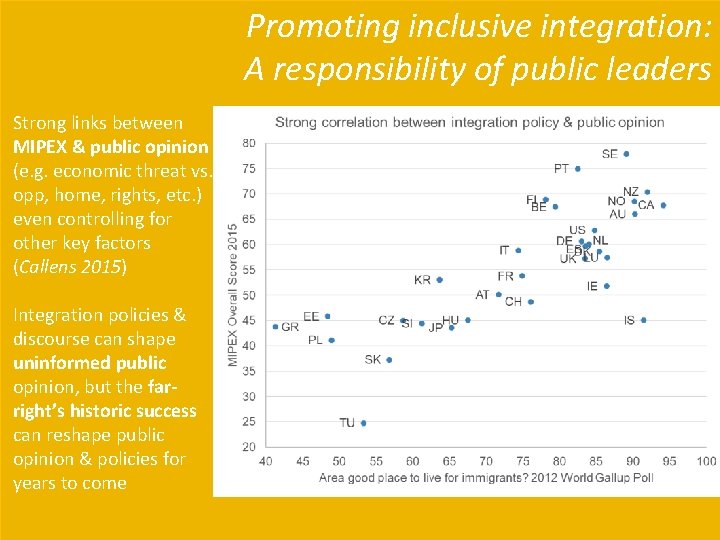
Promoting inclusive integration: A responsibility of public leaders Strong links between MIPEX & public opinion (e. g. economic threat vs. opp, home, rights, etc. ) even controlling for other key factors (Callens 2015) Integration policies & discourse can shape uninformed public opinion, but the farright’s historic success can reshape public opinion & policies for years to come
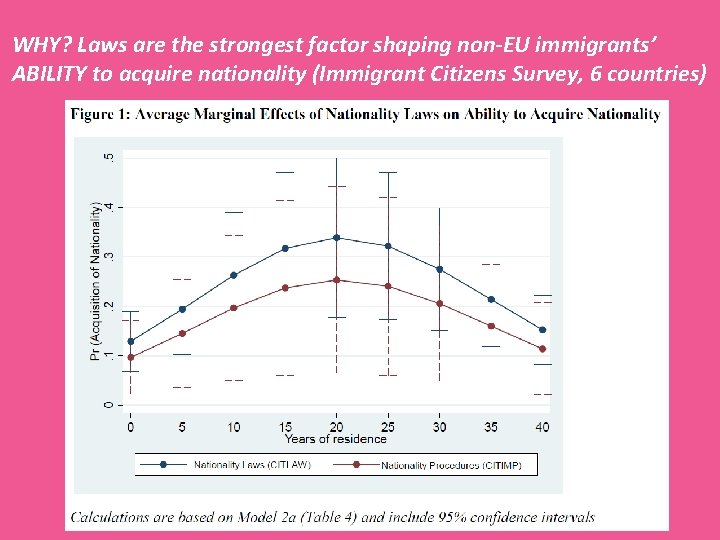
WHY? Laws are the strongest factor shaping non-EU immigrants’ ABILITY to acquire nationality (Immigrant Citizens Survey, 6 countries)
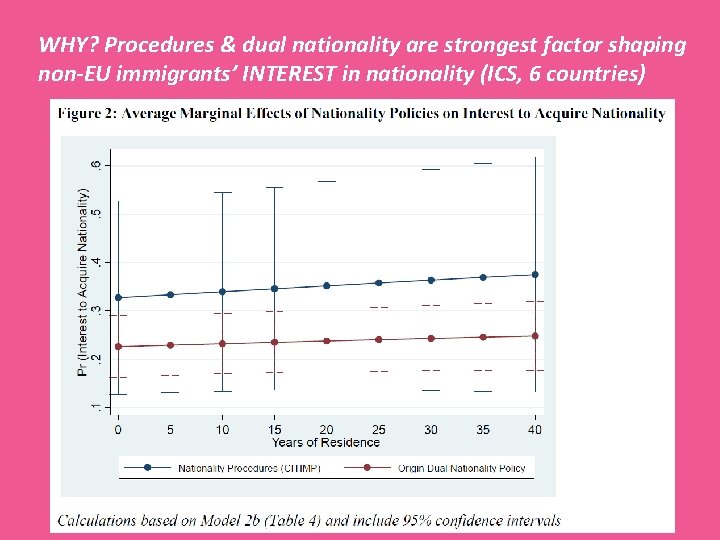
WHY? Procedures & dual nationality are strongest factor shaping non-EU immigrants’ INTEREST in nationality (ICS, 6 countries)
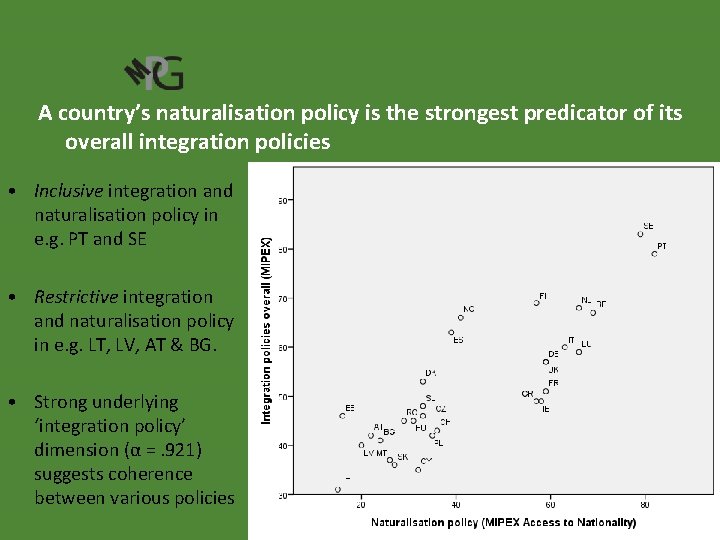
A country’s naturalisation policy is the strongest predicator of its overall integration policies • Inclusive integration and naturalisation policy in e. g. PT and SE • Restrictive integration and naturalisation policy in e. g. LT, LV, AT & BG. • Strong underlying ‘integration policy’ dimension (α =. 921) suggests coherence between various policies
• Strong coherence between various integration policies, with citizenship policy as core predictor of a country’s overall approach to integration. • Long-term residence as ‘substitute’ for citizenship? Yes, in new countries of migration but not in rest of Europe where we find a positive relation. • No contradiction between political rights & naturalisation: actually, the opposite! • Related to strong laws for equal treatment & against nationality discrimination • Link with targeted support to improve immigrants’ education, labour market position, and political participation • More research necessary on impact of integration procedures on outcomes!