
The Past Simple Simple Past Timeline Beginning in
The Past Simple
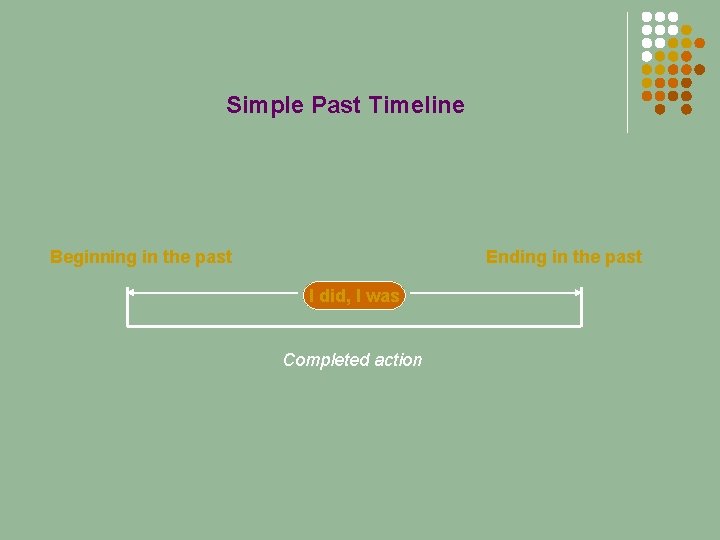
Simple Past Timeline Beginning in the past Ending in the past I did, I was Completed action
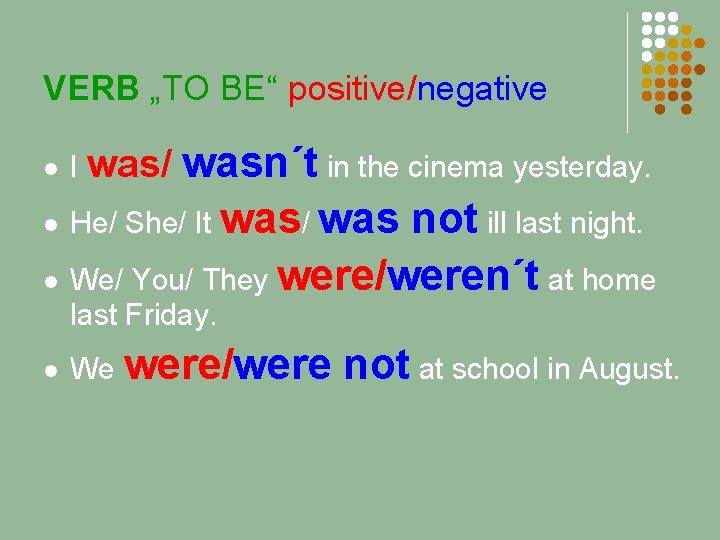
VERB „TO BE“ positive/negative wasn´t in the cinema yesterday. l He/ She/ It was/ was not ill last night. l We/ You/ They were/weren´t at home l I was/ last Friday. l We were/were not at school in August.
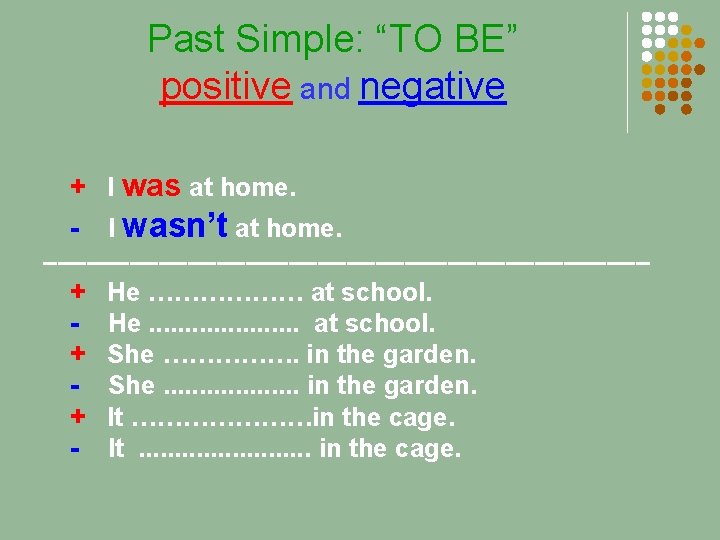
Past Simple: “TO BE” positive and negative + I was at home. - I wasn’t at home. ––––––––––––––––––––– + He ……………… at school. - He. . . . . at school. + She ……………. in the garden. - She. . . . . in the garden. + It …………………in the cage. - It. . . in the cage.
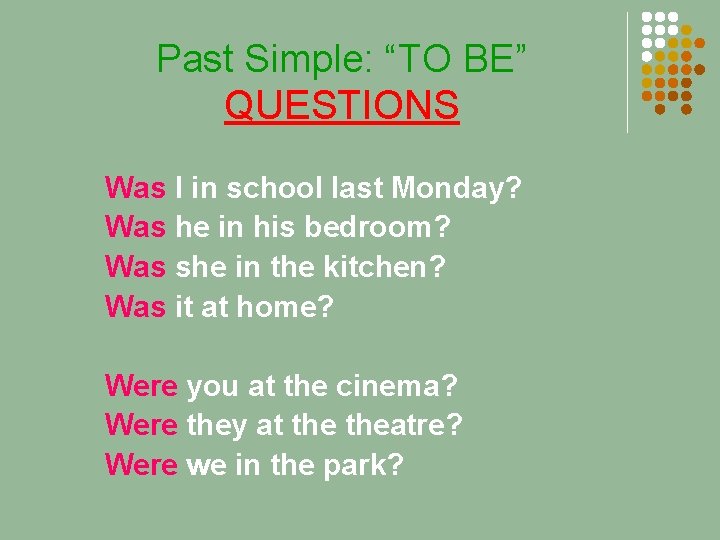
Past Simple: “TO BE” QUESTIONS Was I in school last Monday? Was he in his bedroom? Was she in the kitchen? Was it at home? Were you at the cinema? Were they at theatre? Were we in the park?
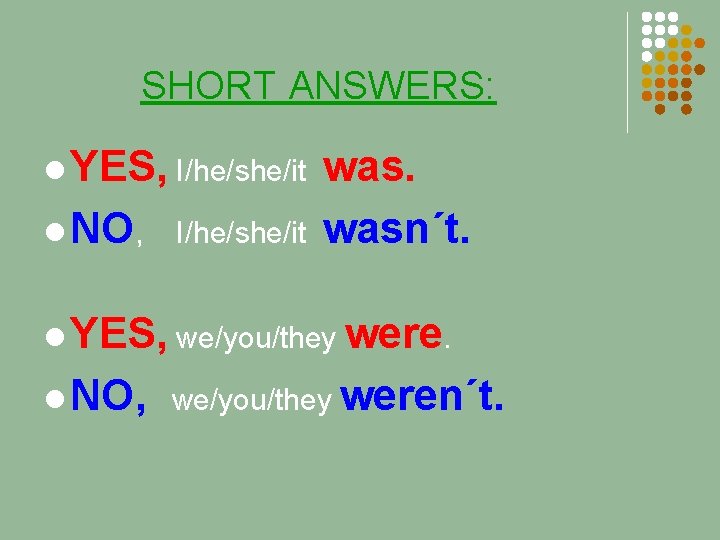
SHORT ANSWERS: l YES, I/he/she/it l NO, I/he/she/it wasn´t. l YES, we/you/they were. l NO, we/you/they weren´t.
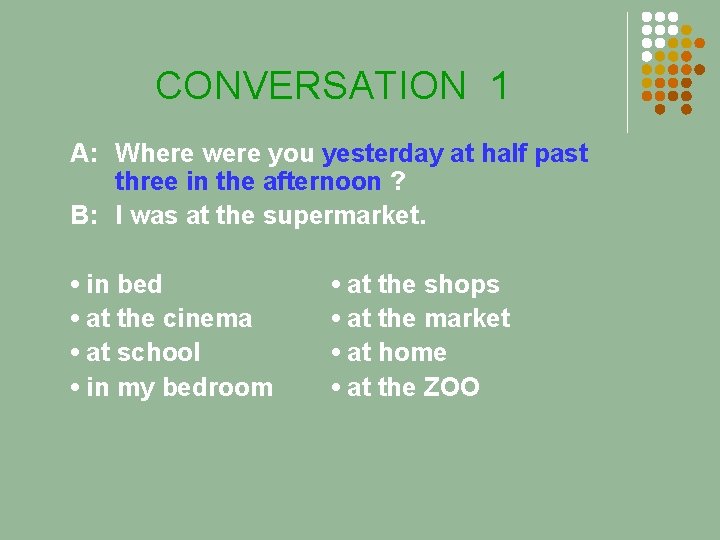
CONVERSATION 1 A: Where were you yesterday at half past three in the afternoon ? B: I was at the supermarket. • in bed • at the cinema • at school • in my bedroom • at the shops • at the market • at home • at the ZOO
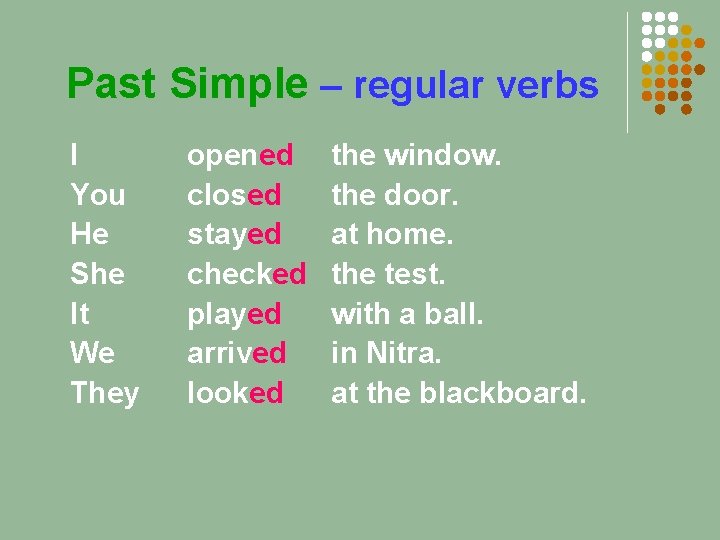
Past Simple – regular verbs I You He She It We They opened closed stayed checked played arrived looked the window. the door. at home. the test. with a ball. in Nitra. at the blackboard.
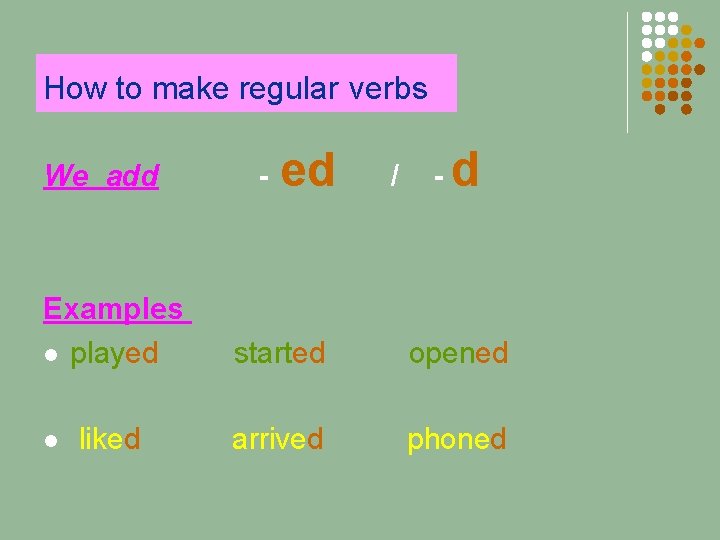
How to make regular verbs We add - eded/ - dd Examples l played started opened liked arrived phoned l
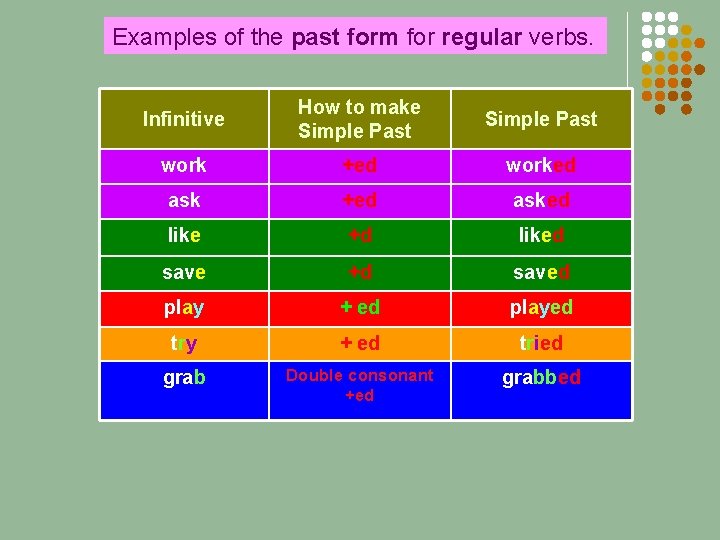
Examples of the past form for regular verbs. Infinitive How to make Simple Past work +ed worked ask +ed asked like +d liked save +d saved play + ed played try + ed tried grab Double consonant +ed grabbed
![[d] [t] [id] l played Peter played ice - hockey yesterday. [plejd] l stopped](http://slidetodoc.com/presentation_image_h2/72d879ad952d7a24880dbcbfce2007c3/image-11.jpg "[d] [t] [id] l played Peter played ice - hockey yesterday. [plejd] l stopped")
[d] [t] [id] l played Peter played ice - hockey yesterday. [plejd] l stopped It stopped in the street. [stopt] l wanted She wanted a new skirt. [wôntid]
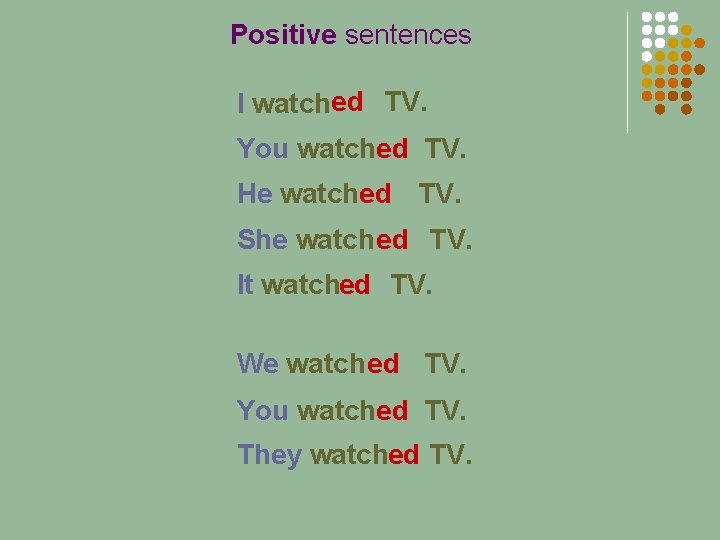
Positive sentences I watched TV. You watched TV. He watched TV. She watched TV. It watched TV. We watched TV. You watched TV. They watched TV.
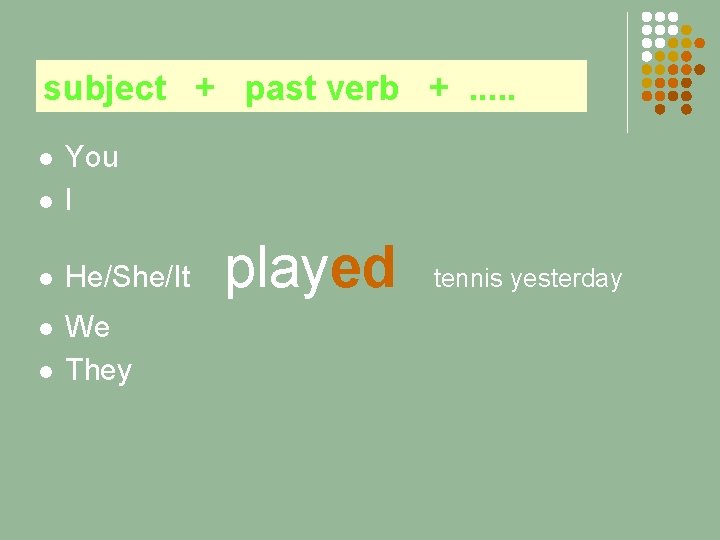
subject + past verb +. . . l You I l He/She/It l We They l l played tennis yesterday
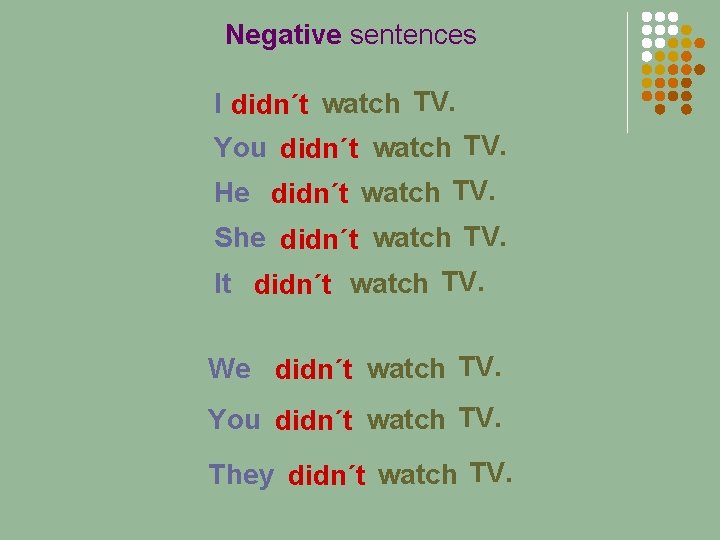
Negative sentences I didn´t watch TV. You didn´t watch TV. He didn´t watch TV. She didn´t watch TV. It didn´t watch TV. We didn´t watch TV. You didn´t watch TV. They didn´t watch TV.

Subject + didn´t + infinitive +. . . l l l I You He/She/It didn´t play l l l We You They tennis yesterday.

Questions and short answers Did I watch TV ? Did you watch TV ? Did he watch TV ? Did she watch TV ? Yes, he did. No, he didn´t. Did it watch TV ? Did we watch TV ? Did you watch TV ? Did they watch TV ? Yes, we did. No, we didn´t.
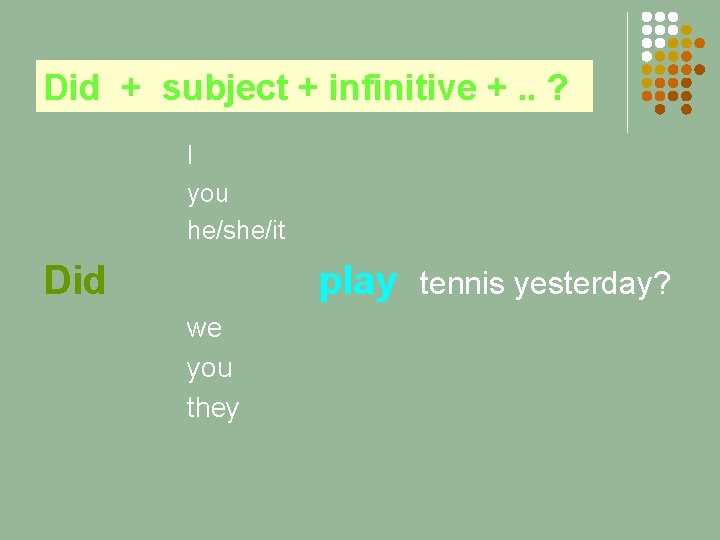
Did + subject + infinitive +. . ? I you he/she/it Did play we you they tennis yesterday?
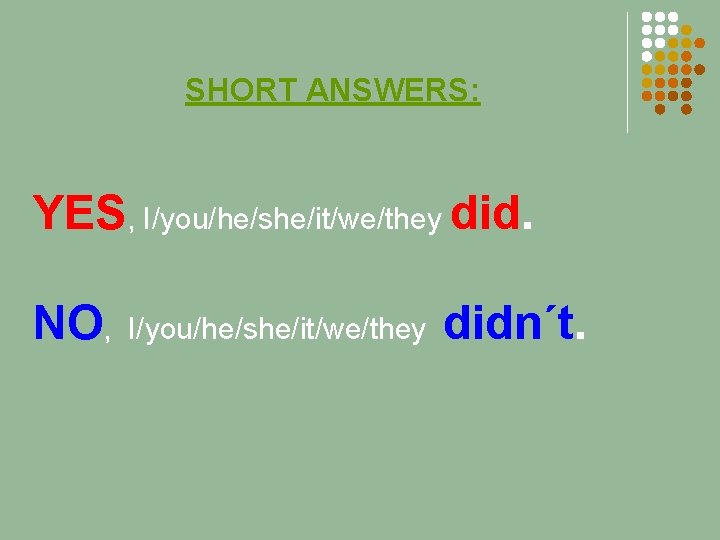
SHORT ANSWERS: YES, I/you/he/she/it/we/they did. NO, I/you/he/she/it/we/they didn´t.
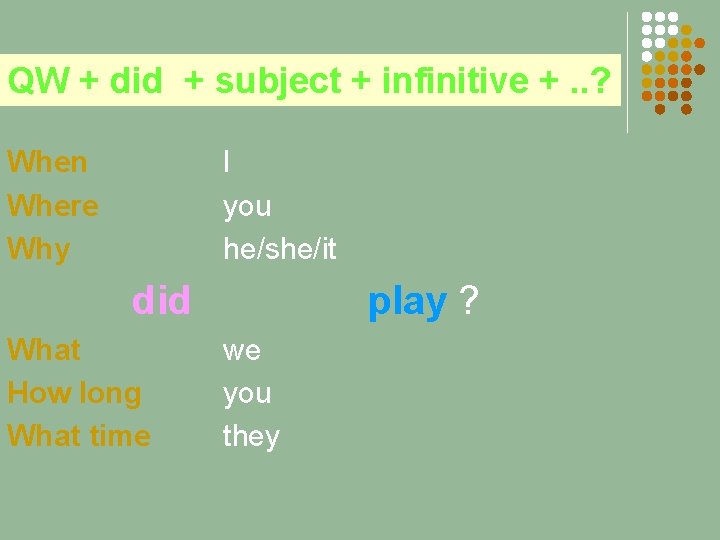
QW + did + subject + infinitive +. . ? When Where Why I you he/she/it did What How long What time play ? we you they
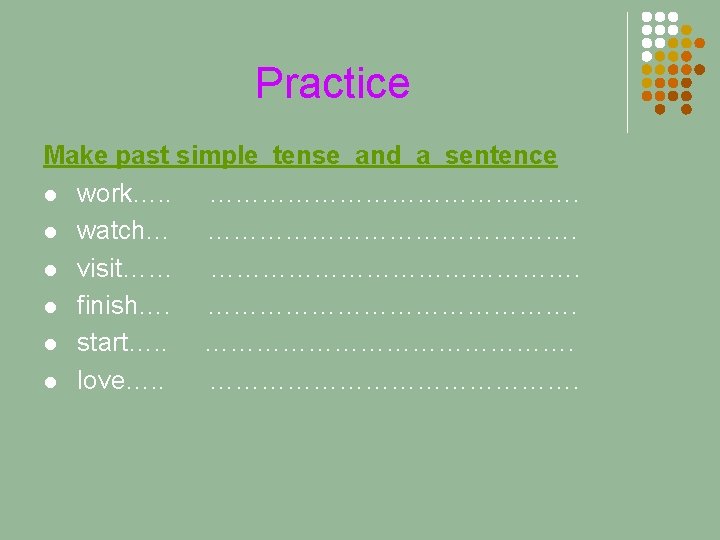
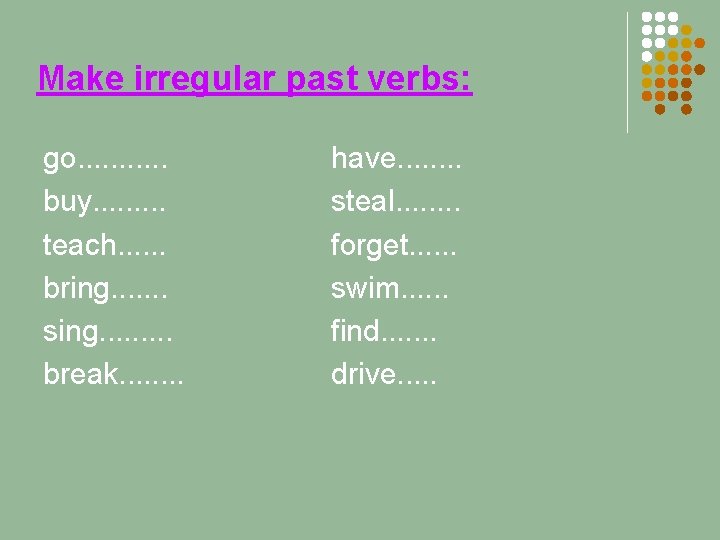
Make irregular past verbs: go. . . buy. . teach. . . bring. . . . sing. . break. . . . have. . . . steal. . . . forget. . . swim. . . find. . . . drive. . .
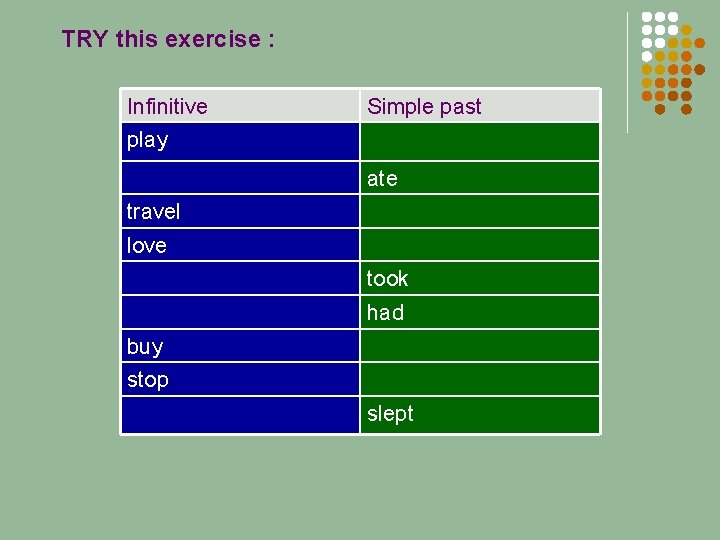
TRY this exercise : Infinitive Simple past play ate travel love took had buy stop slept
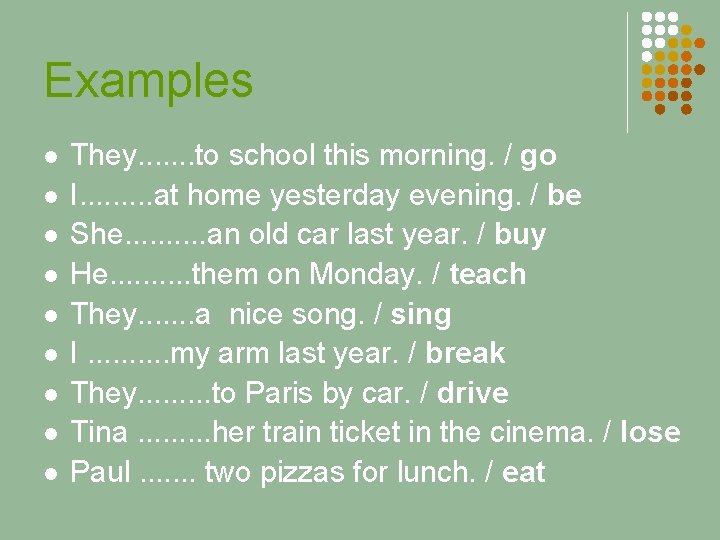
Examples l l l l l They. . . . to school this morning. / go I. . at home yesterday evening. / be She. . an old car last year. / buy He. . them on Monday. / teach They. . . . a nice song. / sing I. . my arm last year. / break They. . to Paris by car. / drive Tina. . her train ticket in the cinema. / lose Paul. . . . two pizzas for lunch. / eat

PAST SIMPLE It is used to express: an action which happened and finished at a particular time in the past Useful words – time expressions: • yesterday • last year, last month • two days ago • in September, in 1998 • in January • when I was a child
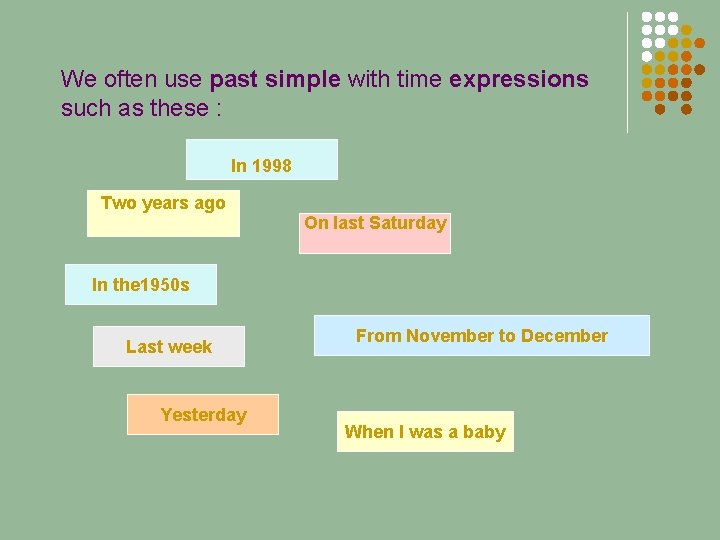
We often use past simple with time expressions such as these : In 1998 Two years ago On last Saturday In the 1950 s Last week Yesterday From November to December When I was a baby
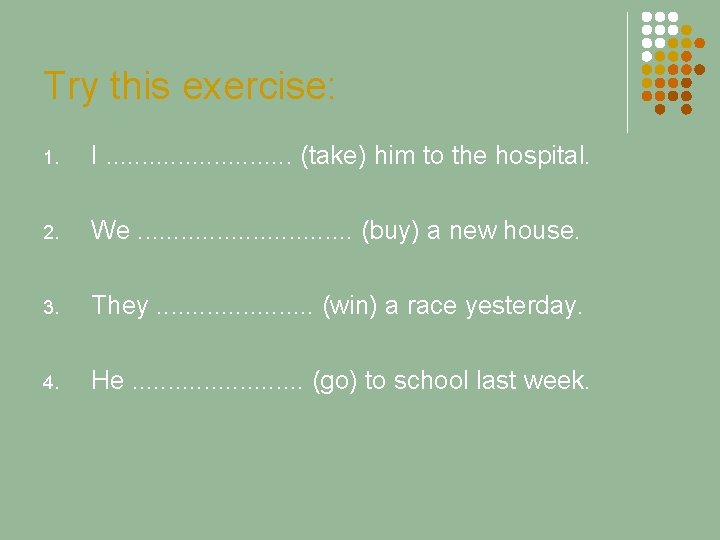
Try this exercise: 1. I. . . (take) him to the hospital. 2. We. . . . (buy) a new house. 3. They. . . . . (win) a race yesterday. 4. He. . . (go) to school last week.
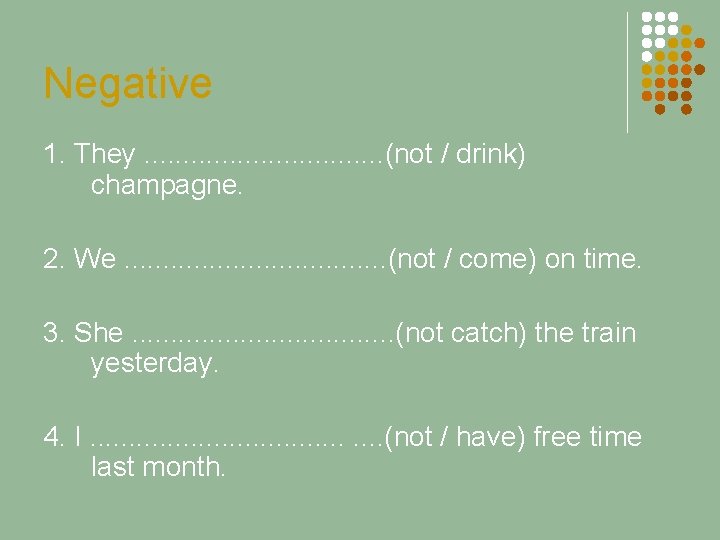
Negative 1. They. . . . (not / drink) champagne. 2. We. . . . (not / come) on time. 3. She. . . . (not catch) the train yesterday. 4. I. . . . . (not / have) free time last month.

QUESTIONS 1. . . they. . (visit) you last Monday? 2. . . she. . . . (bring) a notebook? 3. . . you. . . . (finish) school last year? 4. . . he. . . . (sing) his new songs?

READING: TIM’S HOLIDAY It was eight o’clock. Tim got up and went to the bathroom. He had a bath. He was very happy, because it was the first day of his holiday with Mary. He got dressed. He put on a white shirt and blue trousers. He had his breakfast in the kitchen and then he cleaned his teeth. At nine o’clock he phoned Mary and then he phoned for a TAXI. The taxi arrived at half past nine. But when Tim went to the door, he fell over his suitcase. He broke his leg and cut his hand. The taxi driver took him to the hospital. He couldn’t go on holiday. But Mary was at the airport. She waited for him. Did she go on holiday? We don’t know.

QUESTIONS TO THE TEXT l Find as soon as possible: 1. How many past verbs can you see? How many regular verbs (play – played)? How many irregular verbs (break-broke)? 2. 3.
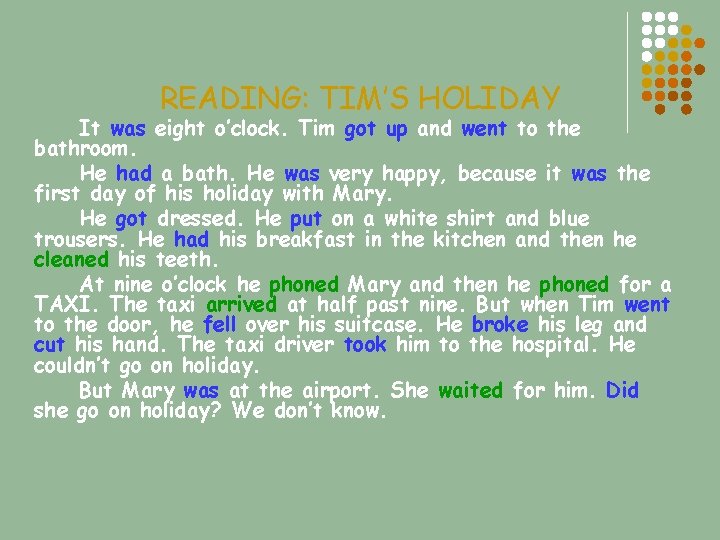
READING: TIM’S HOLIDAY It was eight o’clock. Tim got up and went to the bathroom. He had a bath. He was very happy, because it was the first day of his holiday with Mary. He got dressed. He put on a white shirt and blue trousers. He had his breakfast in the kitchen and then he cleaned his teeth. At nine o’clock he phoned Mary and then he phoned for a TAXI. The taxi arrived at half past nine. But when Tim went to the door, he fell over his suitcase. He broke his leg and cut his hand. The taxi driver took him to the hospital. He couldn’t go on holiday. But Mary was at the airport. She waited for him. Did she go on holiday? We don’t know.
ANSWERS l There are fifteen past verbs. l There are eleven irregular past verbs. l There are four regular past verbs.
CONVERSATION 2 - YESTERDAY 1. 2. 3. 4. 5. 6. 7. 8. 9. 10. 11. When did you get up? Did you have a shower / a bath? Did you have breakfast? What? Did you clean your teeth in the morning? When did you get dressed? What? When did you go to school? How many school lessons did you have? Did you have lunch at school? When did you finish school? What did you do in the afternoon? Did you do your homework? Did you study ENGLISH? ? ? Did you watch TV in the evening? When did you go to bed?
Thanks for your attention
- Slides: 34