
The past perfect indicative el pretrito pluscuamperfecto del

- Slides: 5
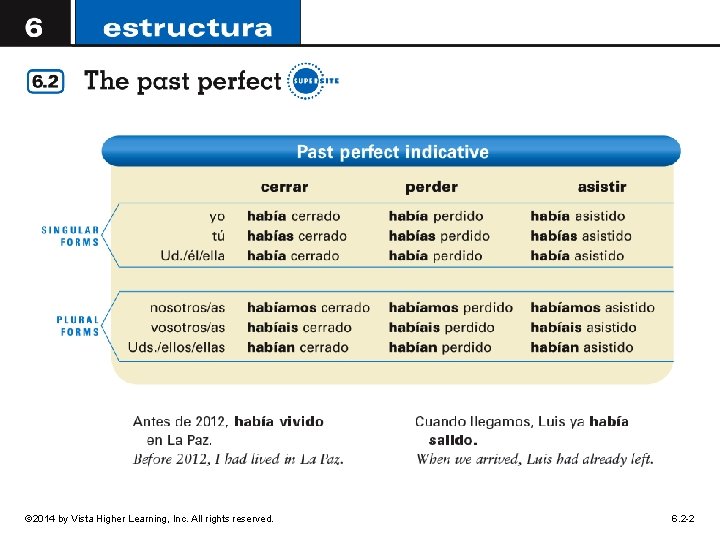
The past perfect indicative (el pretérito pluscuamperfecto del indicativo) is used to talk about what someone had done or what had occurred before another past action, event, or state. Like the present perfect, the past perfect uses a form of haber—in this case, the imperfect—plus the past participle. u © 2014 by Vista Higher Learning, Inc. All rights reserved. 6. 2 -1
© 2014 by Vista Higher Learning, Inc. All rights reserved. 6. 2 -2
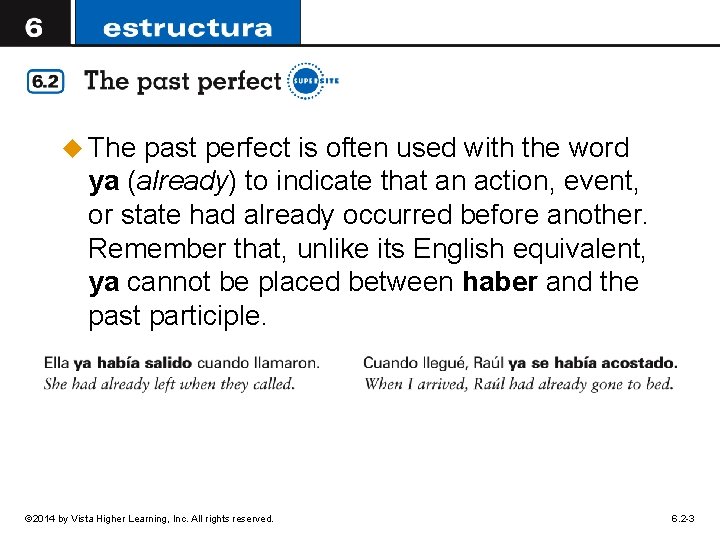
u The past perfect is often used with the word ya (already) to indicate that an action, event, or state had already occurred before another. Remember that, unlike its English equivalent, ya cannot be placed between haber and the past participle. © 2014 by Vista Higher Learning, Inc. All rights reserved. 6. 2 -3
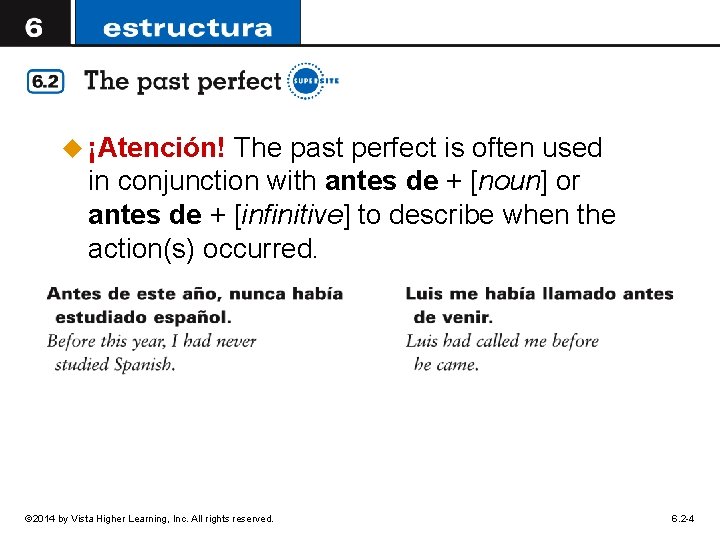
u ¡Atención! The past perfect is often used in conjunction with antes de + [noun] or antes de + [infinitive] to describe when the action(s) occurred. © 2014 by Vista Higher Learning, Inc. All rights reserved. 6. 2 -4
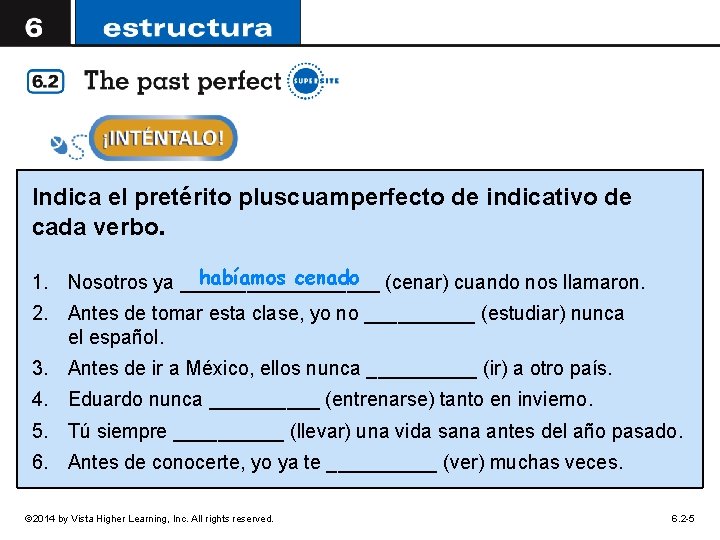
Indica el pretérito pluscuamperfecto de indicativo de cada verbo. habíamos cenado (cenar) cuando nos llamaron. 1. Nosotros ya _________ 2. Antes de tomar esta clase, yo no _____ (estudiar) nunca el español. 3. Antes de ir a México, ellos nunca _____ (ir) a otro país. 4. Eduardo nunca _____ (entrenarse) tanto en invierno. 5. Tú siempre _____ (llevar) una vida sana antes del año pasado. 6. Antes de conocerte, yo ya te _____ (ver) muchas veces. © 2014 by Vista Higher Learning, Inc. All rights reserved. 6. 2 -5