
THE PASSIVE VOICE Table of contents 1 What

THE PASSIVE VOICE

Table of contents • 1 What is the passive voice? • • • 2. The passive endings 3. First conjugation 4. Second conjugation 5. Third conjugation 6. Fourth conjugation
In the active voice, the subject PERFORMS THE ACTION of the verb.

Mures placentam portant.

(The mice carry the cake. )
In the passive voice, the subject is ACTED UPON by the verb.
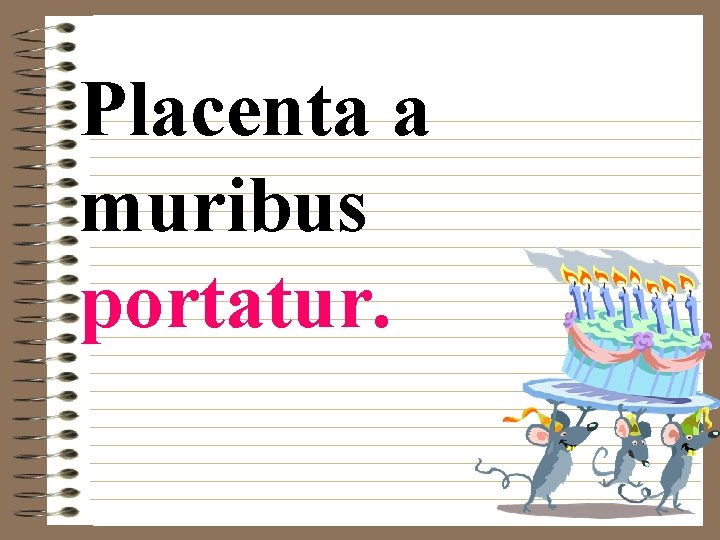
Placenta a muribus portatur.
(The cake is carried by the mice. )
In Latin, there are special endings to show that the verbs are in the passive voice!
First, let’s review the ACTIVE endings of the present tense.
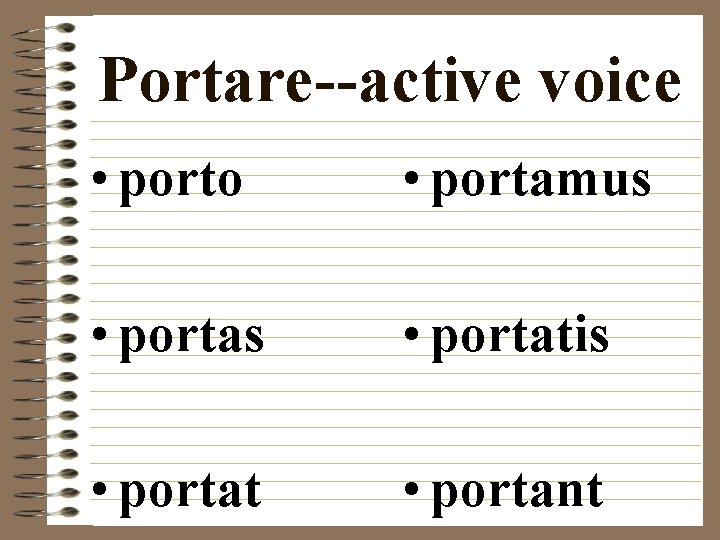
Portare--active voice • porto • portamus • portatis • portat • portant
Now we’ll look at the passive voice endings:
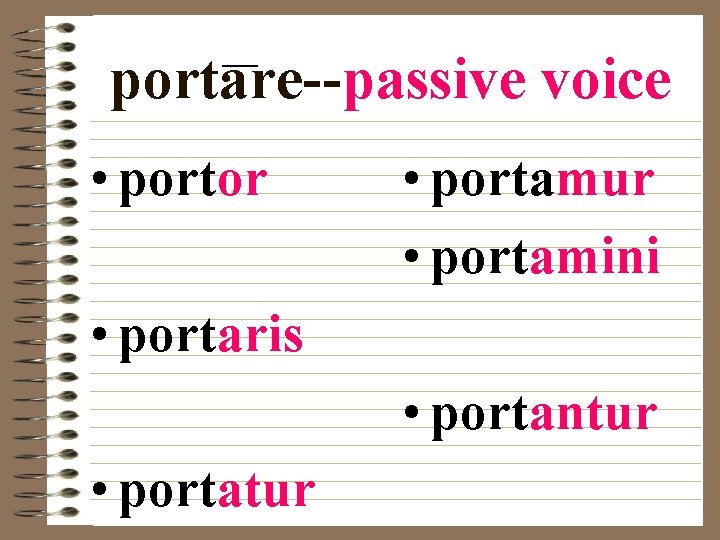
portare--passive voice • portor • portamur • portamini • portaris • portantur • portatur
Second conjugation long “e” verbs
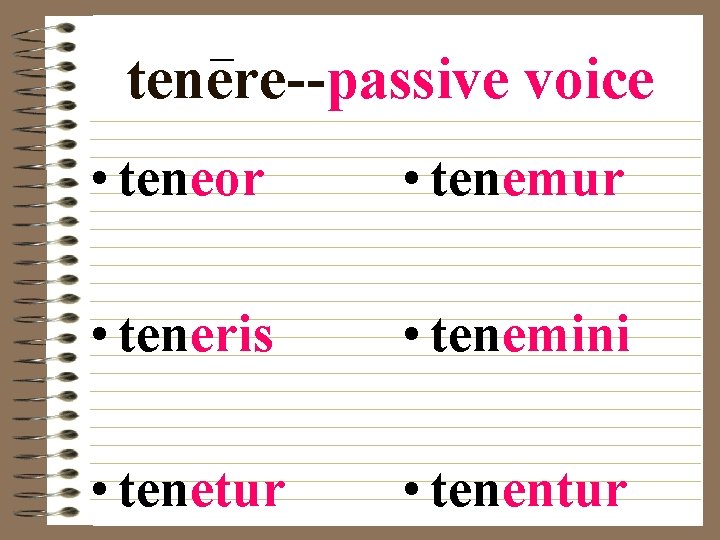
tenere--passive voice • teneor • tenemur • teneris • tenemini • tenetur • tenentur
Third Conjugation the short E verbs
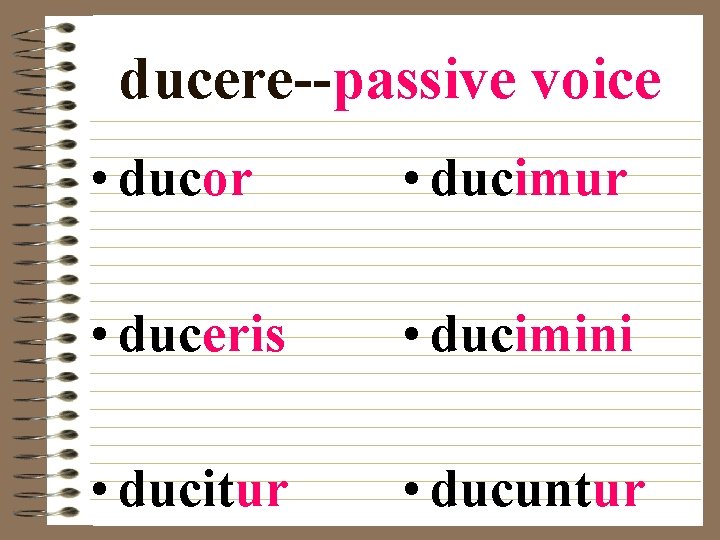
ducere--passive voice • ducor • ducimur • duceris • ducimini • ducitur • ducuntur
Third Conjugation -io verbs
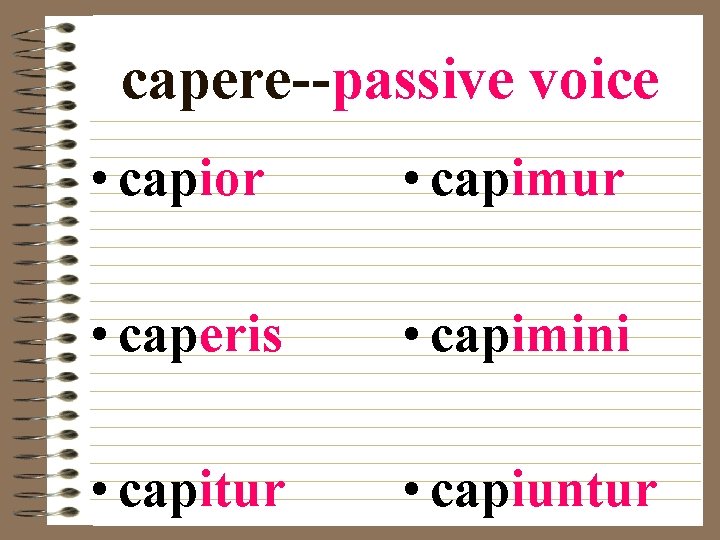
capere--passive voice • capior • capimur • caperis • capimini • capitur • capiuntur
Fourth Conjugation long “i” verbs
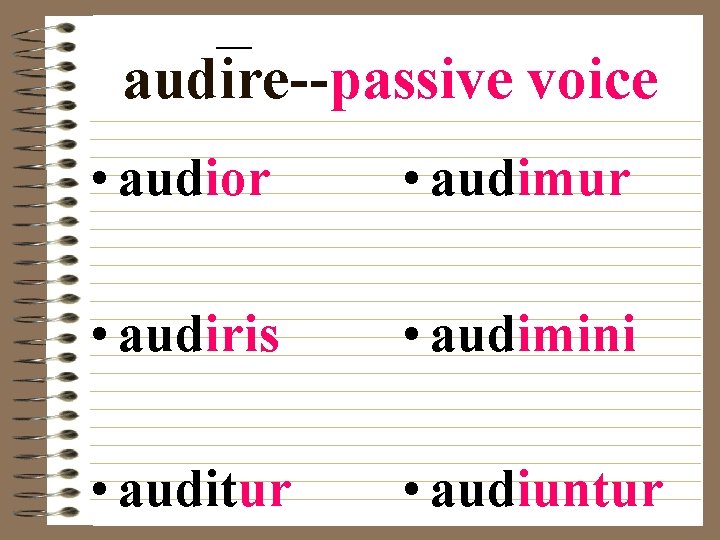
audire--passive voice • audior • audimur • audiris • audimini • auditur • audiuntur
Now, let’s look at some active and passive verb situations:

Puella aquam potat.
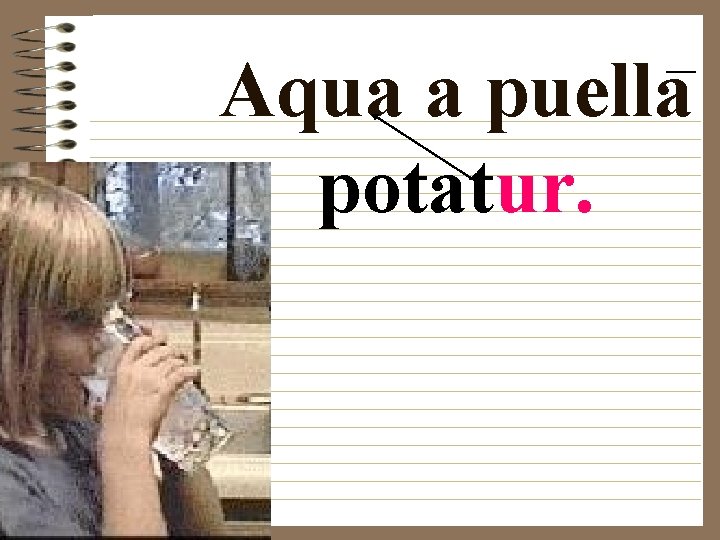
Aqua a puella potatur.
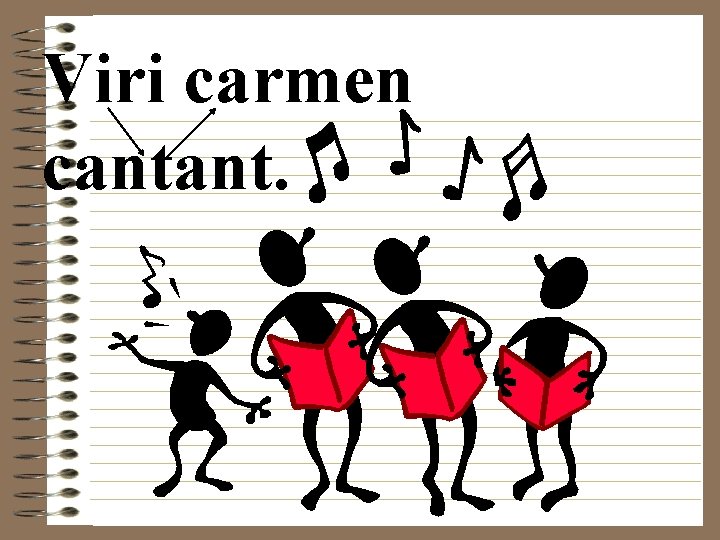
Viri carmen cantant.
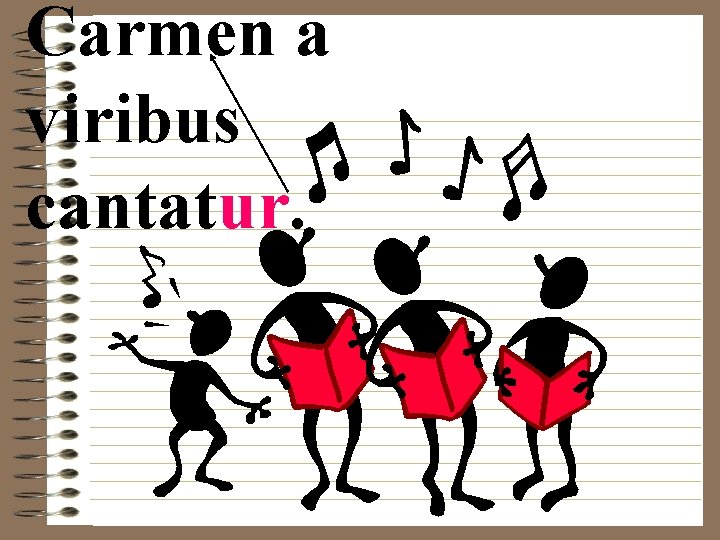
Carmen a viribus cantatur.

Vir panem vendit.
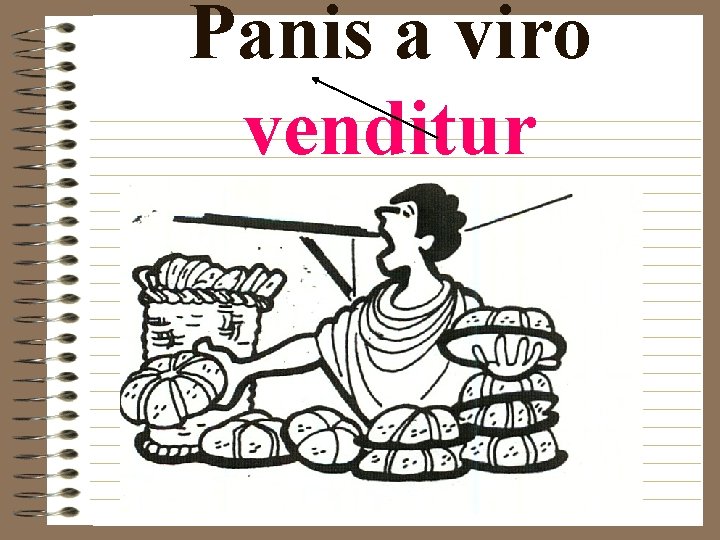
Panis a viro venditur

FINIS
- Slides: 29