
THE PASSIVE VOICE PASSIVE VOICE A Use of

- Slides: 11
THE PASSIVE VOICE
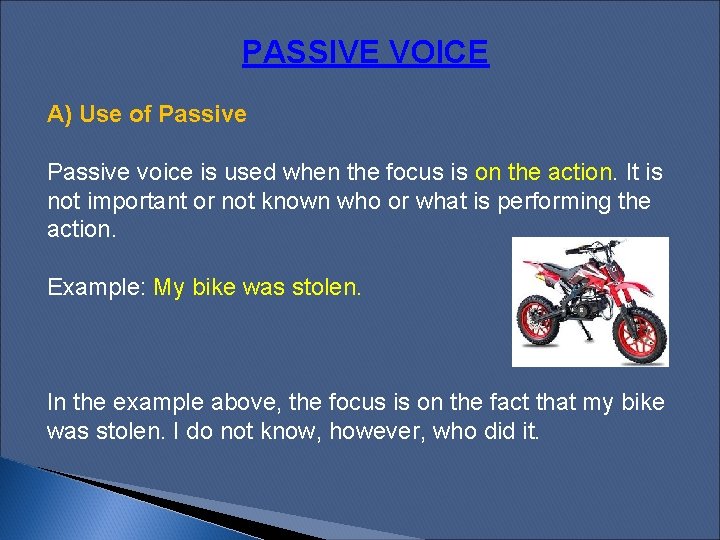
PASSIVE VOICE A) Use of Passive voice is used when the focus is on the action. It is not important or not known who or what is performing the action. Example: My bike was stolen. In the example above, the focus is on the fact that my bike was stolen. I do not know, however, who did it.
Sometimes a statement in passive is more polite than active voice, as the following example shows: Example: A mistake was made. In this case, I focus on the fact that a mistake was made, but I do not blame anyone (e. g. You have made a mistake. ).
B) Form of Passive Subject + to be + Past Participle (3 rd column of irregular verbs) Example: A letter was written. When rewriting active sentences in passive voice, note the following: • object of the "active" sentence becomes subject in the "passive" sentence. • subject of the "active" sentence becomes "object" in the "passive" sentence" (or is left out)
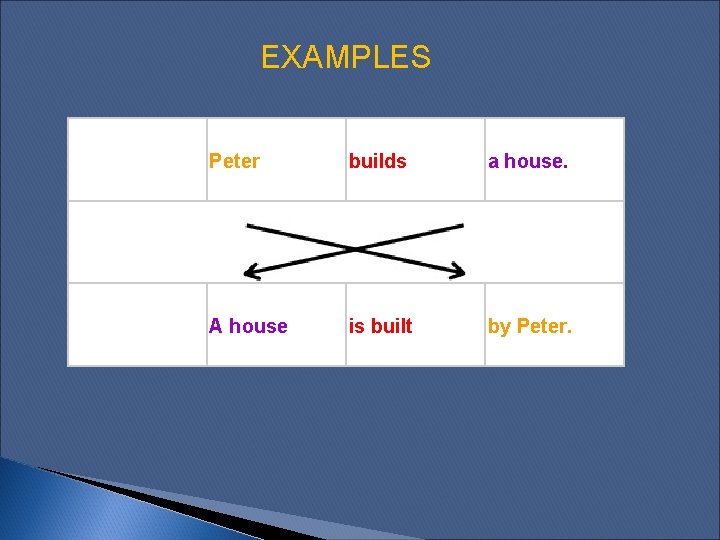
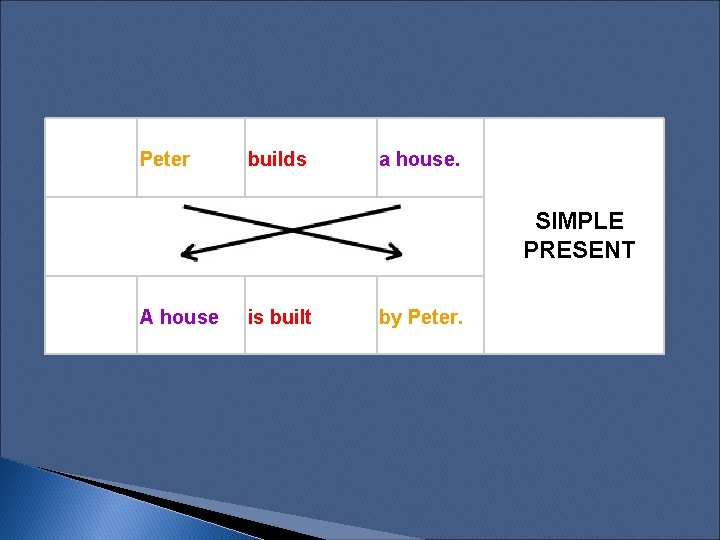
EXAMPLES Active: Peter builds a house. Passive: A house is built by Peter.
Active Peter builds a house. SIMPLE Simple Present PRESENT Passive: A house is built by Peter.
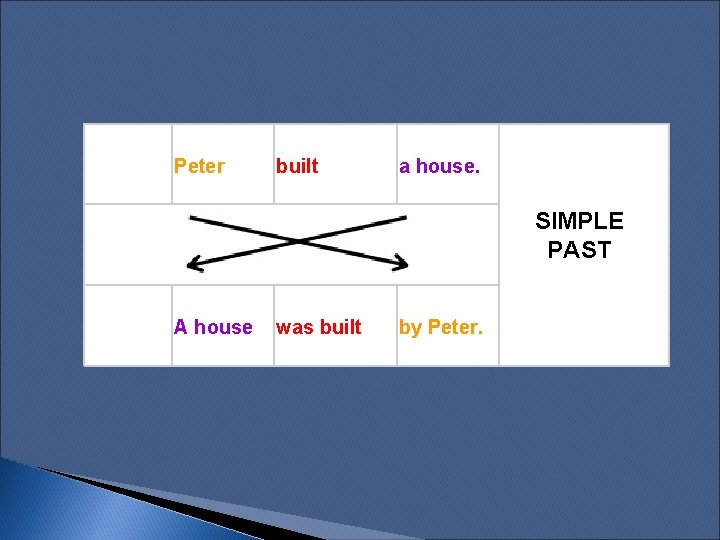
Active: Peter built a house. SIMPLE Simple Past PAST Passive: A house was built by Peter.
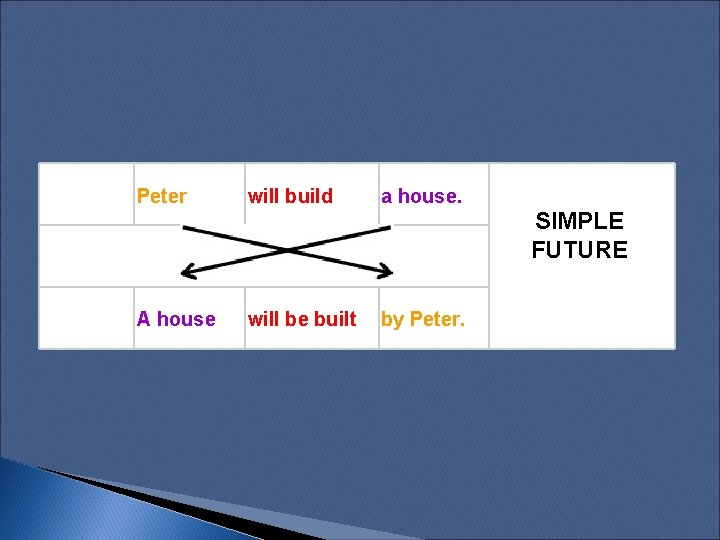
Active: Peter will build a house. SIMPLE FUTURE will-future Passive: A house will be built by Peter.
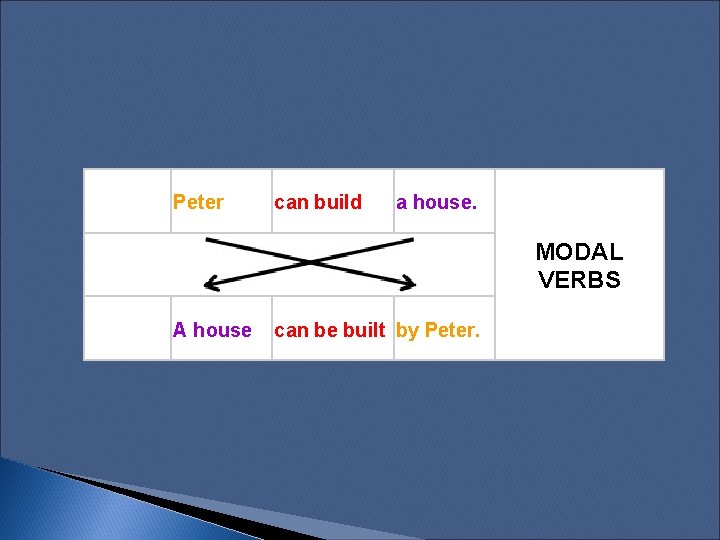
Active: Peter can build a house. MODAL Modals VERBS Passive: A house can be built by Peter.
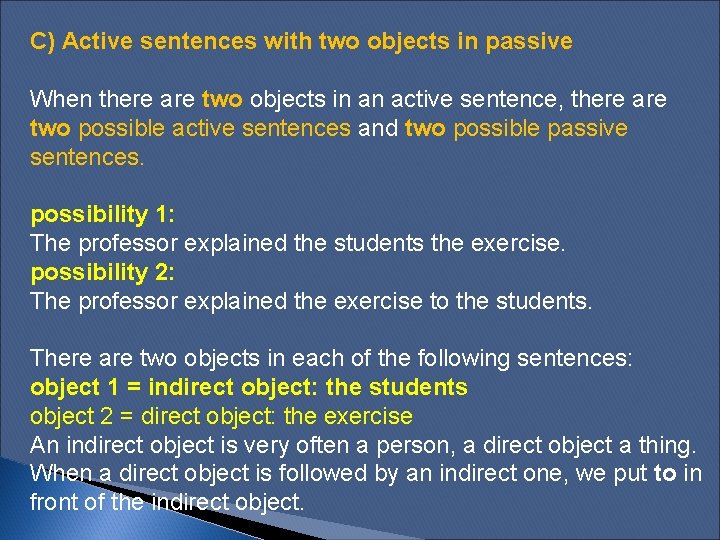
C) Active sentences with two objects in passive When there are two objects in an active sentence, there are two possible active sentences and two possible passive sentences. possibility 1: The professor explained the students the exercise. possibility 2: The professor explained the exercise to the students. There are two objects in each of the following sentences: object 1 = indirect object: the students object 2 = direct object: the exercise An indirect object is very often a person, a direct object a thing. When a direct object is followed by an indirect one, we put to in front of the indirect object.
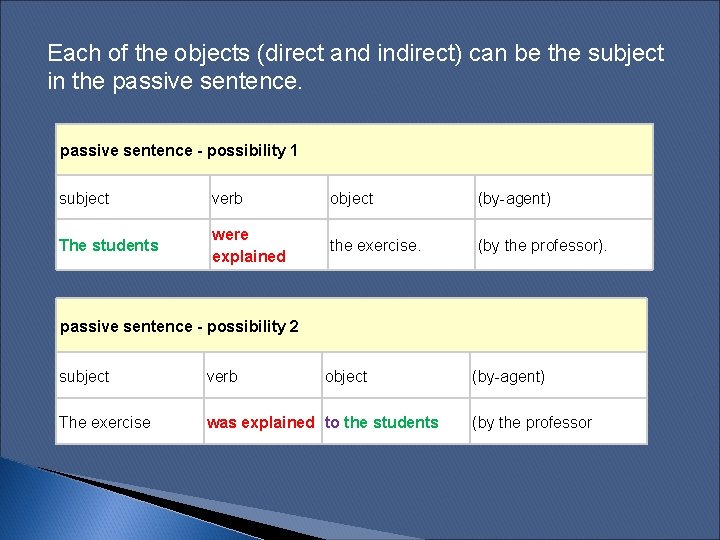
Each of the objects (direct and indirect) can be the subject in the passive sentence - possibility 1 subject verb object (by-agent) The students were explained the exercise. (by the professor). passive sentence - possibility 2 subject verb object The exercise was explained to the students (by-agent) (by the professor