
The Passion Pyramid Using Total Rewards to drive

- Slides: 21
The Passion Pyramid Using Total Rewards to drive culture that inspires passion in your workforce. Dane Turner, Turner Total Rewards
What is Culture? Culture is hard to define, but easy to see … Walk down the main corridor, what do your employees do? • Look you in the eye and acknowledge you with a warm, friendly smile and appropriate kind word (A) • Subtly glance your way to see if you make the first move and if so reciprocate with a similar gesture or greeting (B) • Fix their eyes straight ahead, ignore you completely while keeping their stride (D) • Set their eyes down at the floor and sway toward the wall to assure avoiding eye contact with you (F)
The Importance of Culture Generally the best team wins in sports, but that is not always the most talented team … Why not, what’s the difference? • It’s Culture • The winning team gets the most out of its ability People are your most important (tangible) asset • Culture is an intangible that drives your people • Therefore Culture is likely your most important intangible asset
How to Manage Culture is … • a culmination of individual employee behaviors, attitudes, and perceptions, and • an intangible organizational trait shared and shown by its employees • It’s both! But which drives which? • It’s a chicken / egg thing … or … • It could be a flywheel thing (i. e. perpetual motion) • The potential payoff is HUGE
The Passion Pyramid • Shows HR Leaders how to drive culture to inspire passion for all employees, one employee at a time • A conceptual model which enables HR Leaders to develop a strategic plan to use total rewards to drive culture and inspire passion to take an organization from “good to great. ” • Developed from four conceptual / strategic models • • Total Rewards: Pay, Benefits, “The Work Experience” (World-at-Work) Hierarchy of Human Needs (Maslow) Purpose, Passion, Process “Flywheel” (Studer) Good to Great “Breakthrough” (Collins)
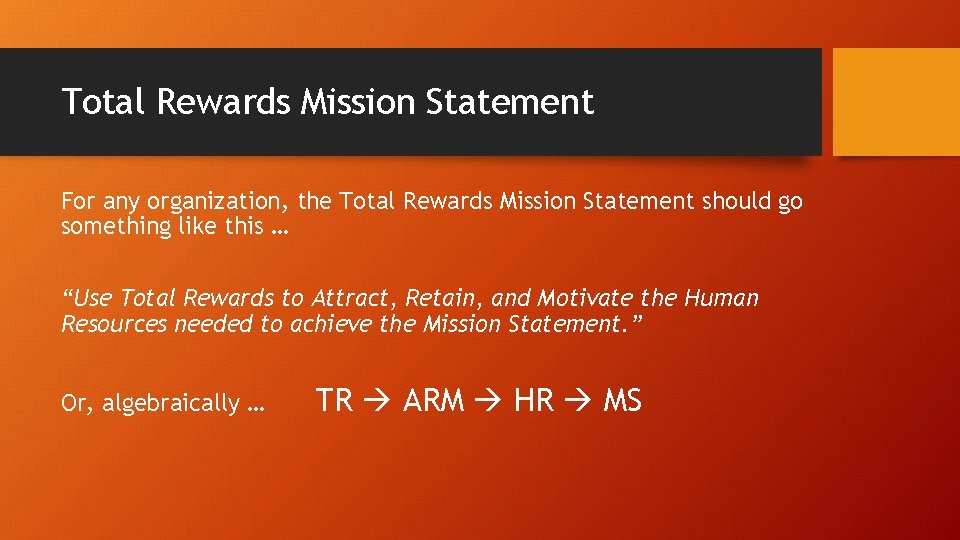
Total Rewards Mission Statement For any organization, the Total Rewards Mission Statement should go something like this … “Use Total Rewards to Attract, Retain, and Motivate the Human Resources needed to achieve the Mission Statement. ” Or, algebraically … TR ARM HR MS
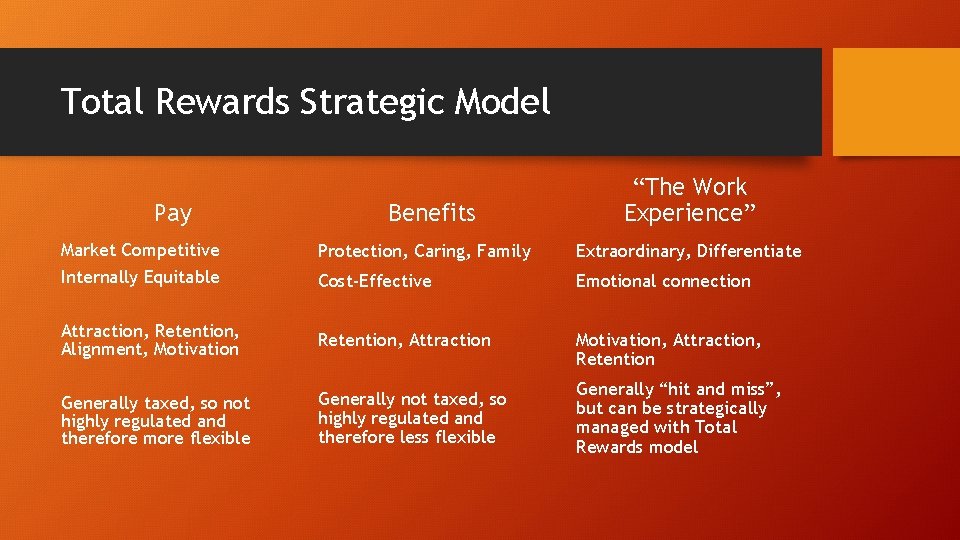
Total Rewards Strategic Model Pay Benefits “The Work Experience” Market Competitive Protection, Caring, Family Extraordinary, Differentiate Internally Equitable Cost-Effective Emotional connection Attraction, Retention, Alignment, Motivation Retention, Attraction Motivation, Attraction, Retention Generally taxed, so not highly regulated and therefore more flexible Generally not taxed, so highly regulated and therefore less flexible Generally “hit and miss”, but can be strategically managed with Total Rewards model
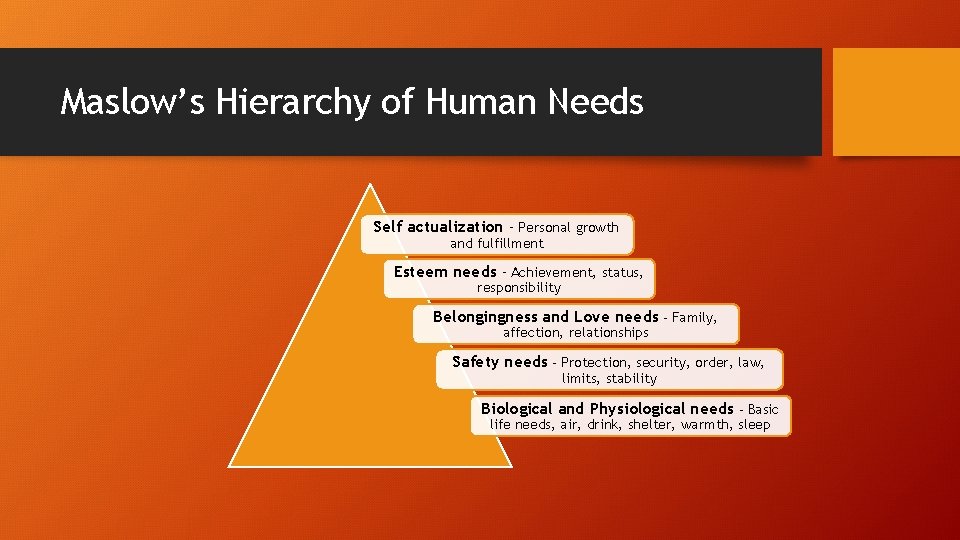
Maslow’s Hierarchy of Human Needs Self actualization – Personal growth and fulfillment Esteem needs – Achievement, status, responsibility Belongingness and Love needs – Family, affection, relationships Safety needs – Protection, security, order, law, limits, stability Biological and Physiological needs – Basic life needs, air, drink, shelter, warmth, sleep
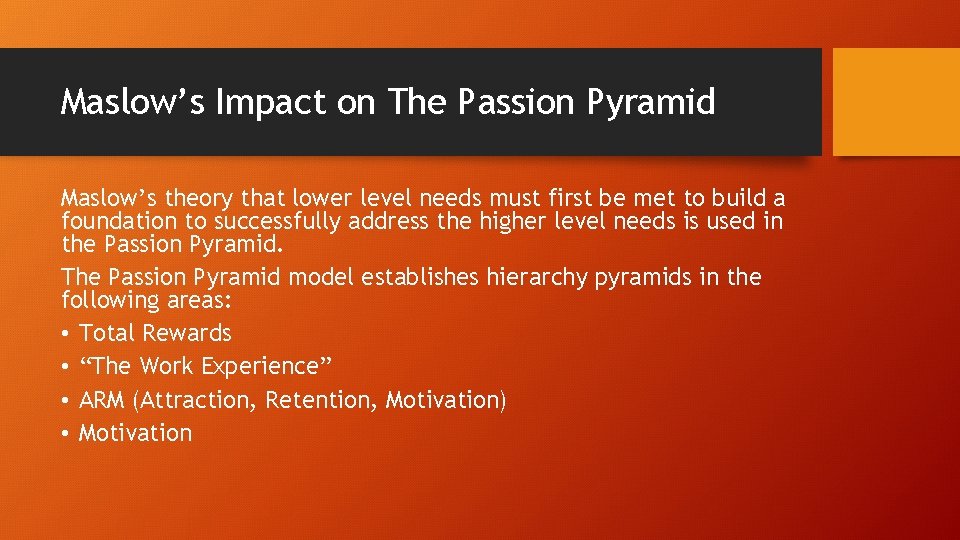
Maslow’s Impact on The Passion Pyramid Maslow’s theory that lower level needs must first be met to build a foundation to successfully address the higher level needs is used in the Passion Pyramid. The Passion Pyramid model establishes hierarchy pyramids in the following areas: • Total Rewards • “The Work Experience” • ARM (Attraction, Retention, Motivation) • Motivation
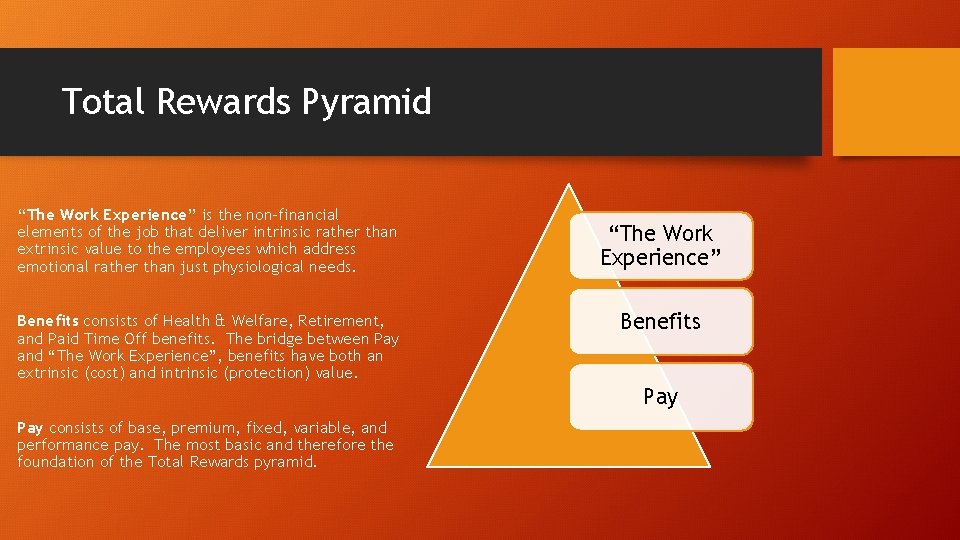
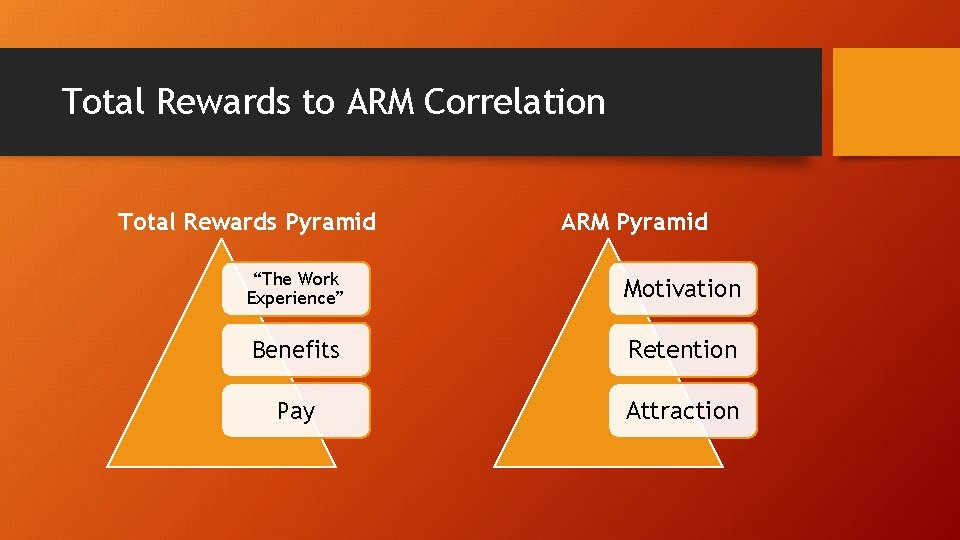
Total Rewards Pyramid “The Work Experience” is the non-financial elements of the job that deliver intrinsic rather than extrinsic value to the employees which address emotional rather than just physiological needs. Benefits consists of Health & Welfare, Retirement, and Paid Time Off benefits. The bridge between Pay and “The Work Experience”, benefits have both an extrinsic (cost) and intrinsic (protection) value. “The Work Experience” Benefits Pay consists of base, premium, fixed, variable, and performance pay. The most basic and therefore the foundation of the Total Rewards pyramid.
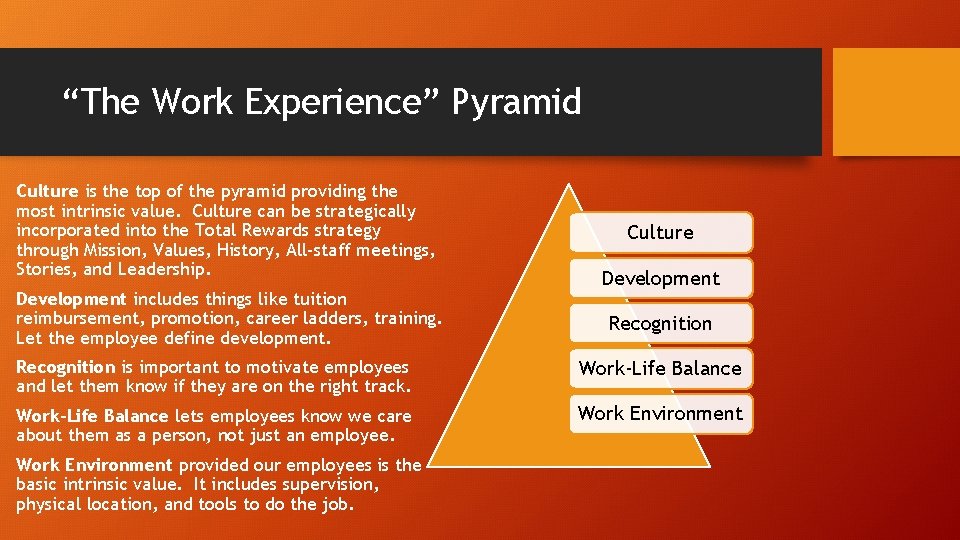
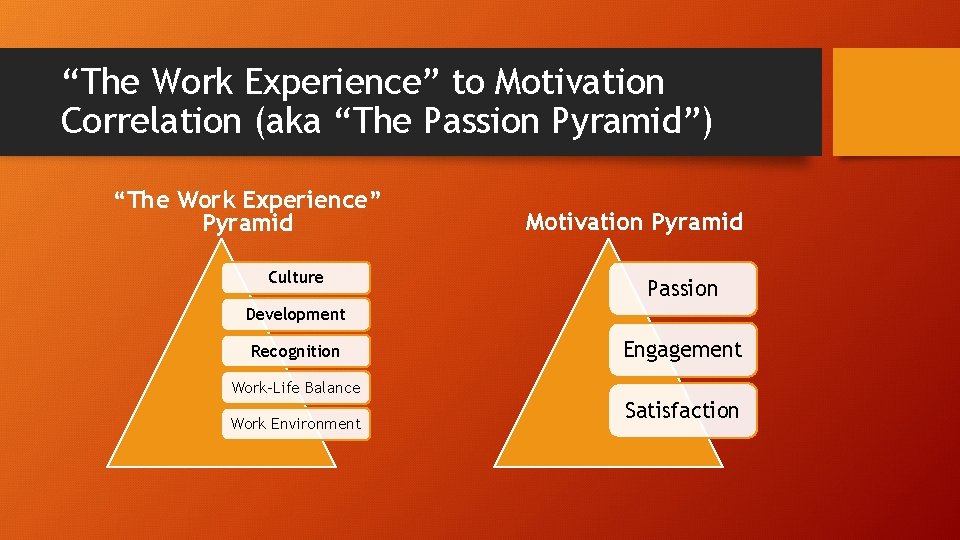
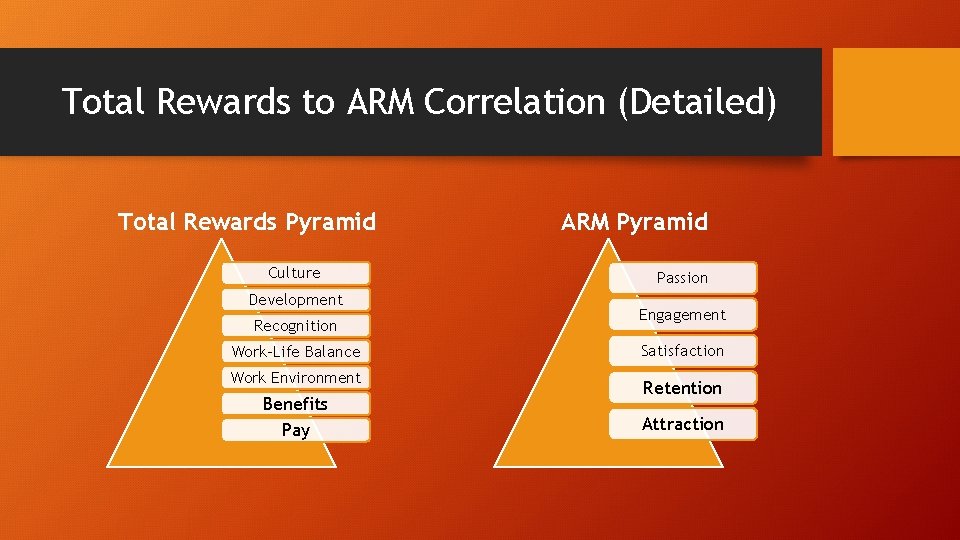
“The Work Experience” Pyramid Culture is the top of the pyramid providing the most intrinsic value. Culture can be strategically incorporated into the Total Rewards strategy through Mission, Values, History, All-staff meetings, Stories, and Leadership. Development includes things like tuition reimbursement, promotion, career ladders, training. Let the employee define development. Culture Development Recognition is important to motivate employees and let them know if they are on the right track. Work-Life Balance lets employees know we care about them as a person, not just an employee. Work Environment provided our employees is the basic intrinsic value. It includes supervision, physical location, and tools to do the job.
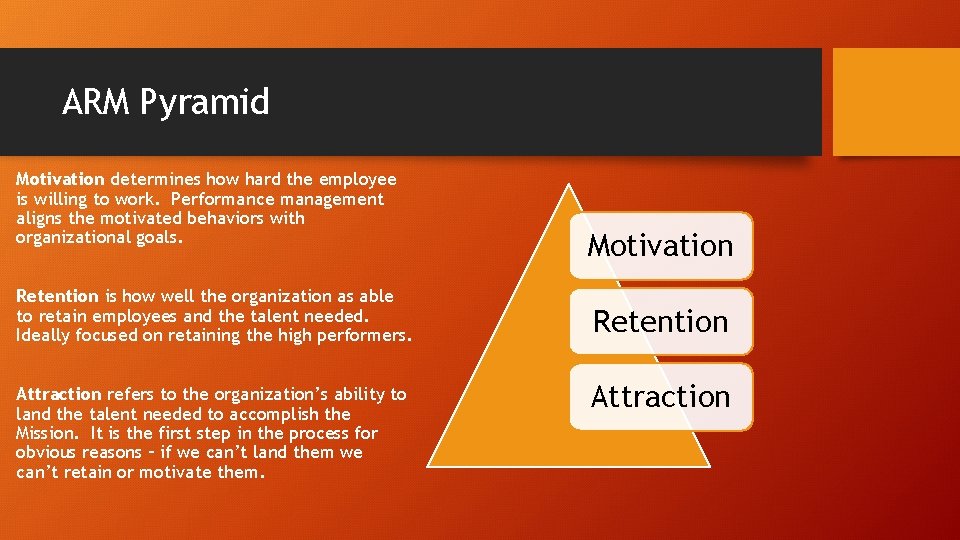
ARM Pyramid Motivation determines how hard the employee is willing to work. Performance management aligns the motivated behaviors with organizational goals. Retention is how well the organization as able to retain employees and the talent needed. Ideally focused on retaining the high performers. Attraction refers to the organization’s ability to land the talent needed to accomplish the Mission. It is the first step in the process for obvious reasons – if we can’t land them we can’t retain or motivate them. Motivation Retention Attraction
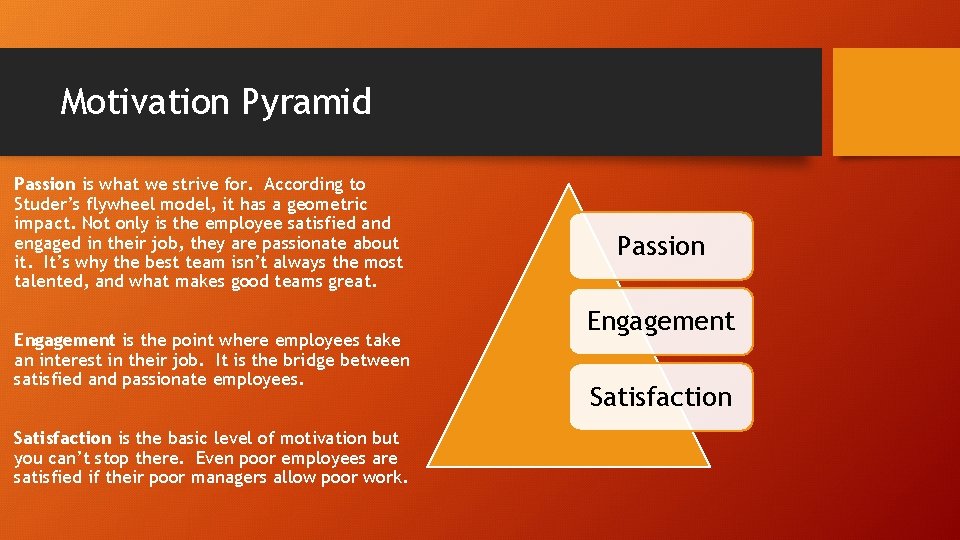
Motivation Pyramid Passion is what we strive for. According to Studer’s flywheel model, it has a geometric impact. Not only is the employee satisfied and engaged in their job, they are passionate about it. It’s why the best team isn’t always the most talented, and what makes good teams great. Engagement is the point where employees take an interest in their job. It is the bridge between satisfied and passionate employees. Satisfaction is the basic level of motivation but you can’t stop there. Even poor employees are satisfied if their poor managers allow poor work. Passion Engagement Satisfaction
Total Rewards to ARM Correlation Total Rewards Pyramid ARM Pyramid “The Work Experience” Motivation Benefits Retention Pay Attraction
“The Work Experience” to Motivation Correlation (aka “The Passion Pyramid”) “The Work Experience” Pyramid Culture Motivation Pyramid Passion Development Recognition Engagement Work-Life Balance Work Environment Satisfaction
Total Rewards to ARM Correlation (Detailed) Total Rewards Pyramid Culture Development Recognition Work-Life Balance Work Environment Benefits Pay ARM Pyramid Passion Engagement Satisfaction Retention Attraction
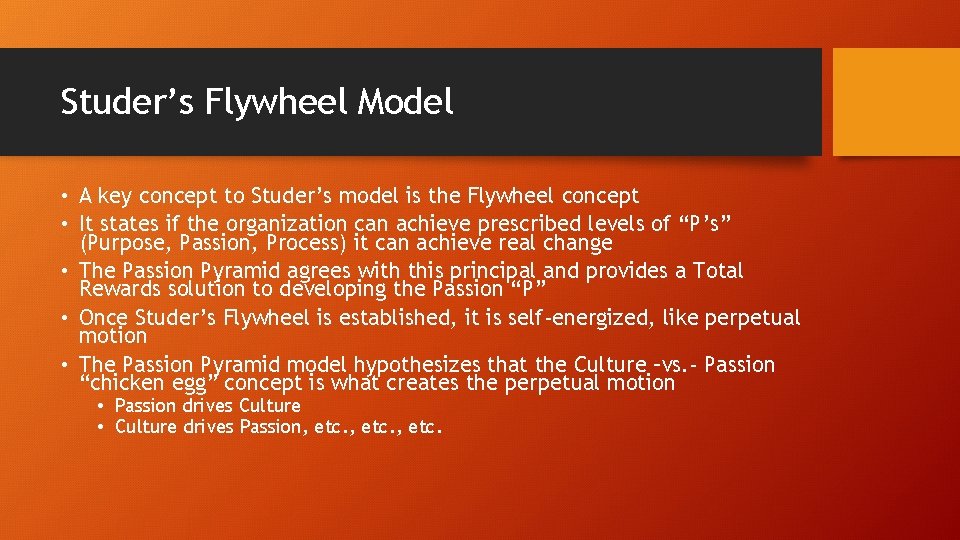
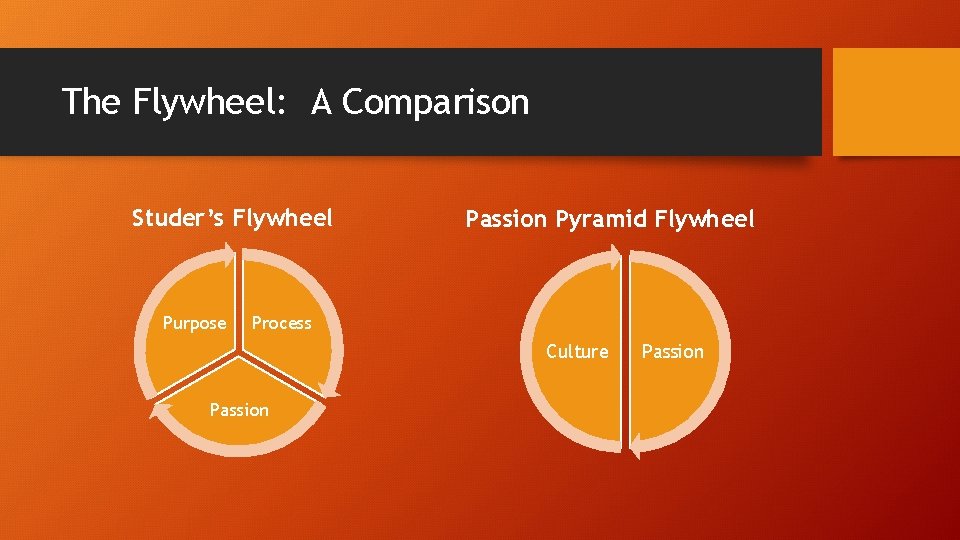
Studer’s Flywheel Model • A key concept to Studer’s model is the Flywheel concept • It states if the organization can achieve prescribed levels of “P’s” (Purpose, Passion, Process) it can achieve real change • The Passion Pyramid agrees with this principal and provides a Total Rewards solution to developing the Passion “P” • Once Studer’s Flywheel is established, it is self-energized, like perpetual motion • The Passion Pyramid model hypothesizes that the Culture –vs. - Passion “chicken egg” concept is what creates the perpetual motion • Passion drives Culture • Culture drives Passion, etc.
The Flywheel: A Comparison Studer’s Flywheel Purpose Passion Pyramid Flywheel Process Culture Passion
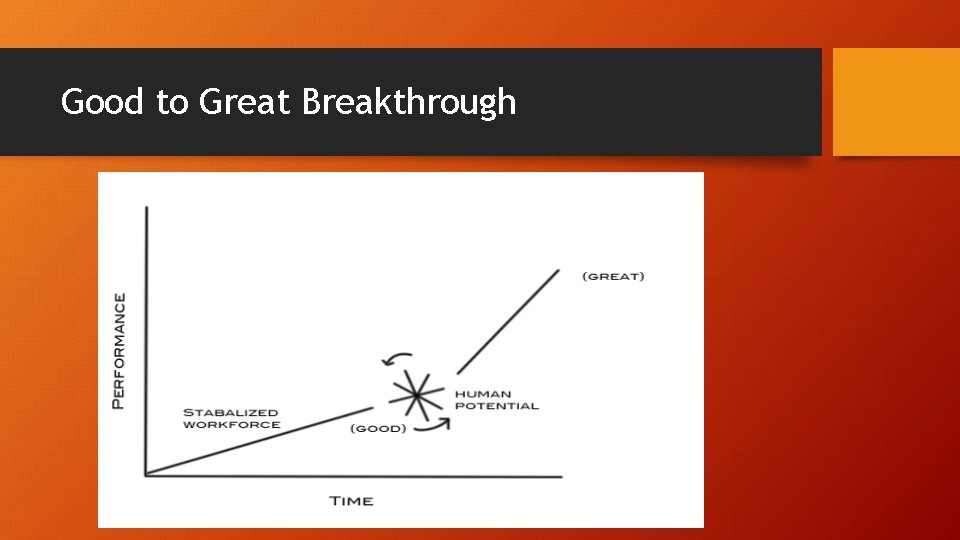
Collins’ Good to Great “Breakthrough” Model • A key concept to Collin’s Good to Great theory is “Breakthrough” • Breakthrough is the point where an organization achieves the lasting success which takes them from good to great • The organization’s chronological journey is depicted as an initial period of variance, followed by a period of sustained stability, then achieving Breakthrough to dramatic sustained success • The Breakthrough point is depicted as a pivot point on the chronological journey at which the organization gains traction and “takes off” • The Passion Pyramid theorizes that the organization’s “fully selfactualized ARM pyramid” is the piece that fits into the Breakthrough point, acting like a Flywheel to generate the perpetual energy and traction to take the organization from “good to great”
Good to Great Breakthrough
Wrapping it up The Passion Pyramid provides a conceptual, strategic framework for the HR leader to envision and conceive of doing great things • No more, no less Thank you for your time and attention Questions / Answers / Discussion