
THE PARTITION OF AFRICA Chapter 9 2 Focus
- Slides: 18
THE PARTITION OF AFRICA Chapter 9. 2
Focus Question How did Imperialist European powers claim control over most of Africa by the end of the 1800’s?
Africa in Early 1800’s North: Mostly under Ottoman Empire Rule. Contains Sahara and lush Mediterranean lands. West: Experienced Islamic revival that spread to many areas. East: Heavy on trade. Most cargo was slaves, but to the Middle East. South: Suffered over conflict due to tribal war and colonist disputes.
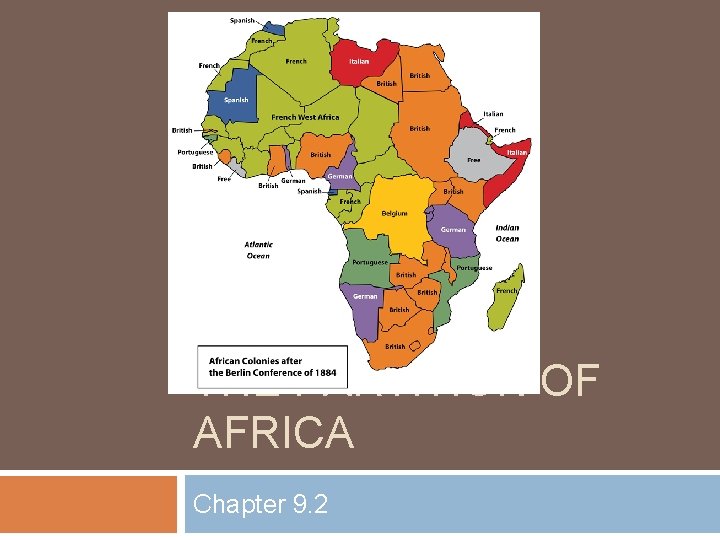
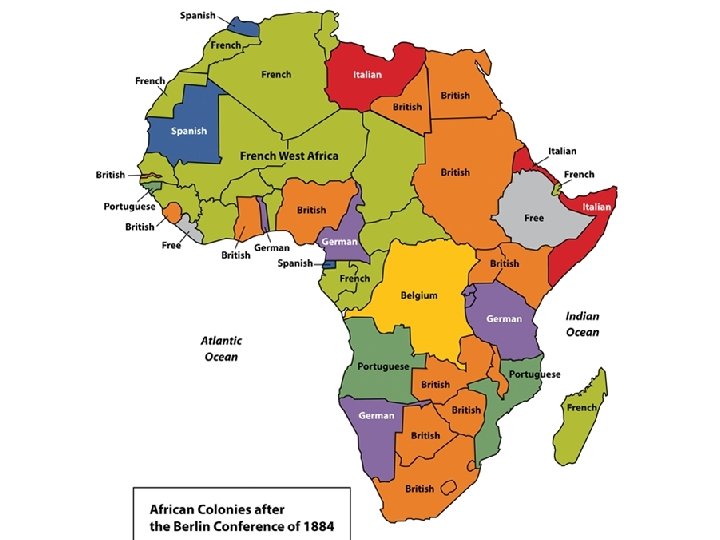
European Contact & Scrabble for Colonies Explorers and Missionaries increase the amount of contact with Africans pushing into the interior even further. Dr. Livingstone crisscrossed Africa for over 30 years Europeans held the Berlin Conference in 1884 to prevent further wars and bloodshed and agreed that for a nation to lay claim they had to set up a government there.
Africans resist Imperialism Strong African Tribes will try to fight off the different European governements Ethiopia (ancient Christian kingdom) survives colonization. King. Menelik will reform nation in late 1800’s building roads, bridges, and setting up Western style schools Italy tried to invade in 1896, but failed. Liberia and Ethiopia were only nations not colonized.
IMPERIALISM IN THE MIDDLE EAST Chapter 9. 3
Focus Question How did European nations extend their power over the Muslim World?
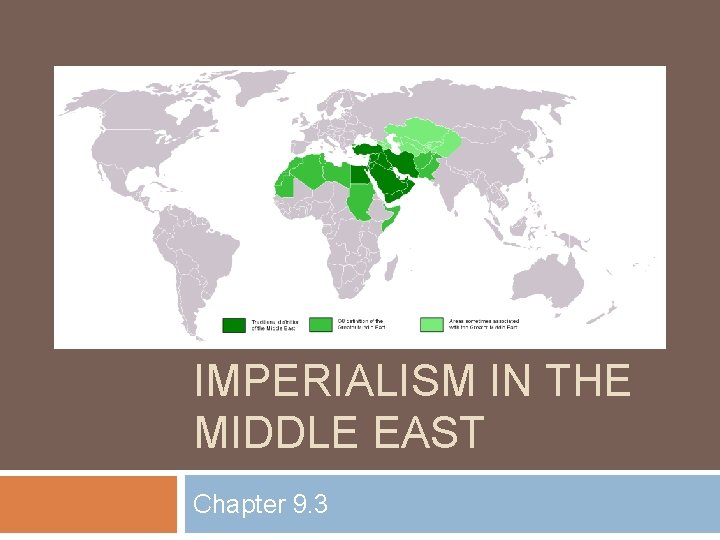
GEOGRAPHY Diverse region stretching around the eastern Mediterranean coast to the Indus valley Includes Afghanistan, Persia (Iran), and the Turkish empire Ottoman Turks defeated in World War I Ottoman lands administered by the League of Nations Rich oil reserves
BRITISH INTERESTS Suez Canal in Egypt, 1869 Short route between Mediterranean Sea and Indian Ocean Egypt independent from Great Britain in 1922 But British controlled canal until 1960 s Mandates following World War I – under the League of Nations Mesopotamia – Iraq Palestine – Israel Included Transjordan (Jordan)
BRITISH INTERESTS Kuwait Declared by invading Britons after World War I to be an “independent sheikdom under British protectorate” Independent in 1961
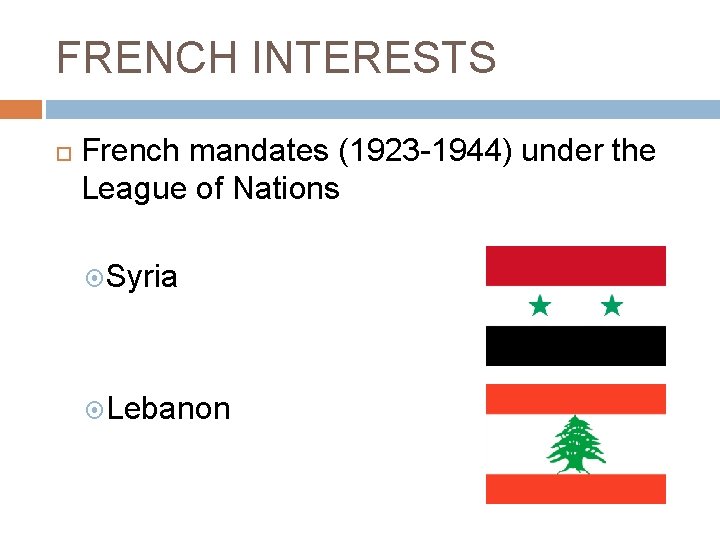
FRENCH INTERESTS French mandates (1923 -1944) under the League of Nations Syria Lebanon
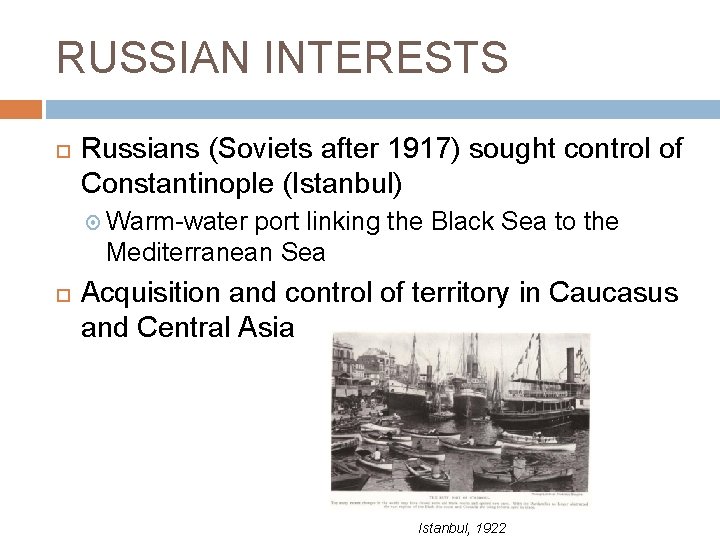
RUSSIAN INTERESTS Russians (Soviets after 1917) sought control of Constantinople (Istanbul) Warm-water port linking the Black Sea to the Mediterranean Sea Acquisition and control of territory in Caucasus and Central Asia Istanbul, 1922
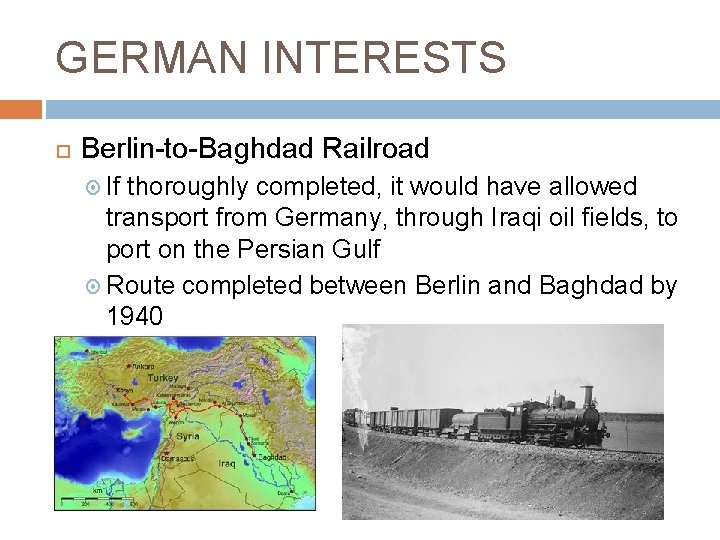
GERMAN INTERESTS Berlin-to-Baghdad Railroad If thoroughly completed, it would have allowed transport from Germany, through Iraqi oil fields, to port on the Persian Gulf Route completed between Berlin and Baghdad by 1940
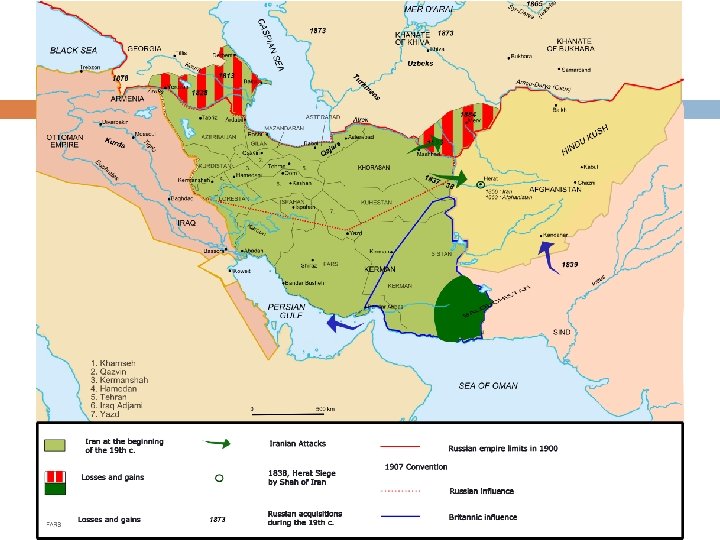
CONFLICTS BETWEEN GREAT BRITAIN AND RUSSIA Russia attempted moving into Afghanistan, India (Pakistan), and Persia (Iran) Afghanistan – ruled by Great Britain until independent in 1919 India (including Pakistan) – ruled by Great Britain until independent in 1947
CONFLICTS BETWEEN GREAT BRITAIN AND RUSSIA 1907 – compromise over Persia (Iran) Northern third – Russian sphere of influence Southeastern third – British sphere of influence Remaining middle third – “no man’s land” Never colonized but lost territory to Russia and Britain during the Qajar era (1794 -1925)
Review Questions What natural resource of this region was of most interest to foreign imperialist powers? What foreign powers held control in this region under mandates granted by the League of Nations?