
The PAP smear Report What does it mean






- Slides: 54
The PAP smear Report What does it mean? ? ? Soheir Mahfouz
Minimal clinical data requirements DATA in -------DATA out GARBAGE in----- GARBAGE out
Clinical data • Name age • Sample history: if repeat or follow up. If follow up must mention previous diagnosis & slide number • Name of referring clinician & contact number • Clinical information: a) Complaint & Provisional diagnosis b ) Menstrual cycle phase & Parity c) Any abnormalities observed on the cervix on examination d) Discharge if present : character
The Report
OUR REPORTING SYSTEM • Adequacy: depends on cellularity & presence of endocervical cells • Cell types present: Normal+/- uterine cells if patient is over 40 • Hormonal status only if LMP is mentioned • Incidental findings: Reactive / inflammation. Infective organisms - Metaplasia- repairatrophy etc…. • Lesion: any observed abnormalities (ASC-US , AGC-US, SIL- malignancy)
Diagnosis based on Bethesda system Normal : Negative for intraepithelial lesion or malignancy (NILM) Abnormal : • Reactive associated with: Inflammation- infection /repair/IUD/radiation (NILM) • Atrophy (NILM) • Metaplasia (NILM) • Atypical squamous cells of unknown significance (ASC-US) or (ASC-NOS) cannot exclude HSIL (ASC-H) • Low grade squamous intraepithelial lesion (LSIL) (CIN I ) • High grade squamous intraepithelial lesion (HSIL) (CINII , IIII & CIS) • Squamous cell carcinoma (Keratinizing or non or small cell) • Glandular cell abnormality Atypical glandular cells unknown significance (AGC-US) or (AGCNOS) Atypical glandular cells can’t exclude high grade lesion /favour neoplasia (AGC-H) Adenocarcinoma
NILM Negative for intraepithelial lesion or malignancy
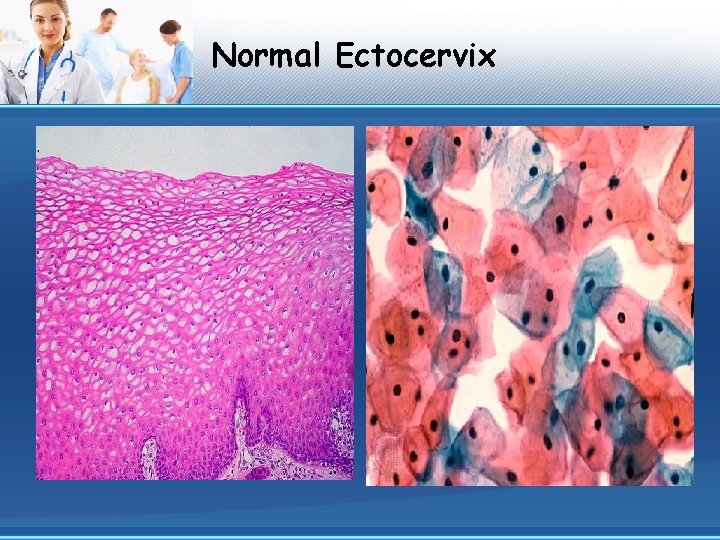
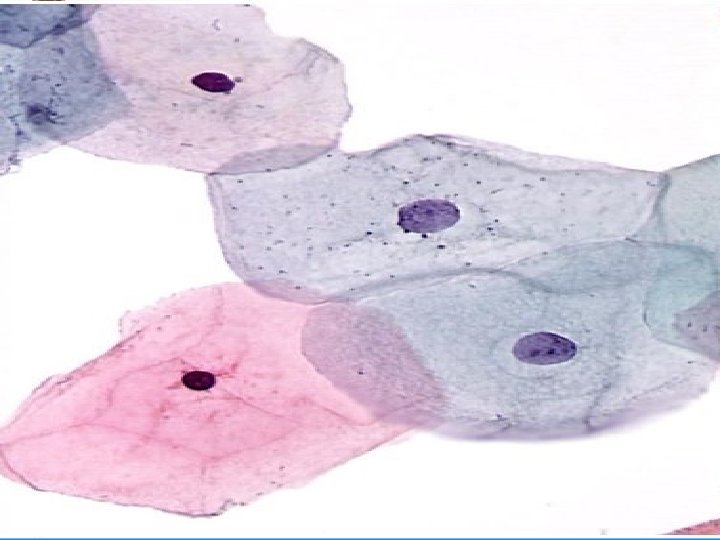
1 - Normal cells NILM
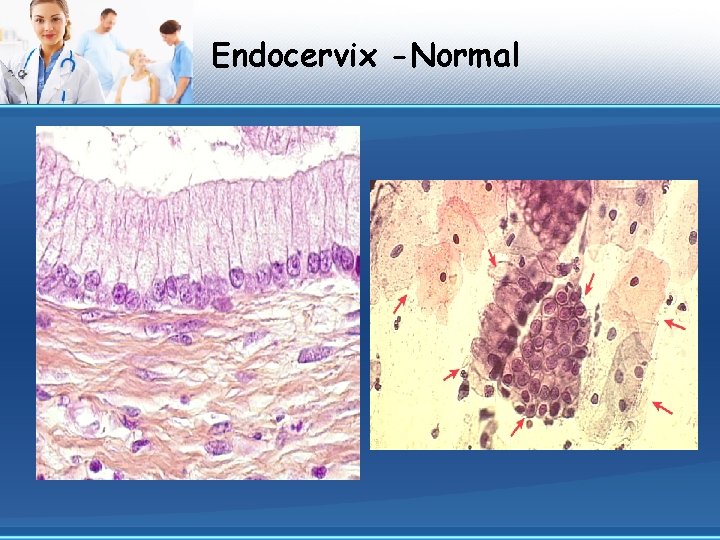
Endocervix -Normal
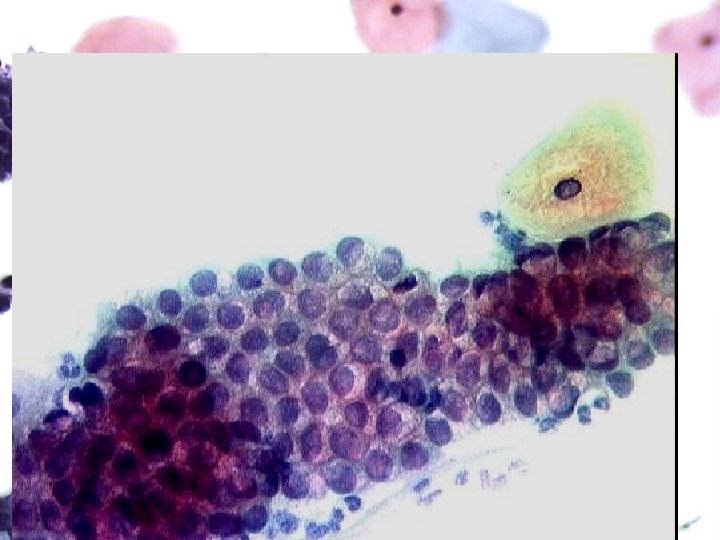
Normal Ectocervix
2 - Abnormal NILM Reactive associated with: Inflammation- infection /repair/IUD/radiation Others: Atrophy/metaplasia/ Hyperkeratosis
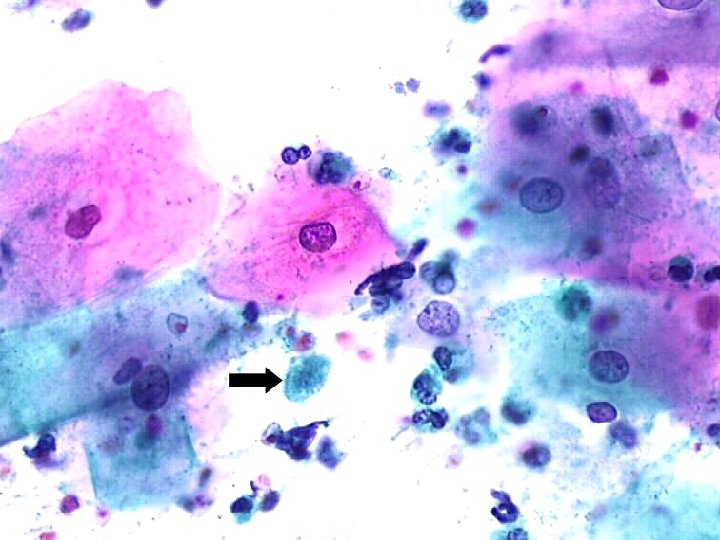
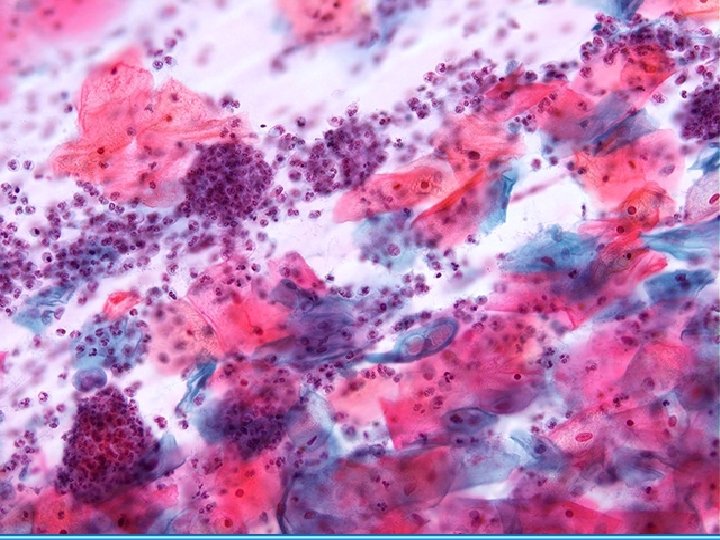
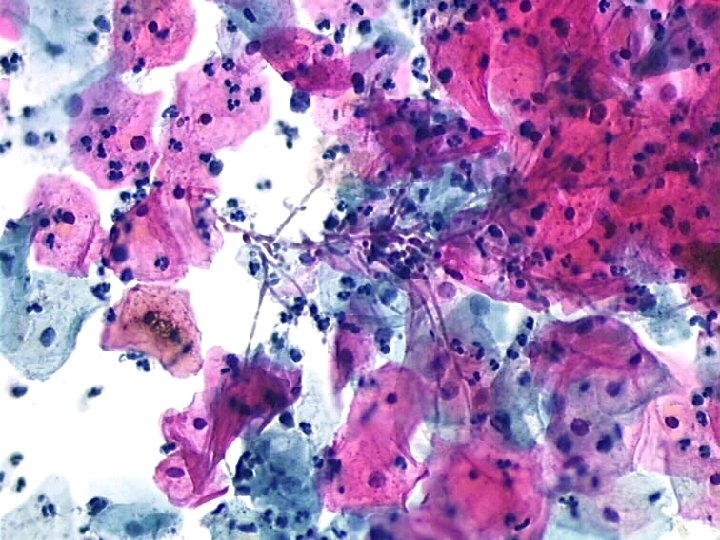
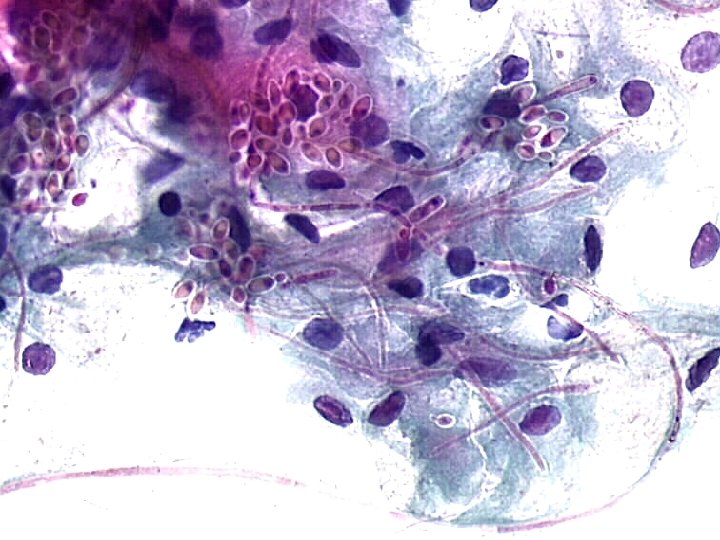
Does this mean an infection? • Many inflammatory cells • Many organisms • Candida A- Lactobacilli & many PNls are common in 2 nd half of cycle near the time of menstruation B- Candida can be seen normally (discharge nature- CP of cervix- PAP smear changes: eosinophilia-phagocytosisbrisk inflammatory background) C- Are the macrophages and PNLs engulfing organisms? D- Patient should be symptomatic to receive antibiotic therapy
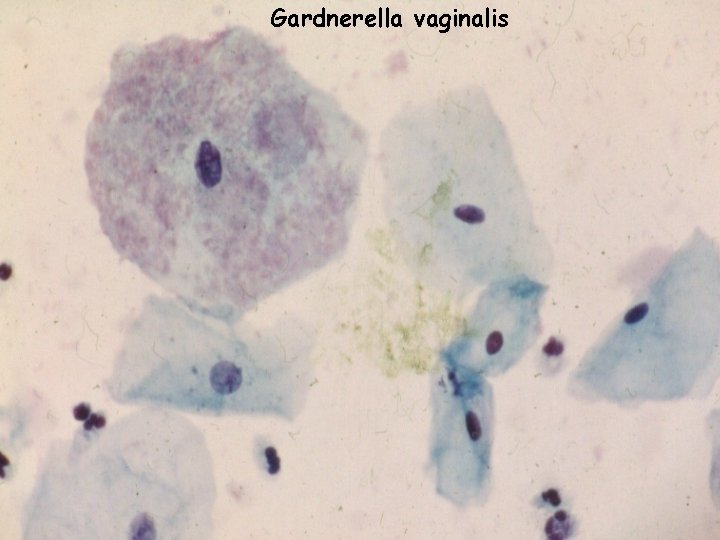
Gardnerella vaginalis
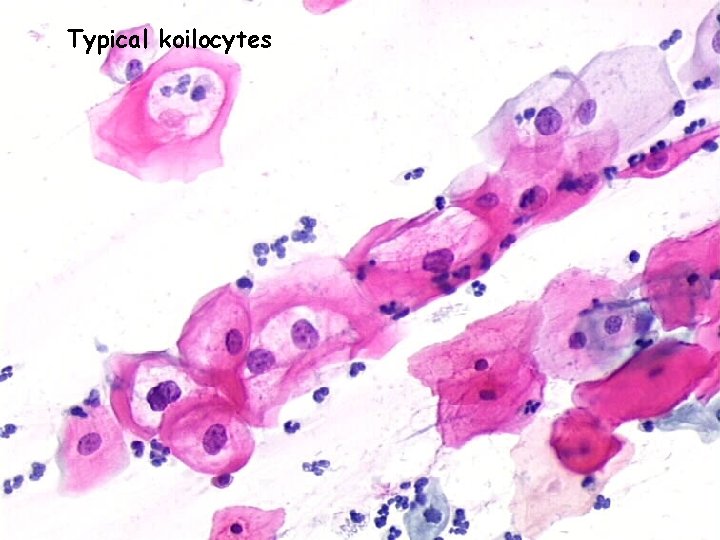
Typical koilocytes
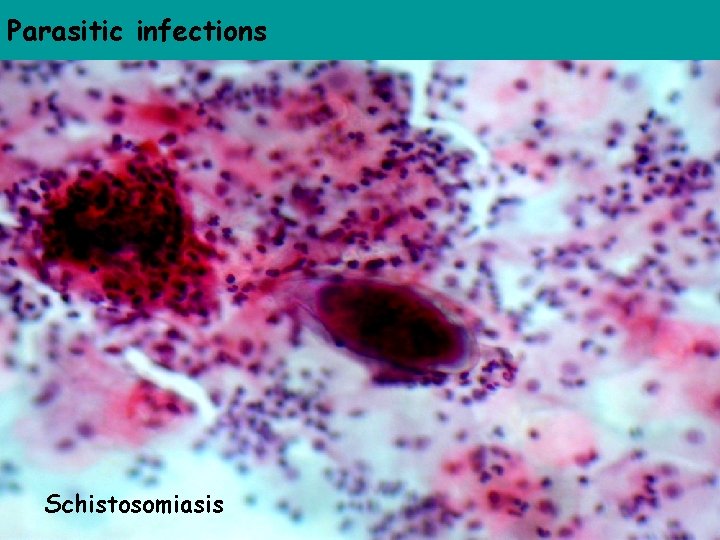
Parasitic infections Schistosomiasis
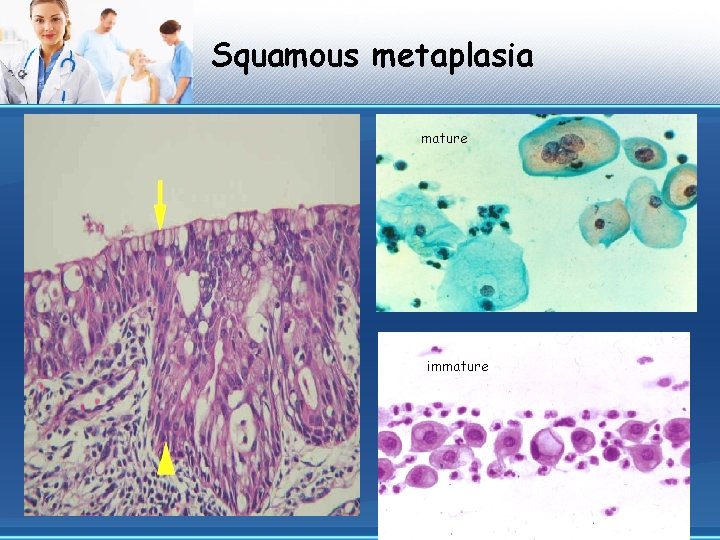
Squamous metaplasia mature immature
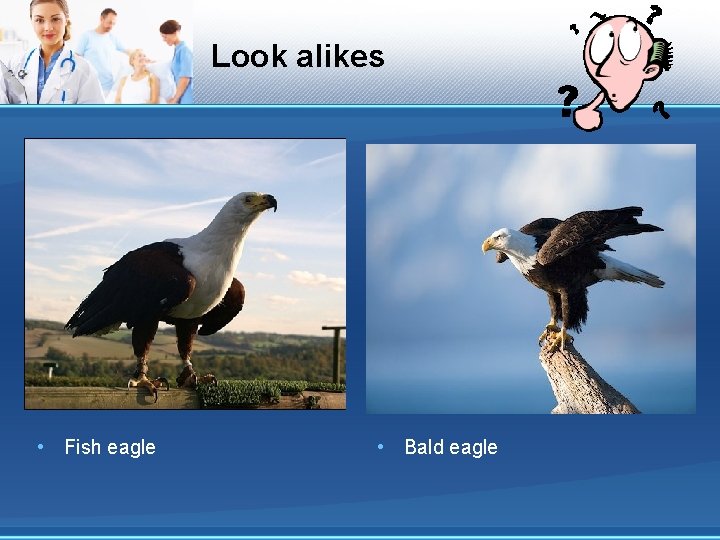
Look alikes • Fish eagle • Bald eagle
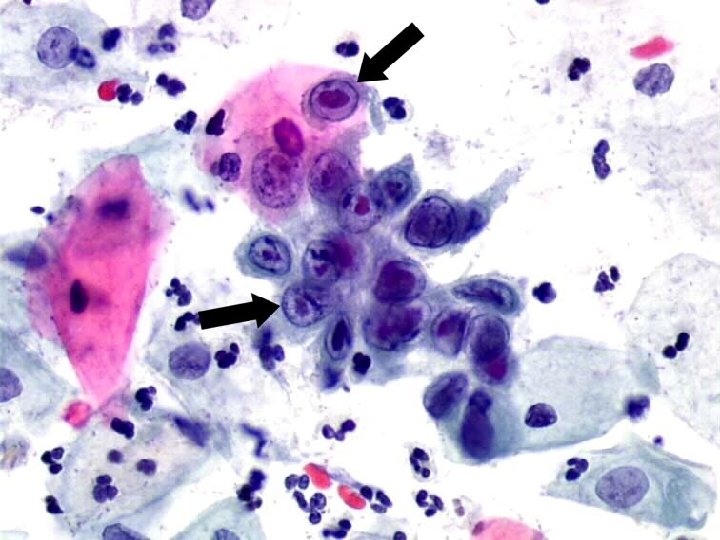
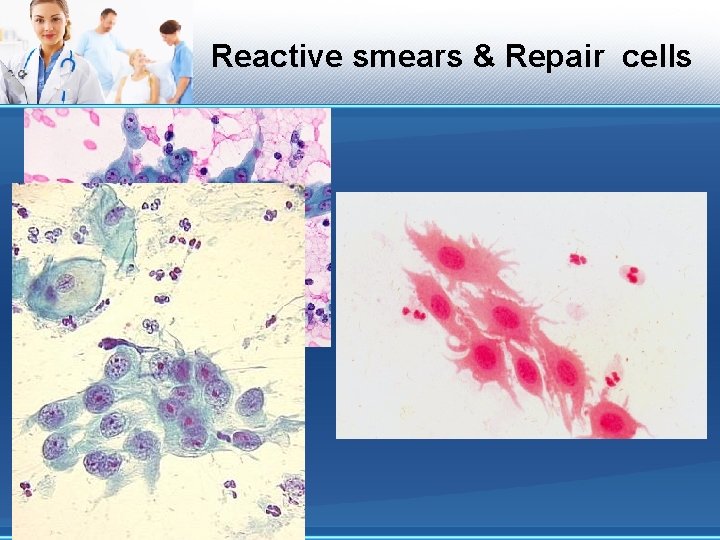
Reactive smears & Repair cells
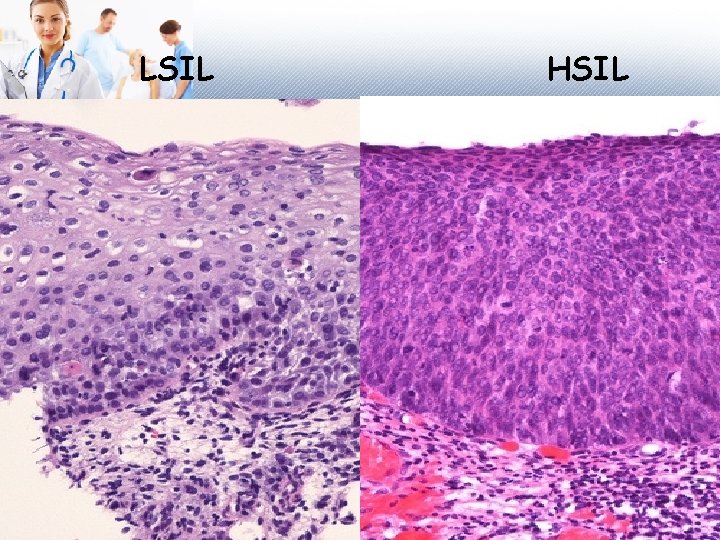
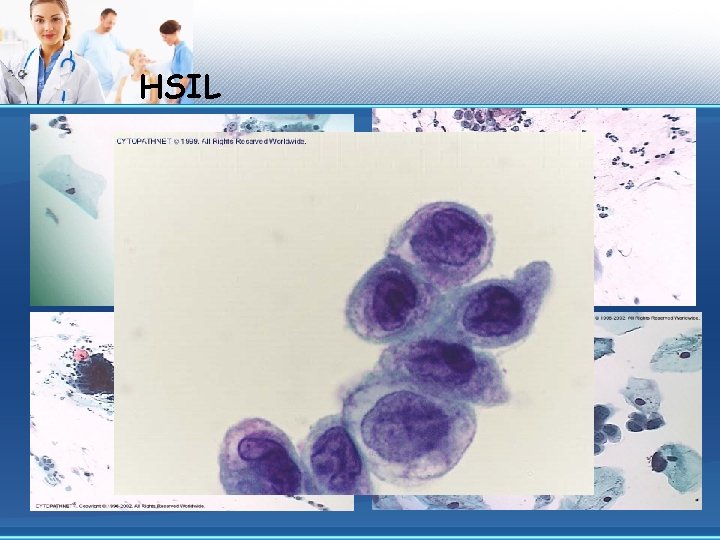
Squamous Intraepithelial Lesion Low grade LSIL High grade HSIL
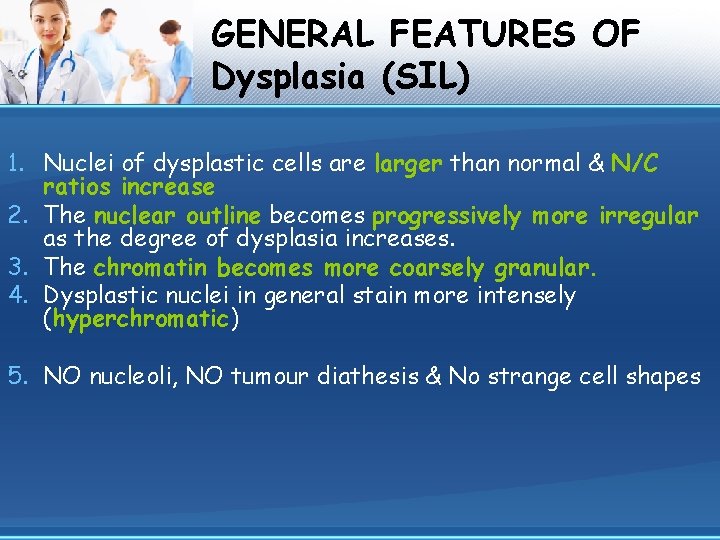
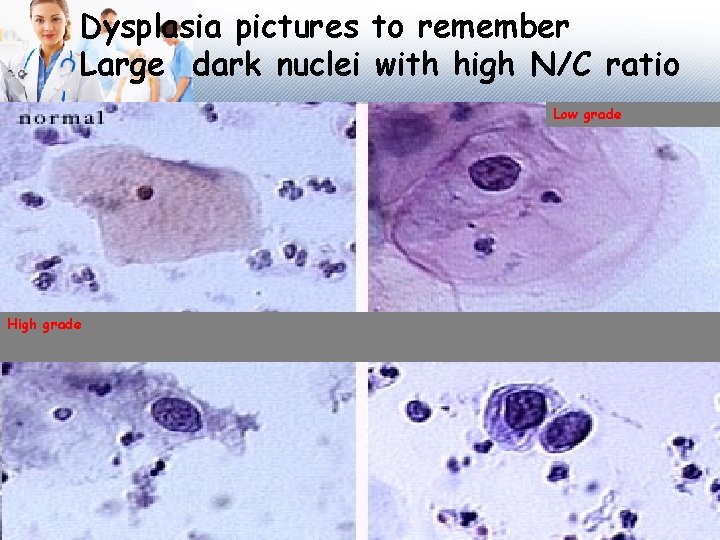
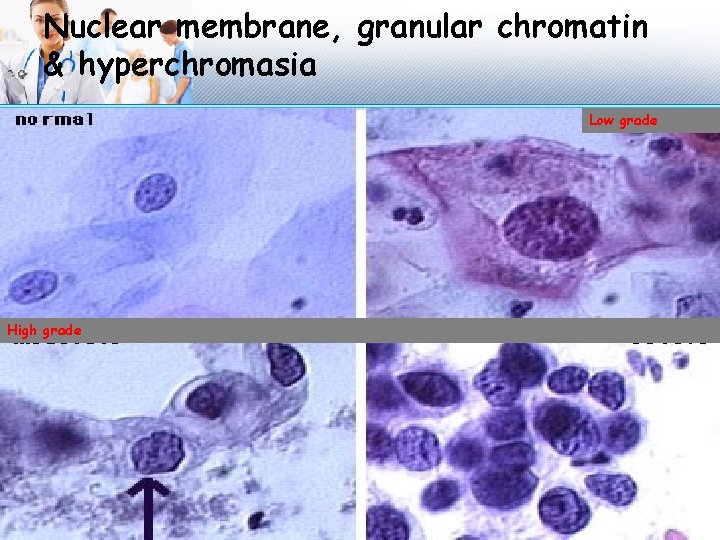
GENERAL FEATURES OF Dysplasia (SIL) 1. Nuclei of dysplastic cells are larger than normal & N/C ratios increase 2. The nuclear outline becomes progressively more irregular as the degree of dysplasia increases. 3. The chromatin becomes more coarsely granular. 4. Dysplastic nuclei in general stain more intensely (hyperchromatic) 5. NO nucleoli, NO tumour diathesis & No strange cell shapes
Dysplasia pictures to remember Large dark nuclei with high N/C ratio Low grade High grade
Nuclear membrane, granular chromatin & hyperchromasia Low grade High grade
LSIL HSIL
Atypical Squamous cells of undetermined significance ASC-US Atypical Squamous cells cannot exclude high grade lesion ASC-H Atypical Glandular cells of undetermined significance AG-US Atypical Squamous cells cannot exclude high grade lesion/adenocarcinoma AGC-H
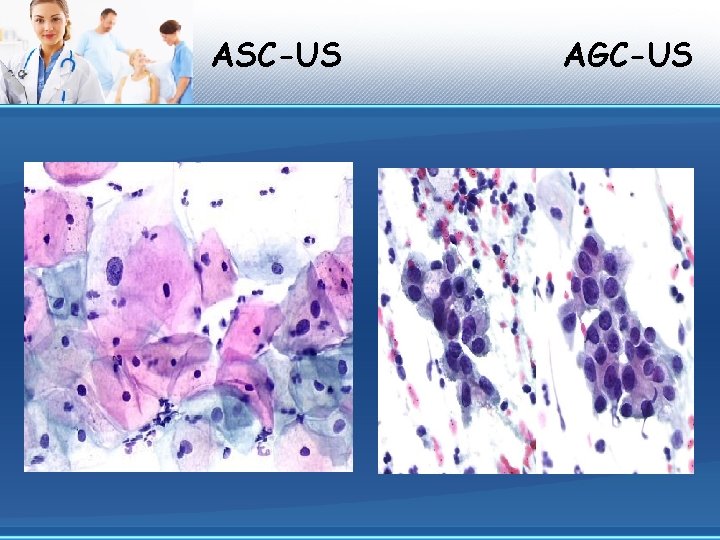
ASC-US AGC-US
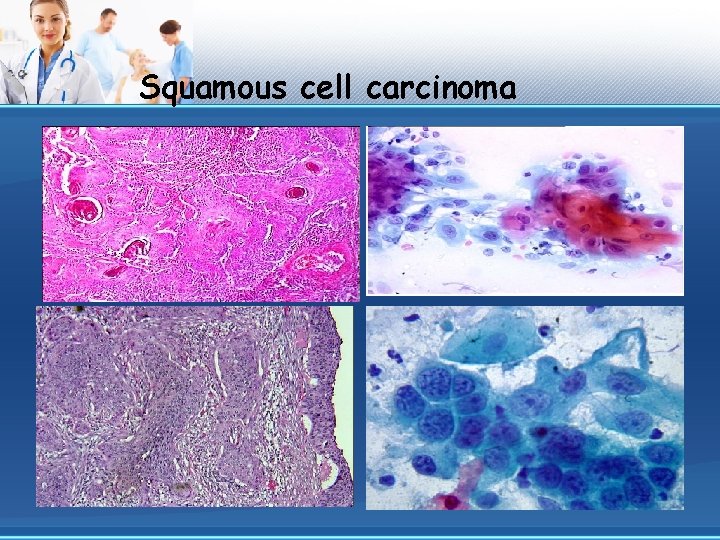
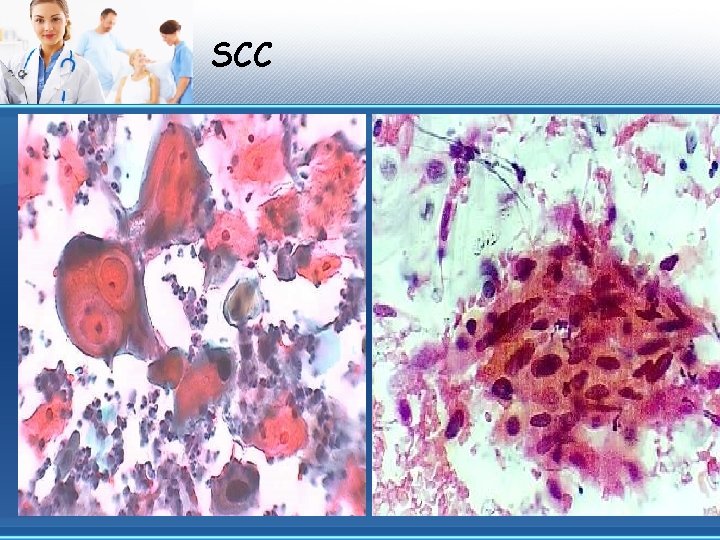
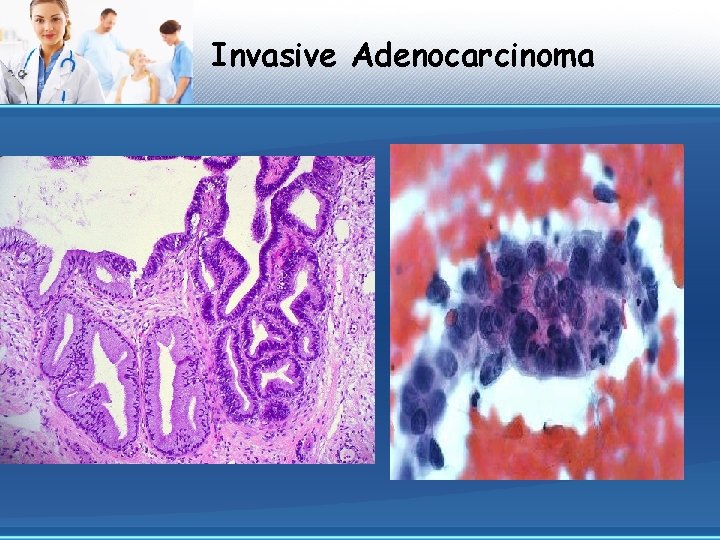
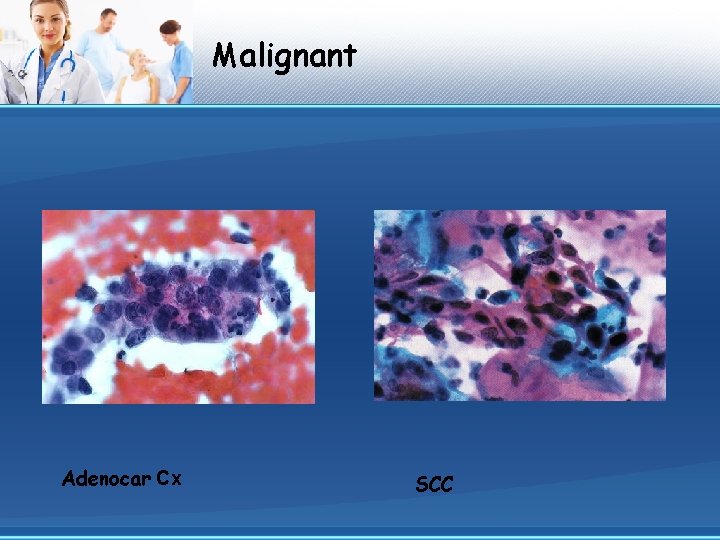
Malignancy Squamous cell carcinoma Adenocarcinoma
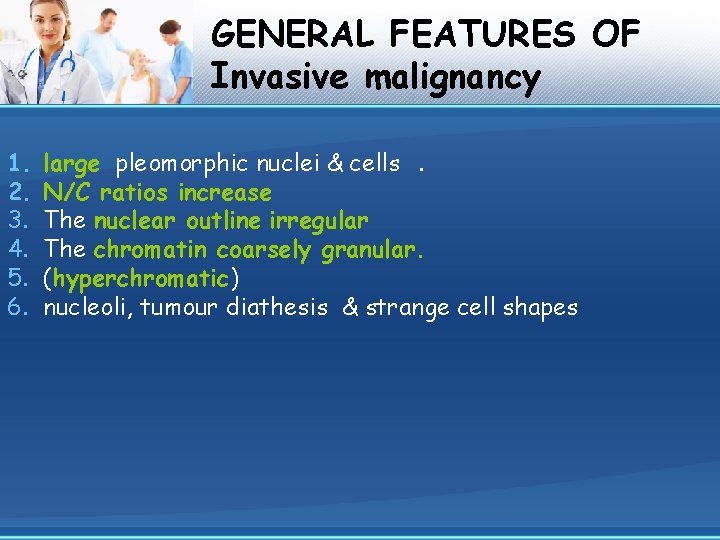
GENERAL FEATURES OF Invasive malignancy 1. 2. 3. 4. 5. 6. large pleomorphic nuclei & cells. N/C ratios increase The nuclear outline irregular The chromatin coarsely granular. (hyperchromatic) nucleoli, tumour diathesis & strange cell shapes
Squamous cell carcinoma
SCC
Invasive Adenocarcinoma
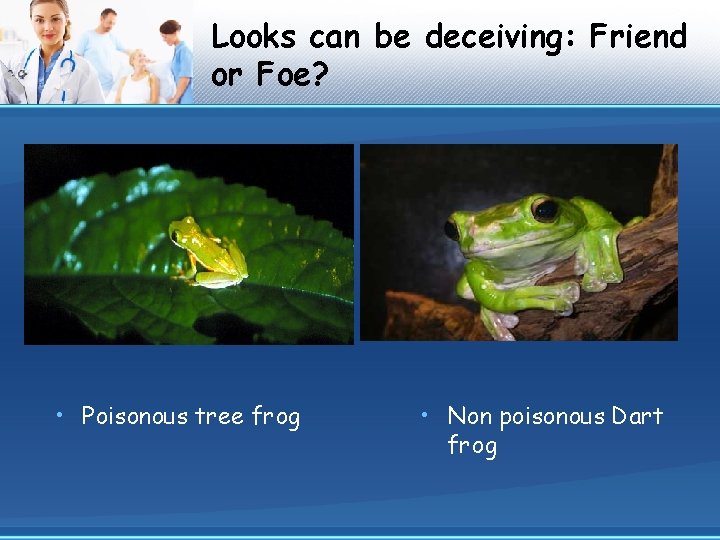
Looks can be deceiving: Friend or Foe? • Poisonous tree frog • Non poisonous Dart frog
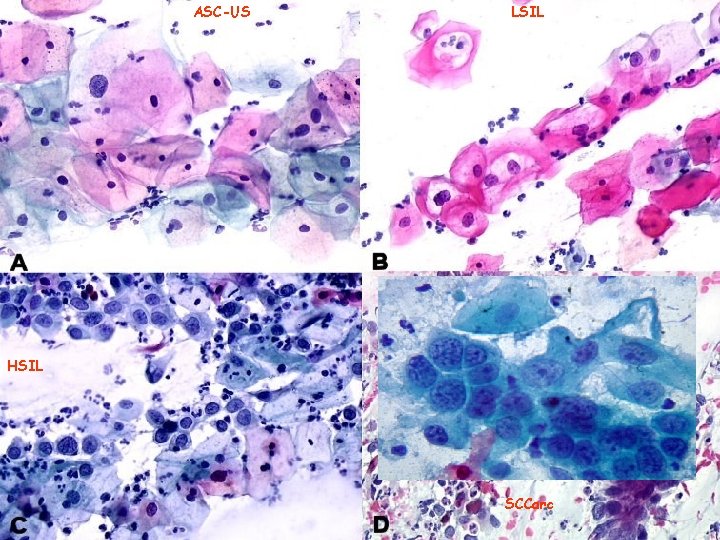
ASC-US LSIL HSIL SCCarc
PAP smears are important to select those women who need further evaluation 7 -10% of those screened will need more evaluation TT decisions are based on histologic examination
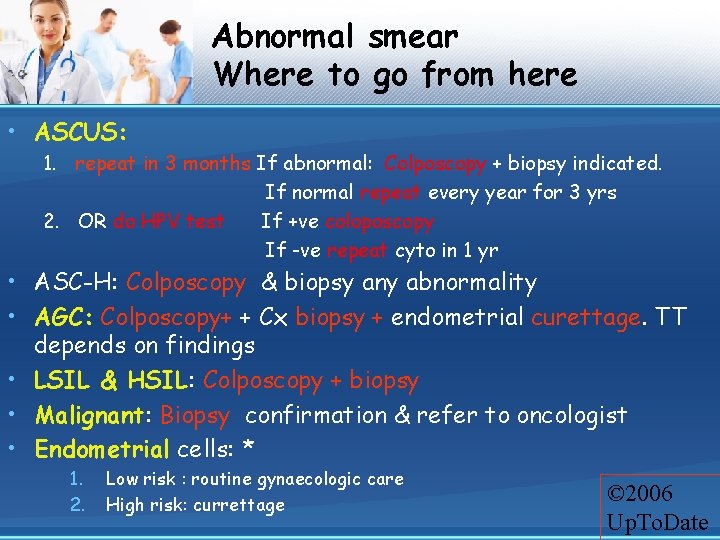
Abnormal smear Where to go from here • ASCUS: 1. repeat in 3 months If abnormal: Colposcopy + biopsy indicated. If normal repeat every year for 3 yrs 2. OR do HPV test If +ve coloposcopy If -ve repeat cyto in 1 yr • ASC-H: Colposcopy & biopsy any abnormality • AGC: Colposcopy+ + Cx biopsy + endometrial curettage. TT depends on findings • LSIL & HSIL: Colposcopy + biopsy • Malignant: Biopsy confirmation & refer to oncologist • Endometrial cells: * 1. 2. Low risk : routine gynaecologic care High risk: currettage © 2006 Up. To. Date
Lets figure these out
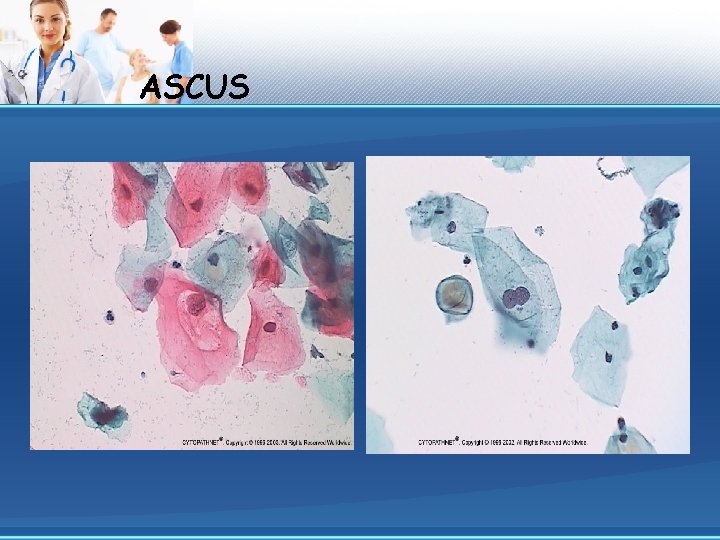
ASCUS
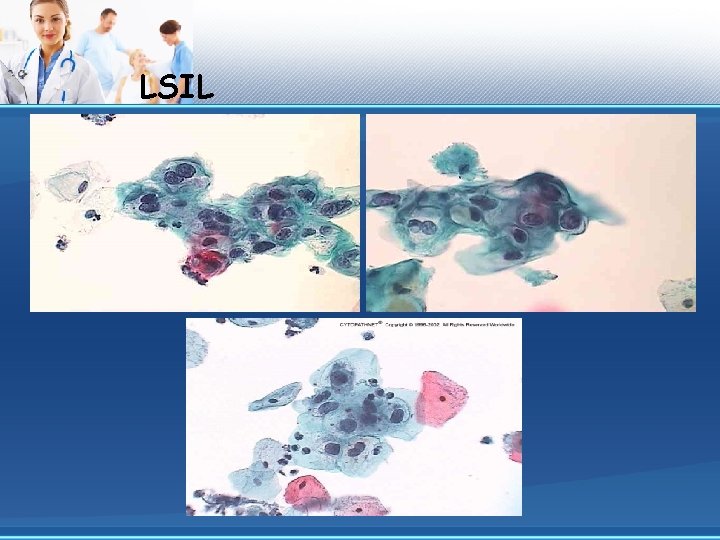
LSIL
HSIL
Malignant Adenocar Cx SCC
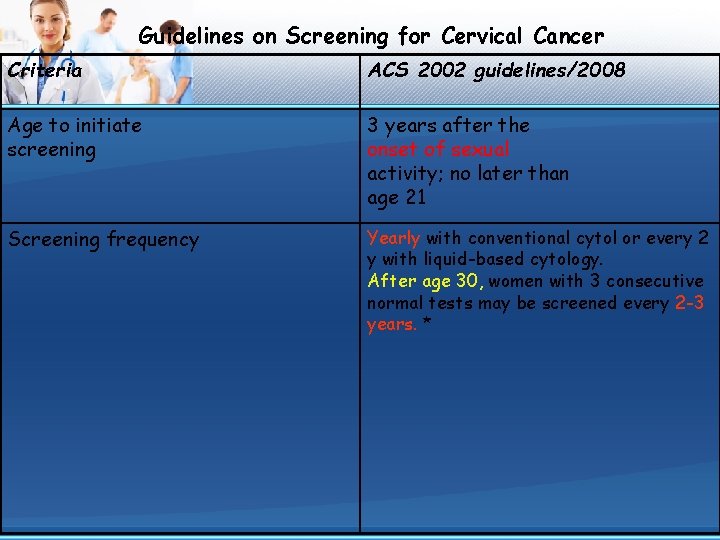
Guidelines on Screening for Cervical Cancer Criteria ACS 2002 guidelines/2008 Age to initiate screening 3 years after the onset of sexual activity; no later than age 21 Screening frequency Yearly with conventional cytol or every 2 y with liquid-based cytology. After age 30, women with 3 consecutive normal tests may be screened every 2 -3 years. *
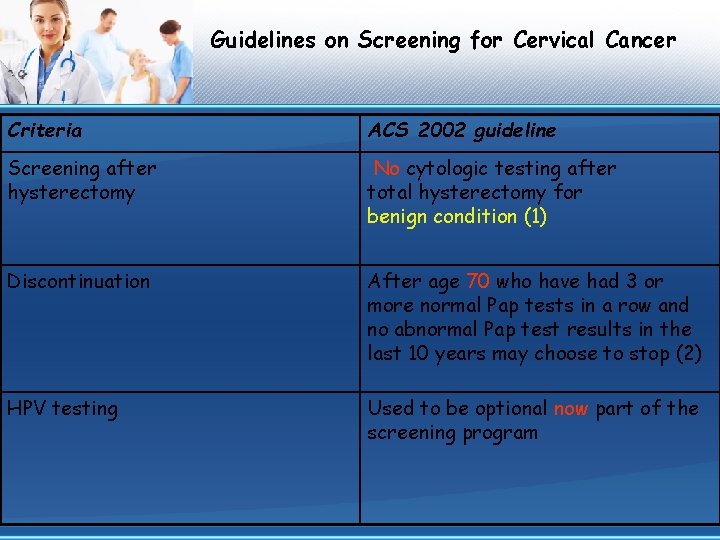
Guidelines on Screening for Cervical Cancer Criteria ACS 2002 guideline Screening after hysterectomy No cytologic testing after total hysterectomy for benign condition (1) Discontinuation After age 70 who have had 3 or more normal Pap tests in a row and no abnormal Pap test results in the last 10 years may choose to stop (2) HPV testing Used to be optional now part of the screening program
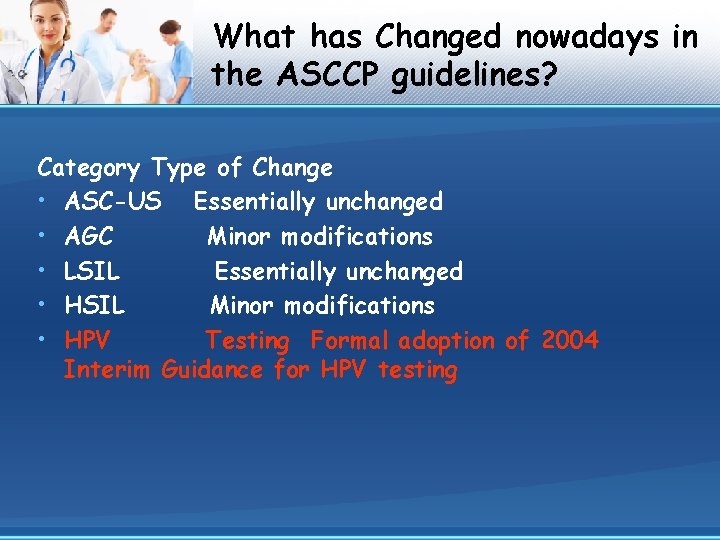
What has Changed nowadays in the ASCCP guidelines? Category Type of Change • ASC-US Essentially unchanged • AGC Minor modifications • LSIL Essentially unchanged • HSIL Minor modifications • HPV Testing Formal adoption of 2004 Interim Guidance for HPV testing
Still wondering? or Satisfied?
Cells we may come across in PAP smears Soheir Mahfouz 9/18/2020 Self Study Series- Soheir Mahfouz 52
Resources 1. Kasr Al Ainy collection 2. Personal collection 3. WHO gynecologic cytology slide series 4. 1973 Tutorials of Cytology- Intl cytology slide sets Univ of Rochester, New York USA 5. The Bethesda System 2001 6. Atlas of Diagnostic Cytopathology, 1 e Barbara F. Atkinson MD (Author) - urine cytology 7. Cytopathology by Zuher M. Naib 1996 9/18/2020 Self Study Series- Soheir Mahfouz 53
Web Resources 1. 2. 3. 4. 5. 6. 7. 8. 9. 10. 11. 12. 13. 14. 15. 9/18/2020 http: //pathed. upstate. edu/cytology/images/ref_img/col_papconv. jpg Kasr Al Ainy Cytology images Bibbo & Weid Look alikes in gynecologic cytology http: //www. fpnotebook. com/Gyn. Cervical. Colposcopy. Squamocolumnar. Junction 3. jpg&imgrefurl=http: //ww w. fpnotebook. com/GYN 36. htm&h=325&w=359&sz=83&hl=en&start=2&tbnid=Vvfo. Nw. Cb. TOzxt. M: &tbnh= 110&tbnw=121&prev=/images%3 Fq%3 Dcervical%2 Bcolposcopy%2 Bimages%26 svnum%3 D 10%26 hl% 3 Den%26 lr%3 D%26 rls%3 DRNWI, RNWI: 2005 -47, RNWI: en http: //pathology 2. jhu. edu/cyto_tutorial/ http: //www. ec. upstate. edu/cyto/index. html http: //www. cytopathology. org/NIH/ http: //www. bccancer. bc. ca/HPI/Education/Cyto. Sleuth. Quiz/default. htm http: //dpalm. med. uth. tmc. edu/cytopath/cytologyimages. htm http: //screening. iarc. fr/index. php www. nwcsqarc. org. uk/colpcourse. htm WHO gynecologic cytology slide series http: //screening. iarc. fr/atlascyto Guidelines for obtaining a PAP smear http: //www. sh. 1 suhsc. edu/fammed/Outpatient. Manual/Pap Smear. htm http: //screening. iarc. fr/index. phpwww. nwcsqarc. org. uk/colpcourse. htm Self Study Series- Soheir Mahfouz 54
Thank you