
The Palaeolithic Age 1 ESO Introduction to History
- Slides: 13
The Palaeolithic Age
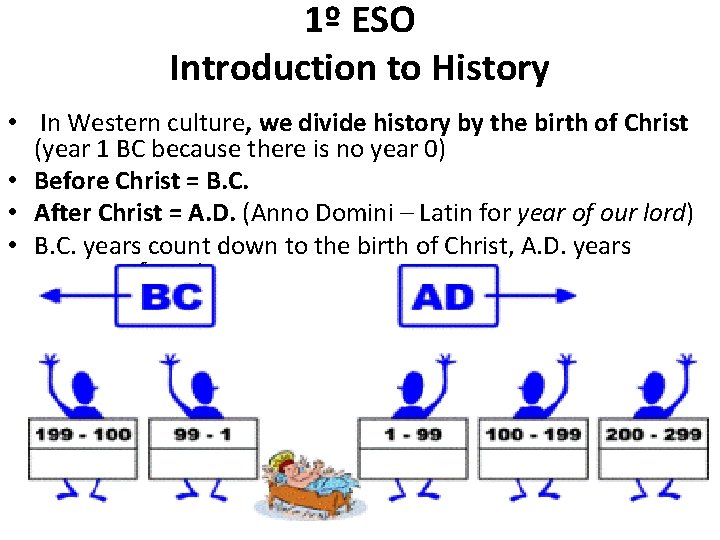
1º ESO Introduction to History • In Western culture, we divide history by the birth of Christ (year 1 BC because there is no year 0) • Before Christ = B. C. • After Christ = A. D. (Anno Domini – Latin for year of our lord) • B. C. years count down to the birth of Christ, A. D. years count up from it.
1 st, 2 nd, 3 rd Centuries… • So, the years 1 -99 AD = 1 st Century AD, 100 -199 AD= 2 nd century AD, 200 -299=3 rd century AD etc. Also the years 99 -1 BC = 1 st century BC and 199 -100 BC = 2 nd century BC, 299 -200 BC = 3 rd century BC etc. • Quiz: What century is the year 401 A. D. in? What about 399 B. C. ? What about 1995 A. D. ? What about 2030 A. D. ?
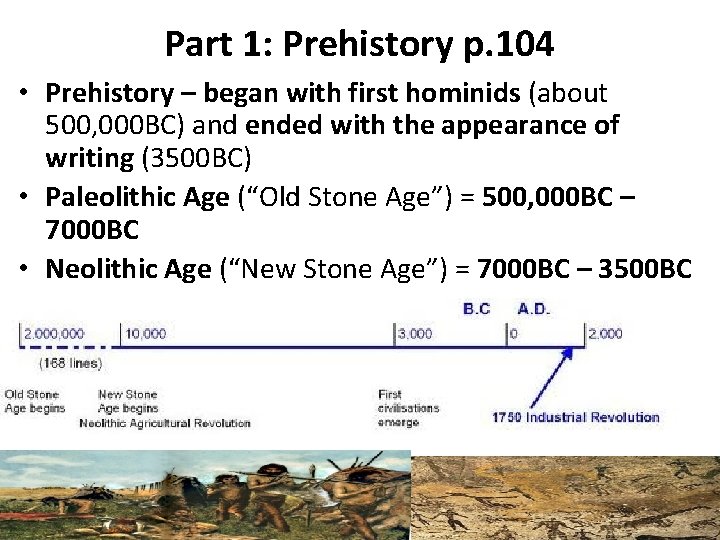
Part 1: Prehistory p. 104 • Prehistory – began with first hominids (about 500, 000 BC) and ended with the appearance of writing (3500 BC) • Paleolithic Age (“Old Stone Age”) = 500, 000 BC – 7000 BC • Neolithic Age (“New Stone Age”) = 7000 BC – 3500 BC
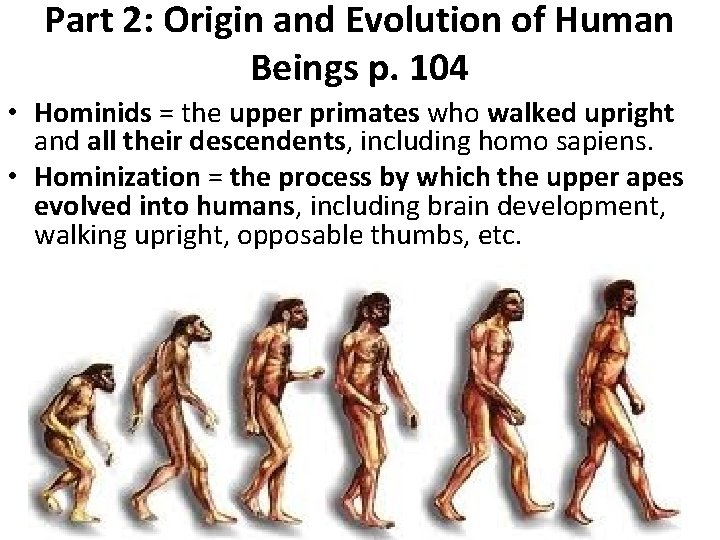
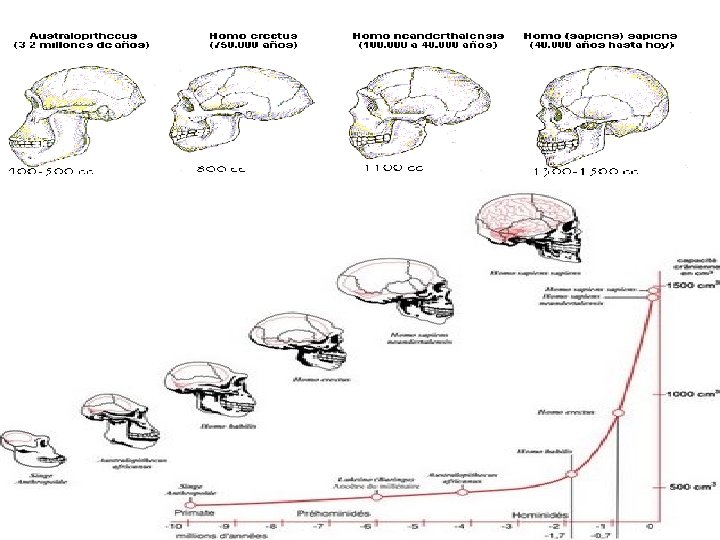
Part 2: Origin and Evolution of Human Beings p. 104 • Hominids = the upper primates who walked upright and all their descendents, including homo sapiens. • Hominization = the process by which the upper apes evolved into humans, including brain development, walking upright, opposable thumbs, etc.
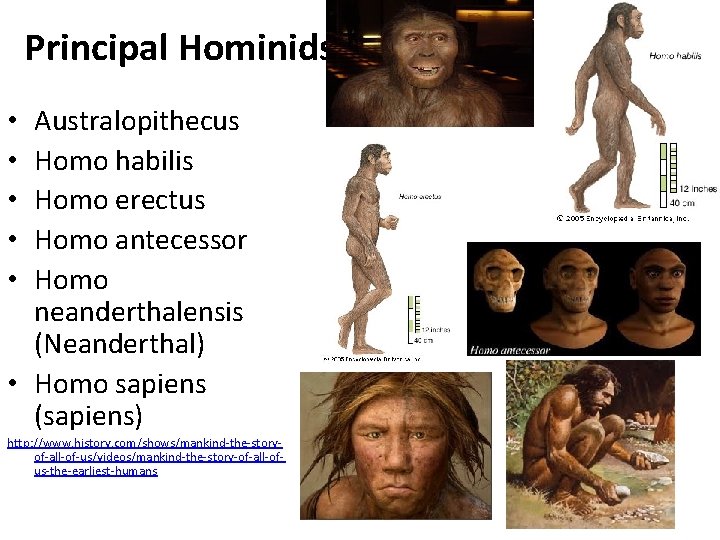
Principal Hominids Australopithecus Homo habilis Homo erectus Homo antecessor Homo neanderthalensis (Neanderthal) • Homo sapiens (sapiens) • • • http: //www. history. com/shows/mankind-the-storyof-all-of-us/videos/mankind-the-story-of-all-ofus-the-earliest-humans
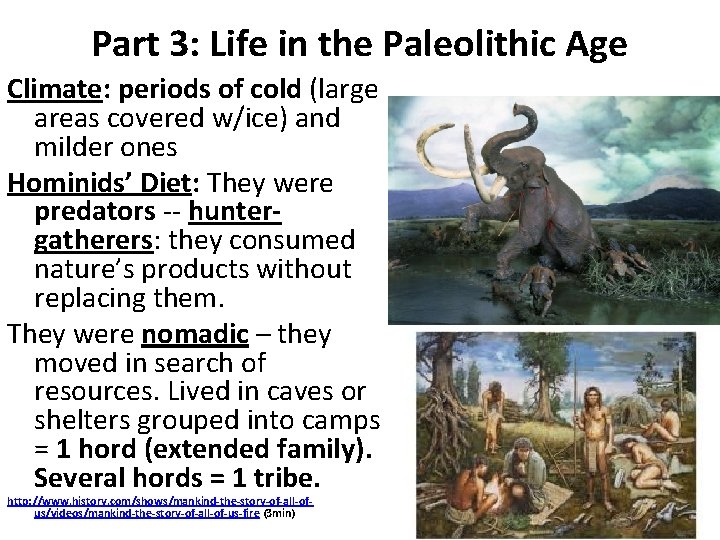
Part 3: Life in the Paleolithic Age Climate: periods of cold (large areas covered w/ice) and milder ones Hominids’ Diet: They were predators -- huntergatherers: they consumed nature’s products without replacing them. They were nomadic – they moved in search of resources. Lived in caves or shelters grouped into camps = 1 hord (extended family). Several hords = 1 tribe. http: //www. history. com/shows/mankind-the-story-of-all-ofus/videos/mankind-the-story-of-all-of-us-fire (3 min)
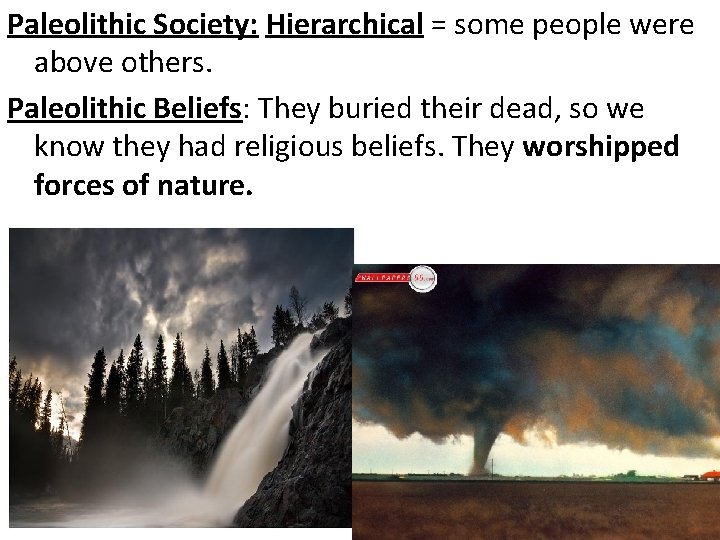
Paleolithic Society: Hierarchical = some people were above others. Paleolithic Beliefs: They buried their dead, so we know they had religious beliefs. They worshipped forces of nature.
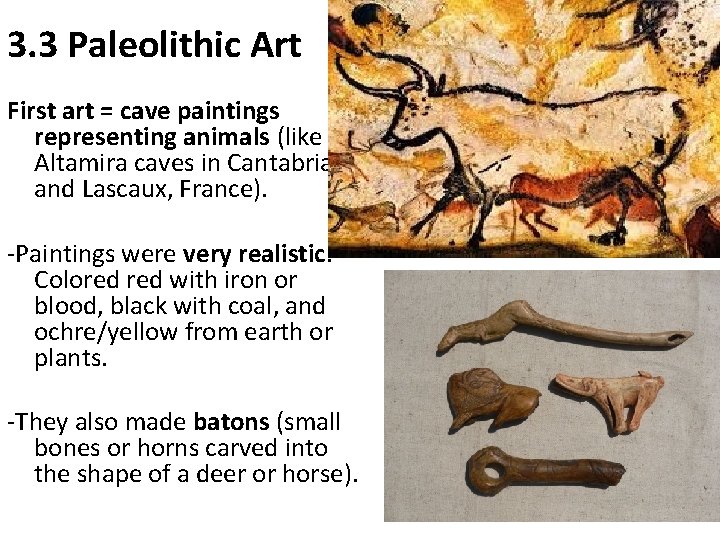
3. 3 Paleolithic Art First art = cave paintings representing animals (like in Altamira caves in Cantabria and Lascaux, France). -Paintings were very realistic. Colored with iron or blood, black with coal, and ochre/yellow from earth or plants. -They also made batons (small bones or horns carved into the shape of a deer or horse).
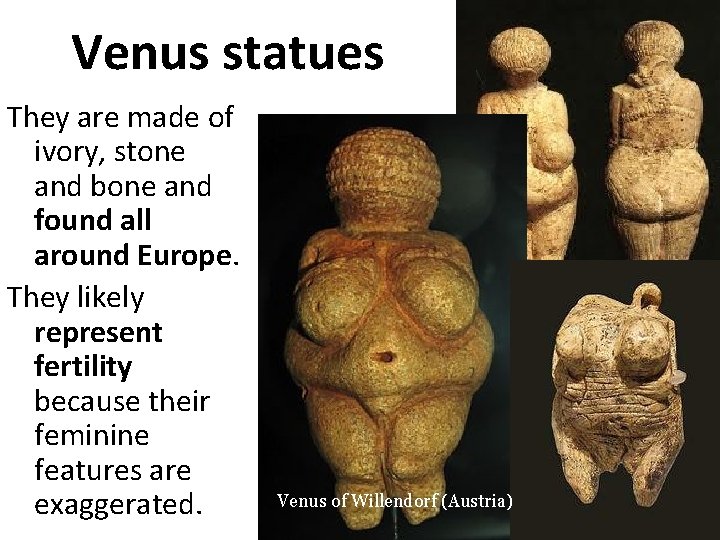
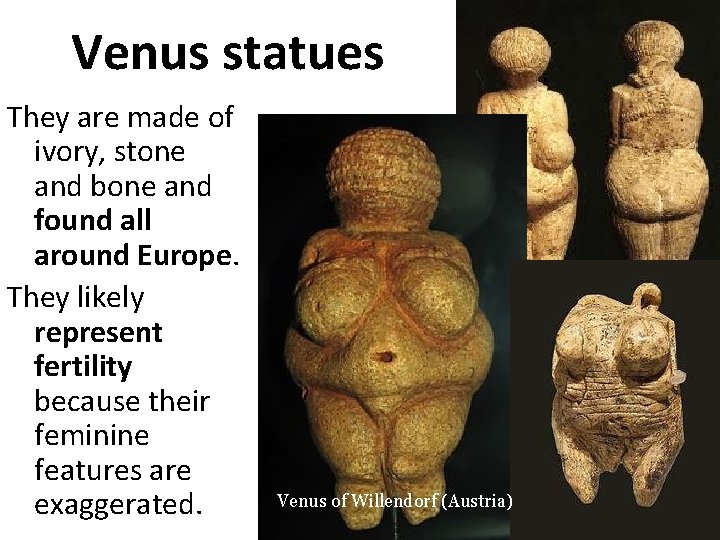
Venus statues They are made of ivory, stone and bone and found all around Europe. They likely represent fertility because their feminine features are exaggerated. Venus of Willendorf (Austria)
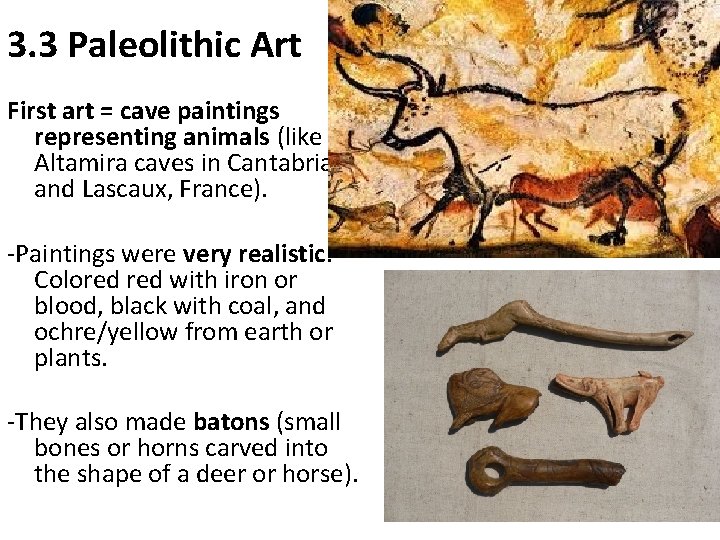
3. 3 Paleolithic Art First art = cave paintings representing animals (like in Altamira caves in Cantabria and Lascaux, France). -Paintings were very realistic. Colored with iron or blood, black with coal, and ochre/yellow from earth or plants. -They also made batons (small bones or horns carved into the shape of a deer or horse).
Venus statues They are made of ivory, stone and bone and found all around Europe. They likely represent fertility because their feminine features are exaggerated. Venus of Willendorf (Austria)