
The Overtone Series Derivation of Tonic Triad Tonal
- Slides: 13
The Overtone Series ¨ Derivation of Tonic Triad – Tonal Model ¨ Timbre ¨ Chord Spacing
Pitch ¨ The perception of pitch is a result of vibration. ¨ A body such as a string or column of air vibrates at a particular frequency producing a characteristic pitch. ¨ E. g. When a string vibrates at 440 cycles per second (Hz), the note A is perceived.
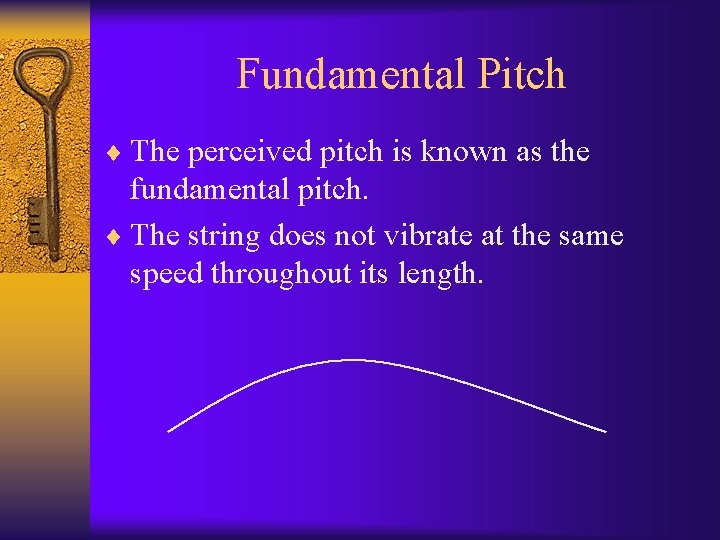
Fundamental Pitch ¨ The perceived pitch is known as the fundamental pitch. ¨ The string does not vibrate at the same speed throughout its length.
Overtones ¨ Halfway through the length of the string, it barely vibrates at all producing a node. ¨ This divides the string into two shorter strings lengths that each vibrate at twice the speed of the complete string. ¨ This produces another pitch an octave above the fundamental known as an overtone.
Many Overtones ¨ The string also vibrates over 1/3 of its length, 1/4 of its length and so on. ¨ The result is that there are many overtones produced above the fundamental pitch. ¨ These overtones are too soft to be individually perceived but are nevertheless present.
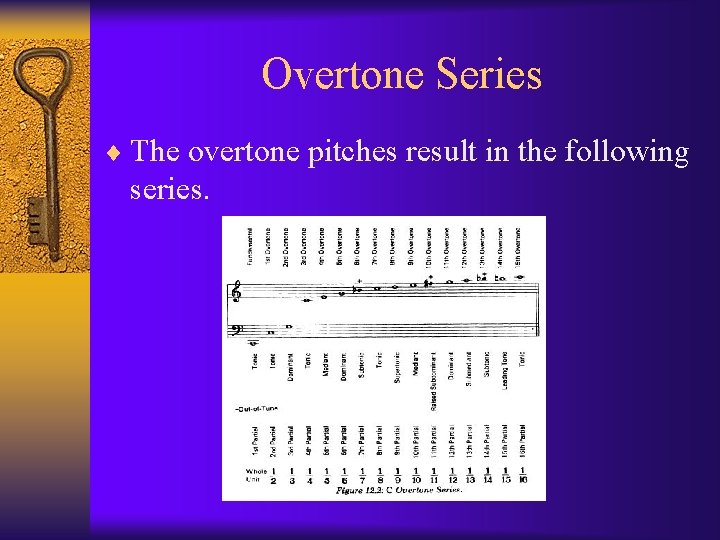
Overtone Series ¨ The overtone pitches result in the following series.
Tonic and Dominant ¨ Notice that the first two overtones correspond to the Tonic and Dominant Scale Degrees of the fundamental pitch’s scale. ¨ This accounts for the importance of tonic and dominant in tonal music as well as the tonal desire to move by fifths.
Tonic Triad ¨ Notice also that the fundamental and first five overtone pitches produce the tonic triad. ¨ This is often used to explain the tonal tendency to always want to return to the tonic triad.
Timbre ¨ Timbre refers to “colour” of sound. ¨ A clarinet and saxophone can play the same pitches but will sound different because of their timbre. ¨ Timbre results from the fact that instruments produce overtones with different amplitudes (volumes).
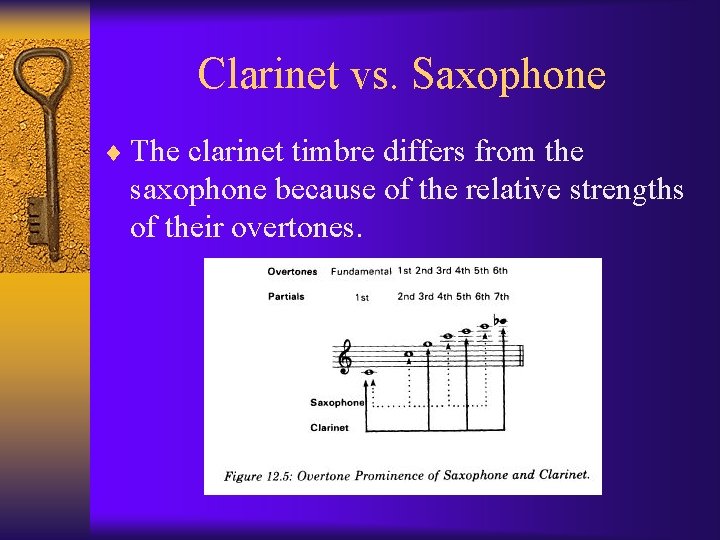
Clarinet vs. Saxophone ¨ The clarinet timbre differs from the saxophone because of the relative strengths of their overtones.
Flutey vs. Nasally ¨ Generally, an instrument that produces stronger overtones will have a more nasal sound (oboe). ¨ An instrument that has weaker overtones will sound more pure (flute). ¨ The stronger overtones account for the greater penetrating ability of the oboe but also for its reduced ability to blend with other instruments.
Spacing ¨ Traditional spacing of chords usually follows the overtone series. ¨ In other words, low pitches are separated by wider gaps than higher pitches. ¨ This is because the lower pitches have more perceptible overtones (within hearing range). ¨ A low pitch triad will therefore sound muddy (low triad on the piano).
Spacing Effects ¨ While the traditional model spaces notes according to the overtone series, interesting effects and chord colours can be created by counteracting the overtone series. ¨ A very dark sound can result from combining low instruments with small intervals.