
The Overlooked Evolutionary Dimension of Modern Fisheries Ulf


- Slides: 27
The Overlooked Evolutionary Dimension of Modern Fisheries Ulf Dieckmann 1 and Mikko Heino 2, 1 1 International Institute for Applied Systems Analysis, Austria 2 University of Bergen, Norway
Fishing the World’s Oceans • A large fraction of our living natural resources are extracted from the oceans • Annual production 100 million tonnes 17 kg per capita, on average 16% of world animal-protein supply US$ 85 billion • Yet, world fisheries are in a global crisis
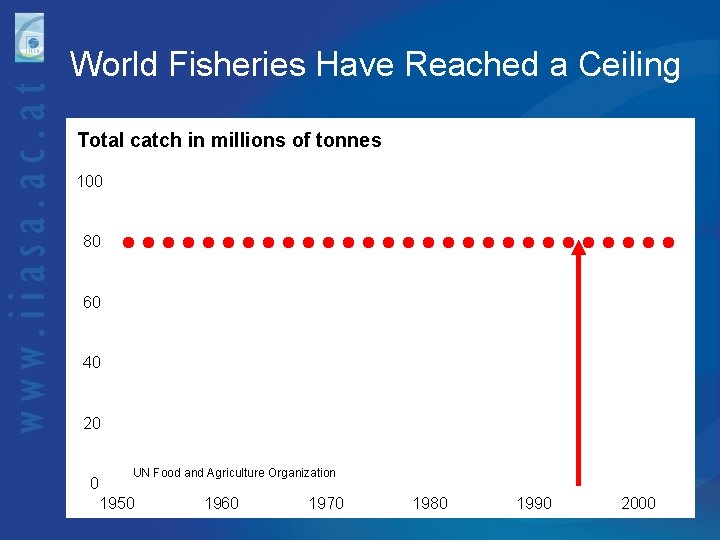
World Fisheries Have Reached a Ceiling Total catch in millions of tonnes 100 China 80 60 40 World excluding China 20 0 UN Food and Agriculture Organization 1950 1960 1970 1980 1990 2000
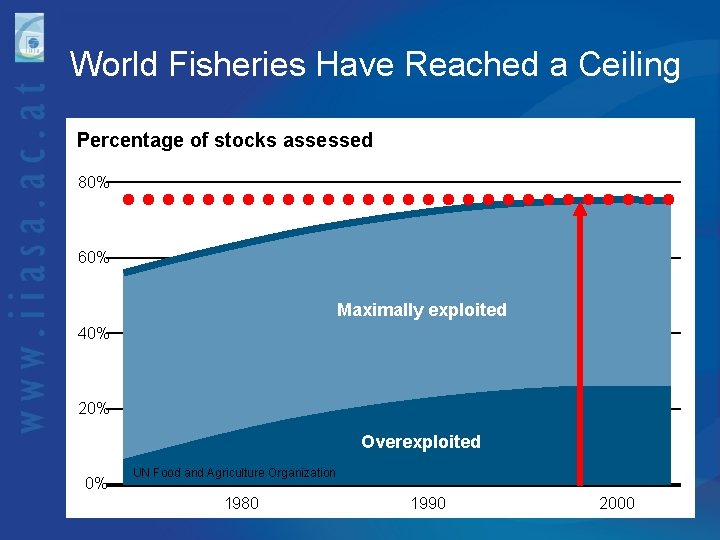
World Fisheries Have Reached a Ceiling Percentage of stocks assessed 80% 60% Maximally exploited 40% 20% Overexploited 0% UN Food and Agriculture Organization 1980 1990 2000
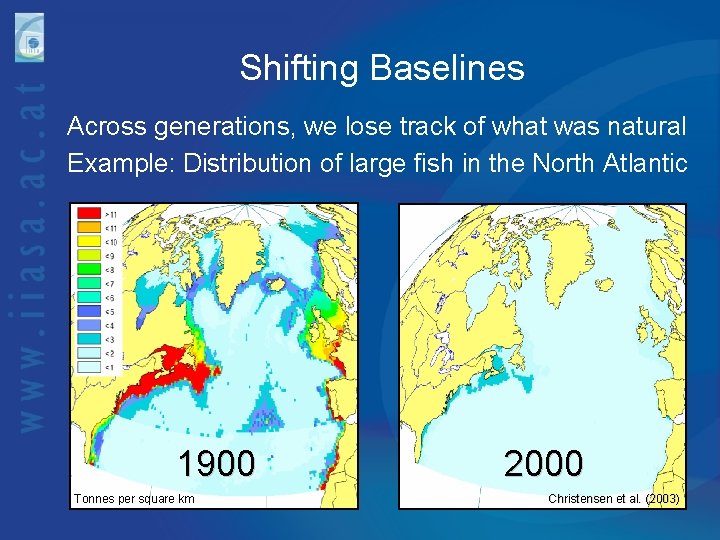
Shifting Baselines Across generations, we lose track of what was natural Example: Distribution of large fish in the North Atlantic 1900 Tonnes per square km 2000 Christensen et al. (2003)
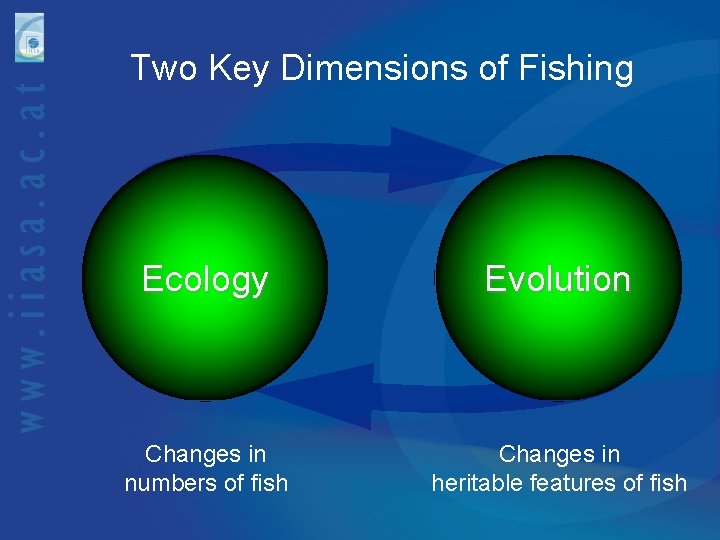
Two Key Dimensions of Fishing Ecology Evolution Changes in numbers of fish Changes in heritable features of fish
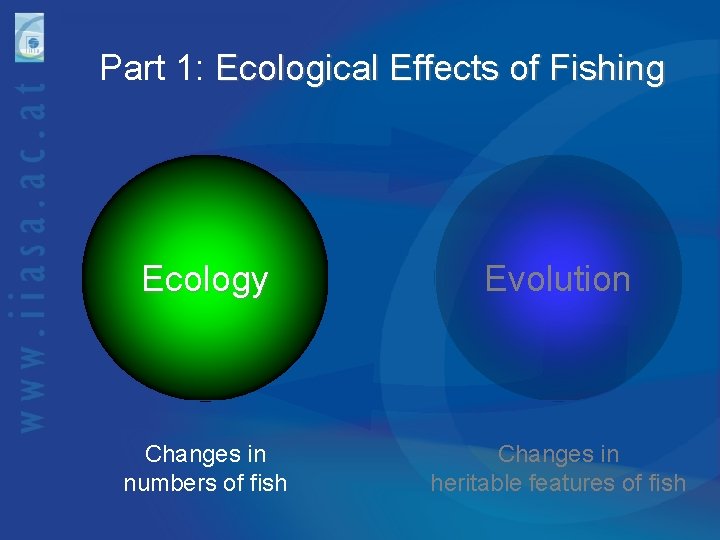
Part 1: Ecological Effects of Fishing Ecology Evolution Changes in numbers of fish Changes in heritable features of fish
Fishing Down the Food Web Once large fish are gone, small fish further down the food web are caught Pauly et al. (1998) © Nature Publishing Group
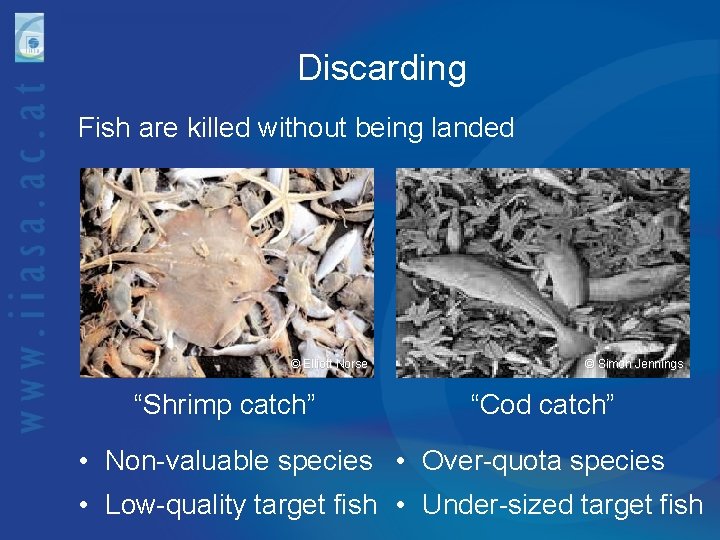
Discarding Fish are killed without being landed © Elliott Norse “Shrimp catch” © Simon Jennings “Cod catch” • Non-valuable species • Over-quota species • Low-quality target fish • Under-sized target fish
Collateral Damage Bottom trawls destroy ocean-floor ecosystems © Peter Auster
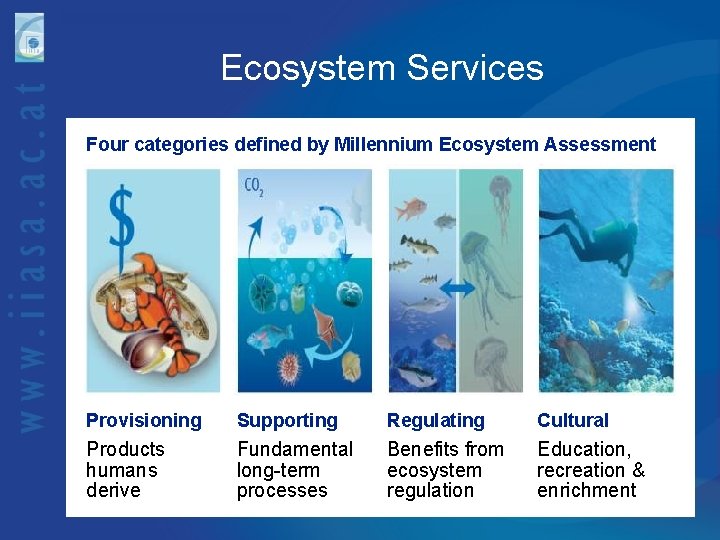
Ecosystem Services Four categories defined by Millennium Ecosystem Assessment Provisioning Supporting Regulating Cultural Products humans derive Fundamental long-term processes Benefits from ecosystem regulation Education, recreation & enrichment
Future Requirements • Reduced exploitation • Less discards and collateral damage • Ecosystem-based fisheries management • Precautionary approach to risks • Marine protected areas • Restoration to maximum sustainable yield (mandated by 2015 by the 2002 UN World Summit on Sustainable Development)
Part 2: Evolutionary Effects of Fishing Ecology Evolution Changes in numbers of fish Changes in heritable features of fish
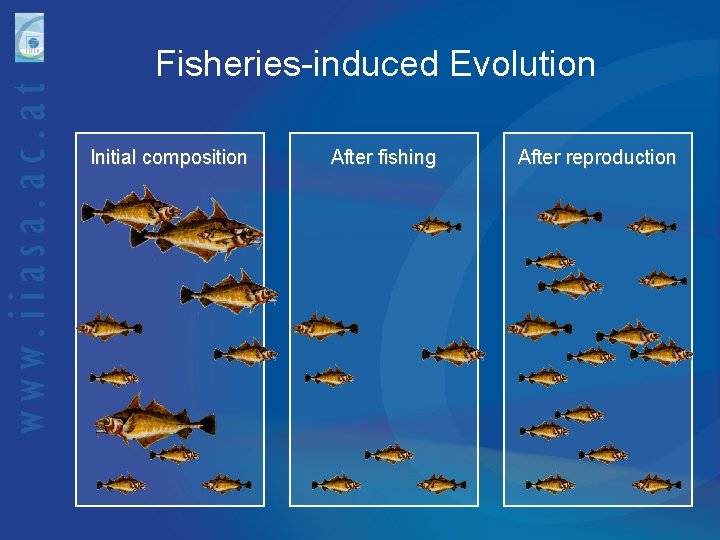
Fisheries-induced Evolution Initial composition After fishing After reproduction
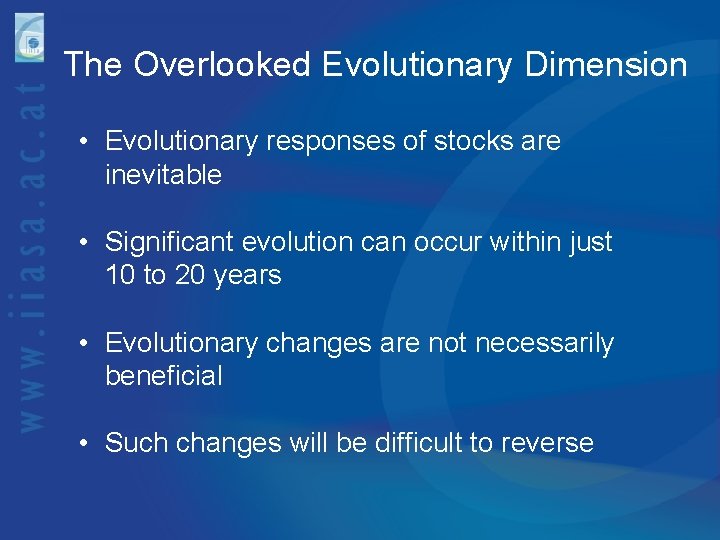
The Overlooked Evolutionary Dimension • Evolutionary responses of stocks are inevitable • Significant evolution can occur within just 10 to 20 years • Evolutionary changes are not necessarily beneficial • Such changes will be difficult to reverse
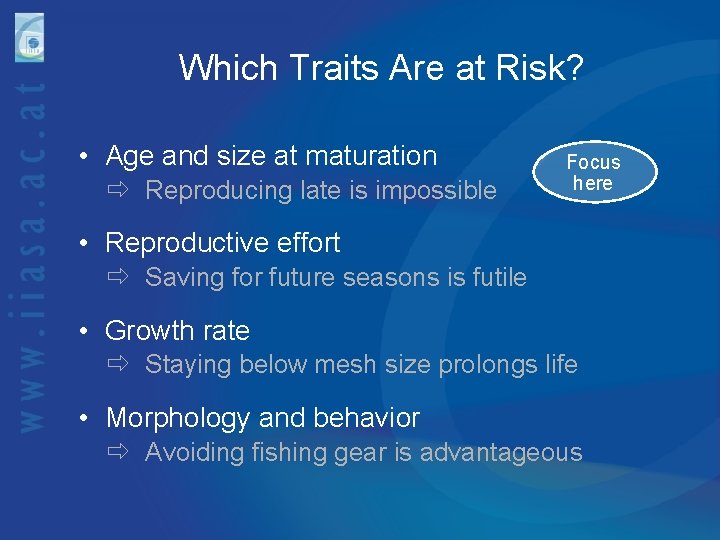
Which Traits Are at Risk? • Age and size at maturation Reproducing late is impossible Focus here • Reproductive effort Saving for future seasons is futile • Growth rate Staying below mesh size prolongs life • Morphology and behavior Avoiding fishing gear is advantageous
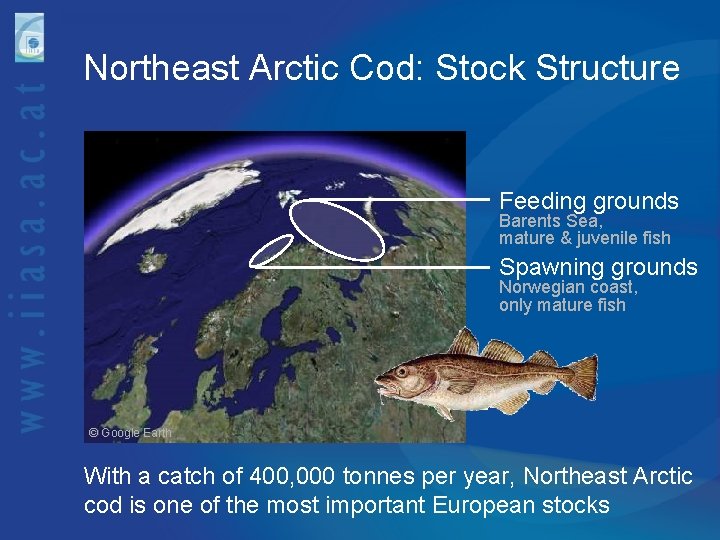
Northeast Arctic Cod: Stock Structure Feeding grounds Barents Sea, mature & juvenile fish Spawning grounds Norwegian coast, only mature fish © Google Earth With a catch of 400, 000 tonnes per year, Northeast Arctic cod is one of the most important European stocks
Northeast Arctic Cod: Fishing History • Fishing along the Norwegian coast has been intensive for centuries • Trawling in the Barents Sea started in the 1920 s and reached its current high level around 1960 • Evolution of earlier maturation at smaller size is thus expected
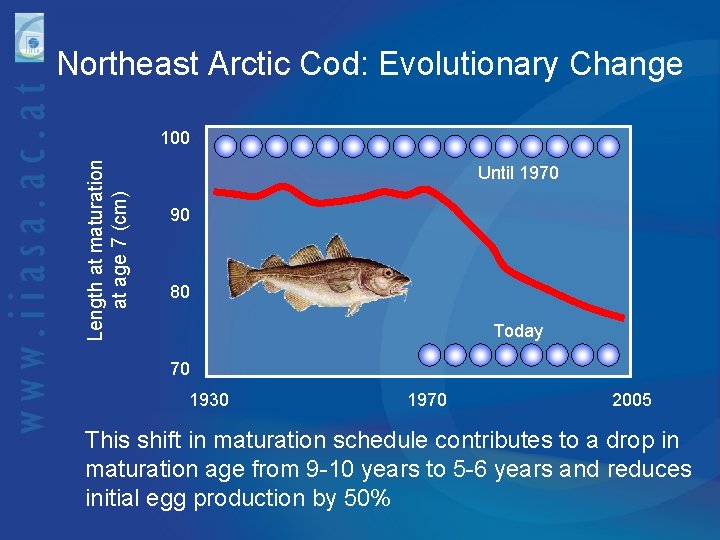
Northeast Arctic Cod: Evolutionary Change Length at maturation at age 7 (cm) 100 Until 1970 90 80 Today 70 1930 1970 2005 This shift in maturation schedule contributes to a drop in maturation age from 9 -10 years to 5 -6 years and reduces initial egg production by 50%
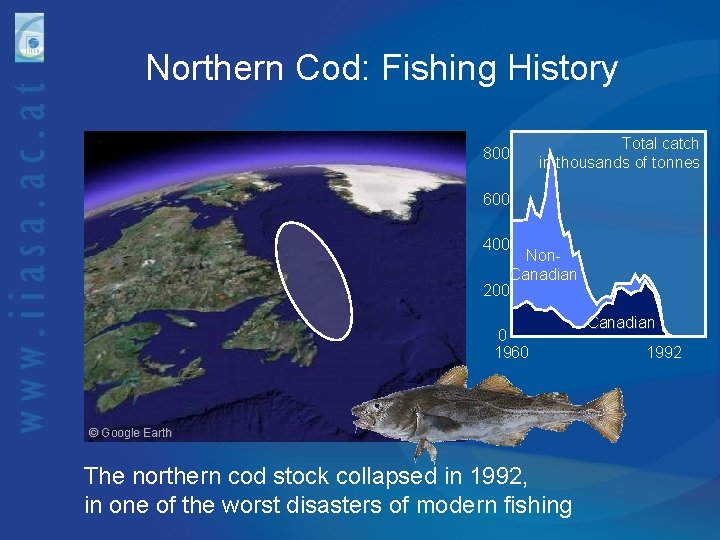
Northern Cod: Fishing History 800 Total catch in thousands of tonnes 600 400 Non. Canadian 200 0 1960 © Google Earth The northern cod stock collapsed in 1992, in one of the worst disasters of modern fishing Canadian 1992
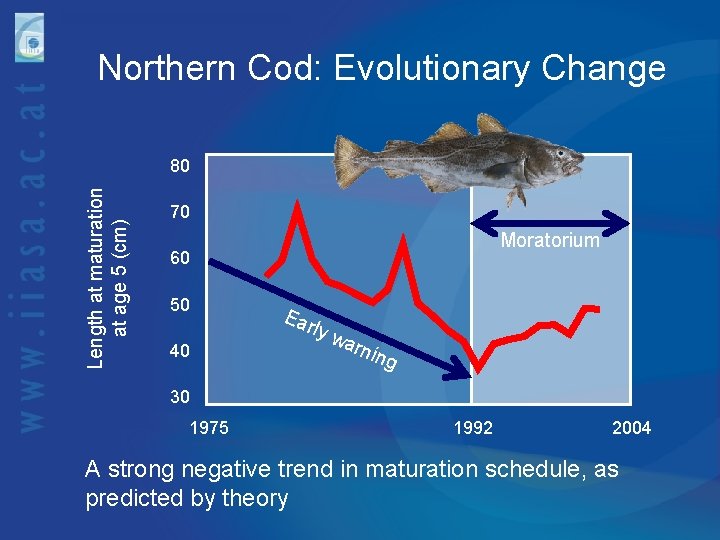
Northern Cod: Evolutionary Change Length at maturation at age 5 (cm) 80 70 Moratorium 60 50 40 Ear ly w arn ing 30 1975 1992 2004 A strong negative trend in maturation schedule, as predicted by theory
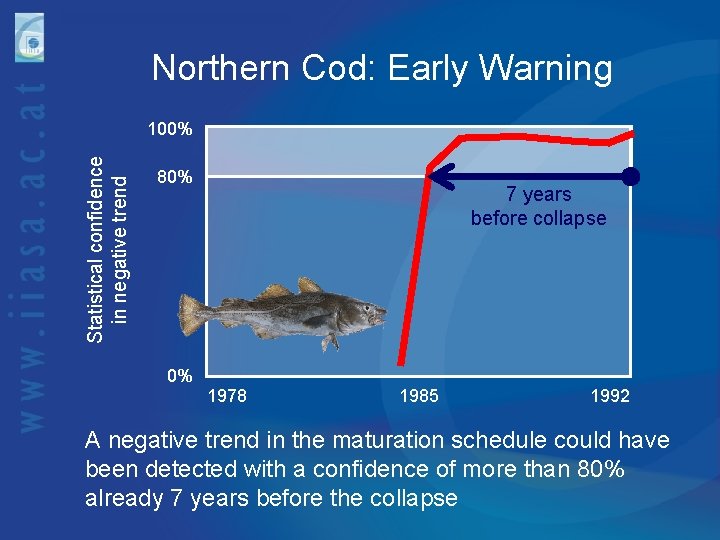
Northern Cod: Early Warning Statistical confidence in negative trend 100% 80% 0% 7 years before collapse 1978 1985 1992 A negative trend in the maturation schedule could have been detected with a confidence of more than 80% already 7 years before the collapse
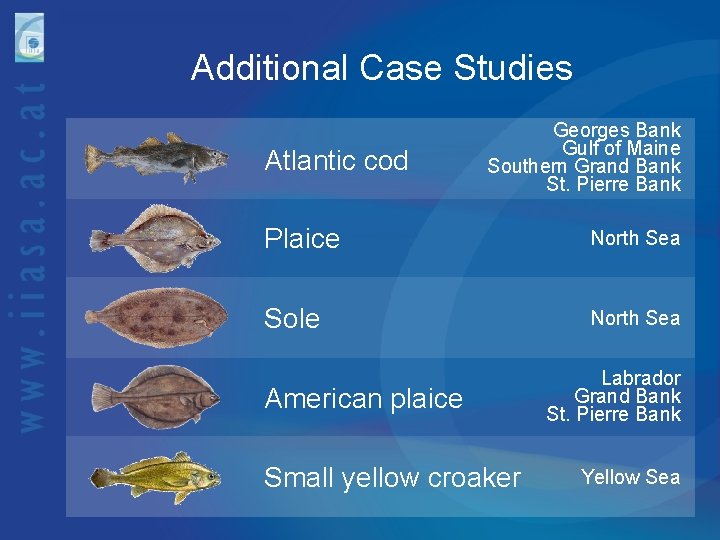
Additional Case Studies Atlantic cod Georges Bank Gulf of Maine Southern Grand Bank St. Pierre Bank Plaice North Sea Sole North Sea American plaice Small yellow croaker Labrador Grand Bank St. Pierre Bank Yellow Sea
Modeling Fisheries-induced Evolution • To understand past fisheries-induced evolution • To forecast the direction, speed, and outcome of future fisheries-induced evolution • To predict the evolutionary vulnerability of species and stocks • To investigate the consequences of alternative management scenarios
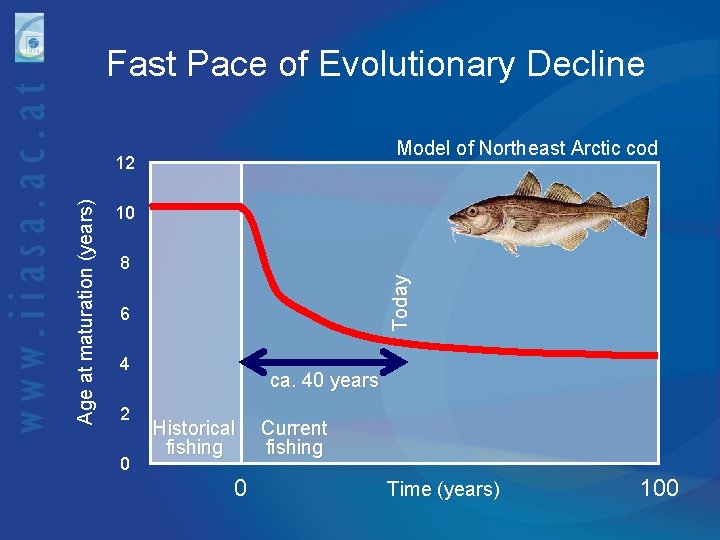
Fast Pace of Evolutionary Decline Model of Northeast Arctic cod 10 8 Today Age at maturation (years) 12 6 4 2 0 ca. 40 years Historical fishing 0 Current fishing Time (years) 100
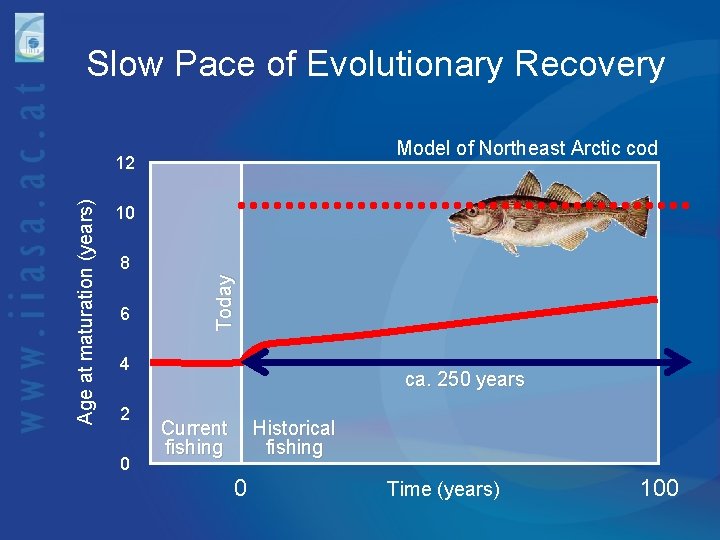
Slow Pace of Evolutionary Recovery Model of Northeast Arctic cod 10 8 6 Today Age at maturation (years) 12 4 2 0 ca. 250 years Current fishing Historical fishing 0 Time (years) 100
Conclusions • Fisheries-induced evolution has been with us for several decades without having been properly recognized • The speed of such evolution is much faster than previously believed • Fisheries-induced evolution affects demography and thus yield, stock stability, and recovery potential • Models suggest that each year during which current exploitation continues may require several years of evolutionary recovery: A “Darwinian debt” to be paid by future generations