
The outbreak of cooperation among successdriven individuals under
The outbreak of cooperation among successdriven individuals under noisy conditions Success-driven migration and imitation as a driver for cooperative behavior Arvid Boström, Axel Zeijen | 21. 11. 2020 | 1
Context and content § Evolutionary game theory as a model to explain cooperation in interactions, based on prisoner’s dilemma § Main addition to existing literature is success-driven migration § Agent-based model with set of parameters § Simulations with varying conditions § Discussion & Conclusion Arvid Boström, Axel Zeijen | 21. 11. 2020 | 2
The model § Prisoner’s dilemma T>R>P>S, two types of behavior § People in grid, interact with <=4 neighbors for an outcome § Comparison with neighbors for best strategy, then: § Check for ‘better’ areas around you, and move § Imitate neighbors with better outcomes § Possibility of ‘noise’ (randomness) in strategy and relocation § Implications: cooperation is fragile! Arvid Boström, Axel Zeijen | 21. 11. 2020 | 3
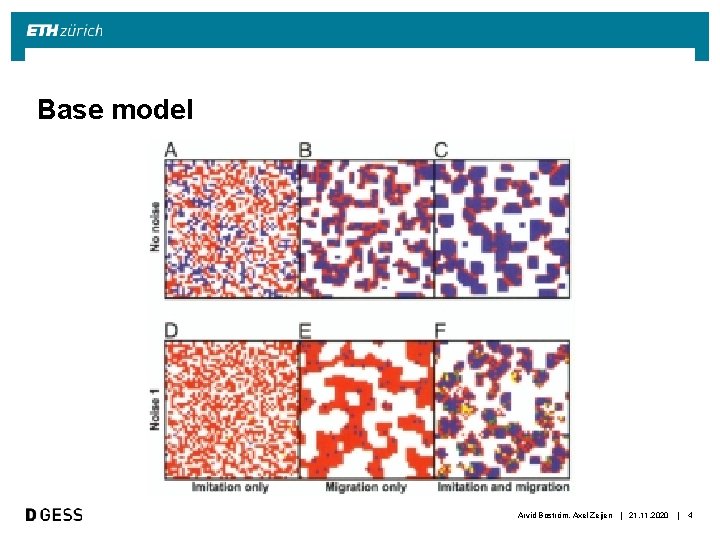
Base model Arvid Boström, Axel Zeijen | 21. 11. 2020 | 4
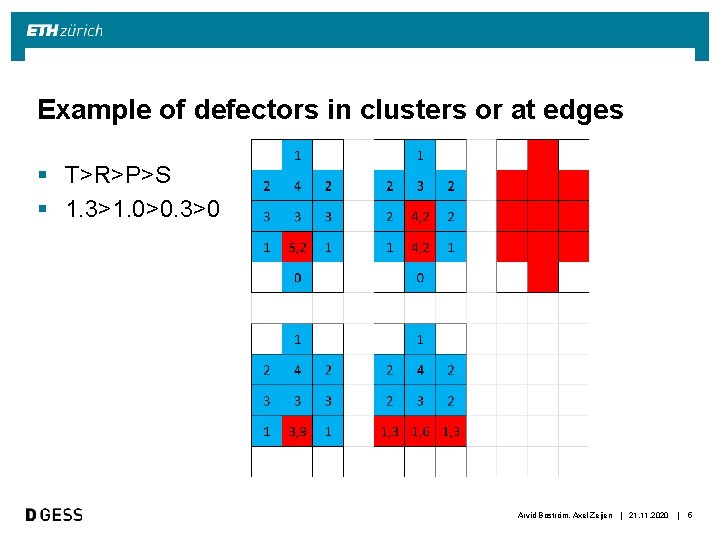
Example of defectors in clusters or at edges § T>R>P>S § 1. 3>1. 0>0. 3>0 Arvid Boström, Axel Zeijen | 21. 11. 2020 | 5
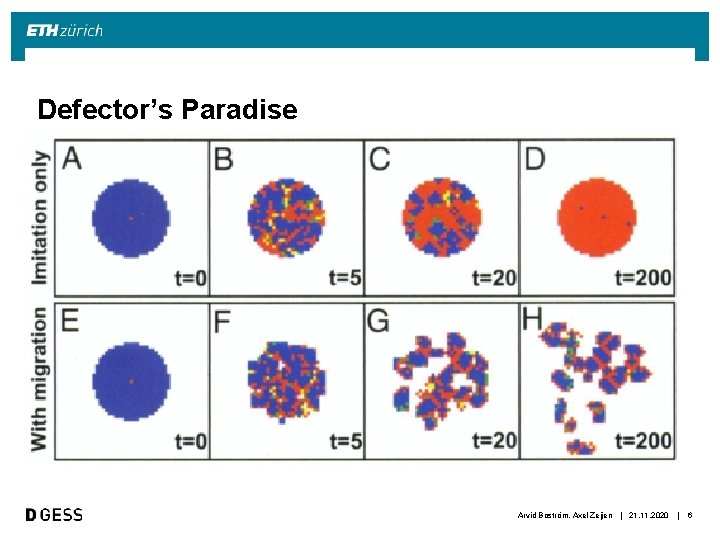
Defector’s Paradise Arvid Boström, Axel Zeijen | 21. 11. 2020 | 6
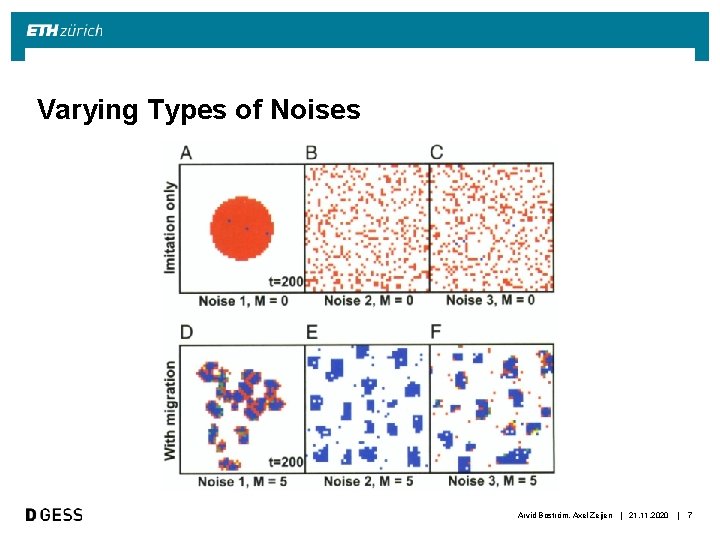
Varying Types of Noises Arvid Boström, Axel Zeijen | 21. 11. 2020 | 7
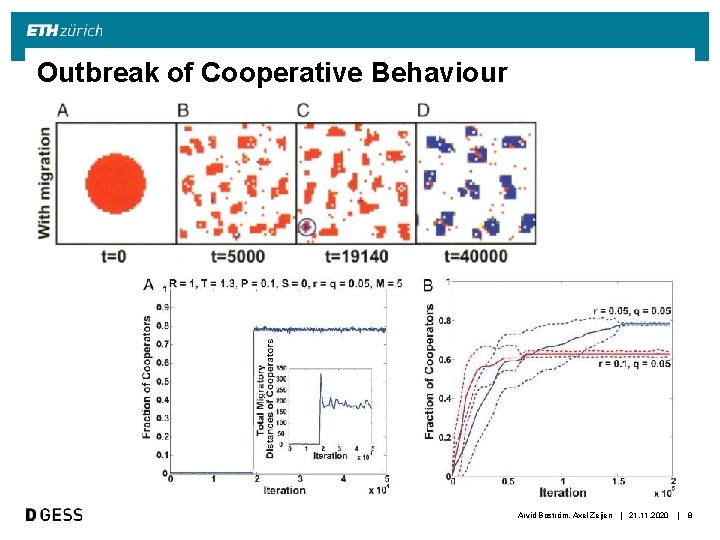
Outbreak of Cooperative Behaviour Arvid Boström, Axel Zeijen | 21. 11. 2020 | 8
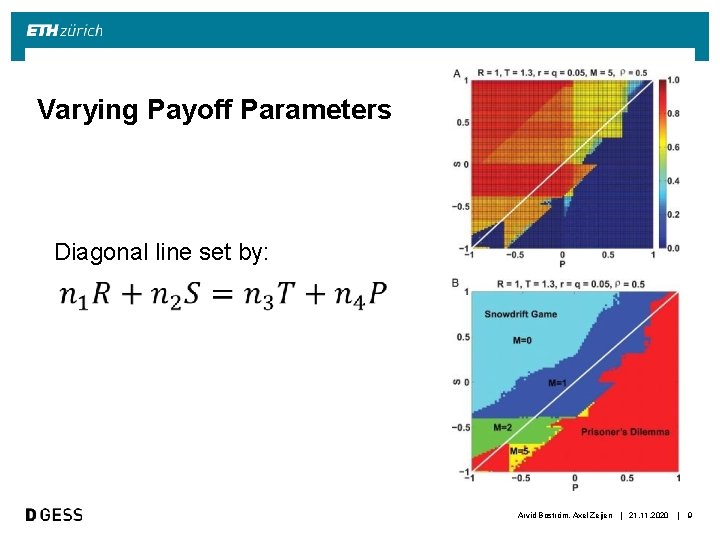
Varying Payoff Parameters Diagonal line set by: Arvid Boström, Axel Zeijen | 21. 11. 2020 | 9
Discussion/Conclusion § § Success-driven migration Explaining cooperation in an egoistic world Mobility’ significance in social order Role of local agglomeration Arvid Boström, Axel Zeijen | 21. 11. 2020 | 10
Thank you for listening, hope it was interesting Questions?
- Slides: 11