
THE OSI MODEL ISO is the organization OSI
- Slides: 24
THE OSI MODEL ISO is the organization. OSI is the model. ISO International Standards Organization OSI Open Systems Interconnection
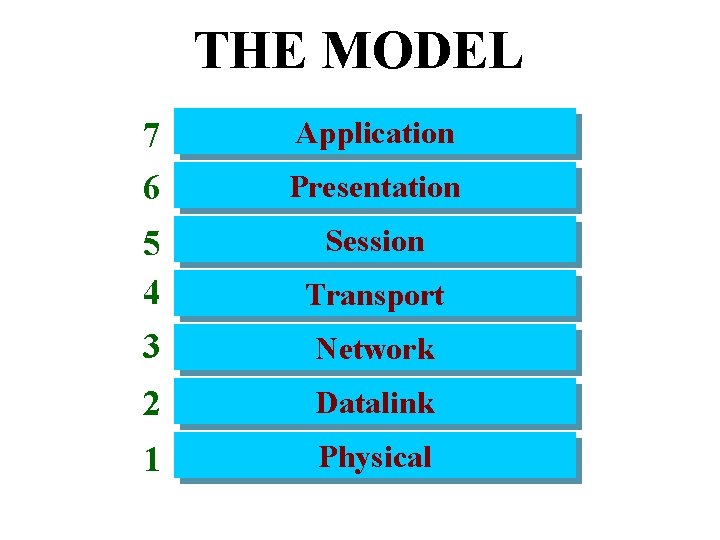
THE MODEL 7 6 Application Presentation Session 5 4 Transport 3 Network 2 Datalink 1 Physical
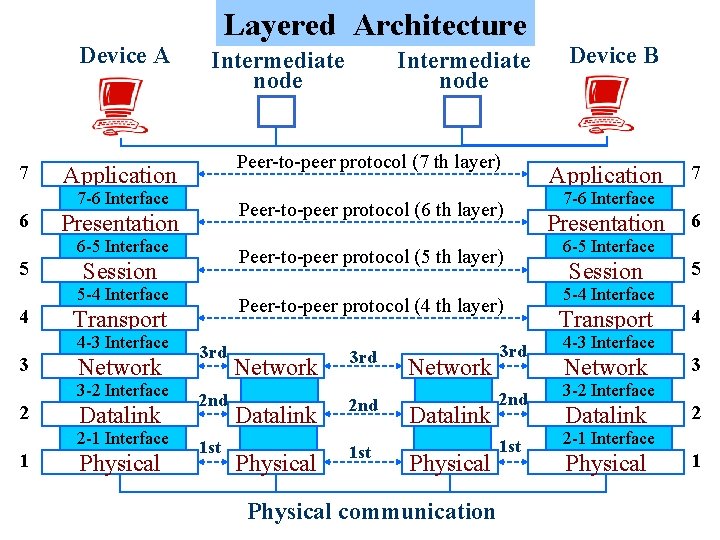
Device A 7 Layered Architecture Intermediate node Peer-to-peer protocol (7 th layer) Application 7 -6 Interface 6 Peer-to-peer protocol (6 th layer) Presentation 6 -5 Interface 5 Peer-to-peer protocol (5 th layer) Session 5 -4 Interface 4 3 Network 3 -2 Interface 2 Datalink 2 -1 Interface 1 Peer-to-peer protocol (4 th layer) Transport 4 -3 Interface Physical Intermediate node 3 rd 2 nd 1 st Network 3 rd Datalink 2 nd Physical 1 st Network Datalink Physical communication Device B Application 7 7 -6 Interface Presentation 6 6 -5 Interface Session 5 5 -4 Interface Transport 3 rd 4 -3 Interface 2 nd 3 -2 Interface 1 st 2 -1 Interface Network Datalink Physical 4 3 2 1
Peer-to-peer Processes Interface between Layers
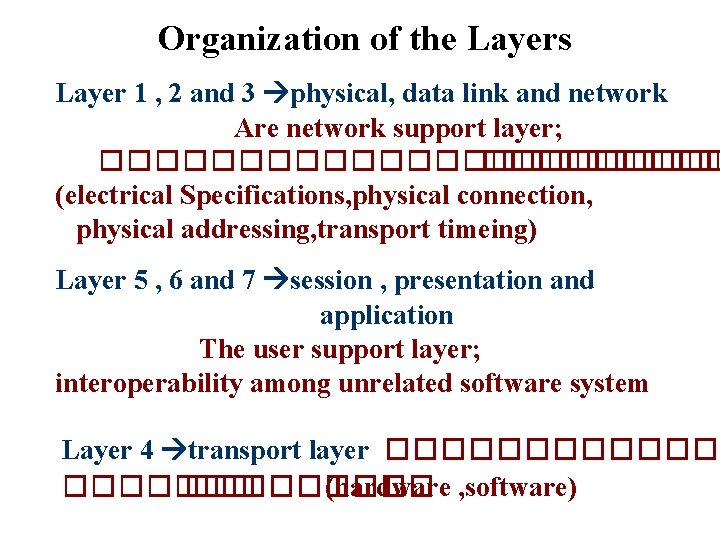
Organization of the Layers Layer 1 , 2 and 3 physical, data link and network Are network support layer; ������������ (electrical Specifications, physical connection, physical addressing, transport timeing) Layer 5 , 6 and 7 session , presentation and application The user support layer; interoperability among unrelated software system Layer 4 transport layer ��������� (hardware , software)
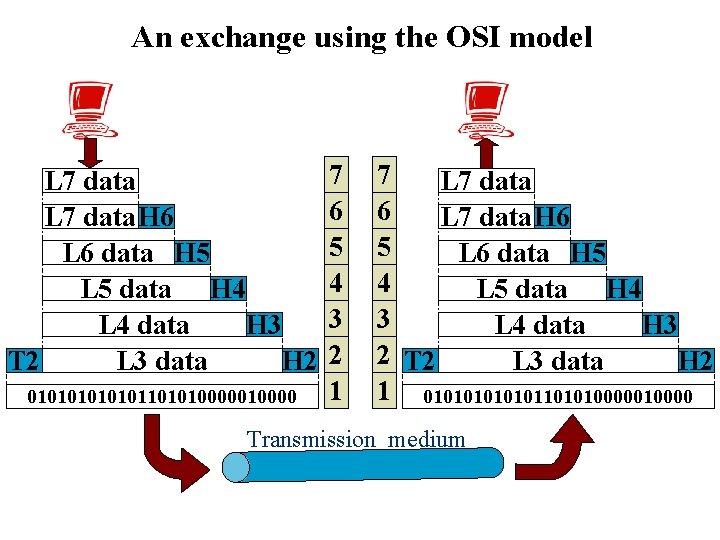
An exchange using the OSI model L 7 data. H 6 L 6 data H 5 L 5 data H 4 L 4 data H 3 T 2 L 3 data H 2 010101101010000 7 6 5 4 3 2 1 7 L 7 data 6 L 7 data. H 6 5 L 6 data H 5 4 L 5 data H 4 3 L 4 data H 3 2 T 2 L 3 data H 2 1 010101101010000 Transmission medium
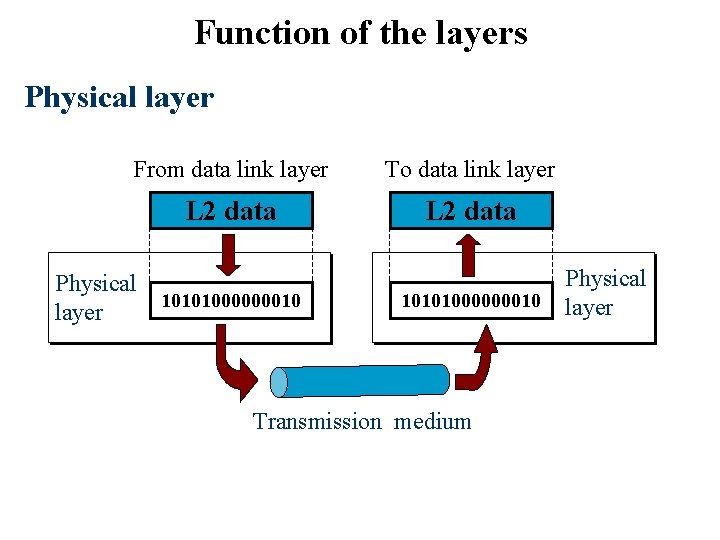
Function of the layers Physical layer From data link layer To data link layer L 2 data Physical layer 10101000000010 Transmission medium Physical layer
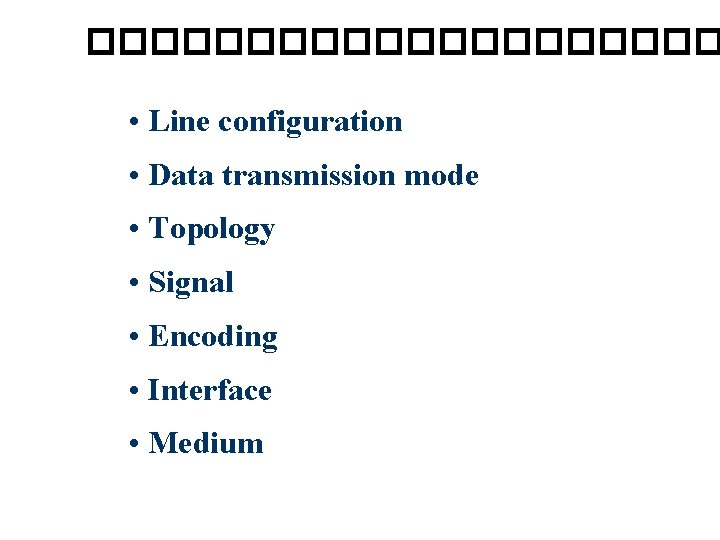
���������� • Line configuration • Data transmission mode • Topology • Signal • Encoding • Interface • Medium
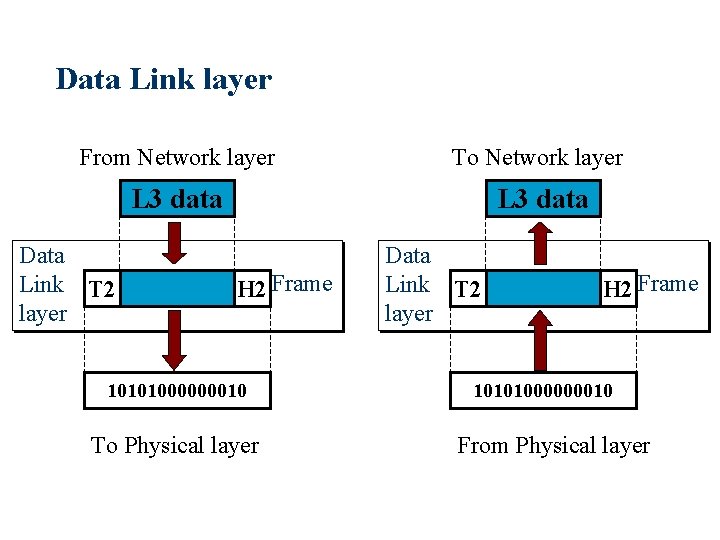
Data Link layer From Network layer To Network layer L 3 data Data Link T 2 layer H 2 Frame 10101000000010 To Physical layer Data Link T 2 layer H 2 Frame 10101000000010 From Physical layer
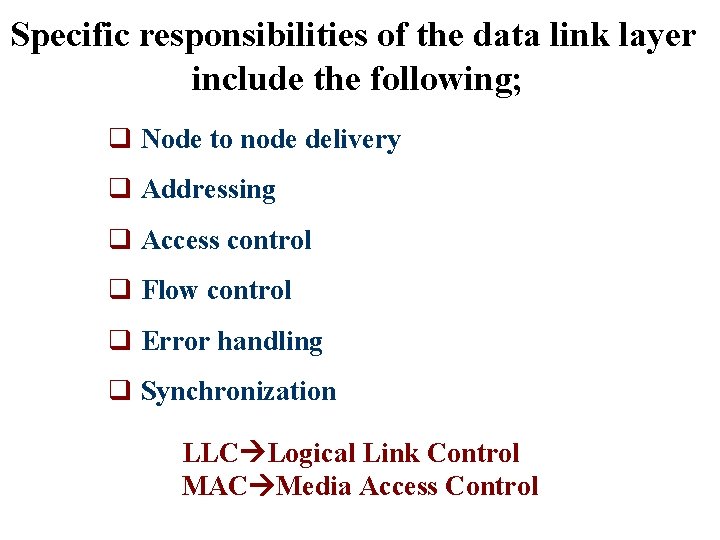
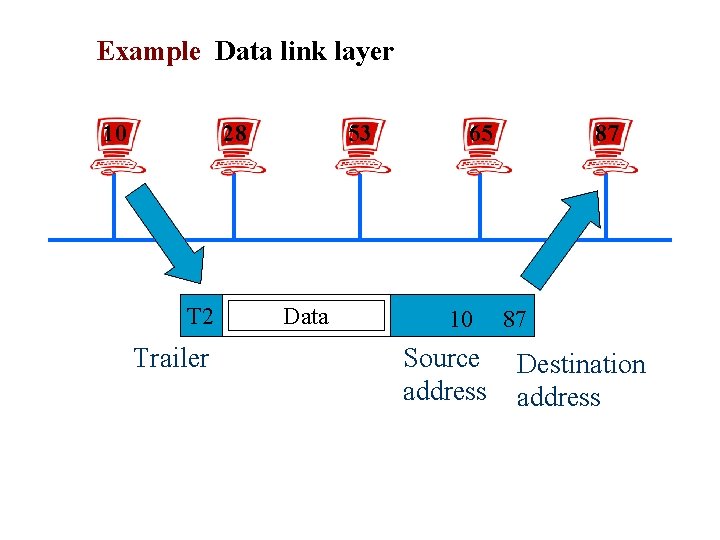
Specific responsibilities of the data link layer include the following; q Node to node delivery q Addressing q Access control q Flow control q Error handling q Synchronization LLC Logical Link Control MAC Media Access Control
Example Data link layer 10 28 T 2 Trailer 53 Data 65 10 Source address 87 87 Destination address
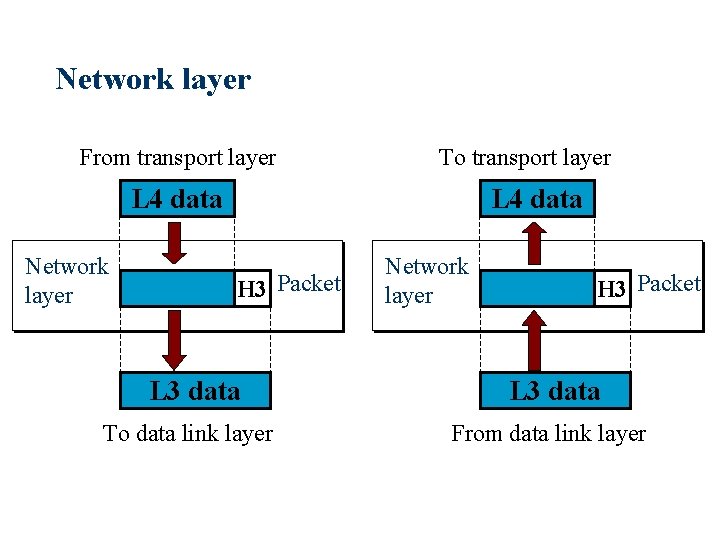
Network layer From transport layer To transport layer L 4 data Network layer L 4 data H 3 Packet Network layer H 3 Packet L 3 data To data link layer From data link layer
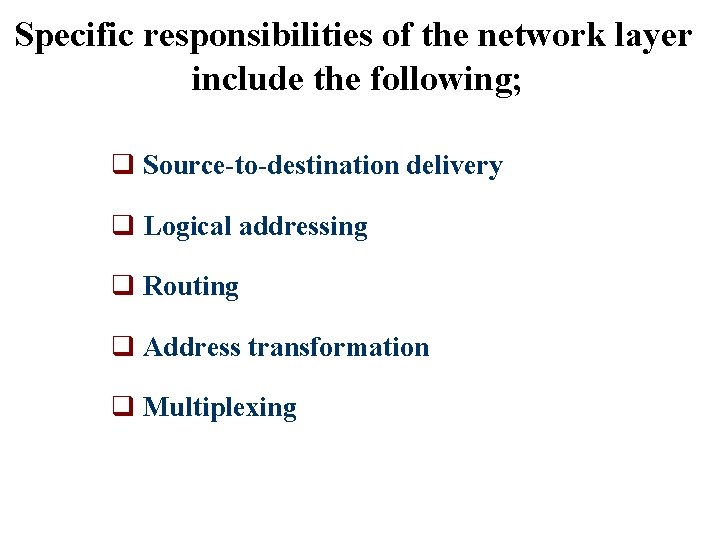
Specific responsibilities of the network layer include the following; q Source-to-destination delivery q Logical addressing q Routing q Address transformation q Multiplexing
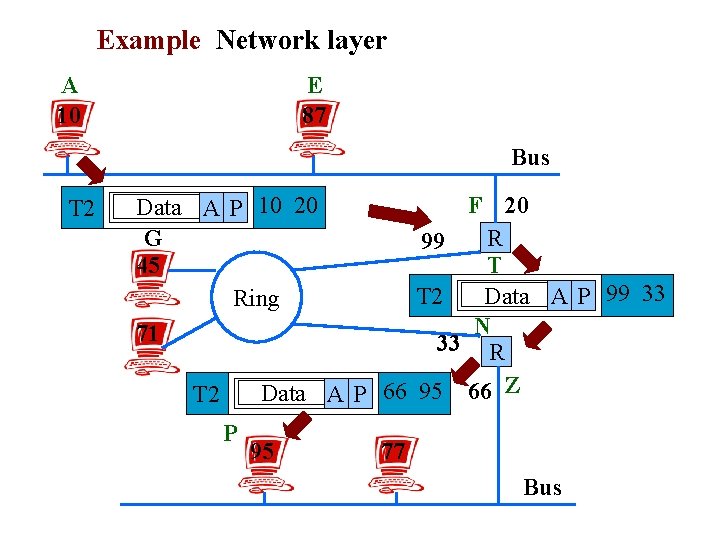
Example Network layer A 10 E 87 Bus T 2 Data A P 10 20 G 45 Ring 71 F 20 R 99 T Data A P 99 33 T 2 N 33 R Data A P 66 95 66 Z T 2 P 95 77 Bus
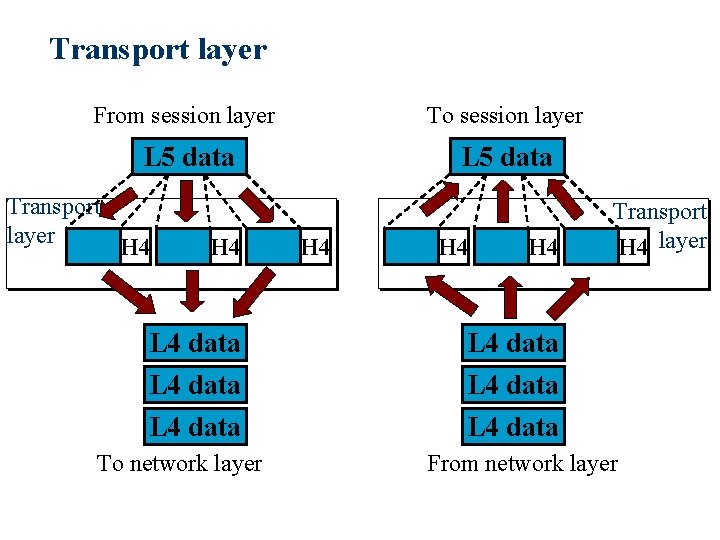
Transport layer From session layer To session layer L 5 data Transport layer H 4 L 4 data To network layer H 4 H 4 Transport H 4 layer L 4 data From network layer
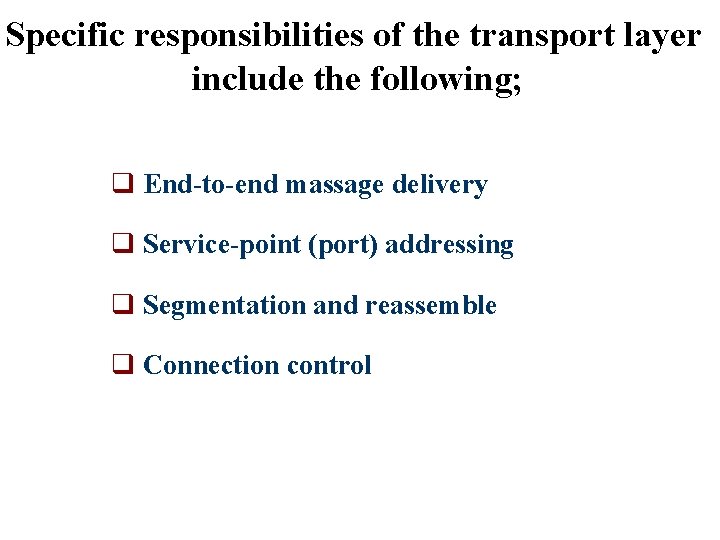
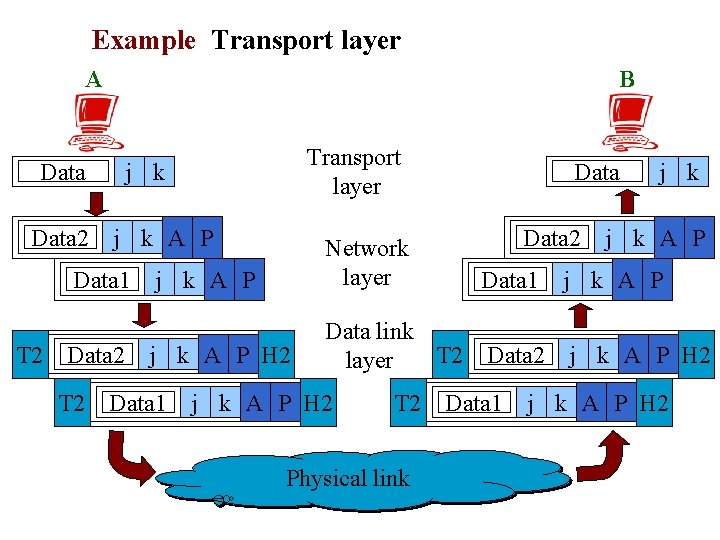
Specific responsibilities of the transport layer include the following; q End-to-end massage delivery q Service-point (port) addressing q Segmentation and reassemble q Connection control
Example Transport layer A B Data 2 j k A P Data 1 T 2 Data 2 Transport layer j k Data 2 j k A P Network layer Data 1 j k A P H 2 Data link T 2 layer Data 2 j k A P H 2 Data 1 j k A P H 2 T 2 Physical link Data 1 j k A P H 2
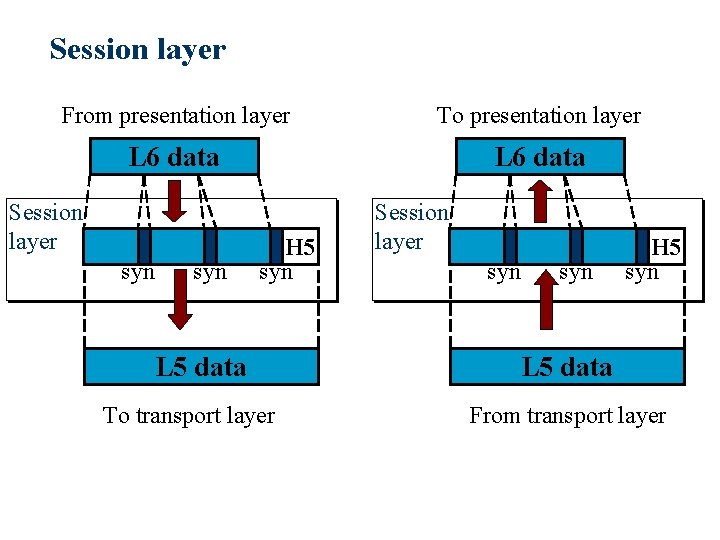
Session layer From presentation layer To presentation layer L 6 data Session layer syn H 5 syn L 5 data To transport layer Session layer syn H 5 syn L 5 data From transport layer
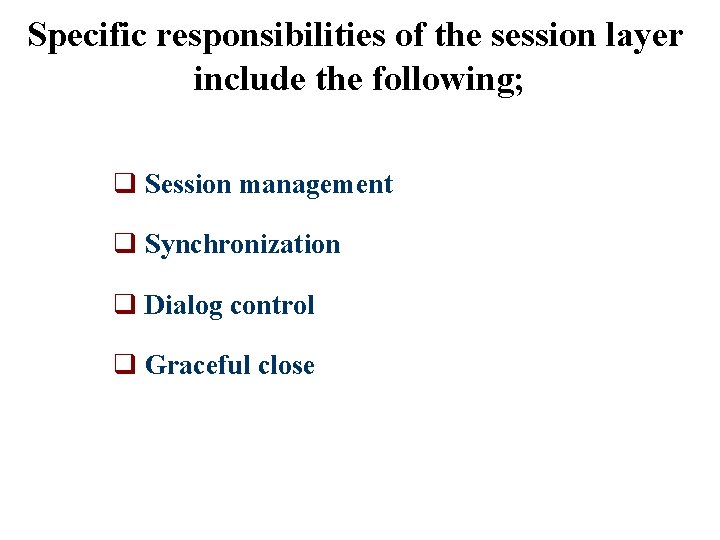
Specific responsibilities of the session layer include the following; q Session management q Synchronization q Dialog control q Graceful close
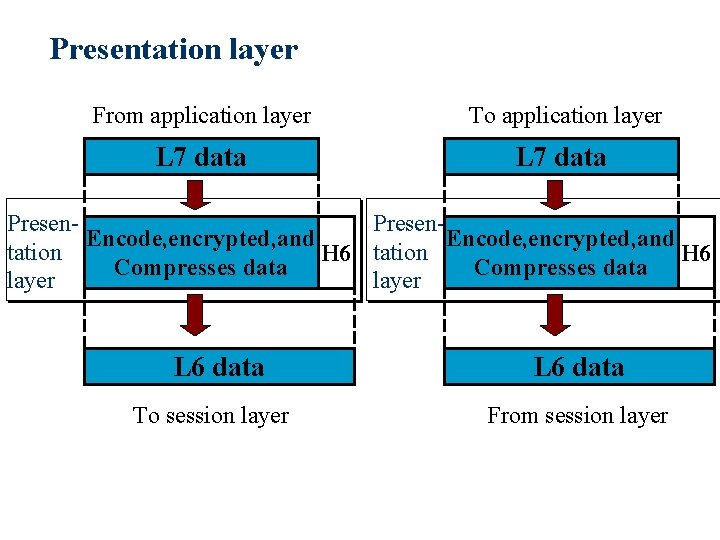
Presentation layer From application layer To application layer L 7 data Presen. Encode, encrypted, and tation H 6 Compresses data layer L 6 data To session layer L 6 data From session layer
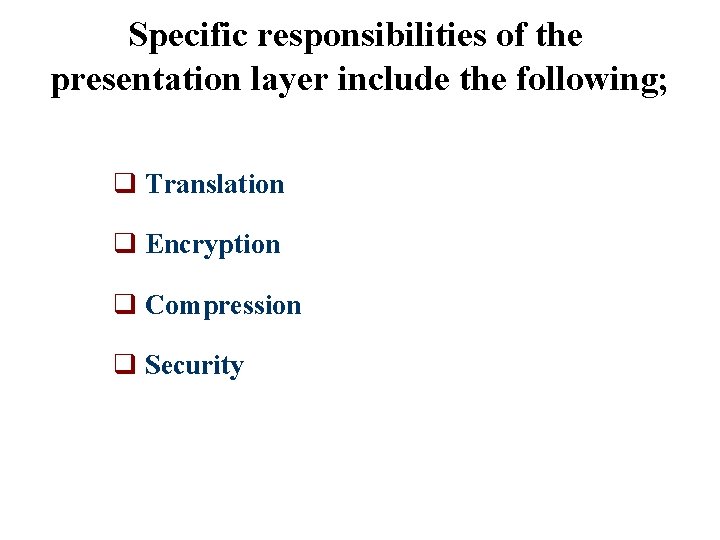
Specific responsibilities of the presentation layer include the following; q Translation q Encryption q Compression q Security
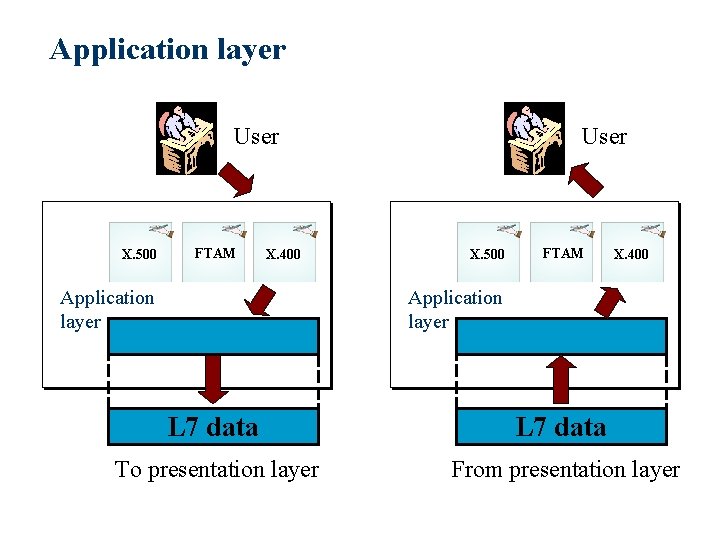
Application layer User X. 500 FTAM X. 400 Application layer L 7 data To presentation layer From presentation layer
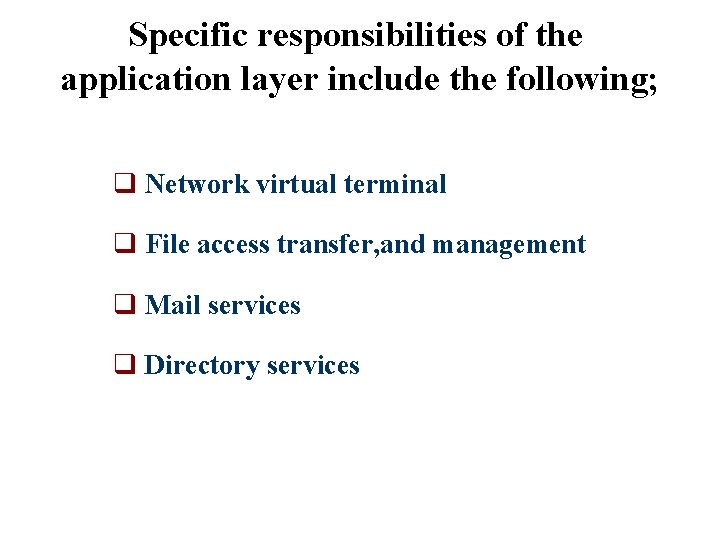
Specific responsibilities of the application layer include the following; q Network virtual terminal q File access transfer, and management q Mail services q Directory services
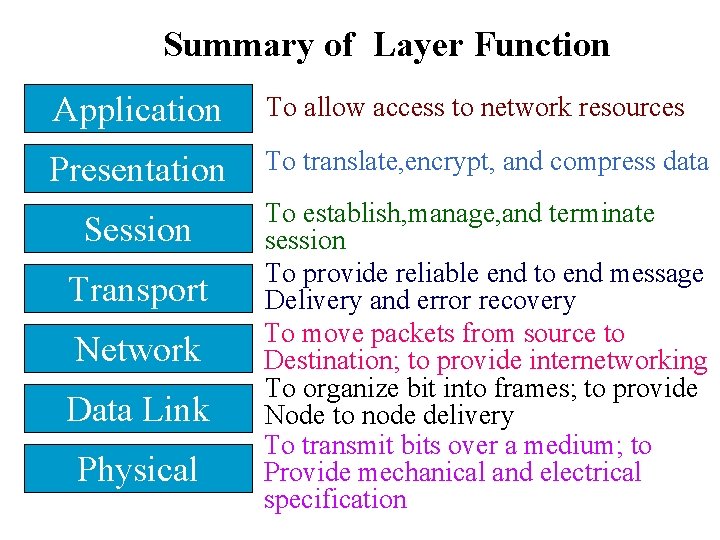
Summary of Layer Function Application To allow access to network resources Presentation To translate, encrypt, and compress data Session To establish, manage, and terminate session To provide reliable end to end message Delivery and error recovery To move packets from source to Destination; to provide internetworking To organize bit into frames; to provide Node to node delivery To transmit bits over a medium; to Provide mechanical and electrical specification Transport Network Data Link Physical