
The OSI Model and the TCPIP Protocol Suite
- Slides: 27
The OSI Model and the TCP/IP Protocol Suite Copyright © The Mc. Graw-Hill Companies, Inc. Permission required for reproduction or display. 1
OBJECTIVES: q To discuss the idea of multiple layering in data communication and networking and the interrelationship between layers. q To discuss the OSI model and its layer architecture and to show the interface between the layers. q To briefly discuss the functions of each layer in the OSI model. q To introduce the TCP/IP protocol suite and compare its layers with the ones in the OSI model. q To show the functionality of each layer in the TCP/IP protocol with some examples. q To discuss the addressing mechanism used in some layers of the TCP/IP protocol suite for the delivery of a message from the source to the destination. TCP/IP Protocol Suite 2
Note ISO is the organization; OSI is the model. TCP/IP Protocol Suite 3
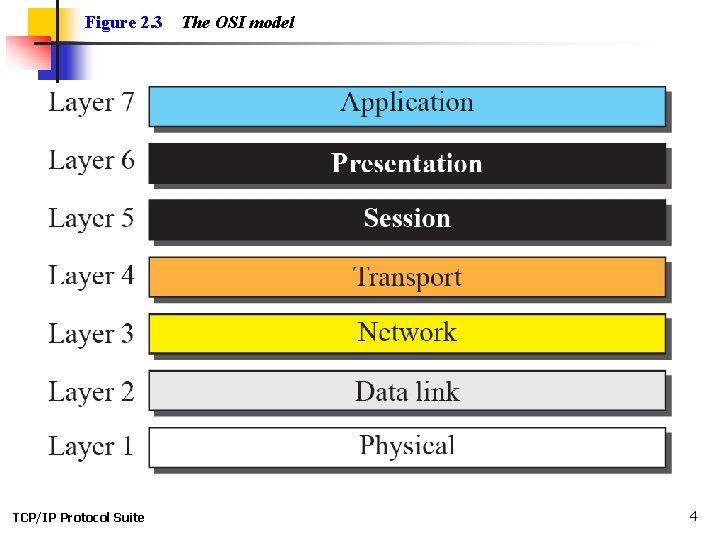
Figure 2. 3 TCP/IP Protocol Suite The OSI model 4
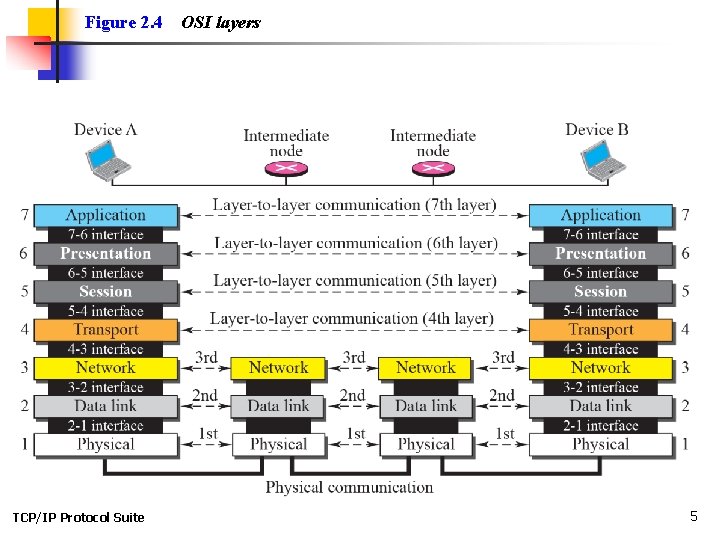
Figure 2. 4 TCP/IP Protocol Suite OSI layers 5
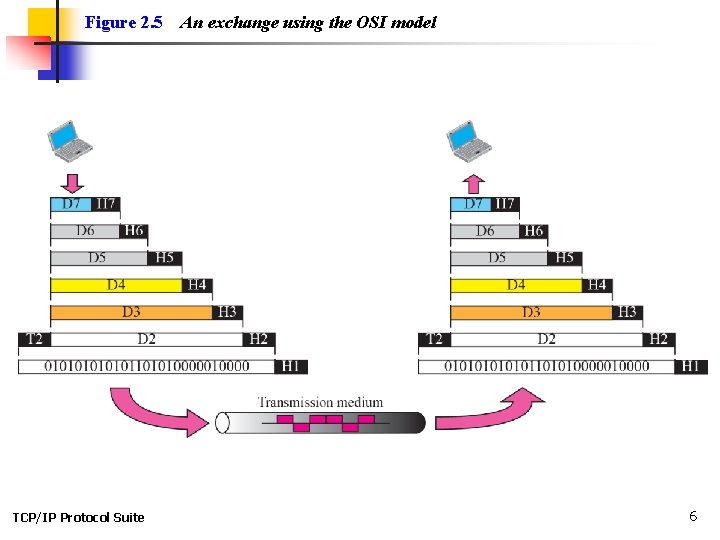
Figure 2. 5 TCP/IP Protocol Suite An exchange using the OSI model 6
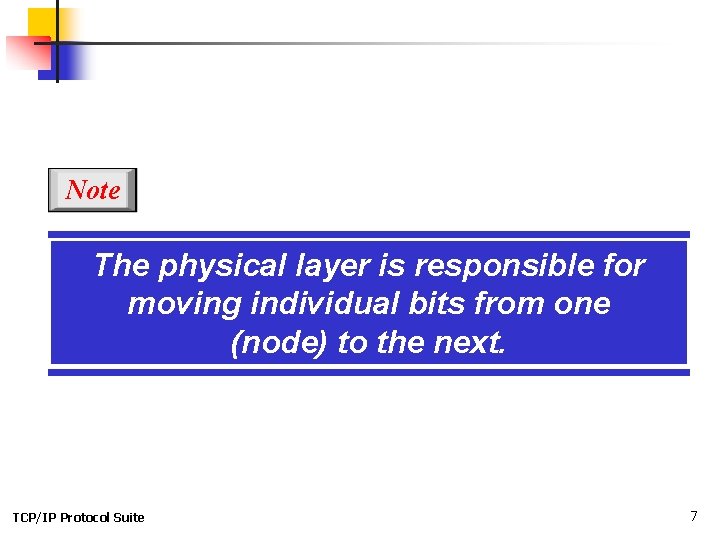
Note The physical layer is responsible for moving individual bits from one (node) to the next. TCP/IP Protocol Suite 7
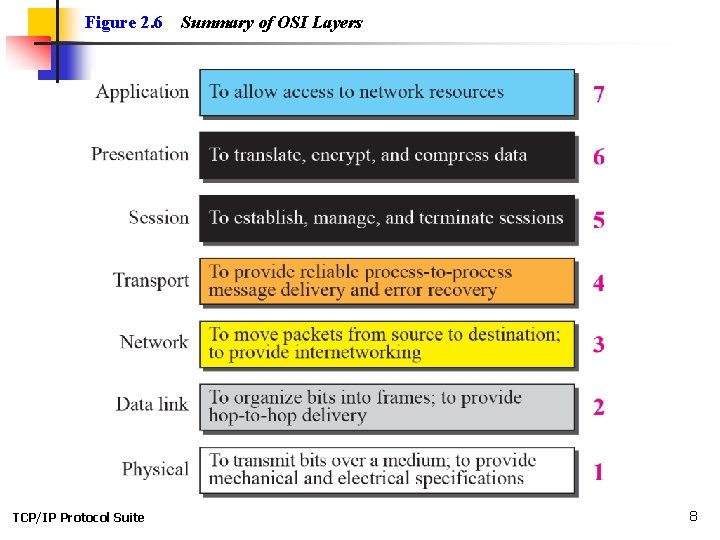
Figure 2. 6 TCP/IP Protocol Suite Summary of OSI Layers 8
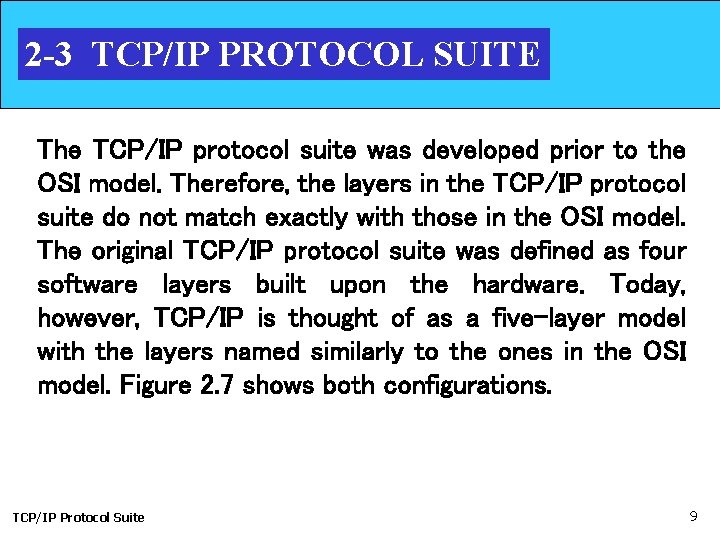
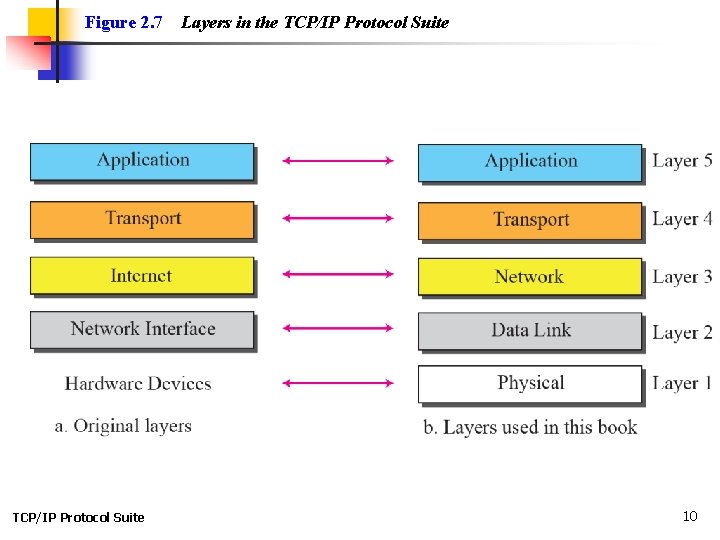
2 -3 TCP/IP PROTOCOL SUITE The TCP/IP protocol suite was developed prior to the OSI model. Therefore, the layers in the TCP/IP protocol suite do not match exactly with those in the OSI model. The original TCP/IP protocol suite was defined as four software layers built upon the hardware. Today, however, TCP/IP is thought of as a five-layer model with the layers named similarly to the ones in the OSI model. Figure 2. 7 shows both configurations. TCP/IP Protocol Suite 9
Figure 2. 7 TCP/IP Protocol Suite Layers in the TCP/IP Protocol Suite 10
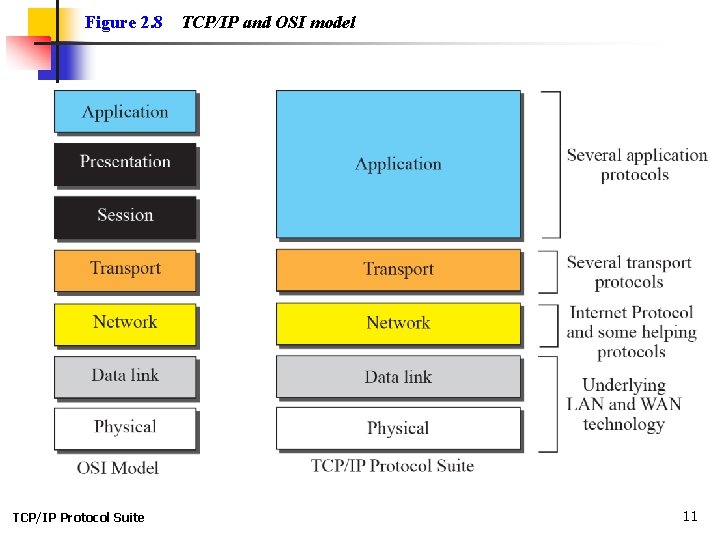
Figure 2. 8 TCP/IP Protocol Suite TCP/IP and OSI model 11
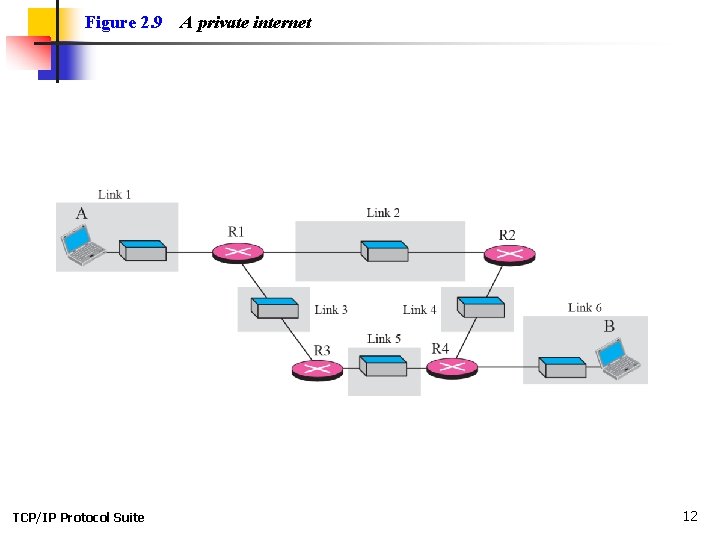
Figure 2. 9 TCP/IP Protocol Suite A private internet 12
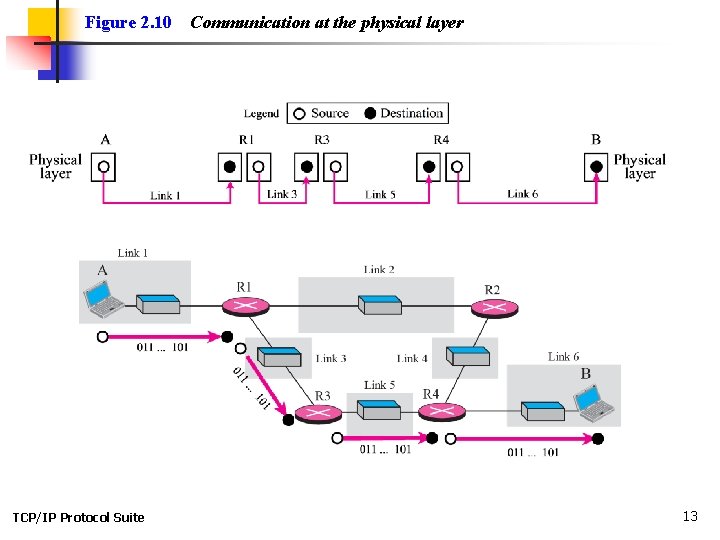
Figure 2. 10 TCP/IP Protocol Suite Communication at the physical layer 13
Note The unit of communication at the physical layer is a bit. TCP/IP Protocol Suite 14
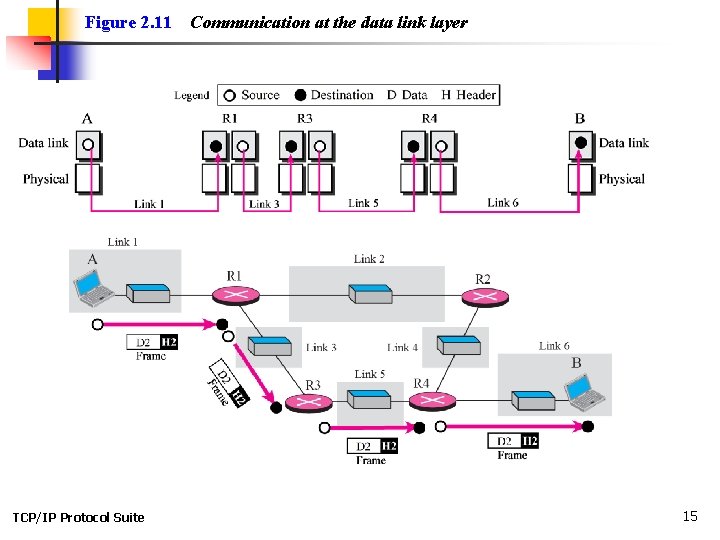
Figure 2. 11 TCP/IP Protocol Suite Communication at the data link layer 15
Note The unit of communication at the data link layer is a frame. TCP/IP Protocol Suite 16
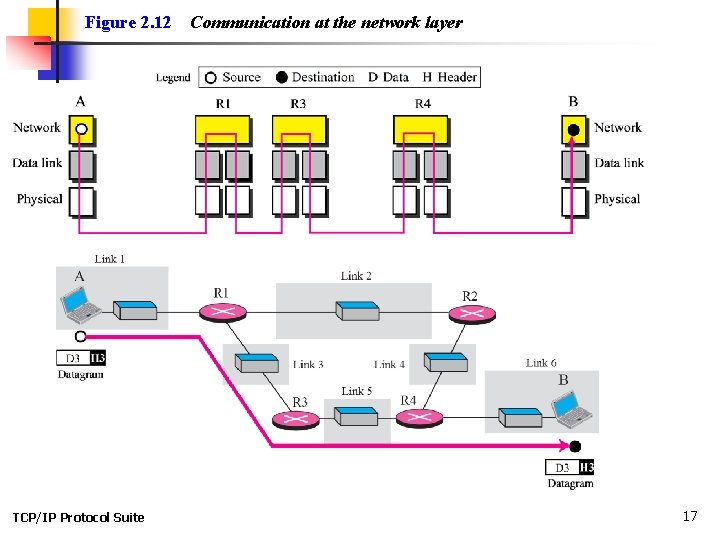
Figure 2. 12 TCP/IP Protocol Suite Communication at the network layer 17
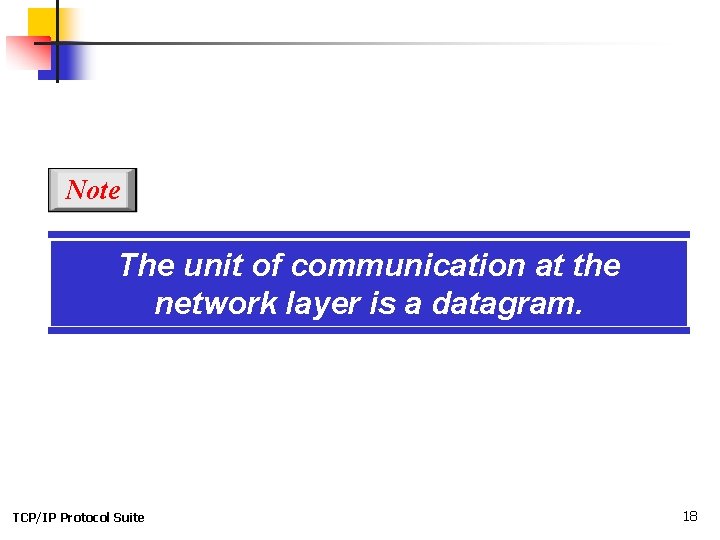
Note The unit of communication at the network layer is a datagram. TCP/IP Protocol Suite 18
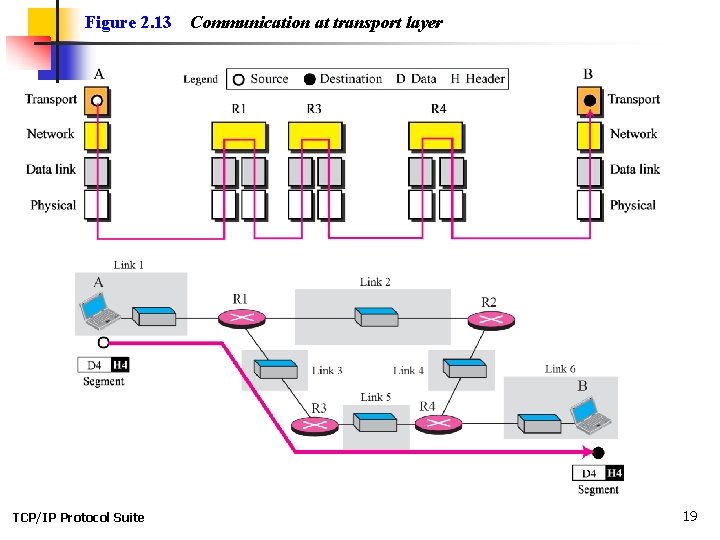
Figure 2. 13 TCP/IP Protocol Suite Communication at transport layer 19
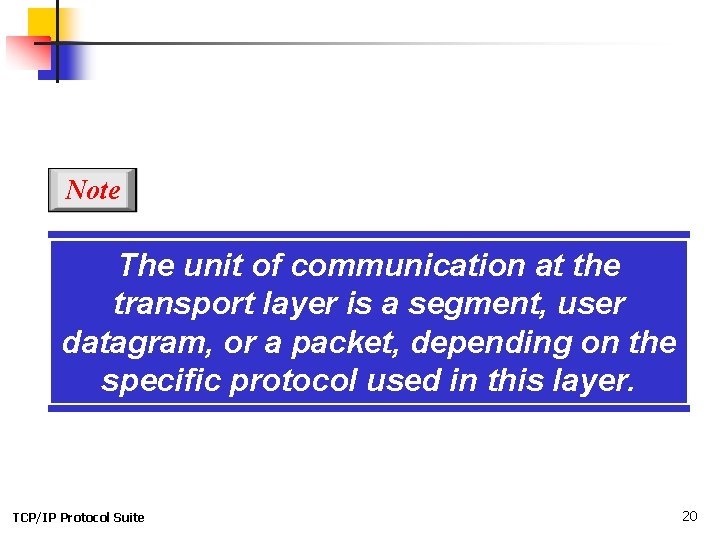
Note The unit of communication at the transport layer is a segment, user datagram, or a packet, depending on the specific protocol used in this layer. TCP/IP Protocol Suite 20
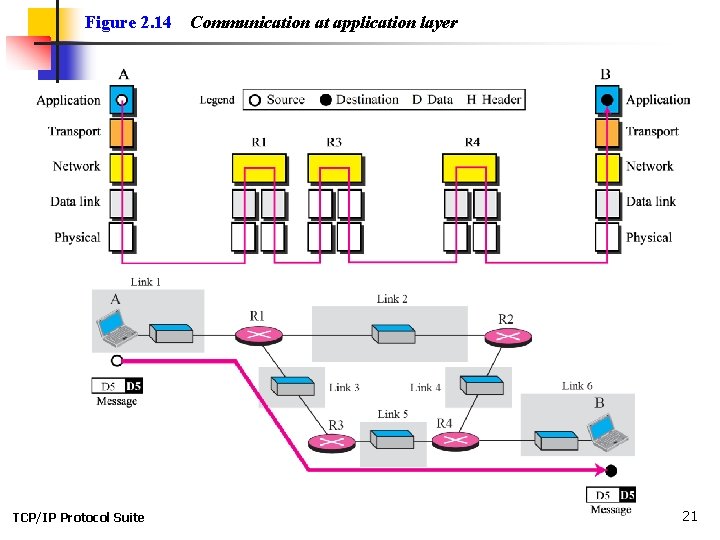
Figure 2. 14 TCP/IP Protocol Suite Communication at application layer 21
Note The unit of communication at the application layer is a message. TCP/IP Protocol Suite 22
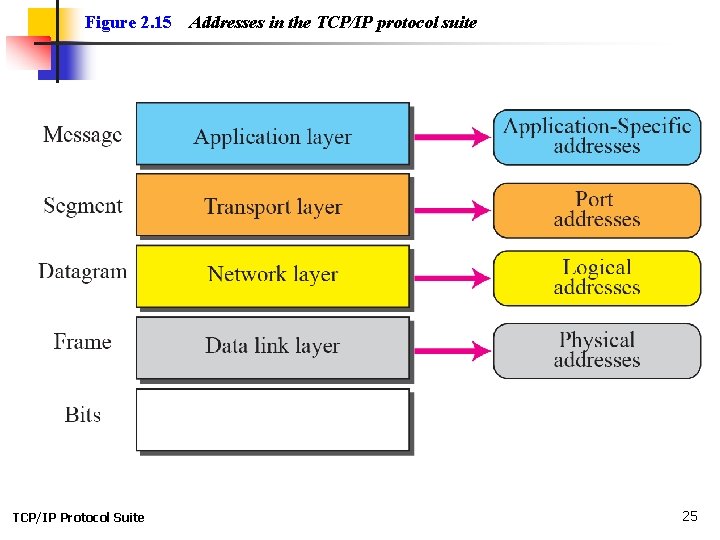
2 -4 ADDRESSING Four levels of addresses are used in an internet employing the TCP/IP protocols: physical address, logical address, port address, and application-specific address. Each address is related to a one layer in the TCP/IP architecture, as shown in Figure 2. 15. TCP/IP Protocol Suite 23
Topics Discussed in the Section ü Physical Addresses ü Logical Addresses ü Port Addresses ü Application-Specific Addresses TCP/IP Protocol Suite 24
Figure 2. 15 TCP/IP Protocol Suite Addresses in the TCP/IP protocol suite 25
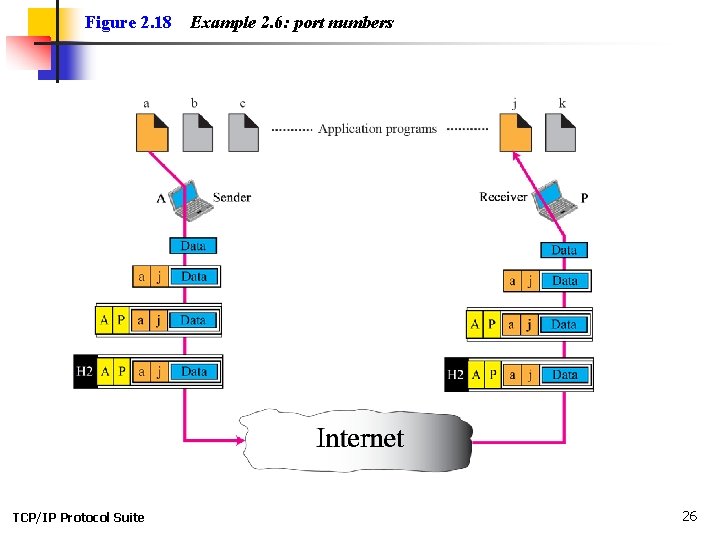
Figure 2. 18 TCP/IP Protocol Suite Example 2. 6: port numbers 26
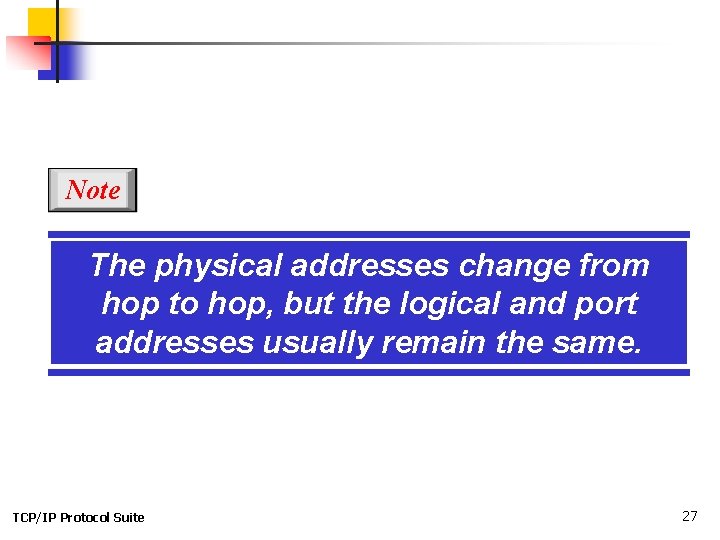
Note The physical addresses change from hop to hop, but the logical and port addresses usually remain the same. TCP/IP Protocol Suite 27