
The Orthographic Depth Hypothesis 25 Years Later M
- Slides: 14
The Orthographic Depth Hypothesis: 25 Years Later M. T. Turvey University of Connecticut and Haskins Laboratories
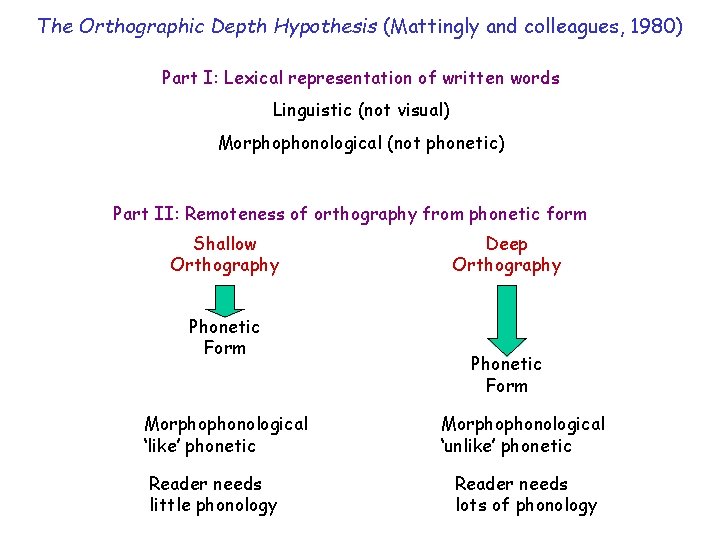
The Orthographic Depth Hypothesis (Mattingly and colleagues, 1980) Part I: Lexical representation of written words Linguistic (not visual) Morphophonological (not phonetic) Part II: Remoteness of orthography from phonetic form Shallow Orthography Phonetic Form Morphophonological ‘like’ phonetic Reader needs little phonology Deep Orthography Phonetic Form Morphophonological ‘unlike’ phonetic Reader needs lots of phonology
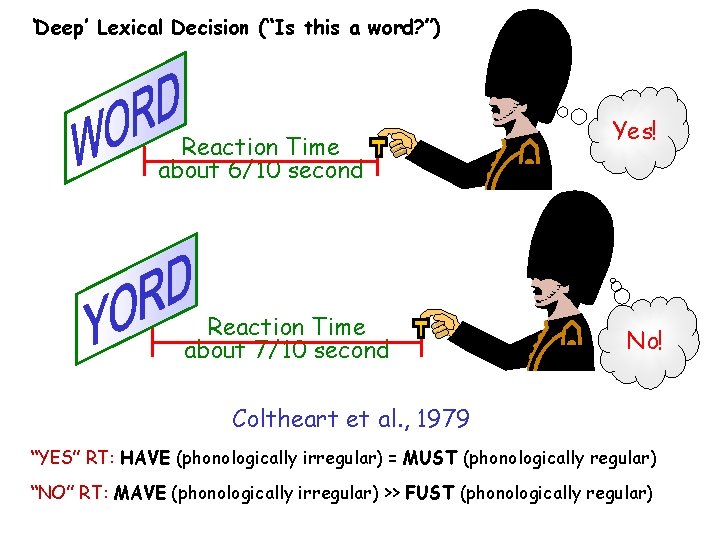
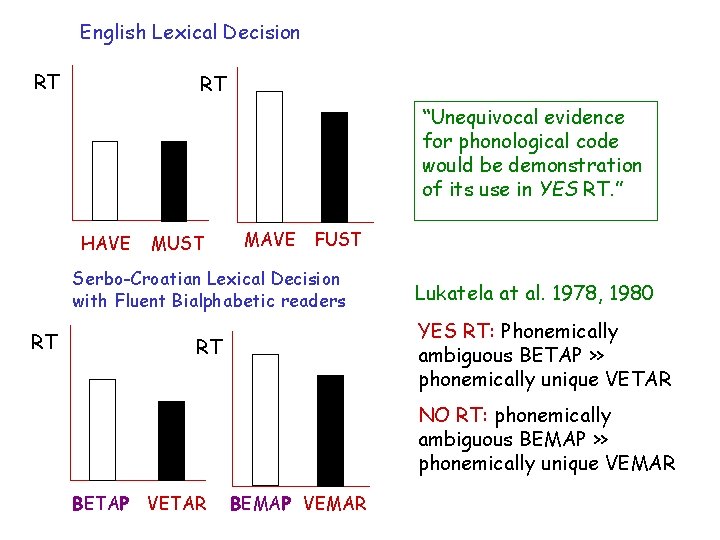
‘Deep’ Lexical Decision (“Is this a word? ”) Reaction Time about 6/10 second Reaction Time about 7/10 second Yes! No! Coltheart et al. , 1979 “YES” RT: HAVE (phonologically irregular) = MUST (phonologically regular) “NO” RT: MAVE (phonologically irregular) >> FUST (phonologically regular)
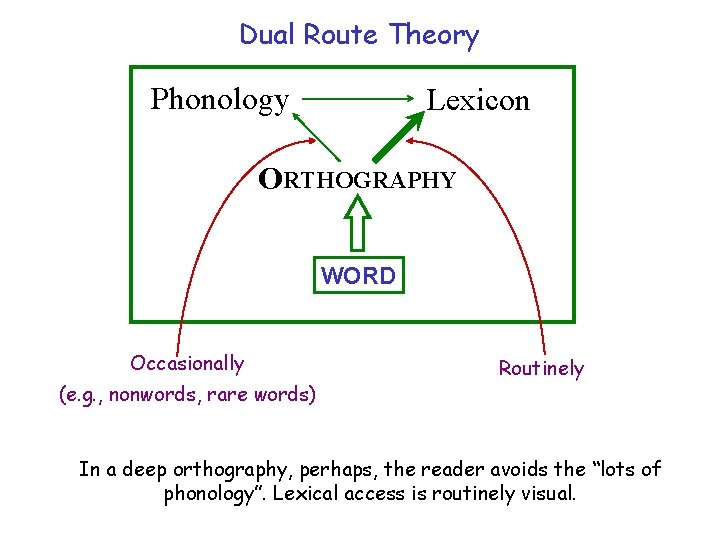
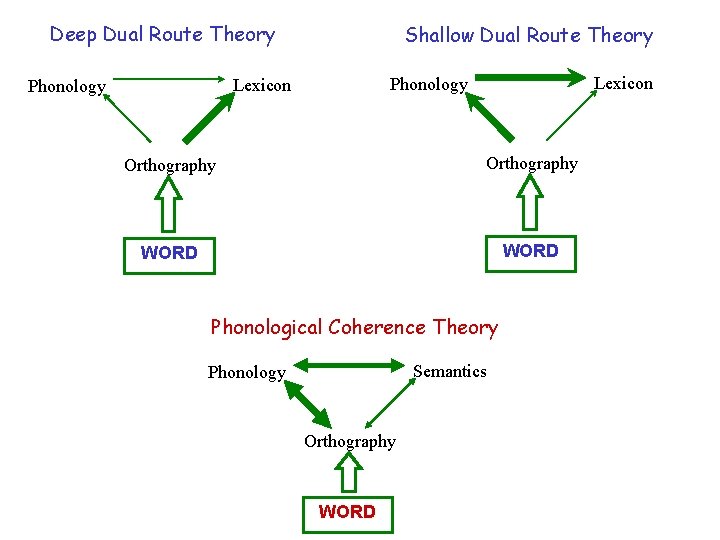
Dual Route Theory Phonology Lexicon ORTHOGRAPHY WORD Occasionally (e. g. , nonwords, rare words) Routinely In a deep orthography, perhaps, the reader avoids the “lots of phonology”. Lexical access is routinely visual.
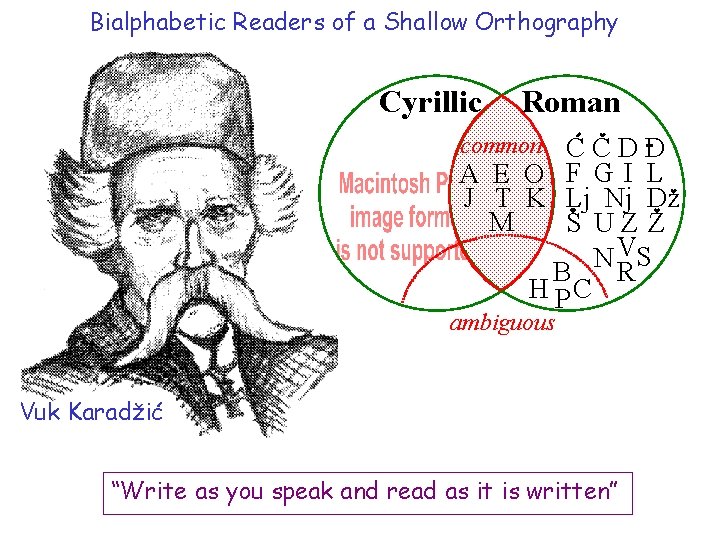
Bialphabetic Readers of a Shallow Orthography Cyrillic Roman common CCDD A E O F GI L J T K Lj Nj Dz M S UZ Z S NV R B H PC ambiguous Vuk Karadzic ˇ ´ “Write as you speak and read as it is written”
English Lexical Decision RT RT “Unequivocal evidence for phonological code would be demonstration of its use in YES RT. ” HAVE MUST MAVE FUST Serbo-Croatian Lexical Decision with Fluent Bialphabetic readers RT Lukatela at al. 1978, 1980 YES RT: Phonemically ambiguous BETAP >> phonemically unique VETAR RT NO RT: phonemically ambiguous BEMAP >> phonemically unique VEMAR BETAP VETAR BEMAP VEMAR
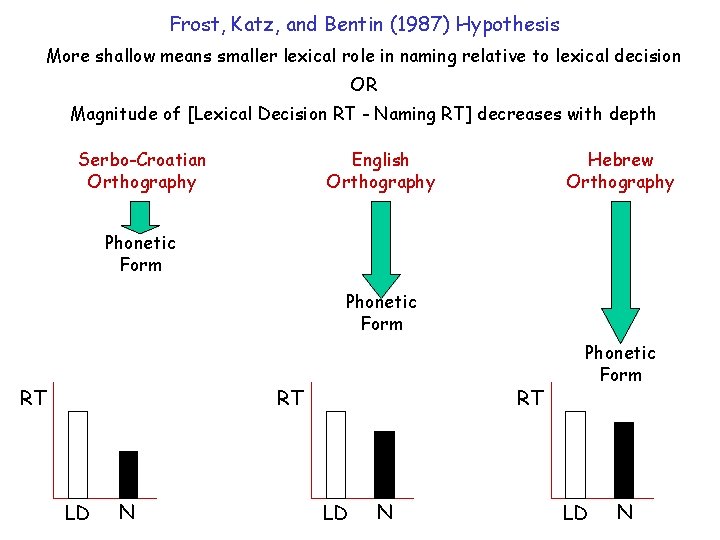
Frost, Katz, and Bentin (1987) Hypothesis More shallow means smaller lexical role in naming relative to lexical decision OR Magnitude of [Lexical Decision RT - Naming RT] decreases with depth English Orthography Serbo-Croatian Orthography Hebrew Orthography Phonetic Form RT RT LD N Phonetic Form LD N
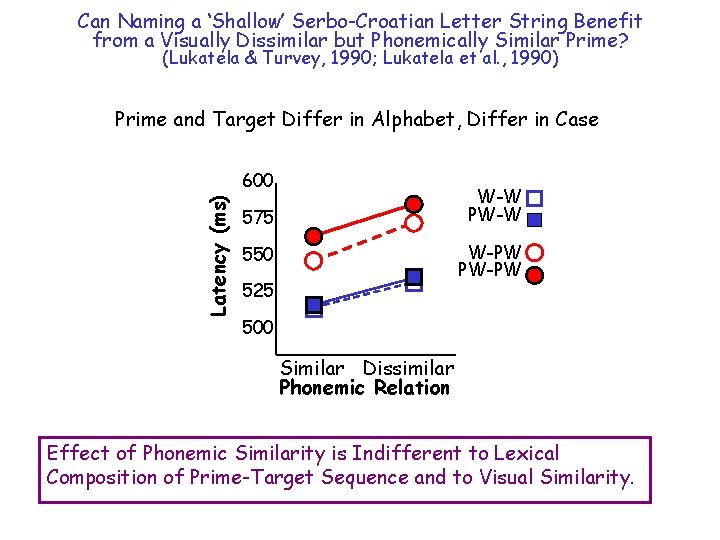
Can Naming a ‘Shallow’ Serbo-Croatian Letter String Benefit from a Visually Dissimilar but Phonemically Similar Prime? (Lukatela & Turvey, 1990; Lukatela et al. , 1990) Prime and Target Differ in Alphabet, Differ in Case Latency (ms) 600 W-W PW-W 575 W-PW PW-PW 550 525 500 Similar Dissimilar Phonemic Relation Effect of Phonemic Similarity is Indifferent to Lexical Composition of Prime-Target Sequence and to Visual Similarity.
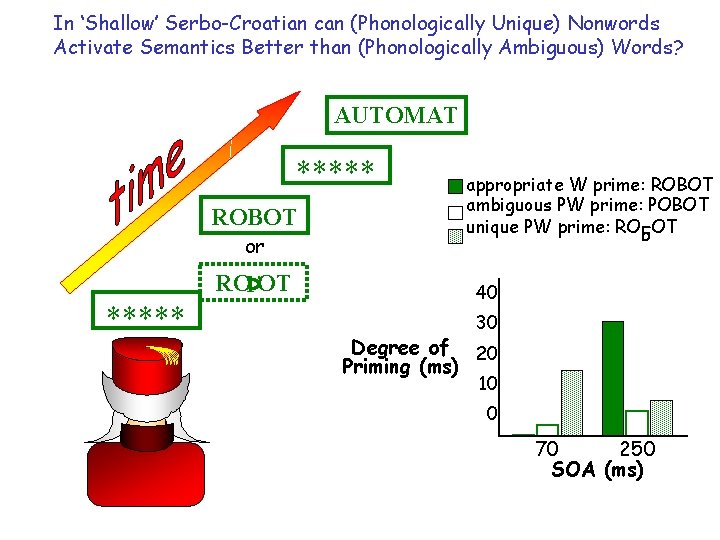
In ‘Shallow’ Serbo-Croatian can (Phonologically Unique) Nonwords Activate Semantics Better than (Phonologically Ambiguous) Words? AUTOMAT ***** ROBOT or ROFOT ***** appropriate W prime: ROBOT ambiguous PW prime: POBOT unique PW prime: ROF b OT 40 30 Degree of 20 Priming (ms) 10 0 70 250 SOA (ms)
Deep Dual Route Theory Shallow Dual Route Theory Lexicon Phonology Orthography WORD Phonological Coherence Theory Semantics Phonology Orthography WORD
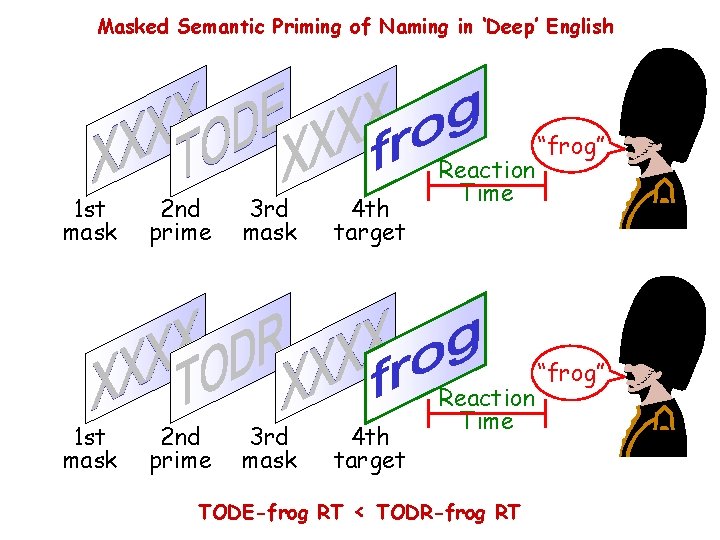
Masked Semantic Priming of Naming in ‘Deep’ English 1 st mask 2 nd prime 3 rd mask 4 th target TODE-frog RT Reaction Time < TODR-frog RT “frog”
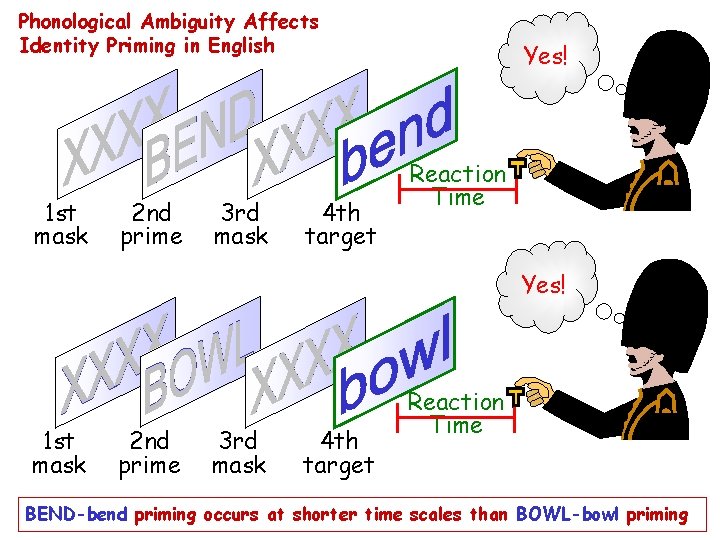
Phonological Ambiguity Affects Identity Priming in English 1 st mask 2 nd prime 3 rd mask 4 th target Yes! Reaction Time Yes! 1 st mask 2 nd prime 3 rd mask 4 th target Reaction Time BEND-bend priming occurs at shorter time scales than BOWL-bowl priming
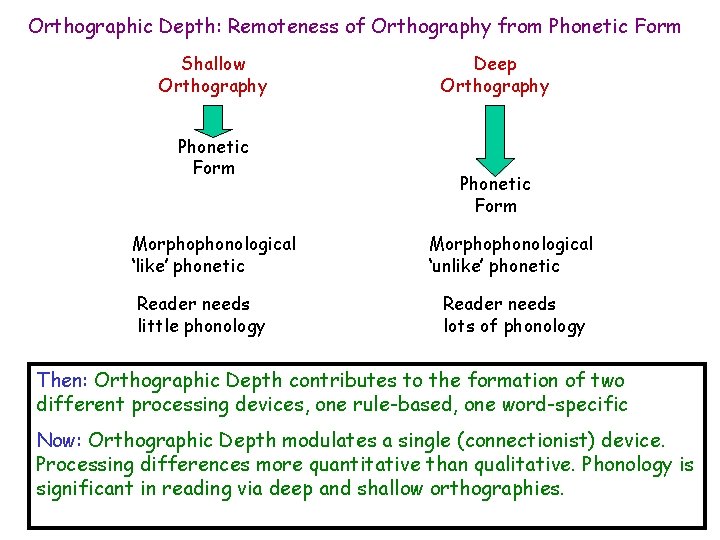
Orthographic Depth: Remoteness of Orthography from Phonetic Form Shallow Orthography Phonetic Form Morphophonological ‘like’ phonetic Reader needs little phonology Deep Orthography Phonetic Form Morphophonological ‘unlike’ phonetic Reader needs lots of phonology Then: Orthographic Depth contributes to the formation of two different processing devices, one rule-based, one word-specific Now: Orthographic Depth modulates a single (connectionist) device. Processing differences more quantitative than qualitative. Phonology is significant in reading via deep and shallow orthographies.
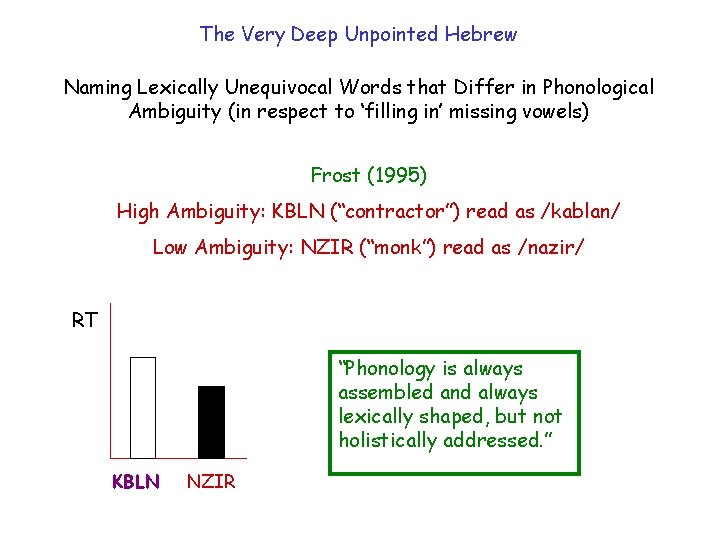
The Very Deep Unpointed Hebrew Naming Lexically Unequivocal Words that Differ in Phonological Ambiguity (in respect to ‘filling in’ missing vowels) Frost (1995) High Ambiguity: KBLN (“contractor”) read as /kablan/ Low Ambiguity: NZIR (“monk”) read as /nazir/ RT “Phonology is always assembled and always lexically shaped, but not holistically addressed. ” KBLN NZIR