
The Origins of the Industrial Revolution Nolan Patefield

- Slides: 11
The Origins of the Industrial Revolution -Nolan Patefield, Shannon Forsythe, Austin Saurdiff
The foundation of the I. R. The agricultural Revolution- developed new harvesting and planting techniques. Great Britain’s “factors of production”- land, capital, and labor. (land being natural resources, Capital being money, goods such as tools, machinery, equipment, and inventory for production processes. The Textile Industry- use of mechanization, domestic system, and new inventions
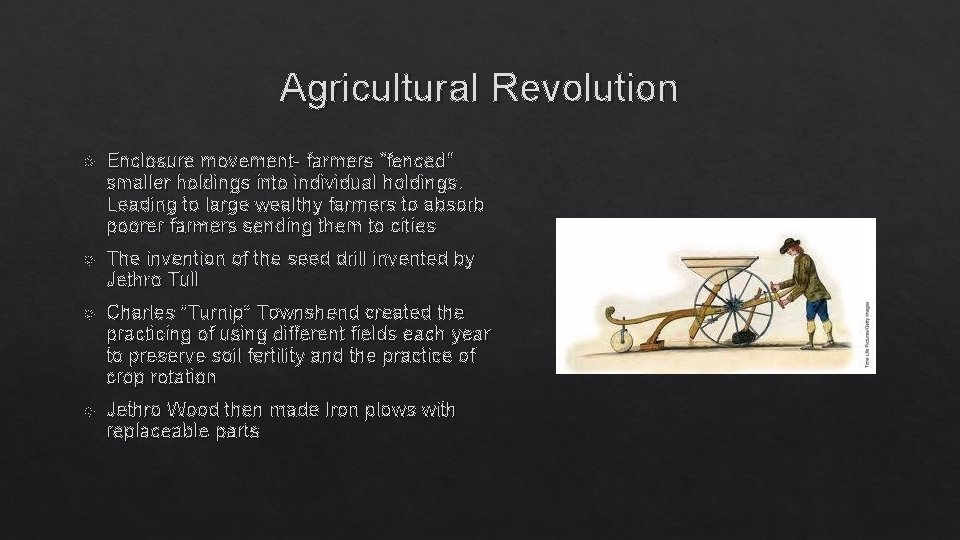
Agricultural Revolution Enclosure movement- farmers “fenced” smaller holdings into individual holdings. Leading to large wealthy farmers to absorb poorer farmers sending them to cities The invention of the seed drill invented by Jethro Tull Charles “Turnip” Townshend created the practicing of using different fields each year to preserve soil fertility and the practice of crop rotation Jethro Wood then made Iron plows with replaceable parts
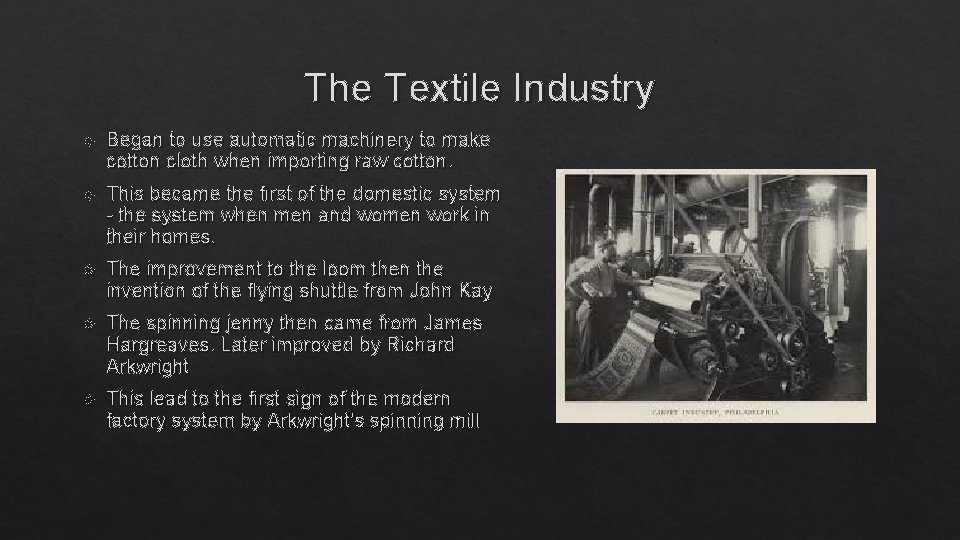
The Textile Industry Began to use automatic machinery to make cotton cloth when importing raw cotton. This became the first of the domestic system - the system when men and women work in their homes. The improvement to the loom then the invention of the flying shuttle from John Kay The spinning jenny then came from James Hargreaves. Later improved by Richard Arkwright This lead to the first sign of the modern factory system by Arkwright's spinning mill
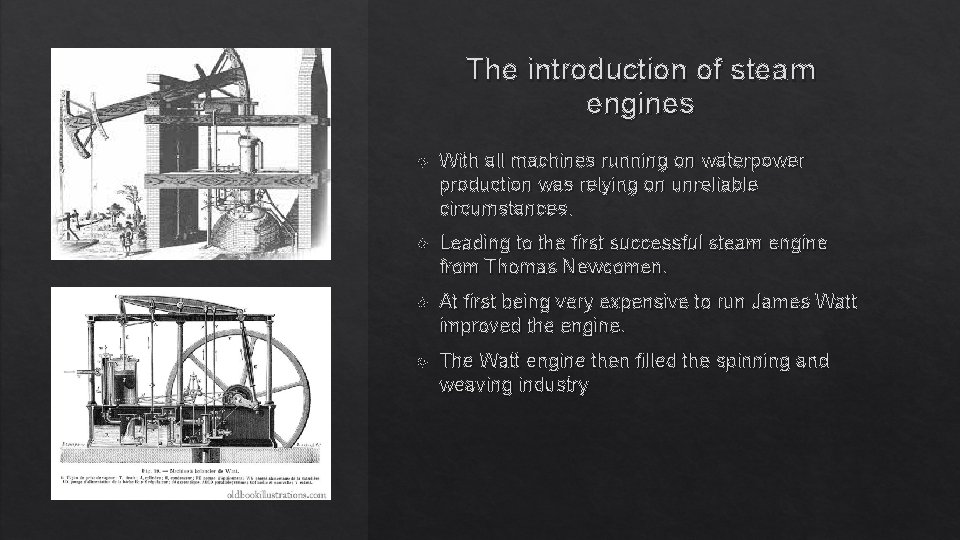
The introduction of steam engines With all machines running on waterpower production was relying on unreliable circumstances. Leading to the first successful steam engine from Thomas Newcomen. At first being very expensive to run James Watt improved the engine. The Watt engine then filled the spinning and weaving industry
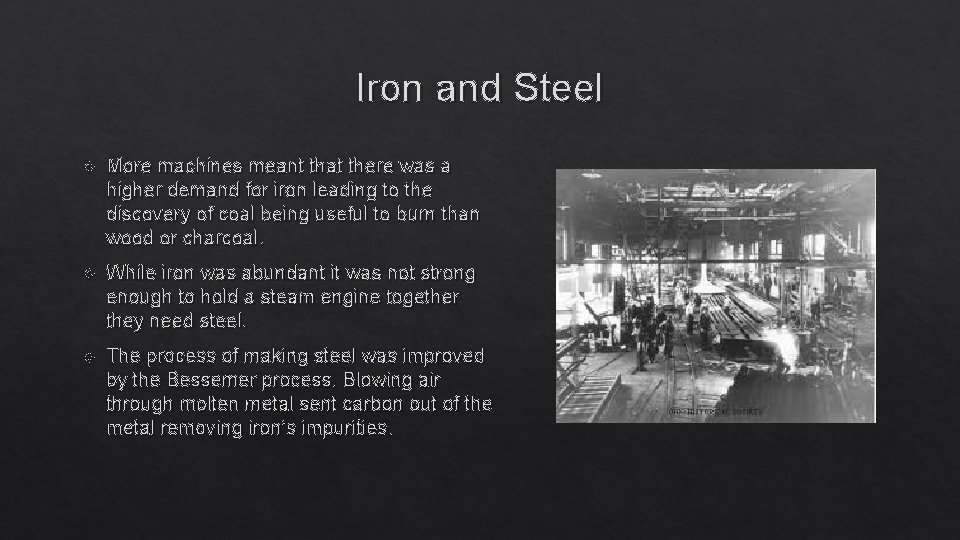
Iron and Steel More machines meant that there was a higher demand for iron leading to the discovery of coal being useful to burn than wood or charcoal. While iron was abundant it was not strong enough to hold a steam engine together they need steel. The process of making steel was improved by the Bessemer process. Blowing air through molten metal sent carbon out of the metal removing iron’s impurities.
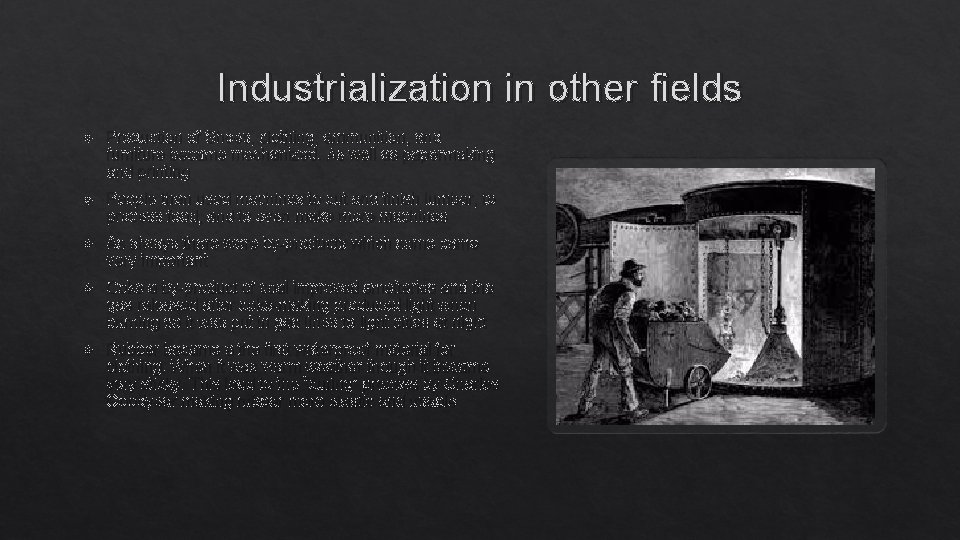
Industrialization in other fields Production of Shoes, clothing, ammunition, and furniture became mechanized. As well as papermaking and printing People then used machines to cut and finish lumber, to process food, and to even make more machines As always there were by-products which some came very important Coke a by-product of coal improved smelteries and the gas released after coke-making produced light when burning so it was put in gas lines to light cities at night Rubber became a the first waterproof material for clothing. When it was warm weather though it became very sticky. This lead to the “curing” process by Charles Goodyear making rubber more elastic and usable
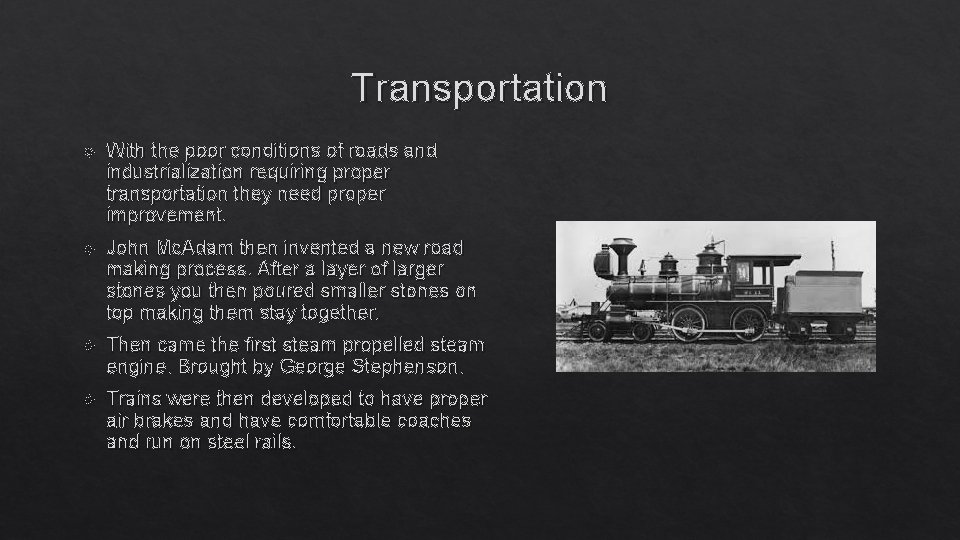
Transportation With the poor conditions of roads and industrialization requiring proper transportation they need proper improvement. John Mc. Adam then invented a new road making process. After a layer of larger stones you then poured smaller stones on top making them stay together. Then came the first steam propelled steam engine. Brought by George Stephenson. Trains were then developed to have proper air brakes and have comfortable coaches and run on steel rails.
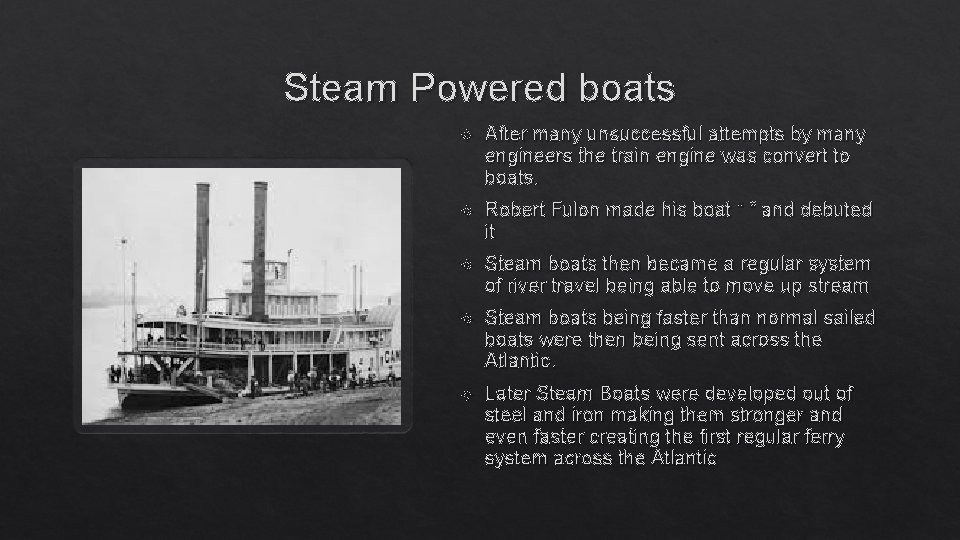
Steam Powered boats After many unsuccessful attempts by many engineers the train engine was convert to boats. Robert Fulon made his boat “ “ and debuted it Steam boats then became a regular system of river travel being able to move up stream Steam boats being faster than normal sailed boats were then being sent across the Atlantic. Later Steam Boats were developed out of steel and iron making them stronger and even faster creating the first regular ferry system across the Atlantic
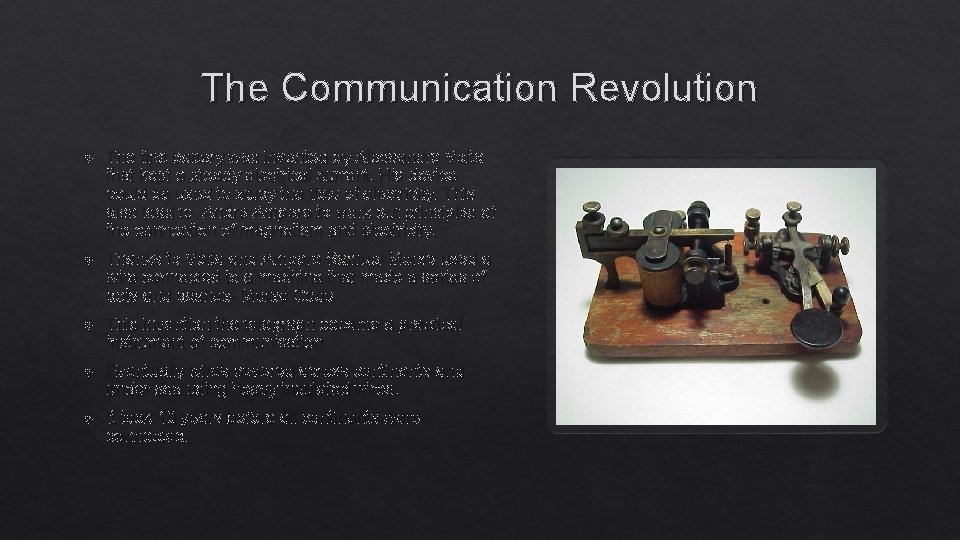
The Communication Revolution The first battery was invented by Alessandro Volta that kept a steady electrical current. His device could be used to study the flow of electricity. This also lead to Andre Ampere to work out principles of the connection of magnetism and electricity. Thanks to Volta and Ampere Samuel Morse used a wire connected to a machine that made a series of dots and dashes- Morse Code This invention the telegraph became a practical instrument of communication Eventually wires covered across continents and under sea using heavy insulated wires. It took 10 years before all continents were connected.
The Spread of Industry While Britain industrialized the fastest it was for it’s resources. Much Europe didn’t have the raw material or the markets to purchase these materials. Wars of the French revolution and the Napoleonic Era set a slow toll for industrialization The French were mainly agricultural in the early stages and Germany had no efficient central government to help industrialization The United States eagerly adopt the idea of industrialization leading to canals and roads connecting the east to the west and steel industries grew. Eventually that the States surpassed Great Britain with the invention of Eli Whitney’s Cotton gin and Cyrus Mc. Cormick’s Cormick reaper a tool used to collect grain.