
The Origins of Race Historical Foundations Unit Early
- Slides: 16
The Origins of Race Historical Foundations Unit
Early Humans Article Debrief �What did the article say about how humans came to look so different from each other? �What environmental factors or social factors impacted physical appearance over time? �Why might someone need darker skin closer to the equator?
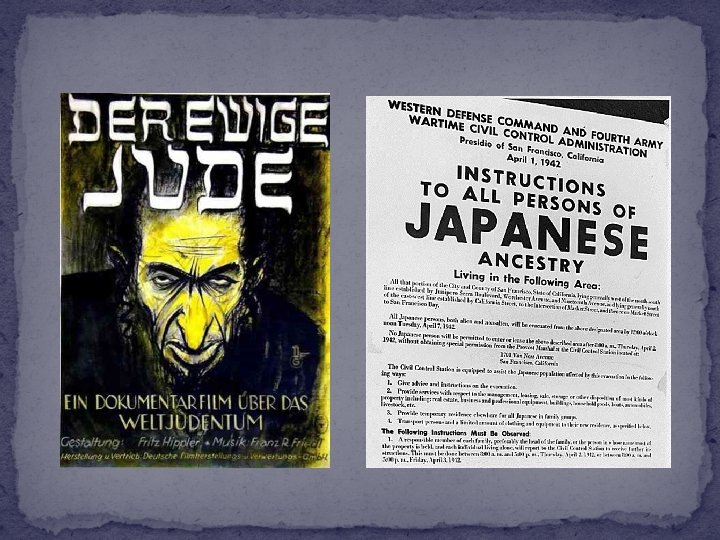
Origins of ‘race’ �Race is a modern idea �Associated with European imperialism and colonization during the age of exploration. �New encounters led to speculation about physical, social, and cultural differences among humans �Many of the racial stereotypes developed during the age of exploration have seriously impacted history.
Race is not ‘real’ but racism is �Race is a physical characteristic that has evolved. �Race has no genetic basis. Not one characteristic, trait or even gene distinguishes all the members of one so-called race from all the members of another so -called race. �Race justified social inequalities as natural.
�Now that we know about the origins of race and how the concept of racism began, we are going to take a look at what happens when another physical characteristic is used to discriminate against people instead of race…
Frontline Episode: “A Class Divided” �Experiment by a teacher in Iowa concerning racism and its consequences �During the late 1960 s, after Martin Luther King Jr. was assassinated. �She wanted to give her students a concrete experience of what it felt like to be discriminated against. �We will view this video as a primary source of the attitudes during the late 1960 s. �"A Class Divided“
Debrief �In your journals… �What’s your reaction to the teacher’s experiment? �How did the behavior of the students change? �Was the experiment effective?
It’s ok to talk about Race �Race is a powerful social idea that gives people different access to opportunities and resources. �Race is such a touchy topic because it is often associated with all of the negative history and oppression of minorities in this country. �But the only way to bridge the gap created by racism and move forward as a more unified society is to talk about it: all of it.
�On a sheet of paper, write down any stereotypes that you have heard before. (phrase them in an appropriate way)
�On a sheet of paper, write down any stereotypes that you have heard before. (phrase them in an appropriate way) �Common ‘positive stereotypes’ � Are these ‘ok’ to say? � What if you don’t fit the ‘category’? How would that make someone feel?
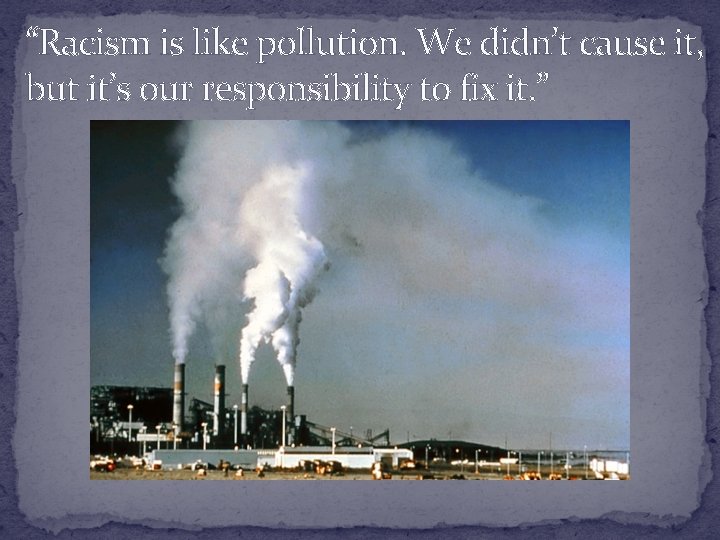
“Racism is like pollution. We didn’t cause it, but it’s our responsibility to fix it. ”
“Colorblindness” will not end racism. �Colorblindness is when we “do not see” someone’s race. �Colorblindness often comes from good intentions: we don’t want to seem prejudiced. �But when we do not see race, we fail to see something important about a person’s identity. �And when we do not see race, it’s hard to see or fight racism.
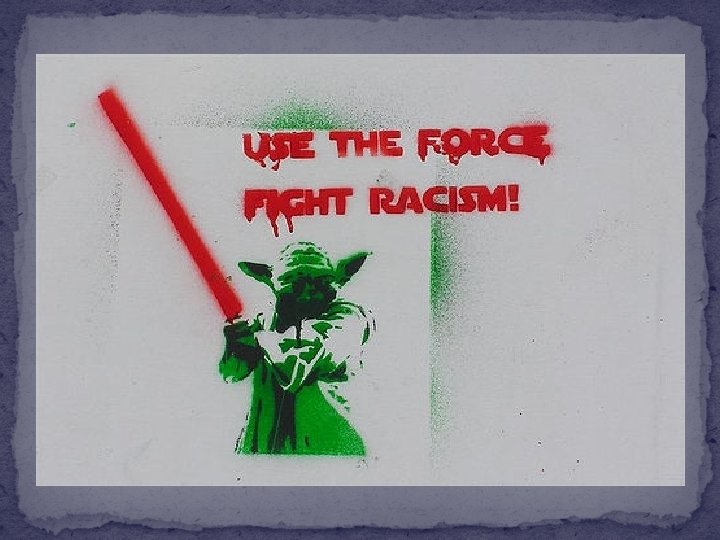
Q: If colorblindness won’t end racism, what CAN we do? �We can be multiculturalists. �Multiculturalism means celebrating all ethnicities and cultural heritages as valuable and worth seeing. �Multiculturalism means being curious about people who are different from us, and wanting to learn more about them. �Multiculturalism means seeing and fighting against racism and injustice.
Reflection �Given everything that we have discussed today, how will this new information shape how we view history in this class throughout the year?