
The Origins of Civilizations in Egypt and Mesopotamia
- Slides: 10
The Origins of Civilizations in Egypt and Mesopotamia De Blois, pp. 9 -13
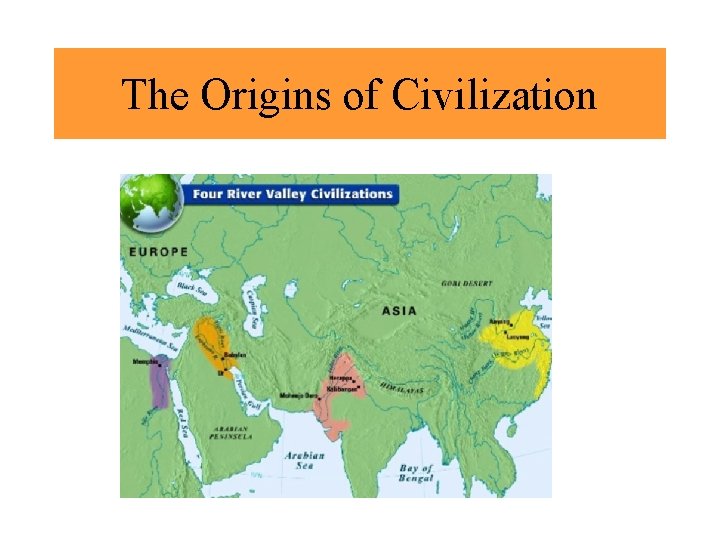
The Origins of Civilization
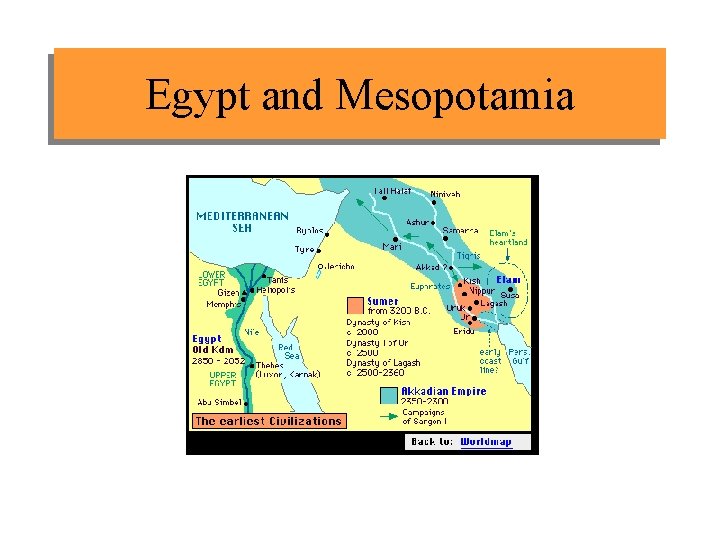
Where? When? Characteristics? • Where? – Egypt – Nile River Valley – Mesopotamia – Tigris and Euphrates Rivers Valley • Modern Iraq and Kuwait • From Greek: “meso” between + “potamia” rivers, the “the land between two rivers) • When? – Just before 3000 BC • Characteristics – Increasing urbanization (cities) – Birth of states (groups of cities) – Invention of writing
Egypt and Mesopotamia
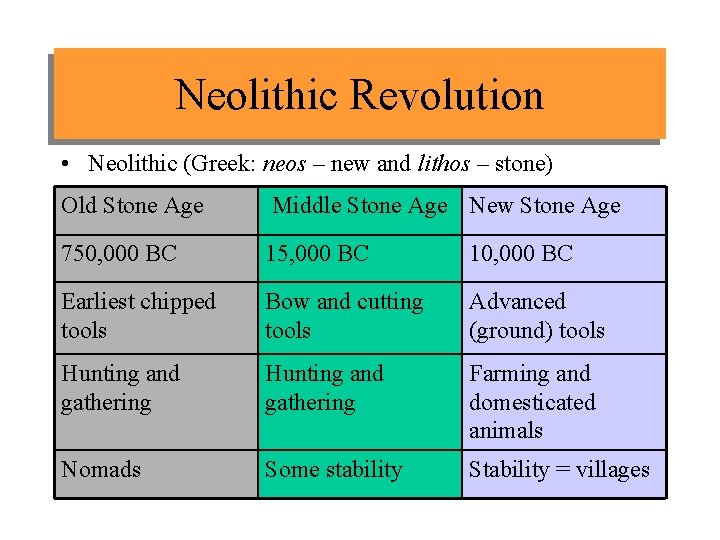
Neolithic Revolution • Neolithic (Greek: neos – new and lithos – stone) Old Stone Age Middle Stone Age New Stone Age 750, 000 BC 15, 000 BC 10, 000 BC Earliest chipped tools Bow and cutting tools Advanced (ground) tools Hunting and gathering Farming and domesticated animals Nomads Some stability Stability = villages
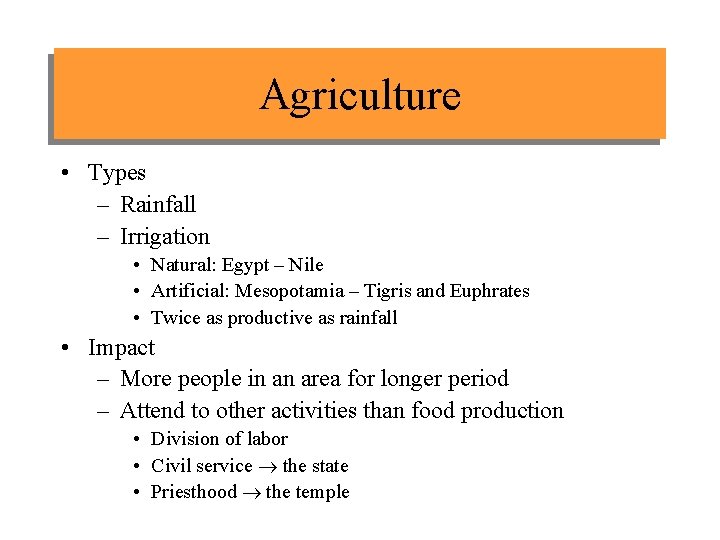
Agriculture • Types – Rainfall – Irrigation • Natural: Egypt – Nile • Artificial: Mesopotamia – Tigris and Euphrates • Twice as productive as rainfall • Impact – More people in an area for longer period – Attend to other activities than food production • Division of labor • Civil service the state • Priesthood the temple
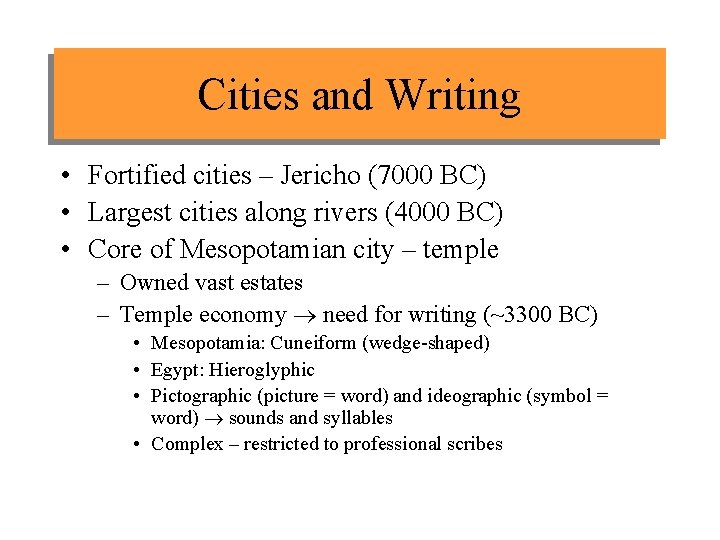
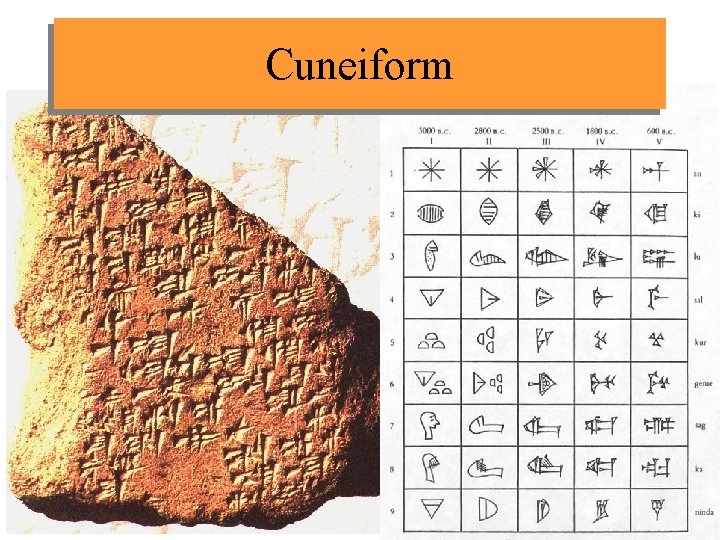
Cities and Writing • Fortified cities – Jericho (7000 BC) • Largest cities along rivers (4000 BC) • Core of Mesopotamian city – temple – Owned vast estates – Temple economy need for writing (~3300 BC) • Mesopotamia: Cuneiform (wedge-shaped) • Egypt: Hieroglyphic • Pictographic (picture = word) and ideographic (symbol = word) sounds and syllables • Complex – restricted to professional scribes
Cuneiform
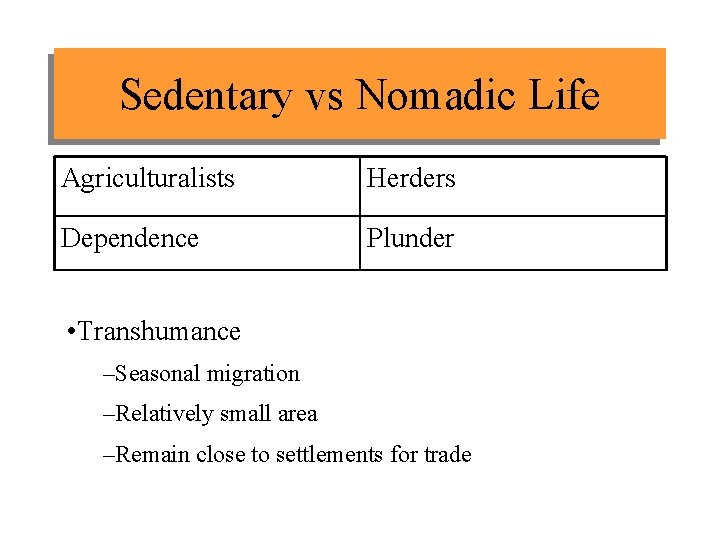
Sedentary vs Nomadic Life Agriculturalists Herders Dependence Plunder • Transhumance –Seasonal migration –Relatively small area –Remain close to settlements for trade
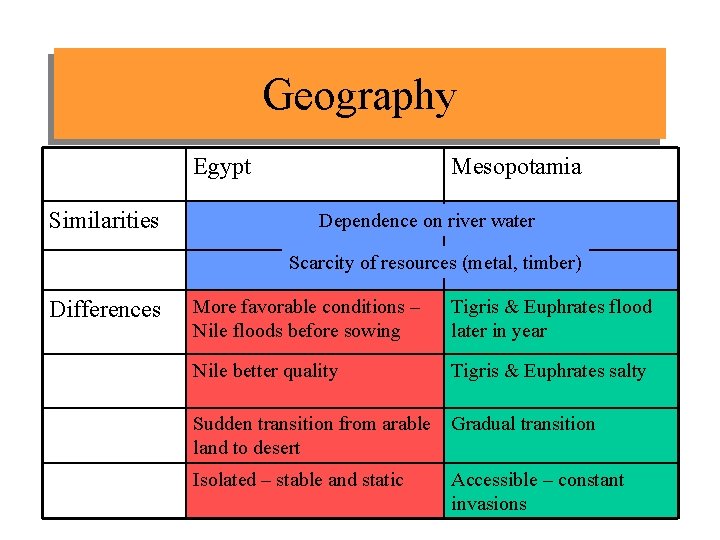
Geography Egypt Similarities Mesopotamia Dependence on river water Scarcity of resources (metal, timber) Differences More favorable conditions – Nile floods before sowing Tigris & Euphrates flood later in year Nile better quality Tigris & Euphrates salty Sudden transition from arable Gradual transition land to desert Isolated – stable and static Accessible – constant invasions