
The origins of Christendom expansion and integration of
- Slides: 6
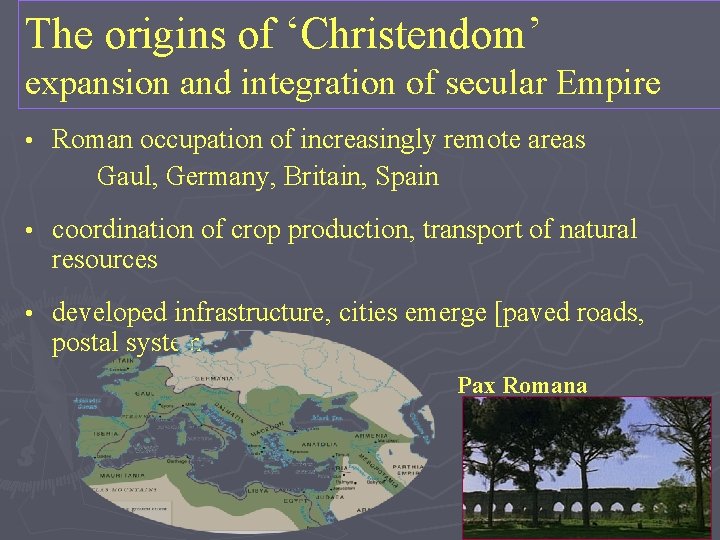
The origins of ‘Christendom’ expansion and integration of secular Empire • Roman occupation of increasingly remote areas Gaul, Germany, Britain, Spain • coordination of crop production, transport of natural resources • developed infrastructure, cities emerge [paved roads, postal system Pax Romana
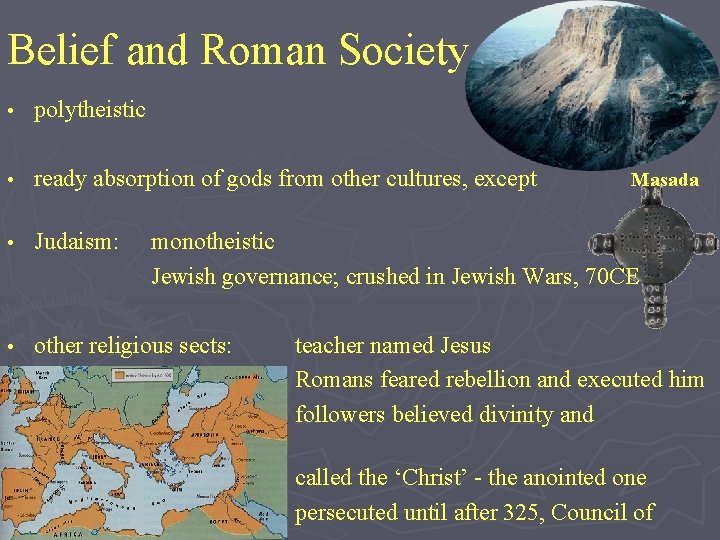
Belief and Roman Society • polytheistic • ready absorption of gods from other cultures, except • Judaism: • other religious sects: Masada monotheistic Jewish governance; crushed in Jewish Wars, 70 CE teacher named Jesus Romans feared rebellion and executed him followers believed divinity and resurrection called the ‘Christ’ - the anointed one persecuted until after 325, Council of
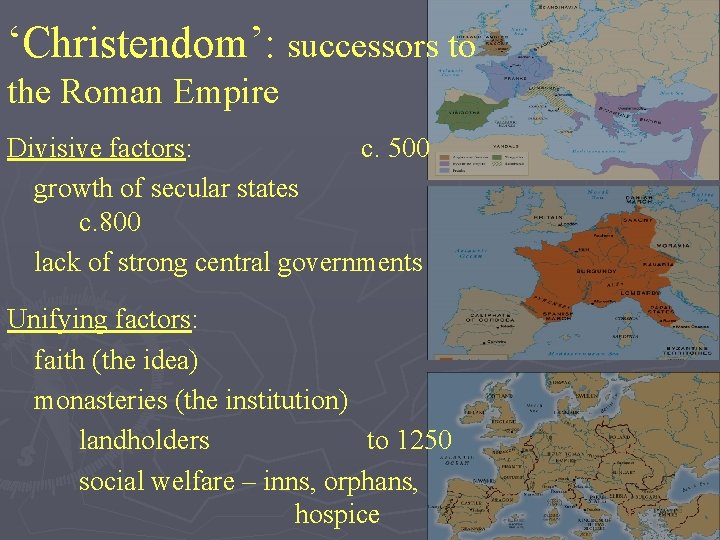
‘Christendom’: successors to the Roman Empire Divisive factors: c. 500 growth of secular states c. 800 lack of strong central governments Unifying factors: faith (the idea) monasteries (the institution) landholders to 1250 social welfare – inns, orphans, hospice
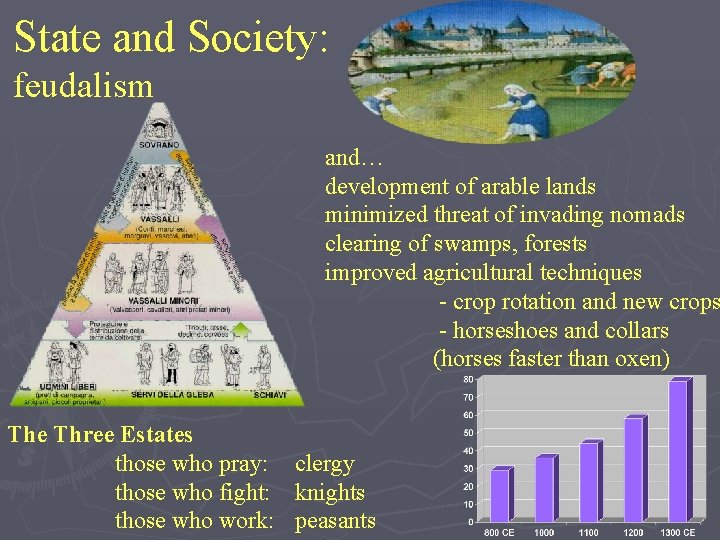
State and Society: feudalism and… development of arable lands minimized threat of invading nomads clearing of swamps, forests improved agricultural techniques - crop rotation and new crops - horseshoes and collars (horses faster than oxen) The Three Estates those who pray: clergy those who fight: knights those who work: peasants
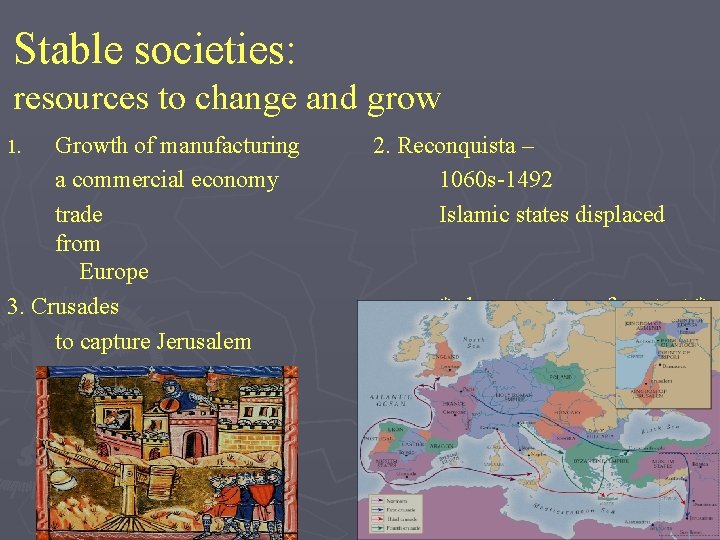
Stable societies: resources to change and grow Growth of manufacturing a commercial economy trade from Europe 3. Crusades to capture Jerusalem 1096 -mid 13 C 1. 2. Reconquista – 1060 s-1492 Islamic states displaced * shapes nature of contact *
Overall of note: The geography, topography of the society: • how has that impacted its development and structure, its homogeneity or multi-ethnicity • how has that shaped relations between it and other groups The overall organization of the society: • model of leadership • social structure • what positions/roles are valued in society The philosophic/spiritual principles of the society: unique similarities