
The Origin of Life Bio Genesis Redis Experiment
The Origin of Life

Bio. Genesis Redi’s Experiment Challenged the idea of spontaneous generation – SG –idea that nonliving matter can produce life – Showed that flies laid the eggs that caused other flies
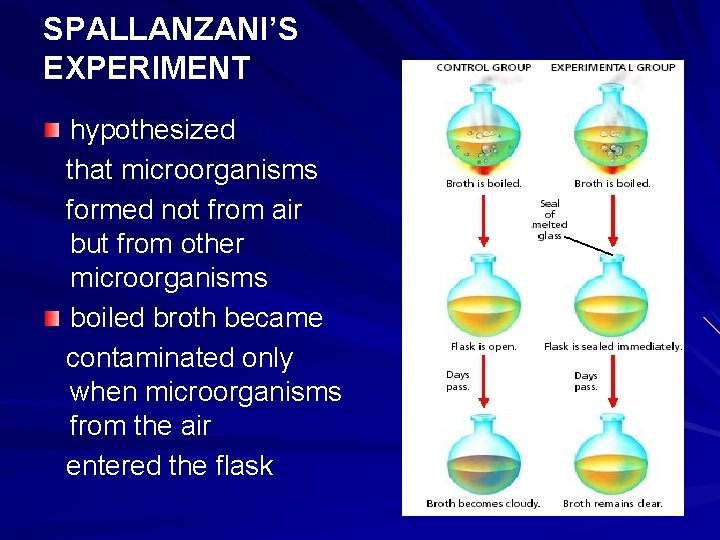
SPALLANZANI’S EXPERIMENT hypothesized that microorganisms formed not from air but from other microorganisms boiled broth became contaminated only when microorganisms from the air entered the flask
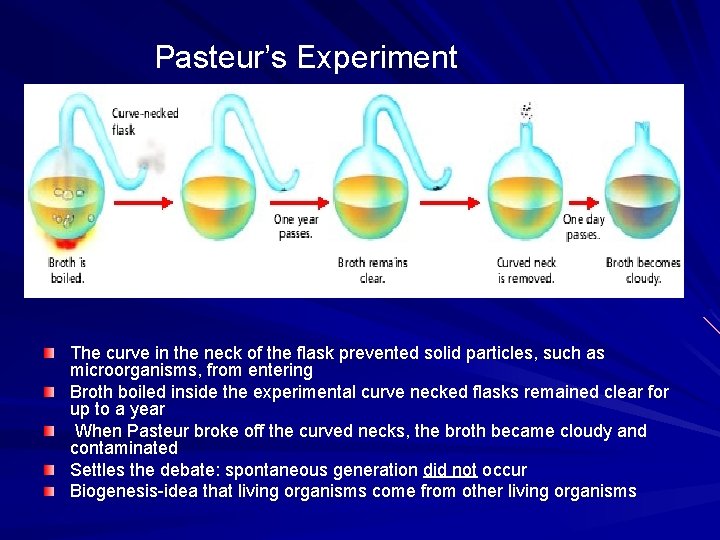
Pasteur’s Experiment The curve in the neck of the flask prevented solid particles, such as microorganisms, from entering Broth boiled inside the experimental curve necked flasks remained clear for up to a year When Pasteur broke off the curved necks, the broth became cloudy and contaminated Settles the debate: spontaneous generation did not occur Biogenesis-idea that living organisms come from other living organisms

History of Life…theory Cells may evolve and change, but new cells always arise from existing cells. How, then, did the first cells originate? Scientists attempt to reconstruct the processes that gave rise to the first cellular life.

Earth’s Age: 4. 6 billion years old Was discovered from studying layers of sediment in Earth’s crust Radioactive dating is also used to determine the age of Earth
RADIOACTIVE DECAY ages of objects like fossils and rocks can be determined by measuring the amount of radioactive decay that has occurred

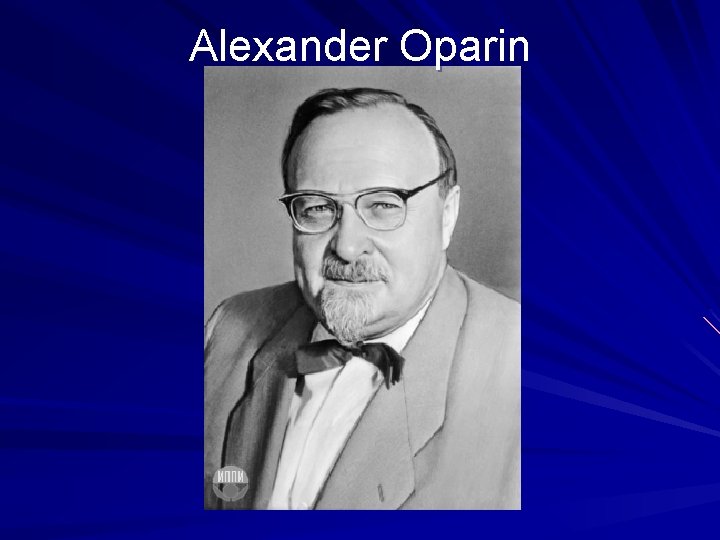
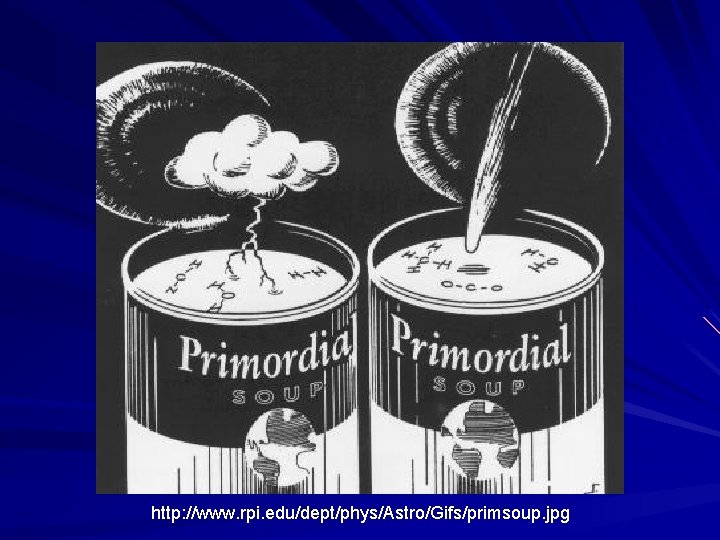
1 st organic compounds (proteins, carbs, nucleic acids) Oparin: early atmosphere consisted of: NH 3, H 2 O, and compounds made of hydrogen and carbon, such as methane (CH 4). Energy from lightning caused a rxn to form organic molecules The rain then washed them into the oceans forming a primordial soup
Alexander Oparin
http: //www. rpi. edu/dept/phys/Astro/Gifs/primsoup. jpg
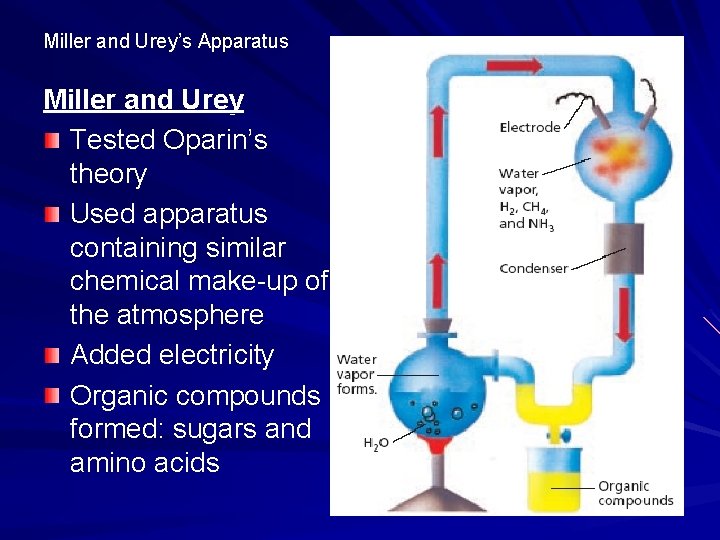
Miller and Urey’s Apparatus Miller and Urey Tested Oparin’s theory Used apparatus containing similar chemical make-up of the atmosphere Added electricity Organic compounds formed: sugars and amino acids

Miller and Urey
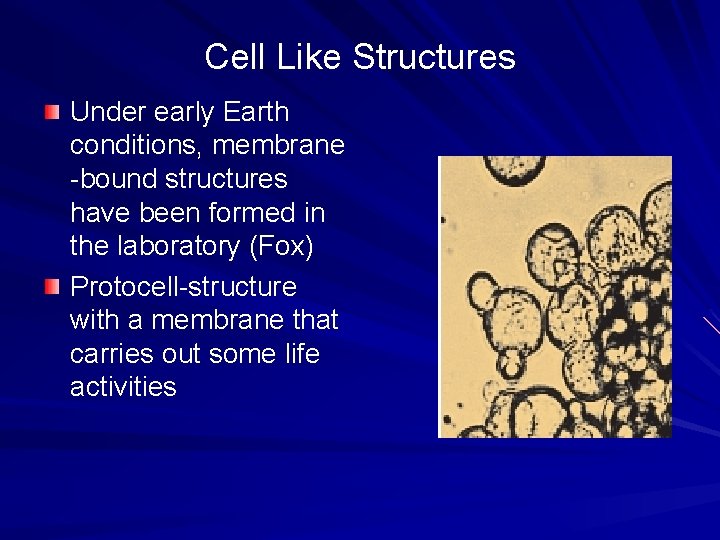
Cell Like Structures Under early Earth conditions, membrane -bound structures have been formed in the laboratory (Fox) Protocell-structure with a membrane that carries out some life activities

First True Cells Because there was no O 2, the first organisms were: – Anaerobic – Prokaryotes – Heterotrophs
The 1 st Autotrophs Chemosynthesis: Ex. Archaebacteria Live in harsh conditions Released energy from sulfur to make food
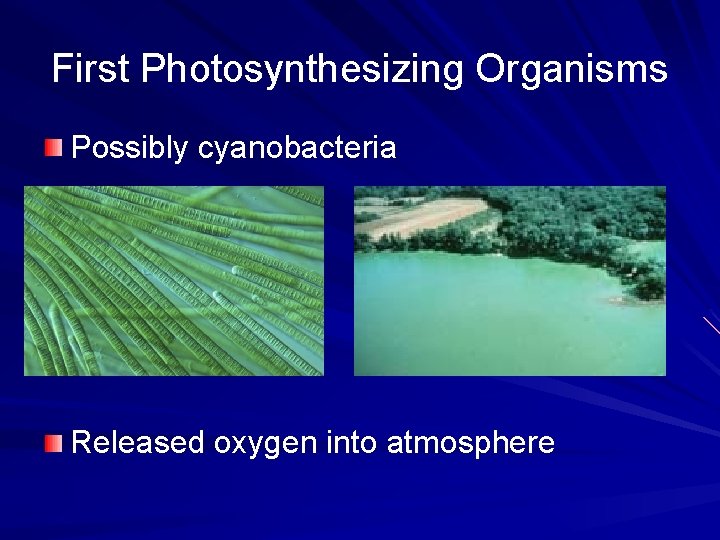
First Photosynthesizing Organisms Possibly cyanobacteria Released oxygen into atmosphere
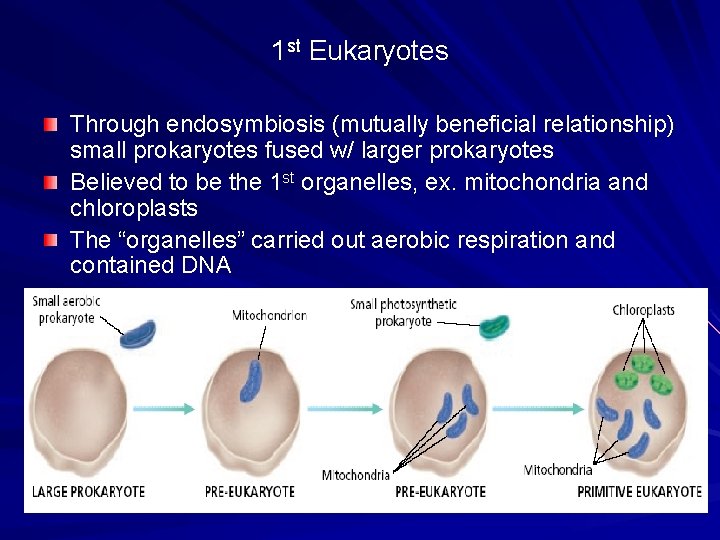
1 st Eukaryotes Through endosymbiosis (mutually beneficial relationship) small prokaryotes fused w/ larger prokaryotes Believed to be the 1 st organelles, ex. mitochondria and chloroplasts The “organelles” carried out aerobic respiration and contained DNA
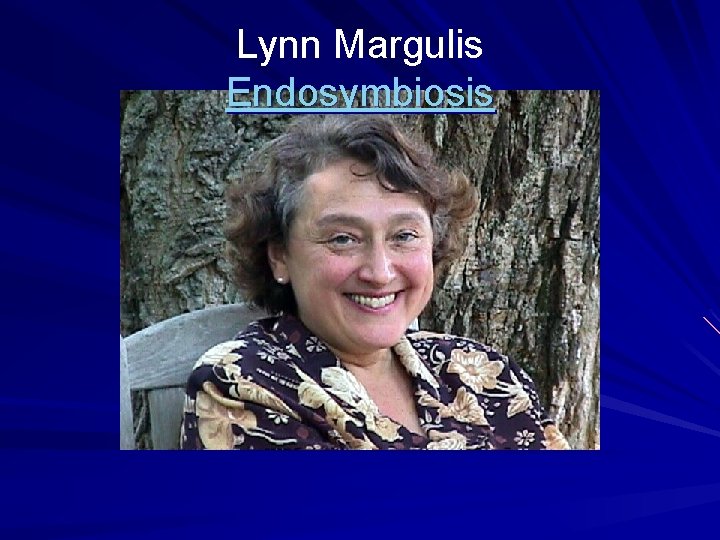
Lynn Margulis Endosymbiosis
- Slides: 19