
The Origin and Evolutionary History of Life Chapter


- Slides: 59
The Origin and Evolutionary History of Life Chapter 21
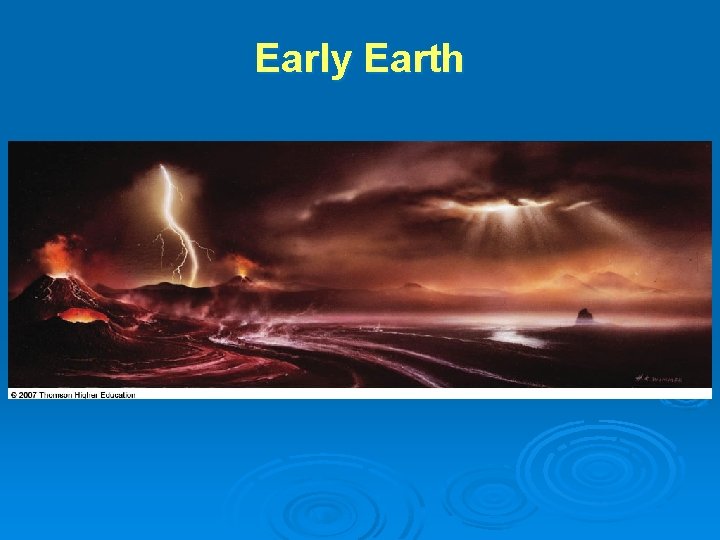
Learning Objective 1 • What conditions do geologists think existed on early Earth?
Early Earth
The Origin of Life • Biologists generally agree • • • life originated from nonliving matter by chemical evolution Origin of life is difficult to test experimentally • testable hypotheses about chemical evolution
KEY CONCEPTS • Although there is no direct fossil evidence of the origin of life, biochemical experiments have demonstrated how complex organic molecules, found in all living organisms, may have formed
4 Requirements for Chemical Evolution 1. Absence of oxygen • oxygen would oxidize abiotically produced organic molecules 2. Energy • to form organic molecules
4 Requirements for Chemical Evolution 3. Chemical building blocks • • water, minerals, gases in atmosphere to form organic molecules 4. Sufficient time • for molecules to accumulate and react
Learn more about conditions on early Earth by clicking on the figure in Thomson. NOW.
Learning Objective 2 • Contrast the prebiotic soup hypothesis and the iron–sulfur world hypothesis
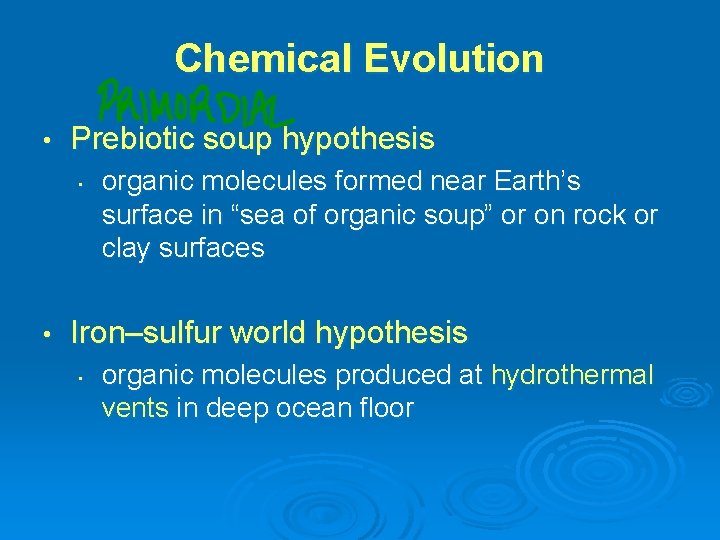
Chemical Evolution • Prebiotic soup hypothesis • • organic molecules formed near Earth’s surface in “sea of organic soup” or on rock or clay surfaces Iron–sulfur world hypothesis • organic molecules produced at hydrothermal vents in deep ocean floor
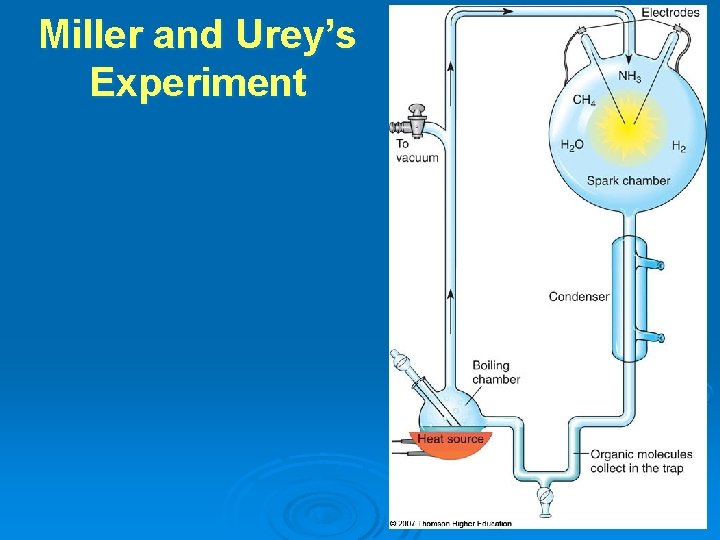
Miller and Urey’s Experiment
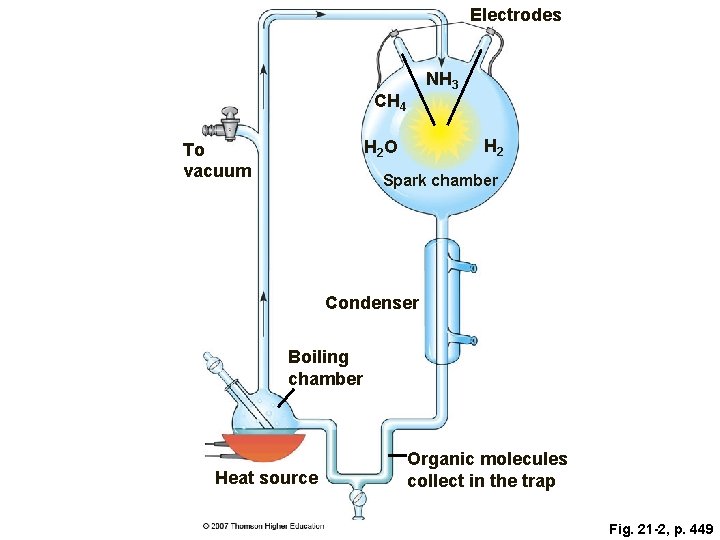
Electrodes NH 3 CH 4 H 2 O To vacuum Spark chamber Condenser Boiling chamber Heat source Organic molecules collect in the trap Fig. 21 -2, p. 449
Insert “Miller's reaction chamber experiment” Miller_Urey. swf
See the Miller–Urey experiment unfold by clicking on the figure in Thomson. NOW.
Learning Objective 3 • What major steps are hypothesized to have occurred in the origin of cells?
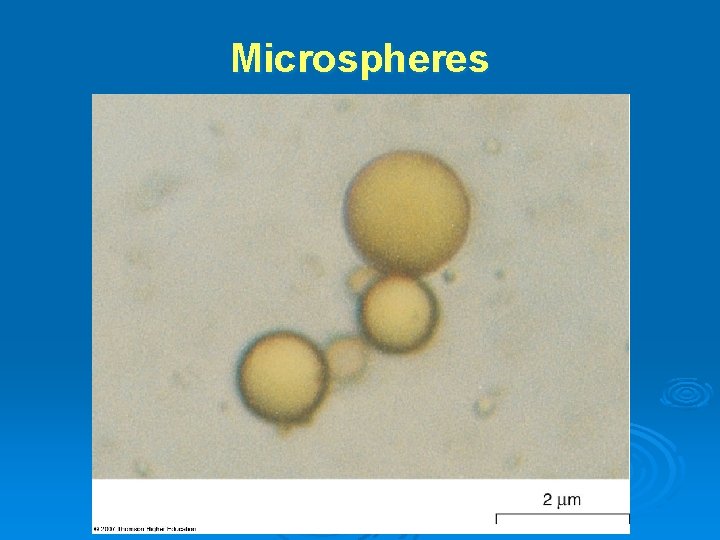
The Origin of Cells • Macromolecules • • Protobionts (macromolecular assemblages) • • assembled from small organic molecules formed from macromolecules Cells • arose from protobionts
Microspheres
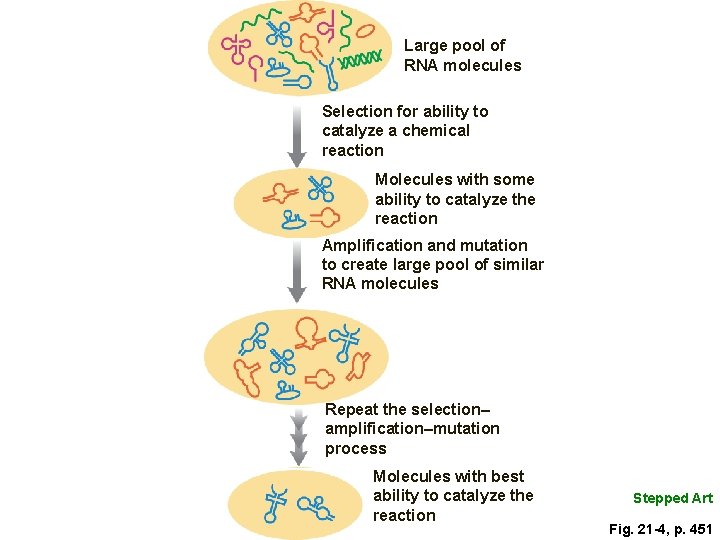
RNA World Model • RNA • • • first informational molecule to evolve progression toward self-reproducing cell Natural selection at molecular level • • resulted in information sequence DNA → RNA → protein
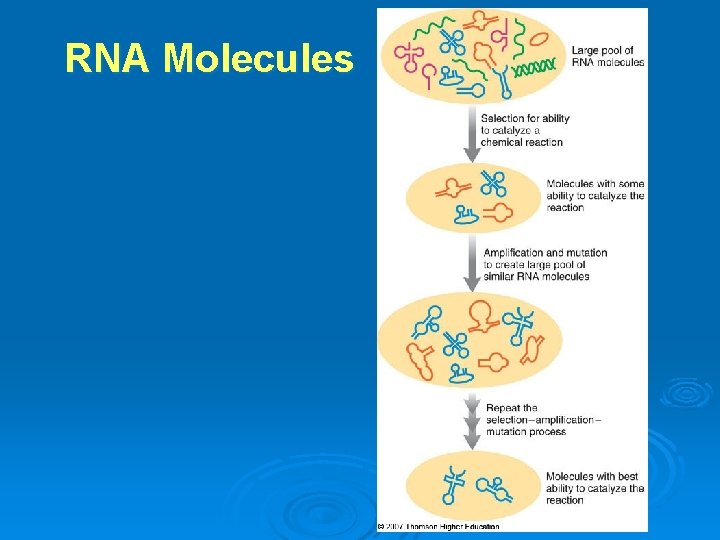
RNA Molecules
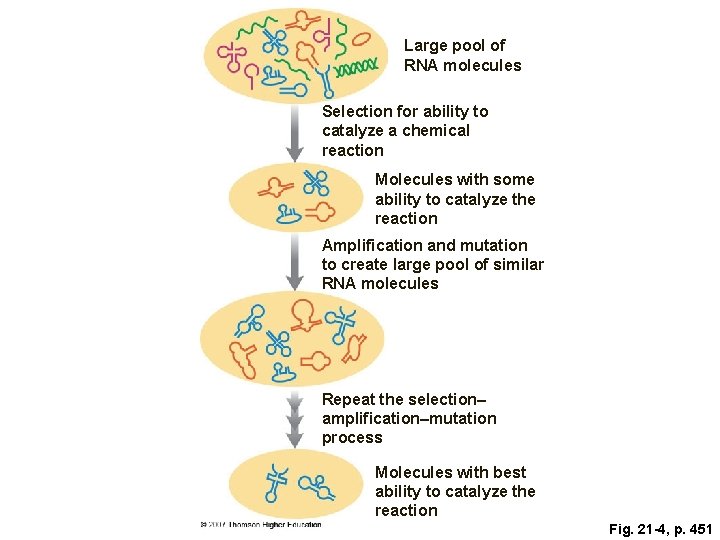
Large pool of RNA molecules Selection for ability to catalyze a chemical reaction Molecules with some ability to catalyze the reaction Amplification and mutation to create large pool of similar RNA molecules Repeat the selection– amplification–mutation process Molecules with best ability to catalyze the reaction Fig. 21 -4, p. 451
Large pool of RNA molecules Selection for ability to catalyze a chemical reaction Molecules with some ability to catalyze the reaction Amplification and mutation to create large pool of similar RNA molecules Repeat the selection– amplification–mutation process Molecules with best ability to catalyze the reaction Stepped Art Fig. 21 -4, p. 451
Learning Objective 4 • How did the evolution of photosynthetic autotrophs affected both the atmosphere and other organisms?
The First Cells • Prokaryotic heterotrophs • • • obtained organic molecules from environment probably anaerobes Autotrophs • • evolved later produced organic molecules by photosynthesis
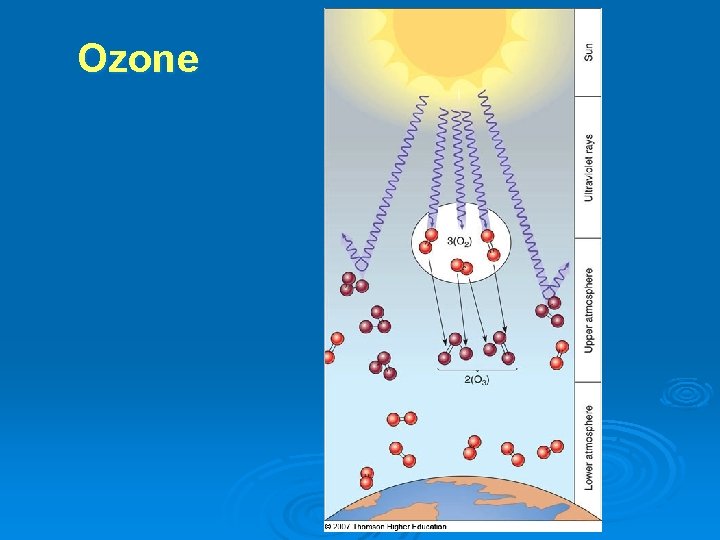
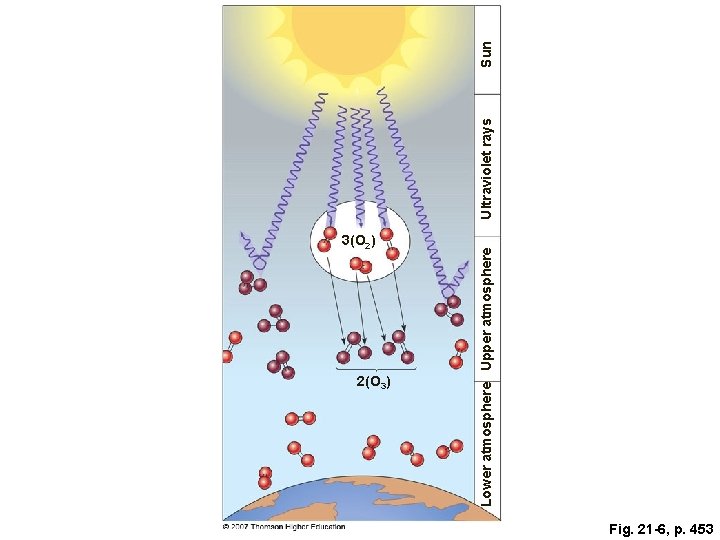
Photosynthesis • Generated oxygen in atmosphere • • • changed early life permitted evolution of aerobes Aerobes • use oxygen for efficient cellular respiration
Ozone
2(O 3) Lower atmosphere Upper atmosphere 3(O 2) Fig. 21 -6, p. 453 Ultraviolet rays Sun
Learning Objective 5 • What is the hypothesis of serial endosymbiosis?
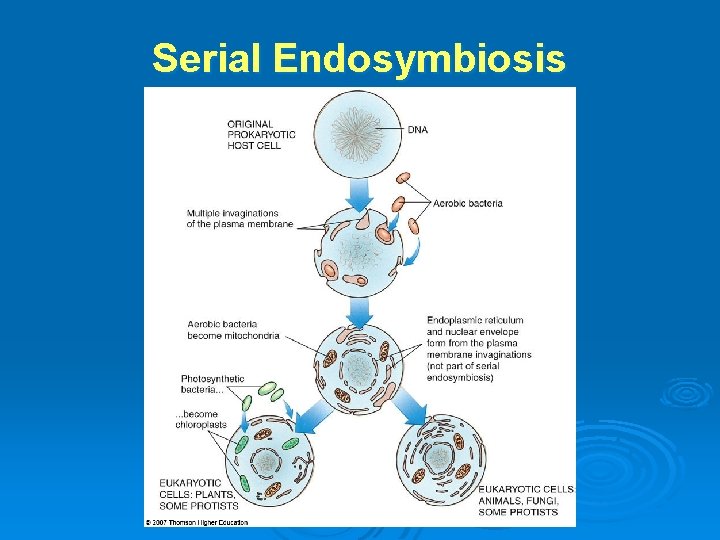
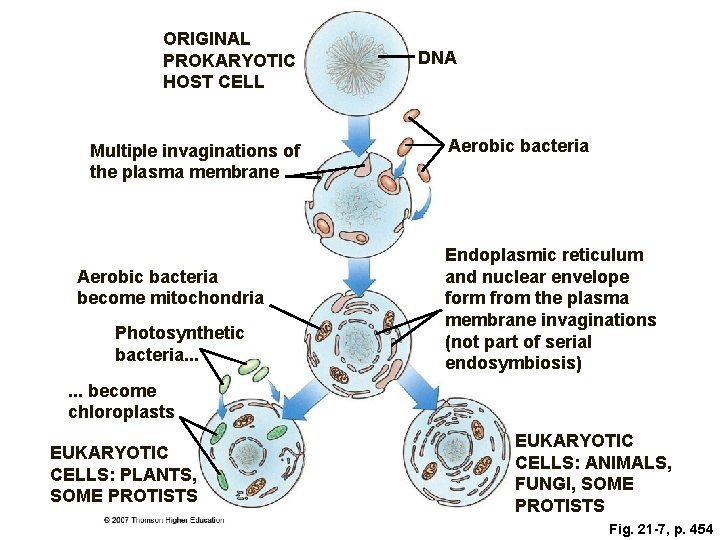
Serial Endosymbiosis • Eukaryotic cells arose from prokaryotic cells • Certain eukaryotic organelles (mitochondria, chloroplasts) evolved from prokaryotic endosymbionts • incorporated within larger prokaryotic hosts
Serial Endosymbiosis
ORIGINAL PROKARYOTIC HOST CELL Multiple invaginations of the plasma membrane Aerobic bacteria become mitochondria Photosynthetic bacteria. . . DNA Aerobic bacteria Endoplasmic reticulum and nuclear envelope form from the plasma membrane invaginations (not part of serial endosymbiosis) . . . become chloroplasts EUKARYOTIC CELLS: PLANTS, SOME PROTISTS EUKARYOTIC CELLS: ANIMALS, FUNGI, SOME PROTISTS Fig. 21 -7, p. 454
Insert “The endosymbiont theory” endosymbiont_theory_m. swf
Learn more about endosymbiosis by clicking on the figure in Thomson. NOW.
KEY CONCEPTS • Photosynthesis, aerobic respiration, and eukaryotic cell structure represent several major advances that occurred during the early history of life
Learning Objective 6 • What are the distinguishing organisms and major biological events of the Ediacaran period and the Paleozoic, Mesozoic, and Cenozoic eras
Proterozoic Eon • 2500 mya to 542 mya • • life consisted of prokaryotes About 2. 2 bya • first eukaryotic cells appeared
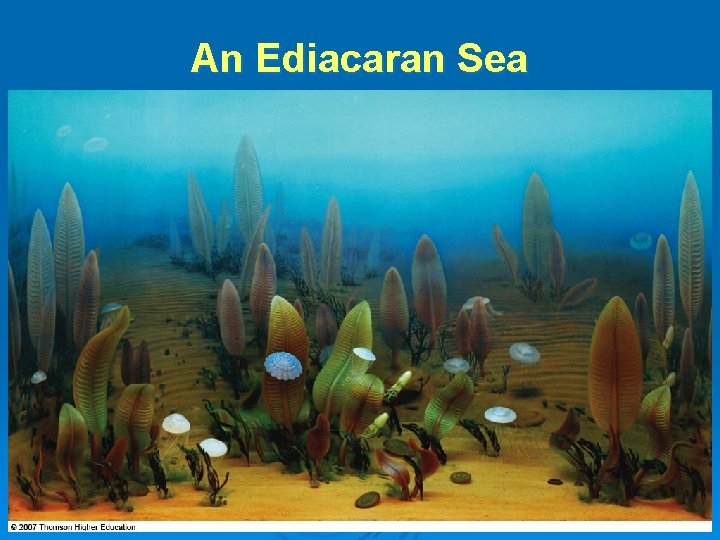
Ediacaran Period • Ediacaran period • • • Ediacaran fossils • • 600 mya to 542 mya last period of Proterozoic eon oldest known fossils of multicellular animals Ediacaran fauna • small, soft-bodied invertebrates
An Ediacaran Sea
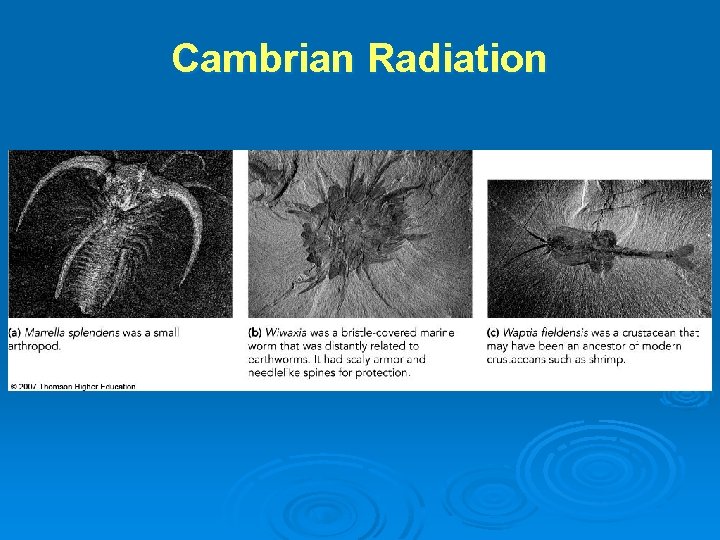
The Paleozoic Era (1) • Began about 542 mya • • lasted about 291 million years Many plants and animals appeared • • all major plants (except flowering plants) all animal phyla reptiles fishes and amphibians flourished
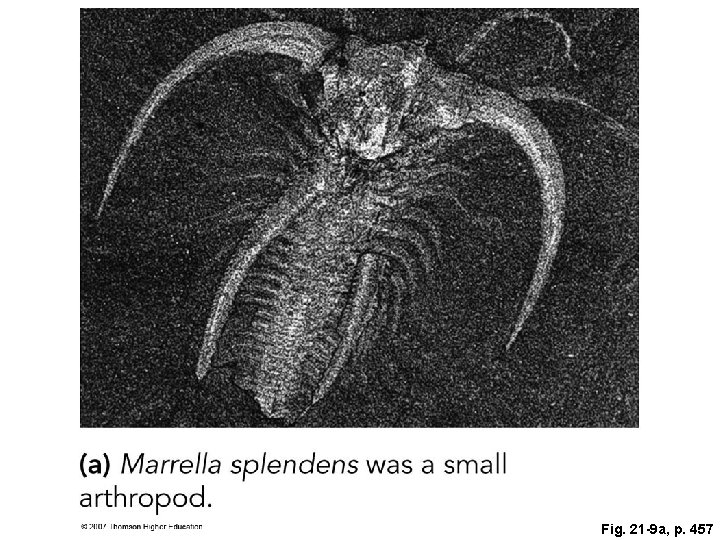
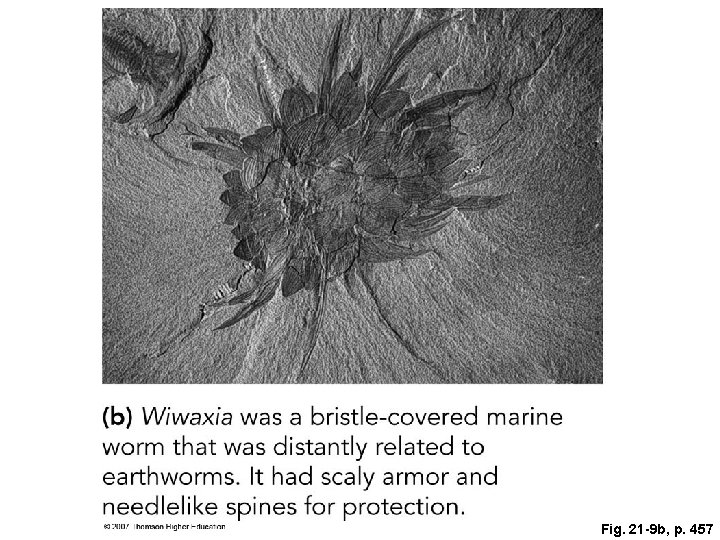
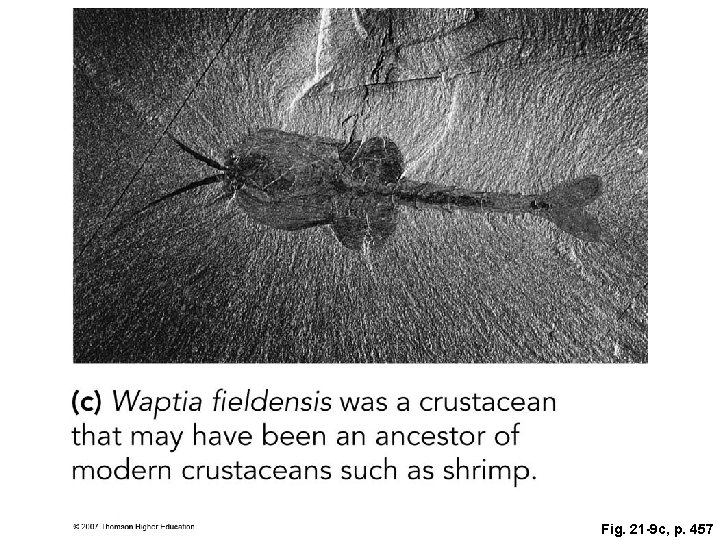
Cambrian Radiation
Fig. 21 -9 a, p. 457
Fig. 21 -9 b, p. 457
Fig. 21 -9 c, p. 457
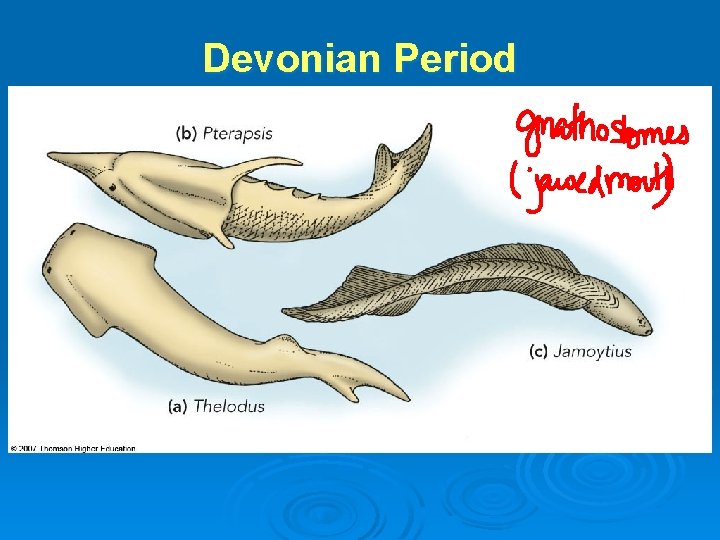
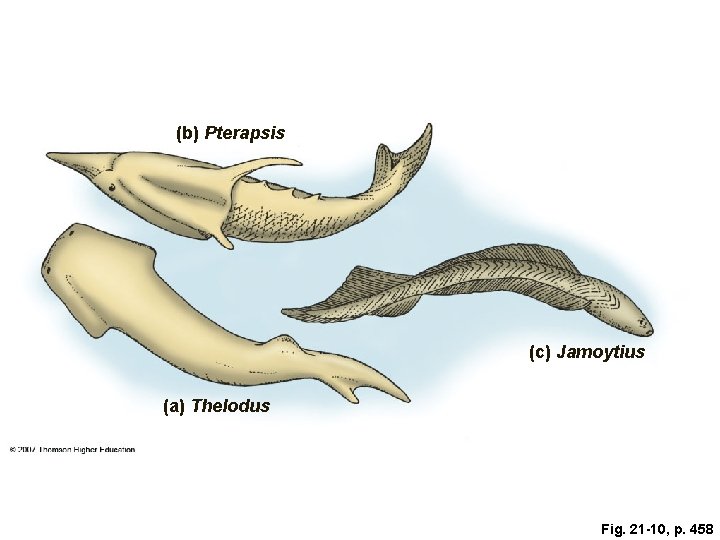
Devonian Period
(b) Pterapsis (c) Jamoytius (a) Thelodus Fig. 21 -10, p. 458
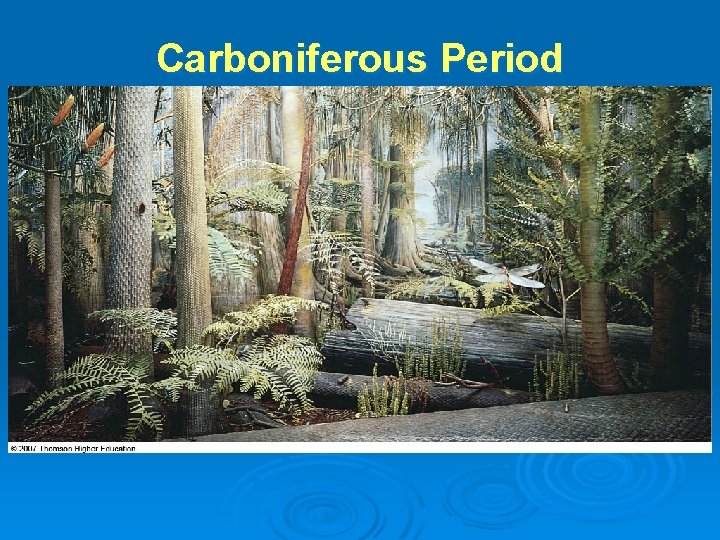
Carboniferous Period
The Paleozoic Era (2) • Greatest mass extinction of all time • • at end of Paleozoic era (251 mya) > 90% of marine species extinct 70% of land-dwelling vertebrate genera many plant species
The Mesozoic Era • Began about 251 mya • • lasted about 185 million years Dinosaurs dominated • • • reptiles diversified insects flourished flowering plants appeared birds appeared early mammals appeared
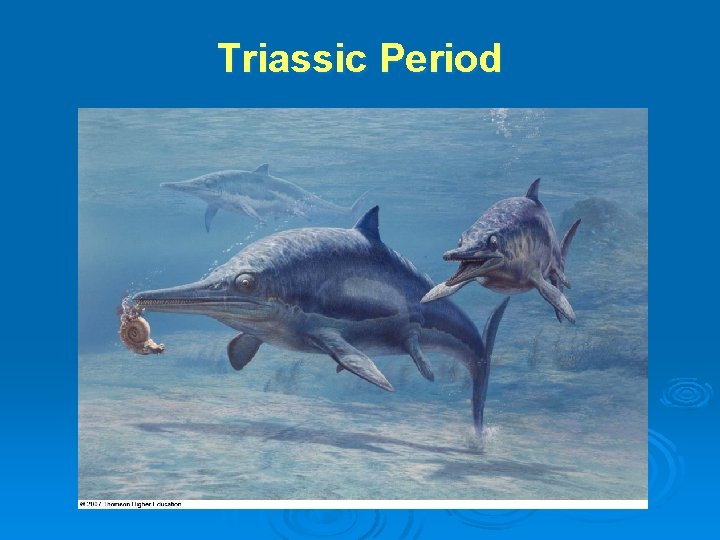
Triassic Period
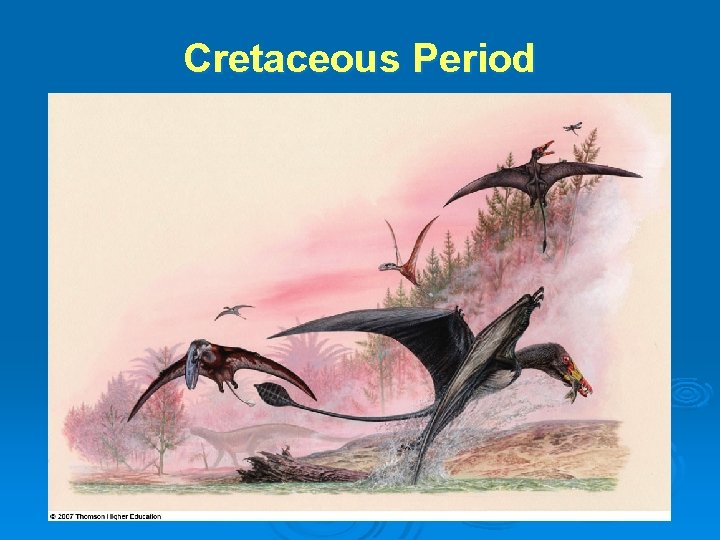
Cretaceous Period
Cretaceous Period • 66 mya • • • end of Cretaceous period many species abruptly became extinct Collision of extraterrestrial body with Earth • • may have caused dramatic climate changes resulted in mass extinction
Cenozoic Era • From 66 mya to present • • flowering plants, birds, insects, mammals diversified greatly Late Miocene and Early Pliocene epochs • human ancestors appeared in Africa
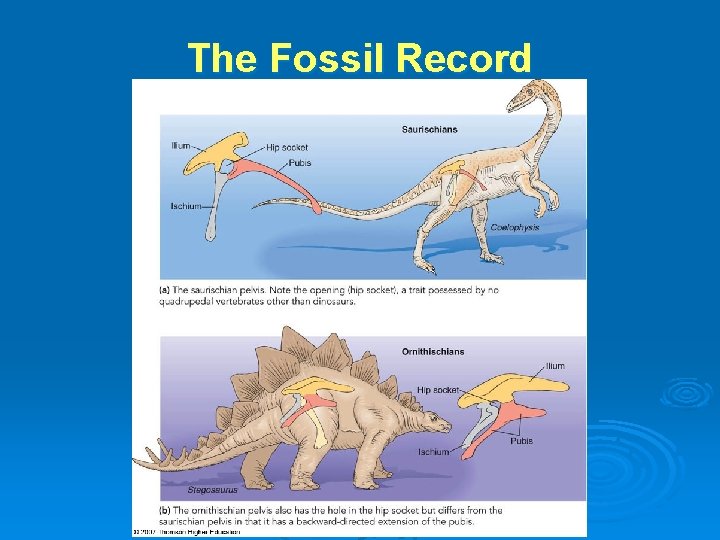
The Fossil Record
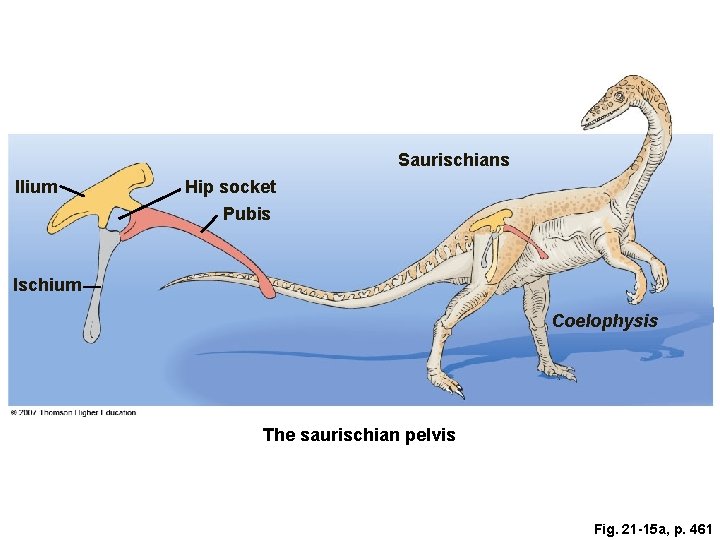
Saurischians Ilium Hip socket Pubis Ischium Coelophysis The saurischian pelvis Fig. 21 -15 a, p. 461
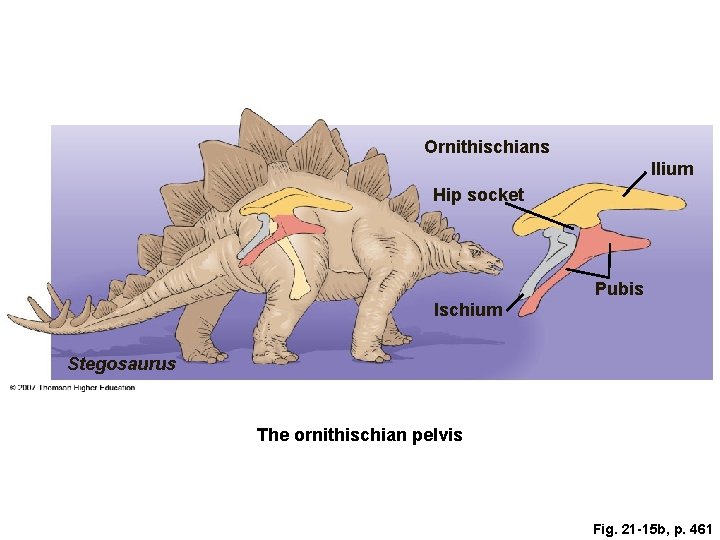
Ornithischians Ilium Hip socket Pubis Ischium Stegosaurus The ornithischian pelvis Fig. 21 -15 b, p. 461
KEY CONCEPTS • The fossil record tells us much of what we know about the history of life, such as what kinds of organisms existed and where and when they lived
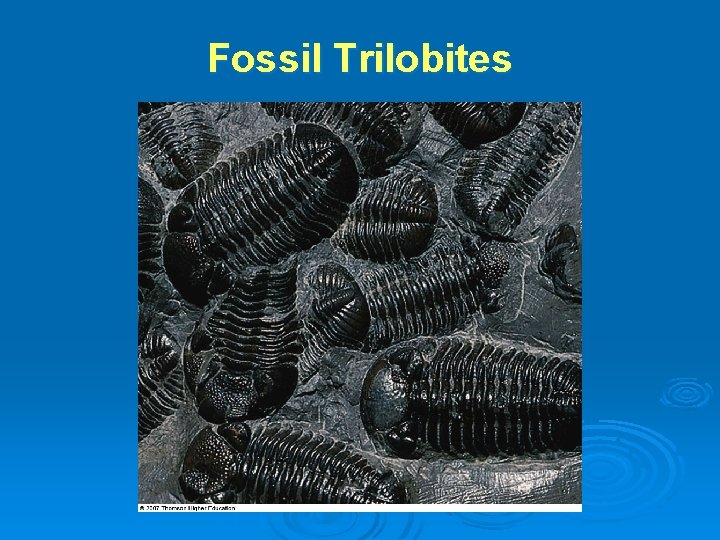
Fossil Trilobites
KEY CONCEPTS • Certain organisms appear in the fossil record, then disappear and are replaced by others
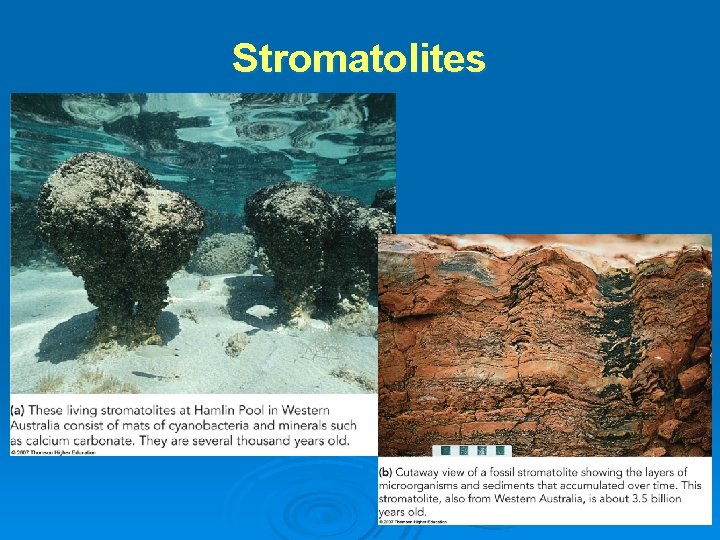
Stromatolites
KEY CONCEPTS • Scientists identify and demonstrate relationships among fossils in rock layers from different periods of geologic time