
The Origin and Evolution of Microbial Life Prokaryotes
The Origin and Evolution of Microbial Life: Prokaryotes and Protists Chapter 16
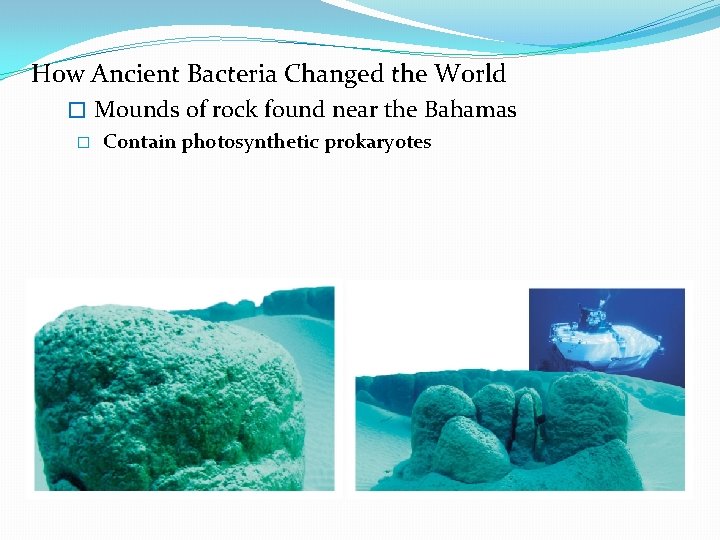
How Ancient Bacteria Changed the World � Mounds of rock found near the Bahamas � Contain photosynthetic prokaryotes
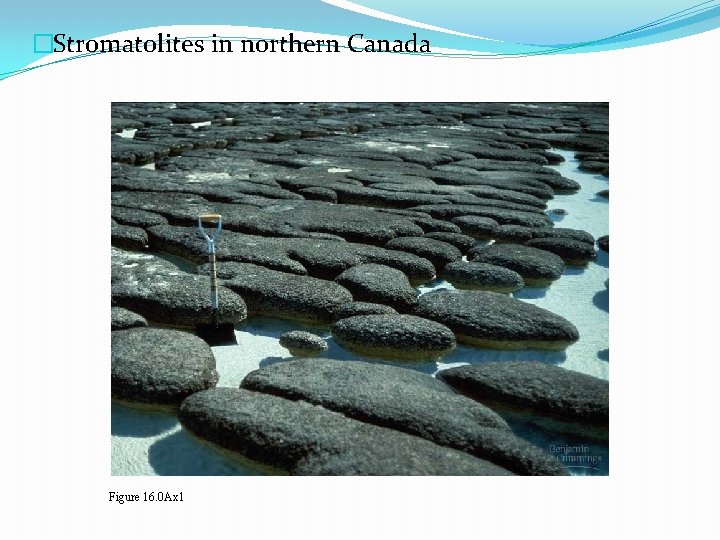
�Stromatolites in northern Canada Figure 16. 0 Ax 1
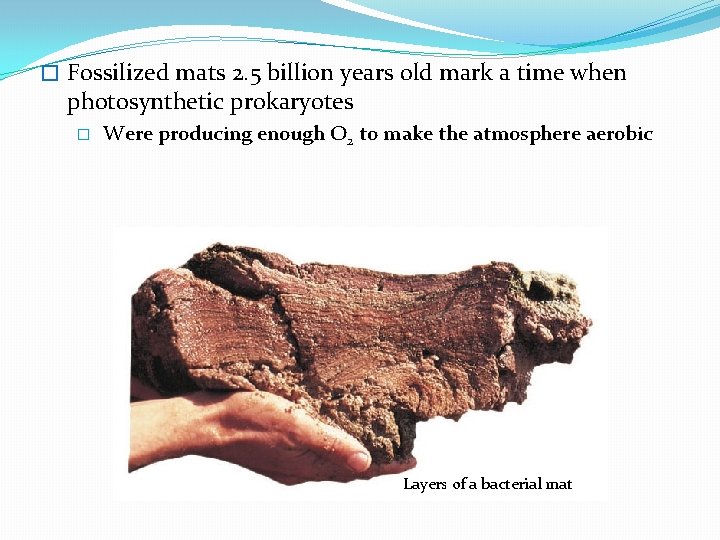
� Fossilized mats 2. 5 billion years old mark a time when photosynthetic prokaryotes � Were producing enough O 2 to make the atmosphere aerobic Layers of a bacterial mat
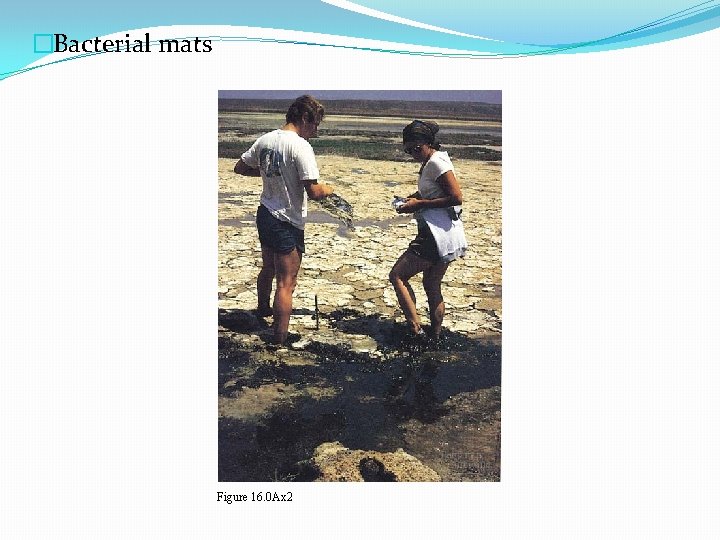
�Bacterial mats Figure 16. 0 Ax 2
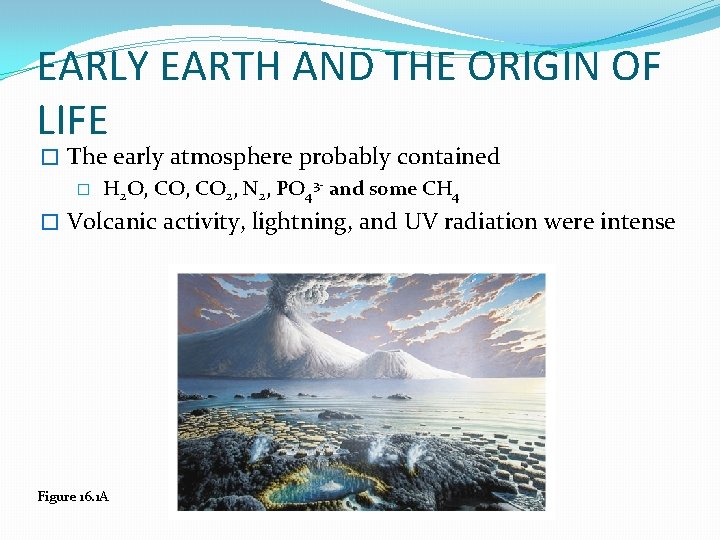
EARLY EARTH AND THE ORIGIN OF LIFE � The early atmosphere probably contained � H 2 O, CO 2, N 2, PO 43 - and some CH 4 � Volcanic activity, lightning, and UV radiation were intense Figure 16. 1 A
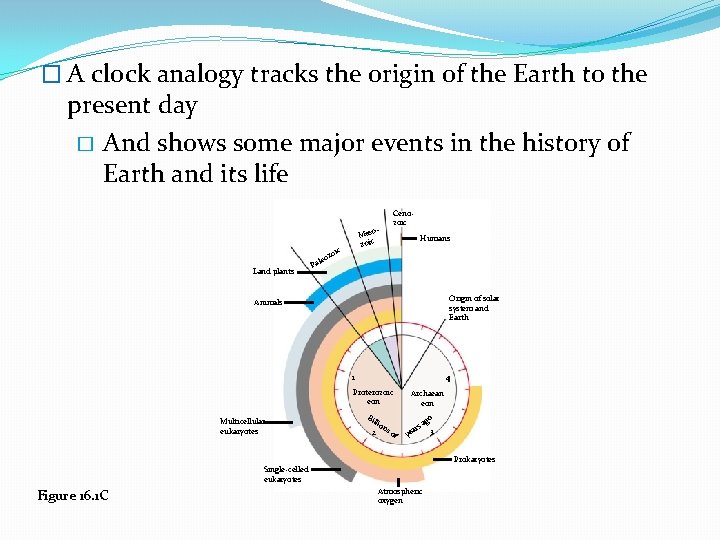
� A clock analogy tracks the origin of the Earth to the present day � And shows some major events in the history of Earth and its life - Land plants Meso zoic ic zo leo Pa Cenozoic Humans Origin of solar system and Earth Animals 4 1 Proterozoic eon Multicellular eukaryotes Archaean eon Bil lio n 2 s of rs a ye 3 Prokaryotes Single-celled eukaryotes Figure 16. 1 C o ag Atmospheric oxygen
� 16. 2 How did life originate? � Organic molecules � May have been formed abiotically in the conditions on early Earth
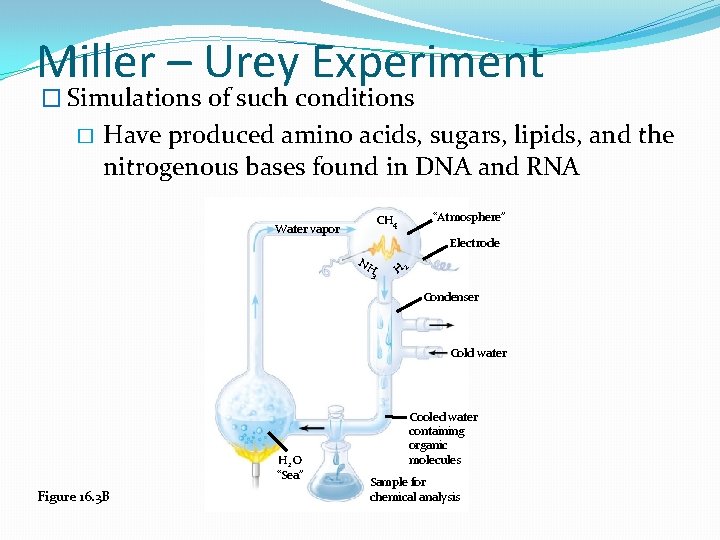
Miller – Urey Experiment � Simulations of such conditions � Have produced amino acids, sugars, lipids, and the nitrogenous bases found in DNA and RNA “Atmosphere” CH 4 Water vapor Electrode NH 3 H 2 Condenser Cold water H 2 O “Sea” Figure 16. 3 B Cooled water containing organic molecules Sample for chemical analysis
� 16. 4 The first polymers may have formed on hot rocks or clay � Organic polymers such as proteins and nucleic acids � May have polymerized on hot rocks
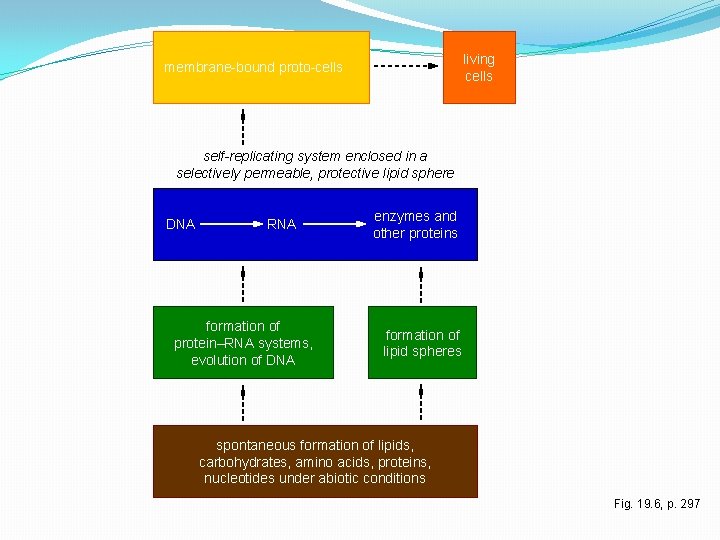
living cells membrane-bound proto-cells self-replicating system enclosed in a selectively permeable, protective lipid sphere DNA RNA formation of protein–RNA systems, evolution of DNA enzymes and other proteins formation of lipid spheres spontaneous formation of lipids, carbohydrates, amino acids, proteins, nucleotides under abiotic conditions Fig. 19. 6, p. 297
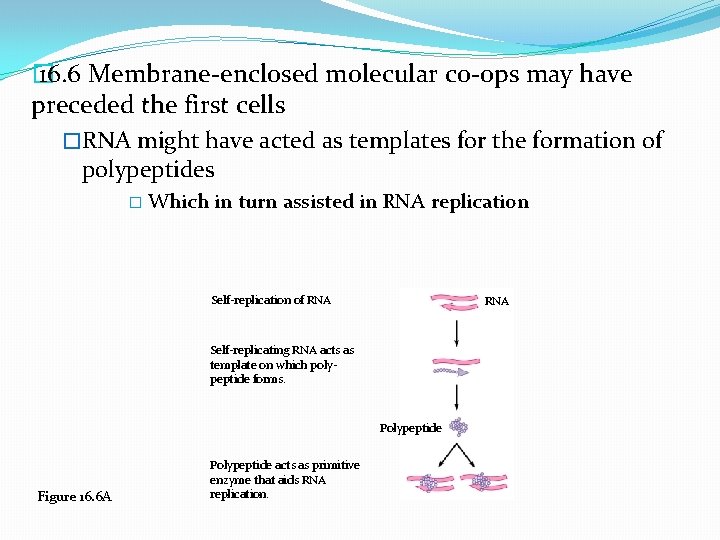
� 16. 6 Membrane-enclosed molecular co-ops may have preceded the first cells �RNA might have acted as templates for the formation of polypeptides � Which in turn assisted in RNA replication Self-replication of RNA Self-replicating RNA acts as template on which polypeptide forms. Polypeptide Figure 16. 6 A Polypeptide acts as primitive enzyme that aids RNA replication.
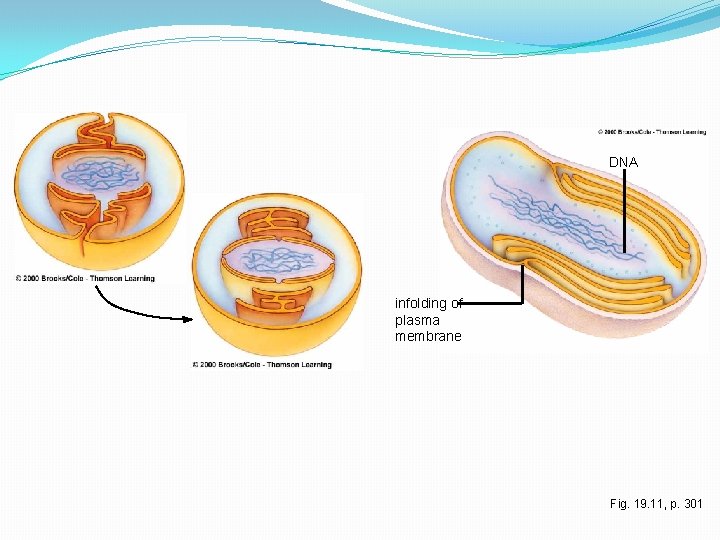
DNA infolding of plasma membrane Fig. 19. 11, p. 301
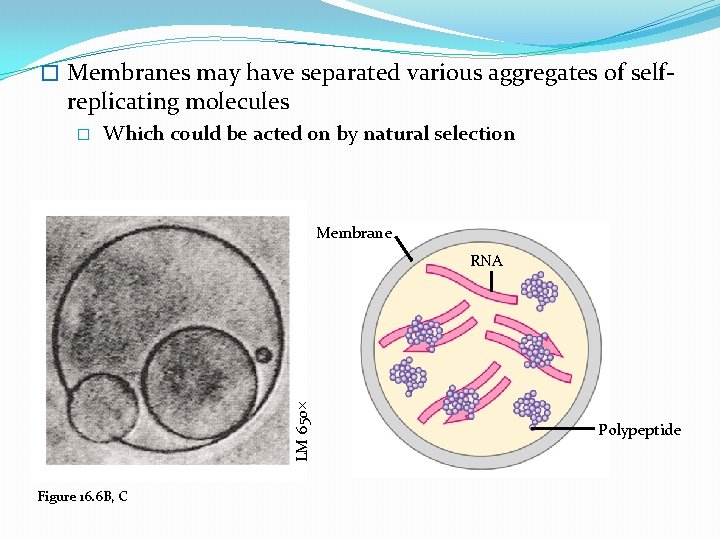
� Membranes may have separated various aggregates of self- replicating molecules � Which could be acted on by natural selection Membrane LM 650 RNA Figure 16. 6 B, C Polypeptide
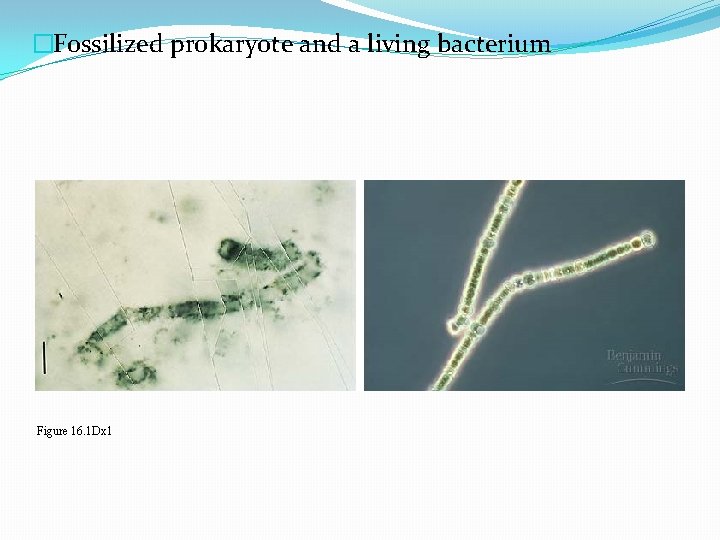
�Fossilized prokaryote and a living bacterium Figure 16. 1 Dx 1
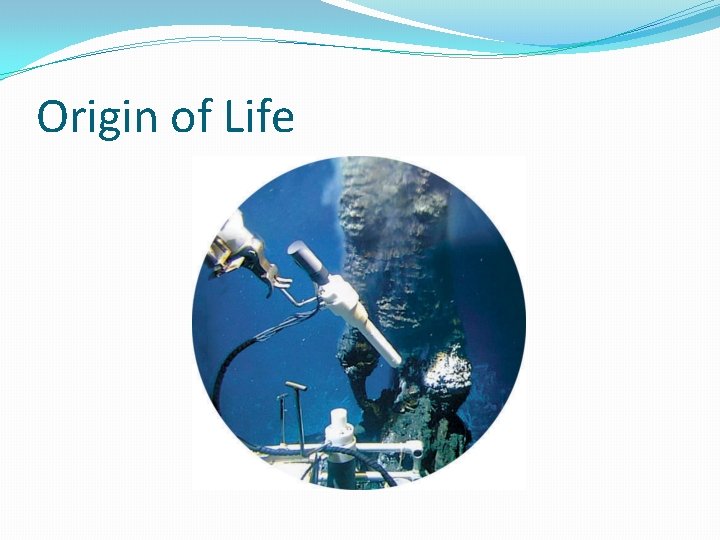
Origin of Life
Origin of Life � Hydrothermal Vent Life � http: //www. youtube. com/watch? v=4 Loi. In. Uo. RMQ � How Did Life Originate? � http: //www. youtube. com/watch? v=ozb. Ferzjkz 4
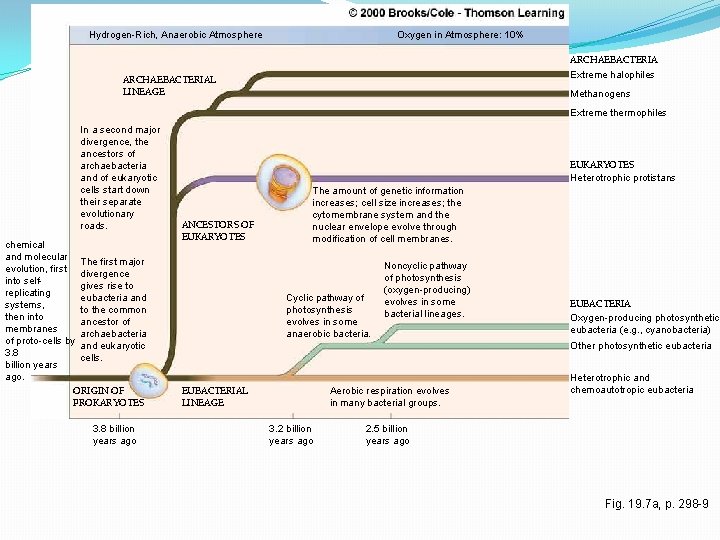
Hydrogen-Rich, Anaerobic Atmosphere Oxygen in Atmosphere: 10% ARCHAEBACTERIA Extreme halophiles ARCHAEBACTERIAL LINEAGE Methanogens Extreme thermophiles In a second major divergence, the ancestors of archaebacteria and of eukaryotic cells start down their separate evolutionary roads. chemical and molecular The first major evolution, first divergence into selfgives rise to replicating eubacteria and systems, to the common then into ancestor of membranes archaebacteria of proto-cells by and eukaryotic 3. 8 cells. billion years ago. ORIGIN OF PROKARYOTES 3. 8 billion years ago EUKARYOTES Heterotrophic protistans ANCESTORS OF EUKARYOTES The amount of genetic information increases; cell size increases; the cytomembrane system and the nuclear envelope evolve through modification of cell membranes. Cyclic pathway of photosynthesis evolves in some anaerobic bacteria. Noncyclic pathway of photosynthesis (oxygen-producing) evolves in some bacterial lineages. EUBACTERIA Oxygen-producing photosynthetic eubacteria (e. g. , cyanobacteria) Other photosynthetic eubacteria EUBACTERIAL LINEAGE Aerobic respiration evolves in many bacterial groups. 3. 2 billion years ago Heterotrophic and chemoautotropic eubacteria 2. 5 billion years ago Fig. 19. 7 a, p. 298 -9
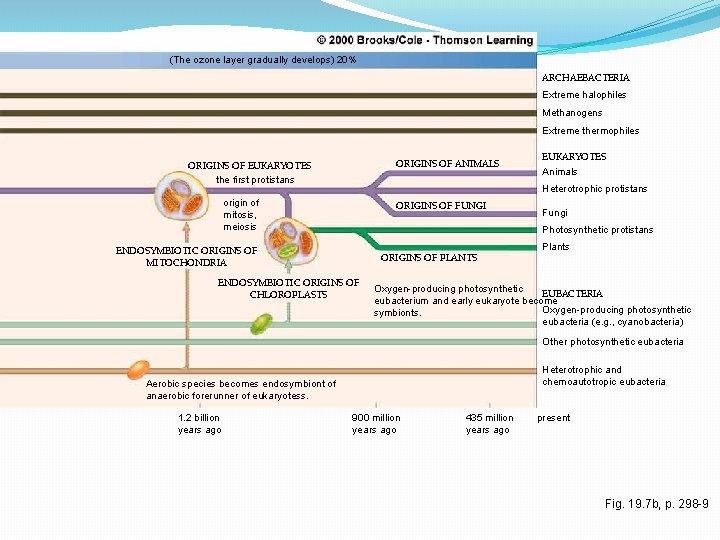
(The ozone layer gradually develops) 20% ARCHAEBACTERIA Extreme halophiles Methanogens Extreme thermophiles ORIGINS OF ANIMALS ORIGINS OF EUKARYOTES the first protistans EUKARYOTES Animals Heterotrophic protistans origin of mitosis, meiosis ORIGINS OF FUNGI Fungi Photosynthetic protistans Plants ENDOSYMBIOTIC ORIGINS OF MITOCHONDRIA ORIGINS OF PLANTS ENDOSYMBIOTIC ORIGINS OF CHLOROPLASTS Oxygen-producing photosynthetic EUBACTERIA eubacterium and early eukaryote become Oxygen-producing photosynthetic symbionts. eubacteria (e. g. , cyanobacteria) Other photosynthetic eubacteria Heterotrophic and chemoautotropic eubacteria Aerobic species becomes endosymbiont of anaerobic forerunner of eukaryotess. 1. 2 billion years ago 900 million years ago 435 million years ago present Fig. 19. 7 b, p. 298 -9
- Slides: 20